Social network analysis
A total of 124 agroecology projects were identified in the mapping analyses divided between 68 EU projects and 56 transnational projects (Iocola et al., 2022a). The social network (Figure 1, Iocola et al., 2022b) obtained with the identified projects resulted in 36 nodes (or countries) and 486 edges. In the figure, the node size is proportional to the number of research projects coordinated by each country, while the edge line thickness is proportional to the weight (w) of the edge. The SNA density was 0.77, its diameter was only two, while the mean distance was 1.23. France (n=18), Italy (18), Spain (16), Germany (15), United Kingdom (14) were the countries that coordinated a greater number of projects, with a strong predominance of the transnational projects for Italy (15) and EU projects for France and United Kingdom (respectively, 13 and 14). In Spain and Germany, the quantity is instead well divided between European (eight for Spain, seven for Germany) and transnational projects (eight for both the countries).
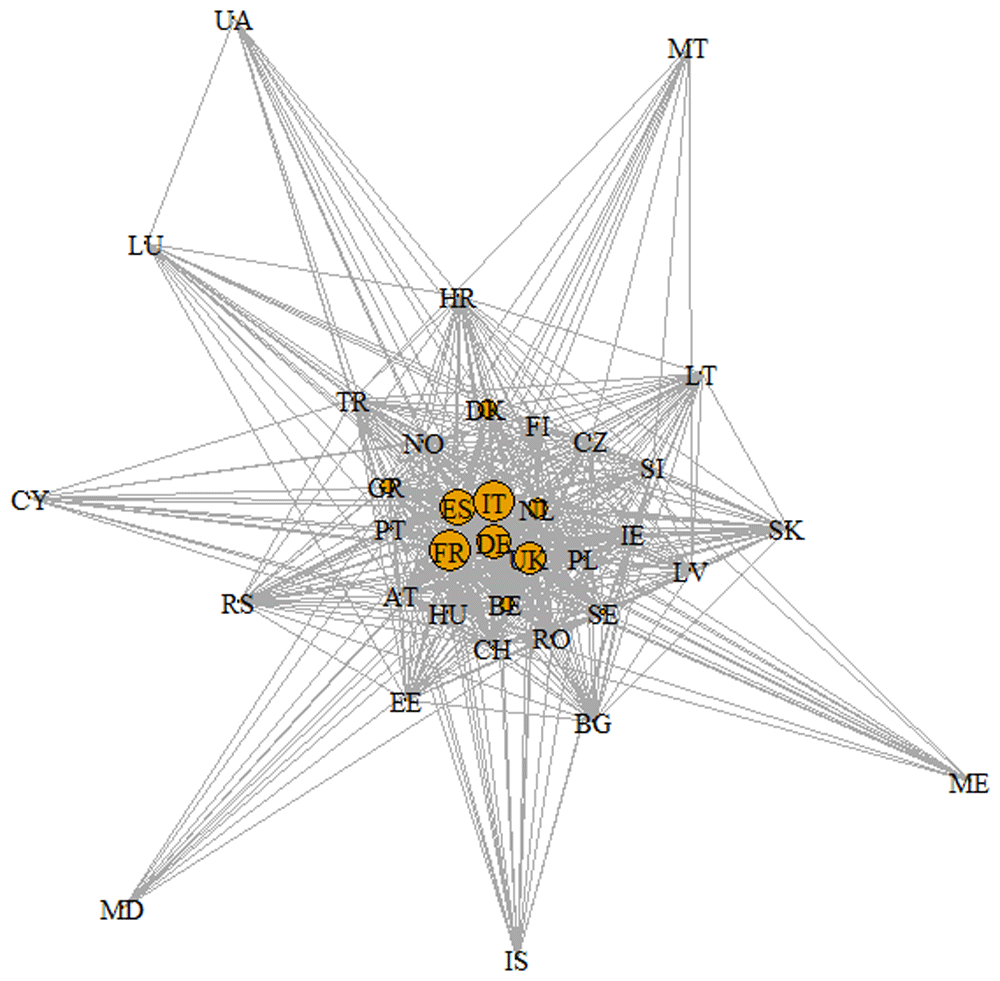
Figure 1. Social Network analysis at country level on agroecological research projects.
The codes of the different countries are reported in the nodes of the network (AT-Austria; BE- Belgium; BG-Bulgaria; CH- Swiss; CY- Cyprus; CZ- Czech Republic; DE-Germany; DK-Denmark; EE-Estonia; ES-Spain; FI- Finland; FR-France; GR-Greece; HR-Croatia; HU- Hungary; IE-Ireland; IS-Iceland; IT-Italy; LT- Lithuania; LU- Luxembourg; LV-Latvia; MD- Moldova; ME-Montenegro; MT-Malta; NL- Netherlands; NO- Norway; PL-Poland; PT- Portugal; RO-Romania; RS-Serbia; SE- Sweden; SI-Slovenia; SK- Slovakia; TR- Turkey; UA- Ukraine; UK- United Kingdom)
Italy and France exhibited more important numbers of cooperation (w=70), followed by Italy and Spain (67). On the contrary, there were 106 interactions between countries out of 486 characterized by just one cooperation. Spain (DC=35), Italy (35), France (34), Netherlands (34), and Portugal (34) had the highest degree centralities, having established direct relations with many countries of the network. On the contrary, Ukraine (12), Moldova (11) and Malta (11) were the countries characterized by fewer direct interactions. All nodes showed a similar score for the Closeness Centrality going from the highest value (CC= 0.016) for Iceland, Luxembourg and Ukraine to the lowest one (0.07) for Belgium. France (0.0138), Netherlands, Germany, Spain, Italy, and Portugal (all with 0.0137) also continued to perform well in this index. Lastly, three different communities of countries with a maximum modularity of 0.02 were identified by our analysis. The three groups are reported in Figure 2.
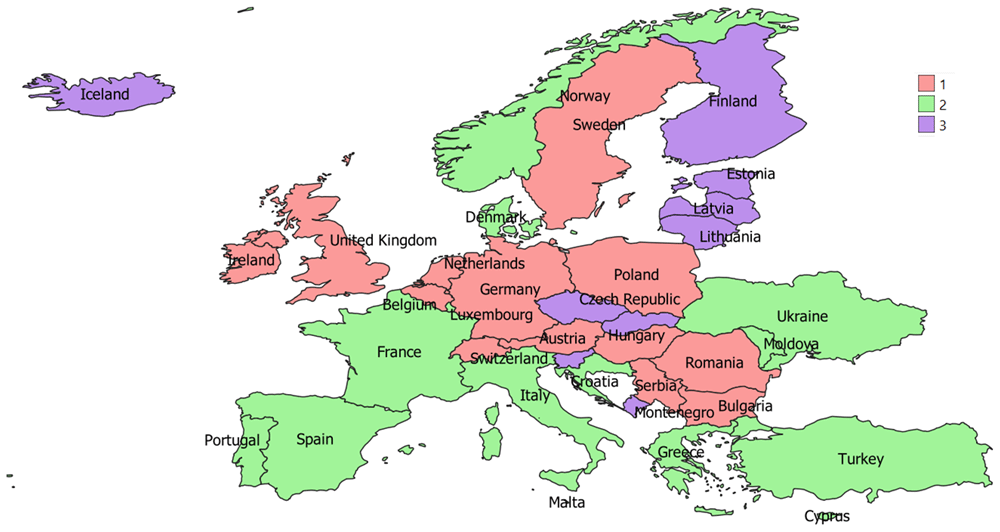
Figure 2. The three groups of countries obtained in the social network analysis.
Survey analysis
We received 26 replies (Iocola et al., 2022c) out of 124 submissions (a total of 20.6 % of responses) from the coordinators of the identified projects: 17 for the EU and nine for the transnational ones. Moreover, some of the respondents (seven EU and five transnational) filled in and sent us the optional Excel file of the ACT.
Considering the survey open to all researchers involved in agroecology, we received 35 responses (Iocola et al., 2022d) from eight Countries (see Underlying data - 4): one from Estonia, four from France, one from Georgia, two from Germany, three from Greece, 19 from Italy, two from Spain, and three from the United Kingdom. Most respondents (63%) were over 50 years, 29% were aged between 35 and 50, and only 9% were under 35. Respondents varied widely in the number of years they have been working in agroecology: 54% of respondents were in later career stage in agroecology (> 10 years), 23% in the middle (5–10 years), and 23% in earlier stage (<5 years). Most of the respondents (83%) were related to agronomic sciences (in particular soil sciences and plant pathology), 11% were from economic sciences, and 6% from social science. 89% work in public research organisation or academia/university, 11% in private research or non-governmental organisations.
General issues and approaches in agroecology research. EU projects presented a longer average duration (3.7 ± 0.9 years) than transnational projects (2.8 ± 0.7 years). Regarding the geographic (local, regional, national, international) scales addressed simultaneously by a project, EU projects showed an average of three scales with the highest values achieved by the international (addressed by 94% of the projects) and local (76%) scales, followed by the regional (71%) and the national ones (65%). Transnational projects addressed simultaneously less scales (average of 1.5) with the highest values showed by the international (78%) and the regional scales (44 %) followed by national and local (both 33%). The different sustainability pillars (environmental integrity, economic resilience, social well-being, good governance) defined by Sustainability Assessment of Food and Agriculture systems (SAFA) were taken into account by the various research projects with the highest percentages achieved by the environmental (94% for EU, 89% for transnational) and economic dimensions (82% for EU, 78% for transnational). The social pillar was covered only by 59% of EU projects and 44% by transnational, and governance by 59% EU and 33% transnational.
Genetic modification techniques (Genome editing, Cisgenic and Transgenic modifications) were implemented in none of the projects, whereas in only five (three EU, two transnational) traditional modification such selective breeding and crossbreeding approaches were applied. Regarding organic and conventional production systems, our findings indicate both were simultaneously taken into account by the majority of EU research projects (82%), but less with 44% for transnational. There were also some research projects that only dealt with the conventional system (6% for EU, 11% for transnational) or with organic agriculture (12% for EU, 44% for transnational). 53% of EU and 56% of transnational projects were dealing with the use of synthetic inputs. The sustainable intensification approach (defined in the questionnaire as “Agricultural yields are increased without adverse environmental impact and without the conversion of additional non-agricultural land” according to FAO, 2011) was selected by only one EU project, whereas ecological intensification (“Agricultural system performances are improved through a knowledge-intensive process that requires optimal management of nature’s ecological functions and biodiversity”; FAO, 2011) was chosen by all others.
Likewise, the definition of the integration of scientific disciplines using an interdisciplinary approach (“Project is composed by members with different expertise covering different fields and disciplines. They collaborate and share ideas from the beginning to resolve issues”) was selected and implemented by most of the projects. Instead, the multidisciplinary approach (“The project is composed by members with different expertise covering different fields and disciplines. Each member works autonomously to come up with findings. Result sharing allows to see whether the different findings are consistent or contradictory”) was implemented in only one EU project.
Living labs (LLs) (defined in the questionnaire as “user-centred, open innovation ecosystems based on systematic user co-creation approach, integrating research and innovation processes in real life communities and settings. In simpler terms, living labs are initiatives in which experimentation is conducted on real farms, in specific territorial and community contexts, with farmers and other actors involved from the beginning as equal partners in proposing ideas, testing them, improving them and promoting them further”) were present in 53% of EU and 22% of transnational projects, while Research Infrastructures (RIs) (“Research infrastructure refers to the facilities, resources and services that are used by the research and innovation community to conduct research and foster innovation in their fields. Research infrastructure includes: major research equipment, knowledge-based resources such as collections, archives and data, e-infrastructure such as data and computing systems and communication networks”) were used/developed by 18% of EU and 44% of transnational projects. RIs remained available even after the end of the projects for 86% of cases and of these, only a third (33%) consisted of databases made available for other future research.
The degree of importance of some of the above issues was also explored in the survey for agroecology researchers (Figure 3). Ecological intensification showed a very slightly higher degree of preference (mean= 3.9 ± 0.22) than sustainable intensification (3.5 ± 0.23), while organic production was considered very important for agroecology by 43% of respondents reaching a mean value of importance of 3.9. LLs (mean= 3.9 ± 0.18) and RIs (3.5 ± 0.21) were also considered quite important to support research in agroecology. No substantial difference was evident between multidisciplinary (mean= 4.4 ± 0.12) and interdisciplinary (4.4 ± 0.14), while the importance for respondents of actors engagement in agroecology was shown by the highest means and lowest standard error values obtained by transdisciplinary and multi-actor approach both with a mean of 4.5 and a standard error of 0.11. Moreover, most of the agroecology studies carried out by respondents in this survey concerned field (71%), farm (83%), and territorial geographic scales (63%), while the value chain was more rarely addressed (14% for upstream, 14% for downstream, and 11% for the whole value chain).
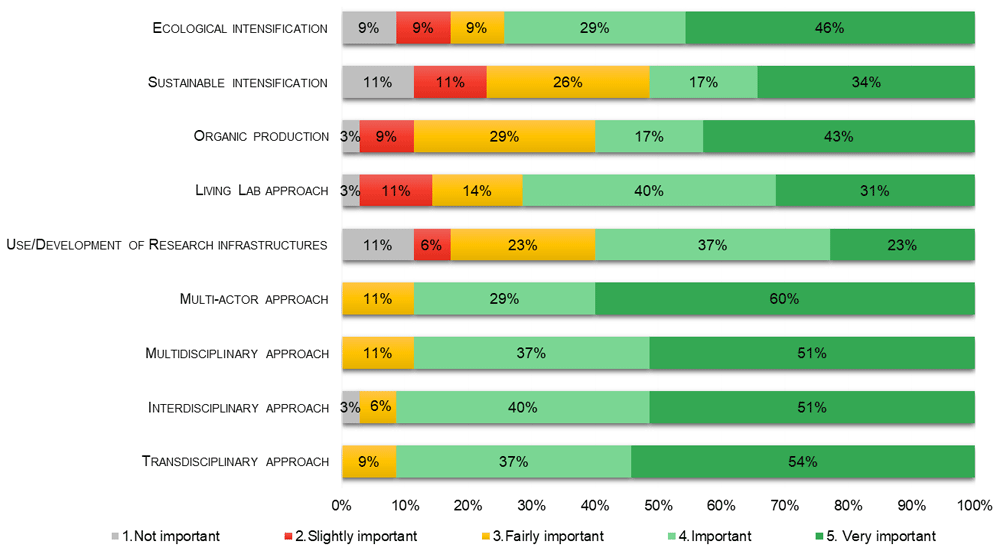
Figure 3. Percentages of importance of themes and approaches in agroecology as reported by respondent researchers (n=35).
Actor engagements. The average number of types of actors involved in agroecology projects was seven for EU projects, and four for transnational projects. Beside scientists, the actors mostly involved in the projects were farmers, their associations, and cooperatives as well as advisors (Figure 4), while there was limited engagement of upstream and downstream value chain actors. Environmental organizations, citizens, and policy makers were mostly present in EU research projects. On average, the different types of involved actors in the studies carried out by researchers involved in agroecology was quite high (n=7) and the obtained percentages were totally in line with the responses provided in the previous survey by the projects’ coordinators. In fact, this survey also confirmed a limited participation of value chain stakeholders. Considering the degrees of actors’ interaction (Table 1) over the three phases of a research project (Figure 5), the higher degrees, characterized by modes of collaboration in which knowledge is truly co-produced and the research process is co-shaped with non-academic actors, were higher in EU projects in all the phases of the research. On the contrary, transnational projects showed the highest percentages in t lower degrees of interaction, limited to information-sharing or actors’ consultation. Furthermore, selecting only the projects with the presence of LLs (9 EU and 2 transnational), the higher degrees of actor interaction (≥ 5) during the three phases were almost exclusively found with EU projects (problem framework: 89% EU, 0% transnational; knowledge production: 89% EU, 0% transnational; new knowledge to fruition: 67% EU, 50% transnational). However, although truly co-learning processes were not implemented in all agroecology projects, coordinators were aware of the importance of strengthening agroecology research impact. In fact, many lessons learned reported in the survey underlined these aspects while considering difficulties that still exist in implementing these approaches (quotes 1–5) and in reaching a diversity of actors (quotes 6–7) (Table 3).
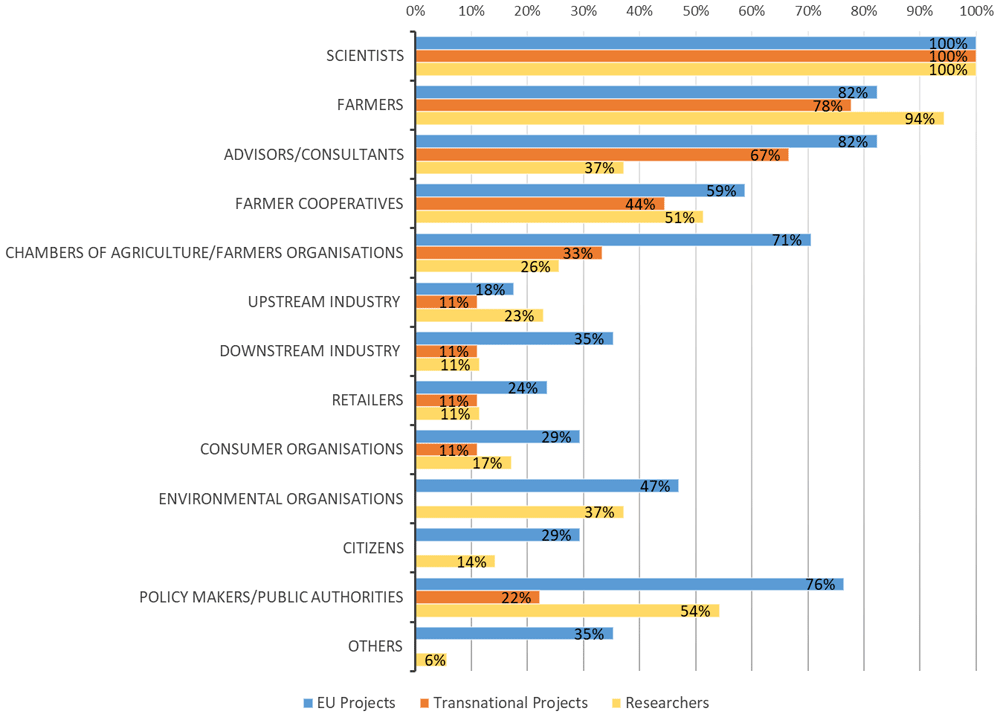
Figure 4. Diversity of actors and their percentages of engagement in agroecology research.
EU: European projects, Transnational: Transnational projects, Researchers: research carried out by researchers involved in agroecology. Others for EU projects: Community seed banks, seed savers, bioenergy producers, NGOs providing access to land, ecosystem service users in the local community, Education organisation, Statutory levy board for agricultural development. Others for Researchers: Professional organisations (organic assoc., breeding assoc. etc)
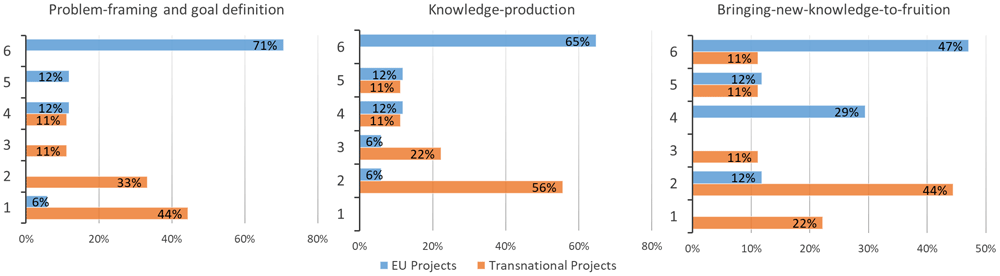
Figure 5. Degrees of actor interaction over the three phases of research in agroecology projects.
Interaction degree ranges from 1=low to 6=high. EU: European projects, Transnational: Transnational projects.
Table 3. Lessons-learned and comments reported in the survey for coordinators of agroecology research projects.
| n. | Quotes |
|---|
| 1. | “Great care may need taken to help ensure a ″better balance″ of science/academic goals with the transdisciplinary and business
elements. Many academics, simply, do not understand what transdisciplinary is, and how this can help direct their research effort
towards being more impactful” - EU |
| 2. | “Involvement of stakeholders in co-creation is useful and facilitates the impact but it is at the same time very challenging due to the
differences in understanding how the science is run”-EU |
| 3. | “Researchers′ and scientists′ targets and how their work is evaluated is in contrast with the type of work and activities needed to engage
effectively with stakeholders. The importance of academic publications is still too great to allow scientists to dedicate more time to
stakeholder engagement” – Transnational |
| 4. | “Projects are difficult when trying to be truly collaborative, but we learned a lot and dissemination and collaboration with stakeholders
becomes stronger” -Transnational |
| 5. | “Agroecology has a cultural dimension. Scientist and stakeholders have to change their mind/way of thinking regarding their
relationships with living beings and environment”- EU |
| 6. | “Importance of considering actors who are hard to reach to ensure Multi-Actor Platforms reflect the principals of just transitions.”- EU |
| 7. | “Stakeholders and strategies for further enhancement and contributions to transitions to agroecology require flexibility to compositions
and the addition of further actors to the network - EU |
In the survey open to agroecology researchers, farmers and other non-academic actors involved in the research were mainly identified by previous collaborations (83%), by a request coming from the same actor (54%) or through a stakeholder analysis (43%). Considering the three phases of the research, interaction with farmers and other non-academic actors mainly took place in phase one (Problem definition: 71% for farmers, 57% for other non-academic actors) than in the other two phases (Knowledge production: 46% for farmers, 51% for other non-academic actors; New knowledge to production: 63% for farmers, 49 % for other non-academic actors). Moreover, while farmers were involved in all the studies carried out by the respondents, other non-academic actors were implicated in 94% of the cases. Monitoring and evaluation of engagement of farmers and other non-academic actors throughout the duration of the research was carried out only by respectively 46% (for farmers) and 31% (for others) of the respondents. Monitoring and evaluation were mainly carried out through periodical meetings, participative workshops, evaluation surveys, periodic contacts and self-reflection. In general, the willingness of farmers (mean= 3.5 ± 0.18) and other non-academic actors (3.4 ± 0.17) to participate to the research was considered somewhat satisfactory by researchers, while the level of satisfaction regarding rewards/promotion/recognition for this type of participatory research was slightly lower (2.5 ± 0.17). Many comments provided by the respondents highlighted the importance of engaging farmers and other food system actors in research related to agroecology, even if there are some difficulties and barriers, as participatory activities need time and energy and because of the low interest of actors not directly linked to the production (quotes 1–4 in Table 4).
Table 4. Lessons-learned and comments reported in the survey for researchers involved in agroecology.
| n. | Quotes |
|---|
| 1. | “Interest from stakeholders (particularly the not-farmer ones) is a crucial aspect, sensibilization activities should be implemented to
increase stakeholders’ awareness they can become actors of the food systems” |
| 2. | “Collaboration with farmers need time and energy to be kept alive, this dimension of maintaining the collaboration "alive" and
"dynamic" is often underestimated in the project funding and not rewarded in term of research” |
| 3. | “Involvement of farmers (and farmers interest to PAR activities) is easier the further away they are from large markets and the more
remote the rural areas” |
| 4. | “Very difficult to engage actors not directly connected with the production” |
| 5. | “More agroecology, longer projects, adding new partner every year, including small farmers as micro-business in Innovation actions,
more social and food system aspects” |
| 6. | “Projects with longer duration (over five years) in fact agro-ecological transition requires long term processes” |
| 7. | “Programmes are still too siloed: integration of all dimensions of agroecology are needed (environmental, social, economic, political - or
across the various principles of agroecology, e.g. 13 HLPE principles)” |
| 8. | “Yield increase paradigm still too much in some calls” |
| 9. | “Agroecology and ecological intensification need to be embedded into the one-health concept and clearly focussed” |
| 10. | “Specific funding calls for agroecology are rare” |
| 11. | “In agroecology one cannot ignore the needs of food system operators and consumers/civil society for which the bottom-up approach
should be implicit. These needs should then be collected by researchers, representatives, and institutions who, together with operators
in the food supply chains, consumers and other stakeholders, develop the research project, enriching it with any elements that may be
overlooked and, in any case, shared by all” |
| 12. | “Funding advocacy and implementation of input independence strategies throughout in the food systems, and particularly, the
productive smallholder farming sector, should be a priority” |
| 13. | “At a minimum, we need consultancy and technical assistance programs for businesses in the food supply chains, especially
farmers and processors, to be implemented through the establishment of communities of practice and living labs, information and
communication campaigns aimed at consumers to gain awareness of sustainable diets and consumption styles, their ability to induce
changes in the production system in view of greater sustainability by interacting with producers” |
| 14. | “Deliverables, milestones and all of the like, are designed so a non-expert project evaluator (officer) can check the boxes and judge the
good progress of the project. Its real impact, however, is another story” |
| 15. | “To be funded, projects need more skills in writing and speaking bureaucratically language, than scientific skills and practical potential.
Too many formalisms. Projects are written with the evaluation sheet in mind, not with innovation potential in mind. Projects are judged
as good when they contain all the wizard words, rather than having real science and innovation potential.” |
| 16. | “Less bureaucracy, more access to private companies” |
| 17. | “More flexibility on how to spend the budget, based on need” |
| 18. | “Programmes/calls should be build considering the possibility to enable the direct participation of stakeholders (e.g. farms,
organization) as partners”; |
| 19. | “Farmers engagement in the project need to have funds since they are key part of the project” |
| 20. | “Individual projects should not become too big (more than 2–5Million) otherwise only the big organisations will be able to coordinate
such a consortium. In contrast, smaller budgets would allow smaller organisations and consortia to profit from the programmes” |
ACT methodology. Respondents of both surveys were also asked to identify how their research or project supported agri-food transformation through agroecology in Europe according to a set of issues (Table 2, Figure 6). Considering all EU and transnational projects, the highest percentages of responses were obtained for issues related to the agroecology elements “efficiency” (62% of total projects), “synergies” (54%), “local economy” (65%), and “co-creation and sharing of knowledge” (73%). Results obtained from the researchers involved in agroecology (Figure 6) were totally in line with those obtained by the projects’ coordinators. The highest percentages of responses were also obtained for Efficiency (69%), Synergies (57%), Local economy (51%), and Co-creation and sharing of knowledge (57%). The classification of projects and studies carried out by agroecology researchers according to the ACT methodology is reported in Figure 7. The highest percentage for EU projects is achieved by the “Systemic” category (53% of projects) while transnational projects were predominantly made up of the “Agroecological transformation” category (67%). The “Incremental change” addressing exclusively the level 1 and/or 2 of food system transformation was only present in the survey open to all agroecology researchers (20% of the cases).
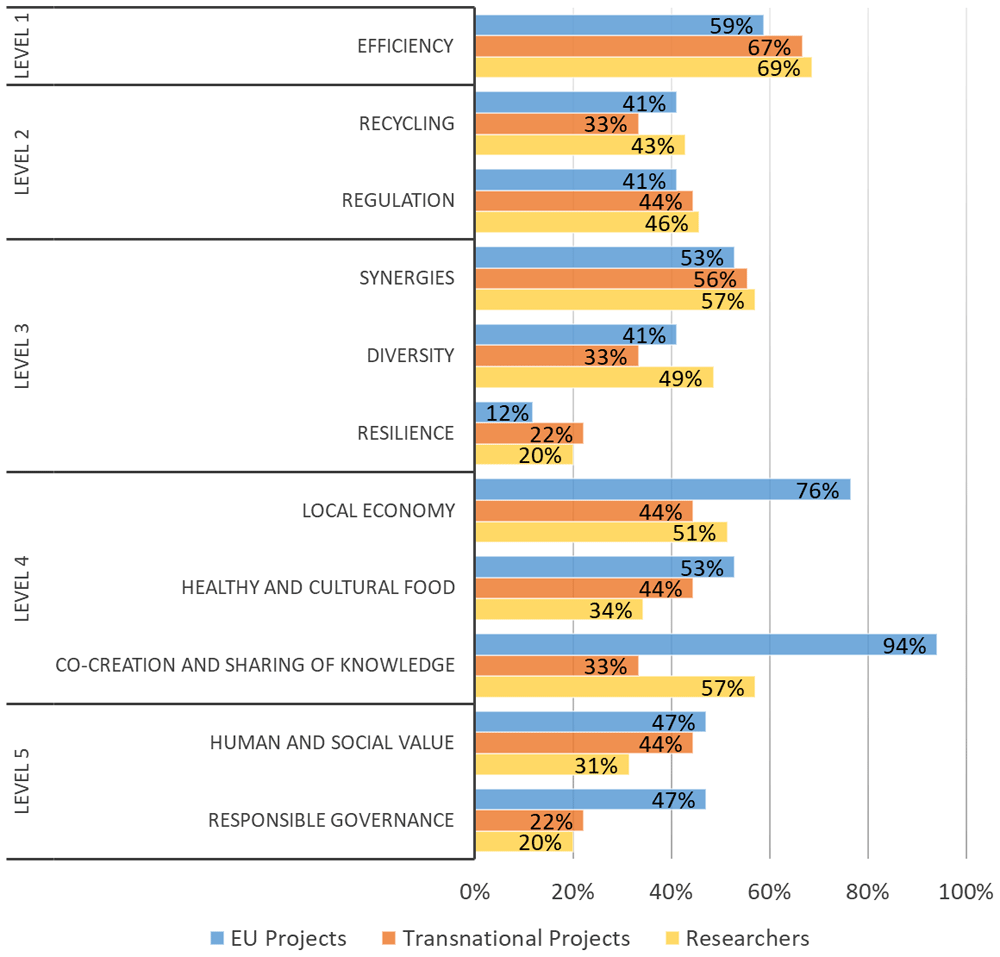
Figure 6. Percentages of the issues promoted by agroecology research to support agri-food transformation in Europe.
Issues are related to the FAO elements of agroecology (FAO, 2018) and embedded in the five levels of food systems transformation proposed by Gliessman (2014). EU: European projects, Transnational: Transnational projects, Researchers: research carried out by researchers involved in agroecology.
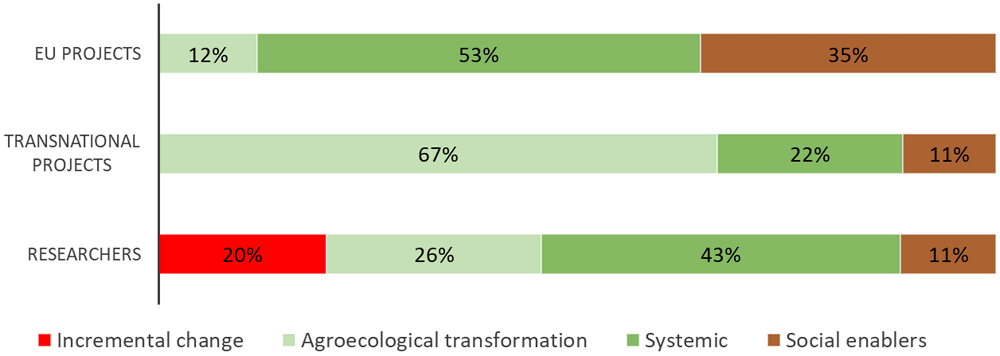
Figure 7. Classification of agroecology research.
Projects and research carried out by researchers involved in agroecology were classified according to the four categories proposed by Pavageau et al. (2020): Incremental change with projects/research addressing solely the level 1 and/or 2; Agroecological transformation where projects/research are also engaged with level 3; Systemic where in addition to level 3, level 4 and/or 5 are also addressed; and Social enablers with the engagement only with level 4 and/or 5.
EU: European projects, Transnational: Transnational projects, Researchers: research carried out by researchers involved in agroecology.
Focus on funding. Some questions of the survey for researchers also addressed experiences on research funding in agroecology. Respondents obtained funding for their agroecology research principally from national (69%) and European (63%) funding programmes. Less funds derived from the transnational initiatives (31%). Researchers were asked the importance of some changes in programmes to better support research in agroecology according to a five-point Likert scale. “Recognition of a lump sum for costs incurred in stakeholder engagement and consultation during the co-framing of the proposal” (4.2 ± 0.14), “Introduction /presence of methods capable of guaranteeing the flexibility of project actions based on the dynamics of the contexts” (4.2 ± 0.15), and “Increase of the duration of the projects funded by the programme” (mean=4.2 ± 0.16) were the most relevant, while “Increase of the maximum funding amount per project” (3.5 ± 0.16) and “Increased use of cross-cutting or joint calls” (3.8 ± 0.18) were considered the least important needed changes.
However, when asked “Do you think that the current funding programmes to which you apply to, are rightly designed to support agri-food transformation through agroecology or do you think that some changes are necessary to strength and accelerate this transformation in Europe?” only 54% of respondents answered “No, some changes are necessary”. Specifically, they mainly required: a) greater duration of the projects with a better integration of social aspects together with the other components (quotes 5–6, Table 4); b) more topics expressly designed for agroecology (quotes 7–10); c) more attention to producers, especially smallholder farmers, and to the different actors of the food system (quotes 11–13); d) less bureaucracy, flexibility and change in funding amount and reporting methods (quotes 14–20).