I. Introduction
Industrial facilities have been the largest consumers of electric energy for decades, oftentimes consuming almost 50% of global electricity production1,2. The electricity consumption profile will change in the coming years, but the industrial sector will continue to consume increasing amounts of energy coming from electrical sources2–4. Indeed, the efficiency of essentially all electrical systems, including those used in the industry, has been steadily increasing since the middle of the twentieth century, and in particular in the last twenty years, but global industrialization, and the general increase in the number of industrial facilities, as well as the decreasing utilization of non-renewable energy sources, will bring upon the said increase in electrical energy utilization (link)5–7. Furthermore, in order to secure increased energy independency, become more resilient to global energy price fluctuations, capitalize on various local idiosyncrasies, etc., electric energy production facilities, associated with industrial environments, will be further diversified. Certainly, fossil fuels and energy coming from conventional renewable energy sources will be used1, but several emerging systems will be implemented in industrial environments. One consequence of such diversification will be that the domain of energy production and utilization will become much more complex, but this will enable energy utilization in contexts not widely adopted today.
In addition to industrial electric energy production facilities' evolution, the advancements in how energy is stored in industrial settings will be intensified. This development will be enabled by three salient processes. Firstly, most of the storage systems are in the focus of academic, financial, legal, and other institutions, for the last ten or twenty years, at the most. Hence, the pertaining technologies are far from mature and many improvements and innovations are yet to come8. At the moment, although many technical and financial instruments, that could usher increased utilization of storage systems in the industry, have been defined, it can be said that storage systems are still at the innovation phase of the technology adoption cycle (excluding pumped-hydro storage). Secondly, the price of all storage systems will be significantly decreased. For example, by 2030, the price of all battery electricity storage systems will be at least halved9. Moreover, the financial instruments that could offset the investment and operational costs of the storage systems will be deployed and will render storage systems financially feasible to a much larger extent than what is the case at the moment. Thirdly, the number of services that could be realized in the field by the storage systems will increase. These services will help industrial entities in optimizing their energy utilization, but also will enable them to sell energy products to the network and generally improve grid operating conditions. Again, currently, many functionalities that could be realized by the storage systems simply cannot be put into practice for various reasons, most of which are not technological (link) (link).
It is important to note that both energy production and energy storage systems, which have been directly or indirectly utilized by the industry previously, were not nominally part of the industrial setting itself, but rather provided by the power grids and network operators. These systems are now being integrated into industrial ecosystems. Moreover, industrial facilities have been notoriously hard to optimize and efficiently govern even without novel energy production and storage systems10,11. The proliferation of production and storage systems in industrial facilities will only exacerbate the problem of energy management. Hence, the fundamental problem to be solved in the following decades will be the problem of energy management in industrial environments. Simply put, elaborate and comprehensive energy management schemes are a prerequisite for meaningful energy production and storage facilities operation, and since essentially many branches of industry rely on extensive energy utilization, the industrial development itself will depend heavily on the advancements in the domain of energy management schemes10–13.
The primary objective of this paper is to explicate the current profile of the industrial facilities and schemes for electricity production, storage, and management. Also, prospects for further advancements are addressed, with emphasis on how certain impediments could be overcome. Please note that the term industrial facilities are used in the somewhat traditional sense in this paper, i.e. service industries, and other energy-non-intensive industry branches are not regarded.
The remainder of the paper is organized as follows. Section II, Section III, and Section IV offer an overview of the electric energy production facilities, storage facilities, and energy management schemes utilized in the industrial environments, respectively. Section V offers concluding remarks.
II. Overview of electric energy production facilities for industrial environments
Traditionally, the industrial energy demands were to large extent covered by fossil fuel usage, either indirectly through the usage of electricity that was produced by burning fossil fuels, or directly, in energy-intensive industries, through the usage of fossil fuels in the industrial processes themselves (as in metallurgy, for example). With the proliferation of renewable energy sources, the portion of the energy utilized in industrial processes, coming from fossil fuels will decrease.
It is worth addressing the data given in Table 1. Even twenty years from now, by the current projections and if there are no significant changes in policies and regulations, more than 70% of our energy will be produced by burning fossil fuels1. Accordingly, the industrial processes will be driven to a large extent by the energy coming from non-renewable energy sources.
Table 1. Energy production by source.
| Source | 2000 | 2018 | 2030 | 2040 |
|---|
| Coal | 2317 | 3821 | 3848 | 3779 |
| Natural gas | 2083 | 3273 | 3889 | 4445 |
| Oil | 3665 | 4501 | 4872 | 4921 |
| Nuclear | 657 | 709 | 801 | 906 |
| Renewables | 659 | 1391 | 2287 | 3127 |
| Hydro | 225 | 361 | 452 | 524 |
| Modern bioenergy | 374 | 737 | 1058 | 1282 |
| Other | 60 | 293 | 777 | 1320 |
| Solar PV | 1 | 592 | 2562 | 4705 |
| Solid biomass | 638 | 620 | 613 | 546 |
| Total (Mtoe) | 10037 | 14314 | 16311 | 17723 |
| Fossil fuel share | 80% | 81% | 77% | 74% |
| CO2 emissions (Gt) | 23.1 | 33.2 | 34.9 | 35.6 |
Still, the trend is evident and fossil fuel usage generally will be decreased. This decrease will be compensated by increased production of other energy sources, most notably those producing electricity (although not exclusively) in a sustainable manner2,4,14. Concerning industrial energy utilization, many processes that can be electrified will be electrified15,16. Also, the energy sources that industrial facilities can exploit by themselves, locally, will be increasingly utilized12,17. The change will be caused by the decrease in investments and operational costs of most renewable energy sources and by the tendency of all energy-consuming entities to be energy-independent. Also, novel financial instruments and paradigms will enable industrial facilities to sell various energy products, and hence, besides covering their energy needs, the installed energy sources will enable them to generate revenue streams via participating in energy trading, by implementing demand-side management schemes, by providing ancillary, grid-supporting, services, etc. Of course, full energy self-sufficiency is not and will not be financially feasible, for most of the branches of industry, in the foreseeable future, but electric energy sources will proliferate industrial environments in an increasing fashion18,19.
As a consequence of the technological maturity, availability of pertaining energy sources, and general compatibility with industrial settings, several well-established electricity production facilities will be used in the following decades.
Figure 1 offers an overview of the electric energy production facilities that are generally in use today20. Essentially, all of these sources are expected to be in use in industrial environments in the following thirty years, excluding wind and geothermal sources. These two sources are shaded in Figure 1 simply to indicate that, although these sources will be used increasingly for electricity generation (please note Figure 21,4), they will not be extensively used in the industry directly. Wind systems are not suitable for industrial environments because of their footprint. Table 2 gives rough estimates of how much land is necessary for a specific electric energy source. Wind systems have roughly twice a larger footprint than photovoltaic (PV) systems and around six-times larger footprint than electricity production facilities based on fossil fuels. Also, wind turbines as architectural objects are not compatible with most industrial buildings. Perhaps paradoxically, one of the few industrial settings that enable the utilization of wind systems is the oil industry (most notably, fracking)(link). Wind energy could be used in the given context, but mostly by installing micro wind turbines. Geothermal energy for electricity generation does not have so much potential since it is oftentimes more meaningful to use heat or heated water directly in the production processes. Also, to large extent, industrial facilities do not coincide geographically with geothermal sources (link)21.
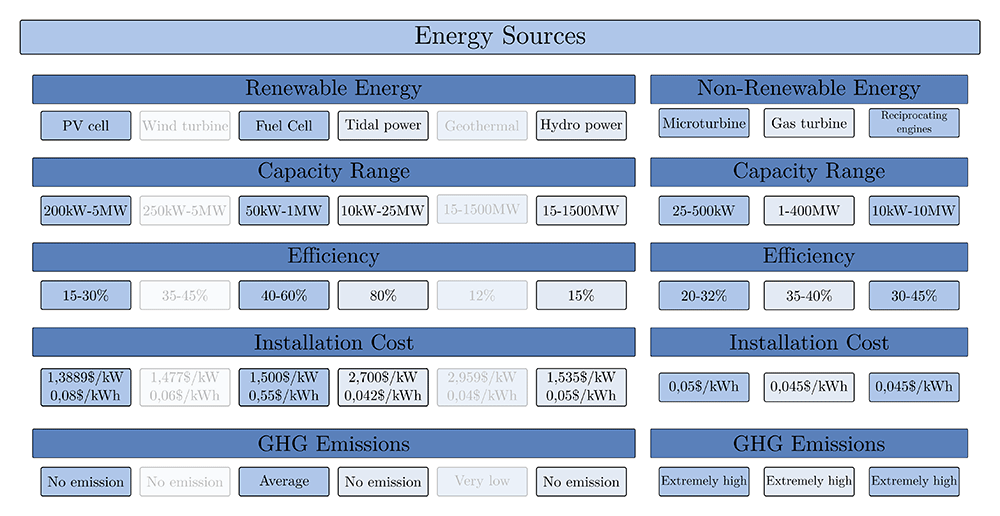
Figure 1. Facilities for electric energy production, in use in industrial facilities.
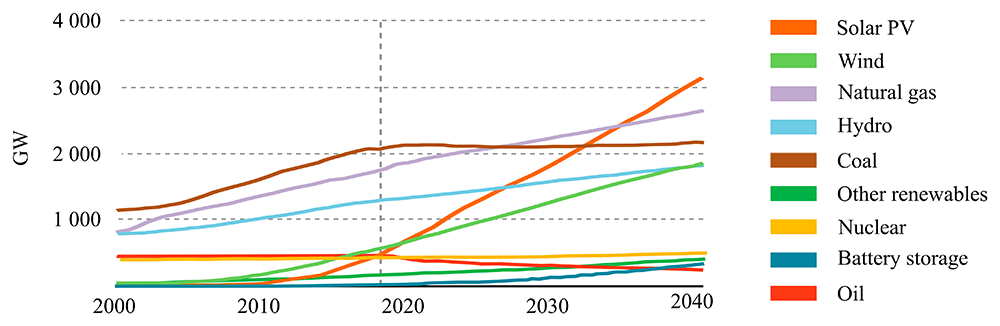
Figure 2. Installed power of electric energy sources – currently and predictions.
Table 2. Land use by energy source.
| Electricity Source | Acres per Megawatt Produced |
|---|
| Coal | 12.21 |
| Natural Gas | 12.41 |
| Nuclear | 12.71 |
| Solar | 43.50 |
| Wind | 70.64 |
| Hydro | 315.22 |
Next, it is important to note that global daily water consumption is around 10×109 liters. Figure 3 illustrates which percentage of that number is used by some branches of the industry. Many branches of industry are dependent on heavy water usage, and this is one of the main reasons why industrial facilities are positioned close to some water surfaces. These water surfaces could be used for electricity generation, also. Hence, water energy extraction systems are expected to be increasingly installed in industrial environments. Besides tidal and wave energy extraction systems, that have been intensively developed in recent years, one more system could be considered. The concept of the so-called tidal storage system is depicted in simplified form in Figure 4 (link). It functions as follows. When, for example, river water level is higher than the dock water level, electricity can be produced by driving the water through a turbine that in turn drives the generator, similarly to traditional hydropower plants. Next, when the river water level is lower than the dock water level, the energy can again be produced similarly. It is important to note that the dock acts as a sort of energy storage since it stores potential energy that is released during different day intervals (hence ‘storage’ in the name). Also, it is dispatchable, albeit within certain time frames during the day. The additional good feature of these systems is that they are based on well-known concepts. The only limiting factor is the fact that the water surface whose water level changes significantly during the day is necessary. For example, one such system is installed in Belgium, where river water level change is well above 6m during the day. The installed power of these systems is in order of magnitude of 1 MW (realized using several turbines) or less.
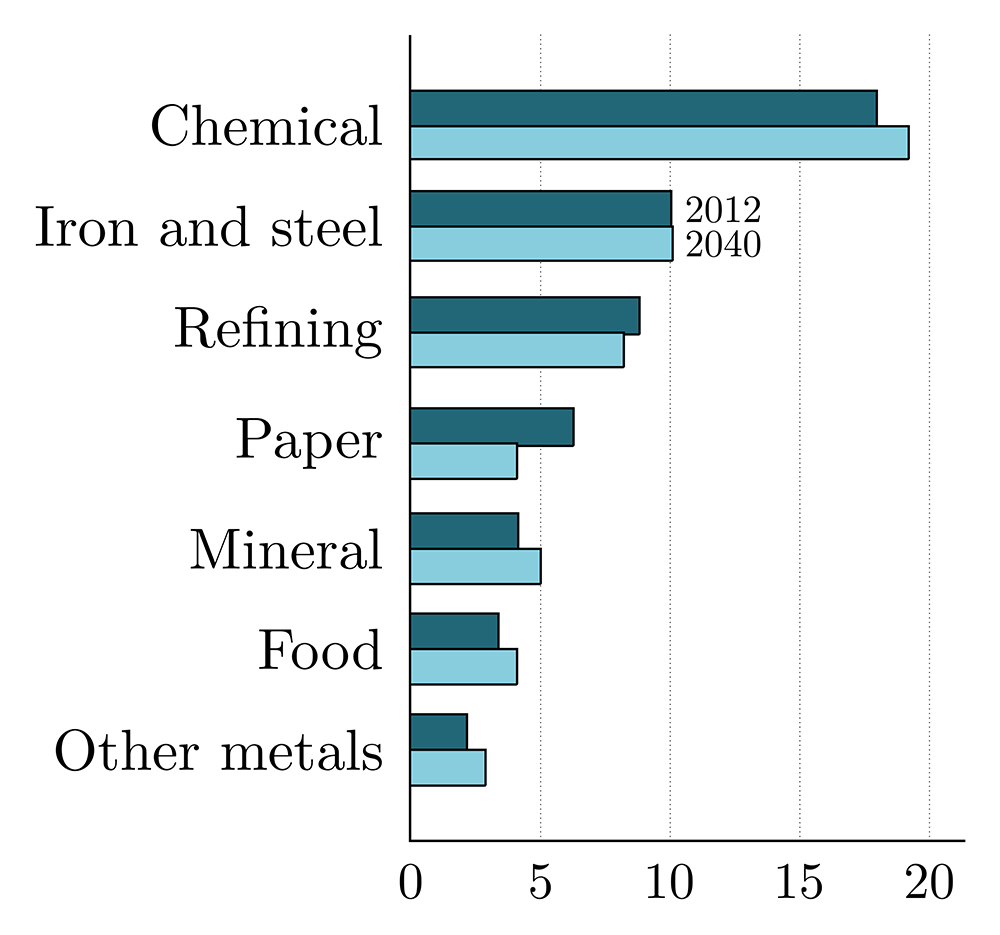
Figure 3. Percentage of global daily water usage, per branch of industry.
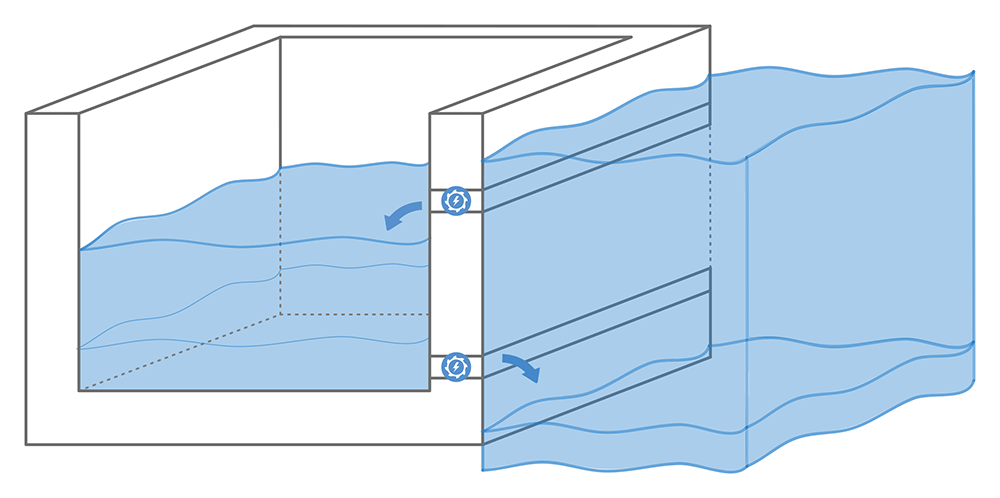
Figure 4. Concept of the tidal storage system.
An additional advancement in the domain of electric energy-producing facilities that can be deployed in industrial environments comes in the form of energy islands. Energy islands are electric energy harvesting structures consisting of two or more electric energy sources. The term energy islands denote floating, artificially made, structures, and not natural islands with installed renewable, or other, energy-producing facilities. Also, inland facilities consisting of two or more (electric) energy-producing sources can be considered energy islands. In any case, several salient goals should be achieved by energy island utilization. Energy islands enable the maximization of available energy utilization by exploiting more than one energy source at the same location. Also, the footprint of renewable energy sources is effectively reduced if energy islands are deployed. Moreover, investment costs can be reduced since mooring equipment and structures that hold the energy harvesting equipment in place can be modular and integrated and thus more reliable and easier to repair and maintain. Similarly, power electronics systems could be modularized or synthesized, etc.
Currently, several research projects are being conducted and aim to integrate different electric energy sources. Notably, PV and offshore wind systems, PV and tidal energy harvesting systems, and wind and wave energy capturing systems are combined and deployed jointly. The largest technical/technological difficulty with the energy island concept lies in the mentioned supporting structures and mooring equipment. The development of these elements has essentially just begun and those are the topics of ongoing research endeavors (link).
III. Overview of electric energy storage facilities for industrial environments
The industrial sector technologically and technically could benefit from using various storage systems as much as the power systems, if not even more(link). The advantages that energy storage systems bring are decreased electricity transmission losses (increase in overall efficiency), increased reliability of energy supply, decreased congestion problems, better demand side management, more flexible peak consumption management (including peak clipping, valley filling, load shifting, etc.), diminished problems associated with renewable resources intermittency, postponement of infrastructure upgrades, mainly considering overhead lines, cables, and transformers, increased power quality, increased network stability, etc.,22–24. Moreover, there are several novel features and services that storage systems could enable. Depending on the type of storage system, second-to-second, minute-to-minute or longer time-spans frequency regulation schemes could be put into practice25. Demand bidding programs promote large consumers to activate curtailment mechanisms, during the network’s critical loading conditions, in return for financial gains26. Storage systems could facilitate the implementation of such procedure significantly. Storage systems will enable elaborate energy management schemes to be implemented in industrial facilities. Peak sharing is scheme in which large independent prosumers coordinate their consumption and production so that none of them reaches consumption peaks, over which increased prices are actuated27, etc.
Still, several obstacles are slowing down the proliferation of storage systems in industrial settings and power systems in general. The first problem is the investment costs, i.e. price of these systems. The prices of storage systems are expected to fall, especially as pertaining technologies evolve9, but to render the utilization of storage systems financially feasible in foreseeable future, diverse financial incentives must be put into practice. Investors simply necessitate more secure and transparent return of investment estimates. The problem simply is that someone must pay those financial incentives. For example, transmission and distribution systems operators do not eagerly anticipate prosumer coordination via peak sharing mechanisms, at least not in a general case and especially if short time periods are considered. Transmission and distribution systems operators would not be able to capitalize on the actuation of peak consumption prices and instead of increasing revenue streams because of higher prices, they would effectively lose money, if peak sharing was utilized. Naturally, the peak sharing should postpone infrastructure investments and thus help the transmission and distribution systems operators also, but it should be taken into account that oftentimes short-term gains overshadow long-term gains, when the human factor is considered. And even if fully objective reasoning is employed, it could turn out that short-term gains are larger than long-term gains (for example, infrastructure upgrades are simply not necessary for the given installed load groups). Similar unfavorable scenarios could be contemplated for other financial incentives. Hence, the larger the number of financial instruments that can be potentially deployed, the larger the possibility of positive financial prospects will be, in the context of energy storage. On the other hand, all these instruments necessitate sophisticated regulatory frameworks, which provide a legal substrate for the instruments’ utilization12,28. Unfortunately, even developed countries have not incorporated storage system utilization into their policies and regulations, but have recognized this as a problem (link)29. Moreover, the fact that the industrial facilities have to exchange information about the operating conditions of the storage systems with the transmission and distribution systems operators imposes the problem of data privacy. Similarly, since the storage systems are controllable and, in many security aspects, dangerous assets, advanced cyber security systems must be implemented25.
Regarding certain storage systems, particularly battery storage systems, and thermal storage systems, even technological maturity could be considered a problem. Nevertheless, it certainly is the case that a myriad of other storage systems is already available. Figure 5 depicts a number of storage systems that can be already found in the field20,22,30–32. Actually, the number of possible storage systems that could be considered in near future for utilization in industrial facilities is almost an order of magnitude larger. Admittedly, most of those not represented in Figure 5 are either in the development phase or in the pilot project testing phase, but have shown promising results5,22,33,34. Notably, small-scale pumped-hydro storage systems are becoming technically and financially feasible, in addition to already addressed tidal-storage systems. Small-scale pumped hydro, outlined in Figure 6, can be installed in industrial environments.
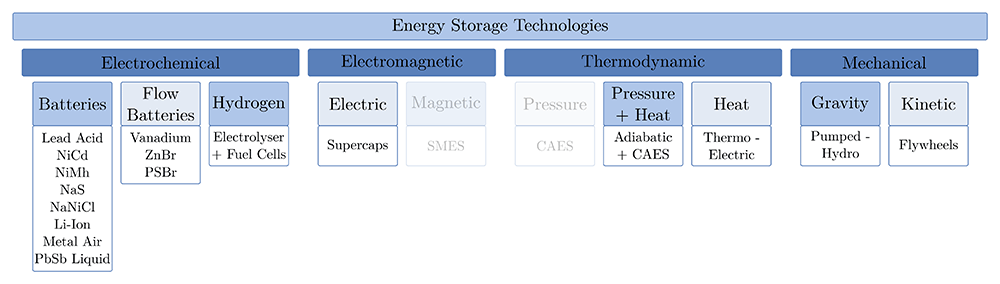
Figure 5. Facilities for electric energy storage, to be used in industrial facilities.
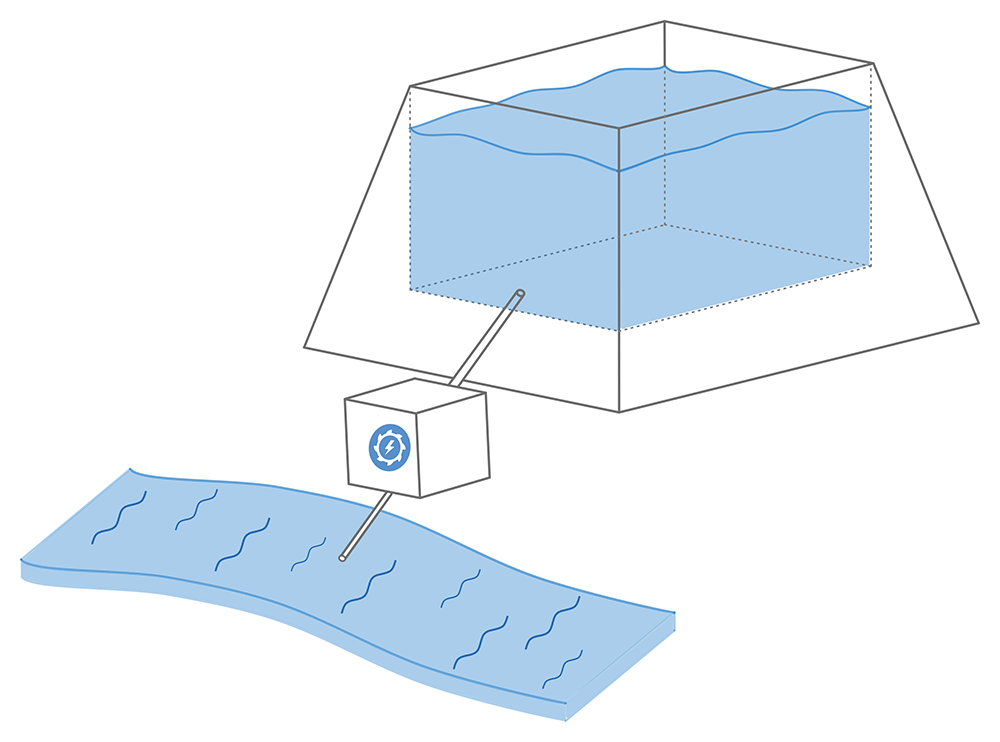
Figure 6. Concept of the small-scale pumped-hydro storage system.
Construction companies are already including the building of suitable water docks and pools in their portfolio (link)5. Existing water surface, although advantageous, is not necessary. Two artificial water pools can be utilized, but the problem of water evaporation and water drainage into the ground, i.e. self-discharge, must be otherwise solved. The cumulative installed power of the drives installed in small-scale pumped-hydro systems is 5 MW or smaller. These storage systems can be combined with floating or other PV installations. These structures are colloquially called energy hills, but they fall under the mentioned energy island concept also. Using a PV system together with a small-scale pumped hydro storage system brings several advantages. The water evaporation is significantly decreased, land utilization is better, PV and storage systems can be considered as one, self-sufficient, system, and its control can be modularized, etc. In addition to these storage systems utilizing water and pertaining water potential energy, other gravity-based storage systems, such as lagoon storage, deep shaft storage, artificial basin storage, etc., are increasingly addressed35. Also, small-scale compressed air energy storage became a promising storage facility, particularly for industrial applications5,33.
When this energy storage diversity is compared with the spectrum of branches of the industry, it becomes clear that possible meaningful combinations are truly numerous. In this context, batteries can be considered as a ‘general-purpose’ solution, while the applications of other storage systems are rather industry dependent. For example, compressed-air energy storage systems correspond naturally with the mining industry. Heat-capturing systems are expected to be used in metallurgy and similar branches of industry. Hydrogen storage and/or utilization systems will be extensively used in chemical and petrochemical industrial facilities, etc.,5,31. Nonetheless, which storage should be used in a particular application is generally a rather difficult choice to make. A non-exhaustive list of features that must be addressed before the type of storage is chosen: possible storage capacity range, dispatchable power, depth of discharge, discharge time, efficiency in various forms, cycling capacity, investment, operation and maintenance costs, self-discharge, mass and volume densities of energy, difficulty in monitoring and controlling the pertaining equipment, operational constraints, reliability, safety, environmental aspects, etc., (link)19,30. Naturally, none of the storage systems excels in a few of the features, let alone in all of them. The problem is somewhat easier to address if the graphs depicted in Figure 7 and Figure 8 are regarded. Using such graphs (they can be made essentially for all salient features of storage systems), narrowing down the choices becomes a more straightforward task30,31.
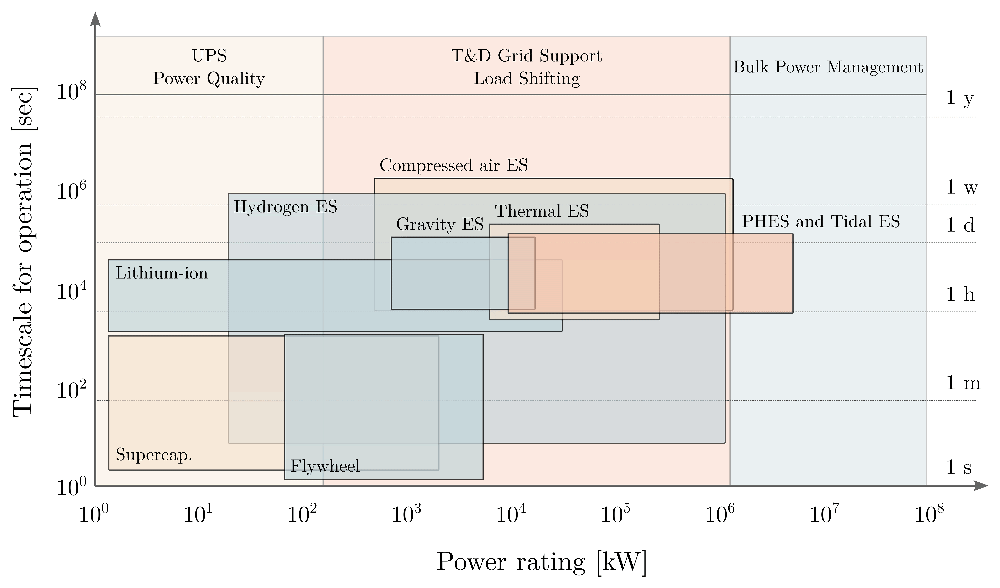
Figure 7. Distribution of storage systems.
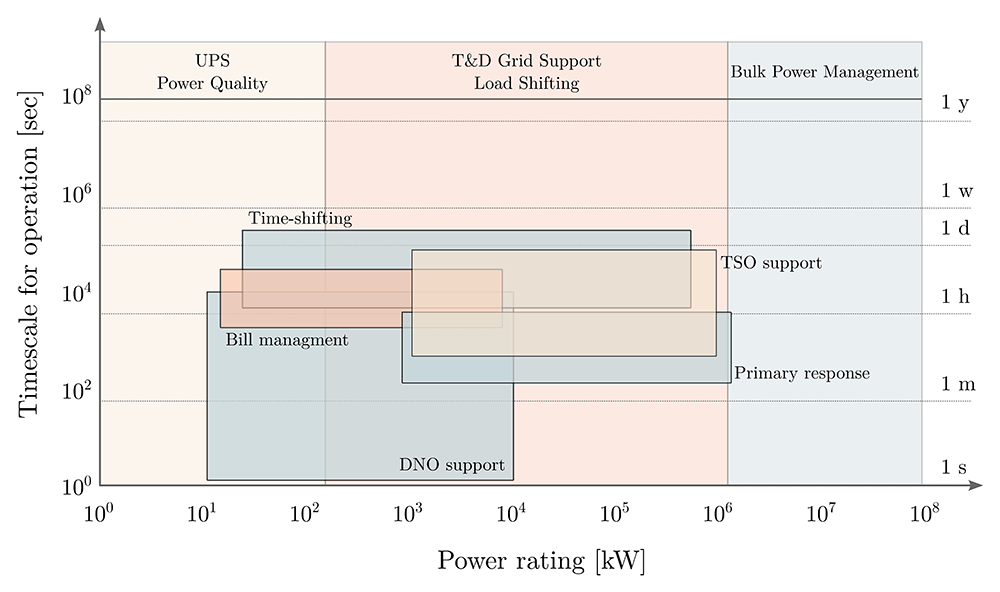
Figure 8. Distribution of energy storage services.
IV. Overview of electric energy management schemes for industrial environments
Energy utilization in industrial facilities is dominantly considered during the design stage of the industrial process. During the operation, the electric energy utilization is optimized and regulated only with respect to grid operators’ demands and instructions, which is usually done on long time spans (the seasonal production-consumption synchronization, the planned maintenance-caused loss of power, deployment of reactive power production assets, etc.). In other words, the electricity consumption is adjusted with respect to externalities, and a much lesser extent with respect to the internal energy dynamics of the factory setting. Nevertheless, although electric energy management in modern industrial facilities is not optimal, good knowledge of load models, precise forecasting in various forms, and reliable and regulated factory production processes enable reasonably efficient factory operation with respect to electric energy utilization.
This setting will be severely disrupted by the propagation of new electric energy production and storage facilities and by the implementation of many services and schemes that shall create additional revenue streams coming from production and storage assets. Manual and long time-span energy utilization manipulations simply will not suffice. Fortunately, the researchers have already devised a great number of energy management schemes that could find extensive use in industrial environments. Figure 9 summarizes the most notable energy management schemes36–39. In the first table, schemes are grouped in accordance with the underlying approach that was utilized. The second table separates some schemes depending on whether the scheme is centralized or decentralized. All these methods could find utilization in near future, but are also characterized by features that primarily limit their applicability, scalability, and ease of use. Energy management schemes that fall under the umbrella of classical energy management schemes can become analytically overly complex even for relatively simple industrial facilities. Moreover, inherent control law discontinuities can impose both non-optimal operating points and stability problems, particularly rule-based schemes36,40,41. Heuristic and metaheuristic methods can be very effective once deployed, but necessitate expert knowledge or significant training time, which results in long development and testing procedures. It is hard to imagine an ‘out-of-the-box’ energy management product based on these schemes37,42. So-called intelligent methods, similar to heuristic and metaheuristic methods, necessitate training procedures that prolong the development time. Moreover, the internal dynamics of these control structures are rather hard, if not impossible, to grasp and are correspondingly unintuitive39,43. This complicates improvements incorporation, reconfigurations, and analysis of failures. Emerging methods, in addition to intuitiveness that is of similar order as for intelligent methods are generally devised for domains that are hard to analytically and quantitatively define and control44,45. Industrial facilities and processes in most cases can be precisely analytically and quantitatively defined. Hence, these methods do not correspond fully to the addressed scope of the application. Additionally, electrical engineers are simply not familiar with these methods, and communication barriers between electrical engineers and engineers implementing these methods are high, at the moment. Regarding centralized and distributed management schemes, the centralized ones are more promising simply because industrial settings and factories are not as complex and as geographically spread out as power systems, whereas distributed (and decentralized) management schemes can find application in network energy management problems46–48. Design and implementation complexity associated with the distributed management schemes is not offset by functionalities that are necessary for industrial applications. Distributed energy management schemes could be utilized meaningfully only in the largest factory settings49.
Hence, it is not a trivial task to choose an adequate energy management scheme. Fortunately, although academically interesting, many of mentioned approaches seem to be of little use for practical applications and can be disregarded. Moreover, even when an appropriate scheme is chosen, development and implementation processes sometimes last for years. Table 3 offers some of the optimization goals of interest to industrial facilities38.
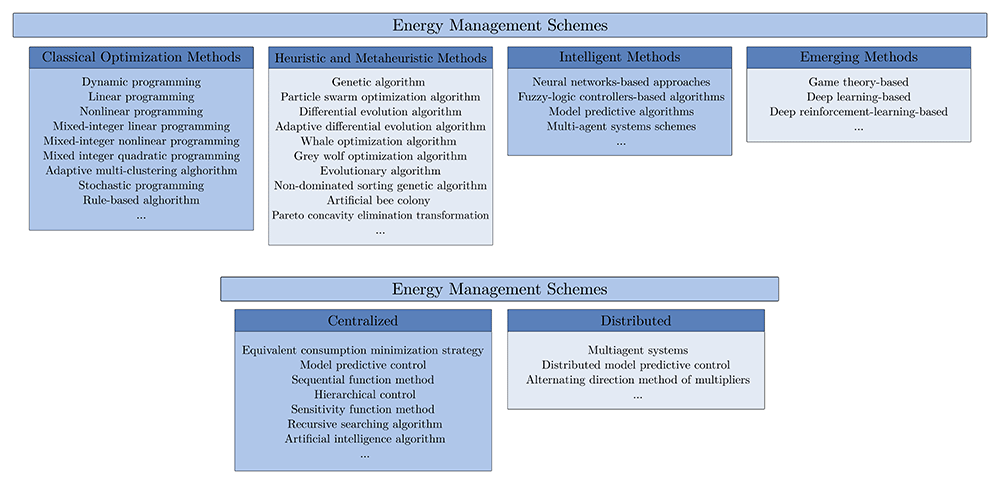
Figure 9. Energy management schemes grouped by type (top table) and notable centralized or distributed solutions (bottom table).
Table 3. Optimization Methods Goals.
| Optimal storage management | Load shedding |
|---|
| Demand response program | Black-start |
| Cost minimization | Postponement of upgrades |
| Energy scheduling | Maintenance costs |
| Operating time | Voltage regulation |
| Reliability of operation | Power quality |
| Losses minimization | Reliability |
| Lower GHG emissions | Voltage support |
| Uninterrupted power flows | Frequency regulation |
| Stable power flows | Ride-through support |
| Peak shaving | Transportation applications |
It is worth emphasizing that energy management schemes usually ought to incorporate most of these optimization goals and not just one or a few. Actually, it is more probable that, for complex factories, the list of goals given in Table 3 is not exhaustive. Additionally, the list of constraints is significantly longer38. Hence, designing energy management protocols for modern industrial facilities is all but a simple task.
Besides design complexity, among others, the following problems will have to be addressed: solutions’ scalability, applicability and implementability, and licensing, tuning, training, and testing procedures. The design complexity, solutions’ scalability, and applicability are technological and academic problems. The licensing and tuning, training, and testing of potential solutions are technical challenges. It will be interesting to see how mentioned technological problems will be addressed and how the evolution of energy management schemes will progress. As indicated previously, these are many paradigms already proposed, but how they will perform in praxis and en masse remains to be seen.
Excluding licensing, the remaining technical problems seem less difficult to solve. It is the authors’ opinion that licensing will be difficult, especially if intelligent or emerging schemes are regarded. To take a simple example, it will be difficult to prove that certain energy management product or feature will behave reliably and even predictably in different scenarios if it is based on deep-learning algorithms. For energy management procedures in industrial environments, there is much less space for errors, in comparison with ICT technologies, for example. Hence, the licensing procedures ought to be much more stringent. On the other hand, tuning, training, and testing of energy management schemes will be significantly facilitated by the utilization of adequate digital twins of industrial facilities. Primarily, real-time digital twin execution, within various hardware-in-the-loop (HIL) paradigms, even faster than real-time execution, will enable provide a playfield for exactly these processes. Moreover, in this regard, the ‘before real-time’ testing concept will play important role in the development of energy management schemes for important processes such as those seen in industrial environments. ‘Before real-time’ testing denotes testing procedures executed in real-time or faster than real-time, using HIL devices, before the energy management scheme is deployed; the comprehensive factory digital twin is developed and various inputs to the digital twin are provided (such as weather forecast, pricing conditions, etc.). This is important since it will provide reliable behavioral results before scheme activation, hence enabling early errors or suboptimal behavior detection. Also, many different scenarios will be examined and the one with the best result will be deployed. This is particularly relevant if weather forecasting is considered, for example. Another important feature is that these testing procedures will be continuously and perhaps autonomously executed. Naturally, advanced energy management schemes will be trained on a ‘next-to-real-thing’ environment, thus securing more reliable operation. Also, long convergence times, a trait of many management schemes, will not be such a significant problem. Still, although paradigmatically digital twining in general is not a new concept, novel comprehensive models of factory assets and reliable data sets are necessary50.
V. Concluding remarks
The electricity utilization in industrial environments will change significantly in the following years. Three main pillars of this change will be in how electric energy is produced, how it is stored in how it is managed. This paper provides some insight into how this evolutive process might progress. Specifically, novel electric energy production facilities that could be installed in industrial settings were addressed. Next, which energy storage assets are most meaningful to use in industrial applications was analyzed. Moreover, a short survey of schemes that have been designed for energy management in industrial or similar contexts is given. Finally, several impediments to the proliferation of these assets were explicated and how their influence can be mitigated or evaded was examined.
Data availability
No underlying data are associated with this article.
Acknowledgments
The authors would like to thank the European Commission and their partners on the European Horizon 2020 project “CREATORS - CREATing cOmmunity eneRgy Systems” for their help and support. For further information visit https://www.creators4you.energy/.
Faculty Opinions recommendedReferences
- 1.
International Energy Agency:
World Energy Outlook 2019. OECD, 2019. Reference Source
- 2.
T. I. R. E. Agency (IRENA):
Renewable Energy Auctions: Analysing 2016 (Executive Summary).
Reference Source
- 3.
IEA: World Energy Outlook 2014. 2014. Publisher Full Text
- 4.
European Environment Agency: The European environment — state and outlook 2020 - Knowledge for transition to a sustainable Europe. 2020. Reference Source
- 5.
Elio J, Phelan P, Villalobos R, et al.:
A review of energy storage technologies for demand-side management in industrial facilities.
J Clean Prod.
2021; 307: 127322. Publisher Full Text
- 6.
Gellings CW, Wikler G, Ghosh D:
Assessment of U.S. Electric End-Use Energy Efficiency Potential.
Electr J.
2006; 19(9): 55–69. Publisher Full Text
- 7.
Sadamori K, Motherway B:
Energy Efficiency 2021.
Energy Effic.
2021; 103. Reference Source
- 8.
Nguyen TT, Martin V, Malmquist A, et al.:
A review on technology maturity of small scale energy storage technologies.
Renew Energy Environ Sustain.
2017; 2: 36. Publisher Full Text
- 9.
IRENA: Electricity storage and renewables: Costs and markets to 2030. 2017. Reference Source
- 10.
Schulze M, Nehler H, Ottosson M, et al.:
Energy management in industry - a systematic review of previous findings and an integrative conceptual framework.
J Clean Prod.
2016; 112(5): 3692–3708. Publisher Full Text
- 11.
Cooremans C, Schönenberger A:
Energy management: A key driver of energy-efficiency investment?
J Clean Prod.
2019; 230: 264–275. Publisher Full Text
- 12.
Abdelaziz EA, Saidur R, Mekhilef S:
A review on energy saving strategies in industrial sector.
Renew Sustain Energy Rev.
2011; 15(1): 150–168. Publisher Full Text
- 13.
May G, Stahl B, Taisch M, et al.:
Energy management in manufacturing: From literature review to a conceptual framework.
J Clean Prod.
2017; 167: 1464–1489. Publisher Full Text
- 14.
IEA: World Energy Outlook 2014. 2014. Publisher Full Text
- 15.
Schüwer D, Schneider C:
Electrification of industrial process heat: long-term applications, potentials and impacts.
TECHNOLOGY.
12. Reference Source
- 16.
Brolin M, Rootzén J, Fahnestock J:
Industry’s Electrification and Role in the Future Electricity System - A Strategic Innovation Agenda. 2017. Publisher Full Text
- 17.
Sorknæs P, Johannsen RM, Korberg AD, et al.:
Electrification of the industrial sector in 100% renewable energy scenarios.
Energy.
2022; 254(Part B): 124339. Publisher Full Text
- 18.
The International Renewable Energy Agency (IRENA): Renewable Energy Options For The Industry Sector: Global And Regional Potential Until 2030. 2015. Reference Source
- 19.
Swinton T, Luo C:
Advancing Renewables in the Manufacturing Sector Final Report. 43. Reference Source
- 20.
Çelik D, Meral ME, Waseem M:
Investigation and analysis of effective approaches, opportunities, bottlenecks and future potential capabilities for digitalization of energy systems and sustainable development goals.
Electr Power Syst Res.
2022; 211: 108251. Publisher Full Text
- 21.
Dalla Longa F, Nogueira LP, Limberger J, et al.:
Scenarios for geothermal energy deployment in Europe.
Energy.
2020; 206: 118060. Publisher Full Text
- 22.
Georgious R, Refaat R, Garcia J, et al.:
Review on Energy Storage Systems in Microgrids.
Electronics.
2021; 10(17): 2134. Publisher Full Text
- 23.
Ajanovic A, Hiesl A, Haas R:
On the role of storage for electricity in smart energy systems.
Energy.
2020; 200: 117473. Publisher Full Text
- 24.
Ding YM, Hong SH, Li XH:
A Demand Response Energy Management Scheme for Industrial Facilities in Smart Grid.
IEEE Trans Ind Inform.
2014; 10(4): 2257–2269. Publisher Full Text
- 25.
Hossain MA, Pota HR, Hossain MJ, et al.:
Evolution of microgrids with converter-interfaced generations: Challenges and opportunities.
Int J Electr Power Energy Syst.
2019; 109: 160–186. Publisher Full Text
- 26.
Li YC, Hong SH:
Real-Time Demand Bidding for Energy Management in Discrete Manufacturing Facilities.
IEEE Trans Ind Electron.
2017; 64(1): 739–749. Publisher Full Text
- 27.
Whitham J:
Peak sharing - A win-win solution for reducing peak demand.
Diesel Gas Turbine Worldw.
1996; 28(3). Reference Source
- 28.
Blass V, Corbett CJ, Delmas MA, et al.:
Top management and the adoption of energy efficiency practices: Evidence from small and medium-sized manufacturing firms in the US.
Energy.
2014; 65: 560–571. Publisher Full Text
- 29.
Study on energy storage - Contribution to the security of the electricity supply in Europe. EU NEIGHBOURS east, 2020; (accessed Oct. 28, 2022). Reference Source
- 30.
AL Shaqsi AZ, Sopian K, Al-Hinai A:
Review of energy storage services, applications, limitations, and benefits.
Energy Rep.
2020; 6 Supplement 7: 288–306. Publisher Full Text
- 31.
He W, King M, Luo X, et al.:
Technologies and economics of electric energy storages in power systems: Review and perspective.
Adv Appl Energy.
2021; 4: 100060. Publisher Full Text
- 32.
Moore J, Shabani B:
A Critical Study of Stationary Energy Storage Policies in Australia in an International Context: The Role of Hydrogen and Battery Technologies.
Energies.
2016; 9(9): 674. Publisher Full Text
- 33.
Ibrahim H, Ilinca A, Perron J:
Energy storage systems—Characteristics and comparisons.
Renew Sustain Energy Rev.
2008; 12(5): 1221–1250. Publisher Full Text
- 34.
Khodadoost Arani AA, Gharehpetian GB, Abedi M:
Review on Energy Storage Systems Control Methods in Microgrids.
Int J Electr Power Energy Syst.
2019; 107: 745–757. Publisher Full Text
- 35.
Sangster AJ:
Massive energy storage systems enable secure electricity supply from renewables.
J Mod Power Syst Clean Energy.
2016; 4(4): 659–667. Publisher Full Text
- 36.
Xie P, Guerrero JM, Tan S, et al.:
Optimization-Based Power and Energy Management System in Shipboard Microgrid: A Review.
IEEE Syst J.
2022; 16(1): 578–590. Publisher Full Text
- 37.
Zia MF, Elbouchikhi E, Benbouzid M:
Microgrids energy management systems: A critical review on methods, solutions, and prospects.
Appl Energy.
2018; 222: 1033–1055. Publisher Full Text
- 38.
Ahmad Khan A, Naeem M, Iqbal M, et al.:
A compendium of optimization objectives, constraints, tools and algorithms for energy management in microgrids.
Renew Sustain Energy Rev.
2016; 58): 1664–1683. Publisher Full Text
- 39.
García Vera YE, Dufo-López R, Bernal-Agustín JL:
Energy Management in Microgrids with Renewable Energy Sources: A Literature Review.
Appl Sci.
2019; 9(18): 3854. Publisher Full Text
- 40.
Bukar AL, Tan CW, Yiew LK, et al.:
A rule-based energy management scheme for long-term optimal capacity planning of grid-independent microgrid optimized by multi-objective grasshopper optimization algorithm.
Energy Convers Manag.
2020; 221: 113161. PubMed Abstract
| Publisher Full Text
| Free Full Text
- 41.
Mansouri SA, Ahmarinejad A, Nematbakhsh E, et al.:
Energy management in microgrids including smart homes: A multi-objective approach.
Sustain Cities Soc.
2021; 69: 102852. Publisher Full Text
- 42.
Thirugnanam K, Moursi MSE, Khadkikar V, et al.:
Energy Management of Grid Interconnected Multi-Microgrids Based on P2P Energy Exchange: A Data Driven Approach.
IEEE Trans Power Syst.
2021; 36(2): 1546–1562. Publisher Full Text
- 43.
Querini PL, Chiotti O, Fernádez E:
Cooperative energy management system for networked microgrids.
Sustain Energy Grids Netw.
2020; 23: 100371. Publisher Full Text
- 44.
Battula AR, Vuddanti S, Salkuti SR:
Review of Energy Management System Approaches in Microgrids.
Energies.
2021; 14(17): 1–32. Reference Source
- 45.
Al-Othman A, Tawalbeh M, Martis R, et al.:
Artificial intelligence and numerical models in hybrid renewable energy systems with fuel cells: Advances and prospects.
Energy Convers Manag.
2022; 253: 115154. Publisher Full Text
- 46.
Kamal F, Chowdhury B:
Model predictive control and optimization of networked microgrids.
Int J Electr Power Energy Syst.
2022; 138: 107804. Publisher Full Text
- 47.
Olivares DE, Cañizares CA, Kazerani M:
A Centralized Energy Management System for Isolated Microgrids.
IEEE Trans Smart Grid.
2014; 5(4): 1864–1875. Publisher Full Text
- 48.
Karavas CS, Kyriakarakos G, Arvanitis KG, et al.:
A multi-agent decentralized energy management system based on distributed intelligence for the design and control of autonomous polygeneration microgrids.
Energy Convers Manag.
2015; 103: 166–179. Publisher Full Text
- 49.
Shi W, Xie X, Chu CC, et al.:
Distributed Optimal Energy Management in Microgrids.
IEEE Trans Smart Grid.
2015; 6(3): 1137–1146. Publisher Full Text
- 50.
Zhang Y, Gatsis N, Giannakis GB:
Robust Energy Management for Microgrids With High-Penetration Renewables.
IEEE Trans Sustain Energy.
2013; 4(4): 944–953. Publisher Full Text