Background
Since the beginning of the COVID-19 pandemic, a lot of emphasis has been placed on the suffering of women giving birth (Aydin & Aktaş, 2021).
Pregnant and breastfeeding women have been negatively affected during this period regarding both the physical and mental health (Mayopoulos et al., 2021; WHO, 2020).
A key cause of poor maternal health relates to a traumatic birth experience as documented in previous research (Ayers et al., 2016; Greenfield et al., 2016; WHO, 2018). Women recognized their own potential vulnerability as well as that of their babies in the process. Uncertainty about what would happen was combined with a strong desire for safe, supportive, kind, respectful, and empathetic care during labor. These apply to professionals and birth partners, and everyone involved in the care process and environment (Downe et al., 2018).
Healthcare professionals involved in perinatal care faced a significant impairment in carrying out their work impairment, due to general Covid restrictions. Given the pandemic scenario, a rapid change in protocols and practices suddenly occurred within the hospitals.
The birth environment has been affected, influencing the quality and nature of interactions between care providers, women, and their families. Perinatal health care workers did not have much time to reflect or gather evidence and had to adjust their practices (Horsch et al., 2020). The impact of the pandemic on the maternity wards and the traumatic stress on perinatal workers has been shown to affect directly and indirectly the quality of care provided to women (Stuijfzand et al., 2020).
Aim
The aim of this review is to identify, categorize and reflect on the most relevant aspects of perinatal workers’ experience, especially obstetricians, after the first wave of Covid-19 up till now. Our focus on the experience of healthcare workers aims to address some of the most relevant issues to acknowledge their role and improve the organization of health systems in order to face future pandemics.
Methods
Design
We conducted a scoping review, in order to identify knowledge gaps and clarify concepts (Munn et al., 2018). We have followed the five stage-process based on Arksey and O’Malley (2005) to: (1) identify the research question; (2) identify relevant studies; (3) study selection; and (4) collate, summarize, and report the results.
Sample
Articles containing information about aspects of the experiences of obstetricians related to the Covid-19 pandemic.
Exclusion criteria
We excluded studies which were: not specific for perinatal workers, conducted in a low-income country, not in the English language or not specific to the aim of the study.
Data collection
The literature search was conducted from September to December 2021 by the first author, using the following databases: Cochrane, Embase and PubMed.
The following search terms and Boolean operators were used to identify the main body of the literature and further citations have been retrieved looking at “similar articles/cited by/references” of the relevant studies:
covid AND (“midwifery” OR “midwifery” OR “midwives” OR “midwife” OR “obstetric” OR “obstetrically” OR “obstetrics OR “obstetrics” OR “obstetrical”) AND (attitude OR belief OR experience OR mentality OR psychology) (“Hospitals, Maternity” OR “Obstetrics and Gynecology Department, Hospital”) AND “COVID-19”
In total 1290 studies have been identified. After removing duplicates, unique citations were screened by title and abstract to determine if the articles met the inclusion criteria, and 1180 of these were excluded. The remaining 110 full text articles were screened for relevance and 66 full texts carefully read by two authors. After full text reading 22 studies were selected (Figure 1).
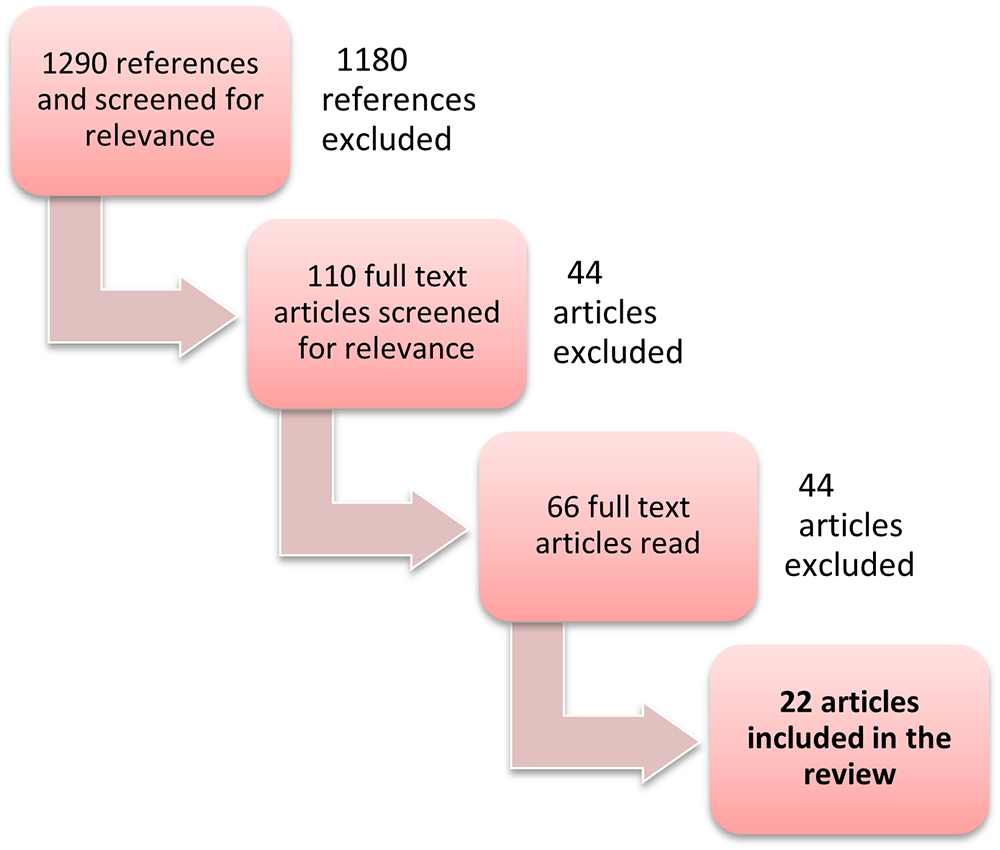
Figure 1. A Studies selection.
Data analysis
The 22 articles have been classified according to the following variables: first author and year of publication; study design; country in which the study was conducted; number of participants (and their characteristics); and main contributions. Two authors extracted data from each selected article.
Findings
A summary of variables extracted from each article is detailed in Table 1. These included demographic variables (e.g., country where the study was done, year of publication); study methods (e.g., design, sample size); type of sample (when present); and the outcome variables of interest for this review that are discussed below. We categorized results for main themes as follows (Table 2).
Table 1. Results.
| First author | Country | Method | Sample | Main findings |
|---|
| 1 | Costa et al. (2021) | Brazil | Mixed-methods | 12 health managers 50%
female managers | Main challenges: virus fears’, doubts related to reliability of evidence, limited
resources, need for mental health support. |
| 2 | Van Manen et al. (2021) | Netherlands | Survey | 495 respondents
Obstetrician 34 (6.9%)
Resident obstetrics 22
(4.4%) Female 481 (97.6%) | Advantages: decrease in the number of appointments during prenatal and
postnatal care (50.1%); more women choosing home birth (57.5%); increase
of telehealth services. Disadvantages: limited partners access to antenatal
care, (71.1%); limited community midwife access to labour care (56.8%). More
tranquility due to the restricted number of family and friends’ visits (59.8%);
doubts on safety maternity care due to policy changes (48.0%). |
| 3 | Iorga et al. (2021) | Romania | Survey | 94 obstetrics and
gynecology Female 65
(69.15%) | High infection level of SARS-Cov-2 in doctors /reported 6 months without days
off/ emerging of health issues / use of pharmaceutical products to treat work
related stress (10%), experience of sleep disorders (25%) and appetite loss.
Negative effects of wearing PPE and strict protection protocols. |
| 4 | Del Piccolo et al. (2021) | Ita | Cross-sectional survey | 481 responders-Female
421 (83.7%) | Psychological distress (GHQ-12 ≥3) was reported in 51.1% of respondents and
was associated with personal, interpersonal, and organizational factors. |
| 5 | Bradfield et al. (2021) | Australia | Cross-sectional survey | 78 medical practitioner
-female 66 (84.6%) | Perinatal workers were concerned of exposure to COVID-19 /midwifery students
felt isolated/ greater stressors reported were health and family-related concerns. |
| 6 | Szabo et al. (2021) | Australia | Mixed methods | 86 doctors - female (86%) | Major changes in guidelines and in health service delivery Information derived
from colleagues / obstetricians reported being adequately informed to care for
Covid positive women. Also described workforce disruptions with consequences
on a personal and professional level. |
| 7 | Kiefer et al. (2021) | US | Survey | 558 respondents - female
463 | Report of high post-traumatic stress (PTS) symptoms were (37.8%), diagnosis of
COVID-19 (9.5%), infected friends or family members (64.5%). Strong association
between PTS symptoms and female sex or prior traumatic experience. |
| 8 | Shah et al. (2020) | UK | cross-section survey-
based | 207 respondents - female
167 (81.1 %) | Greater prevalence of major depressive disorder and generalized anxiety disorder
as compared to the UK general population (more common amongst female
doctors). Continuously updating guidelines as the most significant element for
work-related changes to mental health. Respondents reported difficulties in
sharing with colleagues their mental health matters. |
| 9 | Khot & Kumar (2020) | Australia | Semi-structured
interviews | 12 practitioners | Bringing value to connection regardless the imposed distance
Roles and corresponding responsibilities brought anxieties to clinicians/ Adapt to
practices variations/ Workflow adaptations/Implications for future practice. |
| 10 | Yalçin Bahat et al. (2020) | Turkey | Survey | 253 respondents - female 135 (54.4%) | Respondents reported: fear of getting infected due to contact with Covid positive
pregnant women (76.4%); fear of getting sick (74.4%); desperation due to the
pandemic (64.8%); impact on their family lives (66.5%); moving away from their
families due to the pandemic (72.4%). |
| 11 | Takeshi Umazume et al. (2021) | Japan | Survey | 503 respondents - female
421 (83.7) | Respondents referred to experiencing a physical and mental stress equal to or
greater than the worst catastrophe they had ever experienced (76%).
A greater number of infected patients correlated to high mental and physical
stress in clinicians. Greater stress was reported when wearing complete PPE
during labour care of non-infected women. |
| 12 | Hantoushzadeh et al. (2021) | Iran | Descriptive
phenomenological | 4 gynecologists | “Fear of Disease”: Reducing maternal referrals for prenatal and postnatal care”,
“The preference of mothers to give birth in safe centers “, “concerns on maternity
complications “, and “ Workplace insecurity “. “Burnout”, “Increased workload “,
“Reduced family relationships “and “lack of motivational factors” and “Lessons
Learned from the COVID-19 Pandemic”: adaptation to new conditions” and “The
need to strengthen and support maternity health services “. |
| 13 | Gutschow & Davis-Floyd (2021) | USA | Follow up study | 28 respondents: 1/3
obstetricians, 2/3 midwives | Key lessons learned were to improve testing and accessing PPE for providers
and customers, the necessity to integrate hospital and community providers;
modifications of restrictive protocols related to birth companions, rooming-in,
skin-to-skin and breastfeeding.
Pandemic offered an opportunity to transform maternity care in the United States
toward a more integrated and sustainable model. |
| 14 | Gonzalez et al. (2020) | USA | Commentary | | A report of mental health initiatives and outcomes undertaken by academic
medical centers to support healthcare workers during the pandemic. |
| 15 | Alfieri et al. (2020) | Italy | Report | | Changes in antepartum, intrapartum, and postpartum care |
| 16 | Wilson et al. (2021) | Australia | Report | | Collaboration, forward planning, and having access to PPE are key. To avoid
stress and burnout, it's important to think about clinicians’ needs. Availability to
emotional and psychological support throughout the pandemic. |
| 17 | Madkhali et al. (2021) | Saudi Arabia | Descriptive | | Changes in antepartum, intrapartum, and postpartum care |
| 18 | Relph et al. (2021) | UK | National survey. | 101: 69,1% obstetricians,
18,2% residents, 11,1
midwives | Reduction in antenatal appointments (70%) and in postnatal appointments (56%);
incrementation of remote consultation (89%). Different protocols for gestational
diabetes screening (70%), disruption of service like home births and midwife-
led units (59%). A great reduction in emergency antenatal presentations was
reported (86%). |
| 19 | Harkness et al. (2021) | UK | Survey | 92 respondents | Changings practices related to induction of labour were reported together with
lack of evidence about around outpatient cervical ripening: the basis on which
implementations of protocol were made remain unclear. |
| 20 | Campbell et al. (2020) | USA | Descriptive | | Lessons learned from the pandemic included the importance of developing
teamwork and workflows to ensure safety to patient and healthcare worker. |
| 21 | Ross-Davie et al. (2021) | USA | Descriptive | | Intrapartum care: testing of pregnant at admission for labour and birth;
approaches to labour care for asymptomatic women; timing, place, and overall
labour care; PPE during labour care –clinicians, women, and birth partners;
protocols for using birthing pools and waterbirth; foetal monitoring, newborn
care. |
| 22 | Montagnoli et al. (2021) | ITA | Scoping review | | Decreased number of contacts, guaranteeing appropriate care integrating care
with remote consultations. Referral to epidemic-free community centres with
interdisciplinary teams including IT experts. Delayed access for symptomatic
pregnant women is controversial as it increases the risk of
delayed detection of pregnancy complications. |
Table 2. Main themes.
| Theme | Subthemes | Reference |
|---|
| Fear of the virus | Access to protecting
equipment | Costa et al., 2021; Iorga et al., 2021 |
| Fear to infected family | Bradfield et al., 2021; Del Piccolo et al., 2021; Hantoushzadeh et al., 2021;
Iorga et al., 2021; Yalçin Bahat et al., 2020 |
| Health-related fear | Costa et al., 2021; Iorga et al., 2021; Umazume et al., 2021; Yalçin Bahat et al., 2020 |
| Changing practice due to fear | Costa et al. (2021); Iorga et al., 2021 |
Changes in the
way we provide
care | Technology for communication | Costa et al., 2021; Khot & Kumar, 2020; Szabo et al., 2021; Szabo et al., 2021;
Van Manen et al., 2021 |
Protection measure in the
birth setting | Campbell et al., 2020; Madkhali et al., 2021; Ross-Davie et al., 2021 |
| Inpatient management | Alfieri et al., 2020; Gutschow & Davis-Floyd, 2021; Harkness et al., 2021 |
| Outpatient management | Alfieri et al., 2020; Montagnoli et al., 2021; Relph et al., 2021; Van Manen et al., 2021 |
Increase of the
workload | Disruption in the workforce | Costa et al., 2021; Szabo et al., 2021 |
Continuous updating
protocols | Del Piccolo et al., 2021; Khot & Kumar, 2020 |
Full-body protective
equipment | As Iorga et al. (2021); Umazume et al. (2021) |
| Increased work hours | Costa et al., 2021; Iorga et al., 2021; Szabo et al., 2021 |
| Mental health | Psychological distress | (Hantoushzadeh et al., 2021; Iorga et al., 2021; Szabo et al., 2021); |
| Dysfunctional coping
strategies | Del Piccolo et al., 2021 |
| Being female | Del Piccolo et al., 2021; Iorga et al., 2021; Shah et al., 2020 |
Support
strategies | Psychological screening | Costa et al., 2021; Del Piccolo et al., 2021; Shah et al., 2020 |
| Mental health support | Costa et al., 2021; Del Piccolo et al., 2021; Gonzalez et al., 2020; Khot & Kumar, 2020;
Shah et al., 2020; .Wilson et al., 2021 |
| Maintaining basic needs | Gonzalez et al., 2020; Wilson et al., 2021; Yalçın Bahat et al., 2020 |
University
education | | Alfieri et al., 2020; Madkhali et al., 2021 |
Perspectives of
health managers | | Costa et al., 2021; Shah et al., 2020 |
Fear of the virus
Fear of the virus was widespread among healthcare workers (Bradfield et al., 2021; Costa et al., 2021; Hantoushzadeh et al., 2021; Iorga et al., 2021). Personal protective equipment (PPE) shortage has been shown to be a strong source of stress, especially in the beginning of the pandemic period (Costa et al., 2021; Iorga et al., 2021).
Fear to infect family members was perceived as one of the major sources of stress beyond the fear of getting infected during the provision of care (Bradfield et al., 2021; Del Piccolo et al., 2021; Yalçın Bahat et al., 2020). The concern of exposing relatives brought a lot of healthcare workers to spend time (days, nights) without going home or not meeting their families as well as maintaining protective measures when getting home (Hantoushzadeh et al., 2021; Iorga et al., 2021; Yalçın Bahat et al., 2020).
Due to health-related fear, which was eased having access to PPE (Yalçın Bahat et al., 2020), some doctors asked not to treat COVID-19 patients (Costa et al., 2021). Others increased the rate of cesarean sections to avoid intrapartum care (Iorga et al., 2021) or, started wearing excessive PPE while attending the birth of women who had no symptoms of COVID-19 (Umazume et al., 2021).
Research revealed doctors’ concern about getting covid infection related to the different ways in which they provided care. Particularly doctors who were working with infected pregnant women preferred to perform caesarean section (Iorga et al., 2021), in particular the older the doctor, the more the likelihood to perform a caesarean section (Iorga et al., 2021). As Costa et al. (2021) reported, in more than one occasion, the fear and its consequences have led to heated debates among experts with different perspectives.
Changes in the way care was provided
Changes in healthcare provision around the peripartum period were implemented. These included the introduction of technology for communication; the use of protective measures in the birth setting; and revised inpatient and outpatient management.
Introduction of technology for communication
Telehealth represents the most common solution for follow-up of women with suspected or confirmed Covid-19 or for taking care of women during standard antenatal or postnatal care (Costa et al., 2021; Khot & Kumar, 2020; Szabo et al., 2021; Van Manen et al., 2021).
Different studies highlighted new ways of communicating with staff using technology such as video conferencing (Khot & Kumar, 2020); managing very quickly a multitude of recommendations from health services and government (where the need of scientific knowledge overlaps the need of communication) as well as coping with new ways of communicating with women, partners and other clinicians (when wearing PPE but not only) (Szabo et al., 2021). Some maternal departments were provided with tablets to allow women to speak with their partners and families as visits were not allowed.
Most common protection measures in the birth setting
Due to the incipient danger of contracting Covid-19 infection, protection measures are executed to prevent transmission of SARS-CoV-2, as summarized in Table 3.
Table 3. Protection measures in the birth setting.
| Training | Compulsory infection prevention training and N95 mask fit testing (Madkhali et al., 2021). |
| Hand sanification | Availability of alcohol-based hand sanitizers were in all clinical settings (Madkhali et al., 2021). |
| Screening tool for patients | Checklist for acute respiratory infections (temperature check and symptoms assessment)
(Madkhali et al., 2021). |
Protection measures for positive
women or with symptoms. | Full personal protective equipment for staff (PPE) and particulate air (HEPA) filters)
(Madkhali et al., 2021). |
| Inpatient admission | Use of flow chart for admitted women with suspected or confirmed COVID-19; swab test for
COVID-19 to all women. (Campbell et al., 2020; Madkhali et al., 2021) |
| Early labor | Clinicians wore fluid resistant surgical mask and apron, gloves, and eye protection
(Ross-Davie et al., 2021). |
| Active labour | Clinicians wore ‘droplet’ PPE: a fluid resistant surgical mask and apron, gloves, eye protection
(Ross-Davie et al., 2021). |
| Theatre | In addition to the above PPE clinicians wore ‘aerosol PPE’, respirator (FFP3) mask
(Ross-Davie et al., 2021). |
Outpatient and inpatient management
New protocols were implemented in all Obstetric Units to improve the quality of work despite the hard work conditions, as reported in Table 4, regarding outpatients, and Table 5, about inpatients.
Table 4. Outpatient management.
Antenatal
appointments | A reduction in antenatal contacts (Relph et al., 2021). The proposal to convert some of the antenatal
appointments to remote sessions, especially those of the first and second trimesters (Van Manen et al., 2021); an
increment of self-measurement of blood pressure; some changes in the screening program of GDM; a cut in the
ultrasound made for fetal growth surveillance and less options to choose the place of birth (Alfieri et al., 2020) |
Visits by drive-
through | The woman’s temperature, blood pressure and fetal heart rate are checked while she is in the car. To examine
fetal presentation and amniotic fluid, a portable ultrasound can be used. Clinic or obstetric triage centres will be
able to perform additional exams in case of anomalies.
(Montagnoli et al., 2021). |
Table 5. Inpatient management.
Labors’ induction
protocols | Change to household cervical ripening and an apparent shift towards mechanical methods of induction,
such as balloon catheter and Dilapan-S, which were often believed more secure and tolerable for domestic
use than pharmaceutical methods with PG (Harkness et al., 2021). |
| Labor management | To reduce the duration of labor, to limit the contact between the patients and midwives/obstetricians and to
contain and prevent the complication with (Gutschow & Davis-Floyd, 2021):
• fostering oxytocin usage at higher doses to reduce the duration of the labor;
• adopting amniotomy in order to fix dysfunctional or delayed labor;
• promoting prophylactic use of oxytocin in the third stage of labor to avoid hemorrhages;
• using early epidurals to reduce the need for general anesthesia (which risks aerosolization of the virus);
• trying to reduce the second stage of labor;
• performing cesareans if labor does not progress after only 4 h;
• limiting the use of antenatal corticosteroids after 34 weeks;
• smart usage of magnesium sulfate for slowing preterm labor to avoid respiratory suppression; |
| • refusing an aggressive fluid hydration; and reducing the frequency of cervical exams. |
| Discharge practice | Early discharge is offered and supported, and psychological help is provided to all women who requested it
(Alfieri et al., 2020). |
Management of suspected
positive patients | Respiratory rate >20 acts per minute, the health care personnel must perform to her a nasopharyngeal
swab. While the result of the swab is waited, adequate insulation has to be observed in a short observation
room for this purpose. One more isolation room is placed in the maternity ward for women with positive
result of nasopharyngeal swab, symptomatic or not, who need to be hospitalized but cannot be moved to
home or transferred in another hospital (Alfieri et al., 2020). |
Increase of the workload
The main cause for the increased workload was the disruption in the workforce, mainly due to temporary leave for suspected or confirmed COVID-19, or due to mental health disorders and deployment. (Costa et al., 2021; Szabo et al., 2021). More than one-third of the respondents (34%) in the research of Szabo et al. (2021) had been asked to work outside of maternity care, while Costa et al. (2021), highlighted the redeployment to different roles of those comprising the high-risk group for severe illness.
The need of adaptation to continuous updating of recommendations and measures was found to be the second source of stress. (Del Piccolo et al., 2021; Khot & Kumar, 2020). Different screening methods and different guidelines for PPE were one of the most important results (Khot & Kumar, 2020). Iorga et al. (2021) and Umazume et al. (2021) showed that medical staff should wear full-body PPE and avoid contamination when removing the PPE; which meant that clinicians were not able to eat, drink or use the toilet for several hours.
Research showed that healthcare workers had no vacation leave for up to six months (Iorga et al., 2021), worked for longer shifts (Szabo et al., 2021), had to be available 24/7 (Costa et al., 2021). This led to sleep deprivation (Iorga et al., 2021).
Mental health
There was a significantly higher prevalence of symptoms of psychological distress amongst obstetricians during the COVID-19 pandemic, especially in the case of female doctors (Del Piccolo et al., 2021). This led to decreased job satisfaction, impaired personal health and well-being; challenges with family and parenting; mental health concerns, stress, finances and loss of income (Szabo et al., 2021). Iorga et al., 2021 identified that sleeping problems affected 50% of responders. There was an increased incidence of appetite loss and use of pills to cope with stress and the intake of energy drinks in a quarter of responders. Also, 25% of the responders, the majority of whom were women, reported that they were thinking of changing jobs (Hantoushzadeh et al., 2021; Iorga et al., 2021).
One of the main factors associated with psychological distress appeared to be a female (Del Piccolo et al., 2021; Iorga et al., 2021; Shah et al., 2020).
Del Piccolo et al. (2021) reported that clinically significant psychological distress was related to a greater use of dysfunctional coping strategies such as self-blame but also self-distraction.
Support strategies
Among the main results, there emerged the need for psychological screening and consequent mental health support (Costa et al., 2021; Del Piccolo et al., 2021; Shah et al., 2020). As stated by Shah et al., “changing attitudes and perceptions towards mental health has been an on-going challenge with greater efforts needed to destigmatize mental health in the profession”. Providing small-group discussions (Costa et al., 2021), identifying accessible mental health champions and support pathways (Shah et al., 2020), daily experience sharing, and peer support, were some of the activities employed to reduce stigma and improve support for doctors (Del Piccolo et al., 2021). Maintaining basic needs, like rest and relaxation, healthy eating, physical activity, good sleep routine and social connection, appeared effective for protecting mental health, with special areas opened 24/7 for all employees (Gonzalez et al., 2020; Wilson et al., 2021).
Creative strategies like mental health champions and support paths sent the clear message that support was available for professionals experiencing mental health difficulties (Gonzalez et al., 2020; Shah et al., 2020; Wilson et al., 2021).
Lower prevalence of emotional distress was seen when interactions between professional and family support was present (Costa et al., 2021; Del Piccolo et al., 2021; Yalçın Bahat et al., 2020).
Another crucial aspect was dealing with frequently updated guidelines, protocols, and pathways. As Shah et al. reported, mitigating the impact of continuous updated recommendations was absolutely necessary.
Possible methods included a platform with easy access to the latest evidence, protocols and clear summary of recommendations and changes from previous versions as well as an online virtual course to disseminate updates (Shah et al., 2020). Acknowledging gaps in the evidence and an open and consultative approach by the leader created trust among participants (Khot & Kumar, 2020).
Szabo et al. (2021) emphasized the need for knowledge acquisition resulting from reliable sources of information. Finally feeling protected by PPE and accessing timely and complete information to deal with the pandemic were associated with reduced psychological distress (Del Piccolo et al., 2021).
Overall, perinatal workers reported that the response of obstetric services to the pandemic has shown that change is possible in “a context where change was viewed as difficult in the past” (Szabo et al., 2021). On the contrary participants were concerned with the future viability of private practice and the resulting increased burden on public health systems, and discussed the role of post-pandemic telemedicine (Khot & Kumar, 2020).
Professional education
Several hospitals host a 5-year OBGYN program with residents at different levels, from junior to senior level. They usually continue to attend the departments with adequate PPE, even though senior residents who still need to complete their essential rotations had their graduations delayed until they finished their outstanding rotations (Madkhali et al., 2021). Didactic activities were maintained through online lessons and, where possible, were converted to real-time online activity and arrangement of virtual objective structured clinical evaluation (Alfieri et al., 2020; Madkhali et al., 2021). This pandemic has increased the need to develop virtual surgical skills training methods that can be used as an alternative to hands-on training for residents (Madkhali et al., 2021).
Perspectives of health managers
The role of healthcare managers appeared to be extremely important for supporting the work of healthcare professionals. According to Costa et al. (2021) healthcare managers were responsible to review protocols every day or twice a week with all the difficulties of translating emerging evidence into practice and updating clinical protocols. Although healthcare managers reported that even though managing the best possible provision of healthcare interventions was quite an overwhelming challenge, the opportunity of making the difference was a good motivation (Costa et al., 2021).
Healthcare managers had a strong impact on mental health conditions amongst obstetricians as shown by Shah et al. (2020). Research showed that two aspects can be pivotal in determining how doctors handle and recover, and in reducing the mental health impact. These are: the training of the healthcare managers who contribute to feeling confident by speaking about mental health, and clear and available leadership in the management of complex patients (Shah et al., 2020).
Discussion
The results of this scoping review highlight the presence of recurring themes on the perspective of obstetricians during the covid pandemic. Some aspects are completely new, while others, already existing, have been exacerbated by the emergency (Vanderlaan & Woeber, 2022). With the onset of the pandemic, the organization of birth care in hospitals strongly impaired the maternal choices and birth rights (Morano & Calleja-Agius, 2020; Topalidou et al., 2020).
Labor wards generally appeared not appropriate to face the pandemic. Birth facilities, like the Accident and Emergency Departments, had an unpredictable workload, and have been deeply transformed during the pandemic (Gold et al., 2022). Standard maternity departments have shown to be not able to provide during pandemic appropriate care on the birthright perspective, so negatively influencing the pregnancy and childbirth experience of women and clinicians as well (Horsch et al., 2020; Morano & Calleja-Agius, 2020; van Manen et al., 2021).
The most relevant and common aspect underlined by this review was the psychological distress (fatigue, anxiety, depression, PTSD) leading to the impairment of healthcare workers’ mental health (Stuijfzand et al., 2020).
In particular, some authors stressed that the pandemic pointed out how much the stigma linked to mental health is present and widespread among the obstetricians impacting on health professionals (Costa et al., 2021; Del Piccolo et al., 2021; Shah et al., 2020) as well as on their work.
A key role in the pandemic was played by healthcare managers. In fact, it has been highlighted the importance of the leaders support in shaping how doctors can cope and recover, and in reducing the mental health impact (Costa et al., 2021). Not only organizational procedures, but continuous, responsible relationships with front line (labor ward) clinicians, and appropriate training provided to leaders, allow them to feel confident when facing emergencies and health-related problems (Shah et al., 2020).
In line with previous studies this review confirms that women were personally involved in the pandemic: as mothers, caregivers, and health professionals (Lancet, 2021). They were, and still are, multi-affected by the negative effects of the pandemic.
Women, who globally form the majority of the health system workforce, suffered the greatest damage in terms of mental, physical, and interpersonal health during the pandemic (Del Piccolo et al., 2021; Iorga et al., 2021; Shah et al., 2020; Szabo et al., 2021).
However, the COVID pandemic showed that change in providing childbirth care was possible in a context where change was viewed as difficult in the past.
Many of the articles focus on appropriate education that can enable evidence-based care and respect the unique needs of perinatal patients. This includes workforce flexibility to move some types of care into home settings, which helps “maintain access to quality care, reduce hospital stays, and prevent worker burnout” (Vanderlaan & Woeber, 2022).
Conclusion
In line with some other authors (Van den Berg et al., 2022) we acknowledge that time has come to learn which innovations or recommendations worked best. In fact, countries that responded better to the pandemic were those with consolidated assistance for out-of-hospital delivery (Hantoushzadeh et al., 2021; Montagnoli et al., 2021; Van den Berg et al., 2022).
The pandemic has given us the opportunity to use experience and knowledge for transforming childbirth health policy and culture. Considering that we own an overall predominantly female-driven healthcare system, it is essential to look at the future of healthcare also on changing the current perspective. Starting from birthplaces perhaps is the best way to build a “new normal” (Bradfield et al., 2021).