Plain language summary
The abstract has been reviewed by lay people and deemed suitable for non-experts.
Disclaimer
The views expressed in this article are those of the author(s). Publication in Open Research Europe does not imply endorsement of the European Commission.
Introduction
People need to be well-informed about their medicines. To ensure that medicinal drugs can be taken and prescribed safely, an immense amount of information has to accompany each product. The information currently comes in the form of a large, folded paper included with every product (paper information leaflet), which people read to differing extents (Raynor et al., 2007) and interact with differently based on their situation. While someone without a chronic condition might simply want to learn if they can take a pill and later drive their car or have a glass of wine, someone receiving treatment for a severe or complex condition with multiple drugs would have to identify much more information to account for tolerability and interaction effects. Searching these large paper leaflets for the required information can be time-consuming and is not easily accessible for all: it is specifically challenging, for example, for people with visual impairments who often need tools such as magnifying glasses to read the leaflets (McMahon & Curtis, 2009). While the EU’s Directive 2004/27/EC—which covers medical information provision—requires that information “must also be expressed in Braille format on the packaging [and] [t]he marketing authorisation holder shall ensure that the package information leaflet is made available on request from patients' organisations in formats appropriate for the blind and partially-sighted” (addition to Article 56a), it remains at least questionable whether citizens are aware of these options or make use of it. In this letter, we would like to raise awareness around the level of development of ePI (specifically the app developed by IMI Pharmaledger), as well as provide a brief overview of the current policy environment and the need for engaging the public in the further development and deployment of ePI.
Could a digital version of such leaflets improve the experience?
While digital literacy and smartphone access across the EU differ significantly by country (Van Kessel et al., 2022), there is an ongoing and rapid digitalisation of health and care solutions, including medical information. The European Medicines Agency (EMA) refers to such digital versions of medicine leaflets as electronic Product Information (ePI; sometimes: eLeaflet) and defines this as any “authorised, statutory product information for medicines (i.e. summary of product characteristics, package leaflet and labelling) in a semi-structured format created using the common EU electronic standard. ePI is adapted for electronic handling and allows dissemination via the world wide web, e-platforms and print.” (EMA, 2020a, p. 2). We share our insights concerning the development and co-creation of an ePI application (app) together with patients within the multistakeholder PharmaLedger project (https://pharmaledger.eu) and outline key considerations for future development and implementation. With this app, patients will be able to scan a 2D-barcode on a medicine box and receive the information contained on a paper leaflet, as well as offering additional features in the future which increase readability and safety. Through this scan, patients will also know immediately whether the drug has expired, if the box is an original (anti-counterfeiting check) and can be informed immediately in case of a batch-recall for the drug.
Developing ePI together with patients
Including patient perspectives in eHealth development can help provide different types of value; namely, identifying unmet needs, better usability and desirability, better fit into the patient journey, better adoption, better health outcomes, advocacy and trust, a sense of purpose, and better health equity and access (Jacob et al., 2022). To identify and better understand the needs and priorities for an ePI app, we conducted a series of five workshops with a group of patients recruited by the European Patients’ Forum (EPF) and the European Forum for Good Clinical Practice (EFGCP) (Figure 1). These sessions were led by industry partners, with support from EPF staff (Hunt et al., 2022). The group consisted of eight people from different countries directly or indirectly affected by various disease areas (five female, three male), including two co-authors of this paper. More user-friendly information arose as the key ask from these workshops, together with a need for well-described contraindications with other drugs, automatically updated information on the medicine and side-effects, intuitive formatting and easily readable text, as well as specific information on how and when to take medicine.
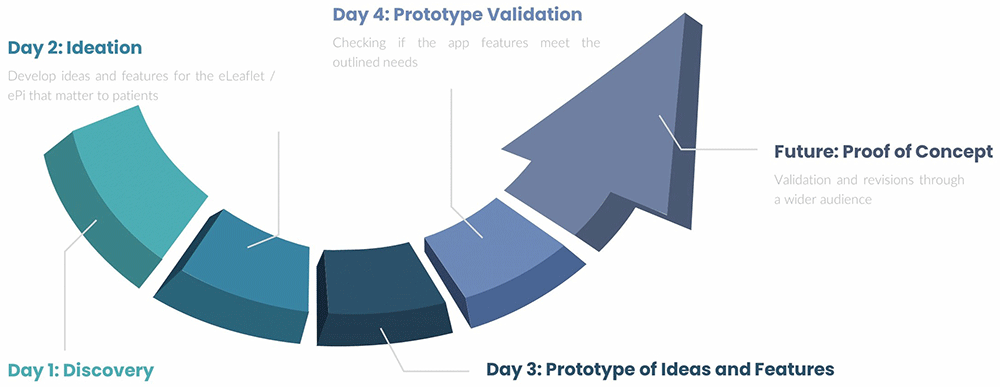
Figure 1. ePI development workshops with patients.
The input from the first four workshops was taken into account for the development of the PharmaLedger ePI app, and a fifth, follow-up workshop focused on the usability of the beta version of the lite app, a web-based version with limited functionality accessible through a browser. While there is no need to install the app—lowering barriers for accessibility—it requires the scanning of two codes printed on the box: one to access the web app (QR Code), and another to access the medical information (2D Code). This caused some confusion among testers and is an important consideration in practice. Details on these workshops have been described in publicly available webinars (Jarke et al., 2022a, Jarke et al., 2022b, Hunt et al., 2022) and the forthcoming press release by the Pharmaledger Association (unpublished report). The data and brief description of the workshops can also be found in our accompanying open repository (Jarke, 2023).
The future of ePI in Europe
Direct input from patients in the development process is key to developing a patient-centric app. In addition to gaining specific insights, patient inclusion and testing provide invaluable knowledge on how people interact with an app in real life and reveal issues that a static dataset cannot. For example, the best meta-analysis would not have told us that a warning logo may not be perceived as such at all: where the developers had chosen an icon that they found to be similar to a nuclear warning sign, one user was wondering why there was a “flower symbol” popping up on the app. Different conditions can affect the flow of the process. During the workshop, we found out that shaky hands, in combination with using older phones, lower the chances of successfully scanning the 2D matrix code. On the other hand, a different code—the QR code leading to the app itself—was still easily scannable under the same conditions. We recommend the continued inclusion of patients and users in the future development of ePI and outline more insights from workshops and related sessions hosted with different stakeholders (Hunt et al., 2022; Jarke et al., 2022a; Jarke et al., 2022b).
ePI will not solve all issues with medicine leaflets
There are many aspects of information leaflets in general that can be improved (Medina-Córdoba et al., 2021; Young et al., 2017). Despite its potential, ePI is not a silver bullet to address all existing issues with medicine leaflets. Our consultations outlined above, and a survey from 2021 suggest people often find information leaflets too complex and sometimes overwhelming (PFMD, 2021). Simplifying medical information is difficult and has wide-ranging ethical, regulatory, and legal implications. It requires extensive research to protect the safety of those taking medicine. While a worthwhile endeavour, the complexity of information does not simply vanish by going digital, and additional efforts are required to help patients understand the information more easily.
Without certainty about levels of digital literacy in patients and being sure everyone benefits equally, paper leaflets will need to be kept alongside electronic versions to avoid new inequalities in health and care. Many people still prefer paper in a hypothetical scenario when given a choice, specifically among people over 40 years old (PFMD, 2021). One scenario accounting for this could be on-demand printing, meaning boxes would come without information leaflets, but pharmacists can print them if patients request them. While previous research has identified some support for such a scenario (Hammar et al., 2016), no data exists on openness from pharmacists to such a solution, and there is a risk of patients who would benefit from a paper information leaflet not taking up the offer due to being hesitant in social interaction.
Advantages of ePI
Nevertheless, an ePI app has the potential to provide a set of highly beneficial functions, including a search function helping to find relevant information more quickly, specifically for side-effects, tolerability, drug-to-drug interactions, as well as a zoom-in function or read-aloud function for people with visual impairment. Information can technically be available in multiple languages.
The global trade of counterfeit medicines is currently estimated to create USD 4.4 billion in illegal revenue, causing massive financial damage to EU governments and legitimate businesses. Of greater concern are the issues directly related to ill health: a model from the OECD estimates that globally 7,2000 to 16,9000 children annually die from pneumonia because they are not treated with proper medicine but counterfeit products (OECD & EUIPO, n.d.). Adding a feature to an ePI app that identifies whether a box is an original can enable patients or carers to spot fake products easily. Further, a batch recall notification feature on personal mobile devices can help communicate the recall and therefore safety of patients. Lastly, having a digital medicine cabinet—an overview of which medicines a user is currently taking and took in the past—could come with a feature in the future that cross-checks the adverse effects of taking these drugs together and issues a warning. Likewise, evidence from behavioural sciences shows that reminders about when to take medication are quite effective in increasing medicine adherence (Jarke et al., 2021; Tran et al., 2014; Zhao et al., 2019), and future versions may include such a function.
Data privacy
The more complex an ePI app becomes and the more features it brings, the more data it also has to process. This data needs to be kept secure and it has to be ensured that patients are not identifiable, a key concern also prevalent in the workshops with patients. At the moment, using a distributed ledger technology such as blockchain, where the data is not stored centrally seems to be the safest option, but it also comes with legal constraints, as it remains unclear if and to what extent the EU General Data Protection Regulation applies where there is no clear data owner (Kayhan, 2022). While blockchain is rising in popularity, it is still an emerging field, and many important questions are emerging alongside. This includes considerations regarding patient data ownership, concerns about how sensitive information should be managed, and who should have access to it.
Get ready and leave no one behind
In their key principles for ePI for human medicines, EMA’s first principle outlines how any ePI app needs to primarily benefit public health (EMA, 2020b). This notion should always be at the forefront of any further developments of ePI and its implementation. By conducting several focus group sessions with patients and industry we understand that patients have priorities which are not easily incorporated into the ePI envisioned by the EMA, such as more user-friendly information. Independent of how exactly a final ePI app will look like, it will be necessary to involve all stakeholders in the process: to ensure the development of a successful implementation of ePI, we encourage the consultation of healthcare practitioners, pharmacists, and, of course, patients and the general population, as the industry moves from a paper-based to a digital system. We suggest continuing this involvement and preparing the public soon, as apps might soon be commonplace. Such involvement should also be accompanied by rigorous evaluation. To avoid reinventing the wheel and foster cooperation in the development of ePI across sectors, the establishment of the Pharmaledger Association (https://pharmaledger.org) as a not-for-profit non-governmental organisation that brings together members of the project consortium and other stakeholders from the healthcare sector is already a promising step. In addition, connections should also be made to relevant initiatives that work to improve the content of ePI (e.g. Gravitate Health: https://www.gravitatehealth.eu) and efforts in developing quality standards for health apps, such as Label2Enable (Hoogendoorn et al., 2023). Understanding the use of product information will allow for evidence-based conversations with regulators and other stakeholders to suggest changes to the future of ePI to make the data more human-centric. A comprehensive, interdisciplinary research agenda could benefit implementation greatly. We provide an initial, non-exhaustive overview of potential research questions based on our own internal discussion and a brief, non-representative survey among the PharmaLedger consortium and social media followers of EPF in Table 1 for consideration.
Table 1. Opportunities for research.
| Research area | Areas for investigation / Research questions |
|---|
| Health sciences and medicine | Pharmacists’ perspective on the adoption and use;
Systematic review and country comparison of existing print-on-demand practices in different countries;
How can patient data (the medicine cabinet) be used to their direct benefit?;
Is it accessible to people with disabilities? |
Social, behavioural, and
educational sciences | Ongoing evaluation of usability;
Understanding of leaflets by users (both digital and paper)
Interventions to increase understanding and uptake (e.g. through nudges and boosts);
Acceptance by stakeholder groups;
Predicting adoption of e-PI apps (what and how to target when proposing change);
Best practices in roll-out;
What aspects of ePI make people read the leaflets if they don’t read paper leaflets;
Traits/types of people using vs not-using ePI or paper leaflets in general;
How to communicate and educate people on the technology (specifically for people with low digital or
health literacy) |
| Economics and finance | Models for financing ePI apps;
How to fund costs for print-on-demand? |
Policy, public administration,
regulatory science | Comparison of infrastructure for using ePI between countries;
After rollout and adoption: Rhetoric and practice - is there a gap?;
Equity: do some groups may benefit less and why + identifying countermeasures |
| Law | Readiness of legal systems for adoption;
GDPR compliance;
Legal considerations for adoptions in non-EU countries;
Does ePI pose any unidentified ethical challenges? |
| Technology | Use of Blockchain for digital medicine cabinets;
Can patients be informed about new research regarding the drug?;
Can eleaflets highlight information for specific groups (e.g. age, gender, chronic disease) - also relevant
for legal research;
Can the blockchain technology used for the app made be more environmentally sustainable;
Are there alternative technologies to blockchain? |
Given the recent and fast developments around ePI, we conceived this paper to make stakeholders, specifically researchers, aware of the advanced stage the technology and policies are already in. We hope that this short overview piece brings further stakeholders into the process and urges those involved to identify and consider special needs of disadvantaged people or those living with disabilities. It appears evident that paper leaflets should not disappear immediately while certain groups are still reliant on them and important steps have been taken in recent years to improve them, specifically through EMA’s Readability Guideline (EMA, 2009). In addition, active patient input has increasingly been sought to improve design and readability (CIOMS, 2022). The emerging body of research around ePI should be seen as an opportunity to gain insights on improving leaflets generally, including those on paper. ePI is not a silver bullet to solve all existing problems with paper leaflets—however, we urge regulators and decision-makers to use the momentum to further improve the understandability of leaflet content—in all formats, digital and paper.
Ethics and consent
Ethical approval and consent were not required.
Data availability
Underlying data
No underlying data are associated with this article.
Acknowledgements
We would like to thank the other members of the Pharmaledger Patient Advisory Group whose input to the workshops informed this paper substantially: Margit Paul, Gregor Cuzak, Marta Morato, Outi Saramäki, and Lotte Klim. We also express our gratitude to Charles Vesley, who led the initial four workshops, as well as Patrick Maher for his input at that stage.
Faculty Opinions recommendedReferences
- CIOMS: Patient involvement in the development, regulation and safe use of medicines. WHO, Geneva, 2022. Publisher Full Text
- Directive 2004/27/EC of the European Parliament and of the Council of 31 March 2004 amending Directive 2001/83/EC on the Community code relating to medicinal products for human use. Reference Source
- EMA: Electronic Product Information (ePI) for EU medicines.2020a. Reference Source
- EMA: Electronic product information for human medicines in the European Union – key principles.2020b. Reference Source
- EMA: GUIDELINE ON THE READABILITY OF THE LABELLING AND PACKAGE LEAFLET OF MEDICINAL PRODUCTS FOR HUMAN USE.2009. Reference Source
- Hammar T, Nilsson AL, Hovstadius B:
Patients' views on electronic patient information leaflets.
Pharm Pract (Granada).
2016; 14(2): 702. PubMed Abstract
| Publisher Full Text
| Free Full Text
- Hoogendoorn P, Versluis A, van Kampen S, et al.:
What Makes a Quality Health App-Developing a Global Research-Based Health App Quality Assessment Framework for CEN-ISO/TS 82304-2: Delphi Study.
JMIR Form Res.
2023; 7: e43905. PubMed Abstract
| Publisher Full Text
| Free Full Text
- Jacob C, Bourke S, Heuss S:
From Testers to Cocreators-the Value of and Approaches to Successful Patient Engagement in the Development of eHealth Solutions: Qualitative Expert Interview Study.
JMIR Hum Factors.
2022; 9(4): e41481. PubMed Abstract
| Publisher Full Text
| Free Full Text
- Jarke H, Ruggeri K, Graeber J, et al.:
Health behavior and decision-making in healthcare. In: Kai Ruggeri, editor. Psychology and Behavioral Economics. Applications for Public Policy 2nd Edition. London: Routledge, 2021. Publisher Full Text
- Jarke H:
Pharmaledger ePI Workshops with patients. Open Science Framework. [Data]. 2023. http://www.doi.org/10.17605/OSF.IO/APN8B
- Kayhan H:
Ensuring Trust in Pharmaceutical Supply Chains by Data Protection by Design Approach to Blockchains.
Blockchain Healthc Today.
2022; 1: 5. PubMed Abstract
| Publisher Full Text
| Free Full Text
- McMahon JM, Curtis A:
Methods of Reading Information on Labels of Prescription Medications by Persons Who Are Visually Impaired.
J Vis Imp.
2009; 103(5): 303–308. Publisher Full Text
- Medina-Córdoba M, Cadavid S, Pérez-Acosta AM, et al.:
Factors that Facilitate and Hinder the Comprehension of Patient Information Leaflets (PILs): A Brief Scoping Review.
Front Pharmacol.
2021; 12: 740334. PubMed Abstract
| Publisher Full Text
| Free Full Text
- OECD & EUIPO: Trade in Counterfeit Pharmaceutical Products. Illicit Trade. OECD Publishing, Paris. Publisher Full Text
- PFMD: Understanding patients’ and HCPs challenges, needs and preferences for patient information leaflets - Survey Report.2021; Jun. Reference Source
- Raynor DK, Silcock J, Knapp P, et al.:
How do patients use medicine information leaflets in the UK?
Int J Pharm Pract.
2007; 15(3): 209–18. Publisher Full Text
- Tran N, Coffman JM, Sumino K, et al.:
Patient reminder systems and asthma medication adherence: A systematic review.
J Asthma.
2014; 51(5): 536–43. PubMed Abstract
| Publisher Full Text
- Van Kessel R, Wong BLH, Rubinić I, et al.:
Is Europe prepared to go digital? making the case for developing digital capacity: An exploratory analysis of Eurostat survey data.
PLOS Digit Health.
2022; 1(2): e0000013. PubMed Abstract
| Publisher Full Text
| Free Full Text
- Young A, Smith A, Tordoff J:
What do patients’ want? Time to innovate medicine information leaflets.
Int J Integr Care.
2017; 17(3): 15. Publisher Full Text
- Zhao YY, Dang FP, Zhai TT, et al.:
The effect of text message reminders on medication adherence among patients with coronary heart disease: A systematic review and meta-analysis.
Med (United States).
2019; 98(52): e18353. PubMed Abstract
| Publisher Full Text
| Free Full Text