Abbreviations
2DMC - 2-dimensional monoculture; 3DCC - 3-dimensional cell culture and co-culture; 3R – replacement, reduction and refinement; ADMET – absorption, distribution, metabolism, excretion and toxicology; APBI - academia, pharmaceutical and biotechnology industry; BOP - burden-of-proof; CRADA - Cooperative Research and Development Agreement; CRO - contract research organization; DARPA - Defence Advanced Research Projects Agency; DDP - drug discovery pipeline; EC - European Commission; EMA - European Medicines Agency; EU - European Union; FDA - Food and Drug Administration; FFP - fit-for-purpose; HC - high content; HT - high throughput; IP - intellectual property; ISO - International Organization for Standardization; JRC - Joint Research Council; LAMEA - Latin-America, Middle East, and Africa; MF - microfluidics; MPS - microphysiological systems; NIH - National Institute of Health; OoC - organ-on-chip; PDMS - polydimethylsiloxane; PETA - People for the Ethical Treatment of Animals; R&D - research and development; SEO - search engine optimization; SO - spheroids and organoids; TRL - technology readiness level; UK - United Kingdom; US - United States.
Introduction
Microphysiological systems (MPS) describe converging technologies aimed at recapitulating sufficiently complex physiology in vitro with increasing design diversity and application, where industry role-players lobbying for end-user product adoption and regulatory acceptance. Disruptive toolsets consisting of instrumentation, consumables and biological models’ impact MPS technologies (i.e. organ-on-chip; organoids; microtissues; perfusion technology; microfluidics; etc.) to provide animal free, yet biologically relevant environments compared to the golden standards of the drug delivery pipeline (DDP) in a robust, reliable, more cost-effective, and ethical manner1–4. Global financial investments from the government and private sector drive the development of these technologies, where influence from the private and public sectors foster regulatory drafting and end-user technology adoption. Socio-political pressure requires the academia, pharmaceutical and biotechnology industry (APBI) to adopt more humane and ethical research and development (R&D) approaches using cost-effective and reliable methodologies, further serving as a driving force for MPS technologies as a replacement or companion technology for the golden standards of the DDP1,5–9. However, the burden-of-proof (BOP) required to demonstrate that MPS present with a fit-for-purpose (FFP) design requires a transparent and peer-reviewed approach to allow for the standardization consensus between regulatory bodies5 where APBI contributes constructively. Unfortunately, a universal standardization to formulate regulatory guidelines is lacking for the technologies2,3,10. Additionally, a lack of broad-based adoption of MPS-based technologies in APBI can be attributed to the lack of standardization and technical limitations of the technologies when compared to the golden standards of the DDP, typically seen as emerging and young technologies with a small market when compared to loosely related technologies such as microfluidics (MF)11–17. It is not fully clear why the MPS market remains comparatively small, where factors such as regulatory acceptance and technology confusion may be contributing factors when coupled with slow technology adoption.
Regardless of the above challenges there has been a multitude of companies – start-ups and established – actively involved in bringing MPS technologies to market with active involvement in reducing the use of animal models, innovating with new technology offerings, or providing scientific services. Most of the companies were built around intellectual property (IP) or know-how generated at prestigious research institutions, where early commercial potential was identified and developed into a product or service by active engagement with early technology adopters and investors. This trend is continuing exponentially in the EU and United Kingdom (UK) where European Commission’s (EC) Horizon-2020 initiative generously funds innovation towards developing state-of-the-art MPS technologies. Additional funding from the individual EU member states further encourages innovation to facilitate collaborative as well as innovative R&D in academia and industry to advance MPS technologies1–4 by developing advanced in vitro biological models; physiologically relevant biochemical and biomechanical environments; machine learning-based image analysis and data management; as well as instrumentation and methodologies for automatization and workflow integration. Established and emerging entrepreneurs who wish to enter this market face technological, regulatory and market risks to demonstrate that their MPS technologies have a FFP design with a sufficient BOP in a comparable manner to the golden standards18,19, a daunting challenge when considered that the average start-up company lifespan is predicted to be less than five years for a small and highly competitive emerging market. However, global recognition that the DDP is neither sufficient nor efficient20,21 for discovery or development of new therapeutics and very costly22–27 has created an APBI end-user environment open to alternative solutions to facilitate cost-reduction28–31. Additionally, socio-political pressure is requiring the adoption of more humane and ethical research practises to forego animal research, where 3R (replacement, reduction, refinement) principle compliant methodologies aim to reduce overall cost and increase accountability in R&D. The conflation of circumstances has created the ideal opportunities for MPS to be the best solution.
In this article we aim to provide a primer for the new or emerging MPS entrepreneur in a broad-based manner using case studies framed within the context of technological considerations and regulatory challenges. This document is not intended as a definitive guideline; it is written from an entrepreneur and start-up perspective active in this industry with the aim to provide knowledge to assist in further reading for concepts which may be unknown to the target audience. The entrepreneurial route is subjective, with success and failure regardless of textbook or instinctual strategies employed. Case studies are presented for randomly selected MPS companies, established and start-up, with a focus to IP history to implementation and expansion into a company to navigate the first five-year survival. Furthermore, the case studies are contextually framed by prefacing the reader with current information on: (i) the technological challenges required to create a FFP technology with sufficient BOP; (ii) the current state of regulatory affairs; and (iii) the current-to-projected MPS associated market sizes.
Methods
Typical scholarly searches were done to find information on state-of-the-art scientific information and for regulatory aspects using peer-reviewed literature, with other sources of information required to form an overview of the companies discussed in the text. The non-peer-reviewed data is described below. All data gathered was publicly available. No information was gathered for proprietary or non-public information, e.g. revenues or business strategies. Generally, the entrepreneur will identify market role-players as a means of assessing a market landscape report, followed by a technological (and other pertinent information) landscape report. An overview of the process follows. Non-peer reviewed information (i.e. press releases, blogs, protocols) provided by company websites typically do not have digital object identifiers (DOI) and rely on good faith.
Generating a market role-player report
The companies showcased in this paper were selected from a market role-player landscape report (Table S3, Extended data32) where data was gathered for the following parameters: company incorporation and history, product lines and services as well as intended customers or clientele. Companies were identified using general (www.google.com) and specific (https://www.crunchbase.com/;https://www.ventureradar.com/) search engines and databases using keywords, e.g. “organ-on-chip”; “advanced in vitro models”; “3D biological models”; “3D microtissues”; “microfluidics”; “microphysiological systems” individually or in combination.
Selection of case study companies for inclusion of additional parameters and creating a technology landscape report
Companies were selected based on corresponding to our fields of expertise and commercial activities of instrumentation, consumables and biological models, thus excluding bioprinting and biomaterials companies. Companies where further selected having already passed a five-year period post-incorporation, excluding companies founded post-2014/15. Multinational companies (e.g. Philips, 3M) and distributors (e.g. Sigma Aldrich, Merck Millipore) who do not have a core business related to MPS were not considered. Final company selection was based on a randomized raffle of eligible companies remaining, followed by predetermined parameter directed data mining to expand on the datasets and condensed to Table 3 and Table S4 (Extended data32). The predetermined parameters incorporated company history, founding technology patents or publications, historical and in-development product lines, collaborations, public declared funding and social media activity. Company specific resources references are pertinently mentioned contextually with references. Collected data was summarized in Table 3 and Table S4 (Extended data32), provided with pertinent links and references providing the last date of access. The data collection and sources for the above is categorized as follows:
Data analysis
Agglomerated data was analysed using the OTTR (Observe-Think-Test-Revise) principles, filtered manually and cross-referenced to create Table 3, Tables S3 and Table S4 (Extended data32). The companies’ information was comparatively assessed followed by scientific and entrepreneurial interpretation. The data presented is not intended as an exhaustive data set, but as a guideline.
Technological challenges for designing in vitro MPS models: biological aspects
Challenges for MPS adoption VS golden standards of the DDP
The Director of the United States (US) Food and Drug Administration (FDA) Centre for Drug Evaluation and Research, Dr Janet Woodcock, admitted that the DDP is broken especially in the context of clinical trials20,21. Lead development or discovery of drug candidates requires a process of evaluation; 2D in vitro > animal in vivo > human in vivo; with a low success rate (<15%) and astronomical costs (USD2.8 billion) over 13–15 years5,6,22,23. Clinical trials consume ≈65% of DDP costs, a crucial point for cost reduction and a driving factor in finding more physiologically relevant R&D models as well as predictive precision medicine approaches23–25. However, any improved in vitro models and methodologies with sufficient BOP and FFP design can provide companion or replacement technologies at any phase of the current DDP golden standards. A recent statistical evaluation9 of MPS technologies concluded that up to 25% of R&D costs can be reduced as well as the turnover time in preclinical phases.
Advances in biomedical research – including the DDP – was shaped by the HeLa cell line33, but also embodies the challenges and limitations of 2D in vitro models19,33,34: (i) loss of phenotype and dedifferentiation; (ii) cellular depolarization; (iii) reduced gene and protein expression; (iv) altered membrane function; (v) altered metabolism; and (vi) cellular cross contamination. Animal models present with a non-human relevant physiology and genotypes5,6,18,23. Despite the intrinsic flaws, the DDP remains unchanged in a case of “the devil you know VS the devil you don’t” where decades of investment in infrastructure, human capital development and academic consensus established regulatory processes reliant on the stability and functionality of the system for downstream cost-recovery of bringing new therapeutics to the market26,27. Cost recovery from the DDP process as well as socio-political pressures (e.g. 3R) has resulted in active downsizing pharmaceutical DDP activities with increased outsourcing to contract research organizations (CROs) – also a prudent financial and R&D risk mitigation strategy28–31. This ongoing process is changing the future of the cosmetics, agrochemical, food, and consumer goods markets in a similar manner, creating opportunities for new technologies such as MPS with added value additions4–6,35, especially when it comes to cost and turnover reduction9. The current challenge faced by MPS technologies is a lack of standardization with limited high throughput (HT) high content (HC) supporting technologies proving prohibitive in adoption for many APBI role-players1–6,9.
The initial lack of MPS technologies9 fit within the “Diffusion of Innovation Theory”36, atypical for most biomedical technologies, where high-risk takers are early technology adopters. MPS role-players from academia and industry active lobby for technology adoption by engaging opinion – and technological leadership in APBI as well as regulatory bodies (see sections MPS roadmaps for standardization and regulations and MPS company comparative case studies: history and origin to current status), where APBI adoption is determined by risk mitigating ability (e.g. financial; time; technological). The technology readiness level (TRL)37 of MPS must present with a reasonable BOP to demonstrate a FFP application (TRL5<) for early adopters to embrace the technology. However, TRL can be perceived as subjective38–41 to the end-user dependent on the need for new technologies or methodologies, where an exceptionally innovate and disrupting technology concept can receive interest from TRL1.
MPS biological model design – design for the end-user
MPS biological models allowing for multi-cell type co-culture42–44, single-organ45–48 or multi-organ approaches49–52 and 3D printed tissues53–57, with or without tissue scaffolding58–61 and micro-vascularization62–64 present. Biological diversity in these models aim to recapitulate specific physiology but does not always clearly demonstrate the advantages or which golden standards is the target of comparison, a discrepancy between FFP design and supporting BOP3–5,9. The MPS in vitro model should clearly demonstrate sufficient complexity with complementary proof if the model is to act as replacement or companion model to the golden standards (Table 1). Figure 1 demonstrates the complexity for consideration when designing an MPS model. The proof required should provide demonstration of functionality with supporting peer-reviewed literature to encourage end-user adoption. From experience, the complexity for in vitro models differs across APBI, thus a “one size fits all” is counterproductive to foster end-user adoption. Engaging in a dialogue with the intended end-user can shape the ideal physiological complexity required for the intended application, allowing for strategic design choices. Typical questions which can contribute to improved end-user engagement can be compiled from Table 1 and Figure 1:
Table 1. The choice of biological model requires considered design.
A generalized categorization of biological models is presented to demonstrate the process of developing a biological microphysiological systems product.
| †2DMC6,69–71 | †3DCC / OOC2–4,9,10,42–64 | †SO65,66,72–77 | †Rodent69,78–82 | †OBPCS1,78,79,83–86 |
|---|
High throughput
(Y/N) | Y | N | Y | N | N |
High content and/or multiplexing
(Y/N) | Y | N | Y | N | N |
Single tissue / organ
(Y/N) | Y | Y | Y | Y | Y |
Multi tissue / organ
(Y/N) | N | Y | Y | Y | Y |
Physiological complexity
(Low / Medium / High) | L | L / M / H | L / M / H | H | H |
Physiological relevance
(Low / Medium / High) | L | L / M | L / M / H | L / M | H |
Work-flow integration
(Low / Medium / High) | H | L / M | M / H | M | L / M |
Standardized technology
(Y/N) | Y | N | Y | Y | N |
Immunocompetent
(Y/N) | N | Y | Y | Y | Y |
Microvasculature
(Y/N) | N | Y / N | Y / N | Y | Y |
ADMET
(Y/N) | Y | Y | Y | Y | Y |
Automation
(Low / Medium / High) | H | L / M | H | L | L / M |
Regulatory approval
(Y/N) | Y | N | N | Y | Y |
Patient derived
(Y/N) | Y | Y | Y | Y | Y |
Relative cost
(Low / Medium / High) | L | M / H | L / M | H | M / H |
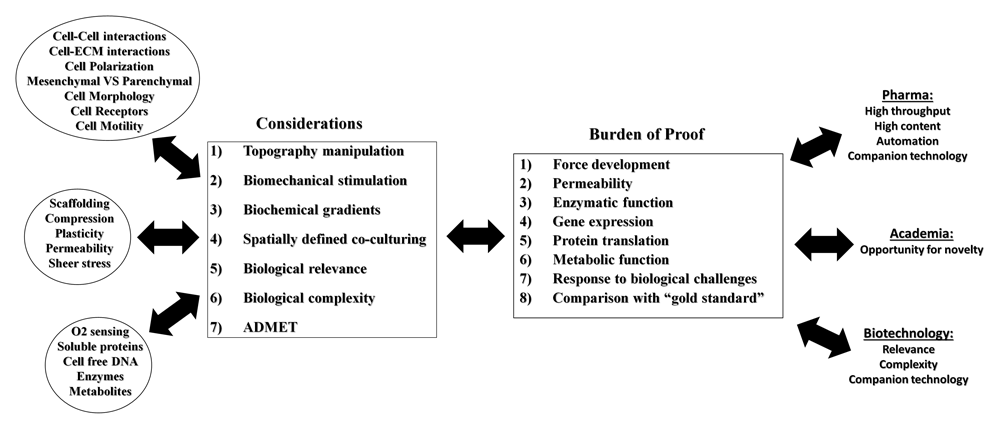
Figure 1. Considerations and correlating burdens of proof to be considered for microphysiological systems design and approaches.
The complexity of the biological model will be determined by the end-user needs as well as the most common available infrastructure to the intended end-user. Academia is the most receptive to a variety of designs, which affords opportunities for novel discoveries and opens new research avenues. The pharmaceutical and biotechnology industries have less degrees of freedom, aiming for function over novelty, requiring design considerations for companion technologies or adherence to minimum requirement regulatory parameters. The complexity of a biological model will be dictated by biomechanical (e.g. shear stress, cell-cell and cell-extracellular matrix (ECM) interactions), biochemical (nutrient, metabolic waste and oxygen gradients), and physiological considerations (monoculture, co-culture or 3D culturing techniques) to demonstrate an obvious advantage over the golden standards. ADMET – absorption, distribution, metabolism, excretion and toxicology. Compiled from 3–5,42–96.
(i) Will the model be used for disease modelling and development studies or as a HT-screening for 1st round preclinical lead discovery from a compound library of thousands of molecules?
(ii) Does the model require (bio)chemical gradients or biomechanical stimuli?
(iii) Does the model require static or dynamic culture conditions with oxygen management? A minimum/maximum culture duration?
(iv) The cost and time to develop the model (and prove advantages over DDP standards)?
(v) What will be acceptable costs for upkeep of the model (e.g. media formulations; hydrogels; consumables; etc.)?
(vi) What is the current available instrumental and laboratory infrastructure?
(vii) Will this be a single use model for novelty or for routine use? Could it be an easier route to provide a service delivery function to the end-user once the model is established?
The academic end-user may be grant dependent with a focus on publication frequency and impact seeking novelty, providing degrees of freedom for creativity in model complexity with inclusion of various companion technologies. Biotechnology and CRO companies present with research or service delivery specialization, where model design and allowances for companion technologies are dictated by the contract giver (e.g. pharma or other biotechnology companies) or regulatory requirements to advance research for commercially viable products. Pharmaceutical (and some biotechnology) companies may require HT and HC screening solutions where biological complexity should provide equal or better results than current in vitro 2D models but allow for facile integration into existing infrastructure and automated workflows. Examples of this will be discussed with reference to Figure 2, also considering Figure 1 as well as Table 1.
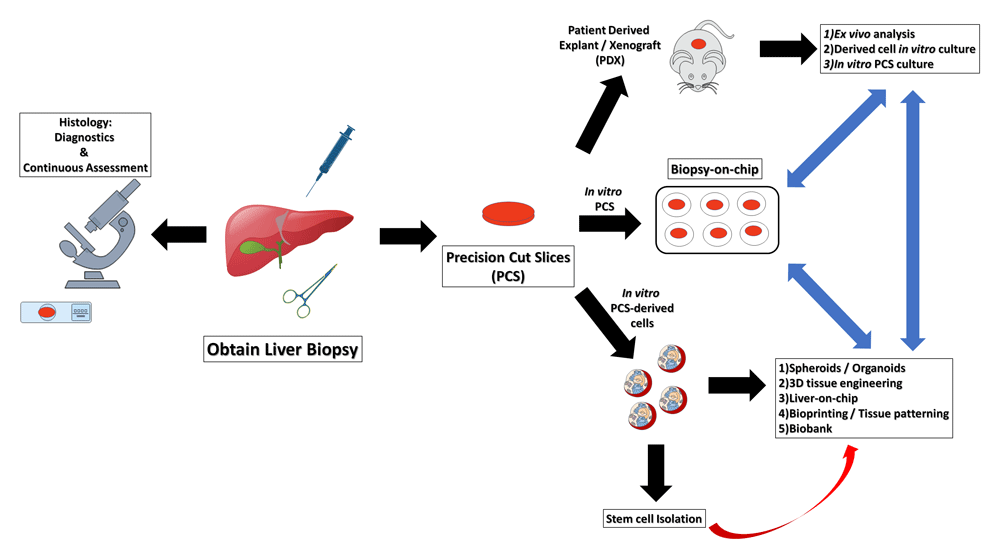
Figure 2. A liver biopsy sample has many applications beyond diagnostics and pathology.
The biopsy tissue can be prepared as precision cut slices (PCS) used in direct ex vivo histoculture, rodent xenografted or used for isolating specific cell types which can be used in multiple tissue engineering approaches. Applications of these approaches can range from preclinical research to translational precision medicine.
Example 1: A pharmaceutical technologist needs to identify 10 most active lead candidate compounds from a 10,000-compound library for minimal liver toxicity. A two-dimensional monoculture (2DMC) in vitro model has the minimum required physiological complexity based on DDP recommendations with regulatory approval, where the methodology for HT-HC screening is already optimized to be cost- and time-efficient in an automated workflow. A MPS solution must demonstrate obvious advantages compared to the biological model, also demonstrating compatibility with the available and optimized infrastructure. The ideal model will be based on spheroids and organoids (SO) technology with added physiological complexity in a 3D environment, such as using extracellular matrix (ECM)-mimics and hydrogels, remaining compatible with HT-HC methodology65–68. The model can be complexed for later stage compound screens, where patient-derived cells from a biobank or primary isolation can be used in 2DMC or SO setups, progressing the molecules of interest through the preclinical screening process with more precision to the next stage of R&D.
Example 2: A liver biopsy is taken from a patient to diagnose a liver pathology (Figure 2). Apart from the histology-based diagnosis, some tissue can be used for various applications for the researcher from pure academic, preclinical or translation applications. The biopsy tissue can xenografted80,81 or used to make patient specific-SO66,73, with the former allowing for the generation of SO as well. Alternately, the biopsy can be used as a precision cut slice or cubic biopsy samples79,83 or preserved in a biobank76,87. The patient derived cells can be isolated into subtypes for SO generation or mixed into a scaffold for cellular self-assembly. The inclusion of ECM-mimics and hydrogels, dynamic or static culture conditions and desired (bio)chemical stimulus will be determined by the needs of the end-user. This type of approach where creativity is encouraged is typical for research institutes and well-funded researchers, where academic freedom allows for creating diverse solutions to advance state-of-the-art for models intended to be used for toxicology, disease modelling and precision medicine.
Accessorizing biological models: instrumentation and consumables
In vitro models require companion technologies to implement successfully, where interaction with the end-user will develop insight with regards to available infrastructure (e.g. CO2 incubators, automated liquid handling systems, microscopy, etc.), the human capital and financial investment available as well as their ability and willingness to invest and expand. Securing interaction with the end-user will provide reciprocal insights. For the end-user, this provides awareness of technological offerings that can address the susceptibility of biological models with regards to temperature88 and gas gradients89–91 intrinsic to commercial humidified CO2 incubators88–91. For example, we used such an approach to design a rapid heating/cooling microscopy stage solution to allow for the live imaging of various existing C. elegans in various developmental stages as a function of temperature differentials using a perfused microfluidics chip. The identified niche was a lack of a standardized microscopy stage with universal compatibility. This was followed by developed companion technologies to expand on this initial niche, such as electrophysiological consumables for heart-on-chip applications.
Consumables and materials in direct contact or indirect (e.g. tubing material) contact with the biological model must be carefully chosen for characteristics such as biocompatibility, hydrophobicity, chemical resistances, leeching and gas permeability97–99. Polydimethylsiloxane (PDMS) is a cost-effective, popular, and versatile polymer used for MPS R&D despite being unsuited for biomarker and drug response-based research3,35,100,101, presenting with a challenge for industrialization. The high oxygen diffusion rate of PDMS can be found using other plastics with the inclusion of synthetic or biological membranes. However, most of the plastics do not allow for facile sterilization techniques or reuse, increasing the costs to the end-user. Consumable design should consider the advantages and limitations of materials inclusion such as: (i) design and efficient prototyping; (ii) manufacturing limitations and costs; (iii) the functional and aesthetic suitability for the end-user; (iv) sustainability and 3R compliance; and (v) cost to the end-user. Examples of these considerations can be seen in consumable design for the PhaseGuideTM designed OganoPlate™ from Mimetas, where this technology allows for liquid shear stress generation in vitro using static culture methodologies, but no biochemical gradients can be generated. Dynamic cell culture may require liquid or gas perfusion instrumentation (ElveSys, CN-Bio, CellASICS, etc.) to allow for cell culture gradient generation by mimicking blood flow and shear stress2–4,102–107, and culture durations of weeks or months. Commercial102,103 and academic104 advancements are demonstrating applications beyond individual MF chips or 24 multiwell towards HT-HC.
Regardless of the advancements and availability of standardised commercial consumables and instrumentation, well-funded researchers may opt to develop unique MPS-technologies. However, these technologies are geographically locked and not accessible to other researchers to independently evaluate or develop new technologies on these platforms92–96. The technological offering from MPS companies is not limited to biological models, consumables, and instrumentation where specialized biochemicals (e.g. hydrogels, culturing media), new biochemical and cell assays and data capture/analysis methodologies are needed for more comprehensive and faster turnaround analysis of organ-on-chip (OoC) and 3-dimensional cell culture and co-culture (3DCC) models. Current cell-based assays are adapted from 2DMC to 3DCC and OoC with less-than-ideal turnaround times for sample preparation and analysis, especially crucial when working with high priority samples or scarce samples.
MPS roadmaps for standardization and regulations
International socio-political pressure and expectation for APBI to adopt broad-based reductionist, ethical and cruelty-free R&D methodologies with improved transparency and communication also aim to improve the democratising of technology8,108,109. European initiatives such as the 3R110 and the Animal Research: Reporting of In Vivo Experiments (ARRIVE) guidelines6,111 have been adopted by the European Medicines Agency (EMA)5. The FDA - Defence Advanced Research Projects Agency (DARPA) - National Institutes of Health (NIH) MPS Program112,113 and the MPS consortium signed under the Cooperative Research and Development Agreement (CRADA) has adopted similar initiatives. The USA Environmental Protection Agency has recently8 declared that animal trials will be abolished by 2035, with similar initiatives following suit in the EU114. Europe has initiatives such as Human Organ and Disease Model Technologies (hDMT)115, Organ-on-Chip in Development (ORCHID)116 and European Organ-On-Chip (EUROoC)117, which consist of well-respected industry and academic role-players to act as advisors for forging the regulatory guidelines for MPS in the EU. A challenge remains for the EU as the organizations tend to have geographic specific incentives and are not unified such as CRADA for the USA. The above initiatives can only reach their full effectiveness with full government, regulator and APBI interaction in a fully transparent process to support the drafting of comprehensive and sensical legislation. Thus far the efforts from these organizations have been building roads to animal-free research and adoption of MPS-based technologies. Companies have taken the responsibility to interact with regulatory agencies, where Emulate and CN Bio are actively in dialogue with the FDA (see MPS company comparative case studies: history and origin to current status) and in early 2021 announced FDA recognition118 of their PhysioMimix™ technology with a joint publication of the use of the technology for drug safety evaluation. Similarly, TissUse4 contributes by their CEO being actively involved in generating awareness with APBI as well as regulators. We have found that a dialogue with the FDA ensures that the most pertinent information for MPS technologies are available and influence interactions with role-players across APBI.
The 2017 EMA workshop5 on “Non-animal approaches in support of medicinal product development – challenges and opportunities for use of micro-physiological systems” published the initial findings in 2018. The workshop was attended by prominent representatives from government and APBI to define scientific consensus, known facts and challenges of MPS technologies. Similarly, the EC’s Joint Research Centre (JRC)4,5,119 polled researchers across 26 EU/Eurozone territories, which echoed similar concerns as during the EMA workshop, where there was general cautious optimism. The conclusions are summarized for each sector in Table 2. The feedback received by the EC-JRC and EMA workshop reiterates that financial and technological risks contribute to an unwillingness in technology adoption, without complete technology aversion. The academics were the most critical of the technology when compared to the more muted responses from the pharmaceutical industry. The response from academia can be attributed to various factors but when considering that MPS technologies are diverse there can be confusion on choosing the technology proposition that will cater to their requirements. Regulatory approval, leading to drafting and adoption of guidelines for standardization of MPS technologies, appears to be a case of WHEN, not a case of IF. The slow adoption of innovative technologies is not always the norm, some technologies are adopted and implemented relatively fast.
Table 2. The sector-specific conclusions about MPS in the European Union from the European Medicines Agency workshop (compiled and adapted from 4,5,119).
| Pharmaceutical industry | Academia | Government |
|---|
• MPS has the potential to replace
current preclinical models, in vitro and
in vivo, preclinical models for ADMET
and bridge knowledge gaps.
• MPS predict physiological responses
better if designed well enough, being
advanced in vitro models.
• MPS models must be designed
FFP, with a defined BOP to clearly
demonstrate the intrinsic limitations.
• MPS identified pharmaceutical targets
with associated biological prediction
has been promising with possible
value addition for specific niches; and
• MPS technologies are emerging
but require maturation which can
be assisted by developing new
complementary technologies or using
existing complementary technologies. | • MPS models are not always
refined sufficiently for the target
organ of interest, with uncertain
genotype-phenotype relationship
• Barrier systems and materials
require improved biocompatibility
and biomechanical relevance
for the physiology to be
recapitulated.
• The desire exists to combine
individual OoC in series or
parallel to better mimic in vivo
conditions.
• Incorporation of immune-
components and other blood
components is essential, as well
as more complex cocultures.
• The design of patient specific
MPS, by using patient derived
primary and stem cells.
• ADMET features (e.g. simulation
of administration or sample
taking) should be incorporated in
MPS design.
• The function of the MPS models
were not defined and too
generalized
• Application protocols deviate too
much from standard laboratory
and DDP protocols
• MPS systems are relatively
expensive for implementation
and upkeep when compared to
equivalent golden standards
• 75% of respondents would adopt
technology if these factors would
be addressed | • Undertakes to establish rules and
guidelines with 3R approaches and
inputs from APBI.
• Acknowledgement that technology
advanced past the applicability of
existing guidelines and regulations.
Thus, new drafting is required.
• Clinical data should be free to access to
determine relevance, where regulators
should be consulted for confirmation
thereof.
• The open sharing of all data is essential
and strongly encouraged. |
MPS technology is currently in the converse of CRISPR technology, where CRISPR120–122 addressed an (i) immediate and future scientific need in APBI in an innovative manner; (ii) by providing a novel and robust technology that resulted from a track record of core competency in the field of genetics and molecular biology; (iii) providing a technology that was readily comprehensible with a strong BOP and crystal clear FFP application; (iv) in a standardized and reproducible manner with acceptable financial investment for the end-user; (v) where the regulatory guidelines were already established by global scientific and ethical consensus. CRISPR is based on a robust track record of underlying well-characterized technologies with global use and implementation. The information provided thus far creates a perspective that MPS technologies require a standardized approach with ethical and legislative guidance to reach optimal maturation time. MPS technologies are intrinsically more complex collections of separate tools, each tool adhering to different standards, where the sum of the standards needs to adhere to equal strict ethical and scientific criteria. The inherent diversity in MPS technologies as well as human genetic diversity will be challenges for technology maturation and standardization.
The state of the market: are all opportunities obvious?
Market analysis for MPS is not trivial due to the related technologies (e.g. 3DCC; OoC; SO; tissue printing; etc.) and interchangeable nomenclature used by APBI, where the true market size is unclear with relatively low growth and value11–14 when compared to related umbrella technology markets15–17 such as MF123–125, comparatively tabled in Table S1 (Extended data32) with a comparison between OoC and MF. The relatively small OoC market is most probably attributed to earlier mentioned uncertainty with regards to technology maturation state, markets echoing sentiments found in the EMA and EU-JRC reports as well as regulatory acceptance. However, as discussed later in this text, investor confidence in the MPS market future appears to be high. The largest projected market share for OoC by geography is the USA, with the most prominent compound annual growth rate (CAGR) projected for the Asia-Pacific region (≈65%), where Latin America-Middle East-Africa (LAMEA) is the most uncertain market but contains ≈25% of the world population. The LAMEA geographies are mired in socio-economic-political challenges and instability, where countries like Rwanda126–128 prove to be the exception with significant investment in innovation and technology hubs. The African continent may provide unique drug discovery and development opportunities for MPS technologies considering that non-Eurocentric genomics have been identified as the next untapped target for APBI129–132.
Emerging entrepreneurs with a drive for societal impact may consider MPS-adjacent markets where companion technology markets and other biosciences markets can be a strategic niche identification. For example, 50.6 million people worldwide are living within a five-year post-therapeutic period post-diagnosis with cancer133,134, with 1-in-5 men and 1-in-6 women predicted to develop cancer, corresponding to 1-in-8 deaths for men and 1-in-11 deaths for women within this period. Cancer collectively surpassed cardiovascular disease in 2019 as the primary cause of death in middle-to-high income countries, remaining the second most prevalent cause of death in developing countries135,136. MPS-based technologies can enter markets for cancer therapeutics and diagnostics (Table S2, Extended data32), currently valued at USD166.6 billion137–140 for the former and USD135 billion for the latter141–145. The geographical market distribution for these technologies is equivalent to the OoC/MF markets (Table S2, Extended data32). Similarly, other markets for MPS entry are the precision medicines as highlighted in “Global Personalized Medicine Market – Types, Technologies and Applications”146 with a projected market growth ≈ USD200 billion by 2024 (11% CAGR from 2017). This projection is attributed to the exponential increases in patient data availability with advanced analytics such as machine learning and customized therapeutics; market reports146,147 highlighted that companion diagnostics and targeted therapeutics will expand from USD113 billion (2016) to USD162 billion (2021)148. An example of using MPS technologies for the cancer therapeutics market comes from the laboratory of Professor Albert Folch, University of Washington, where patient biopsy tissues are interrogated on a proprietary design MF-chip to determine anticancer drug responses in a precision oncology approach149. The TRL was advanced through building a BOP to demonstrate a FFP application from 2012 in publications followed by a patent filing in 2016149–154. This technology was used for the USA-based spinout company OncoFluidics149,155, where the technology can be commercially expanded upon. Other examples of MPS technologies market entry outside the main OoC/MF markets are Cherry Biotech and CellASICS (discussed later), where the OoC/MF technologies found niche markets for microbiology. Diversity in applying OoC/MPS to broaden market appeal can be found in the latest OoC market reports156, which have highlighted a more international distribution in market role-players with direct impacts on the pharmaceutical industry:
(i) Tissue Dynamics (Israel) – Ethnic diverse liver MPS models and HT-HC for AMDET;
(ii) Netri (France) – Brain-on-Chip biological models and consumables;
(iii) Bi/Ond (Netherlands) – User friendly consumables for microscopy and gas diffusion;
(iv) Hesperos (USA) – CRO services for ADMET; and
(v) Altis Biosystems (USA) – Gut-on-Chip and CRO services.
MPS company comparative case studies: history and origin to current status
Entrepreneurs in technology-based companies face a predicted five-year survival rate157,158. A recent publication focused on determining the factors of MPS and related technologies companies’ longevity, determined that business models which presented large product and services catalogues coupled with perpetual new offerings risked failure attributed to overexpansion158. Furthermore, the authors identified company longevity parameters with the conclusion that hybrid (service and product) business models coupled with IP ownership fared better over the initial five-year survival period, with diverse target end-users in the food, pharmaceutical, cosmetics and (pre)clinical markets. Unique IP ownership is attractive to investors, especially in a start-up company where risk mitigation is key. Additionally, another contributing factor to company longevity was proven historical competency, usually a peer-reviewed academic track record, for the core technology and application. A contextual case study to be considered is Organovo159,160, founded in 2007, a liver micro-tissue bioprinting company that was listed on the New York Stock Exchange in February 2012 and valued at USD46.6 million161. Organovo attracted highly desirable collaboration interests from the pharmaceutical – and cosmetics industry such as MERCK162 and L’Oreal163, attributed to company involvement in media coverages on 3R topics and reshaping the DDP164. The company expanded rapidly with project diversification to other microtissues dissimilar compared to initial core competency and faced multifaceted technical challenges and delivery delays, resulting in replacement of the management mid-2019160, where an intent to merge with Tarveda Pharmaceuticals Inc. was announced in February 2020165a,165b. The technical challenges in biological model design (Figure 1; Table 1) to deliver a sufficient BOP to advance the bioprinted tissues to viable products may have played a role, where the microarchitecture of organs differ significantly when factors such as biochemical gradients; biomechanical stimulus; cell population demographics; and degree of vascularization are considered. The appearance of market competitors such as CELLINK, Poeitis and Regemat3D displaced the lone wolf status of Organovo by providing similar or advanced technologies, providing the market with cost-effective technologies leading to competing products and services.
In the next few paragraphs case studies will be presented for selected MPS companies from a role-player landscape report (Table S3, Extended data32), with a summary provided in Table S4 (Extended data32) and Table 3. Publications and patents relating to the companies but not mentioned in the main text can also be found in Table S4 (Extended data32). Data collection, usage and analysis is described in Methods.
Table 3. Summarized comparison between MPS-related companies considering the initial core competency with the proof-of-concept biological model, where the expansion strategy is provided.
The perceived competitive advantages between the companies are given with the most probable technical or business challenges. All these companies have prestigious research institutions directly or indirectly involved in their history (Table S4, Extended data) and are in engaged in active collaborations across APBI with, thus these factors will not be used comparatively.
| Year founded | Initial core competency + proof-of-concept | Initial biological model | Expansion strategy | Competitive advantage | Challenges |
|---|
| AIM Biotech | 2012 | Consumable design | Various | Complementary consumables (e.g. luer connectors, sample holders) | 1. Easy to use
2. Multi-organ serial connections with MF-chips possible
3. Microscopy compatible
4. Complex disease modelling | 1. Experimental repeatability between MF-chips
2. Low sample volume throughput VS. HT-HC technologies |
| Ibidi | 2001 | Consumable design | N/A | 1. Instrumentation
2. Consumables
3. Biochemicals | 1. Standardized fabrication of consumables and instrumentation
2.Wide product catalogue with high level of peer review acceptance | Multitude of other consumables companies: µFluidix; Microfluidics ChipShop; Fluidigm; ElveSys; Dolomite Microfluidics; etc. |
| CellASIC | 2005 | Instrumentation + Consumables design | Microbes | None: Acquisition by Merck Millipore | Most popular system for perfused liquid and gas control of microbial cell culture | Applications outside microbiology |
| CN Bio | 2008 | Instrumentation + consumable design + biological model | Liver | 1. Instrumentation: licensing
2. Increased biological model complexity
3. Multi-organ-on-chip to Human-on-chip
4. CRO: Liver | 1. Dynamic mammalian cell culture: Improved in vitro liver phenotypes
2. Liver specialization with minimal divergence: Established expertise
3. First to demonstrate 10-organs-on-chip: Collaborative effort
4. FDA recognition of technology: Instrumentation + in vitro liver model | 1. Complexity of multi-organ systems
2. Application to larger in vitro models, e.g. precision cut slices; cubed biopsies; histoculture
3. Costs of initial installation and upkeep of system |
| Emulate | 2013 | Consumable design + biological model | Lung | 1. Instrumentation
2. Additional biological models | 1. First functional lung-on-chip model
2. Versatile consumable design for disease modelling various tissues
3. Lung-on-chip model applicable to host-pathogen investigation (e.g. COVID19)
4. FDA collaboration for developing in vitro liver models | 1. Competing lung-on-chip technologies e.g. Alveolix
2. Dynamic cell culture instrumentation companies, e.g. CN Bio; HuRel
3. Static cell culture consumables, e.g. AIM Biotech; Microfluidic ChipShop; Alveolix; Ibidi; etc.
4. Low sample volume throughput VS. HT-HC technologies |
| HµRel | 2005 | Instrumentation + Consumable design + biological model | Liver | 1. Liver specialization
2. Multi-species liver models
3. CRO: Liver | 1. Dynamic mammalian cell culture: Liver
2. Improved in vitro liver phenotypes
3. Products compatible with commercially available consumables + assays + instrumentation
4. Liver models for multiple species
5. Liver models for HT-HC applications | 1. Increasing complexity of competitor in vitro liver models, e.g. CN Bio; Dynamic42; Hesperos
2. HT-HC offerings from competitors |
| InSphero | 2009 | Manufacturing process + Biological model | Liver | 1. Service delivery
2. Additional biological models
3. Increased biological complexity
4. Consumables
5. CRO: various
5. Consultation | 1. Standardized fabrication of in vitro models
2. Fabrication method is applicable to multiple microtissue types
3. Products are HT-HC compatible | 1. Organoid physiological recapitulation is not acceptable to some researchers
2. Cell culture conditions are not dynamic: minimal liquid shear stress and biochemical gradients |
| Mimetas | 2013 | Consumable design + biological model | Kidney | 1. Additional biological models
2. Instrumentation | 1. Standardized manufacturing of consumable
2. Biological models can be fabricated using standardized manufacturing
3. Improved experimental turnover for barrier function experiments
4. Products are HT-HC compatible | 1. Consumable fails to create biochemical gradients
2. Organoids physiological recapitulation is not acceptable to some researchers |
AIM Biotech
The manufacture of MF-chips, consumables and accessories is possible under Good Manufacturing and International Organization for Standardization (ISO) accreditation123,166, awaiting a BOP dependent on end-user adoption and feedback. AIM Biotech, incorporated in 2012167, based their line of OoC consumables on a PDMS design168,169 which evolved into the current MF-chip designs169,170. The original consumable designs were extensively used in the research laboratories of Professor Roger Kamm at the Massachusetts Institute of Technology (MIT) and at the MIT-Singapore Alliance for Research & Technologies, gaining international interest for the ease of use and near ideal for fluorescence microscopy and live imaging experiments. AIM secured exclusive licensing rights for the commercialization of the MF-chip and has the USA NIH as a minority investor together with venture capital168,171. The company website167 provides direct access to user protocols, peer-reviewed publications (Table S4, Extended data32) and webinar links, with a dedicated YouTube™ channel providing public access tutorials and application demonstrations. A joint webinar “3D OoC applications using AIM biotech chips” was held with Millipore Sigma, the latter provides the catalogue on their online store172. To date, the company provides 21 technology associated peer-reviewed publications (Table S4, Extended data32) where various biological applications of the MF chip design is demonstrated, especially where microvascularization models are required for fluorescent microscopy-based projects. Social media activity appears to be minimal with highest activity found on Facebook, mostly students directly interacting with Professor Kamm.
Ibidi GmbH
This privately held company was co-founded in 2001 by two PhD candidates from Technical University Munchen173, growing to an international industry role-player boasting more than 40 000 customers in 40 countries and >18000 publications associated with their product catalogue173. The impressive publication record associated with their products has created strong consumer confidence across APBI, with customer testimonials that include the pharmaceutical industry for a catalogue that includes biochips, consumables, biochemicals and instruments designated for analytics, temperature management and perfusion (e.g. liquid, gas) technologies. Ibidi describes itself as a company which caters specifically to the live cell174–178 diagnostics and analytics markets, which correspond to USD1 billion and USD9 billion, respectively. Consumer education and resources are provided on the company website with text and video tutorials as well as protocols with active social media engagement to announce academic and industry advances in MPS and MF. Ibidi has ISO9001 and ISO13485 certification173 for good manufacturing standards179 and biomedical devices180, respectively.
CellASIC
This Berkeley spinout was founded in 2005 and received a USD240 000 National Cancer Institute grant for advancing their ONIX2 liquid perfusion controller and unique biochip technology that allowed for user control of oxygen gradients in live cell environments181. Merck Millipore acquired CellASIC in 2012 for €21.7 million182 after the successful demonstration of the technology to microbial research, with 70 topic publications (Table S4, Extended data32) and three publications in mammalian models183–185. The company shows no social media activity post-acquisition by Merck, but do offer online application notes186, tutorials187 and protocols187 with customer testimonials188.
CN Bio-Innovations (Previously Zyoxel Ltd)
CN Bio Innovations, an Oxford University spinout, provides biological models and companion technologies for MPS biological models. This company was very active during 2017 with the following activities announced: (i) a US-FDA collaboration189; (ii) a collaborative agreement with AstraZeneca190; (iii) worldwide exclusivity agreement with Bristol-Myers-Squibb for viral hepatitis191; and (iv) obtained exclusive licensing for disruptive perfusion technologies from Vanderbilt University102,103,192. The CN Bio PhysioMimixTM technology – a dynamic cell culture perfusion system – received an innovation award in 2018193 with an added accolade of receiving FDA recognition in early 2021194 for this technology applied towards in vitro liver models. The core technology that served as a catalyst for the company existence was a peer-reviewed article published during 2007195 with a follow-up publication in 2010196, demonstrating perfusion culture is more dynamic for maintaining engineered liver tissues phenotypes over seven days, retaining physiologically more relevant activities than static culture conditions. Expansion on the initial core competency of perfusion culture liver microtissues saw a BOP creation using strategic collaborations (e.g. MIT) and funding from DARPA and the USA Department of Defence189,190,193. The in vitro models expanded progressively to include various types of 3DCC with addition of liver pathologies195–204 towards proof-of-concept multi-organ approaches205–207. CN Bio holds the distinction of being the first MPS company to demonstrate a relatively successful 10-organ-on-chip technology for recapitulation of human-on-a-chip2. In March 2020, CITIC Securities, a China-based investment bank, announced a USD9 million investment for CN Bio business development in EU markets208,209. CN Bio has been featured in various forms of prominent media such as The Huffington Post210, BBC World Service211, Al Jazeera212, and the Discovery Channel213.
Emulate Bio
This Harvard-Wyss Institute spinout was founded in 2013214 and to date holds a total capitalization of USD95 million215, the most invested in MPS company worldwide. The core technology is a lung-on-chip216,217 device originating from the laboratory of Professor Donald Ingber. The core design of the MF-chip used for the lung-on-chip has shown application versatility to other on-chip microtissues218–222 including organoid models73,223 with associated pathologies224–228 intended for disease modelling, drug discovery and absorption, distribution, metabolism, excretion and toxicology (ADMET)229,230. The “tattoo-on-chip”231 collaboration with INTENZE Products demonstrated ADMET using skin-on-chip as a possible market for MPS technologies outside typical APBI, with the USA-FDA in the process of validating a liver-on-chip model for improved food safety232–234. Emulate created the instrumentation known as the “Human Emulation System”, which comprises modular culture units as an alternative to using CO2 incubators for their MF-chips. The company has an impressive workforce (Table S4, Extended data32) and actively engages diverse markets such as consumer chemicals, agriculture, personalized medicine, biotechnology as well as biomedical markets simultaneously. Furthermore, Emulate secured funding and collaboration with Johnson & Johnson, Merck, and The Michael J Fox Foundation for a thrombosis-on-chip235, asthma-on-a-chip236,237 and Parkinson’s-on-a-chip238, respectively. An additional collaboration during 2020 with SpaceX included the human innervated intestine Chip (hiIC) MPS on a mission to the international space station239 to demonstrate “automated maintenance, including imaging, sampling, and storage on orbit and data downlink for molecular analysis on Earth”. Social media activity and end-user interaction is high, being the most active MPS company on the various media outlets (Table S4, Extended data32). The company website (Table S4, Extended data32) is well designed with a good user interface and provides access to publications, blogs, and forums with interaction with MPS experts and academics who have used Emulate products. Emulate changed the upper management structure in early 2020, appointing a new chief executive officer and chairman240.
HµRel Corporation
HµRel (Human-micro-Relevance) Corporation was incorporated in 2005, based on technology developed by the group of Professor Michael Shuler at Cornell241,242, and secured a first investor and future CEO with an experienced entrepreneur: Mr Robert Freedman. Additional funding was secured from angel funding, venture capital and the Humane Society to a total of USD9.2 million243,244 public funding declared. The core technology demonstrated in vitro recapitulation of basic liver function on a MF-chip using a peristaltic pump241,242, followed by expansion on this core competency of in vitro liver microtissues245 with peer-reviewed246–257 evaluation of the technology robustness and application for ADMET and disease modelling for hepatitis247,248 and cancer253. An early post-incorporation collaboration was secured with Johnson & Johnson in 2005258,259, which allowed a strategic expansion of advanced in vitro human liver MPS to include multi-species micro-livers for dogs, primates, and rats260. The company strategically diverged from using a MF-chip based consumable, opting to create MPS products compatible with commercial biochemical assays (e.g. Promega Cell-Titre) and instrumentation (e.g. Roche xCELLigence™) formats designed for HT-HC. Partnering with ACEA Biosciences in 2014–2015261 led to the development of exclusive technology offerings such as real-time sample analysis products, followed by partnering with Cyprotex in 2019262, which established exclusive CRO services for the pharmaceutical, cosmetics and personal care markets261,262. Additionally, HµRel secured collaborations and partnerships with Optivia Biotechnology263, Sanofi264 as well as Bristol-Myers Squibb265. The company holds the distinction of receiving a recommendation from AstraZeneca as the best in vitro liver model on the market257. Social media activity appears minimal, where pertinent information is shared through newsletters and press releases on the company website.
InSphero
Organoid-based technologies are adopted more readily by APBI than other MPS-based biological models due to the technology being standardized, comparatively low-cost and readily integrated into manual or automated workflows266,267, where demonstrated clinical relevance for precision medicine can be realized87,268–270. A strong BOP with near immediate implementation and market across APBI inspired InSphero to be incorporated based on patents271,272 which lead to 3D Insight™ and GravityPLUS™ technologies, initially demonstrating standardised and repeatable production of liver-spheroids in a cost-effective manner for HT-HC methodologies for ADMET applications273–276. The company, in collaboration with the USA-NIH and National Center for Advancing Translational Sciences, demonstrated in 2014 that patient-derived cancer organoids can be used in anticancer compound library screens with translatable results for the patient277,278, with praise from AstraZeneca and Genentech for the 3D InSightTM liver microtissues as the best in vitro model to study drug-induced liver injury279 in the same year and collecting additional accolades for innovation and 3R approaches during 2015/2016280,281. A robust peer-review record for the in vitro models can be found on the company website with most research papers available for free download, complemented with online expert blogs, protocols, and application notes. Establishing collaborations with Protea Biosciences Group282, Genentech279, ALPCO283, Roche284, Pfizer285, and AstraZeneca286 since 2015 demonstrates the trust and secured market that InSphero secured across APBI for their 3D InSightTM microtissues technologies. The microtissues are produced under ISO9001:2015287, finding applications for ADMET and oncology for organ microtissues such as liver288,289, lung274,290, heart291, and pancreatic islets292. The product catalogue includes custom and commercial biological models that include general user protocols, new assay development protocols, product-specific consumables and proprietary biochemicals. The recent expansion of the product range includes the AkuraTM inter-well liquid flow technology293 to provide a competing technology to the OrganoPlate™ from Mimetas.
Mimetas
The PhaseGuideTM technology invented by Paul Vulto294–296 led to the 2013 incorporation of Mimetas, leading to the development of the OrganoPlate™ consumable which provides quasi-perfusion of liquids using a rocking platform. A 2013 grant from the UK-based “CRACK IT” challenge enabled the development of a preclinical kidney-on-chip OrganoPlate™ model297 for ADMET applications, further bolstered by a 2014 UK National Centre for the 3Rs grant where the judging panel comprised pharmaceutical industry experts (Roche-Pfizer-GlaxoSmithKline)298. A landmark collaboration occurred when Mimetas and Galapagos NV announced their intent – Galapagos was the first biotechnology company to adopt MPS technology as part of their core workflow299. Collaboration expansion during 2017 with Roche300 and Molecular Devices301 resulted in the development of a gut-on-chip model for the former and a consumer-ready HT-HC confocal microscopy product for the latter. Capitalizing on the HT-HC theme with the OrganoTEERTM instrumentation enabled real-time epithelial barrier function measurement302,303, providing faster experimental turnover than widely used transwell models. Mimetas increased their social media and end-user activity during 2019, which included sponsoring scientific conferences, symposiums, and workshops304 mostly focused on SO-based biological models with their consumables. Crown Biosciences announced an exclusivity license (17 October 2019) on the OrganoPlate™ organoid platform305. An innovative biological model of snake venom-gland derived organoids demonstrated technology applications in biomining and antivenom biotechnology with a cruelty free and 3R approach306. Peer-reviewed publications for Mimetas-based technologies include kidney307–312, liver313, brain314–317, vasculature318–320, and intestinal303 based models with expansion into cancer models321,322. The Netherlands-based company expanded its geographic footprint to Maryland (USA) during 2019, conveniently located in the BioHealth hub where more than 800 life science companies and institutions as well as the USA-FDA and NIH are based323. Joss Joore, CEO and co-founder, gave a March 2016 TEDx Talk324, with further media coverage in Nature Medicine325, Science.com’s “Supplier Insider”326 as well as i-Micronews327. Social media activity is relatively high when compared to other MPS companies.
Summary
Hybrid business models158 seem to be favoured by all the companies combining products, services, and consultation with sufficient online resources for the end-user. Furthermore, the companies secured early interest for collaboration or investment by providing technologies and core competencies that addressed the needs of APBI role-players such as automated workflow integration using HT-HC methodologies or providing improved in vitro models for ADMET and disease modelling, allowing improved investigation using microscopy methodologies (Figure 3A and 3B). Additionally, companies expanded to the largest (USA) and fastest growing markets (Asia-Pacific), albeit at different stages in the company lifetimes. The younger companies (Table 3) display aggressive human resource expansion, marketing, and social media activity (Table S4, Extended data32) than the more established companies, relative to time passed post-incorporation, possibly to secure larger market share as fast as possible, emboldened by generous funding (Table S4, Extended data32). A comparison in the management structure of the companies, available on the respective websites, correlates overall company behaviour with cultural and generational composition in the management328–330: older generations tend to favour defined job portfolios with high risk-averse behaviour, valuing direct peer-to-peer networking to establish longer lasting professional relationships. Conversely, individuals from younger generations prefer more diverse job portfolios with higher risk-taking behaviour, using social media tools to disseminate information and establish more superficial professional relationships. The strategies used for product rollouts and technology expansion of the companies echo this strategy as well. To date, CN Bio and HµRel expanded from a singular core competency focused on in vitro liver models and companion technologies, expanding by licensing, partnerships, and collaborations for risk mitigation. The younger (Emulate, InSPhero) or consumable-focused (Ibidi, AIM, Mimetas) companies demonstrate a more diverse approach to enter as many markets as possible with as many companion technologies or in vitro model applications as possible. InSphero and Mimetas are possible examples of the “pioneer-settler” principle331–333, which sees “pioneering” companies unlock a new market segment by enduring hardships (e.g. TRL; business development; financial; etc.) only to face aggressive competition by similar or piggybacking technologies. The consumable product offered by Mimetas demonstrated a new way to apply in vitro model methodologies pioneered by InSphero – the latter reciprocally developing a consumable (Akura™Flow) with similar design considerations as the former (Figure 3). Established companies can, however, create negative sentiment and cause near market collapse such as the gaming industry during the early 1980s, attributed to the gaming pioneer and then dominant market role-player Atari334,335. A movie tie-in video game loosely based on the 1982 Steven Spielberg movie “E.T. – the Extra Terrestrial” saw 3.5 million copies unsold, near three times more than sold, then buried in a landfill.
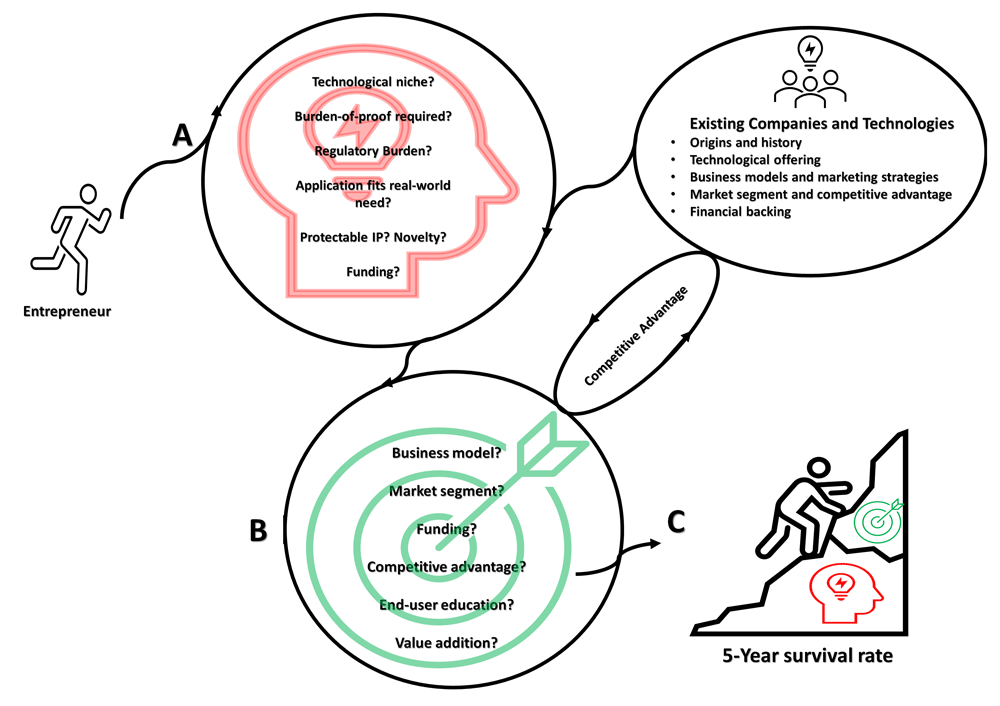
Figure 3. The considerations and risks for the entrepreneur.
Identifying a viable technology or product should be done on a constant basis with consideration required to provide a burden-of-proof to the investor as well as the market, showing an acceptable technology readiness level (A). Subsequently, the business model will need to be refined on a continuous basis in response to competitors, funding, and other factors (B). The initial core competency (A) will form the foundation for the business and developing market appetite (B), where reciprocal feedback loops will help navigate the five-year survival rate (C). There is no single route to guarantee successful five-year survival post-incorporation, but adaptability is essential. IP - intellectual property.
The true impact of social media and other online platforms on company business development and marketing is unclear. YouTube is mostly used for posting marketing materials, technical tutorials, and webinars (Table S4, Extended data32). AIM Biotech and Mimetas have peak single video views of 8004 and 8079, respectively, where CellAsic has a single peak view of 18,658. An example of successful marketing exploitation is shown with a Google search using keywords “organ on chip companies”, resulting in Mimetas as the top result (11,200,000 results; last accessed: 31 January 2020) where it should be considered that Mimetas trademarked the phrase “The Organ-on-Chip Company”336, contributing to company branding but also exploiting search engine optimization (SEO)337,338 to have higher ranking in search engine results. LinkedIn and Twitter are the predominant social media platforms with Mimetas and Emulate showing 3- to 45-fold more followers (Emulate > Mimetas > InSphero > CN Bio > Ibidi > HµRel > AIM; Table S4, Extended data32) per platform, with HµRel and AIM the least active on these platforms. LinkedIn is an organic outlet to disseminate information and targeted market education for science, technology, engineering and mathematics (STEM) and APBI professionals. Twitter is a challenging social media platform for typically social media conservative STEM/APBI professionals339, where concerted efforts from funding bodies, such as EU-H2020340,341, encourages adoption of social media usage for democratised science/technology communication to include the public and enhance research impact342. Social media activity follows a similar generational pattern: older generations prefer formal press releases and company memos as opposed to social media activity. Additionally, the companies all promote themselves as “animal free”, “cruelty free” or “3R approaches” in their mission statement to promote the benefits of MPS/OoC/MF in vitro technologies with respects to the individual company offering the best alternative. The nobility of this humane goal is reinforced for companies who receive awards from People for the Ethical Treatment of Animals (PETA; HµRel and Emulate)343,344 or the Humane Society345, leading to valuable marketing and networking opportunities to enhance company visibility. Networking is the most valuable toolset for the entrepreneur and company346,347, especially when opportunities arise through PETA and the Humane Society where association with celebrities, high-net worth individuals, business and thought leaders involved as donors, spokespersons, or board members.
The projected OoC/MPS market dominant role-players by 2025 (Table S1, Extended data32) are predicted to be Emulate, CN Bio and HµRel – divergent in business-and technology development strategies. The market projections do not include InSphero and Mimetas; however, it is not clear whether this is an omission by OoC definition or some other factors. The total public declared investment value by December 2019 for the companies in this article (Table S4, Extended data32) amounts to ≈ USD190 million, exceeding the 2023 projected market value of USD170 million. The declared investment does not include revenue or donation, nor the plethora of emerging companies. The true OoC/MPS market value can be suppressed by the current state of regulatory acceptance (Table 2), technology readiness and end-user confidence, regardless of the international socio-political pressure to adopt animal-free 3R methodologies. Consumable-focused companies (AIM, Ibidi, Mimetas) face a reduced BOP to demonstrate product TRL by showcasing a primary obvious advantage ranging from ergonomic design, improved microscopy applications, HT-HC compatibility, or the ability to mimic physiological occurrences. The BOP is expanded upon by extensive publications from sold products or collaboration. Interestingly, consumable companies are reported as part of the bioanalytics and microscopy markets, larger markers than OoC/MPS, regardless of their prominent roles in MPS/OoC across APBI. Added value addition to consumable products can include companion instrumentation and biochemicals, but there is a high reliance on collaborative partners from APBI to provide peer-reviewed BOP. The technical challenges (Figure 1; Table 1) to validate a novel biological model with an added companion technology (i.e. perfusion technology) comparatively to a representative golden standard is an exhaustive process, requiring a BOP for both components individually and in tandem to advance to an acceptable TRL to foster technology adoption. The gradual progression to demonstrate TRL can interest the early APBI adopter or investor at any stage of the technology development; however, this is a grand challenge when the targeted end-user sentiment is considered (Table 2). This is a challenging situation for the entrepreneur and company as investors typically require a return on investment in a relatively short duration (<5 years). Implementation of service delivery using the MPS/OoC technologies can serve a dual function of promotion and a source of revenue, especially if done in strategic collaboration. The joint publication from the US-FDA and CN Bio for an in vitro liver model194 using the PhysioMimix™ system has given the latter a higher level of trust in their technology for applications in APBI and from current as well as future investors. Emulate232–234 has used a similar US-FDA interaction for advancing in vitro liver models in a market that is highly coveted yet oversaturated with commercial and academic models. A PubMed search [Last accessed 15 December 2020] using keywords “in vitro liver” yields ≈20 000 publication for the past five years, ≈4400 publications for 2020. In vitro liver models face similar challenges as other in vitro models (cell contamination; genetic shift; non-physiological cell densities) but more specific challenges are providing liver sinusoidal heterogeneity with oxygen zonation, where correlation with drug oral bioavailability and metabolism is lacking348. A conservative estimate suggests ≈50 commercial in vitro liver models (internal database), where a recent review349 highlighted the creative heterogeneity for in vitro liver models including the most prominent MPS/OoC companies in 2019 providing models with application-defined peer-reviewed publications. The companies included Emulate, CN Bio, InSphero and HµRel – FDA recognition provides a clear competitive advantage (Figure 3) for two companies from the list when considered from an end-user perspective.
The above companies used different strategies post-incorporation to mitigate risk to an acceptable level while attracting interest and adoption from APBI and early investment based on an initial core competency coupled with scientific merit. Active campaigning with APBI, regulatory bodies and the public through media outlets is creating an appreciation and awareness for the role of MPS in advancing 3R implementation in a cruelty free manner. Technology maturation is advancing within the uncertain market where technology reputation is crucial. A cautionary case-study for any bioscience entrepreneur should include Elizabeth Holmes, founder of Theranos118,350,351, where the meteoric rise of the company was based on perceived core-competency and novel IP in diagnostic MF. Through reputation and networking from the high-profile board of directors, vast investment was secured, based on future-technology without a robust peer-reviewed BOP or current scientific merit. Elizabeth Holmes is currently facing charges of fraud and investors who want to recuperate their investment352.
Future outlooks
MPS-based companies enter an emerging market with uncertain projected future value, the true market value currently supressed by non-standardised technologies, regulatory process, and slow adoption by APBI end-users. However, progress made by leading MPS companies and regulatory bodies are progressively changing a roadmap to a charted journey, defining MPS requirements for standardization, in collaboration with APBI to shape the industry. Biological models and MPS technologies that have already received recognition from regulatory bodies are well on their way to become MPS reference standards. Consumables-based companies face less regulatory barriers but are active in a competitive market where technical advantages are not always obvious. Regardless, projected future MPS market size remains relatively low where technology maturity is adoption prohibitive for the greater academic community, especially in developing countries, where reliance on well-established methodologies or collaboration with more well-funded research groups are cost-effective. A further challenge for MPS companies is the continuous R&D downsizing and outsourcing seen for the biotechnology and pharmaceutical industry, coupled with a reluctance to invest in emerging technologies regardless of potential. A select few companies successfully demonstrated HT-HC workflow integration, but challenges remain in proving physiological relevance for the intended applications. The convergence of the above challenges created new opportunities for MPS companies to provide CRO services, benefitting the MPS industry in the long-term:
(i) MPS-technologies are provided in a reduced risk and more cost-effective manner to a larger user-base.
(ii) A larger user feedback can assist in improving MPS-technologies by identifying minimal universal requirements, particularly when animal-free methodologies are to be adapted.
(iii) A potentially more extensive BOP can be created to generate TRL confidence for MPS-technologies, for potential investors and end-users, leading to improved industry standardization.
(iv) Larger acceptance of MPS-technologies will eventually evolve into more affordable alternatives for democratising state-of-the-art research.
The companies in this article progressively advanced the MPS field commercially and technologically, paving the way for a newer generation of researchers and entrepreneurs. Regardless of the current challenges the future of the technologies is an untapped potential to technology standardization and global democratising of research using animal-free methodologies. The future of the per definition MPS-market (see section The state of the market: are all opportunities obvious?; Table S1, Extended data32) is projected to be less lucrative than related markets of MF or cellular analytics, but MPS are per definition a multidisciplinary field (Figure 4) reliant on a complex confluence of companies with innovative technologies to recapitulate physiology in vitro. The future entrepreneur must view the MPS industry as a complex environment that appears oversaturated; however, a basic keyword search using Google (Figure 4) highlights by SEO what end-users will find when searching for a company with associated services. A recent market projection353 of the top OoC/MPS companies that will directly influence the pharmaceutical industry highlight established and new companies entering the market with enthusiasm and outpacing some established competitors.
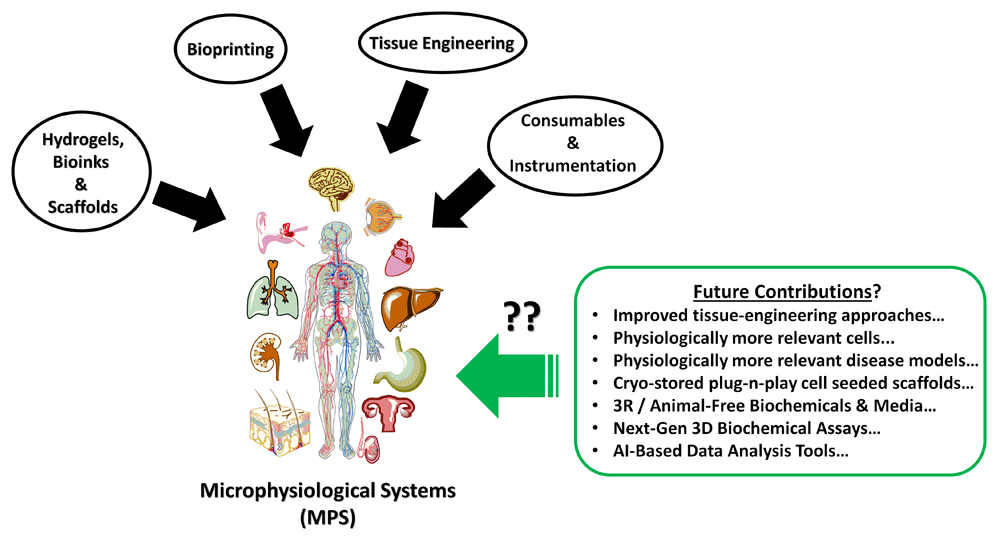
Figure 4. Microphysiological systems (MPS) technologies create a synergistic and competitive environment to drive the advancement of the field.
Multiple technologies and multidisciplinary researchers are required to create the physical environments (extracellular matrix, consumables) allowing recapitulating complex physiology in vitro (tissue engineering, bioprinting) in a relevant manner with in vivo simulation (temperature, liquid flow, media composition). The next generation of MPS will require advancement in multiple industries and technologies, creating opportunities for the innovative.
There is a segment of the MPS market that will eventually require animal-free growth media to fulfil true compliance to ethical and cruelty free 3R approaches, where currently there is an overreliance on animal-derived serum. An additional consideration for avoiding animal-derived components, especially in foods and medicine, include the costly removal of viruses and prions while reducing overall antibiotic usage. Developing an effective media formulation will not only serve the MPS industry but also the synthetic meat156 and cell therapy354 industries, which are projected at USD30 billion and USD6.7 billion, respectively, by 2030. The composition of media includes many biomolecules such as growth factors and hormones that will have to be sourced from non-animal origin such as with insulin, resulting in a significant increase in the biomolecules market in the 1990s. Similar arguments can be made for developing new MPS bioassays to improve experimental turnover or artificial intelligence (AI)-based analysis platforms for real-time culturing adaptation, data capture or analysis. Considering that current in vitro models have still to provide sufficient complexity to replace animal models or to advance precision medicine, new technologies and methodologies can contribute significantly – especially for plug-and-play ready cells in native-mimicked scaffolding with cryo-storage or biobanking design. Entrepreneurs can contribute in any of these fields to advance the maturation and commercial applications of MPS, where creativity and adaptability (Figure 4) will be the guiding factor to navigate the five-year post-incorporation survival.
Data availability
Underlying data
All data underlying the results are available as part of the article and no additional source data are required.
Extended data
EUDAT: MImETIC INDiRECT-ED001. http://doi.org/10.23728/b2share.65a27eea42254ab4828ae489b06af3c532.
This project contains the following extended data in the file ‘Extended Data.docx’:
Table S1 (Comparison of the market variables between MF and OoC)
Table S2 (Comparison of the market variables between diagnostics and therapeutics with regards to cancer)
Table S3 (Companies in MPS, OoC and MF)
Table S4 (A summary of selected MPS companies with regards to publications, patents filed, market segments and social media activity)
Data are available under the terms of the Creative Commons Zero "No rights reserved" data waiver (CC0 1.0 Public domain dedication).
Faculty Opinions recommendedReferences
- 1.
Dawson A, Greenman J, Bower R, et al.:
Microfluidics: the fur-free way towards personalised medicine in cancer therapy.
Drug target Rev.
2016; 3(1): 12–17. Reference Source
- 2.
Edington CD, Chen WLK, Geishecker E, et al.:
Interconnected Microphysiological Systems for Quantitative Biology and Pharmacology Studies.
Sci Rep.
2018; 8(1): 4530. PubMed Abstract
| Publisher Full Text
| Free Full Text
- 3.
Kurth F, Györvary E, Heub S, et al.:
Organs-on-a-chip engineering. In: Hoeng J, Bovard D, Peitsch M, editors.
Organ-on-a-chip.
Academic Press; 2020; 47–130. Publisher Full Text
- 4.
Marx U, Andersson TB, Bahinski A, et al.:
Biology-inspired microphysiological system approaches to solve the prediction dilemma of substance testing.
ALTEX.
2016; 33(3): 272–321. PubMed Abstract
| Publisher Full Text
| Free Full Text
- 5.
European Medicines Agency:
First EMA workshop on non-animal approaches in support of medicinal product development: challenges and opportunities for use of micro-physiological systems. London, United Kingdom. 2017. Reference Source
- 6.
Cronin M:
Non-Animal Approaches the Way Forward. Brussels (Belgium): European Commission; 2017. 2016; 6–7. Publisher Full Text
- 7.
Statement by FDA Commissioner Scott Gottlieb, M.D., on efforts to reduce animal testing through a study aimed at eliminating the use of dogs in certain trials. U.S. Food & Drug Administration; [cited 2020 Jan 31]. Reference Source
- 8.
Administrator Wheeler Signs Memo to Reduce Animal Testing, Awards $4.25 Million to Advance Research on Alternative Methods to Animal Testing. Washington (DC): United States Environmental Protection Agency; [cited 2020 Jan 31]. Reference Source
- 9.
Franzen N, van Harten WH, Retèl VP, et al.:
Impact of organ-on-a-chip technology on pharmaceutical R&D costs.
Drug Discov Today.
2019; 24(9): 1720–1724. PubMed Abstract
| Publisher Full Text
- 10.
Rudmann DG:
The Emergence of Microphysiological Systems (Organs-on-chips) as Paradigm-changing Tools for Toxicologic Pathology.
Toxicol Pathol.
2019; 47(1): 4–10. PubMed Abstract
| Publisher Full Text
- 11.
Organ-on-chip Market Expected to reach $170 Million, Globally, by 2023. Allied Market Research; [cited 2020 Jan 31]. Reference Source
- 12.
Organ-on-Chip Market 2019 - Industry Analysis, Size, Share, Strategies and Forecast to 2023. MarketWatch; [cited 2020 Jan 31]. Reference Source
- 13.
Organ-on-chip Market by Type (Heart-on-chip, Human-on-chip, Intestine-on-chip, Kidney-on-chip, Liver-on-chip, and Lung-on-chip) - Global Opportunity Analysis and Industry Forecast, 2017-2023. Allied Market Research; [cited 2020 Jan 31]. Reference Source
- 14.
Organ-on-Chip Market by Offering (Services, Products), by Type (Liver-on-Chip, Lung-on-Chip, Kidney-on-Chip, Heart-on-Chip, Intestine-on-Chip, Brain-on-Chip), by Application (Toxicology Research, Physiological Model Development, Drug Discovery), by End User (Pharmaceutical & Biotechnology Companies, Academic & Research Institutes), by Geography (U.S., Canada, Germany, U.K., France, China, Japan) – Global Market Size, Share, Development, Growth and Demand Forecast, 2016–2025. Prescient & Strategic Intelligence; [cited 2020 Jan 31]. Reference Source
- 15.
Microfluidics Market Size, Share & Trends Analysis Report By Application (Lab-on-a-Chip, Organs-on-Chips, Continuous Flow), By Technology (Medical, Non-Medical), By Material, And Segment Forecasts, 2020 - 2027. Grand View Research; [cited 2020 Jan 31]. Reference Source
- 16.
Microfluidics Market by Product (Devices, Components (Chips, Sensors, Pump, Valves, and Needles), Application (IVD [POC, Clinical, Veterinary], Research, Manufacturing, Therapeutics), End User and Region - Global Forecast to 2025. Markets and Markets; [cited 2020 Jan 31]. Reference Source
- 17.
Microfluidics Market - Growth, Trends, and Forecasts (2020 - 2025). Mordor Intelligence; [cited 2020 Jan 31]. Reference Source
- 18.
Caldwell J, Gardner I, Swales N:
An introduction to drug disposition: The basic principles of absorption, distribution, metabolism, and excretion.
Toxicol Pathol.
1995; 23(2): 102–114. PubMed Abstract
| Publisher Full Text
- 19.
Tsaioun K, Blaauboer BJ, Hartung T:
Evidence-based absorption, distribution, metabolism, excretion (ADME) and its interplay with alternative toxicity methods.
ALTEX.
2016; 33(4): 343–358. PubMed Abstract
| Publisher Full Text
- 20.
FDA's Woodcock: The Clinical Trials System is 'Broken'. Regulatory Affairs Professionals Society; [cited 2020 Jan 31]. Reference Source
- 21.
FDA's Woodcock: 'The clinical trial system is broken'. BioPharmaDive; [cited 2020 Jan 31]. Reference Source
- 22.
Wong CH, Siah KW, Lo AW:
Estimation of clinical trial success rates and related parameters.
Biostatistics.
2019; 20(2): 273–286. PubMed Abstract
| Publisher Full Text
| Free Full Text
- 23.
DiMasi JA, Grabowski HG, Hansen RW:
The cost of drug development.
N Engl J Med.
2015; 372(20): 1972. PubMed Abstract
| Publisher Full Text
- 24.
A Tough Road: Cost To Develop One New Drug Is $2.6 Billion; Approval Rate for Drugs Entering Clinical Development is Less Than 12%. Policy & Medicine; [cited 2020 Jan 31]. Reference Source
- 25.
Getting A Handle On Clinical Trial Costs. Clinical Leader; [cited 2020 Jan 31]. Reference Source
- 26.
Vogler S, Paris V, Ferrario A, et al.:
How Can Pricing and Reimbursement Policies Improve Affordable Access to Medicines? Lessons Learned from European Countries.
Appl Health Econ Health Policy.
2017; 15(3): 307–321. PubMed Abstract
| Publisher Full Text
- 27.
Keyhani S, Ross JS:
The cost of pharmaceutical innovation to patients.
Expert Opin Drug Discov.
2007; 2(11): 1431–1434. PubMed Abstract
| Publisher Full Text
- 28.
Littman BH, Marincola FM:
Create a translational medicine knowledge repository--Research downsizing, mergers and increased outsourcing have reduced the depth of in-house translational medicine expertise and institutional memory at many pharmaceutical and biotech companies: How will they avoid relearning old lessons?
J Transl Med.
2011; 9: 56. PubMed Abstract
| Publisher Full Text
| Free Full Text
- 29.
Outsourcing Clinical Trials Outside of the US. Global Pharmaceutical Technology; [cite 2020 Jan 31]. Reference Source
- 30.
Partnering with the right CRO is a winning strategy for companies big and small. Drug Discovery World; [cited 2020 Jan31]. Reference Source
- 31.
Pharma is shuffling around jobs, but a skills gap threatens the process. BioPharmaDive; [cited 2020 Jan 31]. Reference Source
- 32.
Taute CJF, Homs CA, Gaudriault P:
MImETIC INDiRECT-ED001.
EUDAT.
2021. http://www.doi.org/10.23728/b2share.65a27eea42254ab4828ae489b06af3c5
- 33.
Lucey BP, Nelson-Rees WA, Hutchins GM:
Henrietta Lacks, HeLa cells, and cell culture contamination.
Arch Pathol Lab Med.
2009; 133(9): 1463–1467. PubMed Abstract
- 34.
Griesinger C, Desprez B, Coecke S, et al.:
Validation of Alternative In Vitro Methods to Animal Testing: Concepts, Challenges, Processes and Tools. In: Eskes C, Whelan M, editors.
Validation of Alternative Methods for Toxicity Testing.
[place unknown]: Springer; 2016; 65–132. Publisher Full Text
- 35.
Mastrangeli M, Millet S, Braeken D, et al.:
Organ-on-Chip In Development: Towards a European roadmap for Organ-on-Chip.
ORCID Vision Workshop.
2018. Reference Source
- 36.
Dearing JW, Cox JG:
Diffusion of innovations theory, principles, and practice.
Health Aff (Millwood).
2018; 37(2): 183–190. PubMed Abstract
| Publisher Full Text
- 37.
Horizon 2020 Work Programme 2014-2015 General Annexes. European Commission; [cited 2020 Jan 31]. Reference Source
- 38.
Adam G, Andrews K, Armstrong M, et al.:
Measuring Technology Readiness for Investment: Accelerating Technology Development and Improving Innovation Performance.
2017. Reference Source
- 39.
Lee MC, Chang T, Chien WTC:
An Approach for Developing Concept of Innovation Readiness Levels.
Int J Technol Proj Manag.
2011; 3(2): 18–37. Reference Source
- 40.
Tomaschek K, Olechowski A, Eppinger S, et al.:
A Survey of Technology Readiness Level Users. 26th Annual INCOSE International Symposium, Edinburgh (Scotland), 18–21 July 2016. Reference Source
- 41.
El-Khoury B, Kenley CR:
An Analysis of TRL-Based Cost and Schedule Models. 9th Annual Acquisition Research Symposium, Monterey (California, USA), 16–17 May 2012. Reference Source
- 42.
Bray LJ, Hutmacher DW, Bock N:
Addressing Patient Specificity in the Engineering of Tumor Models.
Front Bioeng Biotechnol.
2019; 7: 217. PubMed Abstract
| Publisher Full Text
| Free Full Text
- 43.
Linkous A, Balamatsias D, Snuderl M, et al.:
Modeling Patient-Derived Glioblastoma with Cerebral Organoids.
Cell Rep.
2019; 26(12): 3203–3211.e5. PubMed Abstract
| Publisher Full Text
| Free Full Text
- 44.
Klicks J, Maßlo C, Kluth A, et al.:
A novel spheroid-based co-culture model mimics loss of keratinocyte differentiation, melanoma cell invasion, and drug-induced selection of ABCB5-expressing cells.
BMC Cancer.
2019; 19(1): 402. PubMed Abstract
| Publisher Full Text
| Free Full Text
- 45.
Blaurock-Möller N, Gröger M, Siwczak F, et al.:
CAAP48, a New Sepsis Biomarker, Induces Hepatic Dysfunction in an in vitro Liver-on-Chip Model.
Front Immunol.
2019; 10: 273. PubMed Abstract
| Publisher Full Text
| Free Full Text
- 46.
Lauschke VM, Shafagh RZ, Hendriks DFG, et al.:
3D Primary Hepatocyte Culture Systems for Analyses of Liver Diseases, Drug Metabolism, and Toxicity: Emerging Culture Paradigms and Applications.
Biotechnol J.
2019; 14(7): e1800347. PubMed Abstract
| Publisher Full Text
- 47.
Fonseca KL, Rodrigues PNS, Olsson IAS, et al.:
Experimental study of tuberculosis: From animal models to complex cell systems and organoids.
PLoS Pathog.
2017; 13(8): e1006421. PubMed Abstract
| Publisher Full Text
| Free Full Text
- 48.
Chen WLK, Edington C, Suter E, et al.:
Integrated gut/liver microphysiological systems elucidates inflammatory inter-tissue crosstalk.
Biotechnol Bioeng.
2017; 114(11): 2648–2659. PubMed Abstract
| Publisher Full Text
| Free Full Text
- 49.
van Midwoud PM:
An alternative approach based on microfluidics to study drug metabolism and toxicity using liver and intestinal tissue [dissertation]. Groningen: University of Groningen;
2010. Reference Source
- 50.
Rogal J, Binder C, Kromidas E, et al.:
WAT-on-a-chip integrating human mature white adipocytes for mechanistic research and pharmaceutical applications.
Sci Rep.
2020; 10(1): 6666. PubMed Abstract
| Publisher Full Text
| Free Full Text
- 51.
Dawson A, Dyer C, Macfie J, et al.:
A microfluidic chip based model for the study of full thickness human intestinal tissue using dual flow.
Biomicrofluidics.
2016; 10(6): 064101. PubMed Abstract
| Publisher Full Text
| Free Full Text
- 52.
Maschmeyer I, Lorenz AK, Schimek K, et al.:
A four-organ-chip for interconnected long-term co-culture of human intestine, liver, skin and kidney equivalents.
Lab Chip.
2015; 15(12): 2688–2699. PubMed Abstract
| Publisher Full Text
- 53.
Turnbull G, Clarke J, Picard F, et al.:
3D bioactive composite scaffolds for bone tissue engineering.
Bioact Mater.
2017; 3(3): 278–314. PubMed Abstract
| Publisher Full Text
| Free Full Text
- 54.
Ashammakhi N, Ahadian S, Xu C, et al.:
Bioinks and bioprinting technologies to make heterogeneous and biomimetic tissue constructs.
Mater Today Bio.
2019; 1: 100008. PubMed Abstract
| Publisher Full Text
| Free Full Text
- 55.
Ye S, Boeter JWB, Penning LC, et al.:
Hydrogels for liver tissue engineering.
Bioengineering (Basel).
2019; 6(3): 59. PubMed Abstract
| Publisher Full Text
| Free Full Text
- 56.
Dai X, Liu L, Ouyang J, et al.:
Coaxial 3D bioprinting of self-assembled multicellular heterogeneous tumor fibers.
Sci Rep.
2017; 7(1): 1457. PubMed Abstract
| Publisher Full Text
| Free Full Text
- 57.
Nguyen DG, Funk J, Robbins JB, et al.:
Bioprinted 3D primary liver tissues allow assessment of organ-level response to clinical drug induced toxicity in vitro.
PLoS One.
2016; 11(7): e0158674. PubMed Abstract
| Publisher Full Text
| Free Full Text
- 58.
Ozbolat IT:
Scaffold-Based or Scaffold-Free Bioprinting: Competing or Complementing Approaches?
J Nanotechnol Eng Med.
2015; 6(2): 024701. Publisher Full Text
- 59.
Liu H, Wang Y, Cui K, et al.:
Advances in Hydrogels in Organoids and Organs-on-a-Chip.
Adv Mater.
2019; 31(50): e1902042. PubMed Abstract
| Publisher Full Text
- 60.
Guo JL, Kim YS, Xie VY, et al.:
Modular, tissue-specific, and biodegradable hydrogel cross-linkers for tissue engineering.
Sci Adv.
2019; 5(6): eaaw7396. PubMed Abstract
| Publisher Full Text
| Free Full Text
- 61.
Parak A, Pradeep P, du Toit LC, et al.:
Functionalizing bioinks for 3D bioprinting applications.
Drug Discov Today.
2019; 24(1): 198–205. PubMed Abstract
| Publisher Full Text
- 62.
Zhang YS, Pi Q, van Genderen AM:
Microfluidic bioprinting for engineering vascularized tissues and organoids.
J Vis Exp.
2017; (126): 55957. PubMed Abstract
| Publisher Full Text
| Free Full Text
- 63.
Zervantonakis IK, Hughes-Alford SK, Charest JL, et al.:
Three-dimensional microfluidic model for tumor cell intravasation and endothelial barrier function.
Proc Natl Acad Sci USA.
2012; 109(34): 13515–13520. PubMed Abstract
| Publisher Full Text
| Free Full Text
- 64.
Al-Lamki RS, Bradley JR, Pober JS:
Human organ culture: Updating the approach to bridge the gap from in vitro to in vivo in inflammation, cancer, and stem cell biology.
Front Med (Lausanne).
2017; 4: 148. PubMed Abstract
| Publisher Full Text
| Free Full Text
- 65.
Dzobo K, Rowe A, Senthebane DA, et al.:
Three-Dimensional Organoids in Cancer Research: The Search for the Holy Grail of Preclinical Cancer Modeling.
OMICS.
2018; 22(12): 733–748. PubMed Abstract
| Publisher Full Text
- 66.
Phan N, Hong JJ, Tofig B, et al.:
A simple high-throughput approach identifies actionable drug sensitivities in patient-derived tumor organoids.
Commun Biol.
2019; 2(1): 78. PubMed Abstract
| Publisher Full Text
| Free Full Text
- 67.
Riedl A, Schlederer M, Pudelko K, et al.:
Comparison of cancer cells in 2D vs 3D culture reveals differences in AKT-mTOR-S6K signaling and drug responses.
J Cell Sci.
2017; 130(1): 203–218. PubMed Abstract
| Publisher Full Text
- 68.
Kaushik V, Yakisich JS, Kulkarni Y, et al.:
Chemoresistance of Lung Cancer Cells: 2D and 3D In Vitro Models for Anticancer Drug Screening. In: Torres AFC, editor. Lung Cancer - Strategies for Diagnosis and Treatment. [place not specified]: IntechOpen; 2018; 173–193. Publisher Full Text
- 69.
Jackson SJ, Thomas GJ:
Human tissue models in cancer research: Looking beyond the mouse.
Dis Model Mech.
2017; 10(8): 939–942. PubMed Abstract
| Publisher Full Text
| Free Full Text
- 70.
Hatzis C, Bedard PL, Birkbak NJ, et al.:
Enhancing reproducibility in cancer drug screening: How do we move forward?
Cancer Res.
2014; 74(15): 4016–4023. PubMed Abstract
| Publisher Full Text
| Free Full Text
- 71.
Zhang D, Luo G, Ding X, et al.:
Preclinical experimental models of drug metabolism and disposition in drug discovery and development.
Acta Pharm Sin B.
2012; 2(6): 549–561. Publisher Full Text
- 72.
Baker K:
Organoids provide an important window on inflammation in cancer.
Cancers (Basel).
2018; 10(5): 151. PubMed Abstract
| Publisher Full Text
| Free Full Text
- 73.
Kasendra M, Tovaglieri A, Sontheimer-Phelps A, et al.:
Development of a primary human Small Intestine-on-a-Chip using biopsy-derived organoids.
Sci Rep.
2018; 8(1): 2871. PubMed Abstract
| Publisher Full Text
| Free Full Text
- 74.
Karolak A, Markov DA, McCawley LJ, et al.:
Towards personalized computational oncology: From spatial models of tumour spheroids, to organoids, to tissues.
J R Soc Interface.
2018; 15(138): 20170703. PubMed Abstract
| Publisher Full Text
| Free Full Text
- 75.
Vinke C:
Canine liver organoids for disease modeling of copper toxicosis and transplantation [master’s thesis]. Utrecht: Utrecht University;
2015. Reference Source
- 76.
Sachs N, de Ligt J, Kopper O, et al.:
A Living Biobank of Breast Cancer Organoids Captures Disease Heterogeneity.
Cell.
2018; 172(1–2): 373–386.e10. PubMed Abstract
| Publisher Full Text
- 77.
Sasmita AO, Wong YP:
Organoids as Reliable Breast Cancer Study Models: An Update.
Int J Oncol Res.
2018; 1(2): 008. Publisher Full Text
- 78.
Meijer TG, Naipal KA, Jager A, et al.:
Ex vivo tumor culture systems for functional drug testing and therapy response prediction.
Futur Sci OA.
2017; 3(2): FSO190. PubMed Abstract
| Publisher Full Text
| Free Full Text
- 79.
Naipal KAT, Verkaik NS, Sánchez H, et al.:
Tumor slice culture system to assess drug response of primary breast cancer.
BMC Cancer.
2016; 16: 78. PubMed Abstract
| Publisher Full Text
| Free Full Text
- 80.
Gomez-Cuadrado L, Tracey N, Ma R, et al.:
Mouse models of metastasis: Progress and prospects.
Dis Model Mech.
2017; 10(9): 1061–1074. PubMed Abstract
| Publisher Full Text
| Free Full Text
- 81.
Roife D, Dai B, Kang Y, et al.:
Ex vivo testing of patient-derived xenografts mirrors the clinical outcome of patients with pancreatic ductal adenocarcinoma.
Clin Cancer Res.
2016; 22(24): 6021–6030. PubMed Abstract
| Publisher Full Text
| Free Full Text
- 82.
Choi SI, Jeon AR, Kim MK, et al.:
Development of Patient-Derived Preclinical Platform for Metastatic Pancreatic Cancer: PDOX and a Subsequent Organoid Model System Using Percutaneous Biopsy Samples.
Front Oncol.
2019; 9: 875. PubMed Abstract
| Publisher Full Text
| Free Full Text
- 83.
de Graaf IAM, Olinga P, de Jager MH, et al.:
Preparation and incubation of precision-cut liver and intestinal slices for application in drug metabolism and toxicity studies.
Nat Protoc.
2010; 5(9): 1540–1551. PubMed Abstract
| Publisher Full Text
- 84.
Frenk NE, Spring L, Muzikansky A, et al.:
High-Content Biopsies Facilitate Molecular Analyses and Do Not Increase Complication Rates in Patients With Advanced Solid Tumors.
JCO Precis Oncol.
2017; 1–9. Publisher Full Text
- 85.
Rosales Gerpe MC, van Vloten JP, Santry LA, et al.:
Use of Precision-Cut Lung Slices as an Ex Vivo Tool for Evaluating Viruses and Viral Vectors for Gene and Oncolytic Therapy.
Mol Ther Methods Clin Dev.
2018; 10: 245–256. PubMed Abstract
| Publisher Full Text
| Free Full Text
- 86.
Wu X, Roberto JB, Knupp A, et al.:
Precision-cut human liver slice cultures as an immunological platform.
J Immunol Methods.
2018; 455: 71–79. PubMed Abstract
| Publisher Full Text
| Free Full Text
- 87.
Weeber F, Ooft SN, Dijkstra KK, et al.:
Tumor Organoids as a Pre-clinical Cancer Model for Drug Discovery.
Cell Chem Biol.
2017; 24(9): 1092–1100. PubMed Abstract
| Publisher Full Text
- 88.
Walker MW, Butler JM, Higdon HL, et al.:
Temperature variations within and between incubators-a prospective, observational study.
J Assist Reprod Genet.
2013; 30(12): 1583–1585. PubMed Abstract
| Publisher Full Text
| Free Full Text
- 89.
Al-Ani A, Toms D, Kondro D, et al.:
Oxygenation in cell culture: Critical parameters for reproducibility are routinely not reported.
PLoS One.
2018; 13(10): e0204269. PubMed Abstract
| Publisher Full Text
| Free Full Text
- 90.
Place TL, Domann FE, Case AJ:
Limitations of oxygen delivery to cells in culture: An underappreciated problem in basic and translational research.
Free Radic Biol Med.
2017; 113: 311–322. PubMed Abstract
| Publisher Full Text
| Free Full Text
- 91.
WEBINAR: What is hyperoxia, normoxia and hypoxia to cells: Why researchers should care about environmental oxygen and how it influences results. Scintica; [cited 2020 Jan 31]. Reference Source
- 92.
Eduati F, Utharala R, Madhavan D, et al.:
A microfluidics platform for combinatorial drug screening on cancer biopsies.
Nat Commun.
2018; 9(1): 2434. PubMed Abstract
| Publisher Full Text
| Free Full Text
- 93.
Mathur L, Ballinger M, Utharala R, et al.:
Microfluidics as an Enabling Technology for Personalized Cancer Therapy.
Small.
2020; 16(9): 1904321. PubMed Abstract
| Publisher Full Text
- 94.
Bower R, Green VL, Kuvshinov D, et al.:
Maintenance of head and neck tumor on-chip: Gateway to personalized treatment?
Futur Sci OA.
2017; 3(2): FSO174. PubMed Abstract
| Publisher Full Text
| Free Full Text
- 95.
Olubajo F, Achawal S, Greenman J:
Development of a Microfluidic Culture Paradigm for Ex Vivo Maintenance of Human Glioblastoma Tissue: A New Glioblastoma Model?
Transl Oncol.
2020; 13(1): 1–10. PubMed Abstract
| Publisher Full Text
| Free Full Text
- 96.
Pridgeon CS, Schlott C, Wong MW, et al.:
Innovative organotypic in vitro models for safety assessment: aligning with regulatory requirements and understanding models of the heart, skin, and liver as paradigms.
Arch Toxicol.
2018; 92(2): 557–569. PubMed Abstract
| Publisher Full Text
| Free Full Text
- 97.
Ren K, Zhou J, Wu H:
Materials for Microfluidic Chip Fabrication.
Acc Chem Res.
2013; 46(11): 2396–2406. PubMed Abstract
| Publisher Full Text
- 98.
Kotz F, Risch P, Helmer D, et al.:
High-Performance Materials for 3D Printing in Chemical Synthesis Applications.
Adv Mater.
2019; 31(26): e1805982. PubMed Abstract
| Publisher Full Text
- 99.
Eto H, Soga N, Franquelim, HG, et al.:
Design of Sealable Custom-Shaped Cell Mimicries Based on Self-Assembled Monolayers on CYTOP Polymer.
ACS Appl Mater Interfaces.
2019; 11(24): 21372–21380. PubMed Abstract
| Publisher Full Text
| Free Full Text
- 100.
Torino S, Corrado B, Iodice M, et al.:
PDMS-based microfluidic devices for cell culture.
Inventions.
2018; 3(3): 65. Publisher Full Text
- 101.
Halldorsson S, Lucumi E, Gómez-Sjöberg R, et al.:
Advantages and challenges of microfluidic cell culture in polydimethylsiloxane devices.
Biosens Bioelectron.
2015; 63: 218–231. PubMed Abstract
| Publisher Full Text
- 102.
Vanderbilt researchers win an R&D100 Award for MultiWell MicroFormulator. Vanderbilt University; [cited 2020 Jan 31]. Reference Source
- 103.
NCATS Supports Award-Winning Technology for Drug Development. National Center for Advancing Translational Sciences (NCATS); [cited 2020 Jan31]. Reference Source
- 104.
Parrish J, Lim KS, Baer K, et al.:
A 96-well microplate bioreactor platform supporting individual dual perfusion and high-throughput assessment of simple or biofabricated 3D tissue models.
Lab Chip.
2018; 18(18): 2757–2775. PubMed Abstract
| Publisher Full Text
- 105.
Kaarj K, Yoon JY:
Methods of delivering mechanical stimuli to Organ-on-a-Chip.
Micromachines (Basel).
2019; 10(10): 700. PubMed Abstract
| Publisher Full Text
| Free Full Text
- 106.
Zhao Y, Kankala RK, Wang SB, et al.:
Multi-organs-on-chips: Towards long-term biomedical investigations.
Molecules.
2019; 24(4): 675. PubMed Abstract
| Publisher Full Text
| Free Full Text
- 107.
Zhang B, Peticone C, Murthy SK, et al.:
A standalone perfusion platform for drug testing and target validation in micro-vessel networks.
Biomicrofluidics.
2013; 7(4): 44125. PubMed Abstract
| Publisher Full Text
| Free Full Text
- 108.
Waldman-Brown A, Wanyiri J, Adebola SO, et al.:
Democratising Technology: the Confluence of Makers and Grassroot Innovators. Proceedings for the International Conference on Creativity and Innovations at Grassroots. Ahmedabad, India. 2015. Reference Source
- 109.
Democracy in Europe Movement 2025:
Technological Sovereignty: Democratising Technology and Innovation [green paper]. Progressive Agenda for Europe.
2019; 3: 1–26. Reference Source
- 110.
Moving beyond the Three Rs in Biomedical Research. European Commission; [cited 2020 Jan 31]. Reference Source
- 111.
ARRIVE guidelines. NC3Rs; [cited 2020 Jan 31]. Reference Source
- 112.
Sutherland ML, Fabre KM, Tagle DA:
The National Institutes of Health Microphysiological Systems Program focuses on a critical challenge in the drug discovery pipeline.
Stem Cell Res Ther.
2013; 4 Suppl 1(Suppl 1): I1. PubMed Abstract
| Publisher Full Text
| Free Full Text
- 113.
Smirnova L, Kleinstreuer N, Corvi R, et al.:
3S - Systematic, systemic, and systems biology and toxicology.
ALTEX.
2018; 35(2): 139–162. PubMed Abstract
| Publisher Full Text
| Free Full Text
- 114.
Ban on animal testing. European Commission; [cited 2020 Jan 31]. Reference Source
- 115.
human Organ and Disease Model Technologies. hDMT; [cited 2020 Jan 31]. Reference Source
- 116.
Organ on Chip in Development. European Commission; [cited 2020 Jan 31]. Reference Source
- 117.
EUROoC. EUROoC Network; [cited 2020 Jan 31]. Reference Source
- 118.
Dundes L, Buitelaar MS, Streiffi Z:
Bad Witches: Gender and the downfall of Elizabeth Holmes of Theranos and Disney’s Maleficent.
Soc Sci.
2019; 8(6): 175. Publisher Full Text
- 119.
European Commission:
EURL ECVAM Status Report on the Development, Validation and Regulatory Acceptance of Alternative Methods and Apporaches. EUR29455. 2018. Reference Source
- 120.
Barrangou R, Doudna JA:
Applications of CRISPR technologies in research and beyond.
Nat Biotechnol.
2016; 34(9): 933–941. PubMed Abstract
| Publisher Full Text
- 121.
Beyond CRISPR: What’s current and upcoming in genome editing. ScienceMag; [cited 2020 Jan 31]. Reference Source
- 122.
Brinegar K, Yetisen AK, Choi S, et al.:
The commercialization of genome-editing technologies.
Crit Rev Biotechnol.
2017; 37(7): 924–932. PubMed Abstract
| Publisher Full Text
- 123.
Convery N, Gadegaard N:
30 years of microfluidics.
Micro and Nano Engineering.
2019; 2: 76–91. Publisher Full Text
- 124.
Ma S, Murphy TW, Chang L:
Microfluidics for genome-wide studies involving next generation sequencing.
Biomicrofluidics.
2017; 11(2): 021501. PubMed Abstract
| Publisher Full Text
| Free Full Text
- 125.
Chiu DT, DeMello AJ, Di Carlo D, et al.:
Small but Perfectly Formed? Successes, Challenges, and Opportunities for Microfluidics in the Chemical and Biological Sciences.
Chem.
2017; 2(2): 201–223. Publisher Full Text
- 126.
Rwanda is Building Africa’s Very Own Silicon Valley – Kigali Innovation City (KIC). Business Africa Online; [cited 2020 Jan 31]. Reference Source
- 127.
Rwanda is bringing tech buzz to Africa. Fortune; [cited 2020 Jan 31]. Reference Source
- 128.
Africa's first 'Silicon Valley' to be built in Rwanda. Ankara: Anadolu Agency; [cited 2020 Jan 31]. Reference Source
- 129.
Human Genomics Research Has A Diversity Problem. NPR; [cited 2020 Jan 31]. Reference Source
- 130.
Bentley AR, Callier S, Rotimi CN:
Diversity and inclusion in genomic research: why the uneven progress?
J Community Genet.
2017; 8(4): 255–266. PubMed Abstract
| Publisher Full Text
| Free Full Text
- 131.
Building the future of health research: Proposal for a European Council for Health Research. A consensus document of the H2020 Scientific Panel for Health.
2018. Reference Source
- 132.
Bountra C, Lee WH, Lezaun J:
A New Pharmaceutical Commons: Transforming Drug Discovery.
Oxford Martin Policy Paper.
Reference Source
- 133.
Latest global cancer data: Cancer burden rises to 19.3 million new cases and 10.0 million cancer deaths in 2020. Lyon (France): IARC; [cited 2020 Dec 30]. Reference Source
- 134.
Bray F, Ferlay J, Soerjomataram I, et al.:
Global Cancer Statistics 2018: GLOBOCAN Estimates of Incidence and Mortality Worldwide for 36 Cancers in 185 Countries.
CA Cancer J Clin.
2018; 68(6): 394–424. PubMed Abstract
| Publisher Full Text
- 135.
Cancer Surpasses CVD as Leading Cause of Death in High-Income Counties. AJMC; [cited 2020 Jan 31]. Reference Source
- 136.
Cancer Overtakes CVD as Leading Cause of Death in Wealthy Nations. Medscape; [cited 2020 Jan 31]. Reference Source
- 137.
Cancer Therapeutics Market by Application (Blood Cancer, Lung Cancer, Colorectal Cancer, Prostate Cancer, Breast Cancer, Cervical Cancer, Head & Neck Cancer, Glioblastoma, Malignant Meningioma, Mesothelioma, Melanoma, and Others) and Top Selling Drugs (Revlimid, Avastin, Herceptin, Rituxan, Opdivo, Gleevec, Velcade, Imbruvica, Ibrance, Zytiga, Alimta, Xtandi, Tarceva, Perjeta, Temodar, and Others): Global Opportunity Analysis and Industry Forecast, 2019 – 2026. Allied Market Research; [cited 2020 Jan 31]. Reference Source
- 138.
Global Cancer Therapeutics Market: Emphasis on Recurrent and Metastatic Divisions. BCC Research; [cited 2020 Jan 31]. Reference Source
- 139.
Global Cancer Therapeutics Market: Emphasis on Recurrent and Metastatic Divisions. Research and Markets; [cited 2020 Jan 31]. Reference Source
- 140.
Global Cancer Therapeutics Market Size By Application, By End User, By Geographic Scope and Forecast. Verified Market Research; [cited 2020 Jan 31]. Reference Source
- 141.
https://www.marketwatch.com/press-release/cancer-diagnostics-market-2019-industry-analysis-by-future-demand-top-players-size-share-opportunities-revenue-and-growth-rate-through-2025---market-reports-world-2019-10-24
- 142.
Cancer Diagnostics Market Worth $249.6 Billion By 2026 CAGR: 7.0%. Grand View Research; [cited 2020 Jan 31]. Reference Source
- 143.
Cancer Diagnostics Market by Technology (ELISA, ELFA, PCR, NGS, Immunohistochemistry, Microarray, Imaging (MRI, CT, PET, Ultrasound, Mammography), Biopsy), Application (Breast Cancer, Lung Cancer, Colorectal Cancer, Melanoma) - Forecast to 2020. Markets and Markets; [cited 2020 Jan 31]. Reference Source
- 144.
Cancer Diagnostics Market - Growth, Trends, and Forecasts (2020 - 2025). Mordor Intelligence; [cited 2020 Jan 31]. Reference Source
- 145.
Cancer Diagnostics Market Size By Application (Tumor Biomarkers Tests, Imaging {Ultrasound and Radiology, Mammography, MRI Scan, PET Scan, CT Scan, SPECT & Others}, Biopsy, Liquid Biopsy, Immunohistochemistry, In Situ Hybridization), By Cancer Type (Bladder Cancer, Breast Cancer, Colon and Rectal Cancer, Endometrial Cancer, Kidney Cancer, Leukemia, Liver-Lung Cancer, Melanoma, Non-Hodgkin Lymphoma, Pancreatic Cancer, Prostate Cancer, Thyroid Cancer), By End-use (Hospitals, Diagnostic Laboratories, Diagnostic Imaging Centers, Cancer Research Institutes), Industry Analysis Report, Regional Outlook, Application Potential, Price Trends, Competitive Market Share & Forecast, 2020 – 2026. Global Market Insights; [cited 2020 Jan 31]. Reference Source
- 146.
Global Personalized Medicine Market – Types, Technologies and Applications. Research and Markets; [cited 2020 Jan 31]. Reference Source
- 147.
Personalized Medicine, Targeted Therapeutics and Companion Diagnostic Market to 2025 - Strategic Analysis of Industry Trends, Technologies, Participants, and Environment. Research and Markets; [cited 2020 Jan 31]. Reference Source
- 148.
Companion Diagnostics - Global Market Trajectory & Analytics. Research and Markets; [cited 2020 Jan 31]. Reference Source
- 149.
A marriage of tumor slices and microfluidics. Cancer; [cited 2020 May 25]. Reference Source
- 150.
Chang T, Monnat RJ Jr, Folch A, et al.:
A microfluidic device for exposing tumor biopsy tissue to multiple drugs. In: Fujii T, Hibara A, Takeuchi S, et al.Proceedings of the 16th International Conference on Miniaturized Systems for Chemistry and Life Sciences, MicroTAS 2012. 2012; 815–817. Reference Source
- 151.
Chang TC, Mikheev AM, Huynh W, et al.:
Parallel microfluidic chemosensitivity testing on individual slice cultures.
Lab Chip.
2014; 14(23): 4540–4551. PubMed Abstract
| Publisher Full Text
| Free Full Text
- 152.
Sip CG, Bhattacharjee N, Folch A:
Microfluidic transwell inserts for generation of tissue culture-friendly gradients in well plates.
Lab Chip.
2014; 14(2): 302–314. PubMed Abstract
| Publisher Full Text
| Free Full Text
- 153.
Rountree A, Karkamkar A, Khalil G, et al.:
BaroFuse, a novel pressure-driven, adjustable-throughput perfusion system for tissue maintenance and assessment.
Heliyon.
2016; 2(12): e00210. PubMed Abstract
| Publisher Full Text
| Free Full Text
- 154.
Folch A, Monnat RJ, Chang CT, et al.:
Microfluidic assay apparatus and methods of use. United States patent US20140113838A1. 2014 Apr 24. Reference Source
- 155.
OncoFluidics. Oncofluids; [cited 2020 Jan 31]. Reference Source
- 156.
Plant-based and Cultured Meat 2020-2030. IDTechEx; [cited 2020 Dec 30].
Reference Source
- 157.
Zhang B, Radisic M:
Organ-on-A-chip devices advance to market.
Lab Chip.
2017; 17(14): 2395–2420. PubMed Abstract
| Publisher Full Text
- 158.
van de Burgwal LHM, van Dorst P, Viëtor H, et al.:
Hybrid business models for ‘Organ-on-a-Chip’ technology: The best of both worlds.
PharmaNutrition.
2018; 6(2): 55–63. Publisher Full Text
- 159.
Organovo. Organovo Holdings Inc.; [cited 2020 Jan 31]. Reference Source
- 160.
Organovo exploring strategic alternatives and implementing restructuring plan. 3D Printing Media Network; [cited 2020 Jan 31]. Reference Source
- 161.
Organovo Holdings. Crunchbase; [cited 2020 Jan 31]. Reference Source
- 162.
Organovo & Merck Enter Multi-year Research Partnership for 3D Printed Human Tissue. 3DPrint.com; [cited 2020 Jan 31]. Reference Source
- 163.
L'Oreal's Plan to Start 3D Printing Human Skin. Bloomberg; [cited 2020 Jan 31]. Reference Source
- 164.
Media Coverage. Organovo; [cited 2020 Jan 31]. Reference Source
- 165a.
Organovo Files Definitive Proxy Statement and Sends Letter to Stockholders. San Diego (CA): Business Wire; [cited 2020 Oct 10]. Reference Source
- 165b.
Organovo Announces Termination of Merger Agreement with Tarveda Therapeutics. San Diego (CA): Business Wire; [cited 2020 Oct 10]. Reference Source
- 166.
Interoperability of microfluidic devices — Guidelines for pitch spacing dimensions and initial device classification. Online Browsing Platform; [cited 2020 Jan 31]. Reference Source
- 167.
AIM Biotech. AIM Biotech; [cited 2020 Jan 31]. Reference Source
- 168.
Products. AIM Biotech; [cited 2020 Jan 31]. Reference Source
- 169.
Pavesi, A, Lim SH, Lim SK, et al.:
Microfluidic platform for investigating cell-based interactions. WIPO PCT patent WO2016076795A1. 2016 May 19. Reference Source
- 170.
3D Cell Culture Chip. AIM Biotech; [cited 2020 Jan 31]. Reference Source
- 171.
AIM Biotech Overview. PitchBook; [cited 2020 Jan 31]. Reference Source
- 172.
AIM Biotech 3D Organ-On-A-Chip Devices. Merck; [cited 2020 Jan 31]. Reference Source
- 173.
ibidi at a Glance. ibidi: [cited 2020 Jan 31]. Reference Source
- 174.
New Market Reports. Markets and Markets; [cited 2020 Jan 31]. Reference Source
- 175.
Live Cell Imaging Market to Reach USD 3.76 Billion By 2026. New York (NY): GlobeNewswire; [cited 2020 Jan 31]. Reference Source
- 176.
Live Cell Imaging Market - Growth, Trends, and Forecasts (2020 - 2025). Mordor Intelligence; [cited 2020 Jan 31]. Reference Source
- 177.
Live Cell Imaging Market worth $2.9 billion by 2023. Markets and Markets; [cited 2020 Jan 31]. Reference Source
- 178.
World Live Cell Imaging Market - Opportunities and Forecast, 2020-2027. Allied Market Research; [cited 2020 Jan 31]. Reference Source
- 179.
ISO 9000 Family. ISO; [cited 2020 Jan 31]. Reference Source
- 180.
ISO 13485. ISO; [cited 2020 Jan 31]. Reference Source
- 181.
Grants Awarded. NCI Innovative Molecular Analysis Technologies; [cited 2020 Jan 31]. Reference Source
- 182.
CellASIC Corp. Berkeley IPIRA; [cited 2020 Jan 31]. Reference Source
- 183.
Park JS, Rhau B, Hermann A, et al.:
Synthetic control of mammalian-cell motility by engineering chemotaxis to an orthogonal bioinert chemical signal.
Proc Natl Acad Sci USA.
2014; 111(16): 5896–5901. PubMed Abstract
| Publisher Full Text
| Free Full Text
- 184.
Changou CA, Chen YR, Xing L, et al.:
Arginine starvation-associated atypical cellular death involves mitochondrial dysfunction, nuclear DNA leakage, and chromatin autophagy.
Proc Natl Acad Sci USA.
2014; 111(39): 14147–14152. PubMed Abstract
| Publisher Full Text
| Free Full Text
- 185.
Zambrano S, De Toma I, Piffer A, et al.:
NF-κB oscillations translate into functionally related patterns of gene expression.
eLife.
2016; 5: e09100. PubMed Abstract
| Publisher Full Text
| Free Full Text
- 186.
Applications of the CellASIC® ONIX Microfluidic Platform. Merck; [cited 2020 Jan 31]. Reference Source
- 187.
Tutorials/Protocols for the CellASIC® ONIX Microfluidic Platform. Merck; [cited 2020 Jan 31]. Reference Source
- 188.
CellASIC® ONIX Live Cell Analysis Customer Reviews. Merck; [cited 2020 Jan 31]. Reference Source
- 189.
FDA signs collaborative agreement with CN Bio Innovations to use Organs-on-Chips to improve drug development and evaluation. London: CN Bio Innovations; [cited 2020 Jan 31]. Reference Source
- 190.
CN Bio Innovations announces research collaboration with AstraZeneca to validate a new in vitro tool to predict optimised drug dosing regimens for multi-drug therapies. London: CN Bio Innovations; [2020 Jan 31]. Reference Source
- 191.
CN Bio Innovations announces license of worldwide rights to Hepatitis B programme from Bristol-Myers Squibb. London: CN Bio Innovations; [cited 2020 Jan 31].
Reference Source
- 192.
CN Bio Innovations announces licence of platform microfluidics technologies from Vanderbilt University. London: CN Bio Innovations; [cited 2020 Jan 31].
Reference Source
- 193.
PhysioMimix™ Human 3D Cell Culture wins Lab Innovation 2018 Award. CN Bio Innovations; [cited 2020 Jan 31]. Reference Source
- 194.
Rubiano A, Indapurkar A, Yokosawa R, et al.:
Characterizing the Reproducibility in Using a Liver Microphysiological System for Assaying Drug Toxicity, Metabolism and Accumulation.
Clin Transl Sci.
2020; Accepted Author Manuscript. PubMed Abstract
| Publisher Full Text
- 195.
Inman W, Domansky K, Serdy J, et al.:
Design, modeling and fabrication of a constant flow pneumatic micropump.
J Micromech Microeng.
2007; 17(5): 891. Publisher Full Text
- 196.
Domansky K, Inman W, Serdy J, et al.:
Perfused multiwell plate for 3D liver tissue engineering.
Lab Chip.
2010; 10(1): 51–58. PubMed Abstract
| Publisher Full Text
| Free Full Text
- 197.
Ebrahimkhani MR, Neiman JAS, Raredon MSB, et al.:
Bioreactor technologies to support liver function in vitro.
Adv Drug Deliv Rev.
2014; 69–70: 132–157. PubMed Abstract
| Publisher Full Text
| Free Full Text
- 198.
Sarkar U, Rivera-Burgos D, Lage EM, et al.:
Metabolite profiling and pharmacokinetic evaluation of hydrocortisone in a perfused three-dimensional human liver bioreactor.
Drug Metab Dispos.
2015; 43(7): 1091–1099. PubMed Abstract
| Publisher Full Text
| Free Full Text
- 199.
Long TJ, Cosgrove PA, Dunn RT, et al.:
Modeling therapeutic antibody-small molecule drug-drug interactions using a three-dimensional perfusable human liver coculture platform.
Drug Metab Dispos.
2016; 44(12): 1940–1948. PubMed Abstract
| Publisher Full Text
| Free Full Text
- 200.
Kostrzewski T, Cornforth T, Snow SA, et al.:
Three-dimensional perfused human in vitro model of non-alcoholic fatty liver disease.
World J Gastroenterol.
2017; 23(2): 204–215. PubMed Abstract
| Publisher Full Text
| Free Full Text
- 201.
Sarkar U, Ravindra KC, Large E, et al.:
Integrated assessment of diclofenac biotransformation, pharmacokinetics, and omics-based toxicity in a three-dimensional human liver-immunocompetent coculture systems.
Drug Metab Dispos.
2017; 45(7): 855–866. PubMed Abstract
| Publisher Full Text
| Free Full Text
- 202.
Tsamandouras N, Kostrzewski T, Stokes CL, et al.:
Quantitative assessment of population variability in hepatic drug metabolism using a perfused three-dimensional human liver microphysiological system.
J Pharmacol Exp Ther.
2017; 360(1): 95–105. PubMed Abstract
| Publisher Full Text
| Free Full Text
- 203.
Ortega-Prieto AM, Skelton JK, Wai SN, et al.:
3D microfluidic liver cultures as a physiological preclinical tool for hepatitis B virus infection.
Nat Commun.
2018; 9(1): 682. PubMed Abstract
| Publisher Full Text
| Free Full Text
- 204.
Kostrzewski T, Maraver P, Ouro-Gnao L, et al.:
A Microphysiological System for Studying Nonalcoholic Steatohepatitis.
Hepatol Commun.
2019; 4(1): 77–91. PubMed Abstract
| Publisher Full Text
| Free Full Text
- 205.
Yu J, Cilfone NA, Large EM, et al.:
Quantitative Systems Pharmacology Approaches Applied to Microphysiological Systems (MPS): Data Interpretation and Multi-MPS Integration.
CPT Pharmacometrics Syst Pharmacol.
2015; 4(10): 585–594. PubMed Abstract
| Publisher Full Text
| Free Full Text
- 206.
Tsamandouras N, Chen WLK, Edington CD, et al.:
Integrated Gut and Liver Microphysiological Systems for Quantitative In Vitro Pharmacokinetic Studies.
AAPS J.
2017; 19(5): 1499–1512. PubMed Abstract
| Publisher Full Text
| Free Full Text
- 207.
Maass C, Dallas M, LaBarge ME, et al.:
Establishing quasi-steady state operations of microphysiological systems (MPS) using tissue-specific metabolic dependencies.
Sci Rep.
2018; 8(1): 8015. PubMed Abstract
| Publisher Full Text
| Free Full Text
- 208.
CN Bio Innovations raises $9 million USD (c. £6.9 million GBP).
Cambridge (England): Business Wire; [cited 2020 Jan 31].
Reference Source
- 209.
CN Bio Innovations raises $9 million USD (c. £6.9 million GBP). Yahoo! Finance; [cited 2020 Jan 31]. Reference Source
- 210.
Women In Innovation: Developing 'Organs-On-Chips'. Huffington Post; [cited 2020 Jan 31].
Reference Source
- 211.
BBC World Service. CN Bio Innovations; [cited 2020 Jan 31].
Reference Source
- 212.
Liver on a Chip. Aljazeera; [cited 2020 Jan 31]. Reference Source
- 213.
Discovery Channel, Developmental Biology. TheScientist; [cited 2020 Jan 31].
Reference Source
- 214.
About Us. Emulate Bio; [cited 2020 Jan 31].
Reference Source
- 215.
Emulate. Crunchbase; [cited 2020 Jan 31].
Reference Source
- 216.
Donald Ingber. Emulate Bio; [cited 2020 Jan 31].
Reference Source
- 217.
Huh D, Matthews BD, Mammoto A, et al.:
Reconstituting Organ-Level Lung Functions on a Chip.
Science.
2010; 328(5986): 1662–1668. PubMed Abstract
| Publisher Full Text
- 218.
Jang KJ, Mehr AP, Hamilton GA, et al.:
Human kidney proximal tubule-on-a-chip for drug transport and nephrotoxicity assessment.
Integr Biol (Camb).
2013; 5(9): 1119–1129. PubMed Abstract
| Publisher Full Text
- 219.
Sheyn D, Cohn-Yakubovich D, Ben-David S, et al.:
Bone-chip system to monitor osteogenic differentiation using optical imaging.
Microfluid Nanofluidics.
2019; 23(8): 99. PubMed Abstract
| Publisher Full Text
| Free Full Text
- 220.
Torisawa YS, Spina CS, Mammoto T, et al.:
Bone marrow-on-a-chip replicates hematopoietic niche physiology in vitro.
Nat Methods.
2014; 11(6): 663–669. PubMed Abstract
| Publisher Full Text
- 221.
Huh D, Kim HJ, Fraser JP, et al.:
Microfabrication of human organs-on-chips.
Nat Protoc.
2013; 8(11): 2135–2157. PubMed Abstract
| Publisher Full Text
- 222.
Kim HJ, Huh D, Hamilton G, et al.:
Human gut-on-a-chip inhabited by microbial flora that experiences intestinal peristalsis-like motions and flow.
Lab Chip.
2012; 12(12): 2165–2174. PubMed Abstract
| Publisher Full Text
- 223.
Workman MJ, Gleeson JP, Troisi EJ, et al.:
Enhanced Utilization of Induced Pluripotent Stem Cell-Derived Human Intestinal Organoids Using Microengineered Chips.
Cell Mol Gastroenterol Hepatol.
2017; 5(4): 669–677.e2. PubMed Abstract
| Publisher Full Text
| Free Full Text
- 224.
Villenave R, Wales SQ, Hamkins-INdik T, et al.:
Human gut-on-a-chip supports polarized infection of coxsackie B1 virus in vitro.
PLoS One.
2017; 12(2): e0169412. PubMed Abstract
| Publisher Full Text
| Free Full Text
- 225.
Jain A, van der Meer AD, Papa AL, et al.:
Assessment of whole blood thrombosis in a microfluidic device lined by fixed human endothelium.
Biomed Microdevices.
2016; 18(4): 73. PubMed Abstract
| Publisher Full Text
| Free Full Text
- 226.
Jain A, Barrile R, van der Meer AD, et al.:
Primary Human Lung Alveolus-on-a-chip Model of Intravascular Thrombosis for Assessment of Therapeutics.
Clin Pharmacol Ther.
2018; 103(2): 332–340. PubMed Abstract
| Publisher Full Text
| Free Full Text
- 227.
Huh D, Leslie DC, Matthews BD, et al.:
A human disease model of drug toxicity-induced pulmonary edema in a lung-on-a-chip microdevice.
Sci Transl Med.
2012; 4(159): 159ra147. PubMed Abstract
| Publisher Full Text
- 228.
Benam KH, Villenave R, Lucchesi C, et al.:
Small airway-on-a-chip enables analysis of human lung inflammation and drug responses in vitro.
Nat Methods.
2016; 13(2): 151–157. PubMed Abstract
| Publisher Full Text
- 229.
Beilmann M, Boonen H, Czich A, et al.:
Optimizing drug discovery by investigative toxicology: Current and future trends.
ALTEX.
2019; 36(2): 289–313. PubMed Abstract
| Publisher Full Text
- 230.
Ewart L, Dehne EM, Fabre K, et al.:
Application of Microphysiological Systems to Enhance Safety Assessment in Drug Discovery.
Annu Rev Pharmacol Toxicol.
2018; 58(1): 65–82. PubMed Abstract
| Publisher Full Text
- 231.
Emulate, Inc. and INTENZE Products, Inc. Announce Collaboration to Use Organ-Chips to Study Tattoo Ink Safety Risks. Boston (MA) and Las Vegas (NV); Emulate Bio; [cited 2020 Jan 31].
Reference Source
- 232.
FDA to Use Emulate's Organ-on-a-Chip Technology for Toxicology Testing. Scipol; [cited 2020 Jan 31].
Reference Source
- 233.
FDA Signs Collaborative Agreement with Emulate, Inc. to Use Organs-on-Chips Technology as a Toxicology Testing Platform for Understanding How Products Affect Human Health and Safety. Boston (MA); Emulate Bio; [cited 2020 Jan 31].
Reference Source
- 234.
Miniature liver on a chip could boost US food safety.
Nature.
[cited 2020 Jan 31].
Reference Source
- 235.
Emulate Announces Strategic Collaboration with Johnson & Johnson Innovation to Use Organs-on-Chips Platform to Better Predict Human Response in Drug Development Process. Cambridge (MA); Emulate Bio; [cited 2020 Jan 31].
Reference Source
- 236.
New Data from Emulate’s Asthma-on-Chip Presented at American Thoracic Society Annual Meeting. Boston (MA); Emulate Bio; [cited 2020 Jan 31].
Reference Source
- 237.
Emulate Announces Expanded Collaboration with Merck to Use Organ-Chips in Drug Discovery and Development Process for Inflammatory Diseases. Cambridge (MA); Emulate Bio; [cited 2020 Jan 31].
Reference Source
- 238.
Emulate, Inc. Awarded Michael J. Fox Foundation Grant to use Organs-on-Chips to Investigate Drug Candidates for Treatment of Parkinson’s Disease. Cambridge (MA); Emulate Bio; [cited 2020 Jan 31].
Reference Source
- 239.
SpaceX Dragon Heads to Space Station with NASA Science, Cargo. NASA; [cited 2020 Jan 31]. Reference Source
- 240.
Emulate, Inc. Appoints Jim Corbett as Chief Executive Officer and Martin Madaus, PhD, as Executive Chairman. Boston (MA): Emulate, Inc.; [cited 2020 Mar 30]. Reference Source
- 241.
Sin A, Chin KC, Jamil MF, et al.:
The Design and Fabrication of Three-Chamber Microscale Cell Culture Analog Devices with Integrated Dissolved Oxygen Sensors.
Biotechnol Prog.
2004; 20(1): 338–345. PubMed Abstract
| Publisher Full Text
- 242.
Viravaidya K, Shuler ML:
Incorporation of 3T3-L1 cells to mimic bioaccumulation in a microscale cell culture analog device for toxicity studies.
Biotechnol Prog.
2004; 20(2): 590–597. PubMed Abstract
| Publisher Full Text
- 243.
Hurel. Crunchbase; [cited 2020 Jan 31]. Reference Source
- 244.
Baxter GT, Freedman R:
A dynamic in vivo surrogate assay platform for cell-based studies.
Am Biotechnol Lab.
2004; 22(2): 28. Reference Source
- 245.
Hurel. Hurel; [cited 2020 Jan 31].
Reference Source
- 246.
Atienzar F:
Which models to use in Early Toxicology Assessment to detect Human Hepatotoxic Drugs? Presented at: ADME & Pred Tox meeting; Barcelona , Spain.
2013 Apr; 11–12.
- 247.
Winer BY, Huang TS, Pludwinski E, et al.:
Long-term hepatitis B infection in a scalable hepatic co-culture system.
Nat Commun.
2017; 8(1): 125. PubMed Abstract
| Publisher Full Text
| Free Full Text
- 248.
Winer BY, Huang T, Pludwinski, E, et al.:
Persistent hepatitis B viral infection in a novel, scalable primary hepatocyte co-culture system. Poster session presented at: Euro ISSX. 14th European ISSX Meeting; Cologne, Germany.
2017.
- 249.
Viravaidya K, Sin A, Shuler ML:
Development of a Microscale Cell Culture Analog to Probe Naphthalene Toxicity.
Biotechnol Prog.
2004; 20(1): 316–323. PubMed Abstract
| Publisher Full Text
- 250.
Oh TI, Sung JH, Tatosian DA, et al.:
Real-time fluorescence detection of multiple microscale cell culture analog devices in situ.
Cytometry A.
2007; 71(10): 857–865. PubMed Abstract
| Publisher Full Text
- 251.
Kidambi S, Yarmush RS, Novik E, et al.:
Oxygen-mediated enhancement of primary hepatocyte metabolism, functional polarization, gene expression, and drug clearance.
Proc Natl Acad Sci USA.
2009; 106(37): 15714–15719. PubMed Abstract
| Publisher Full Text
| Free Full Text
- 252.
Chao P, Maguire T, Novik E, et al.:
Evaluation of a microfluidic based cell culture platform with primary human hepatocytes for the prediction of hepatic clearance in human.
Biochem Pharmacol.
2009; 78(6): 625–632. PubMed Abstract
| Publisher Full Text
| Free Full Text
- 253.
Tatosian DA, Shuler ML:
A novel system for evaluation of drug mixtures for potential efficacy in treating multidrug resistant cancers.
Biotechnol Bioeng.
2009; 103(1): 187–198. PubMed Abstract
| Publisher Full Text
- 254.
Novik E, Maguire TJ, Chao P, et al.:
A microfluidic hepatic coculture platform for cell-based drug metabolism studies.
Biochem Pharmacol.
2010; 79(7): 1036–1044. PubMed Abstract
| Publisher Full Text
| Free Full Text
- 255.
Wang WW, Khetani SR, Krzyzewski S, et al.:
Assessment of a Micropatterned Hepatocyte Coculture System to Generate Major Human Excretory and Circulating Drug Metabolites.
Drug Metab Dispos.
2010; 38(10): 1900–1905. PubMed Abstract
| Publisher Full Text
- 256.
Chan R, Benet LZ:
Evaluation of the relevance of DILI predictive hypotheses in early drug development: Review of In vitro methodologies vs BDDCS classification.
Toxicol Res (Camb).
2018; 7(3): 358–370. PubMed Abstract
| Publisher Full Text
| Free Full Text
- 257.
Bonn B, Svanberg P, Janefeldt A, et al.:
Determination of human hepatocyte intrinsic clearance for slowly metabolized compounds: Comparison of a primary hepatocyte/stromal cell co-culture with plated primary hepatocytes and hepaRG.
Drug Metab Dispos.
2016; 44(4): 527–533. PubMed Abstract
| Publisher Full Text
- 258.
Hurel Corporation And Johnson and Johnson Pharmaceutical R&D Enter Into Joint Scientific Collaboration. Beverly Hills (CA): BioSpace; [cited 2020 Jan 31]. Reference Source
- 259.
J&JPRD and Hurel enter scientific collaboration. Outsourcing-Pharma; [cited 2020 Jan 31]. Reference Source
- 260.
Products. Hurel; [cited 2020 Jan 31]. Reference Source
- 261.
ACEA Biosciences and Hurel Corporation Announce Joint Marketing of Integrated Product Kits. San Diego (CA) and North Brunswick NJ; Hurel Corporation; [cited 2020 Jan 31]. Reference Source
- 262.
Hurel announces partnership with Cyprotex. Hurel Corporation; [cited 2020 Jan 31]. Reference Source
- 263.
Optivia Biotechnology Forms Technology and Marketing Alliance with Hurel Corporation. Menlo Park (CA) and New Brunswick (NJ); Hurel Corporation; [cited 2020 Jan 31]. Reference Source
- 264.
Hurel and Sanofi enter cell-based R&D Collaboration. North Brunswick; Hurel Corporation; [cited 2020 Jan 31]. Reference Source
- 265.
Cho C, Pludwinski E, Parekh A, et al.:
HµREL humanPool: Combining the phenotypic breadth of pooled primary hepatocytes with the stable, long-enduring cellular competency of HµREL co-culture technology. Poster session presented at: ISSX 2014.
- 266.
HUB Organoids. The Netherlands: HUB Organoids; [cited 2020 Jan 31]. Reference Source
- 267.
Skardal A, Murphy SV, Devarasetty M, et al.:
Multi-tissue interactions in an integrated three-tissue organ-on-a-chip platform.
Sci Rep.
2017; 7(1): 8837. PubMed Abstract
| Publisher Full Text
| Free Full Text
- 268.
Muruganandan S, Fan X, Dhal S, et al.:
Development of a 3D tissue slice culture model for the study of human endometrial repair and regeneration.
Biomolecules.
2020; 10(1): 136. PubMed Abstract
| Publisher Full Text
| Free Full Text
- 269.
Aref AR, Campisi M, Ivanova E, et al.:
3D microfluidic Ex vivo culture of organotypic tumor spheroids to model immune checkpoint blockade.
Lab Chip.
2018; 18(20): 3129–3143. PubMed Abstract
| Publisher Full Text
| Free Full Text
- 270.
Aberle MR, Burkhart RA, Tiriac H, et al.:
Patient-derived organoid models help define personalized management of gastrointestinal cancer.
Br J Surg.
2018; 105(2): e48–e60. PubMed Abstract
| Publisher Full Text
| Free Full Text
- 271.
Messner S, Moritz W, Lichtenberg J, et al.:
Method of preparing cells for 3D tissue culture. WIPO PCT patent WO2015158777A1. 2015. Reference Source
- 272.
Moritz W, Kelm J, Clavien PA, et al.:
Hanging drop plate. Canada patent CA2737627A1. 2010. Reference Source
- 273.
Thoma CR, Stroebel S, Rösch N, et al.:
A High-Throughput-Compatible 3D Microtissue Co-Culture System for Phenotypic RNAi Screening Applications.
J Biomol Screen.
2013; 18(10): 1330–1337. PubMed Abstract
| Publisher Full Text
- 274.
Amann A, Zwierzina M, Gamerith G, et al.:
Development of an Innovative 3D Cell Culture System to Study Tumour--Stroma Interactions in Non-Small Cell Lung Cancer Cells.
PLoS One.
2014; 9(3): e92511. PubMed Abstract
| Publisher Full Text
| Free Full Text
- 275.
Kermanizadeh A, Brown DM, Moritz W, et al.:
The importance of inter-individual Kupffer cell variability in the governance of hepatic toxicity in a 3D primary human liver microtissue model.
Sci Rep.
2019; 9(1): 7295. PubMed Abstract
| Publisher Full Text
| Free Full Text
- 276.
Mukherjee S, Zhelnin L, Sanfiz A, et al.:
Development and validation of an in vitro 3D model of NASH with severe fibrotic phenotype.
Am J Transl Res.
2019; 11(3): 1531–1540. PubMed Abstract
| Free Full Text
- 277.
InSphero Announces Collaboration with NIH National Center for Advancing Translational Sciences (NCATS). Schlieren (Switzerland) and Rockville (MD): InSphero; [cited 2020 Jan 31]. Reference Source
- 278.
NIH/NCATS and InSphero Host Inaugural 3D Tumor Model Standards Working Group at AACR 2017. Schlieren (Switzerland): InSphero; [cited 20202 Jan 31]. Reference Source
- 279.
Comprehensive Study by AstraZeneca and Genentech Confirms Superiority of InSphero Human Liver Microtissues for Prediction of Drug-Induced Liver Injury. Schlieren (Switzerland): InSphero; [cited 2020 Jan 31]. Reference Source
- 280.
InSphero’s CEO Jan Lichtenberg wins Entrepreneur Of The Year™ 2015. Schlieren (Switzerland): InSphero; [cited 2020 Jan 31]. Reference Source
- 281.
InSphero Scientist Receives 3Rs ward for Microtissue-based Body on a Chip System. Schlieren (Switzerland): InSphero; [cited 2020 Jan 31]. Reference Source
- 282.
Protea Biosciences and InSphero AG Enter into Collaboration and Co-marketing Agreement to Combine 3D Technologies. Schlieren (Switzerland) and Morgantown (WV): InSphero; [cited 2020 Jan 31]. Reference Source
- 283.
InSphero Partners with ALPCO to Advance Diabetes Research. Schlieren (Switzerland): InSphero; [cited 2020 Jan31]. Reference Source
- 284.
InSphero Receives Additional USD 10m for Organ-on-a-Chip Disease Models. Schlieren (Switzerland): InSphero; [cited 2020 Jan 31]. Reference Source
- 285.
InSphero Announces Agreement with Pfizer to Develop Novel Assays for Predicting Drug-induced Liver Injury. Schlieren (Switzerland): InSphero; [cited 2020 Jan 31]. Reference Source
- 286.
AstraZeneca Relies on 3D Insight™ Human Islet Microtissues in Pancreatic Beta-cell Study. Schlieren (Switzerland): InSphero; [cited 2020 Jan 31]. Reference Source
- 287.
InSphero Certified for ISO 9001:2015. Schlieren (Switzerland): InSphero; [cited 2020 Jan 31]. Reference Source
- 288.
Proctor WR, Foster AJ, Vogt J, et al.:
Utility of spherical human liver microtissues for prediction of clinical drug-induced liver injury.
Arch Toxicol.
2017; 91(8): 2849–2863. PubMed Abstract
| Publisher Full Text
| Free Full Text
- 289.
Messner S, Fredriksson L, Lauschke VM, et al.:
Transcriptomic, Proteomic, and Functional Long-Term Characterization of Multicellular Three-Dimensional Human Liver Microtissues.
Appl In Vitro Toxicol.
2018; 4(1): 1–12. PubMed Abstract
| Publisher Full Text
| Free Full Text
- 290.
Huber JM, Amann A, Koeck S, et al.:
Evaluation of assays for drug efficacy in a three-dimensional model of the lung.
J Cancer Res Clin Oncol.
2016; 142(9): 1955–1966. PubMed Abstract
| Publisher Full Text
| Free Full Text
- 291.
Yazdi SR, Shadmani A, Bürgel SC, et al.:
Adding the 'heart’ to hanging drop networks for microphysiological multi-tissue experiments.
Lab Chip.
2015; 15(21): 4138–4147. PubMed Abstract
| Publisher Full Text
| Free Full Text
- 292.
Bauer S, Huldt CW, Kanebratt KP, et al.:
Functional coupling of human pancreatic islets and liver spheroids on-a-chip: Towards a novel human ex vivo type 2 diabetes model.
Sci Rep.
2017; 7(1): 14620. PubMed Abstract
| Publisher Full Text
| Free Full Text
- 293.
Microphysiological Systems: Engineered for Biological InSIght. InSphero; [cited 2020 Jan 31]. Reference Source
- 294.
Vulto P, Podszun S, Meyer P, et al.:
Phaseguides: A paradigm shift in microfluidic priming and emptying.
Lab Chip.
2011; 11(9): 1596–1602. PubMed Abstract
| Publisher Full Text
- 295.
Vulto P, Urban G, Podszun S, et al.:
Phaseguide patterns for liquid manipulation. WIPO PCT patent WO2010086179A2. 2010. Reference Source
- 296.
Vulto P, Urban G, Podszun S, et al.:
Phaseguide patterns for liquid manipulation. European patent EP2391444A2. 2011. Reference Source
- 297.
1.6 million USD pharma funding for kidney-on-a-chip nephrotoxicity model. Leiden (The Netherlands); Mimetas; [cited 2020 Jan 31]. Reference Source
- 298.
Pharma-supported pilot towards neurotox model. Mimetas; [cited 2020 Jan 31]. Reference Source
- 299.
MIMETAS and Galapagos to develop human disease models on-a-chip. Leiden (The Netherlands); Mimetas; [cited 2020 Jan 31]. Reference Source
- 300.
In Nature Communications: gut-on-a-chip in high throughput leak-tight intestinal tubules to study toxicology, transport, and disease. Leiden (The Netherlands); Mimetas; [cited 2020 Jan 31]. Reference Source
- 301.
Molecular Devices and MIMETAS sign co-marketing agreement. Sunnyvale (CA) and Leiden (The Netherlands); Mimetas; [cited 2020 Jan 31]. Reference Source
- 302.
Vulto P, Trietsch SJ, Lanz HL, et al.:
Barrier function measurements. WIPO PCT patent WO2017007325A1. 2017. Reference Source
- 303.
Beaurivage C, Naumovska E, Chang YX, et al.:
Development of a gut-on-a-chip model for high throughput disease modeling and drug discovery.
Int J Mol Sci.
2019; 20(22): 5661. PubMed Abstract
| Publisher Full Text
| Free Full Text
- 304.
Meet us. Mimetas; [cited 2020 Jan 31]. Reference Source
- 305.
MIMETAS And Hubrecht Organoid Technologies Partner To Market Organoids-On-A-Chip. Biobanking; [cited 2020 Jan 31]. Reference Source
- 306.
Post Y, Puschhof J, Beumer J, et al.:
Snake Venom Gland Organoids.
Cell.
2020; 180(2): 233–247.e21. PubMed Abstract
| Publisher Full Text
- 307.
Petrosyan A, Cravedi P, Villani V, et al.:
A glomerulus-on-a-chip to recapitulate the human glomerular filtration barrier.
Nat Commun.
2019; 10(1): 3656. PubMed Abstract
| Publisher Full Text
| Free Full Text
- 308.
Trietsch SJ, Naumovska E, Kurek D, et al.:
Membrane-free culture and real-time barrier integrity assessment of perfused intestinal epithelium tubes.
Nat Commun.
2017; 8(1): 262. PubMed Abstract
| Publisher Full Text
| Free Full Text
- 309.
Vriend J, Nieskens TTG, Vormann MK, et al.:
Screening of Drug-Transporter Interactions in a 3D Microfluidic Renal Proximal Tubule on a Chip.
AAPS J.
2018; 20(5): 87. PubMed Abstract
| Publisher Full Text
- 310.
Suter-Dick L, Mauch L, Ramp D, et al.:
Combining Extracellular miRNA Determination with Microfluidic 3D Cell Cultures for the Assessment of Nephrotoxicity: a Proof of Concept Study.
AAPS J.
2018; 20(5): 86. PubMed Abstract
| Publisher Full Text
- 311.
Vriend J, Peters JGP, Nieskens TTG, et al.:
Flow stimulates drug transport in a human kidney proximal tubule-on-a-chip independent of primary cilia.
Biochim Biophys Acta Gen Subj.
2020; 1864(1): 129433. PubMed Abstract
| Publisher Full Text
- 312.
Vormann MK, Gijzen L, Hutter S, et al.:
Nephrotoxicity and Kidney Transport Assessment on 3D Perfused Proximal Tubules.
AAPS J.
2018; 20(5): 90. PubMed Abstract
| Publisher Full Text
- 313.
Jang M, Neuzil P, Volk T, et al.:
On-chip three-dimensional cell culture in phaseguides improves hepatocyte functions in vitro.
Biomicrofluidics.
2015; 9(3): 034113. PubMed Abstract
| Publisher Full Text
| Free Full Text
- 314.
Bolognin S, Fossépré M, Qing X, et al.:
3D Cultures of Parkinson’s Disease-Specific Dopaminergic Neurons for High Content Phenotyping and Drug Testing.
Adv Sci (Weinh).
2018; 6(1): 1800927. PubMed Abstract
| Publisher Full Text
| Free Full Text
- 315.
Wevers NR, van Vught R, Wilschut KJ, et al.:
High-throughput compound evaluation on 3D networks of neurons and glia in a microfluidic platform.
Sci Rep.
2016; 6: 38856. PubMed Abstract
| Publisher Full Text
| Free Full Text
- 316.
Koo Y, Hawkins BT, Yun Y:
Three-dimensional (3D) tetra-culture brain on chip platform for organophosphate toxicity screening.
Sci Rep.
2018; 8(1): 2841. PubMed Abstract
| Publisher Full Text
| Free Full Text
- 317.
Wevers NR, Kasi DG, Gray T, et al.:
A perfused human blood-brain barrier on-a-chip for high-throughput assessment of barrier function and antibody transport.
Fluids Barriers CNS.
2018; 15(1): 23. PubMed Abstract
| Publisher Full Text
| Free Full Text
- 318.
Poussin C, Kramer B, Lanz HL, et al.:
3D human microvessel-on-a-chip model for studying monocyte-to-endothelium adhesion under flow - application in systems toxicology.
ALTEX.
2020; 37(1): 47–63. PubMed Abstract
| Publisher Full Text
- 319.
Beekers I, van Rooij T, Verweij MD, et al.:
Acoustic Characterization of a Vessel-on-a-Chip Microfluidic System for Ultrasound-Mediated Drug Delivery.
IEEE Trans Ultrason Ferroelectr Freq Control.
2018; 65(4): 570–581. PubMed Abstract
| Publisher Full Text
- 320.
van Duinen V, van den Heuvel A, Trietsch SJ, et al.:
96 perfusable blood vessels to study vascular permeability in vitro.
Sci Rep.
2017; 7(1): 18071. PubMed Abstract
| Publisher Full Text
| Free Full Text
- 321.
Lanz HL, Saleh A, Kramer B, et al.:
Therapy response testing of breast cancer in a 3D high-throughput perfused microfluidic platform.
BMC Cancer.
2017; 17(1): 709. PubMed Abstract
| Publisher Full Text
| Free Full Text
- 322.
Kramer B, de Haan L, Vermeer M, et al.:
Interstitial flow recapitulates gemcitabine chemoresistance in a 3D microfluidic pancreatic ductal adenocarcinoma model by induction of multidrug resistance proteins.
Int J Mol Sci.
2019; 20(18): 4647. PubMed Abstract
| Publisher Full Text
| Free Full Text
- 323.
MIMETAS Opens New Laboratory Facilities and Offices in the USA. Gaithersburg (MD); Mimetas; [cited 2020 Jan 31]. Reference Source
- 324.
Jos Joore: "Personalized Medicine - Going for the Sure Cure" | TEDxBinnenhof 2016. YouTube; [cited 2020 Jan 31]. Reference Source
- 325.
Willyard C:
Channeling chip power: Tissue chips are being put to the test by industry.
Nat Med.
2017; 23(2): 138–140. PubMed Abstract
| Publisher Full Text
- 326.
OrganoPlate®. Scientist; [cited 2020 Jan 31]. Reference Source
- 327.
MIMETAS: High-throughput 3D perfused tissue models. i-micronews; [cited 2020 Jan 31]. Reference Source
- 328.
Bencsik A, Horváth-Csikós G, Juhász T:
Y and Z Generations at Workplaces.
J Compet.
2016; 8(3): 90–106. Publisher Full Text
- 329.
Becton JB, Walker HJ, Jones-Farmer A:
Generational differences in workplace behavior.
J Appl Soc Psychol.
2014; 44(3): 175–189. Publisher Full Text
- 330.
Valickas A, Jakštaitė K:
Different Generations’ Attitudes Towards Work and Management in the Business Organizations.
Hum Resour Manag Ergon.
2017; 11: 108–119. Reference Source
- 331.
Golder PN, Tellis GJ:
Pioneer Advantage: Marketing Logic or Marketing Legend?
J Mark Res.
1993; 30(2): 158–170. Publisher Full Text
- 332.
Robinson WT, Kalyanaram G, Urban GL:
First-mover advantages from pioneering new markets: A Survey of Empirical Evidence.
Rev Ind Organ.
1994; 9(2): 1–23. Publisher Full Text
- 333.
Pioneer-Migrator-Settler (PMS) Map. Blue Ocean; [cited 2020 Jan 31].
Reference Source
- 334.
Excavating The Video-Game Industry’s Past. The New Yorker; [cited 2020 Jan 31]. Reference Source
- 335.
Ernkvist M:
Down Many Times, but Still Playing the Game. Paper presented at: XIV Int Econ Hist Congr; Helsinki (Finland).
2006; 21–26. Reference Source
- 336.
Company Information. Mimetas; [cited 2020 Jan 31].
Reference Source
- 337.
Yalcin N, Köse U:
What is search engine optimization: SEO?
Procd Soc Behav.
2010; 9: 487–493. Publisher Full Text
- 338.
Gudivada VN, Rao D, Paris J:
Understanding Search-Engine Optimization.
Computer.
2015; 48(10): 43–52. Publisher Full Text
- 339.
External Communication Strategy 2020. European Research Council; [cited 2020 Jan 31].
Reference Source
- 340.
Communication tips for ERC grantees. European Research Council, [cited 2020 Jan 31].
Reference Source
- 341.
Social Media & Outreach. National Institutes of Health; [cited 2020 Jan 31].
Reference Source
- 342.
Fagbule OF:
Use of social media to enhance the impact of published papers.
Ann Ib Postgrad Med.
2018; 16(1): 1–2. PubMed Abstract
| Free Full Text
- 343.
Announcing PETA’s 2014 Company of the Year. PETA; [cited 2020 Jan 31].
Reference Source
- 344.
Hurel Wins Proggy for Groundbreaking Non-Animal Testing Method. PETA; [cited 2020 Jan 31].
Reference Source
- 345.
Hurel Receives Funding From The Humane Society. North Brunswick (NJ) and Washington (DC) BioSpace; [cited 2020 Jan 31].
Reference Source
- 346.
Dana LP, Granata J:
Evolution of coopetition in a cluster: the case of Waipara in the wine sector.
J Small Bus Entrep.
2013; 26(4): 429–442. Publisher Full Text
- 347.
Dodd SD, Keles J:
Expanding the networks of disadvantaged entrepreneurs. Organisation for Economic Co-operation and Development;
2015; 1–46.
Reference Source
- 348.
Tirnitz-Parker JEE:
Hepatocellular Carcinoma. Brisbane, Australia: Codon Publications;
2019. PubMed Abstract
| Publisher Full Text
- 349.
Zhou Y, Shen JX, Lauschke VM:
Comprehensive Evaluation of Organotypic and Microphysiological Liver Models for Prediction of Drug-Induced Liver Injury.
Front Pharmacol.
2019; 10: 1093. PubMed Abstract
| Publisher Full Text
| Free Full Text
- 350.
Hart C, Hagan T:
Theranos Case Study: What Went Wrong? [presentation].
2019; 1–13. Reference Source
- 351.
Lackner KJ, Plebani M:
The Theranos saga and the consequences.
Clin Chem Lab Med.
2018; 56(9): 1395–1396. PubMed Abstract
| Publisher Full Text
- 352.
SEC v Holmes et al. [legal document]. [filed 2018 Mar 14]; Case 5:18-cv-01602;
1–24.
- 353.
5 Top Emerging Organ-on-a-Chip (OOC) Startups Impacting The Pharma Sector. StartUs Insights, [cited 2020 Dec 10]. Reference Source
- 354.
Global Cell Therapy Technologies Market 2021 Size, Development Status, Type and Application, Segmentation, Forecast 2030. MarketWatch; [cited 2021 Feb 8].
Reference Source