1. Introduction
The exploration of potential environmental, economic, and social impacts of emerging technologies during research and innovation projects has been increasingly performed with life cycle, or value chain based, models. One example is the application of (social) Life Cycle Assessments (LCA) for quantification of environmental or labour footprints associated with a product, process, or service. While the activities performed in some research and innovation projects raise ethical issues, ethical impacts are not generally considered in life cycle models. To overcome this gap, a standard procedure for Ethical Impact Assessment (EIA) was adapted for incorporation in a multicriteria decision support framework for risk governance of nanomaterials, within the H2020 RiskGONE project. The original procedure was defined in the CEN Workshop Agreement part 2 CWA 17145-2:2017 (E) on Ethical Impact Assessment (EIA) (CEN, 2017). How the EIA procedure fits into the wider risk governance framework has been presented in the concept paper by Malsch et al. (2020).
Firstly, this CEN Workshop Agreement was translated into guidelines supporting stakeholders engaged in dialogue on risk governance of nanomaterials to identify and assess ethical impacts alongside more traditional risk assessment indicators and impacts related to environment, economy, and society (Riskgone D3.6 (2020)1). Secondly, online tools in the form of decision trees and online forms were developed to let users navigate through the six-step standard EIA procedure. These tools were placed within the RiskGONE cloud platform: https://www.enaloscloud.novamechanics.com/riskgone/EIA/.
While intended to be used by stakeholders engaged in risk governance of nanomaterials, the guidelines and tools may also be useful for other stakeholders, such as companies or project coordinators leading research or developing nanotechnology-enabled products (Malsch et al., 2021b).
The research question addressed in this method article2 is how the adapted EIA guidelines and tools can be fine-tuned into a suitable method to identify and evaluate ethical impacts related to a variety of applications of nanomaterials, resulting in recommendations for remediating expected negative ethical impacts. The validity of the proposed EIA instrument to identify and address ethical issues of research was checked by comparing it to similar methods for ex-ante identifying and evaluating expected ethical impacts of research projects. For example, a similar checklist-procedure is used on a large scale in the EU ethics self assessment process for research funding applicants3. In addition, the original ethical impact assessment methodology developed and tested in the SATORI4 project was also used in later projects such as SIENNA5.
In this paper, six theoretical case studies related to different applications of nanomaterials are briefly described (Section 2). While the case studies are theoretical in the sense that the recommendations were not intended to be adopted by researchers and stakeholders working on live projects, they are nevertheless based on literature, previous studies and address ethical impacts of everyday life topics. For each case study, an EIA was performed at least partially to assess various aspects of the problem at hand, together with groups of stakeholders. In the subsequent methods section (Section 3), a step-by-step explanation of the ethical impact assessment procedure is given. Then, the practical use of the online ethical impact assessment tools is demonstrated by reporting on tests on these theoretical case studies where nanomaterials were applied, and discussed with stakeholders. Finally, possible improvements to increase the relevance of the tools for stakeholders in risk governance of nanomaterials are discussed (Section 4).
2. Case studies
Six theoretical case studies on nanomaterials were used for testing the online tools and the guidelines (in RiskGONE D3.66). Most case studies were chosen as relevant because they reflect the use of nanomaterials in different application areas, rather than a single nanomaterial which can have many uses. Two applications (i.e., wastewater remediation (case study 1) and solar energy (case study 2)) aim to solve current problems related to environmental pollution associated with human activity serving human needs. Respectively, the needs for clean and fresh water, and the need for a clean and green energy supply. The benefit and, potentially, urgency of the intervention is reinforced by situating the cases in developing countries. Issues of using nanomaterials in a healthcare context were at the core of the case study of nanomaterials in dentistry (case study 3), and the case study on ZnO nanoparticles highlighted food and agricultural ethical issues (case study 5). The case study on nanomaterials in tyres (case study 4) built upon earlier discussions at the OECD addressing health and environmental impacts of nanomaterials in tyres (OECD, 2014). The case study on sharing nanosafety data (case study 6) addressed discussions about responsible nanosafety research.
Case study 1 focused on the risks and benefits of utilising nanomaterials in wastewater remediation in developing countries. This case study was based on a recent technology review exploring the use of nanomaterials in (photo) catalytic decontamination of wastewater (Kokkinos et al., 2020). The spectrum of nanomaterials included carbon and graphene-based materials, metal organic frameworks, metal oxides and composites. Antimicrobial effects, and removal of chemical and metallic contaminants were discussed. In the original review, potential environmental risks and economic aspects were addressed. The EIA focused additionally on specific ethical issues related to health, equity and sustainable development. The results of this case study are reported in the book chapter Malsch et al. (2024).
Case study 2 focused on the ethical risks and benefits associated with utilising nanomaterials for solar energy in developing countries. This was based on a review by Georgios Pallas et al. (2018) of LCA-studies of nanomaterials in solar PV and other green applications. They found that some nano-based products were greener and cleaner than conventional products, but that health and environmental impacts of nanomaterials released in the environment were mostly not considered. That review did not cover ethical issues. The case study presented here complemented this review by explicitly addressing ethical impacts of the use of nanomaterials in solar energy. Some issues were related to properties of nanomaterials, while others were relevant to solar energy in general or the application of solar energy in developing countries. This case was included together with the wastewater case in a presentation at Virtual ANSOLE DAYS & BALEWARE 2021, 4–5 February 2021: https://ansole.org/ansoles-10th-anniversary-international-online-conference-a2ioc-2021/ (discussed below).
Case study 3 explored ethical impacts of nanomaterials in dentistry. The EIA targeted nanomaterials which were applied to improve properties of components of dental materials and dental hygiene products. The dental materials included composites, adhesive systems, impression materials and dental implants. The dental hygiene products included toothpaste, toothbrushes, and mouth rinse. In literature, innovative applications of nanotechnology in nanobiosensors for detecting oral cancer and nano-drug delivery were also mentioned. Identified ethical issues were related to health, liberty and sustainable development. The case was inspired by analysis of interviews with dental students and professionals (Xenaki et al., 2019; Xenaki et al., 2020). It was discussed with nanosafety experts during the training organised in the H2020 project NanoCOMMONS on 18 November 2021.
Case study 4 addressed impacts of nanomaterials in tyres. Two types of nanomaterials have been widely used in tyres for years (OECD, 2014): Carbon black fillers (5–100nm) are used to improve tread wear and traction (30–40% loading increases rolling resistance and weight). Conventional highly dispersible (HD) silica is used to reduce rolling resistance of carbon black filled tyres, superior wear resistance to conventional silica and smaller improvements in wet grip and rolling resistance. Indirectly, HD silica contributes to reduction in fuel consumption. One emerging nanomaterial likely to become widely used in tyres is highly dispersible high surface area (HD-HS) silica for trucks and fast cars, offering better wear resistance. Furthermore, nanoclays may be used in tyre inner liner to limit air loss and improve rolling resistance, sidewall deflection, spring rate, heat build-up and service life. In addition to environmental, health and safety and life cycle issues raised by the incorporation of nanomaterials in tyres, some ethical issues were identified in the screening of ethical impacts, including impacts on social justice and equality and sustainable consumption and production (SDG 12). The results of this EIA were presented in a poster during the Nanoweek at Cyprus, June 2022 (Malsch et al., 2022).
Case study 5 targeted issues raised by the use of Zinc Oxide (ZnO) nanoparticles as bactericide in combatting citrus greening (Grieger & Kuzma, 2021). Ethical issues related to health, social justice and equality, environment and sustainability were identified in the screening phase. This case study has not been discussed publicly so far.
Case study 6 compared ethical issues of sharing or not sharing nanosafety data. Researchers collaborating in the Nanosafety Cluster engaged a in discussion on the ethical impacts related to (not) sharing nanosafety data. Screening the ethical impacts suggested that openly sharing nanosafety data relevant to risk governance of nanomaterials could give rise to ethical issues related to health and to liberties, and that these data might be misused. On the other hand, not openly sharing such nanosafety data could raise ethical issues related to health, equality, common good, environment, and sustainability. Preliminary results of the EIA were presented in a poster during the final conference of RiskGONE in Madrid, June 2023 (Malsch et al., 2023).
3. Methods
Online tools have been designed to support users in performing the six-step EIA procedure (screening, drafting an EIA-plan, identifying, and evaluating ethical issues, drafting remedial actions, and review of the EIA) depicted in Figure 1. These tools and the guidelines, developed in the RiskGONE project, facilitate ethical impact assessments of case studies. The outcomes of these tests are used for generating input into further development of the tools.
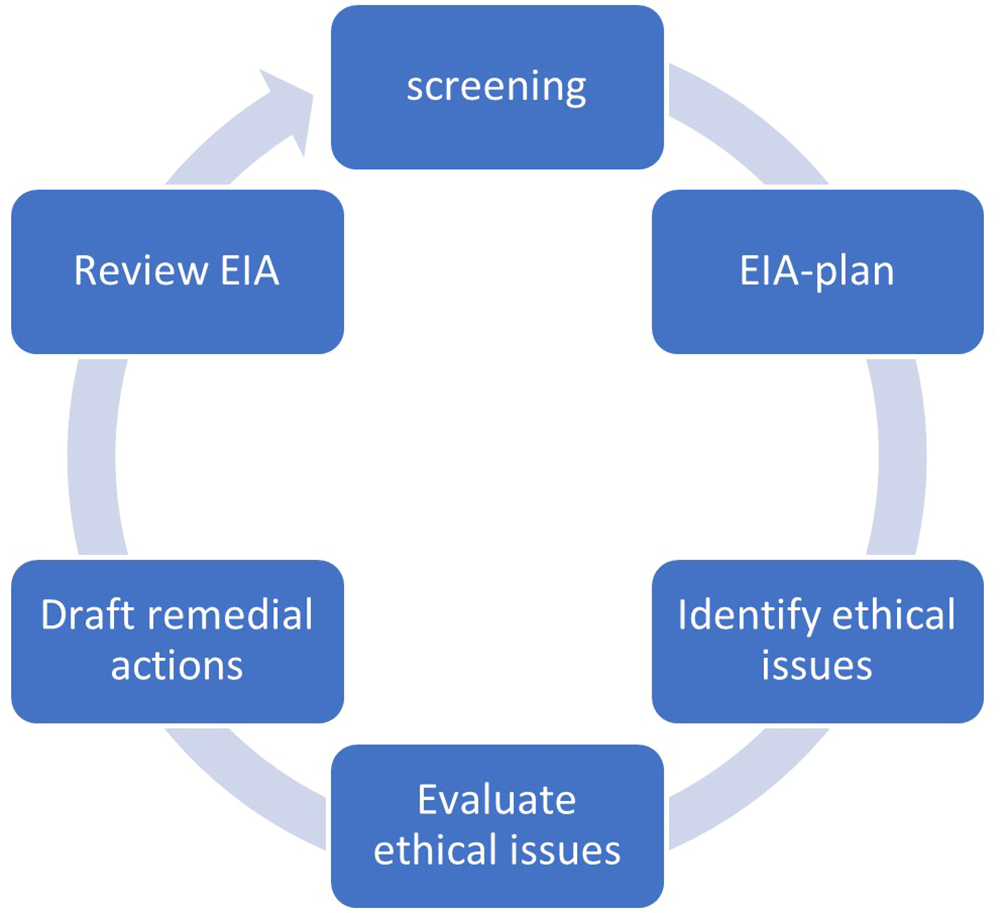
Figure 1. The EIA procedure as prescribed in the CEN pre-standard on ethical impact assessment (CEN, 2017).
3.1 Six-step EIA procedure
In this methods section, the six-step EIA procedure is described in detail.
Step 1: screening potential ethical impacts
The self-assessment of ethical issues prescribed in the CEN pre-standard is limited to a checklist of nine categories of negative ethical impacts: Health, Privacy, Liberties, Equality, Common good, Environment, Sustainability, Military dual use, and Misuse. These categories span a wide range of ethical issues, making the tool suitable for screening many kinds of nanomaterials for any conceivable application. For example, nano-enabled wastewater cleaning in developing countries raises different issues from nanomaterials in dentistry, but the tool is applicable to both.
In the online tool developed in the RiskGONE project7, the prescribed procedure was programmed in a decision tree, to determine the scale of the EIA needed and whether a full-scale EIA is necessary to be performed. Furthermore the tool can be used to determine the scope of such an EIA into an online threshold analysis decision tree8. The user selects relevant ethical impacts and indicates the severity of each point (1 = minor; 2 = moderate; 3 =medium; 4= high; 5=severe). The output is one of four different recommendations: i) no EIA, or ii) a small, iii) a medium, or iv) large-scale EIA. No EIA is needed if none of the identified issues is set higher than minor severity (1). In cases where the self-assessment concludes that no EIA is needed, the user should consult an external ethicist to confirm this. A small EIA is needed if less than three issues are identified and at least one is of moderate severity (2), or at least three issues are identified, but none more than moderate severity (2). A medium EIA is needed if three or four issues are identified and at least one is high or severe severity (4–5), or at least five issues are included and at least one is moderate or medium severity (2–3). A large EIA is needed if at least five issues are identified and at least one is high or severe severity (4–5).
To support the self-assessment of ethical risks as well as benefits of nanomaterials use, another risk-benefit decision tree was developed with the same checklist, where the user can select and estimate the size of ethical risks as well as benefits.9
Step 2: drafting EIA plan
If performing a full-scale EIA is deemed necessary, the user should prepare an EIA plan, which is proportionate to the size of the EIA. This includes selection of sources and methods for identifying and evaluating ethical impacts, drafting remediation measures, and review of the EIA by an independent ethicist. The online EIA tool has different online formats for planning a small, medium, or large-scale EIA, which the user can fill in and download as a pdf.10
The online EIA tools for identifying and evaluating ethical issues and for drafting remedial actions only support performing a small-scale EIA. Medium or large scale EIAs require the collaboration of larger teams, more resources, and more different methods for identifying ethical impacts. Since most applications of nanomaterials are unlikely to raise severe ethical issues and hence do not require more than a small-scale EIA, supporting larger EIA studies is out of the scope of this project. Larger-scale EIAs have been performed in other projects such as SIENNA.11
Step 3: identifying ethical impacts
The first substantial activity in the EIA process is the identification of relevant ethical impacts to the case under study. This step may be performed by junior staff without ethics training, but at least some understanding of relevant ethical issues is recommended by the authors of the CEN prestandard. This part of the research is supported by several online tables on the webpage Identification of Ethical Impacts.12
This includes a table for collecting references, a more detailed checklist (Table 1) than in the screening phase, and a form supporting the drafting of a report on identifying impacts.
Table 1. Online checklist to analyse ethical issues more in depth.
| Ethical checklist: What is known on the ethical issues raised by the nanomaterials and products under assessment? | Stakeholder estimates: How severe do you consider the following ethical issues raised by the nanomaterials and products under assessment? |
|---|
| Category | Sub-criterion | Description of the issue and severity, and whether it is a short, medium, or long-term concern | Reference to the source | Estimate of the severity of the issue (not at all (0) to severe (5)) | Please give a reason for your estimate |
|---|
| 1. Health-related issues of the manufacturing and use of the materials and products. | 1.1. Applied in a healthcare context
1.2. Public health or safety issues | Free text field | Free text field | Scale 0–5 | Free text field |
| 2.Impacts on the rights and liberties of individuals and groups of the value chain and application of nanomaterial. | 2.1. Freedom
2.2. Autonomy
2.3. Authenticity
2.4. Identity
2.5. Privacy
2.6. Human Dignity
2.7. Human bodily integrity
2.8. Intellectual property | | | | |
| 3. Could the value chain and application of nanomaterial have a negative impact in terms of social justice and equality? | 3.1. The distribution of opportunities, powers and capabilities
3.2. Civil and political rights
3.3. The distribution of economic resources and income
3.4. The distribution of risks and hazards
3.5. Effects on vulnerable, disadvantaged, and under-represented individuals, groups, or communities in society, including future generations
3.6. Effects on individuals, groups and communities in low income and lower-middle income countries | | | | |
| 4. Could the value chain and application of nanomaterial have a negative impact on the well-being of individuals or groups, and/or on the common good, including cultural heritage? | 4.1. Effects on the well-being and interests of individuals and groups in society, including the quality of work
4.2. Effects on social institutions and structures, democracy and important aspects of culture and cultural diversity
4.3. Cultural heritage includes physical artefacts and intangible attributes of a group or society, such as sites, monuments, artefacts, texts, archives, remains and information about the past | | | | |
| 5. Could the value chain and application of nanomaterial have a negative impact on the environment, animals and/or plants? | 5.1. The direct and long-term effects on the environment, animals and plants of any chemical elements used
5.2. The direct and long-term effects on the environment, animals and plants of GMOs
5.3. Human encroachment on natural habitats and environmental policy | | | | |
| 6. Could the value chain or application of nanomaterial raise concerns in terms of sustainable development? | 6.1. In terms of the use of resources
6.2. In terms of the generation of harmful waste products
6.3. Impacts on Sustainable Development Goals | | | | |
| 7. Could the nanomaterial or its application have significant military purposes (dual use)? | 7.1. Effects in terms of the development of weapons of mass destruction
7.2. Military surveillance systems
7.3. Autonomous weapons systems | | | | |
| 8. Could the nanomaterial or nano-enabled product become subject to misuse? | 8.1. Can [information about] harmful biological, chemical, radiological, nuclear, or explosive materials, and/or the means of their delivery, easily [or accidentally] be misused
8.2. May such materials easily fall into the hands of terrorists or criminals?
8.3. May such materials be abused by governmental and other institutional actors in non-military contexts? | | | | |
The work starts with collecting and reviewing ethics literature by the ethicist or EIA team. The corresponding literature list should be included in the References table, and the collected literature should be analysed using the online checklist on the same webpage, depicted in Table 1 below.
To avoid overlap with traditional nanosafety studies analysing environmental, health and safety risks, the analysis of ethical issues should henceforth be focused on complementary issues, highlighted in Table 1. To end this step, the results of the desk research should be summarised in the online report on the identification of ethical issues and downloaded as a pdf for further analysis.
The CEN pre-standard also calls for performing horizon scanning or another foresight study. In addition, the CEN pre-standard requires stakeholder engagement as part of the identification of ethical issues and again during evaluation and drafting remedial actions.
Step 4: evaluating ethical impacts
The evaluation of the identified ethical impacts is supported by several online tables on the webpage evaluation of ethical impacts.13 While the identification of ethical issues in step 3 focused on negative ethical impacts, the evaluation step broadens out again to analyse negative as well as positive ethical impacts. The reason is that the evaluation includes balancing impacts on different identified ethical principles, where the consideration of potential ethical benefits as well as risks is needed. This evaluation assumes at least some training in philosophical ethical theories and in applied ethics, to be able to understand and apply the ethical theories. The researcher should start by updating the literature list with references to relevant ethical principles and theories.
The researcher should clarify the relevant ethical principles and values by applying ethical theories to the identified issues and by analysing what light the key ethical concepts in those theories shed on the case under study. The first online form on this webpage supports this analysis (depicted in Table 2 below).
Table 2. Online form supporting application of ethical values and principles to the identified issues.
| Identified principle or value | Which ethical theory is applied? | What does it mean in the case under study? |
|---|
| | |
The researcher should then assess the degree to which each identified ethical value or principle is likely to be violated or benefited in the expected ethical impact. This analysis is supported by the second table on the webpage (Table 3 below).
Table 3. Online form supporting assessment of impact of application of nanomaterials to the identified principles or values.
| Degree of violation (1 = minor; 2 = moderate; 3 =medium; 4= high; 5=severe) | Identified principle or value | Degree of benefit (1 = minor; 2 = moderate; 3 =medium; 4= high; 5=extreme) |
|---|
| | |
The third table on the webpage (Table 4 below) supports the analysis of trade-offs between different relevant ethical principles or values.
Table 4. Online form supporting analysis of trade-offs between different relevant ethical principles or values.
| Identify sets of conflicting values and principles | Describe the alternative remediation measures |
|---|
| |
In cases where conflicts between fundamental values are at stake, the ethicist should find ways to solve such value conflicts by following up to five rules of thumb prescribed in the EIA guidelines. Three of these rules of thumb are relevant to small EIAs, the other two are more time consuming to implement and therefore out of scope of this paper: 1: Fundamental values take precedence over non-fundamental values. 2: Assess the degree of violation of conflicting fundamental values and choose the action that least compromises a fundamental value. 3: Project moral values into situations when two fundamental values seem to be equally violated to determine which value appears more important in the particular situation.
To conclude the evaluation of identified ethical issues, all information included in the tables on the corresponding webpage should be downloaded again as a pdf for further analysis and for stakeholder and expert consultations.
Step 5: remediating ethical issues
The full-scale EIA should result in practical recommendations for remediation of the identified ethical issues. The formulation of these recommendations is supported by two online tables on the webpage Remedial actions for EIA14. These online tables guide the users through the process, which relies strongly on discussions of draft recommendations with stakeholders. The first step is to collect recommendations from similar projects and list them under organisational and societal recommendations, supported by the first online table on the webpage (Table 5 below).
Table 5. Online form for collecting recommendations from similar projects.
| Collect recommendations from similar R&I projects |
|---|
| Type of ethical impact | Type of remedial action | recommendations | notes |
|---|
| Broad social impacts due to R&I activities (e.g. changing economic paradigms) | Societal recommendations | | |
| Impacts due to malfunctioning of organisations (e.g. risks of conflicts of interest) | Organisational recommendations | | |
After this, the EIA team should formulate its own societal and organisational recommendations for the case under study, supported by the second online table on this webpage (Table 6 below).
Table 6. Online form supporting the drafting of recommendations by the project team.
| Formulate societal recommendations | Formulate organisational recommendations |
|---|
| Type of issue (drop down menu) | Specify the issue (text) | Involved stakeholders (drop down menu, several choices allowed) | Describe the value conflict | Draft preliminary recommendations of EIA team (bullet points) | Insert outcome of discussion of recommendations with stakeholders (text) | Formulate final recommendations (bullet points) | Name of the organisation (text) | Activity of organisation (drop down menu) | Draft preliminary recommended change in procedure to identify, respond to, address, manage, avoid, or minimize ethical issues (bullet points) | Insert outcome of discussion of recommendations with organisation (text) | Formulate final recommendations (bullet points) |
|---|
| Choose from values below: | Free text field | Choose from values below: | Free text field | Free text field | Free text field | Free text field | Free text field | Choose from values below: | Free text field | Free text field | Free text field |
| Societal values | | Scientists | | | | | | Manufacturing | | | |
| Public trust | | Industry | | | | | | Sales | | | |
| Public concerns | | Trade unions | | | | | | Use | | | |
| | NGOs (specify) | | | | | | Waste processing | | | |
| | Media | | | | | | Other (specify) | | | |
| | Other (specify) | | | | | | | | | |
The drafted recommendations and report of stakeholder engagement should then be included in a report and downloaded as a pdf.
Step 6: external review of Ethical Impact Assessment
An essential element of a credible Ethical Impact Assessment is the mandatory check of the results and the procedure followed by an external ethicist. The webpage Review of EIA15 includes guidance for such an external review. The peer review of this paper is considered to take the place of such an external review. In ethical impact assessments performed by users intending to adopt the recommendations and put them into practice, sufficient resources and the engagement of a qualified external ethicist must be foreseen during the planning of the EIA.
3.2 Results of the six-step EIA procedure applied in the CSs
Testing step 1: the Ethical Impact screening tool
The output of the ethical impact assessment screening of nanomaterials for wastewater remediation, ZnO nanoparticles combatting citrus greening, nanomaterials in dentistry, and sharing nanosafety data were small-scale EIAs, and for solar photovoltaics and nanomaterials in tyres that no EIA was needed (see Table 7). However, to complement studies by partners on other risk assessment studies of nanomaterials in tyres, a complete small-scale EIA was nevertheless performed on this case study.
Table 7. Results of EIA step 1 for the six case studies.
| Case study title | Result |
|---|
| CS1 Ethical impact assessment of nanomaterials for wastewater remediation | Small scale EIA |
| CS2 Ethical impact assessment of nanomaterials for solar photovoltaics | No EIA needed |
| CS3 Ethical impact assessment of nanomaterials in dentistry | Small scale EIA |
| CS4 Ethical impact assessment of nanomaterials in tyres | No EIA needed |
| CS5 Ethical impact assessment of ZnO nanoparticles combatting citrus greening | Small scale EIA |
| CS6 Ethical impact assessment of (not) sharing nanosafety data | Small scale EIA |
Comparing the results of the self-assessment shows that the tool helps focusing further analysis on relevant ethical issues. Not all categories were relevant to the selected cases. In none of them, ethical impacts on privacy or military dual use were expected, which is understandable given the focus of the overall risk governance framework on civil applications of nanomaterials raising environmental, health and safety concerns. In all cases, minor or moderate health related ethical risks were foreseen, related to nanosafety issues, but in the case of dentistry also related to biomedical ethical issues. In four cases, these risks were balanced by foreseen benefits to health, for wastewater remediation these were deemed strong, for sharing nanosafety data moderate, and for dentistry and citrus greening minor. Minor to moderate environmental risks were expected in all cases except dentistry, which were balanced by moderate to strong environmental benefits in four of these cases (wastewater, solar energy, sharing data, and tyres). Three cases raised minor or moderate equality related concerns (wastewater, tyres, and citrus greening), which were balanced by minor expected benefits for wastewater, sharing data, and citrus greening. While three cases raised minor or moderate sustainability issues (wastewater, tyres, and citrus greening), sustainability was deemed to benefit strongly by applications of nanomaterials in wastewater remediation and solar energy, moderate by applications combating citrus greening and minor by applying them in tyres and by sharing data. In dentistry and sharing data, minor risks for liberties were foreseen, balanced by minor benefits in dentistry. Sharing data raised minor concerns about potential misuse but offered moderate positive prospects for contributing to the common good. The output of the risk-benefit tools for the cases is depicted in Figure 2.
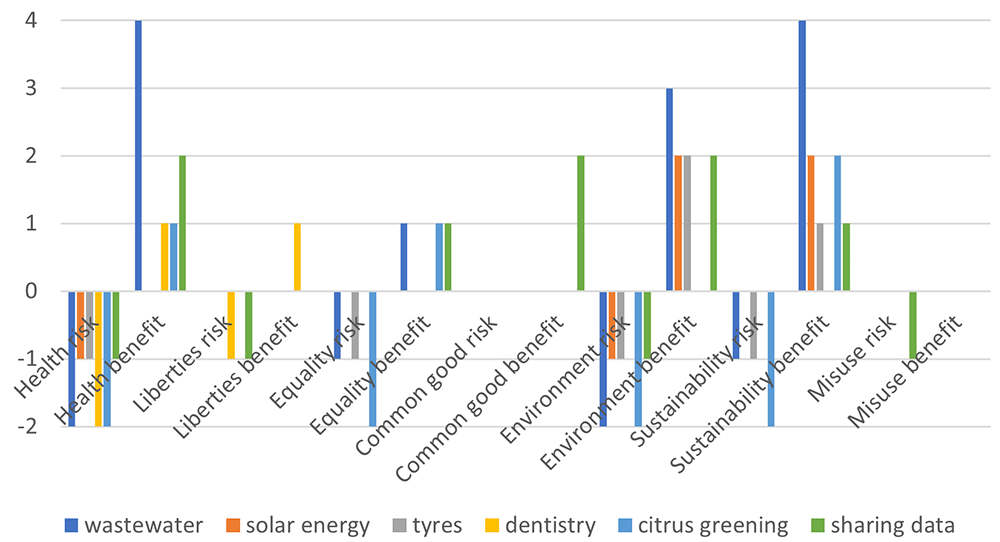
Figure 2. Output of self-assessment screening of ethical risks and benefits of nanomaterials for wastewater remediation in developing countries, for nanomaterials in solar photovoltaics, for using nanomaterials in tyres and dentistry, ZnO nanoparticles for combatting citrus greening, and sharing nanosafety data.
Testing step 2: the EIA plan tool
To test the EIA plan tool, simplified EIA plans were developed for the case studies of nanomaterials in wastewater remediation (CS1), ZnO nanoparticles for combatting citrus greening (CS5), nanomaterials in tyres (CS4) and in dentistry (CS3), and for sharing nanosafety data (CS6). These plans were limited to desk research by one ethicist of open access literature and online sources, combined with discussions with partners in similar research projects on risk governance of nanomaterials and participants in events where results were presented. In cases where the users intend to implement the resulting recommendations, larger EIA teams may need to be formed and additional resources may need to be budgeted for access to literature and for organising foresight activities and consultations with broader groups of stakeholders and experts. An external ethicist should review the plan before starting the EIA process.
After inserting the title and abstract of each EIA plan, the budget and team composition were specified. In four cases, it was limited to personnel costs for desk research by one researcher drafting a report, to be reviewed by a team of experts relevant to the case at hand. For wastewater, preliminary results were presented to experts in nanosafety in Europe, and in water research in Africa. For tyres, the results were presented to nanosafety experts. For dentistry, nanosafety and dentistry researchers were engaged, and for sharing data, experts in ethics, risk assessment, LCA, data science, nano-informatics, nanosafety, and risk governance commented on draft papers. Originally, the EIA on ZnO nanoparticles for combatting citrus greening was planned as an interdisciplinary student group assignment during a summer school which was cancelled.
For each EIA plan, the standard review criteria to assess the results were validity of screening output, appropriateness of selected literature and stakeholders, and quality of methodology. The optional preliminary stakeholder consultation was only planned for the case study of sharing nanosafety data, because this was originally proposed by partners in RiskGONE and started with a plenary discussion during a consortium meeting.
The plan for identifying ethical issues included desk research to review comparable cases in online literature, and to estimate likely strength of identified impacts. The plan for evaluating ethical impacts consisted of applying relevant ethical values, concepts and theories found in literature by an ethicist, who drafted remedial societal and organisational recommendations. Finally, identified stakeholders were consulted on how they evaluated the ethical issues and recommendations. These stakeholders were participants in conferences and workshops where results were presented or partners in RISKGONE or other projects in risk governance of nanomaterials. The review of the EIA plan was combined with peer review of resulting manuscripts.
Testing step 3: Identifying ethical issues
The work started with collecting and reviewing ethics literature by the ethicist or EIA team. In the wastewater, tyres, dentistry, and sharing data case studies, relevant literature was identified through searching a shortlist of journals and internet repositories of grey literature where ethical aspects of these applications were discussed. The corresponding literature list was included in the References table. The EIA team analysed the collected literature using the online checklist on the same webpage. Table 8 summarises the more detailed issues identified in literature for the small-scale EIA of the four cases.
Table 8. Identifying ethical issues in literature.
Regarding nanosafety data, ethical impacts of sharing and of not sharing it were identified.
| | Wastewater | Tyres | Dentistry | Data |
|---|
| Health-related | Public health & safety | x | x | x | X |
| Applied in healthcare context | | | x | |
| Liberties | Autonomy | | | X | |
| Human bodily integrity | | | X | |
| Intellectual property | | | | X |
| Equality | Distribution of risks & hazards | x | X | | x |
| People in developing countries | X | | | X |
| Future generations | | X | | |
| Unbalanced economic resources | | | | X |
| Common good | Well-being of groups in society | | | | X |
| Environment | Water, land, harmful waste | x | X | x | X |
| Sustainability | SDG12 (sustainable consumption & production) | | X | | X |
| SDG13 (climate change) | | x | | |
| Misuse | | | | | X |
Sufficient issues were identified in literature, and since applications of nanomaterials are relatively mature compared to other emerging technologies, the added value of performing foresight was limited. To limit the burden on the time of such stakeholders, all the activities of the EIA team on identification and evaluation of ethical issues and in drafting recommendations was combined in one package and the results of all three steps were discussed together in one online stakeholder consultation for the wastewater and dentistry cases. These stakeholder consultations are discussed below, in the section “Results of Stakeholder Engagement”. The other cases were not discussed with stakeholders before the original submission of the present paper to open research Europe.
Testing step 4: evaluating ethical issues
To evaluate the identified ethical issues in a particular case, specific ethical theories and values were found online. In the case where nanotechnology is used in wastewater remediation in developing countries, the precautionary principle (COMEST, 2005) water ethics framework (Liu et al., 2011) and global code of conduct for research in resource-poor settings (Global code, 2018) were applicable. For nanomaterials in tyres, the concepts distributive and intergenerational justice, and the Sustainable Development Goals sustainable chemicals management (SDG12.4) and circularity (SDG12.5) were relevant. In the case of nanomaterials in dentistry, the Dental Ethics Handbook offered relevant guidance (American college of dentists, 2016). For sharing nanosafety data, intellectual property, social justice, public health ethics, dual use and misuse, environmental and animal ethics were relevant ethical concepts.
In each case, the likelihood and intensity of benefiting or violation of each of these identified values were compared, to find trade-offs between positive and negative ethical impacts of projects where the nanomaterials were to be applied. A summary of the estimated trade offs is depicted in Figure 3.
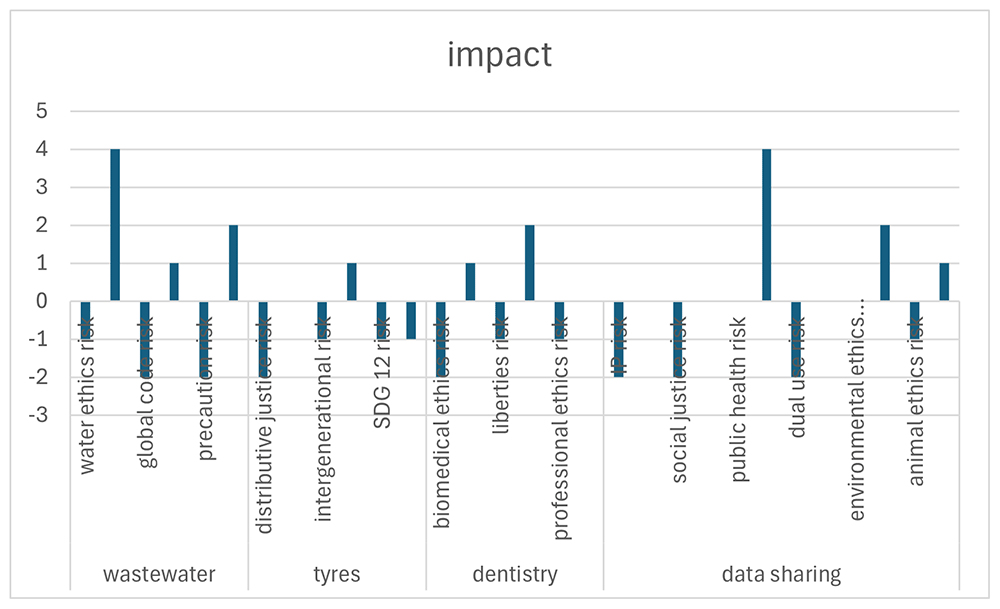
Figure 3. Summary of trade offs between positive and negative impacts on ethical values for wastewater, tyres, dentistry and data sharing case studies.
For example, during the development of the technology in the wastewater case in some regions without access to clean water, trade-offs may occur in the short to medium term between the precautionary principle, which could lead to delays in development of innovative solutions, and the human right to clean water (see Table 9). Other trade-offs in this case are more related to conflicting interests of different water users, including industry, agriculture, and consumers. Those trade-offs must be tabled in participatory dialogues engaging all stakeholders.
Table 9. Example of remediating value conflicts in the wastewater-case.
| Value 1 | Value 2 | Description of the value conflict | Proposed remediation |
|---|
Human
right to
water | Precautionary
principle | In some target countries, many consumers currently do
not have access to clean water. The nanotechnology-
enabled wastewater remediation system is therefore
urgently needed. However, the precautionary principle
calls for taking risk management measures to address
uncertain risks of nanomaterials which may be released
in the cleaned water, which could delay implementation
of the solution. | While the human right to water is more
fundamental than the precautionary principle,
the project partners do not have the primary
responsibility for it. The consortium could engage
with the national government or donors to ensure
access to clean drinking water from other sources
during the project and invest sufficient resources
in investigating potential release and health or
environmental impacts of the nanomaterials used in
the wastewater remediation system. |
In most cases, the rules of thumb were not needed to resolve value conflicts. However, in the dentistry-case, a value conflict was identified between the freedom and intellectual property rights of producers and the biomedical ethics principles and liberties of the patients and dentists. The first rule of thumb is: ‘If one conflicting value is fundamental and the other is not, prefer the fundamental value. If both are fundamental, keep the value conflict and apply rule of thumb 2.’ In this case, both conflicting values are fundamental, requiring application of the second rule of thumb: ‘Assess the degree of violation of conflicting fundamental values and choose the action that least compromises a fundamental value.’ To resolve this, a precautionary approach was proposed to complement a regulatory gap in nanoregulation (at least at the time of publication of the analysed literature), exploring advantages and disadvantages of different approaches used in cases documented in literature.
Testing step 5: drafting recommendations
The draft recommendations were mostly adapted from similar cases found in literature. In the wastewater case, for example, two projects were identified recommending comprehensive ethical frameworks for water management and research in resource poor settings, which are well-balanced frameworks for addressing societal and organisational impacts. The societal recommendation is to implement the UNESCO water ethics framework (Liu et al., 2011) in national regulations or policies. The organisational recommendation is to apply the code of conduct for research in resource-poor settings (global code, 2018). For nanomaterials in tyres, technical recommendations included capturing tyre wear particles at source (Tyre collective 2018) and recovering carbon black from end of life tyres (WBCSD, 2021). Societal measures proposed by the WHO (2019) targeted health inequalities since poorer people in some regions were more exposed to air pollution than other European citizens. In consultations with stakeholders, more specific recommendations can be discussed to resolve the identified value conflicts and address the ethical issues.
3.3 Results of stakeholder engagement
Stakeholder testing of screening tools
The output of the screening of ethical impacts in the case-study on wastewater was discussed during an online meeting of around 25 predominantly nanosafety experts, members of the EU H2020 risk governance projects funded under the NMBP-13 call, namely RiskGONE, Gov4Nano and NanoRIGO. The experts gathered and discussed the case study during a meeting on 14th April 2021. Because the session demonstrating the EIA tools on this case study was limited to 30 minutes of a programme covering more presentations, the participants were asked to give their quantified estimate of the severity of ethical issues identified in literature on a five-point scale of 1=minor to 5=severe. They were also asked to give such estimates of the strength of ethical risks and benefit at stake in the case study. The severities indicated by the participants (3–4) were a lot higher than of the ethics expert doing the original impact assessment (1–2). Due to time constraints, it was not possible to find out if this was due to different calibration of the scales or to substantial differences in evaluations of the ethical risks and benefits (see also Malsch et al., 2021b). The raw data on the responses of these stakeholders is included in Malsch (2023).
A later demonstration of the EIA tools on the case study of nanomaterials in dentistry, was organised by the EU H2020 project NanoCOMMONS on 18th November 2021, with 38 registered participants from seventeen countries worldwide (Argentina, Austria, Canada Costa Rica, Czech Republic, Germany, Spain, France, India, Italy, Malta, Malaysia, Netherlands, Norway, Portugal, Thailand, UK, and USA). The participants were mainly researchers from universities and public research institutes, consultants, a researcher at a hospital, one government representative and one company representative. The session started with an online presentation, after which three break out groups of about five to ten participants each tested the self-assessment screening tool16. All three groups agreed on the need for a medium scale EIA, while the ethics expert had considered a small-scale EIA to be sufficient. In addition, the issues identified by the three groups differed, as indicated in Table 10. The raw data on the responses of these stakeholders is also included in Malsch (2023).
Table 10. Responses of three groups during stakeholder meeting discussing nanomaterials in dentistry at the EU H2020 project NanoCOMMONS’ training on 18-11-2021.
Scale: 0=no, 1=minor, 2=moderate, 3=medium, 4=high, 5=severe.
| Category | Group 1 | Group 2 | Group 3 |
|---|
| Health | 3 | 1 | 3 |
| Privacy | 0 | 1 | 0 |
| Liberties | 0 | 0 | 1 |
| Equality & social justice | 3 | 0 | 2 |
| Common good & well being | 3 | 0 | 2 |
| Environment (waste) | 3 | 2 | 2 |
| Sustainability | 0 | 3 | 3 |
| Military dual use | 0 | 0 | 0 |
| Misuse | 0 | 0 | 0 |
During the subsequent discussion, participants remarked that risk perceptions are subjective, and never give similar results. Qualitative assessment of outputs by different stakeholder groups including regulators and NGO-representatives, or patients, could generate interesting results.
Reports of stakeholder discussions of improvements of the EIA tools
Scope of the analysis
The abovementioned Nanosafety experts in the online NMBP-13 workshop on 14 April 2021 commented on the choice of nanomaterials impacts in the case-study on wastewater. The case study was based on a review of different kinds of nanomaterials used in wastewater remediation including carbon and graphene-based materials, metal organic frameworks and metal oxides and composites (Kokkinos et al., 2020). According to participants, the case study should be focused on TiO2 because there is mounting evidence of nanosafety issues of those materials, and not of other nanomaterials used in wastewater remediation. Nanosafety experts discussing the dentistry case in the training organised by the H2020 project NanoCOMMONS on 18 November 2021 recommended that the EIA tools should be used incrementally, starting with simple cases, and advancing to more complex cases. From simple to complex materials, or from production of a material to a complex use case of composites incorporating nanomaterials such as dentistry.
In which context can the EIA tools be used?
The Ethical Impact Assessment pre-standard (CEN, 2017) underlying the EIA tools was developed by European partners in the SATORI project17. Just like other methods supporting Responsible Research and Innovation, the EIA guidelines and tools in their present form may not be directly relevant in non-European contexts. For example Wakunuma et al. (2021) propose a contextualisation of Global North-South differences in innovation emphasis, where the individual is central to capital driven innovation in the Global North, and the community is central to livelihood-driven innovation in the Global South. This could partially explain the lack of response of mainly non-European participants in two online conferences where preliminary results of EIA-case studies were discussed. In the ANSOLE DAYS & BALEWARE 2021 online conference, the 131 registered participants were mainly academic experts in sustainable energy and water research in 24 African, six EU, two Asian and one Latin American countries. Participants raised the question whether performing the ethical impact assessment of nano-enabled wastewater remediation was relevant in the African context. The conference booklet and links to the videos on YouTube are accessible online18. The hybrid International Water-Climate Summer School at North-West University, Mahikeng Campus, North-West Province, South Africa, on 4 – 18 October 2022, was attended by masters and doctoral students in water (SDG 6) and climate (SDG 13) related research. One of the topics was “Ethics and intersectionality for water-climate studies”, where students in social sciences discussed ethical dilemmas in their research projects of local communities involved in water and climate research. The questions of participants after the presentation on the draft EIA on nano-enabled wastewater purification focused mainly on practical research integrity issues, including interpretation of the rules protecting the rights of human participants, avoiding bureaucracy, and on how to safeguard scientific quality, while taking responsibility for the impact of policies inspired by the research results on the livelihood of the participants. How to remediate value conflicts due to applying the technology in real life in a developing country was not discussed by the participants. More information on the aims and scope of the summer school are available online.19 Further research is needed to explore the relevance and requirements for fine-tuning of EIA guidelines and tools in non-European context.
Who should use the EIA tools?
On 26 January 2021, an online meeting was held on risk governance tools. This meeting was attended by more than 40 Nanosafety experts, who were partners in EU-funded NMBP-13 risk governance projects. Responding participants most often expected ethicists to use the EIA tools (nine of the thirteen respondents in a small survey reported in Malsch et al., 2021a; Malsch, 2023). This is in accordance with the original intentions of the partners in the SATORI20 project who developed the underlying CEN pre-standard for use by an Ethics Committee (CEN, 2017a). Testing the online EIA tools on several case studies confirmed that the participation of at least one (junior) ethicist in the team performing a full-scale ethical impact assessment is needed to ensure sufficient quality of the assessment. However, eight of these nanosafety experts expected industry and seven government to use the tools. Testing the EIA-tools also indicates that industrial companies and government agencies could use the tools for assessing potential ethical issues of nanoproducts as part of a broader risk governance framework. They could employ interdisciplinary EIA-teams including at least one ethicist.
Potential applications of the EIA tools
Seven of fourteen responding nanosafety experts participating in the online NMBP-13 tools meeting on 26th January 2021 expected their organisation or themselves to use the EIA tools as an integral part of risk governance of nanotechnology, for which the tools were developed. Four respondents would use the EIA tools for screening ethical impacts of a product or project, suggesting that the self-assessment screening tool (step 1) could be appropriate for non-expert use. After testing the tools on several cases, this potential use is confirmed, and more concrete instructions were developed for non-expert users wishing to perform a self-assessment of potential ethical issues of nanomaterials under development for specific applications. No respondents expected to use the full set of EIA-tools to guide a full ethical impact assessment, confirming that users should at least employ one ethicist for this. The screening tool is deemed useful enough for non-experts to perform an initial self-assessment of potential ethical issues. Finally, three respondents do not expect to use the EIA tools.
Nanosafety experts participating in the training organised by the EU H2020 project NanoCOMMONS on 18th November 2021 suggested another application of the self-assessment screening tool: to ask different stakeholder representatives to estimate their perceived severity of ethical issues of a given nanomaterial or use case and then discuss the differences between the groups. Developing the tool further for such a purpose could be the topic of a follow-up project.
Which ethical issues should be addressed?
Testing the EIA tools on several applications of nanomaterials indicates that not all categories in the screening tool are relevant to risk governance of nanomaterials, and not all ethical concerns perceived by stakeholders may fit comfortably in one of these categories. To improve the fit of the checklist to user needs, the nanosafety experts participating in the NMBP-13 tools meeting on 26th January 2021 were asked which nanotechnologies or nano-enabled products raise ethical issues, receiving thirteen responses. While nine or ten answers suggested nanotechnologies or nano-enabled products, others addressed the fate during the life cycle or impacts of nanotechnology (e.g., on humans or the environment). ‘Climate change’ could refer to applications of nanotechnology to remediate climate change or effects of the use of nano-enabled products on climate change. The former was assumed. Several answers combined two categories (e.g., food or health combined with sensors). Food-related applications are currently not explicitly addressed by the EIA-screening checklist, while the other applications are more clearly targeted by some of the pre-existing categories (health, privacy, and sustainability). The responses were very brief key words, and it was not always clear what was meant.
The ethical categories which are currently included in the EIA-screening tool do not quite match the suggested ethical issues respondents consider relevant to risk governance of nanotechnology. While privacy, equality, environment, and the sustainable development goals are both included in the checklist and mentioned by respondents, the latter did not mention specific healthcare related issues, liberties, the common good, dual use, and misuse aspects. Related to health, they suggested health impacts of nanotechnology, and related to sustainability, materials sourcing was mentioned. Some of the mentioned issues are already addressed in other modules of the risk governance framework for nanotechnology, especially impacts on human health and the environment. Furthermore, respondents mentioned other issues and values which are commonly addressed in discussions related to nanosafety, such as traceability, transparency, accessibility of confidential business information, and trust. Finally, ethical (researcher and corporate social responsibility) codes were mentioned. These codes combine several ethical principles and values and are relevant as reference documents. In the analysis of the wastewater case, such reference documents were used as sources for relevant principles and values (Global code, 2018; Liu et al., 2011).
The comments made during the discussions with stakeholders and tests of the EIA tools on case studies mentioned above, suggest that overlap of the EIA with traditional risk assessment and life cycle analysis of nanomaterials should be avoided in case the EIA tools are included in a modular multicriteria risk governance framework, because this will be done by experts in other fields in other modules like risk assessment or life cycle assessment. While in the screening stage, users may still tick environmental, health and safety issues, a subsequent full-scale EIA should be focused on complementary ethical issues, such as healthcare ethics, privacy, liberties, equality, common good, agri-food ethics, sustainability, and misuse. Categories for a possible revised checklist for EIA in the nano risk governance framework are depicted in Figure 4. To fit in the existing decision tree format, the checklist has again nine categories. Other issues could be environmental, health and safety issues, military dual use, artificial intelligence, or another issue relevant for the screened material and product in its societal context. The user should briefly describe each issue and estimate the severity (1–5).
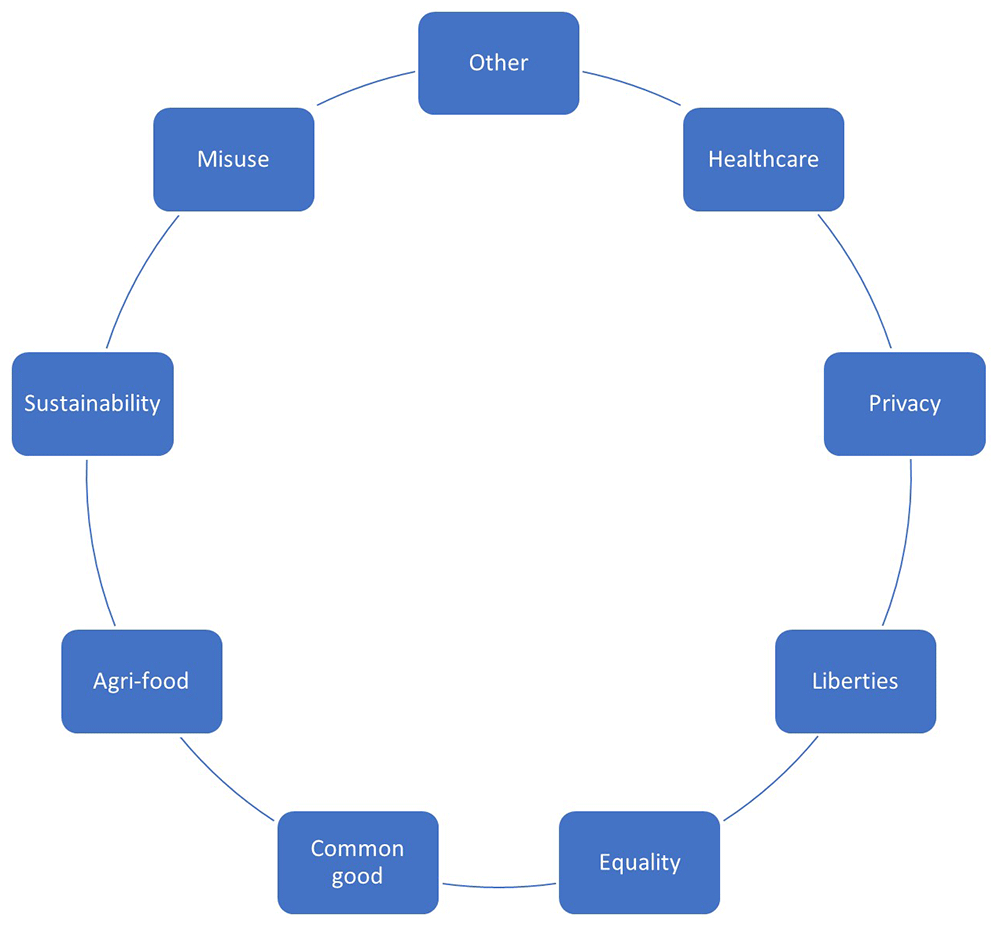
Figure 4. Suggested revised EIA screening checklist.
Improving user-friendliness
Participants in the training organised in the H2020 project NanoCOMMONS on 18th November 2021, who tested the screening tool, recommended to explain the interpretation of each category more extensively for non-expert users. Four respondents commented on the question how the Ethical Impact Assessment tools can be improved. One was satisfied with the tools, suggesting that users should “review the categories and criteria to establish the category that one thinks corresponds to it.” Two respondents wanted more specific and direct information links to relevant guiding documents and articles. One wanted simpler questions, recommending “…to be always as specific as possible in the questions,” and formulating more subjective answers, such as: “I am severely concerned, I do not consider this relevant,....” Another proposed giving “maybe more examples in case of open questions, so that the user gets hints how the questions have to be answered (could be answered).”
These respondents also made suggestions on information to be offered to guide a non-expert user through using the tools, including Information on benefits and unwanted effects at layman's level links with more information and examples, and a glossary or simply reformulated questions.
One respondent suggested removing the category ‘military dual use’, explaining: “One of my functions is risk management and therefore there are aspects that I have clear, but it seems to me that asking if nanomaterials can be used in military matters is not the way to be approached because if they only serve to improve logistics or information, they have no impact on the civilian population nor will they cause harm to soldiers.”
Another respondent proposed “eventually test[ing the tools] on different stakeholder groups: users, regulators, NGOs.” This was in line with the earlier mentioned suggestion to use the screening tool to identify differences in value perceptions as a basis for stakeholder dialogue.
4. Conclusions
This paper explored how the ethical impact assessment methodology outlined in CEN CWA 17145-2:2017 (E) can be fine-tuned to support evaluating and drafting remediation recommendations of ethical issues related to different applications of nanomaterials. In general, the validity of the proposed EIA instrument to identify and address ethical issues of research is deemed to be sufficiently confirmed, because a variant of this methodology is used on a large scale in the EU ethics self assessment process for research funding applicants21.
After testing the online tools on case studies and discussing the demonstrated tools with partners in several projects on nanosafety (reported in Malsch et al., 2021a; Malsch et al., 2021b), the following conclusions can be drawn on the expected users of the tools, ethically sensitive applications of nanomaterials and relevant ethical issues related to nanomaterials.
The online EIA tools developed in RiskGONE offer practical guidance and support for professionals and ethicists who want to explore potential ethical issues of the use of nanomaterials and nanotechnologies in products for a wide variety of applications in different societal contexts. The methodology explained in this paper has been tested on six theoretical case studies. For the applications of nanomaterials in solar energy and in tyres, no significant ethical impacts were identified in the preliminary screening stage, over and above the traditional environmental, health and safety and life cycle issues. Therefore, no full ethical impact assessment was deemed necessary beyond risk assessment and life cycle analysis. For sharing nanosafety data, the application of nanomaterials in photocatalytic decontamination of wastewater, nanomaterials in dentistry, and ZnO nanoparticles to combat citrus greening, moderate ethical issues were identified, calling for a small-scale ethical impact assessment by one (junior) ethicist in consultation with stakeholders. The in-depth results of some of these case studies have been or will be reported in separate papers.
In section 3.3, discrepancies were found between the assessment of the ethicists doing the screening and the stakeholders engaged. This could be explained either because the ethicist and the stakeholders interpret the scales differently, lacking common benchmarks, or because the ethicist and the stakeholders have different understandings of the severity of ethical issues at stake in situations arising from everyday life applications of technology. Assuming a lack of common benchmarks, the suitability of the tool to support semi-quantitative screening of ethical impacts can be improved by engaging in a process to reach a common understanding of the severity of each identified issue. In this semi-quantitative mode, the professional ethicist can use the scale to identify and prioritise issues subject to Ethical Impact Assessment, placing the identified issues in the context of ethical knowledge about the severity of ethical issues related to science and technology, and other human activities. Before involving multiple experts or stakeholders in corroboration of these estimates, the interpretation of scales should be discussed thoroughly. In cases of large discrepancies, the evaluation step can be re-iterated a second (or third and more times) by taking into consideration the evaluation results of the previous rounds, if deemed relevant.
If the ethicist and stakeholders agree on the benchmark, but hold different understandings of the severity of the ethical issues in a practical application, the five point scale can be used in a comparative mode, to identify issues for stakeholder dialogue delving into underlying value conflicts. In this comparative mode, the interpretation of the scale should be left to the participating stakeholders, who can use the scale more as a relative assessment tool to compare the severity of distinct identified ethical issues. In the subsequent dialogue, their arguments for their estimated severity should be explicitly discussed, as well as their views on the issue at stake.
During the testing and fine-tuning of the EIA method to assess different applications of nanomaterials, different groups of stakeholders were engaged to try out the screening tools or to comment on preliminary case study results. The screening tools were tried by around 25 predominantly nanosafety experts, and by 38 researchers from universities and public research institutes, consultants, a researcher at a hospital, one government representative and one company representative (see section 3.3).
More general feedback on the scope of the analysis, the context in and applications for which the tools can be used, who should use the tools, and suggestions on improvements was collected from more diverse groups of stakeholders including 40 nanosafety experts, students and researchers participating in online conferences (see section Reports of stakeholder discussions of improvements of the EIA tools). Reflection on the discussions with those stakeholders resulted in concrete proposals for online EIA screening tools which are more focused on specific ethical issues raised by the nanomaterials and applications targeted by risk governance, for improving the user-friendliness of the online EIA tools, and for using the tools to support stakeholder dialogue on value conflicts at stake in risk governance of nanomaterials. Since the focus of the research was on fine-tuning the EIA method and online tools for evaluating ethical impacts of applications of nanomaterials, no attempt was made to compare responses from different groups of respondents. Further research is needed to investigate differences in user needs between these groups.
The prominent role of an ethicist in performing the EIA was questioned by one of the reviewers, who expressed these concerns: “Handing over the ethics review primarily to an ethicist/external ethics reviewer might carry the danger that the ethics assessment gets an isolated activity that is not well connected to scientific and technical parts of the project. This also mirrors in one of the responses of the stakeholders that ethicists should do an ethics review. The authors might comment on the risk that ethics review might become an activity that is not well integrated in the overall project and how to better integrate ethics assessment in the development of emerging technologies.”
A simple explanation of the prominent role of ethicists is that this role is prescribed in the original CEN workshop agreement, where the ethical impact assessment procedure (CEN 2017 part 2) was foreseen to be used by an Ethics Committee (CEN 2017a part 1). Adapting this original pre-standard to assessing ethical impacts of applications of nanomaterials and drafting recommendations for remediating negative ethical impacts, could call for different divisions of labour between ethicists and experts in other disciplines. While the desk research and analysis in the tests on theoretical demo-cases discussed in the present paper were mainly performed by an ethicist, the ethical impact assessment procedure of a case where researchers and stakeholders working on live projects intend to implement the recommendations, requires the collaboration of a multidisciplinary team, to ensure that the resulting recommendations are not only sound from a philosophical ethical perspective, but also make sense to and are doable by the involved researchers and professionals.
The original intended use of the adapted EIA guidelines and online tools was by a Risk Governance community engaging researchers from different disciplines, policy makers and stakeholder representatives. If the EIA is performed in this context as one module in a multicriteria risk governance analysis of an application of a nanomaterial in for instance tyres or dentistry, it makes more sense to let one or more ethicists review ethics literature, use other research methods to identify ethical issues, and perform ethical analysis of these identified ethical issues, while team members from other disciplines focus on analysis of health or environmental risks or environmental, economic or social life cycle analysis. The complete team should in the end take responsibility for all aspects of the multicriteria assessment. In addition, a broader group of stakeholders with clear interest in the identified issues should be involved in corroborating the findings and formulating recommendations for remediating actions. The EIA it is not complete without this.
Even if the EIA is performed as stand-alone procedure to identify and evaluate ethical issues raised by a research project, and to draft recommendations for remediating negative impacts, the team taking responsibility for the results should not be limited to ethicists. Safeguards to improve the integration of the EIA in governance of emerging technologies include (i) making the management of the project responsible for implementing the recommendations, and (ii) publishing the recommendations allowing for public monitoring of their practical implementation. This way, the managers have a clear interest in formulating doable recommendations, which arguably contribute to remediating the identified ethical issues.