Introduction
The aging population represents a vulnerable and rapidly growing demographic in Europe. Age-related challenges, both psychosocial and physical in nature, necessitate targeted interventions (Hatton et al., 2020; ten Bruggencate et al., 2019; Zallio et al., 2016). The integration of technology into the built environment offers promising opportunities to alleviate the burden on caregivers and enhance the well-being and active aging of older adults (Chrysikou, 2018; Rogers & Fisk, 2010; Thielke et al., 2012). Technology can play a crucial role in meeting the basic safety and psychological needs of older adults, reducing social isolation, promoting feelings of safety and independence, and improving care and quality of life (Barbosa Neves et al., 2019; Bixter et al., 2018; Chopik, 2016; Hatton et al., 2020; Thielke et al., 2012).
Despite the potential benefits, a significant proportion of older adults exhibit reluctance to embrace smart technologies (Zallio et al., 2016) due to individual differences and unmet needs that technology alone fails to address (Rogers & Fisk, 2010). Several barriers hinder the acceptance and adoption of technology among older adults, including inadequate training and instructional materials, negative perceptions of technology, concerns regarding privacy, and perceived lack of usefulness and usability (Andrews et al., 2019; Astell et al., 2020; Hatton et al., 2020; Kamin et al., 2020; Rogers & Fisk, 2010; Thielke et al., 2012).
This study aimed to identify older adults’ levels of wellbeing, loneliness, and health-related quality of life as well as their perception of different technologies that could promote their independence (and if wellbeing, loneliness, and health-related quality of life are associated with different aspects of technology perception).
Methods
Study location and participants
The study was conducted in three senior homes located in the coastal region of Slovenia (Izola, Lucija, and Olmo). A total of 73 participants without significant cognitive issues were recruited for the study (i.e., participants that formal caregivers perceived as cognitively capable of using tested technologies). We were first given a list of senior home residents for whom the senior home staff believed they were cognitively capable of participating in our study. We approached each of those participants in person, described the study, and invited them to participate. Approximately 40% of invited individuals decided to participate in the study. The recruitment and data collection took place in December 2023. The questionnaires were administered either in the common rooms of retirement homes or in the private rooms of participants by one of the authors of the article. The average age of participants was 83; they were predominantly female, and with a completed high school education or lower. We did not conduct separate analysis by sex; the sample size for each group was relatively small, we did not expect significant differences between sexes, and the goal of the study was to acquire a holistic understanding of the situation. While most participants had some general experience with technology, few considered themselves experienced or skilled in its use. The statistical power calculation showed that our study sample (n = 73) was sufficiently large to detect even a low correlation coefficient (r = 0.35) with a high probability (1 – β = 80%), given the standard alpha size (α = 0.05).
Tested technologies
The study tested the following technologies:
- Smartwatch (Fitbit Versa 2): This device monitored and provided real-time data on health metrics such as heart rate, step count, and calories burned.
- Video-conferencing system (Daisy from SenLab): This system enabled communication between residents and their relatives or friends. Older individuals accessed the Daisy system through a television. They logged in to the system by placing their personal card on the NFC reader, and they navigated through the interface with the help of a remote control.
- Smartphone (SeniorsPhone from SenLab): This Android launcher was designed to simplify smartphone usage for older adults. It facilitates tasks such as making calls, sending texts, and locating and contacting caregivers, relatives, and friends.
- Air quality sensor: The sensor monitored room temperature, humidity, presence of hazardous particles (PM2.5, PM10), carbon dioxide (CO2), and volatile organic compounds (VOCs). Older adults could see these data displayed on the sensor at all times, and the data were color coded based on the appropriateness/safety of values: red for risky values (e.g., high CO2 values), orange for suboptimal values, and green for values in the safe range.
Measures
Several questionnaires were administered to assess different aspects of participants' well-being, loneliness, health-related quality of life, and perceptions of technology. The measures examined:
- Well-being: The well-being of older adults was assessed using the WHO-5 questionnaire, which is a valid subjective measure of current mental well-being of a respondent with good construct validity. It consists of five statements related to one’s wellbeing in the last two weeks (Topp et al., 2015).
- Loneliness: The UCLA Loneliness Scale is a valid 20-item questionnaire that captures a unidimensional model of loneliness. Subjects respond to statements on the scale from “I often feel this way” to “I never feel this way” (Russell et al., 1978).
- Health-related quality of life: The EQ-5D-3L questionnaire was employed to evaluate the health-related quality of life of the participants. This measure assesses various dimensions of health, including mobility, self-care, usual activities, pain/discomfort, and anxiety/depression (EuroQol Research Foundation, 2019).
- Trust in technologies: The Almere questionnaire was administered to assess the participants' trust in the technologies included in the study. This measure evaluated how people perceived technologies’ reliability, usefulness, and protection of personal data (Heerink et al., 2010).
- Usability of technologies: The System Usability Scale (SUS) was utilized to assess the older adults' perceptions of the usability of the technologies under investigation. The SUS is a well-established scale that provides a reliable assessment of usability (Lewis, 2018).
- Training Evaluation Inventory: This is a valid questionnaire for measuring subjective enjoyment of training, perceived usefulness and difficulty, subjective knowledge gain, and attitude towards training (Ritzmann et al., 2014).
The measures used in the study are available in the Zenodo repository (Lipovac & Erce, 2023), except for the EQ-5D-3L questionnaire, which can only be accessed through online registration.
Data collection
Data collection was conducted through face-to-face interviews with participants. Trained researchers administered the questionnaires and provided any necessary assistance to ensure comprehension and accurate responses. The researchers also provided technology training for the participants that lasted approximately 5 minutes per device. Questionnaires on wellbeing, loneliness, health-related quality of life, and technology training evaluation were administered at the beginning of the study. Questionnaires capturing trust in technologies and Fitbit and SeniorsPhone usability were administered after participants were able to use the technologies for approximately one week. For some questionnaires, data is available from only a subset of participants (21 for Technology Evaluation Inventory and 10 for Trust in technologies and System Usability scale).
Ethical considerations
Ethical approval was obtained from The National Medical Ethics Committee of the Republic of Slovenia board prior to conducting the study (0120-343/2022/5). Informed consent was obtained from all participants, emphasizing voluntary participation, confidentiality, and the right to withdraw from the study at any time. The informed consent form was verbally summarized by a researcher, and participants had the opportunity to read it carefully before signing. The informed consent form stated that the (anonymized) data would be used and shared publicly for research purposes.
Data analysis
Data analysis was conducted using R software. Datasets and the R analysis script are available online (Lipovac & Erce, 2023). Descriptive statistics, including means, frequencies, and percentages, were calculated to summarize the participants' characteristics, questionnaire responses, and technology perceptions. The correlogram presented in the Results section presents Pearson correlation coefficients between different variables. The variables included in the correlogram are based on the previously described questionnaires:
- WHO-5 (Wellbeing)
- UCLA (Loneliness)
- EQ-5D-3L (Health-related quality of life)
- EQ-5D-3L VAS (Self-rated health)
- Training Evaluation Inventory (Technology training evaluation)
- Almere (Trust in technologies)
- SUS (Fitbit and SeniorsPhone usability)
Fields that are crossed out in the correlogram represent a correlation coefficient that is not statistically significant (p >= 0.05).
Results
Wellbeing
Based on the results of the WHO-5 questionnaire, most older adults are characterized by average or high wellbeing (Figure 1).
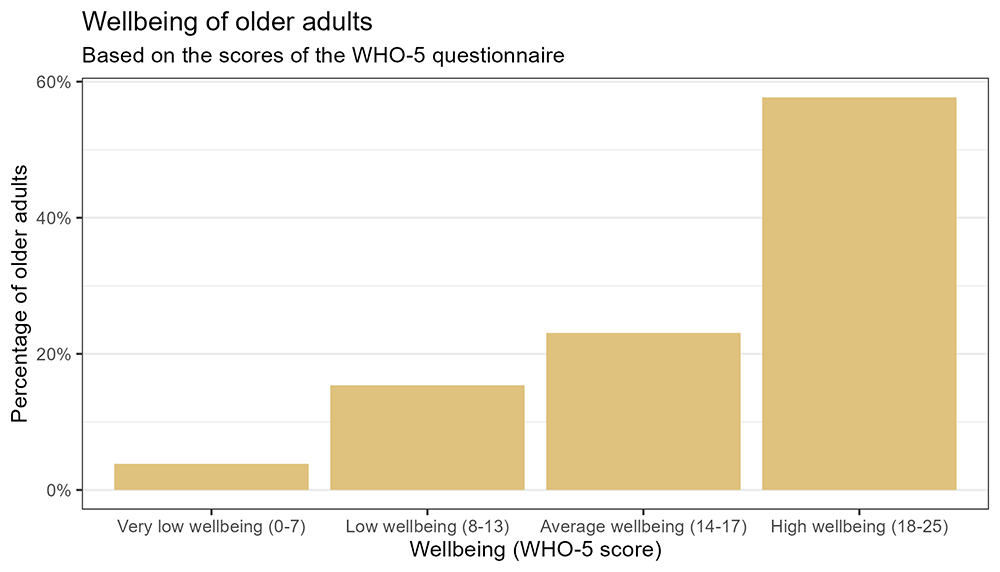
Figure 1. Most older adults report average of high wellbeing.
Loneliness
According to the results on the UCLA loneliness scale, a large majority of older adults experience low or moderate loneliness, and relatively few participants experience moderate-high or high loneliness (Figure 2).
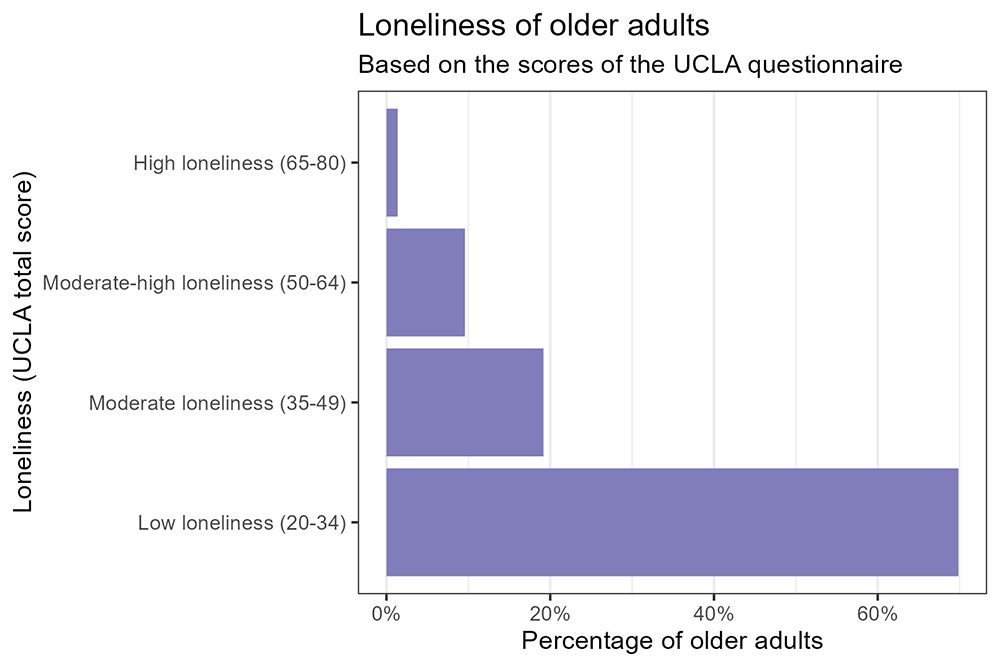
Figure 2. Most older adults report low or moderate levels of loneliness.
Health-related quality of life
Based on the EQ-5D-3L questionnaire scores, most participants experience no issues with self-care and accomplishing their usual daily activities. Similarly, most participants do not report experiencing anxiety/depression. On the other hand, more than half participants experience at least some problems with pain/discomfort and mobility (Figure 3).
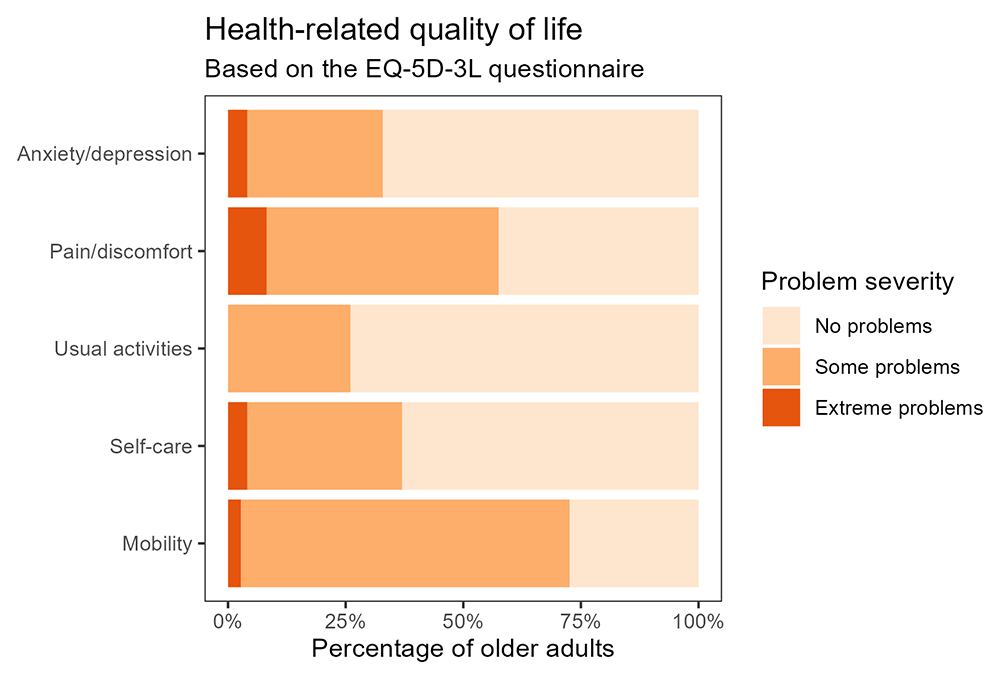
Figure 3. Most older adults had no problems with most aspects of health-related quality of life.
When older adults were asked to rate their health on a scale from 0 (worst possible health they could imagine) to 100 (best possible health they could imagine), a very large majority of participants reported a value of 50 or higher, and a relatively high proportion of participants reported very high values (Figure 4).
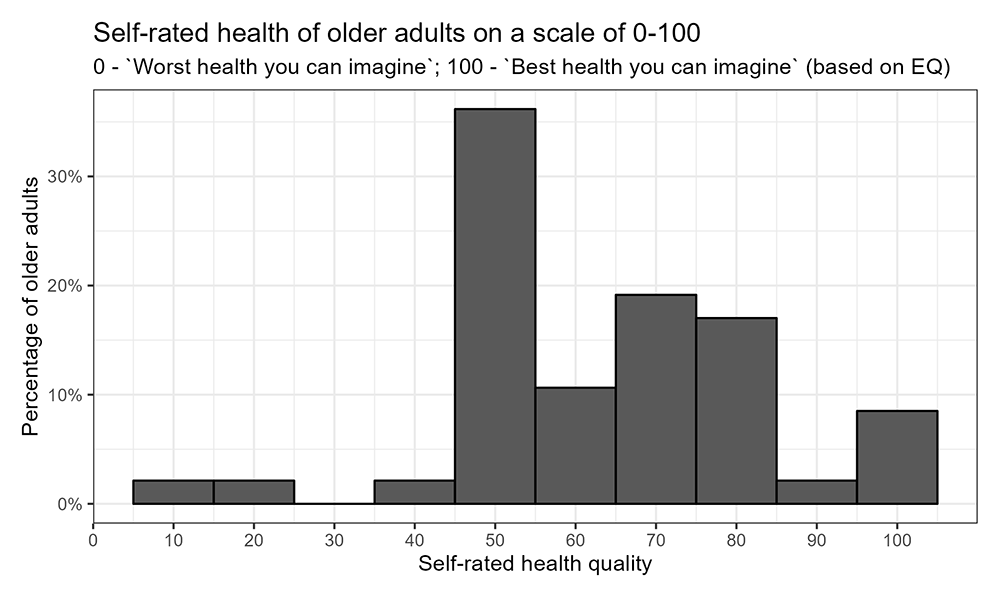
Figure 4. Most older adults rated their overall health with the number 50 or higher on a 0-100 scale.
Perception of tested technologies
On the Almere questionnaire, older adults reported a relatively high trust in technologies. They generally trust the tested technologies with their personal data, believe that the technologies provide reliable information, and perceive technologies as useful (Figure 5).
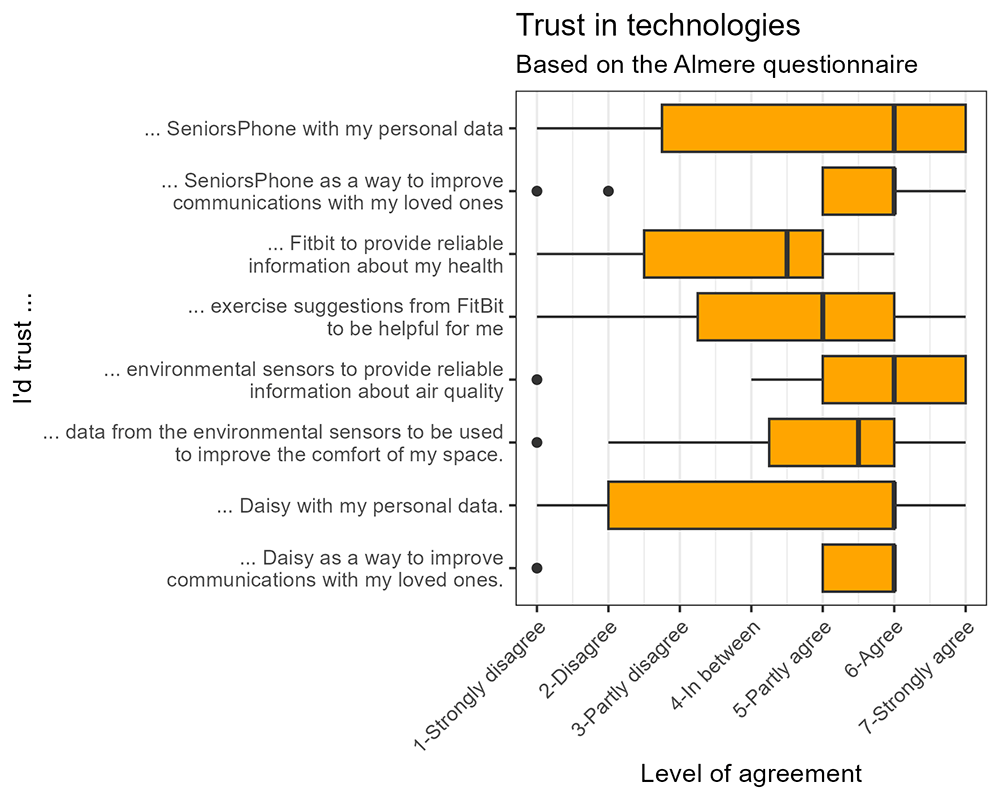
Figure 5. Older adults tend to report high trust in tested technologies.
According to the results on the System Usability Scale, older adults generally rated the usability of the SeniorsPhone with middle values on the usability scale. Fitbit’s usability was generally rated higher (Figure 6).
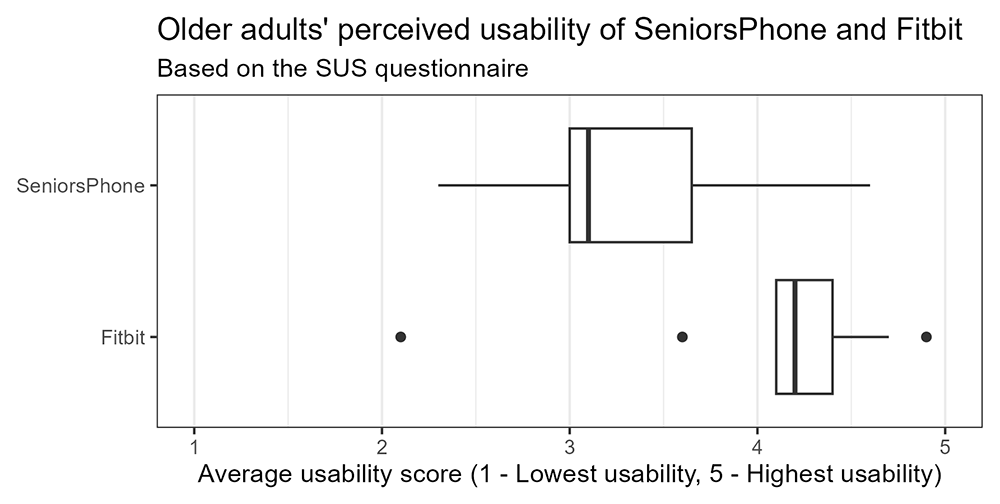
Figure 6. The usability of SeniorsPhone was rated with middle values, while the Fitbit was rated higher.
On the Training Evaluation Inventory, older adults rated the training they received before using the new technologies as positive. In general, they reported that the training was informative, useful, simple, and enjoyable, and they expressed a positive attitude towards the training (Figure 7).
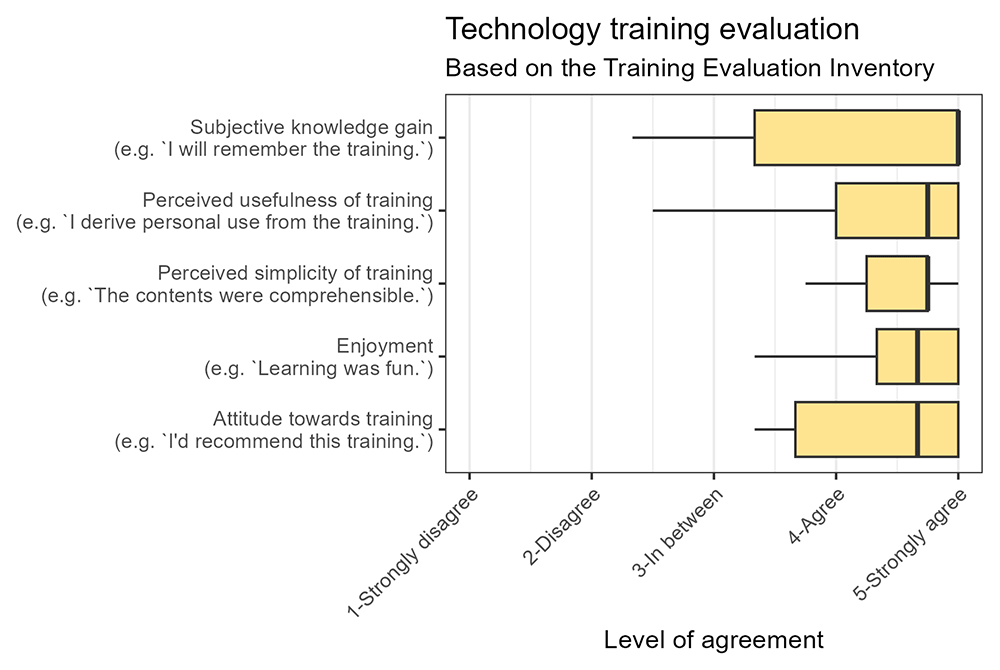
Figure 7. Participants were generally satisfied with the technology training they received.
Association between variables on health, wellbeing, loneliness, health-related quality of life, and variables related to technology
People that reported higher wellbeing tended to report better health, health-related quality of life, and lower loneliness. Those that perceived one technology (e.g., Fitbit) as more usable tended to perceive the other technology as more usable as well (e.g., SeniorsPhone). Higher perceived usability of technologies was positively correlated with overall trust in the technologies - belief that the technologies can be trusted with personal data, provide reliable information, and are generally useful. Participants who reported higher wellbeing tended to perceive Fitbit (but not SeniorsPhone) as more usable than others (Figure 8).
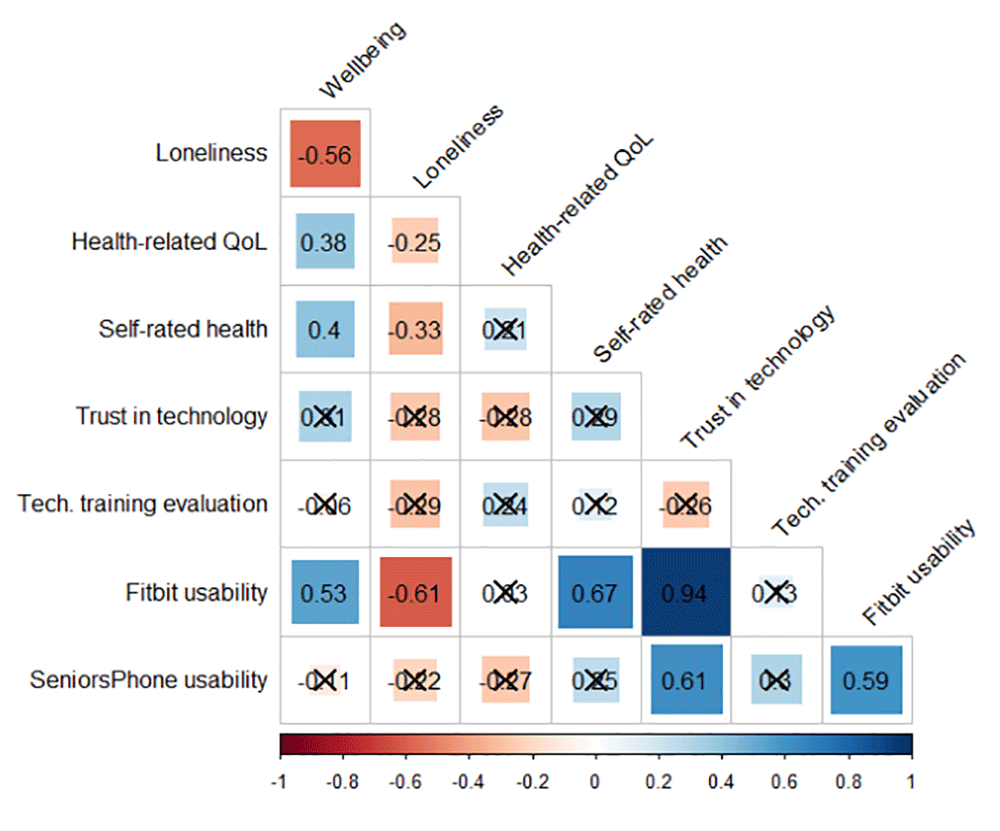
Figure 8. Health and wellbeing variables correlated with each other; the same was true for technology variables.
Discussion
The aim of this study was to explore wellbeing, health, and loneliness of older adults, and their perception of different technologies, as well as to investigate the association between these constructs.
The results indicated that most participants exhibited average or high levels of well-being. This is an encouraging finding, suggesting that the residents of Slovenian senior homes, at least those without significant cognitive issues, are generally characterized with good mental health. It is important to consider positive wellbeing of older adults as a facilitator in promoting the acceptance and adoption of technology. When individuals have a higher sense of well-being, they may be more open to trying new technologies, and more likely to successfully interact with them (Andrews et al., 2019).
Loneliness, a significant psychosocial challenge among older adults, was found to be relatively low or moderate in most participants. This suggests that the senior home residents had a sufficient level of social connectedness and support. Social isolation and loneliness are known barriers to technology adoption among older adults, as they may contribute to a lack of motivation or interest in using technology, while also leading to less available support for technology-related issues (Kamin et al., 2020). The relatively low levels of loneliness observed in this study might have thus positively influenced the participants' perception of technology.
The assessment of health-related quality of life revealed that most participants did not face significant difficulties in self-care and daily activities. However, a notable proportion reported problems related to pain/discomfort and mobility. These findings highlight the importance of incorporating technologies that address physical well-being and specific needs and provide support for managing pain and improving mobility (Thielke et al., 2012). Technologies such as the smartwatch used in the study, which monitored health metrics and provided real-time feedback, could play an important role in promoting self-awareness and facilitating healthier lifestyle choices among older adults.
The perception of the tested technologies was generally positive among the participants, who reported high trust in technologies and perceived them as usable. Trust in technology is a critical factor influencing adoption, as older adults need to feel confident that their personal data is protected, and that the technology is reliable (Kamin et al., 2020). The finding that older adults in our study trusted the technologies and perceived them as useful is promising, as it suggests readiness to embrace technological solutions that promote well-being and independence.
Usability, an essential aspect of technology acceptance, was rated satisfactorily for the SeniorsPhone and even higher for the Fitbit. The positive perception of usability indicates that the technologies were perceived as accessible and beneficial. These findings highlight the value of designing user-friendly interfaces, and providing adequate training and support to ensure a positive user experience (Bixter et al., 2018).
The correlations between evaluated variables revealed an interesting association. Higher levels of wellbeing and lower level of loneliness were associated with higher ratings of the Fitbit usability. This suggests that older adults with higher levels of well-being may be more receptive to adoption of at least some technologies, and more likely to perceive these technologies as beneficial.
In conclusion, the findings indicate that Slovenian senior home residents without significant cognitive issues generally report average or high levels of well-being, low or moderate levels of loneliness, and typically do not face significant difficulties in self-care and daily activities. The participants perceived the tested technologies positively, generally viewing them as trustworthy and usable. Interestingly, individuals with higher levels of well-being and lower levels of loneliness seem more likely to perceive at least some technologies as more usable. These findings highlight the importance of considering individual psychosocial characteristics when designing and implementing technology interventions for older adults.
Limitations
Our study's primary limitation is the generalizability of the findings due to its exclusive focus on three coastal senior homes in different towns within Slovenia. These specific locations may attract individuals with varying socio-economic and health statuses, potentially differing significantly from senior home residents in other regions of the country and other countries. Consequently, the results may not fully represent the broader population of senior home residents. Additionally, we did not evaluate the cognitive status of participants with objective tests, so we may have excluded some participants unfairly (based on the opinion of the senior home staff).
Data availability
Zenodo: Data analysis for "Wellbeing, loneliness, health-related quality of life and perception of technology of older adults in Slovenian senior homes". https://doi.org/10.5281/zenodo.8252316. (Lipovac & Erce, 2023)
This project contains the following underlying data:
TEI.xlsx. (Technology Evaluation Inventory data.)
TIT.xlsx. (Trust in technologies data.)
expgroup_WHO5_UCLA_EQ_SUS.xlsx (data on WHO-5, UCLA, EQ, and SUS)
data_analysis_slo_senior_homes.pdf
data_analysis_slo_senior_homes.rmd
Acknowledgements
We are grateful to Michael D. Burnard for support in development of the study and Andreja Kutnar for reading the article and providing comments.
Faculty Opinions recommendedReferences
- Andrews JA, Brown LJE, Hawley MS, et al.:
Older adults’ perspectives on using digital technology to maintain good mental health: Interactive group study.
J Med Internet Res.
2019; 21(2): 1–11. PubMed Abstract
| Publisher Full Text
| Free Full Text
- Astell AJ, McGrath C, Dove E:
‘That's for old so and so's!’: does identity influence older adults’ technology adoption decisions?
Ageing & Society.
2020; 40(7): 1550–1576. Publisher Full Text
- Barbosa Neves B, Franz R, Judges R, et al.:
Can digital technology enhance social connectedness among older adults? A feasibility study.
J Appl Gerontol.
2019; 38(1): 49–72. PubMed Abstract
| Publisher Full Text
- Bixter MT, Blocker KA, Rogers WA:
Enhancing social engagement of older adults through technology.
Aging, Technology and Health.
2018; 179–214. Publisher Full Text
- Chopik WJ:
The benefits of social technology use among older adults are mediated by reduced loneliness.
Cyberpsychol Behav Soc Netw.
2016; 19(9): 551–556. PubMed Abstract
| Publisher Full Text
| Free Full Text
- Chrysikou E:
Why we need new architectural and design paradigms to meet the needs of vulnerable people.
Palgrave Communications.
2018; 4(1). 116. Publisher Full Text
- EuroQol Research Foundation: EQ-5D-5L User Guide. 2019. Reference Source
- Hatton AL, Haslam C, Bell S, et al.:
Innovative solutions to enhance safe and green environments for ageing well using co-design through patient and public involvement.
Res Involv Engagem.
2020; 6(1): 45. PubMed Abstract
| Publisher Full Text
| Free Full Text
- Heerink M, Kröse B, Evers V, et al.:
Assessing Acceptance of Assistive Social Agent Technology by Older Adults: the Almere Model.
Int J Soc Robot.
2010; 2(4): 361–375. Publisher Full Text
- Kamin ST, Beyer A, Lang FR:
Social support is associated with technology use in old age.
Zeitschrift für Gerontologie und Geriatrie.
2020; 53(3): 256–262. PubMed Abstract
| Publisher Full Text
- Lewis JR:
The system usability scale: past, present, and future.
Int J Hum Comput Interact.
2018; 34(7): 577–590. Publisher Full Text
- Lipovac D, Erce M:
Data analysis for "Wellbeing, loneliness, health-related quality of life and perception of technology of older adults in Slovenian senior homes" [Data set]. Zenodo.2023. http://www.doi.org/10.5281/zenodo.8252316
- Ritzmann S, Hagemann V, Kluge A:
The Training Evaluation Inventory (TEI)-evaluation of training design and measurement of training outcomes for predicting training success.
Vocations and Learning.
2014; 7: 41–73. Publisher Full Text
- Rogers WA, Fisk AD:
Toward a psychological science of advanced technology design for older adults.
J Gerontol B Psychol Sci Soc Sci.
2010; 65(6): 645–653. PubMed Abstract
| Publisher Full Text
| Free Full Text
- Russell D, Peplau LA, Ferguson ML:
Developing a Measure of Loneliness.
J Pers Assess.
1978; 42(3): 290–294. PubMed Abstract
| Publisher Full Text
- ten Bruggencate T, Luijkx KG, Sturm J:
How to fulfil social needs of older people: Exploring design opportunities for technological interventions.
Gerontechnology.
2019; 18(3): 156–167. Publisher Full Text
- Thielke S, Harniss M, Thompson H, et al.:
Maslow’s hierarchy of human needs and the adoption of health-related technologies for older adults.
Ageing International.
2012; 37(4): 470–488. Publisher Full Text
- Topp CW, Østergaard SD, Søndergaard S, et al.:
The WHO-5 well-being index: A systematic review of the literature.
Psychother Psychosom.
2015; 84(3): 167–176. PubMed Abstract
| Publisher Full Text
- Zallio M, Berry D, Casiddu N:
Adaptive environments for enabling senior citizens: An holistic assessment tool for housing design and IoT-based technologies. In: 2016 IEEE 3rd World Forum on Internet of Things (WF-IoT). IEEE, 2016; 419–424. Publisher Full Text