Introduction
Onchocerciasis is a neglected tropical disease primarily found in Africa, caused by the filarial nematode Onchocerca volvulus and transmitted through bites of infectious blackflies (Simulium spp.)1. Onchocerciasis is known to cause dermatitis and blindness (“river blindness”) and is associated with a clinical spectrum of seizures and disorders grouped under the term onchocerciasis-associated epilepsy (OAE)2. In areas where there is high ongoing O. volvulus transmission, children are at risk of developing OAE, with seizure onset typically occurring between the ages of three to 18 years2. Elimination of onchocerciasis depends mainly on community-directed treatment with ivermectin (CDTi) in at-risk communities, which can be supplemented with activities to eradicate the blackflies3.
Onchocerciasis was first reported in Sudan in 1947 by Kirk et al. Ivermectin distribution started in South Sudan in 1996 through the Southern Sudan Onchocerciasis Control Programme, but annual CDTi was only formally initiated in 20054,5. Moreover, there have been several years of low coverage treatment due to insecurity, and community drug distributors' high attrition rate, which, in combination with high onchocerciasis transmission potential, has allowed the disease to remain endemic most of the country4–6. Although CDTi was interrupted in 2020 because of the COVID-19 pandemic, it has been re-introduced biannually (six-monthly) since 2021.
Currently, the World Health Organisation (WHO) recommends using serodiagnostic tools based on the detection of antibodies specific to a 16KDa species-specific antigen of O. volvulus (Ov16), utilising either a rapid diagnostic test or an Enzyme-Linked Immunosorbent Assay (ELISA) platform7. The antigen Ov16 serves as an early marker of onchocerciasis infection, so seroconversion to Ov16 can be used to detect pre-patent infection, which is not possible with skin snips8. Since its discovery in 1991, the use of Ov16 has emerged as the gold standard for onchocerciasis serology, with sensitivities in the 80–89% range and specificity values in the 97–99% range depending on the assay used and the sample collection assessed9,10.
In 2018, a house-to-house survey in Maridi County, an onchocerciasis-endemic area in Western Equatoria State, South Sudan, showed a very high epilepsy prevalence of 43.8 per 1000 individuals11. Notably, in Kazana 2, the site closest to the major blackfly breeding site in the area (Maridi Dam), an epilepsy prevalence of 119.0 per 1000 individuals was noted11. In December 2019, onchocerciasis transmission was assessed in Maridi in three sites at different distances from the Maridi Dam via an Ov16 serosurvey in children three to nine years of age. The overall seroprevalence of the children was 24.5%12. As these findings indicated high onchocerciasis transmission, a community-based vector control strategy, “Slash and Clear”, has been implemented at least once a year at the Maridi Dam since December 2019 (Figure 1)13. This strategy consists of clearing the trailing vegetation to eliminate the blackfly breeding site and reduce biting density in the nearby communities.
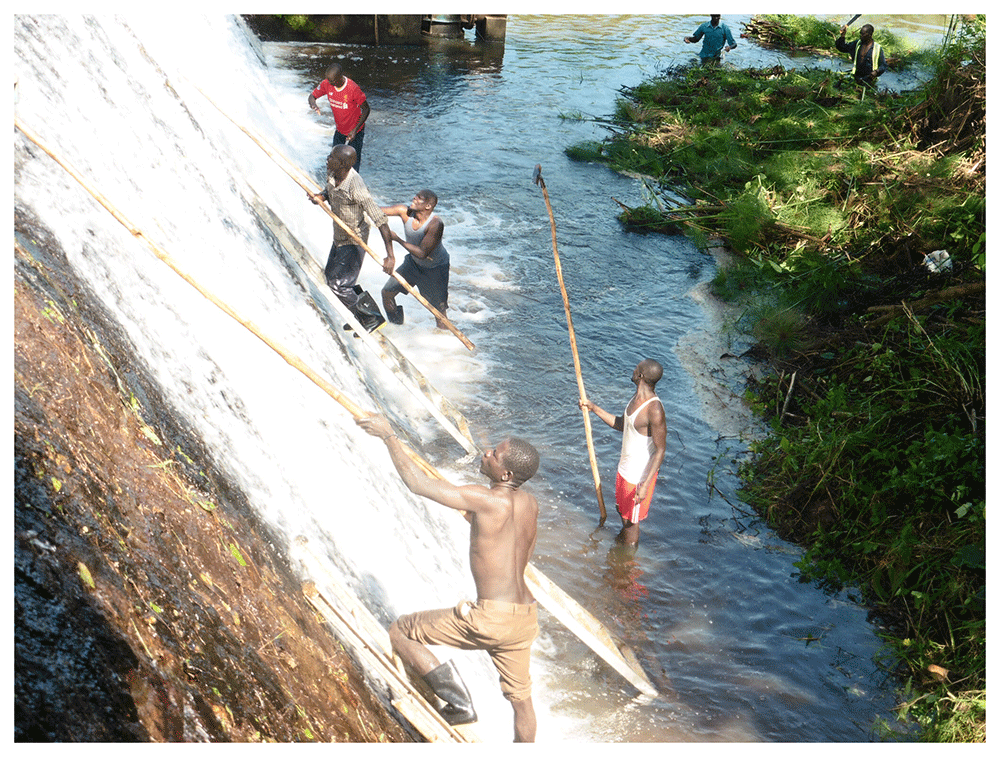
Figure 1. Slash-and-Clear at the Maridi Dam, South Sudan.
In February 2023, a follow-up O. volvulus serosurvey was conducted among children aged three to nine years in Maridi to evaluate possible changes in transmission patterns. This paper presented the effect of strengthening the onchocerciasis elimination interventions as demonstrated by seroprevalence in children aged three to nine years using the Ov16 SD BIOLINE rapid diagnostic test (RDT).
Methods
Ethical standards
Ethical approval for this study was obtained from the University of Antwerp’s ethics committee (Ref: BUN B300201940004) and from the ethics committee of the Ministry of Health of South Sudan (MOH/RERB 56/2022). All participants were recruited only after informed parental consent was granted (and assent for children aged seven years and above). The research procedures were in compliance with the declaration Helsinki, and all personal data were treated confidentially.
Study setting
South Sudan is known to have multiple endemic hotspots of onchocerciasis, including Maridi County in the Western Equatoria State (Figure 2).
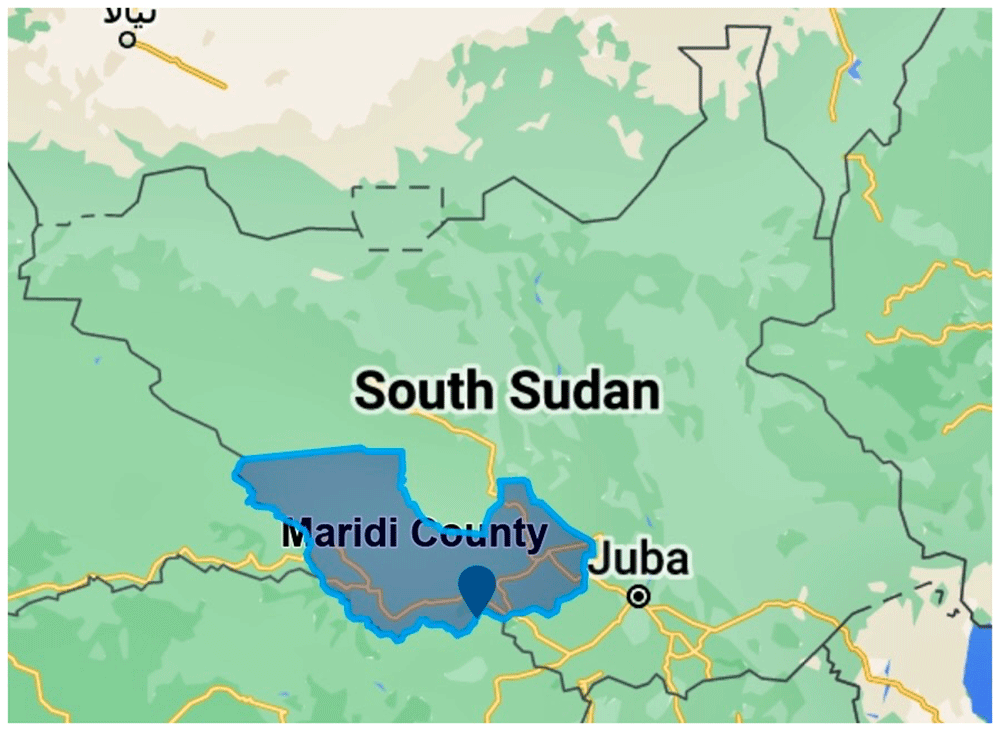
Figure 2. Location of Maridi County in Western-Equatorian State, South Sudan (produced in Scribble Maps).
Maridi County is home to over 115,000 individuals14 and is crossed by the Maridi River, upon which a dam was built in the 1950s. The dam spillway was identified as the sole blackfly breeding site in Maridi12, driving onchocerciasis transmission in the neighbouring villages. This study was conducted between 2019 (baseline) and 2023 (follow-up) in five villages, of which Kazana 1, Kazana 2, and Hai-Matara are situated in the proximity of the dam (high-transmission zone; HTZ) and Hai-Tarawa and Hai-Gabat are located further away from the dam (low-transmission zone; LTZ) (Figure 3).
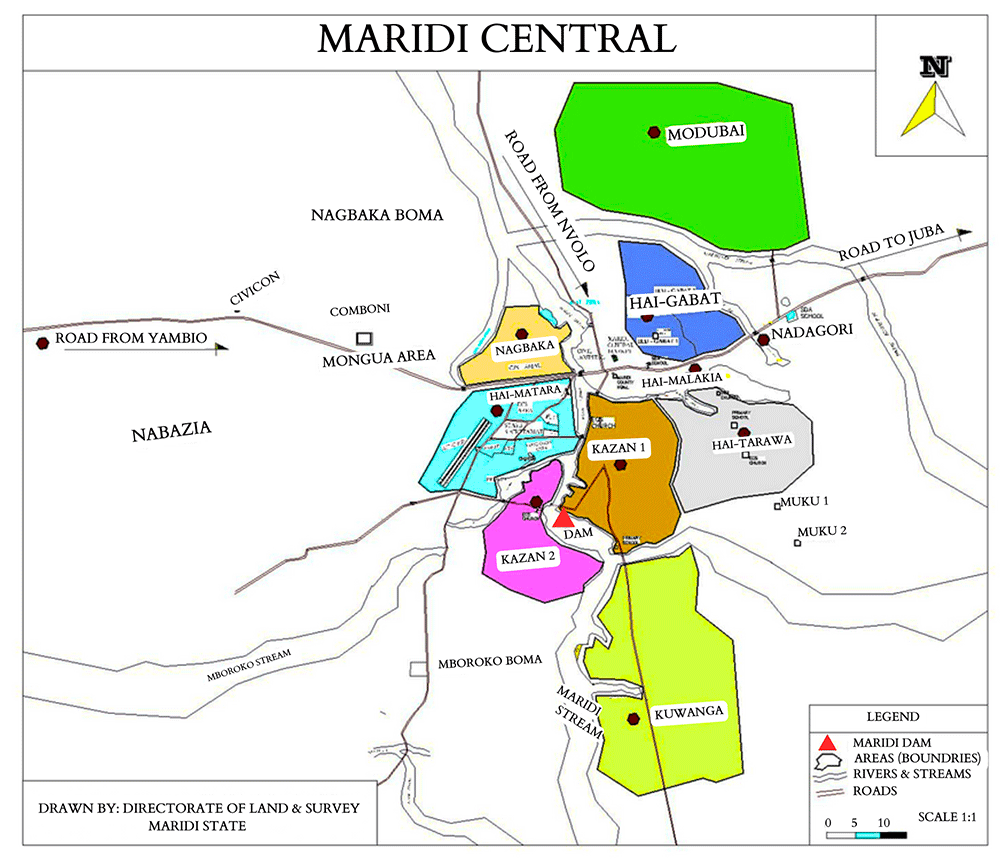
Figure 3. The Maridi central area with the location of high- (Kazana 1 and 2 and Hai-Matara sites) and low-onchocerciasis transmission zones (Hai-Gabat and Hai-Tarawa sites) and the Maridi Dam (adapted from Colebunders et al.11).
Study procedures
A cross-sectional study was conducted before and after strengthening the control interventions against onchocerciasis. The procedures of the baseline survey (2019) have been described in detail previously12. Several weeks before the follow-up survey in 2023, the research team contacted the community leaders to inform them about the study and obtain their consent and collaboration. Five local healthcare workers were trained to perform the Ov16 SD BIOLINE RDT and administer a questionnaire to the parents of the children. One day before participant recruitment, community mobilisers notified villagers about the study and of the site(s) chosen in each village (schools, churches, etc.) to test the eligible children (three to nine years old). On the day of the study in each study site, the mobilisers used megaphones, and healthcare workers went from house to house to gather more participants. All children for whom informed consent was provided by a parent/guardian were enrolled in the study (assent was obtained from children aged seven to nine years).
A short questionnaire was administered to the parent/guardian and the child to collect relevant information about the child’s history (age, sex, village of residence, previous ivermectin intake, itching/skin lesions, epilepsy). Thereafter, all the participating children were finger-pricked with a single-use, retractable lancet of 2.00 millimetres (Ergo lance). Whole blood from each finger prick was used for Ov16 rapid diagnostic testing (RDT) (SD Bioline, Inc, Gyeonggi-do, South Korea). The Ov16 RDT test was read after 30 minutes and performed in the field following the manufacturers’ instructions.
Data analysis
Study data was checked daily and uploaded to the REDCap secure online platform. The final datasets were exported from REDCap, cleaned in Excel spreadsheets, then transferred to the R software version 4.2.2 for analysis. Continuous variables were summarised as median with interquartile range (IQR), while categorical variables were expressed as percentages. The findings of the baseline (2019)12 and follow-up (2023) surveys were compared using the Chi-squared test (or Fisher’s exact test when appropriate), and 95% confidence intervals (CIs) were produced using the Wilson score with continuity correction.
Results
Ov16 seroprevalence in Maridi 2023
During the 2023 O. volvulus seroprevalence study in Maridi, 248 children aged three to nine years were recruited. The median age was six years (IQR: 4–8), and 114 were males (46.0%). Ninety-three of the participating children (37.5%) had some form of dermatitis, as evidenced by itching and/or visible skin lesions. Furthermore, four children (1.6%) were identified as having epilepsy.
The overall Ov16 RDT seroprevalence was 30.7% (76/248). The seroprevalence was significantly different across villages (p<0.001), with Kazana 1 and Kazana 2 being the most affected and Hai-Gabat and Hai-Tarawa less affected (Figure 4).
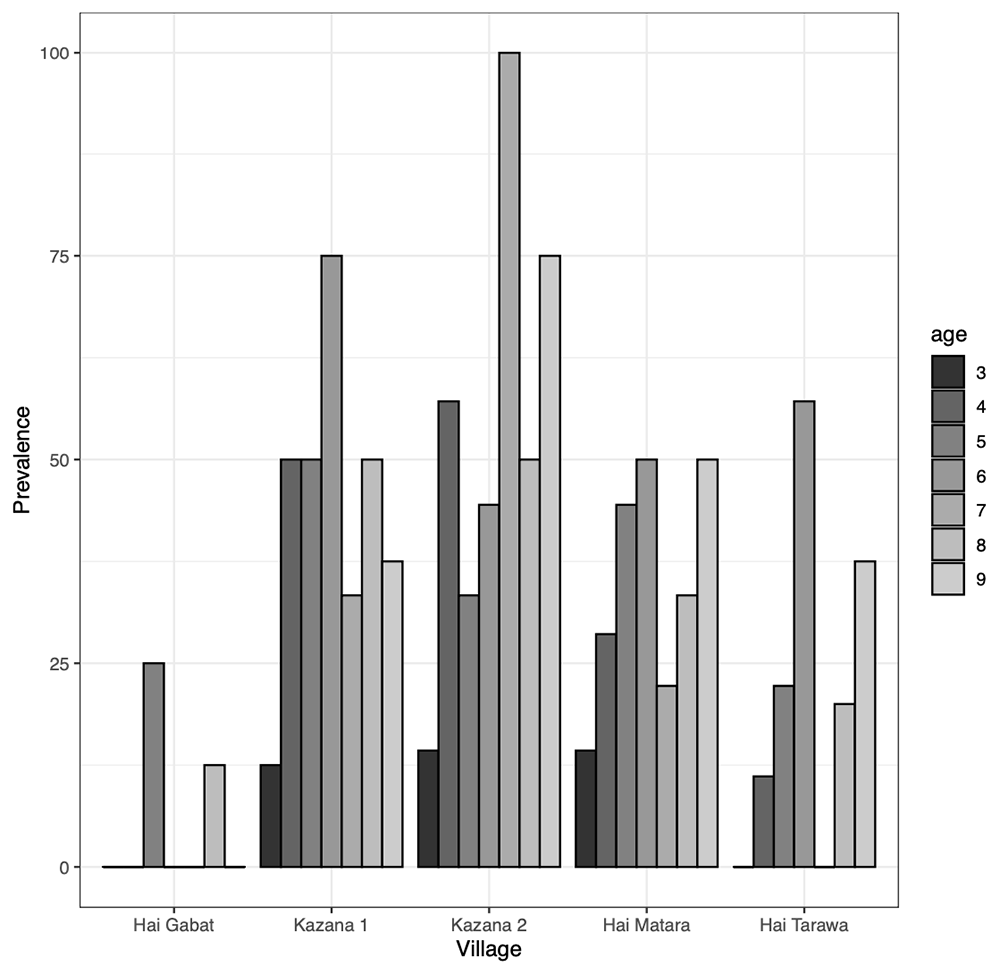
Figure 4. Ov16 rapid diagnostic test seroprevalence in 2023 per study site and age (years old).
The Ov16 RDT seroprevalence was similar for males and females (p=0.98) and did not vary significantly across the younger (30.7% seropositivity among children aged <7 years) and older (30.5% seropositivity among aged ≥7 years) age-groups (p=0.78) (Table 1). However, the 3-year-olds, had lower Ov16 seropositivity: 8.8% (3/34) versus 34.1% (73/214) in the older children; p<0.001.
Table 1. Ov16 rapid diagnostic test seroprevalence in 2023 by age group and sex across included villages.
| Ov16 RDT seroprevalence % (Ratio, 95%CI) | Comparisons |
|---|
| Village | Hai-Gabat | Kazana 1 | Kazana 2 | Hai-Matara | Hai-Tarawa | Overall | p-value* |
|---|
| Age-groups |
| 3–6 years | 3.4 (1/29, 0.2-19.6) | 46.7 (14/30, 28.8-65.4) | 43.8 (14/32, 26.0-60.6) | 35.5 (11/31, 19.8-54.6) | 7/30 (23.3, 10.6-42.7) | 30.7 (47/153, 23.7-38.8) | 0.98 |
| 7–9 years | 4.8 (1/21, 0.2-25.9) | 8/20 (40.0, 20.0-63.6) | 66.7 (8/12, 38.9-89.6) | 33.3 (7/21, 15.5-57.0) | 4/20 (20.0, 0.7-44.3) | 30.5 (29/95, 21.7-40.9) |
| Sex |
| Male | 3.6 (1/28, 0.2-20.2) | 8/16 (50.0, 28.0-72.0) | 55.0 (11/20, 32.0-76.2) | 38.9 (7/18, 18.3-64.0) | 6/31 (19.4, 8.1-38.1) | 29.2 (33/113, 21.2-38.6) | 0.78 |
| Female | 4.5 (1/22, 0.2-24.9) | 14/34 (42.2, 25.2-59.2) | 46.6 (12/26, 27.1-66.3) | 32.4 (11/34, 18.0-50.6) | 5/19 (26.3, 10.1-51.4) | 31.9 (43/135, 24.3-40.5) |
| Overall | 30.6 (76/248, 25.1-36.9) |
Children with dermatitis had a higher Ov16 RDT seroprevalence (43.5%, 40/92) compared to their peers without dermatitis (22.6%, 35/155); p< 0.001. Of the four children with epilepsy, none tested positive for Ov16 antibodies.
Ov16 seroprevalence in Maridi over time
Comparing baseline and follow-up Ov16 RDT results, the overall Ov16 seroprevalence increased non-significantly from 24.3% in 2019 to 30.6% in 2023 (p=0.22) (Figure 5). The seroprevalence among three-year-olds, born after implementation of more robust onchocerciasis elimination measures like vector control and bi-annual CDTi, was measured at 8% in 2023 and was thus lower than the level of 12.5% measured among three-year-olds in 2019. However, the difference was not significant (p=0.68). Conversely, the Ov16 seropositivity rose non-significantly from 26.7% in 2019 to 34.1% in 2023 among children aged four years and above (p=0.16). Transmission zone-specific Ov16 seroprevalence did not significantly change across surveys (HTZ: p= 0.70; LTZ: p= 0.18; Table 2).
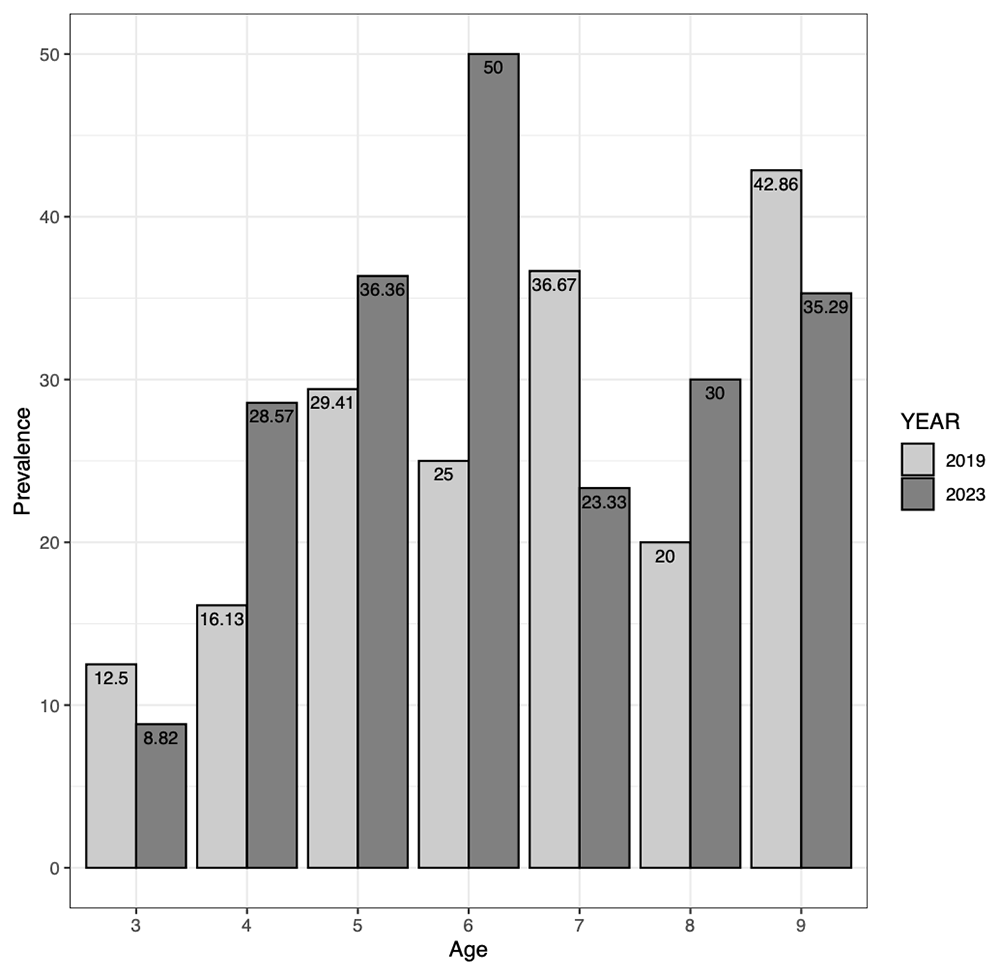
Figure 5. Ov16 rapid diagnostic test seroprevalence (%) by age and year surveyed (2019 and 2023).
Table 2. Ov16 rapid diagnostic test seroprevalence among three- to nine-year-olds per survey (2019/2023) and village.
| 2019 seroprevalence %(Ratio,
95%CI) | 2023 seroprevalence %(Ratio,
95%CI) | p-value* |
|---|
| Village |
| Hai-Gabat | 0.0 (0/24, 0.0-17.2) | 4.2 (2/48, 0.7-14.9) | N.A. |
| Kazana 1 | 35.0 (14/40, 21.1-51.7) | 44.0 (22/50, 30.3-58.7) | 0.52 |
| Kazana 2 | 50.0 (12/24, 31.4-68.6) | 50.0 (23/46, 36.1-63.9) | 1.00 |
| Hai-Matara | 14.8 (4/27, 4.9-34.6) | 34.6 (18/52, 22.3-49.2) | N.A. |
| Hai-Tarawa | 17.2 (5/29, 6.5-36.5) | 22.0 (11/50, 12.0-36.3) | 0.83 |
| Transmission zones |
| Low-transmission zone | 9.4 (5/53, 3.5-21.4) | 13.0 (13/100, 7.4-21.6) | 0.70 |
| High-transmission zone | 33.0 (30/91, 23.7-43.7) | 42.6 (63/148, 34.6-51.0) | 0.18 |
| Overall | 24.3 (35/144, 17.7-32.3) | 30.7 (76/248, 25.1-36.9) | 0.22 |
Discussion
In 2023, an Ov16 seroprevalence of 30.7% was found among children aged three to nine years in Maridi, representing a non-significant increase from the 24.3% seroprevalence documented in 201912 (p=0.98). As the elimination measures were only introduced three years ago, children between the ages of four and nine years in the 2023 cohort had already been highly exposed to onchocerciasis before strengthening the control interventions. An increase in the seroprevalence in the age group of three to nine years old children was to be expected, particularly because of the very high pre-intervention endemicity15. Indeed, some of the children might harbour prepatent infection before the start of the intervention, which may break out in the course of the intervention. A force-of-infection model for onchocerciasis has shown that upon interrupting O. volvulus transmission by vector control, the microfilarial prevalence of the zero to four and five to nine year old age groups continues to rise during the first five years, after which it starts falling16.
The fact that the Ov16 seroprevalence among the three-year-olds did not decrease significantly may also be related to the small sample size, short follow-up duration since the strengthening of the control interventions and the lack of CDTi in 2021. Indeed, mathematical modelling has suggested that a one-year CDTi interruption may significantly impact onchocerciasis elimination prospects in settings such as Maridi, with short CDTi histories and high onchocerciasis endemicity17,18. The one-year CDTi interruption in 2020 and the consistently low CDTi coverage rates achieved in Maridi (40.8% in 201711 and 56.6% in 202119) explain why some three-year-old children became infected with O. volvulus. Achieving a CDTi coverage of at least 80% of the total population is strongly recommended for the successful elimination of onchocerciasis transmission, particularly in areas with a high prevalence of the disease20.
The high Ov16 seroprevalence among young children in Maridi reveals that the onchocerciasis elimination measures must be further strengthened to protect children from developing onchocerciasis-associated morbidities. Over one-third (37.5%) of the children had some form of dermatitis, as evidenced by itching and/or visible skin lesions. A significantly higher proportion of children with dermatitis tested Ov16 RDT positive (43.5%) compared to their peers without dermatitis (22.6%, p<0.001), suggesting the dermatitis was likely caused by an active O. volvulus infection in a large proportion of children. In resource-constrained settings such as many parts of sub-Saharan Africa, when children present with dermatitis and itching, scabies should be considered as a possible diagnosis. However, the absence of characteristic scabies lesions was noted in the children included in the study. Additionally, since scabies is treatable with ivermectin, its prevalence typically decreases in regions where mass ivermectin distribution is implemented21.
This study demonstrates the feasibility of using rapid diagnostic tests for evaluating onchocerciasis transmission in highly endemic settings. Until recently, field Ov16 RDTs were overlooked in monitoring onchocerciasis transmission in endemic foci since the gold standard technique recommended by the World Health Organization (WHO) was Ov16 enzyme-linked immunosorbent assay (ELISA)22. However, in practice, there are logistical challenges to performing Ov16 ELISA (need for a cold chain, specialised equipment, and capacity), particularly in remote sites like Maridi. Meanwhile, studies in Cameroon23 and the Democratic Republic of Congo24 have found that Ov16 RDT done in the field was helpful in investigating onchocerciasis transmission patterns. Therefore, it is worth considering the widespread use of RDTs as a point-of-care approach for monitoring onchocerciasis in resource-limited sites.
Our study had some limitations. A sufficiently large sample size of 3-year-old children needs to be Ov16 RDT tested, and a longer follow-up is needed to investigate effect of strengthening an onchocerciasis elimination programme. Moreover, in the absence of skin snips for microfilariae quantification and blackfly infection rates, it is difficult to obtain precise estimates of the intensity of O. volvulus transmission in Maridi. Further research may be required to better understand the Ov16 antibodies dynamics during and after O. volvulus infection. Strengthening the onchocerciasis elimination program certainly decreased the O. volvulus transmission in Maridi. This was suggested by the results of a recent longitudinal population-based study that showed that the incidence of onchocerciasis-associated epilepsy, including nodding syndrome, considerably decreased in Maridi between 2018 and 202225.
In conclusion, using Ov16 RDT, we were were able to demonstrate that Maridi remains a hotspot for O. volvulus transmission even after the implementation of elimination measures. These measures should be continued and strengthened even further, including increasing the CDTi coverage to protect children from developing OAE and to move towards the elimination goals of WHO in 2030.
Data availability
EUDAT. Rapid diagnostic testing for onchocerciasis in Maridi (South Sudan) before and after improving elimination strategies. DOI: 10.23728/b2share.e98101581be64e6188836d73a19d024326.
This project contains the following data:
- Baseline and follow-up serosurveys were conducted in Maridi in 2019 (prior to strengthening onchocerciasis elimination efforts) and 2023, respectively. During both surveys, children aged three to nine years were recruited from five study sites situated at different distances from the Maridi Dam. Ov16 antibodies were detected via rapid diagnostic tests (RDTs) using whole blood obtained by finger-pricking the participants. Baseline and follow-up Ov16 prevalence rates were calculated and compared.
Data are available under the terms of the Creative Commons Zero "No rights reserved" data waiver (CC0 1.0 Public domain dedication).
Author contributions
Conceptualisation by AH, SRJ and RC; data curation by AH and SRJ; formal analysis by AH and JNSF; funding acquisition by RC; investigation by SRJ and AH; methodology by SRJ, RC and AH; project administration by SRJ; resources by RC, JR; software by AH; supervision by RC and JNSF; validation by RC; visualisation by AH; writing – original draft by AH, JNSF, L-JA and RC; and writing – review & editing by AH, SRJ, L-JA, RC, and JNSF.
Acknowledgements
We are grateful to the clinical officers, nurses and research assistants who conducted the surveys; to the Maridi Health Sciences Institute and Amref Health Africa for using its facilities, equipment, and vehicles; to the Western Equatoria State and the Maridi County governments for their support; and to the population of the Maridi settlements for their cooperation and participation.
Faculty Opinions recommendedReferences
- 1.
Brattig NW, Cheke RA, Garms R:
Onchocerciasis (river blindness) – more than a century of research and control.
Acta Trop.
2021; 218: 105677. PubMed Abstract
| Publisher Full Text
- 2.
Colebunders R, Njamnshi AK, Menon S, et al.:
Onchocerca volvulus and epilepsy: A comprehensive review using the Bradford Hill criteria for causation.
PLoS Negl Trop Dis.
2021; 15(1): e0008965. PubMed Abstract
| Publisher Full Text
| Free Full Text
- 3.
Boussinesq M, Fobi G, Kuesel AC:
Alternative treatment strategies to accelerate the elimination of onchocerciasis.
Int Health.
2018; 10(suppl_1): i40–i48. PubMed Abstract
| Publisher Full Text
| Free Full Text
- 4.
Rumunu J, Brooker S, Hopkins A, et al.:
Southern Sudan: an opportunity for NTD control and elimination?
Trends Parasitol.
2009; 25(7): 301–7. PubMed Abstract
| Publisher Full Text
| Free Full Text
- 5.
WHO: Rapid assessment of loiasis and onchocerciasis in Equatoria region of Southern Sudan: 4th to 24th 2005. Reference Source
- 6.
Noma M, Zoure HGM, Tekle AH, et al.:
The geographic distribution of onchocerciasis in the 20 participating countries of the African Programme for Onchocerciasis Control: (1) priority areas for ivermectin treatment.
Parasit Vectors.
2014; 7: 325. PubMed Abstract
| Publisher Full Text
| Free Full Text
- 7.
WHO: Onchocerciasis: diagnostic target product profile to support preventive chemotherapy. 2021. Reference Source
- 8.
Lobos E, Weiss N, Karam M, et al.:
An immunogenic Onchocerca volvulus antigen: a specific and early marker of infection.
Science.
1991; 251(5001): 1603–5. PubMed Abstract
| Publisher Full Text
- 9.
Cama VA, McDonald C, Arcury-Quandt A, et al.:
Evaluation of an OV-16 IgG4 Enzyme-Linked Immunosorbent Assay in Humans and Its Application to Determine the Dynamics of Antibody Responses in a Non-Human Primate Model of Onchocerca volvulus Infection.
Am J Trop Med Hyg.
2018; 99(4): 1041–8. PubMed Abstract
| Publisher Full Text
| Free Full Text
- 10.
Golden A, Steel C, Yokobe L, et al.:
Extended result reading window in lateral flow tests detecting exposure to Onchocerca volvulus: a new technology to improve epidemiological surveillance tools.
PLoS One.
2013; 8(7): e69231. PubMed Abstract
| Publisher Full Text
| Free Full Text
- 11.
Colebunders R, Carter JY, Olore PC, et al.:
High prevalence of onchocerciasis-associated epilepsy in villages in Maridi County, Republic of South Sudan: A community-based survey.
Seizure.
2018; 63: 93–101. PubMed Abstract
| Publisher Full Text
| Free Full Text
- 12.
Lakwo TL, Raimon S, Tionga M, et al.:
The Role of the Maridi Dam in Causing an Onchocerciasis-Associated Epilepsy Epidemic in Maridi, South Sudan: An Epidemiological, Sociological, and Entomological Study.
Pathogens.
2020; 9(4): 315. PubMed Abstract
| Publisher Full Text
| Free Full Text
- 13.
Raimon S, Lakwo TL, Sebit WJ, et al.:
"Slash and Clear", a Community-Based Vector Control Method to Reduce Onchocerciasis Transmission by Simulium sirbanum in Maridi, South Sudan: A Prospective Study.
Pathogens.
2021; 10(10): 1329. PubMed Abstract
| Publisher Full Text
| Free Full Text
- 14.
South Sudan - County Population Estimates - 2015-2020. Humanitarian Data Exchange. accessed 11 Mar 2023.
Reference Source
- 15.
Lont YL, Coffeng LE, de Vlas SJ, et al.:
Modelling Anti-Ov16 IgG4 Antibody Prevalence as an Indicator for Evaluation and Decision Making in Onchocerciasis Elimination Programmes.
PLoS Negl Trop Dis.
2017; 11(1): e0005314. PubMed Abstract
| Publisher Full Text
| Free Full Text
- 16.
Remme J, Ba O, Dadzie KY, et al.:
A force-of-infection model for onchocerciasis and its applications in the epidemiological evaluation of the Onchocerciasis Control Programme in the Volta River basin area.
Bull World Health Organ.
1986; 64(5): 667–81. PubMed Abstract
| Free Full Text
- 17.
Nana-Djeunga HC, Djune-Yemeli L, Domche A, et al.:
High infection rates for onchocerciasis and soil-transmitted helminthiasis in children under five not receiving preventive chemotherapy: a bottleneck to elimination.
Infect Dis Poverty.
2022; 11(1): 47. PubMed Abstract
| Publisher Full Text
| Free Full Text
- 18.
Hamley JID, Blok DJ, Walker M, et al.:
What does the COVID-19 pandemic mean for the next decade of onchocerciasis control and elimination?
Trans R Soc Trop Med Hyg.
2021; 115(3): 269–80. PubMed Abstract
| Publisher Full Text
| Free Full Text
- 19.
Jada SR, Amaral LJ, Lakwo T, et al.:
Effect of Onchocerciasis Elimination Measures on the Incidence of Epilepsy in Maridi, South Sudan: A Three-Year Prospective Study.
The Lancet.
Preprint. Publisher Full Text
- 20.
Conceptual and operational framework of onchocerciasis elimination with ivermectin treatment. African Programme for Onchocerciasis Control. 2010. Reference Source
- 21.
Lake SJ, Kaldor JM, Hardy M, et al.:
Mass Drug Administration for the Control of Scabies: A Systematic Review and Meta-analysis.
Clin Infect Dis.
2022; 75(6): 959–67. PubMed Abstract
| Publisher Full Text
| Free Full Text
- 22.
WHO: Onchocerciasis guidelines for stopping mass drug administration and verifying elimination of human onchocerciasis. In: Organisation WH, editor. 2016; 44. Reference Source
- 23.
Ekanya R, Beng AA, Anim MA, et al.:
Concordance between Ov16 Rapid Diagnostic Test(RDT) and Ov16 Enzyme-Linked Immunosorbent Assay (ELISA) for the Diagnosis of Onchocerciasis in Areas of Contrasting Endemicity in Cameroon.
Parasite Epidemiol Control.
2023; 21: e00290. PubMed Abstract
| Publisher Full Text
| Free Full Text
- 24.
Lenaerts E, Mandro M, Mukendi D, et al.:
High prevalence of epilepsy in onchocerciasis endemic health areas in Democratic Republic of the Congo.
Infect Dis Poverty.
2018; 7(1): 68. PubMed Abstract
| Publisher Full Text
| Free Full Text
- 25.
Jada SR, Amaral LJ, Lakwo T, et al.:
Effect of onchocerciasis elimination measures on the incidence of epilepsy in Maridi, South Sudan: a 3-year longitudinal, prospective, population-based study.
Lancet Glob Health.
2023; 11(8): e1260–e8. PubMed Abstract
| Publisher Full Text
- 26.
Hadermann A, Jada SR, Amaral LJ, et al.:
Rapid diagnostic testing for onchocerciasis in Maridi (South Sudan) before and after improving elimination strategies. [Data set].
2023. http://www.doi.org/10.23728/B2SHARE.E98101581BE64E6188836D73A19D0243