Introduction
One of the most accomplished women politicians in Zimbabwe, Joice Mujuru, has held various political positions, including member of parliament, minister, and vice-president. She has been part of a small group of political elites in Zimbabwe, among whom women are even fewer. However, perceptions about her power to influence decisions in a context characterised by dominant ‘Big men’ have led to her elite status being the subject of debate among feminists and political activists. These debates, as shall be demonstrated in this paper, show that combinations of positional, decisional, reputational and sociometric methods and generally accepted definitions of political elites that consider individuals’ and groups’ disproportionate power to affect national political outcomes on a continuing basis (Best & Higley, 2018) may be inadequate to fully capture the experiences of women political elites in Africa because of the elite women’s complex relationships with dominant masculine political networks. Given this, this paper advances elite theory by proposing an African feminist approach that accounts for contextualised gendered power dynamics and experiences in considerations of political elites.
Elite theory imagines society as divided between the masses and a ruling minority, with political power, or ‘the power to take and impose decisions valid to the whole society’, belonging to the latter (Mariotti, 2020). Thus, political elites are defined as ‘networks of individuals and small, relatively cohesive, and stable groups with major decisional power’ (Pakulski, 2018). At the national level, members of this group are typically conceived as holders of top executive positions in the largest, most resource-rich and pivotal organisations and movements, including those holding strategic positions in political parties, parliaments and other powerful hierarchically structured institutions that control major decisional centres in societies (Best & Higley, 2018; Pakulski, 2018). Actions of these individuals and groups are ‘crucial determinants of major political and social outcomes, including the type of political regime in a society’ (Pakulski, 2018: 13). Paying attention to who these individuals and groups are, is therefore essential for understanding political and social outcomes.
Political elites are identified through combinations of positional, decisional, reputational, and sociometric research methods (Hoffmann-Lange, 2018; Pakulski, 2018). The positional method ‘is based on the assumption that political influence in complex societies is vested in formal leadership positions located in a broad range of political, business, military, media, and various civil society institutions and organisations’ (Hoffmann-Lange, 2018: 80). The decisional method focusses on ‘active involvement in important policy decisions’ (Hoffmann-Lange, 2018: 83). The reputational method focuses on political elites as identified by experts (Hoffmann-Lange, 2018). The sociometric method relies on ‘the regard that other group members confer to an individual’ (Ilmarinen et al., 2019: 606). There is a relationship between the method used and the power structure detected. For instance, John Walton (1966) found that where reputational methods were used, power structures identified tended to be pyramidal, while factional and coalitional power structures were common where the decision-making approach was used. This paper, therefore, is significant because it seeks to explore ways of capturing gendered power dynamics in considerations of elite groups and networks.
Women politicians in Africa often find themselves in precarious positions as they negotiate their place in men-dominated environments. Their positions are further complicated because, as Daloz points out, political power remains weakly institutionalised in most parts of Africa, and foundations of political accountability ‘rest on informal links between patrons and their respective networks’ (2018: 248). This paper looks at both formal and informal networks and relationships, as they are shaped by local political culture and contexts, to advance the search for a way to provide a more reliable picture of the realities of women politicians within the African context. Political culture is ‘the system of empirical beliefs, expressive symbols, and values which defines the situation in which political action takes place’ (Verba cited in Pye 2015: 7).
Theoretical and analytical framework
This paper combines an African feminist approach and discourse analysis to trace the various debates and ideas surrounding Joice Mujuru’s role in Zimbabwean politics. An African feminist perspective considers African women’s specific needs and goals as they are shaped by the realities of their societies. It is rooted within an African context and culture, which considers racial struggles and colonial histories (Dipio, 2019; Dosekun, 2021). Although the definition of African feminism remains contested (see Amaefula, 2021), notions of solidarity, inclusiveness, collective action and female agency are central in conceptualising African women’s experiences (Maloiy, 2022). Thus, in the context of this paper, African feminisms provide a way to explore women’s elite position in Zimbabwean politics in ways that consider issues to do with self-determination and women’s agency within specific social, cultural and political contexts.
To this, a discourse analysis adds a means of taking into account the power dynamics involved in constructing knowledge and ways of talking about the participation of African women in politics. The discursive approach
Examines not only how language and representation produce meaning, but how the knowledge which a particular discourse produces connects with power, regulates conduct, makes up or constructs identities and subjectivities, and defines the way certain things are represented, thought about, practiced and studied (Hall, 1997: 6).
Thus, a discourse analysis provides a way to look at the effects and consequences of choices of words and other elements used to construct meanings and how these can be interpreted. Combining an African feminist approach and discourse analysis allows for an exploration of positional, decisional, reputational, and sociometric methods of identifying political elites in ways that consider gendered power dynamics and social, cultural and political backgrounds and contexts.
Case study
This paper focuses on Joice Mujuru, a female Zimbabwean politician. It uses information already available in the public domain. The paper was produced under the project WOMPOL-AFRICA: Women Politicians in Africa: War of Symbols and the Struggle for Political Legitimacy, which received funding from the European Union’s Horizon 2020 research and innovation programme under the Marie Skłodowska-Curie grant agreement number 101032680.
Joice Mujuru has a distinguished track record in Zimbabwean politics due to her participation in Zimbabwe’s liberation war against colonial rule and post-independence politics. During the liberation struggle, Joice Mujuru served as a political instructor at two military bases. She rose through the ranks to become one of the first woman commanders of the Zimbabwe African National Liberation Army (ZANLA) forces, the military wing of the Zimbabwe African National Union (ZANU), one of the leading African nationalist organisations that participated in Zimbabwe’s anti-colonial war. She also became a member of the Central Committee and the National Executive of the Zimbabwe African National Union-Patriotic Front (ZANU-PF), Zimbabwe’s ruling party since independence in 1980. She is famously known for bringing down a Rhodesian helicopter using a machine gun during the war. According to Mawere (2019), she engaged in active combat even when she was pregnant. At independence in 1980, she became the Minister of Sports, Youth and Recreation, making her the youngest cabinet minister. She later held various ministerial positions, including Minister of Community Development and Women’s Affairs; Minister of State in the Prime Minister’s Office; Resident Minister and Governor for Mashonaland Central; Minister of Information, Posts and Telecommunications; and Minister of Rural Resources and Water Development (Mawere, 2019). In the early years of independence, she was the only woman minister in a cabinet of older men, many of whom had a university education, unlike Mujuru, who described herself as having ‘very little education […which] had already vanished’ because they had no books to read during the war ‘to keep [their] minds fresh’ (cited in Geisler, 2004: 118). However, she made up for her lack of education and knowledge by surrounding herself with young women academics, some of whom joined her ministry as civil servants, advisors and researchers (Geisler, 2004). During all this, she continued her education, eventually earning a doctoral degree. In December 2014, Mujuru was fired from her position as Vice President of the country on allegations of having plotted to topple the then-president, Robert Mugabe.
Paying attention to dominant discourses around which Joice Mujuru’s role in Zimbabwean politics is understood, this paper demonstrates how positional, decisional, reputational and sociometric methods fall short of capturing gendered power dynamics in elite groups and networks. It focuses on the discourses around Mujuru’s power to influence policies and decisions, her reputation and her precarious position in men-dominated political spaces.
Positional method considerations
In 2005, about two months after she became the Vice President of Zimbabwe, Joice Mujuru attended the Zimbabwe food fair as the guest of honour. Despite her position and accomplishments, she represented the First Lady, Grace Mugabe, who could not attend the Zimbabwe food fair. As reported in the Kwayedza (14-20th January 2005), a state-controlled weekly newspaper, her participation mainly involved reading a speech that the First Lady had prepared for the event. Men such as Joshua Nkomo, Simon Muzenda and Joseph Msika, who had occupied the position of Vice President before her, had never been called upon to perform such a duty for the First Lady. How is it then that a person occupying the country’s second most powerful political office was reduced to reading a speech for the first lady at an event where, as Parichi (2016) points out, an aide of the first lady would have served the purpose?
Parichi (2016) suggests motherhood takes precedence over political office among women’s groups and networks in Zimbabwean politics. Motherhood is constructed ‘as a powerful form of elevation of female politicians as it is consistently associated with a select few female politicians, the elite of Zimbabwean politics, those at the very apex of the political pyramid’ (2016: iv). In this context, Mai (mother) becomes a political term used to ‘denote a certain (if officially unacknowledged) rank in that social group’ (Parichi, 2021:60). Since Grace Mugabe, as the wife of the President, was the country’s ‘first mother’, she out-ranked Joice Mujuru and was therefore in a position to summon her to be her representative at a food fair. Thus, within the Zimbabwean context, the position of Vice President, when occupied by a woman, meant something different from when men occupied it because other gendered networks and relationships came into play.
At one point, Grace Mugabe referred to Joice Mujuru as mwana (a baby or child), who could be dumped by her political parents, the president and Grace Mugabe, if she misbehaved (Parichi, 2016). After being called mwana, Joice Mujuru did not respond by challenging the implied dependency position. Instead, she cast herself as President Mugabe’s ‘daughter’. Although her response challenged Grace Mugabe’s authority over her, perhaps even casting the First Lady as the infamous evil stepmother, Mujuru implied that she derives her political legitimacy from President Mugabe’s name and stature within ZANU-PF. But being a daughter meant being under the protection and control of the patriarch. This reflects women’s precarious position in a political space dominated by men and in which, as Mawere points out, ‘women are expected to inhabit the political margins to ensure their survival’ (2019: 29). Joice Mujuru sought to link her position in politics to a powerful man as a means for survival.
Some of Joice Mujuru’s critics have viewed her political elite status as dependent on the influence of her husband, the late Solomon Mujuru (see Gwande, 2023; Mawere, 2019; Parichi, 2016; Sabao, 2013). Solomon Mujuru was considered one of the most powerful men in Zimbabwean politics and was sometimes referred to as the kingmaker (Tendi, 2020). Bhatasara & Chiweshe (2021) note that, unlike fellow politicians and war veterans such as Margaret Dongo and Shuvai Mahofa, who were not married to powerful politicians and were branded as prostitutes, Mujuru was bestowed some respectability because of her marriage to the late General Solomon Mujuru. Joice Mujuru’s loss of political power only a few years after her husband’s death seems to support this view. After her husband’s death, Mujuru was also labelled a prostitute (see Mangena, 2021; Mawere, 2019).
Although Mujuru’s perceived marginalisation as Vice President may reflect ‘the general weakness of this position in modern politics (Mangena, 2021:7), an African feminist lens offers insights into the many ways her experiences demonstrate that she did not occupy a similar elite position in politics as men in the same position as her. Gendered power dynamics and socio-political contexts were vital in shaping what her position signified in Zimbabwean politics.
Decisional method considerations
Although Joice Mujuru occupied a position of power, she was not in a position to use the power resources associated with that position fully. Bhatasara and Chiweshe argue that after the first democratic elections in Zimbabwe in 1980, the few women in parliament, such as Joice Mujuru, ‘were political appointees meant to window-dress the masculine House of Assembly’ (2021: 221). In 1985, the ruling party’s top decision-making body, the Politburo, had only one woman out of 15 members (Parpart, 1995). For many years, Mujuru remained among the few women to hold high-level political positions in a context where, as Law notes, ‘women were conceptualised as the nation’s mothers and not as its ideologues’ (2021: 262). This idea that her appointment to positions of power was not designed to make her powerful but to make the men political elites appear more inclusive of women seems to follow her throughout her career.
In post-independence Zimbabwe, when Joice Mujuru started her political career, she occupied a position on the margins of decision-making power. Despite her significant contributions to the anti-colonial struggle, she and many other women in her position were excluded from participating in the negotiations that ended the war. Her trajectory can be contrasted to that of the other former Vice President, Joshua Nkomo. Joshua Nkomo is also referred to as ‘Father Zimbabwe’ due to the recognition of his contributions to the anti-colonial struggle and the creation of Zimbabwe. As the leader of one of the leading nationalist groups, the Zimbabwe African People's Union (ZAPU), founded in 1961, Nkomo was part of the delegation that signed The Lancaster House Agreement on 21 December, 1979, which ended the liberation war and led to Zimbabwe’s independence. In 1987, Joice Mujuru and all other women were also excluded from the negotiations that led to the signing of the Unity Accord between Joshua Nkomo’s ZAPU and Robert Mugabe's ruling Zimbabwe African National Union (ZANU). The Unity Accord ended years of violence and political unrest that characterised post-independence Zimbabwe, especially in Matabeleland and parts of the Midlands, areas which were the stronghold of ZAPU.
This marginalisation of Joice Mujuru in decision-making processes stems from the fact that, after the war, women were expected to return to what were considered their traditional roles in the home and leave national politics to men (Bhatasara & Chiweshe, 2021). This expectation is reflected in the ‘Operation Clean-Up’ of 1983, in which thousands of women in Zimbabwe’s main cities of Harare and Bulawayo were indiscriminately arrested and charged with being prostitutes, vagrants and beggars because they had dared walk in the city streets without proof of marriage or proof of employment. Law describes this as ‘a blatant effort to curtail women’s autonomy’ and designed to force ‘women back into rural areas, to ensure their participation in the rural economy and to re-establish patriarchal prerogatives’ (Law, 2021:262). The Ministry of Women's Affairs, which Joice Mujuru led, claimed that it had neither been informed nor consulted over the matter (Geisler, 1995). The ministry could also not stop subsequent ‘clean-up’ operations (Geisler, 1995). Thus, at the moment of ‘flag independence’, oppressive gendered structures and ways of thinking embedded in the contemporary world systems of power did not often get meaningful attention in decolonisation processes (also see Geisler, 2004; Ramtohul, 2021).
Mujuru, who was head of the ZANU-PF Women’s League as well, was also restricted by party policy on issues concerning women’s rights. For instance, at some point, she ‘vowed to attack the customs and institutions that kept Zimbabwean women subordinate’ but later, when the attitude of the party and the government towards gender equality shifted to embracing and preserving customs, ‘“traditional” values also crept into the speeches and demands of the minister’ (Geisler, 2004:119). Some women soon realised that the ministry could not influence policy in ways that met their demands. Many professional women distanced themselves from the Ministry of Women's Affairs, opting to form women’s groups such as the Women's Action Group that worked to document the experiences of women who were rounded up in ‘clean-up’ operations and campaign for their release (Geisler, 1995).
When speaking about her experience as a politician in an interview with Sophie Mokoena on SABC News, a news channel owned by the South African Broadcasting Corporation (SABC), Joice Mujuru indicates that, simply because she was from the armed forces, many people may have expected her to be as forceful as Che Guevara, the Argentinian Marxist-Leninist revolutionary and internationalist, but many factors limited her ability to influence decisions (2017). These factors include her military training, which made her less inclined to challenge authority; her age and cultural background, which made her less inclined to challenge her elders; the characters of her seniors, who were not willing to take advice from their subordinates; her gender and her reluctance to cause ‘misunderstandings’ by being seen as too ambitious in a context characterised by long tenures and limited circulation of top-level political leaders. Zimbabwe’s political regime can be counted among semi-authoritarian regimes in which, as Tripp notes, ‘any manifestation of opposition to government policy, even basic advocacy around a policy change, could be interpreted by the authorities as a sign of adopting an anti-governmental position’ (2003:243). To survive in politics, Mujuru avoided ruffling any feathers, which might explain why she lasted longer than women such as Margaret Dongo, who were vocal about criticising top-level men leaders and their policies.
In an investigation of women’s experiences in Zimbabwean politics, Mawere concludes that ‘the political centre in Zimbabwe is rendered a male space with buffers to prevent the political dominance of women’ and that ‘any attempt [by women] to move to the political centre leads to political extinction’ (2019: 29). Mujuru corroborated this view by alleging that her expulsion from the ZANU-PF party, after more than three decades of service, came about when the then-president, Robert Mugabe, realised he could no longer control her (interview with Sophie Mokoena on SABC News, 14 January 2017). Mujuru indicates that she used her ‘social ministries’ to demonstrate that she was committed to ensuring the welfare of people and was thus able to build her support base. But her methods of building a support base show that she exercised tactical agency – an agency of the weak. Unlike those with strategic agency or those in a position to make or influence policy decisions, those with tactical agency manoeuvre within the ‘enemy’s field of vision’ to gain immediate returns by seizing available opportunities (Honwana, 2006). Because Mujuru acted under men’s surveillance, she could not build a support base that was strong enough to enable her to access the centre of power.
It is important to note that when the man who replaced Mujuru as Vice President of the country, Emmerson Mnangagwa, revealed his presidential ambitions, President Mugabe also dismissed him from his post. However, he was able to take over power from Mugabe with the assistance of the military. In an interview with Blessed Mhlanga on the YouTube channel HStvLive Zim (19 July 2021), Jonathan Moyo, a political scientist and former minister in the Mugabe government, points out that, because of the history of Zimbabwe, in which independence from white minority rule was attained after an armed struggle, the military has always been the centre of power in Zimbabwe. Moyo’s statement supports the idea that Mnangagwa, who had been Minister of State Security and Minister of Defence, had strong ties with the military and was embedded in the centre of decision-making power as one of the strategic elites, unlike Joice Mujuru, who, after the death of her husband, the kingmaker, no longer had any strong informal ties to this network and was, therefore, a tactical elite.
Reputational method considerations
Mujuru’s participation in politics has been seen as a feminist victory by some, especially because she is a war hero around whom the ruling party developed what Parichi describes as ‘a myth of courage, violence and ruthlessness’ (2021: 59). Her promotion to the position of Vice President came as a result of the mounting pressure from women’s organisations and ZANU-PF women to promote women to political leadership positions in Government. The ZANU-PF party amended its constitution to include the Women’s League’s demand that one of the two Vice Presidents be a woman. However, being a beneficiary of the ZANU-PF women’s quota policy also meant that some saw her as a token representative whose presence ‘did not fundamentally change the way people thought (or think) about women’s political leadership’ (Mangena, 2021:6-7). There had been a systematic effort within the ZANU-PF party to minimise the participation of women in politics. For instance, Dauda describes a situation in Mutare, Manicaland Province, in which, during the primaries, a woman candidate had to battle men party executives in both her province and district who told supporters that they should not vote for her because ‘they already had one woman MP’ in the province (2001: 265). Men leaders within the party had the power to select the women who could participate in elections and what their positions should be.
In an article titled ‘Mujuru: The story of scattered wisdom’ published in The Herald (8 October 2016), the author, Nathaniel Manheru, purports to have had a conversation with a woman, presumably a ZANU-PF member who dismissed Joice Mujuru by saying, ‘she is not the best of or from us, and [ZANU-PF men] appointed her for a self-fulfilling failure’ that was designed to sabotage the campaign to include women in political leadership positions. This form of ‘sabotage’ could potentially be used because, as Fayomi et al. note, some research suggest that ‘the public perceptions of the capabilities of women in executive political leadership generally tend to be based on the mistakes of one or a few women’ (2021:388). Although it may be debatable that Mujuru was not the best woman politician ZANU-PF had to offer, perceptions about Mujuru’s position are often tied to the idea that the gender quota ‘could have been manipulated to sustain patriarchal domination …: by choosing not the best from among the women’ (Mangena, 2021:7). The fact that ultimately it is men who decide on the women to be ‘chosen’ for political leadership positions has led to perceptions that the selected women are picked because they are amenable to patriarchal demands and interests. For instance, Thamsanqa Moyo observes that the women ‘have to be mute or become cheerleaders’ (2023). After Joice Mujuru was nominated for the position of Vice President in November 2004, an opinion piece titled ‘Sunday 21st: The day the cooking stick went to the quiet one’ was published in The Herald (27 November 2004: 8). The article suggested that Mujuru was rewarded for staying in the background and not presenting herself as too ambitious. Thus, the article implied that those who appointed her expected that she would not challenge their patriarchal authority; that is, she would not use decision-making and any other powers that her new position would give her in ways that would disrupt the status quo.
As mentioned earlier, others also saw the strong hand of her husband, the kingmaker, in Joice Mujuru’s election at the 2004 ZANU-PF Congress (Tendi, 2020). Feminists such as Grace Kwinjeh and Everjoice Win viewed Mujuru ‘as representing mere patriarchal interests and promoting femocracy’ (Bhatasara & Chiweshe, 2021). Femocracy is defined as
An anti-democratic female power structure which claims to exist for the advancement of ordinary women, but is unable to do so because it is dominated by a small clique of women whose authority derives from their being married to powerful men, rather than from any actions or ideas of their own (Mama, 1995:41).
Thus, perceptions about Joice Mujuru’s agency, competence and positioning in Zimbabwean politics are linked to gender politics within the ZANU-PF party as well as among feminists and women’s movements.
Following the appointment of Joice Mujuru to the position of Vice President of the ruling ZANU-PF party and of Zimbabwe, an opinion piece titled ‘ZANU PF’s latest Gimmick: women’ appeared in The Standard on 13 February 2005. In this article, Misihairabwi and Kwinjeh, two women politicians belonging to the then main opposition party, the Movement for Democratic Change (MDC), argued that the appointment was designed as a window-dressing trick to fool people into thinking that ZANU-PF is inclusive of women even at the highest levels of the party (2005). The article suggested that even if Mujuru was qualified to be Vice President, as a woman, she would not be given the space and opportunity to influence policy and decisions in the party and government. This critique can be understood in the context of past experiences, for example, the ‘operation clean-up’ mentioned earlier, in which Mujuru, as minister of Women’s Affairs, demonstrated her lack of influence.
The elevation of women like Mujuru to positions of power in the men-dominated political space was seen as designed to benefit powerful men, to whom these women would be indebted (Bhatasara & Chiweshe, 2021; Mawere, 2019). This is reflected in Mavis Makuni’s article, ‘The fuzzy maths of SADC’, which appeared in the Financial Gazette on 13 January 2005. The article’s title references the 1997 Southern African Development Community (SADC) Gender and Development Declaration, which committed heads of member states to achieve at least a 30 per cent representation of women in political decision-making by 2005. In this article, Makuni, a columnist for the newspaper, indicates that there was speculation within ZANU-PF that the ruling party’s decision to invoke the SADC declaration and instruct its ten provinces to nominate a woman candidate to fill the vacancy created by the death of Vice-President Simon Muzenda was ‘not exactly underpinned by a commitment to gender balance’ but designed to thwart the political ambitions of Speaker of Parliament Emmerson Mnangagwa (2005). Six out of ten provinces in the country had supported Mnangagwa as a possible co-Vice President at the Tsholotsho Declaration in 2004 (Mawere, 2019; Rwodzi, 2018). Therefore, Joice Mujuru’s nomination was marred by controversies that further complicated her reputation.
There are indications that Joice Mujuru worked hard to get the Vice President position and keep it for ten years. For instance, Mawere (2019) points out that she mobilised the support of provincial chairs, the Politburo and the Central Committee members, and the support of the youth. However, Mujuru’s complicated reputation came into play when she was dismissed from the position of Vice President in December 2014.
When Mujuru was fired from the position of Vice President, much of her well-known heroic escapades were then labelled fictional. In an article titled ‘VP Mujuru stole my Picture: War veteran’ published in The Herald (2 December 2014), Lloyd Gumbo reports that a woman came forward to claim that she is, in fact, the person in the famous photograph of a woman combatant that had been published with Mujuru’s name at the bottom. Other critics labelled Mujuru a Chimbwido (helper) and claimed that she was not the one who shot down an enemy helicopter, as previously told, but a man she was having a sexual affair with (Mangena, 2021). She was also accused of colluding with men liberation fighters during the war by facilitating the sexual abuse of girls in guerrilla camps (Mangena, 2021). These attacks on Mujuru’s credibility demonstrate the fragility of women politicians’ reputations in contexts where moral standards influencing political reputation are highly gendered. A feminist lens is, therefore, necessary to understand how patriarchal contexts often shape reputations and impact women’s locations and experiences in political elite groups and networks.
Interestingly, when the ZANU-PF National Disciplinary Committee expelled Vice President Mujuru from the party, the given reasons bestowed more agency on her than had generally been acknowledged. For instance, she was accused of forming parallel structures to challenge Mugabe for the presidency of ZANU-PF and of being corrupt, a factional leader, and a coup plotter (Chibuwe, 2016; Rwodzi, 2018). In an article titled ‘Mujuru’s sangomas and wicked rituals exposed’ published in The Sunday Mail (1 March 2015), reporter Tendai Mugabe reports that at the 21st February Movement, an event to celebrate President Mugabe’s birthday, President Mugabe publicly accused Mujuru of dabbling in witchcraft to seize political power and oust him. Such an accusation suggests that Mujuru was actively working to take power away from the president.
Ncube points out that in Zimbabwean politics, women who are framed as ‘witches’ or ‘whores’ are often those who ‘disrupt, on one hand, the traditional definitions of women’s roles (invisible, passive, domesticated and lacking agency) and, on the other hand, the male hegemony of the public sphere in general and politics in particular’ (2020: 25–26). Mujuru became a threatening disruptor for wanting to succeed Robert Mugabe as Zimbabwe’s president. Thus, women politicians’ reputational marginality may be a product of patriarchal control over the construction of narratives and discourses about women.
Although there was some acknowledgement of Joice Mujuru’s ambition and agency in politics, her reputation as ‘weak’ led to suggestions that powerful men in ZANU-PF took advantage of her weakness in a factional power struggle within the party. For instance, an independent newspaper, Daily News, presented Mujuru as a victim of a rival faction that, in a bid to succeed Mugabe as the head of the ZANU-PF party and the country, may have taken advantage of the fact that her powerful husband was dead (Chibuwe, 2016).
After being expelled from the ruling ZANU-PF party, Mujuru demonstrated her agency and ambition by forming her party, the Zimbabwe People First (ZPF), in 2016. She abandoned the ZPF in 2017 to create a new party, the National People’s Party (NPP), after another struggle for power in which some members of the ZPF questioned her ability to lead because she was a woman. In an interview published in The Herald and titled ‘Mujuru (nee Mugari) is only fit for housework’ (11 February 2017), journalist Senzo Mpofu spoke to one of the former members of her party, Kudakwashe Bhasikiti, and Bhasikiti had this to say
We didn’t know that even President Mugabe had seen that when he made her Vice President, there was nothing of substance there and that Mujuru was the name of the husband. What is inside her is from her Mugari side. So, Joice Mugari is very different from Mujuru. We only understood this when we gave her this post and asked her to work. We saw that the mettle of the Mujurus was different from that of the Mugaris. Mugari is a person who is only fit for housework.
Reference to her maiden name suggested that Mujuru could not be anything more than General Mujuru’s wife. But, despite such criticism, when Mujuru joined opposition politics, many non-state-controlled media outlets started portraying her as a powerful contender in Zimbabwean politics – ‘a symbol of compassion and sanctity’ – who might be the saviour of Zimbabwean politics (Rwodzi, 2018:200). Mujuru participated in the 2018 elections as a presidential candidate but failed to garner meaningful support, which suggests that, among many other obstacles, it was difficult to overcome her reputational marginality.
Sociometric method considerations
The sociometric method of identifying elites includes peer nomination, in which participants are asked to nominate others according to a specific stimulus criterion; peer-ranking, in which participants are asked to order individuals based on their preferences on specific criteria; peer-rating, in which participants are asked to rate others based on the extent to which they meet a specific criterion; and paired comparisons, in which participants are asked to make preference choices based on the presentation of all possible choices in the target group (Terry, 2000). What is significant about this method is that there is a symbiotic relationship between measurement and social phenomena. That is, measurement informs theoretical understanding of social phenomena, and theoretical consideration of social phenomena informs measurement. Robert Terry notes that one important and distinctive aspect of the sociometric tradition ‘is the explicit emphasis on measurement, the “metric” sharing equal time with the “socio”’, which focuses on a group’s social relations and their meaning (2000: 27). The sociometric method acknowledges the critical role of interpersonal perception and social judgment:
Discussion in the above sections demonstrates how various contexts and intersectional positionalities have shaped perceptions about Joice Mujuru among individuals and groups. For example, while some individuals and groups within the ruling ZANU-PF may have promoted the idea that the appointment of Joice Mujuru to the position of Vice President was a feminist victory, some feminists from the opposition party were pessimistic about Mujuru’s ability to influence policies and decisions in ways commensurate with her new position. Thus, in the sociometric method, who the ‘judge’/voter is, should be considered as important as who is being judged/votee. It is, therefore, essential for the sociometric model to capture both voter and votee characteristics. Embedding a feminist component when identifying political elites could enable the sociometric method to capture women’s precarious positions in men-dominated political spaces through a feminist evaluation of the substantive meaning of sociometric data.
An African feminist approach in considerations of political elites
The above considerations of ideas about Joice Mujuru’s role in Zimbabwean politics show that to capture the experiences of women political elites in Zimbabwe (or anywhere) more fully, it is essential to take into account the complex relationships that elite women have with dominant masculine and other gendered political networks and groups. An African feminist approach provides a framework to identify political elites that looks closely at gendered experiences and power dynamics within groups and networks in African contexts. This way, positional, decisional, reputational and sociometric considerations can be understood within specific gendered socio-political contexts (see Figure 1).
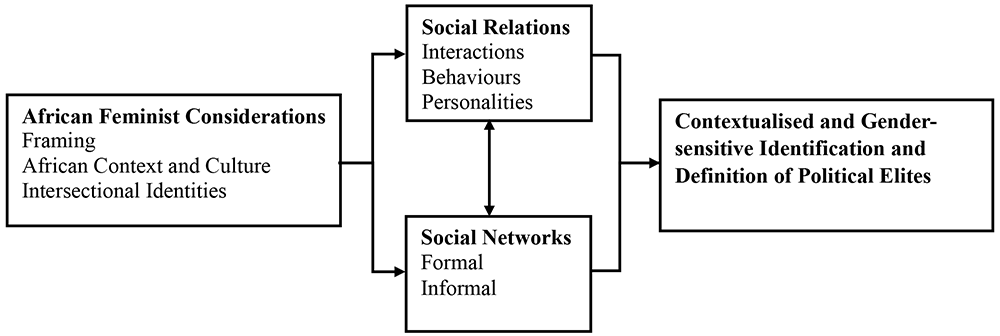
Figure 1. An African feminist approach in considerations of political elites.
African feminist considerations inform the entire process. They involve a closer look at how the idea of ‘elite’ is framed within specific gendered African contexts, and this offers a more contextualised understanding of the criteria used to identify political elites, that is, who is included or excluded and the gendered meanings of such inclusion or exclusion. For instance, the position of First Lady may have more power in some aspects than that of Vice President depending on the socio-political contexts, including the gendered political cultures and formal and informal political network structures. Framing might consist of paying attention to the gendered impact of parameters used, for example, through collecting sex-disaggregated information that locates individuals and groups within or outside the set parameters. In addition to framing, there is also a need to consider the context and culture that shapes gendered experiences, as this also influences how interactions and behaviours are understood. It is also essential to pay attention to group members’ intersectional identities and how these impact their roles within group and network activities. This may include asking the following questions about group members: Are they men or women? Do they have a rural or urban background? What is their level of education? What are their political interests? This would help provide a more nuanced understanding of the characteristics of groups, subgroups and cliques.
A consideration of social relations involves paying attention to group members' interactions (reciprocal action or influence), behaviours (the way they act or conduct themselves towards others) and personalities (‘individual differences in characteristic patterns of thinking, feeling and behaving’ (American Psychological Association, 2022)). When viewed from a feminist perspective, these interactions, behaviours and personalities will reveal gendered power dynamics, experiences, and cultural and contextual aspects that influence the identification of elites and meanings of roles within groups and networks.
Considerations of formal and informal social networks involve examining the structural components of the groups and subgroups (social network analysis) and characterising the individual’s relationship to the group (individual-directed focus). Social network analysis can provide indices such as network density, group cohesion, and group egalitarianism, as well as information on subgroups and cliques (Terry, 2000). A feminist lens can then offer a means to understand how gendered power dynamics shape group cohesion and egalitarianism and the formation of subgroups and cliques. An individual-directed focus can provide indices such as ‘social acceptance and rejection, social status, social isolation, and social visibility’, which help examine ‘the nature of the individual and his or her role in the social group’ (Terry, 2000: 34). Through a feminist lens, we can, for example, observe how gendered power relations and intersectional identities influence who among the members are strategic elites and who are tactical elites.
Therefore, feminist considerations in identifying and understanding political elites will lead to a contextualised and gender-sensitive identification and definition of elites. This will help to better comprehend how various political cultures and contexts shape the understanding of women’s roles and positions in political groups and networks and their relationship to power centres. It will also shed light on contextual factors to take into account when considering effective ways of promoting women’s political leadership.
Conclusion
The purpose of this paper was to demonstrate how a feminist perspective helps provide a way of understanding political elites that takes into account women’s complex relationships with dominant masculine and other gendered political groups and networks. The paper used the Zimbabwean politician Joice Mujuru as a case study to show that considerations of gendered contexts and experiences are essential in elite theory. Joice Mujuru exemplifies the experiences of many African women in politics who, despite holding positions of power, often find themselves in precarious and marginal political spaces where they struggle to access formal and informal decision-making centres and exercise power commensurate with their positions. Women also face unfavourable perceptions regarding their ability to lead and are often viewed as patronage networks or beneficiaries of party/state policies rather than agents in shaping national politics. This marginalisation of women politicians raises the question of how to understand, more fully, their positions in and relationships with elite groups and networks. This paper proposes an African feminist approach in considerations of political elites to help create a path to further explorations of African elite groups and networks in gender-sensitive and context-based ways.