Introduction
Agricultural Knowledge and Innovation Systems (AKIS) facilitate the complex interrelations, dynamics and interactions between individuals, organisations, and institutions involved in the creation, dissemination and exploitation of knowledge and innovation across the entire agricultural, forestry and related sector value chain, ranging from research and development to production, processing, marketing and distribution (Hermans et al., 2017; Klerkx et al., 2012; Turner et al., 2016). PREMIERE is a new Coordination and Support Action (CSA) project funded by the European Commission under Cluster 6 of the Horizon Europe Work Programme (Food, Bioeconomy, Natural Resources, Agriculture and Environment related projects), tasked with engaging with an extensive and diverse network of AKIS stakeholders from across policy, research and practice in order to foster the co-creation of coherent and well-prepared multi-actor project proposals which create an ‘enabling environment’ to foster and ‘speed up’ innovation, knowledge sharing and digitisation in agriculture, forestry and related sectors, for the betterment of the European Green Deal, the EU Climate Policy, the Common Agricultural Policy (CAP) and Farm to Fork Strategy objectives and targets.
Stakeholder engagement is widely reported to be a key part of corporate social responsibility (CSR) in strategic management academic literature. Indeed, such engagement is considered equally as important as all the other business functions as it can help improve decision-making and accountability (Freeman & Dmytriyev, 2017; Greenwood, 2007). Noland and Phillips (2010), for example, explain that ‘engagement’ is a type of interaction that involves, at minimum, recognition and respect of common humanity and the ways in which the actions of each may affect the other. Brand and Blok (2019) add that all relevant stakeholders need to be involved in a continuous manner that goes beyond mere consultation, and instead provided with the information, power and opportunity to play a role in decision-making; in order to create mutually beneficial interactions (Jarmai & Vogel-Pöschl, 2020). Furthermore, Schwarz and Künzel (2021) highlight that committed collaboration and cooperation between partners from different sectors, where their respective perspectives and expertise are taken into account, helps account for the complexity of interests and power dynamics involved in a multi-actor project, leading to more sustainable, tangible and viable solutions for all.
A wealth of strategic management academic literature in the field of organizational behaviour and corporate social responsibility exists on best practice stakeholder engagement and communication strategies. Its counterpart however, from an AKIS perspective is largely absent. As AKIS is increasingly positioned as a central concept for knowledge integration and framing innovation support policies for the sustainable development of the agriculture, forestry and related sectors (Hermans et al., 2015; Sutherland et al., 2023), such a disparity and gap in literature is a concern.
Connecting these previously disparate fields of literature, this method article provides a detailed breakdown of the 5-step AKIS Stakeholder Engagement Strategy developed by the PREMIERE Horizon Europe Project, comprising of 15 partners, spanning 12 countries across Europe, and outlines how such an approach can significantly contribute to the preparation and drafting of Horizon Europe project proposals, and related policy instruments such as EIP-AGRI OGs and Thematic Networks in a co-creative way, in line with the Multi-Actor Approach (MAA). By showcasing the effectiveness of utilising strategic management literature guidelines related to the aims, practices, and impacts of stakeholder engagement relations in businesses and other organizations, this method article demonstrates how this multi-staged Stakeholder Engagement Strategy can be utilised by other multi-actor projects to identify, map, analyse and connect with AKIS stakeholders at EU, National and regional level, ranging from policy makers to harder to reach groups, through genuine dialogue, holistic insights and feedback loops ‘all along the project’, while developing relationships of mutual respect, in place of mere, one-off consultations, thereby ensuring compliance with the European Commission’s MAA (European Commission, 2023a).
This method article demonstrates the central importance PREMIERE’s 5-step AKIS Stakeholder Engagement Strategy places on bidirectional and cross-sectoral knowledge exchange and idea generation to implement meaningful MAA from the outset of a project. The strategy’s commitment to engaging with, and learning from, harder to reach stakeholders or traditionally excluded groups, in particular, helps to ensure that that all relevant stakeholders’ voices are heard through genuine, ongoing dialogue. The more such stakeholders feel that their ideas are being listened to, the more trusting they will feel, and the more invested they will be in the successful delivery of project outcomes. Conducting stakeholder engagement in such a participatory manner not only encourages and facilitates the development of new relationships, leading to more innovative ways of working and creative solutions, but also leads to an enhanced sense of co-ownership and uptake of multi-actor project outputs amongst those ‘on the ground’. Such an approach will, in turn, enable Cluster 6 Horizon Europe projects, and related policy instruments such as EIP-AGRI OGs and Thematic Networks, to significantly contribute to CAP’s cross-cutting objective of modernising agriculture, forestry and related sectors through innovative solutions and technologies.
Aligning with Horizon Europe’s Research and Innovation (R&I) Framework
Engaging and linking networks of multiple AKIS stakeholders in an integrated and inclusive manner through the multi-staged AKIS Stakeholder Engagement Strategy developed by the PREMIERE Project not only helps strengthen the social and economic impact of innovation outputs by bridging research (technical/ technological advancement) and practice (social diffusion) (Yang et al., 2022), but is also a crucial step in improving our understanding, governance and implementation of the MAA, in particular in the context of Horizon Europe Projects (European Commission, 2023a).
Such an interactive innovation (or ‘co-innovation’) approach is now more important than ever as ongoing stakeholder engagement is considered a central aspect of the ongoing evolution of Horizon Europe’s Research and Innovation (R&I) framework. Furthermore, proposals submitted for some Horizon Europe calls, which include a request to follow the MAA (notably under the Cluster 6 Work Programme), must ensure the genuine and sufficient involvement of a diverse set of actors in order to make the R&I process and its outcomes more reliable, demand-driven, shared and relevant to society, and maximize impact (European Commission, 2023a). Creating a space for collaboration and co-innovation through the MAA, enables multi-directional flows of knowledge exchange between key stakeholders, leading to a better understanding of challenges faced by (end-) users, and a clearer picture of the problems that need to be addressed, in order to achieve sustainable agricultural and forestry and rural development (Beers & Geerling-Eiff, 2013; Hermans et al., 2015; Yang et al., 2022). The European Commission defines (end-) users, as those who put project results into practice (European Commission, 2023a). PREMIERE’s Stakeholder Engagement Strategy’s emphasis on the collaborative design and development of multi-actor project proposals, rooted in strategic management academic literature, will ensure that the R&I process, and its outcomes are impactful and demand-driven, ready to use in practice, widely disseminated and relevant to society, particularly (end-) users.
In particular, the Stakeholder Engagement Strategy developed by PREMIERE has aligned itself closely with Horizon Europe’s R&I Framework by adopting Jeffery’s (2009) core values of inclusivity and transparency required for meaningful stakeholder participation throughout a project’s duration, as outlined below:
• Inclusivity: Stakeholder engagement needs to be culturally responsive and aware as well as respectful of difference and diversity. Regardless of one’s social or economic level, age, race, gender, or other considerations, all pertinent stakeholders will have the chance to participate in, and contribute to, the project in a meaningful way. This includes underrepresented and/or harder to reach stakeholder groups. This approach helps ensure that PREMIERE’s Stakeholder Engagement Strategy takes the expertise and perspectives of all relevant stakeholders into consideration throughout the duration of the project, in order to being about mutual learning and co-creation.
• Transparency: Stakeholders need to properly understand why the process of engagement is occurring and what it hopes to achieve. Clear information will be provided on the co-creation criteria, the roles and responsibilities of stakeholders in the engagement process, and anticipated outcomes resulting from their input in the project from the outset. The decision-making process will be open, honest and focused, therefore helping to foster a culture of collaboration, idea sharing and respect amongst relevant stakeholders from the beginning to the end of the project.
Adopting these values for the purposes of the Stakeholder Engagement Strategy developed by PREMIERE are important as the LIAISON H2020 Project previously identified challenges and inconsistencies (including regional differences) in previous EU (co-)funded projects, both in the interpretation of the concepts of the MAA and the ‘interactive innovation model’, and in their practical application (Fieldsend et al., 2021). Additional research in this area has also found that insufficient attention has been given to the effective inclusion of the ‘tacit’ knowledge of ‘users’ in consortia in many H2020 projects, as well as to the process of working together in a genuinely co-creative way ‘all along the project’, from defining the problem to implementing the solution (Feo et al., 2022; Fieldsend et al., 2020).
5-Step AKIS Stakeholder Engagement Strategy
The 5-step AKIS Stakeholder Engagement Strategy, developed by the entire muti-actor PREMIERE project consortium in an integrated and inclusive manner, translates the complex process of mapping, analysing and engaging potential AKIS stakeholders at EU, national and regional level into an easy-to-follow, step-by-step framework. Such an approach ensures the genuine and sufficient involvement of a diverse array of stakeholders in MAA projects, as outlined by the European Commission (2023a) (Figure 1).
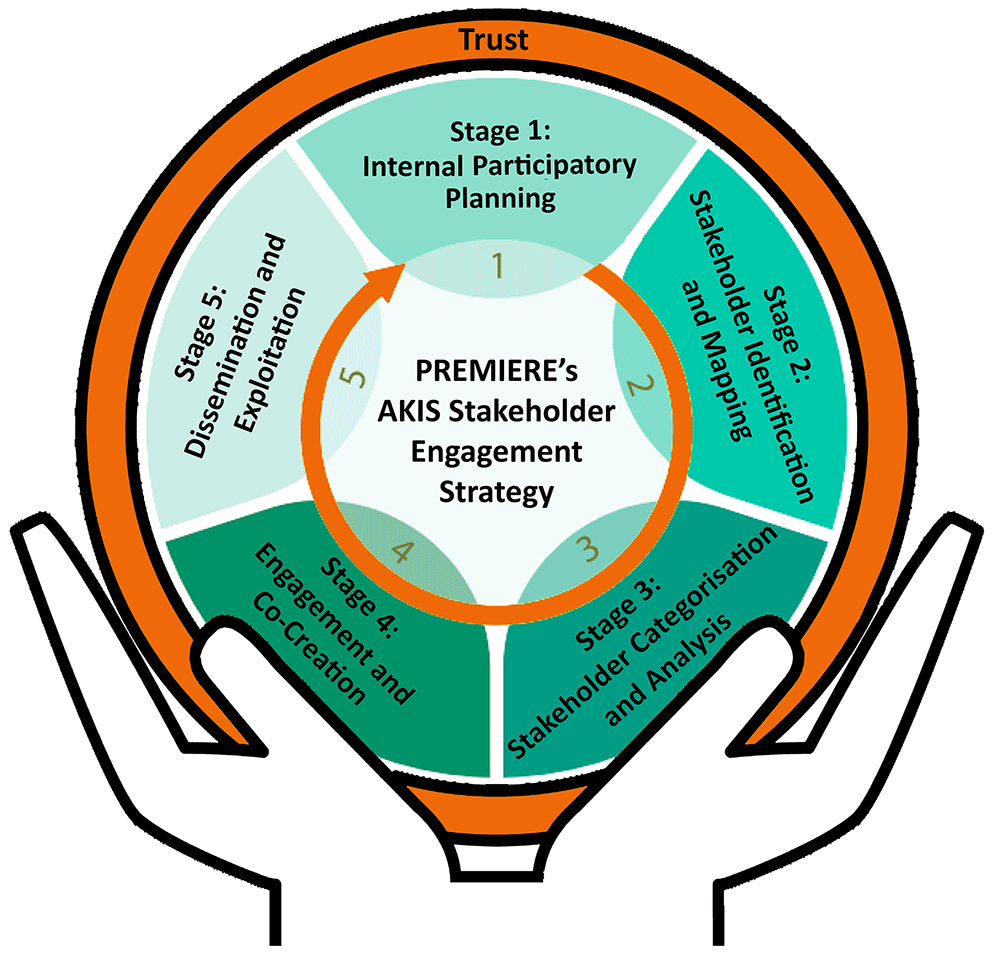
Figure 1. 5-Step PREMIERE AKIS Stakeholder Engagement Strategy.
The systematic, logical and practical structure of this multi-staged strategy, inspired by strategic management literature, not only helps ensure that AKIS stakeholders are involved in a given multi-actor project in an integrated, focused and efficient way with mutual benefits from the outset, as advised by (Hirsch Hadorn et al., 2008), but also its interoperability and standardisation to be adopted by other multi-actor projects when identifying mapping groups, and subsequently categorising such stakeholders in accordance to their interest and influence on a given project.
Building Trusting Relationships Amongst AKIS Stakeholders
The AKIS Stakeholder Engagement Strategy developed by PREMIERE prioritises the development of trusting, meaningful relationships throughout the lifespan of a multi-actor Horizon Project by fostering an on-going cycle of proactive knowledge exchange and feedback between AKIS stakeholders involved in such projects, as recommended by the European Commission (2023a). Such an approach changes the narrative from ‘designing for’ to ‘designing with’, resulting in a better understanding of relevant actor’s interests and priorities, subsequently leading to reduced conflict and better outcomes, for all involved.
Building trust and long-term collaborative relationships between stakeholders over time is outlined as a fundamental prerequisite to a meaningful stakeholder engagement process in strategic management literature, as it allows stakeholders to have a voice and influence in decision-making processes that affect them (Arenas et al., 2013; Danks et al., 2017; ISEA, 1999; Jeffery, 2009). Furthermore, trustful, stable stakeholder relationships will support mutual understanding providing all stakeholders with the belief or confidence that stakeholders have in a project to act in their best interests and deliver on its promises, while a lack of trust will keep interaction at a superficial level (Freeman, 2015; Jarmai & Vogel-Pöschl, 2020). Jeffery (2009) explains that that poor stakeholder engagement and communication has the potential to undermine stakeholder relations resulting in mistrust and tension, as well as making the possibilities for future relations much more difficult. This is important to consider, as a multi-actor Horizon Europe Projects, such as PREMIERE, do not exist in a vacuum.
As there will inevitably be varying levels of trust and willingness to trust amongst AKIS stakeholders entering a typical transnational, multi-actor Horizon Europe Project consortium such as PREMIERE, due to perceived power imbalances, linguistic and cultural barriers, and differing working styles, for example, appropriate and diligent planning and preparation in the early stages of the stakeholder engagement process, in particular, is required to help develop initial levels of trust and credibility in a project from the outset.
Uncovering and Selecting Relevant AKIS Stakeholders
To support the design and development of the AKIS Stakeholder Engagement Strategy devised by PREMIERE, knowing ‘who’ the relevant stakeholders are, is an essential prerequisite. Whilst the SCAR-AKIS Strategic Working Group (SWG) at EU level and National Contact Points (NCPs) and farm advisory and at national and regional level, for example, are three obvious groups of important stakeholders to approach given this broad scope, PREMIERE’s stakeholder identification and mapping process provides a more objective and inclusive approach to identifying and grouping stakeholders outside of the project consortia. This ensures that PREMIERE reduces the reproduction of information from the same stakeholders who are frequently involved in Horizon Europe bids, because they are considered ‘experts’ in this area, and therefore often called upon to act as representatives. The resultant inclusive group of stakeholders also helps bring a breadth and depth of knowledge, skills and resources to the project which are unlikely to be found through traditional ‘expert’ groups.
Although less objective than directly contacting individual stakeholders, the initial three stages of PREMIERE’s Stakeholder Engagement Strategy methodology; (i) Participatory Planning; (ii) Stakeholder Identification and Mapping and (iii) Stakeholder Categorisation and Analysis have been developed and applied with the aim of minimising subjectivity in both stakeholder identification and categorisation, resulting in a richly annotated database of AKIS stakeholders, that PREMIERE consortium partners can draw from when inviting and selecting participants to participate in the interrelated WPs of the project.
Such an unbiased, transparent approach is important as the negative consequences of conducting stakeholder engagement in an inefficient and ad hoc manner is widely reported in strategic management academic literature, particularly as it can be misused to empower some and disempower others (Metzger et al., 2017). The adoption of PREMIERE’s Stakeholder Engagement Strategy by other multi-actor projects will also help ensure inclusivity and equity by conducting their work through each of these processes in a gender-responsive, culturally sensitive, non-discriminatory and inclusive manner. This, in turn, will identify potentially affected vulnerable and marginalized groups and provide them with an opportunity to participate, as advised by Botes and Van Rensburg (2000) and UNDP (2020). Indeed, cooperation amongst a diverse network of Stakeholders, ranging from policy, research and practice, through the MAA, incorporating each of their respective perspectives and expertise in dealing with complex societal challenges in order to achieve tangible, mutual and viable solutions oriented toward the common good is a core prerequisite for achieving goal 17 of the Sustainable Development Goals (SDG) set out by the United Nations (UN), as highlighted by (Schwarz & Künzel, 2021).
Quadruple Helix Model (QHM) of Innovation
The AKIS Stakeholder Engagement Strategy developed by PREMIERE represents all parts of the Quadruple Helix Model (QHM) of innovation, originally conceptualized by Carayannis and Campbell (2009). The QHM recognises four main stakeholder types involved in the innovation ecosystem:
• Government/Policy: This helix includes government institutions and policies at local, regional, national and European level that influence the innovation process. It involves the creation of policies and regulations that promote and support innovation.
• Science/Academia: This helix represents universities, research institutions, and other knowledge-based organisations that are involved in the creation and dissemination of new knowledge and skills that drive innovation.
• Industry/Business: This helix represents the private sector and includes businesses and corporations that are involved in the innovation process. It involves the development of new products, services, and technologies that drive sustainable economic growth.
• Society/Community: This helix represents Non-Governmental Organizations (NGOs), community groups, and other social actors that are involved in the innovation process. It involves the creation of social networks and partnerships that promote innovation and social development.
Adopting this approach ensures a balanced involvement of relevant stakeholder types with complementary enterprise and knowledge, in line with the LIAISON Project’s multi-level governance model, which highlights the need for a multi-level approach to better understand different user groups’ needs at all levels and to optimise the functioning and exploitation of muti-actor co-innovation partnership outputs (Fieldsend et al., 2020). Building on the classical triple helix, structured around university–industry–government relations (Etzkowitz & Leydesdorff, 2000), the QHM is grounded on the idea that the generation and production of impactful innovation is made possible through multi-layered, dynamic, multi-directional interactions rather than unidirectional push-pull relationships amongst different ‘spheres’ of actors, with different backgrounds, areas of specialization and experience. The framework has been used in various contexts, including regional development, social innovation, and sustainable development, to promote innovation and economic growth while also addressing social and environmental challenges.
The explicit inclusion of society in this collaborative network, in line with the European Commission’s (2023a) responsible R&I guidelines, in particular, facilitates the integration of (end-) users and beneficiaries into the joint knowledge generation and co-creation process of national and regional innovation ecosystems, not only driven by technological advancements but also by the needs and values of society (Grundel & Dahlström, 2016; McAdam et al., 2018). Actively involving societal stakeholders and individual laypersons in participatory research and innovation projects also helps re-align research trajectories with public preferences, resulting in holistic, sustainable solutions that serve all, rather than just a few (Carayannis & Campbell 2009; Leydesdorff, 2011; Schütz et al., 2019).
However, whilst the QHM’s conversion of hierarchical or vertical innovation design processes into collaborative and horizontal actions is widely considered key in facilitating the acceleration of ideas and co-creation of end user-oriented innovations to address a shared challenge, such an ideal is reported to be challenging to bring to fruition in practice (Etzkowitz, 2003; Schütz et al., 2019). This is largely due to the presence of organisational idiosyncrasies, cultures and policies, which dictate the salience attributed to different actors, and consequently their engagement (McAdam et al., 2018). This is an additional reason why the ‘identification of relevant stakeholders is not straightforward’ (Cuppen, 2009, p. 33). Proactive stakeholder dialogue and engagement in a structured and guided way is therefore necessary to create, orchestrate and maintain top-down and bottom-up relationships between heterogeneous groups of stakeholders involved in the innovation process (Grundel & Dahlström, 2016; Roman & Fellnhofer, 2022).
Inclusive NUTS Regions
As multi-actor Horizon Europe Projects such as PREMEIRE are European wide, in operation across all 27 EU member states, and the regions within each of these countries, stakeholders have been divided into their respective NUTS Region in the Stakeholder Engagement Strategy internal template created by PREMIERE. The NUTS classification (Nomenclature of territorial units for statistics) is a coherent geographical boundary system, according to which the socio-economic territory of the European Union is divided into hierarchical levels. The three hierarchical levels are:
• NUTS 1 represents the highest level of classification, which groups together regions with similar socio-economic characteristics.
• NUTS 2 represents the middle level of classification, which divides each NUTS 1 region into smaller sub-regions with more similar characteristics.
• NUTS 3 represents the lowest level of classification, which divides each NUTS 2 region into smaller statistical units.
This classification enables cross-border statistical comparisons at various regional levels within the EU. Each NUTS-region at EU Member State level is assigned a unique code. The length of the code depends on the hierarchical level of the NUTS-region. The current NUTS 2021 classification is valid from the 1st of January 2021 and lists 92 regions at NUTS 1, 242 regions at NUTS 2 and 1166 regions at NUTS 3 level.
‘Bottom-Up’ Approach towards Co-Creation
The consideration given by the AKIS Stakeholder Engagement Strategy created by PREMIERE to NUTS 2 and 3 regions helps multi-actor project partners identify, select and include underrepresented and/or harder to reach groups across Europe, which often tend to be disconnected from mainstream networks, as highlighted by Hurley et al. (2020). Gray (2007) explains that ‘it is important to try to include all relevant stakeholders, and those who often get omitted are the harder-to-reach groups. Extra effort and innovation will be needed to contact and engage with these groups or individuals, who do not generally come forward by their own volition’ (p.20). Luyet (2012) adds that ‘it is important to ensure that weaker stakeholders are not marginalized or discriminated against’ (p. 217). Furthermore, Yang et al. (2022) adds that whilst innovative approaches towards driving socio-economic growth, ensuring food security and improving resilience to climate change, for example, benefit from engaging multiple stakeholders, while respecting their specific roles and responsibilities, they must be adapted to the regional/local context to ensure impact while managing risks and avoiding unintended negative consequences.
As innovation is increasingly seen as a social process, more bottom-up or interactive, than top-down from science to implementation (EU SCAR AKIS, 2019; Negatu & Musahara, 2016), the consideration given by the Stakeholder Engagement Strategy created by PREMIERE to the social dimensions involved in farming, forestry and rural society in each EU Member State through such a ‘bottom-up’ approach, will help lead to a greater engagement in the co-creation of innovation, sharing of complementary knowledge at local/regional level and adoption of project results amongst (end-) users. This is an important consideration because a farm, for example, is not just a piece of land or a workplace (Burton, 2004), but rather represents ‘the physical manifestation of generations of knowledge; knowledge developed and used over time’ (Gill, 2013, p. 79) by both the farmer and by those who have lived and worked there before (Brandth & Haugen, 2011; Glover, 2011). As such soil-specific human capital (Laband & Lentz, 1983) is not easily transferable, communicated or learnable (Conway et al., 2018; Gill, 2013), future farmer-centred EIP-AGRI projects, for example, will be unsuccessful if they do not learn from the farming community’s invaluable store of locally specific tacit and lay knowledge developed shaped and internalised by the daily and seasonal labour-intensive demands working the land. Indeed, Moschitz et al. (2015) argue that it is important to start from farmers' perspectives when attempting to understand how farmers innovate. This is in line with recommendations made by the EU SCAR AKIS Working Group who stress that that farmers are must be recognised as producers (not simply recipients) of agricultural innovations (Sutherland et al., 2023).
Tackling the so called ‘silo mentality’, through an enhanced sense of co-ownership of project outputs amongst (end-) users, by engaging and co-creating with those ‘on-the ground’, will not only help Horizon Europe Projects such as PREMIERE to bridge the gap between policy, science and practice but also help build meaningful and lasting relationships between all AKIS stakeholders involved in developing and rolling out initiatives aimed at boosting innovation in agriculture, forestry and rural areas, as a whole. The LIAISON H2020 Project previously highlighted the benefits of adopting such a multi-level approach to better understand and optimise the functioning and implantation of multi-actor co-innovation partnerships (Fieldsend et al., 2020), and this is an important focus of the Stakeholder Engagement Strategy developed by PREMIERE.
AKIS Stakeholder Engagement Strategy
Stage 1: Internal Participatory Planning
The formulation of a robust AKIS Stakeholder Engagement Strategy by the PREMIERE Project, rooted in strategic management literature guidelines relevant to the MAA, yet tuned to the human side of farming, forestry and rural development, was developed and refined in an open, clear and transparent manner between all partners involved in the project in the initial internal participatory planning stage.
As PREMIERE is a diverse, multi-actor consortium, consisting of partners who possess different forms of knowledge, perspectives, resources, and experiences (practical, scientific, policy based, etc.), the formulation of a holistic collaboration process, facilitating exchanges of information and expertise between partners in order to identify who relevant stakeholders are, and novel approaches towards stakeholder engagement, for example, was an essential prerequisite of the project. Strategic management literature explains that such collective spaces for consultation also enable partners to successfully navigate a series of challenges related to the diverse viewpoints of the consortium, who may have diverging opinions, perceptions and desires; how to account for heterogeneity within stakeholder categories; how to account for those who are marginalized and harder to reach and to what extent can an individual’s participation be considered representative of their stakeholder category, for example (Campling et al., 2021; Jarmai & Vogel-Pöschl, 2020; Lelea et al., 2016).
PREMIERE facilitated such multi-directional internal flows of knowledge exchange and discussion through preparatory meetings held via Zoom during the first six months of the project (January to June 2023), as well as during a collaborative WP1 workshop involving all project partners at the PREMIERE kick off meeting in Eberswalde, Germany in March 2023. A range of topics raised by PREMIERE Partners at this event, such as the importance of engaging with stakeholder groups via the aforementioned Quadruple Helix Model (QHM) of Innovation at both national and regional Level (via NUTS Regions), the value of the ‘bottom-up’ approach towards co-creation, ensuring gender inclusivity and the need to embrace a new era of AKIS, were discussed in detail amongst the consortium, and mutually agreed upon as a result of this internal participatory planning process of the Stakeholder Engagement Strategy developed by PREMIERE.
Collaboration, in this manner, is key in identifying mutual challenges and devising innovative new ideas and solutions in a co-creative way amongst AKIS stakeholders, at equal levels, all along a multi-actor project’s duration. Belmans et al. (2018) uses the complex socio-ecological issue such as agriculture’s impact on water quality as an example as to why the MAA is imperative to address the limitations of a sole actor tackling such an issue alone. Systemic engagement interaction between researchers, farmers, entrepreneurs, regional and national organisations, etc. is required (ibid), hence the imperativeness of PREMIERE’s participatory approach towards stakeholder identification, selection and engagement.
Stage 2: Stakeholder Identification and Mapping
Stakeholder Mapping at National and Regional Level. The first step in effectively engaging with stakeholders is to identify who they are, and then subsequently map them (Akhmouch & Clavreul, 2016). Contributions and suggestions of relevant stakeholder groups within the aforementioned QHM (Government/Policy; Science/Academia; Industry/Business and Society/Community), across all 27 EU members states, were sought from PREMIERE Partners during the project’s kick off meeting in Eberswalde, Germany in March 2023, as part of the co-creation process of the stakeholder mapping process. On a practical level, the following questions, devised by Durham et al. (2014), were set forth to help identify relevant stakeholders:
• Who are the key individuals that may be able to influence the project?
• What is the interest of those individuals related to the project?
• Who may be affected by, and benefit from, the project?
• Who has capacities and common interests that can support the project?
By mobilising the diverse networks of the multi-actor PREMIERE consortium to engage in the process, this co-creative exercise, captured an inclusive and comprehensive list of key national and regional AKIS stakeholders at all levels who participate (or intend to participate) in the drafting of multi-actor project proposals, from multiple perspectives.
Following an analysis of collaborative group work carried out by the PREMIERE consortium during the initial stages of the project, an internal AKIS stakeholder group database template was subsequently drawn up and populated on a Microsoft Excel spreadsheet. This living database, centrally stored the PREMIERE Project’s online internal repository in line with GDPR guidelines, acts as a central point of reference for PREMIERE partners to select relevant AKIS stakeholders to participate in the interrelated WPs of the project in a systematic and unbiased manner.
All stakeholder groups listed within each of the QHM categories are defined within the stakeholder mapping template in order to help PEMIERE partners implement a harmonized approach for effectively identifying and efficiently populating relevant stakeholders in the database. In following the aims and objectives of the PREMIERE Project each of the 27 EU Member states are featured in the internal Stakeholder Mapping template excel file, broken down into their three NUTS Regions (NUTS 1, NUTS 2 and NUTS 3). The inclusion of the NUTS 2 and NUTS 3 regions will enable stakeholders at regional/local level to be closely engaged with throughout the PREMIERE Project. This is important as they will ultimately be the ones most affected by the project, and are also the ones offering first-hand insights and information. Indeed, the European AKIS ecosystem increasingly acknowledges and recognises the need for EU Member State to include social innovation and inclusiveness within their AKIS strategies and action plans by taking into account the full range of rural socio-cultural contexts in their respective countries (EU SCAR AKIS, 2019). The Stakeholder Engagement Strategy developed by PREMIERE adheres itself to this fundamental principle of AKIS by adopting a more regionalised, landscape level, ‘peer-to-peer’ approach through NUTS 2 and NUTS 3 channels. The application of place-specific knowledge transfer and exchange practices therefore helps PREMIERE facilitate communication between, and increase levels of trust amongst, AKIS stakeholders ‘on the ground’ (e.g. innovation actors such as farmers and foresters) rather than overarching European/National knowledge transfer activities. This is because their skillset and knowledge of the peripheral mountainous/uplands regions of Europe, for example, will be taken seriously into account in the co-design of future multi-actor initiatives informed by the work of the PREMIERE Project.
The entire PREMIERE consortium subsequently came together as a group within their respective organisation to populate the finalised internal PREMIERE Stakeholder Mapping template with each stakeholder groups’ name and contact details (only if publicly available) at national and regional level for their respective country. To ensure agile and effective management of the AKIS Stakeholder Engagement Strategy created by PREMIERE, and to maximise exploitation, partners are expected to periodically update and refine the project’s stakeholder group database throughout the duration of the project through continuous self-reflection, feedback and input.
Stakeholder Mapping at EU Level. The next step involved PREMIERE mobilising the diverse networks of the project’s multi-actor consortium, located across the European Union, to identify and map relevant stakeholder groups at EU level, in a participatory manner. This approach again reflected the fact that as no partnership in AKIS operates in isolation and the identification and mapping of relevant stakeholders at EU level is not a straightforward process, it is not plausible for one partner alone to decide on which stakeholders need to be included (Müller et al., 2012). Like the national and regional databases, the EU Stakeholder Groups internal template will continue to be enriched with the PREMIERE consortium’s ongoing contributions throughout the duration of the project.
Stakeholder Data Protection and GDPR. Regarding the data protection of identified stakeholder groups at EU, national and regional level, and storage of their details on a projects internal database, the following guidelines adopted from the EU’s 2016 General Data Protection Regulation (GDPR), adhered to throughout the duration of the project:
• No personal contact data will be included in Stakeholder Groups Database internal template created by PREMIERE unless it is publicly available, or the stakeholder has confirmed to share his/her contact for the purpose of the project.
• Data in the Stakeholder Groups Database will not be publicly available (i.e. the data will not be shared with third parties and are not attribute to any commercial use), but solely serve the purpose of guaranteeing stakeholder engagement and participation in the project.
• Identification of potential stakeholders is an ongoing process. The stakeholder mapping process will be continuously updated and added to when a new candidate is identified throughout the project in line with GDPR compliance.
PREMIERE’s dedicated Data and Ethics Committee are responsible for monitoring and ensuring General Data Protection Regulation (GDPR) compliance throughout the duration of the project.
Stage 3: AKIS Stakeholder Categorisation and Analysis
AKIS Stakeholder Interest/Influence Matrix. Once AKIS stakeholder groups are collectively identified and mapped at EU, national and regional level, stage 3 of the Stakeholder Engagement Strategy developed by PREMIERE outlined how they can then analysed and categorised into different priority groups by project partners in order to manage their engagement in the project, guide recruitment efforts for pertinent AKIS stakeholders within the project’s various WPs, and subsequently devise an efficient communication plan with targeted messaging for relevant stakeholder groups. Friedman and Miles (2006) explains that the process of such stakeholder analysis and categorisation provides a foundation for a better understanding of the relationships and linkages between various stakeholder groups so that partnerships, both current and potential ones, can be recognised and strengthened. Whilst analytically this process is a time-consuming activity, and requires a significant amount of work in the development and application phases, Hollmann et al. (2022) stresses that it is essential to prioritise some groups over others, as stakeholders differ in terms of the role, and influence, they may have on the project’s success. For example, high-priority group members can support or hinder the project, while low-priority groups have a marginal impact on the project outcomes.
PREMIERE partners adopted Mendelow’s (1991) matrix to collectively analyze and subsequently categorise AKIS stakeholders into two main characteristics based on their perceived level of interest in the actions and results of the project, as well as their ability to influence project actions, outcomes and reputation, which form the axes of the two-dimensional matrix, visualised in Figure 2 below:
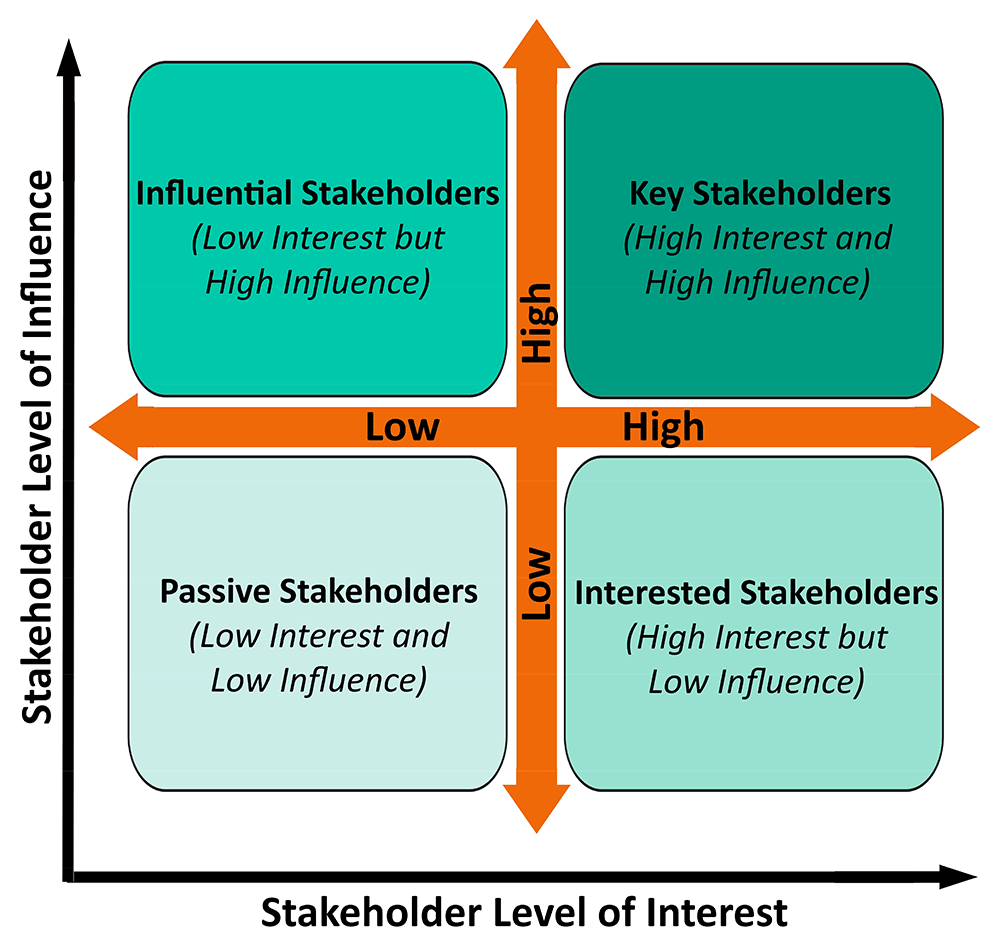
Figure 2. AKIS Stakeholder Interest/Influence Matrix.
This well-established technique divides stakeholders into four groups in terms of their levels of impact and interest. These categories range from low influence and low interest to low influence but high interest, high influence but low interest and high influence and high interest. As a result of this process, four different priority groups emerge:
• Key Stakeholders (High Interest and High Influence)
• Influential Stakeholders (Low Interest but High Influence)
• Interested Stakeholders (High Interest but Low Influence)
• Passive Stakeholders (Low Interest and Low Influence)
As stakeholders groups inevitably differ in terms of the interest and influence they will have on project outcomes (Hollmann et al., 2022), applying Mendelow’s (1991) matrix helps distinguish the ‘core group’ from the ‘larger periphery’ of engaged stakeholders, thus providing a clearer view of the factors and conditions needed to achieve project objectives, including who will be involved and the determination of the most appropriate communication channels required to engage with the various groups of identified stakeholders (ibid). Such an approach will also challenge and overcome any pre-conceived ideas and assumptions in relation to the nature of different stakeholders’ knowledge and perspectives that may affect project outcomes throughout the duration of a project.
Piloting the Stakeholder Interest/Influence Matrix Internally. To test the applicability, suitability and practicality of Mendelow’s stakeholder analysis and categorisation matrix in the context of the inventory of EU, national and regional stakeholder groups identified and mapped by the PREMIERE consortium across all 27 EU members’ states, individual partners were then tasked with conducting an initial practice run of this Interest/Influence matrix within their respective member states during the project’s kick off meeting in Eberswalde, Germany in March 2023. PREMIERE partners were required to collectively determine and indicate where they believed each of the identified stakeholder groups sat within this matrix, based on each group’s perceived level of interest in the project and their ability to influence the project, by placing colour coded sticky notes on a A0 print out version of Figure 2. This collaborative process of research, debate, and discussion employed by PREMIERE, drawing from multiple perspectives within the consortium, enabled a more effective and efficient way of conducting the stakeholder analysis and categorisation process and determining best practice approaches for doing so.
Following an evaluation of this process, PREMIERE partners decided to convert this matrix into a user-friendly interactive tool on Mural, an intuitive digital whiteboard built for team collaboration to maximise its accessibility, usability, and impact within the project consortium. Pooling partners’ collective knowledge of the interest and influence of identified stakeholder groups, drawn from many different perspectives, during this phase of the strategy was important as Varvasovszky and Brugha (2000) previously stressed that stakeholder analysis conducted by a project team ‘compensates for and neutralize individual biases and question untested assumptions’ (p.340).
Once the identified stakeholders had been categorised into priority groups by the multi-actor PREMIERE consortium within the Mural’s interactive platform, the newfound knowledge and inclusive information garnered from an analysis of this methodologically uncomplicated, yet thorough, process permitted the determination of the level of engagement and communication required for each stakeholder group, and in turn, the selection of relevant stakeholders to participate in PREMIERE’s interrelated WPs.
Alignment of the Interest/Influence Matrix with the European Innovation Scoreboard. The utilisation of Mendelow’s stakeholder interest/influence matrix across the 27 EU Member States also ensures that the annual European Innovation Scoreboard (EIS) published in 2022 (European Commission, 2022), providing a comparative assessment of the research and innovation performance of Member States, and the relative strengths and weaknesses of their research and innovation systems, is taken into account in the AKIS Stakeholder Engagement Strategy developed by PREMIERE. EU countries currently fall into four EIS performance groups:
• Innovation Leaders: Sweden, Finland, Denmark, the Netherlands, and Belgium are the Innovation Leaders in the EU.
• Strong Innovators: Ireland, Luxembourg, Austria, Germany, Cyprus, and France are Strong innovators, performing above the EU average.
• Moderate Innovators: Estonia, Slovenia, Czechia, Italy, Spain, Portugal, Malta, Lithuania, and Greece are Moderate innovators.
• Emerging Innovators: Hungary, Croatia, Slovakia, Poland, Latvia, Bulgaria and Romania are considered Emerging Innovators with performance below the EU average.
The EIS 2022 report is the second edition published using the updated EIS measurement framework introduced in 2021. Interestingly, between 2021 and 2022 innovation performance has improved in 19 Member States, most strongly in the Czech Republic, Ireland, and Finland (at 7.5%-points or more), and has declined for eight Member States, including Estonia, France, Germany, Italy, Latvia, Luxembourg, Malta, and Romania, with performance declining strongest in Estonia (-8.9%-points) (European Commission, 2022). The AKIS Stakeholder Engagement Strategy developed by PEMIERE allows for an emphasis on low performing EU Member States when assessing countries where the project must concentrate its efforts, in order to boost their overall innovation performance, particularly in relation to the development and roll out of multi-actor project proposals in a co-creative way.
Stage 4: Engagement and Co-Creation
The knowledge garnered from identifying and mapping relevant AKIS stakeholders across the QHM of Innovation, at EU, national and regional Level (via NUTS Regions), and subsequently assessing and categorising their interest in, and influence over, a project through Mendelow’s (1991) matrix, during the initial three stages of the Stakeholder Engagement Strategy methodology developed by PREMIERE, provides multi-actor projects with such as PREMIERE with a solid platform to decide on an appropriate course of action to involve the various groups of stakeholders in the engagement and co-creation processes of a given project, and manage their expectations in a fair, open and transparent manner, depending on their position in the matrix as shown in Table 1. Such an approach can also help multi-actor projects to develop and orientate suitable channels and tools of communication as well as dissemination and exploitation. The stakeholder categorisation is reported in the first column of Table 1 and the engagement efforts and activities for the different groups of PREMIERE stakeholders are displayed in the third column.
Table 1. AKIS Stakeholder Engagement Efforts.
| Category | Interest/Influence | AKIS Stakeholder Engagement Efforts |
|---|
Group 1
Key AKIS Stakeholders | High Interest and
High Influence | Engage Closely - These key stakeholders are critical to the project's success and
require close engagement and collaboration at the earliest possible opportunity in
order to satisfy their needs and expectations. |
Group 2
Influential AKIS
Stakeholders | Low Interest but High
Influence | Try to Involve/Keep Satisfied - This group is the most difficult to deal with, as they
are very difficult to get in collaboration with. Whilst these stakeholders may not be
critical to the project's success, they have the power or authority to affect the project's
decisions and actions. They should therefore be monitored and kept up to date in
order to satisfy their needs and rectify any concerns they may have. Such actions
ensure that their influence does not have a negative impact on the project. Whilst
awareness-raising can make them more interested in the project, it is also important
not to overwhelm this group with too much information. |
Group 3
Interested AKIS
Stakeholders | High Interest but Low
Influence | Keep Informed/Empower - These stakeholders are important to the project's success
as they are directly affected by issues the project tackles, but have limited ability
and power to affect the project's decisions and actions. Whilst they may require less
intensive engagement, they should still be kept adequately informed and involved
through the provision of balanced and objective information to help understand the
project’s activities, progress, actions and results. It is also possible to use relations
with this group to manage or build rapport with other relevant ‘harder to reach’
stakeholders or traditionally excluded groups. |
Group 4
Passive AKIS
Stakeholders | Low Interest and Low
influence | Minimal Effort/Monitor - These stakeholders are of limited importance and have
limited ability to affect the project's decisions and actions. They may require minimal
engagement, but should still be kept informed about the progress of the project and
monitored for possible changes in attitudes as their interest and/or influence can
change over time. |
The determination of the most appropriate engagement efforts and activities for each of the different groups of identified AKIS stakeholders, enables Cluster 6 Horizon Europe Projects such as PREMIERE, and related policy instruments such as EIP-AGRI OGs and Thematic Networks, to be in a position to recruit and engage with the most appropriate group of AKIS stakeholders who possess the necessary knowledge, skills, networks and resources needed to prepare multi-actor projects proposals in a co-creative way.
As efficient and targeted communication is a vital part of this stakeholder engagement process, in order to ensure timely and valuable contributions from relevant stakeholders, the AKIS Stakeholder Engagement Strategy developed by PREMIERE can help inform complementary communication plans, developed in accordance to Horizon Europe guidelines on communicating projects and their outcomes (European Commission, 2023b), which enable and ensure valuable multi-directional flows of knowledge transfer an exchange between a Horizon Europe Project and relevant groups, thus raising project awareness and triggering end user’s interest to engage with the project’s outputs, for example.
Importance of Involving ‘High Interest but Low Influence’ Stakeholders. Involving High Interest but Low Influence Stakeholders (Group 3) in the stakeholder engagement and co-creation process, in particular, enables Cluster 6 Horizon Europe Projects such as PREMIERE to include representatives of ‘harder to reach’ groups. Adopting this approach ensures that those AKIS stakeholders whose stories are often marginalised by the larger assemblages, such as the farming community, are not only represented, but also provided with a ‘voice’, in order to achieve fair representation of all AKIS actors, not just the easy to access groups. Providing underrepresented and/or harder to reach AKIS actor with an opportunity to be involved in the decision-making processes from the outset, through the incorporation of their idea’s views and values, in particular, helps ensure that outputs are correctly targeted, and improvement can be made. Involvement in the co-creation process also provides these actors with an enhanced sense of co-ownership of the solutions generated, and become more eager to use the results, as previously highlighted by Shepherd and Bowler (1997). Such an approach is considered important for the long-term success, durability and upkeep of a project (Mathur et al., 2008).
PREMIERE’s Multi-Actor Project Proposal Co-Creation Strategies. Once key AKIS stakeholders have been identified, mapped and categorised across the QHM of Innovation, at EU, national and regional Level (via NUTS Regions) by Horizon Europe Projects during the initial three stages of the Stakeholder Engagement Strategy methodology developed by PREMIERE, a project will be in a position to invite and select relevant AKIS stakeholders to participate in their various WPs in a systematic and unbiased manner.
This approach will help maximise a projects impact in improving the preparation of effective multi-actor proposals, and related policy instruments such as EIP-AGRI OGs and Thematic Networks, by enabling relevant stakeholders to actively engage in the project by working together in a co-creative way through the MAA.
Multi-Actor Engagement and Co-Creation Evaluation and Feedback. In order to maximise the effectiveness and exploitation of project outputs by ‘end-users’ at the earliest possible opportunity, stage 4 of the Stakeholder Engagement Strategy developed by PREMIERE necessitates the provision of sufficient and timely feedback to relevant AKIS stakeholders throughout a given project’s lifetime on how their inputs, reflection and contributions have influenced the co-creation process. Such feedback loops will build further trust and strengthen relationships within a project and between AKIS stakeholders. Manetti (2011) previously explained that the main feature of stakeholder engagement, is not the mere involvement of stakeholders to ‘mitigate’ or manage their expectations (stakeholder management), but to also create a network of mutual responsibility towards the co-creation of multi-actor project proposals as well as meaningful, enduring cooperative relationships. As well as helping bridge the gap between policy, science and practice through the optimisation of interactive innovation (or ‘co-innovation’) project approaches, the Stakeholder Engagement Strategy developed by PREMIERE can help contribute to a project’s profile, success and long-term legacy by ensuring that practice-ready knowledge and innovative solutions generated by the project are available and easily accessible to those ‘on-the-ground’.
Stage 5: Dissemination and Exploitation (D&E)
Dissemination and Exploitation (D&E) is an essential element of the 5-Step Stakeholder Engagement Strategy developed by the PREMIERE Project. In line with mandatory guidelines set out by the European Commission (2023b), a D&E plan defines how the project will conduct the implementation of all dissemination and exploitation activities resulting from the outcomes and outputs of a project’s WPs, to multiple audiences. The dissemination tools developed and utilised throughout the PREMIERE project, and the exploitation of results during and after its completion, follow the AIDA model: Awareness in order to catch the attention of the target audience, Interest and Desire of the target audiences to know more about the project, and Action provide ample support by the project and promotion of its results to facilitate exploitation (Preston, 1982). The D&E stage of the Stakeholder Engagement Strategy developed by the PREMIERE also aligns itself closely with the use of the European Commission’s free-of-charge channels such as: (i) Cordis Results in Brief; (ii) CORDIScovery podcasts; (iii) Research and Innovation success stories; (iv) Horizon Magazine and dedicated social media accounts for project and dissemination and exploitation purposes. Project partners will periodically assess the progress of the PREMIERE’s D&E activities and, if necessary, corrective measures will be identified, updated and applied throughout the project lifetime.
Conclusion
While the successful identification, mapping and analyses of stakeholder groups (via the QHM of Innovation, at EU, national and regional Level (via NUTS Regions), relevant to multi-actor Horizon Europe Projects such as PREMIERE may appear challenging from the outset, the systematic, logical and practical structure of the 5-step Stakeholder Engagement Strategy developed by PREMIERE, inspired by strategic management literature guidelines relevant to the MAA, outlined in this method article makes this objective achievable.
Since co-innovation is a non-linear and iterative learning process, involving intense communication and collaboration between different groups of stakeholders (Fieldsend et al., 2020; Ingram et al., 2020), PREMIERE’s academically grounded Stakeholder Engagement Strategy, modified to the needs and requirements of stakeholders working towards the delivery of AKIS commitments across the EU, will maximise the likelihood of a Horizon Europe Project’s success by:
• Avoiding the risk of leaving out relevant stakeholders, particularly underrepresented and/or harder to reach groups.
• Identifying levels of stakeholder involvement in the project by completing an Influence/Interest matrix.
• Planning stakeholder engagement by clarifying the levels and methods of participation and communication.
The cooperation and co-creation between relevant stakeholders, rather than solely consultation, made possible by the Stakeholder Engagement Strategy developed by PREMIERE can help address the complexity of interests and influences involved in the planning, preparation and drafting of multi-actor Horizon Europe project proposals, and related policy instruments such as EIP-AGRI OGs and Thematic Networks. This, in turn, will help ensure that all stakeholder needs and expectations are met, and the final solutions are sustainable, applicable and practical to the end user, ultimately helping to ensure sustainable and viable agriculture, forestry and related sectors moving forward. Dismantling existing silos of policy, research and practice relating to the uptake and implementation of the MAA in such a participatory, end-user focused manner will demonstrate the project’s ‘returns on investment’, in terms of bringing about increased levels of acceptance and take-up of Horizon Europe R&I results by society.
Ethics and consent
The PREMIERE Project was granted ethical approval by the European Commission Ethical Review Board on June 14th 2022 (Ref. Ares(2022)4381373), as well as approval from the Ethics Board of the Eberswalde University for Sustainable Development (HNEE), Germany, on December 22nd 2022, who reached the conclusion that ‘no ethical concerns exist concerning the project’.
Regarding consent, a consent form will be circulated to potential external actors invited to take part in PREMIERE various Work Packages over the course of the project so that they are aware of what the project is about (e.g. purposes of the research, who is organising and funding the research) and what their participation involves. Any planned written/audio transcription, photographic and/or video recording session will also be done only upon agreement from the human participants involved. Collected data will be stored securely in PREMIERE’s internal repository, Nextcloud, and any publications/outputs arising from this work will not refer to anyone by name and no statements therein will or should be attributable to any individual or organisation. They will be made aware that their participation will be voluntary and that they could withdraw at any time without giving a reason.