Introduction
Plastic pollution is ubiquitous and persistent. In marine ecosystems, it has emerged as a significant concern: large plastic items can entangle marine animals, cause physical injuries, and alter or disrupt habitats; smaller plastic items can be ingested by organisms, and even be transferred to internal organs and cells1,2. Plastics also can contain chemical additives which are added to the polymers during the manufacturing process or that can be adsorbed and accumulated from the environment3,4. These pollutants can then be transferred from the plastic into the aquatic systems3–9. Multiple reports have studied the effect of plastic leachates in several aquatic organisms. Laboratory experiments have shown that plastic leachates increase oxidative stress9–11 and impair embryo and larval development5,6,8,9,12–16.
These studies used leachates from different types of plastic items: farming gear, pre-production plastic pellets, plastic toys, plastic bags, as well as virgin plastics and others. The protocols for lixiviation of these different studies vary slightly, and recently a study has been published to provide a unified protocol for further studies17. Variations include lixiviation time, rotation speed of the samples during lixiviation, and plastic concentrations. However, the source of seawater used to obtain the leachates, provided it is not contaminated, has not been suggested as one of the variables to take into account, as both artificial seawater (ASW) and natural filtered seawater (FSW) have been accepted as equivalent ecologically relevant media for ecotoxicity tests with marine organisms17,18. As such, different studies use either ASW5,7,15,19 or FSW8,9,11,13,14,16 to obtain their leachates.
We have previously used pre-production PVC pellet leachates in toxicology studies in sea urchin adults and embryos8,9,11 and chemical analysis of the leachates by inductively coupled plasma – optical emission spectrometry (ICP-OES) has shown that they leach high amounts of zinc into natural seawater. These leachates inflicted very important developmental abnormalities in a large number of invertebrate taxa larvae8,9,20. However, we wanted to know if the composition of the leachates would be similar when using artificial sea water. Here we obtain leachates of pre-production PVC pellets in three types of ASW as well as in FSW and in double deionised water (ddW) to compare their elemental content, as well as their effect on developing embryos of the tunicate Ciona intestinalis to confirm if they are equivalent media for obtaining leachates of plastic particles and to perform ecotoxicology studies.
Methods
Chemical analysis of plastic leachates by Inductively coupled plasma – optical emission spectrometry (ICP-OES)
Previous research has shown elevated Zn concentrations in PVC plastic pre-production nurdles using the same pellets as we use here9. Zn concentrations were quantified using an Agilent 5110 VDV Inductively Coupled Plasma Optical Emission Spectrometer (ICP-OES) using the ICPExpert software version 7.6.2.12331 to control the instrument. Analytical routines were followed as described in 9 with minimal modifications. All dilutions of chemical solutions used for analysis were done using 2 % v/v HNO3 prepared from concentrated Fisher Scientific General purpose grade nitric acid for which sufficient purity for ICP analysis was previously established. Dilution of the nitric acid was carried out using MilliQ water (18.2 MΩ) in a ratio of 1 part concentrated nitric acid in 32 parts MilliQ.
Zn concentrations were quantified using an acid blank and four calibration solutions made from a certified 1,000 µg/g Zn single element plasma standard (Fisher Scientific SpecpureTM). Calibrations were done before and after sample analysis to verify consistency of the calibration curves. Zn calibration solutions were prepared to nominal concentrations of 5.21 ng/g, 10.30 ng/g, 20.72 ng/g, and 52.22 ng/g using an intermediate stock solution of 1 µg/g that was prepared via another intermediate stock solution of 30 µg/g from the original certified standard. All stock solutions and standards were prepared gravimetrically to ensure optimal precision. Internal consistency of the measurements was ascertained using a synthetic Zn solution prepared to 25.94 ng/g which reproduced to 26.05 ng/g (n = 2) during the analytical sequence.
Potential biases resulting from seawater matrix were previously falsified using a suite of calibration solutions of the same standard in seawater matrix. Signals for all wavelengths were obtained in radial mode in six blocks of 30 seconds each, resulting in total signal integration of 180 s per sample. The peak intensity in counts per second was derived using the two nearest pixels to the expected peak centre with automatic baseline fitting applied. The Zn signal was quantified using the 213.857 nm and the Zn 202.548 nm lines. In addition to quantitative Zn measurements, intensities of Ca (317.933 nm, 422.673 nm), Mg (279.553 nm, 280.270 nm, 285.213 nm), Na (589.592 nm), Sr (407.771 nm, 421.552 nm), S (181.972 nm) and Ba (455.403 nm) were monitored to verify the consistency of the sample dilution.
Plastic leachates were gravimetrically diluted c. 1:200 using 50 mL tubes in 2% nitric acid in order to adjust the sample matrix for optimal analytical conditions. Three independent leachate events for each type of water were analysed.
Ciona intestinalis treatments
C. intestinalis were collected from Mylor Yacht Harbour (UK) in October 2023, transported to the lab within 30 minutes of collection and kept in clean natural seawater with aeration at 18oC, with constant light to inhibit spawning. After a week, gametes were retrieved from both male and female gonads sequentially to avoid self fertilisation. Crosses were done using single mattings from male and female gonads from different animals. Eggs from each gonad were placed in 15 ml of FSW and dry sperm was diluted 15 µl to 10 ml of FSW, and 100 microliters of this dilution were used to fertilise the eggs. Fertilised eggs were left in a rotating platform for 10 minutes, after which they were washed once in FSW to prevent polyspermy. Washed zygotes were immediately transferred to the treatment solutions at a rate of 20 embryos per ml. Treatment solutions were each of the seawaters used, and PVC leachates in each type of seawater at a concentration of either 1% or 5% (v/v). Experiments were performed in triplicate. Images of 22 hours post fertilisation (hpf) larvae were obtained using a Leica M165 C scope and a Leica DFC 295 camera.
Results and discussion
Zn content in PVC plastic leachates
We monitored the zinc concentrations in 10% PVC nurdle leachates in normal sea water, double distilled water, and the three commercial brands of artificial sea water (Figure 1; Extended data) using inductively coupled plasma – optical emission spectrometry. We found that all three artificial sea waters used contained significantly less zinc originating from the plastics than filtered sea water or double distilled water.
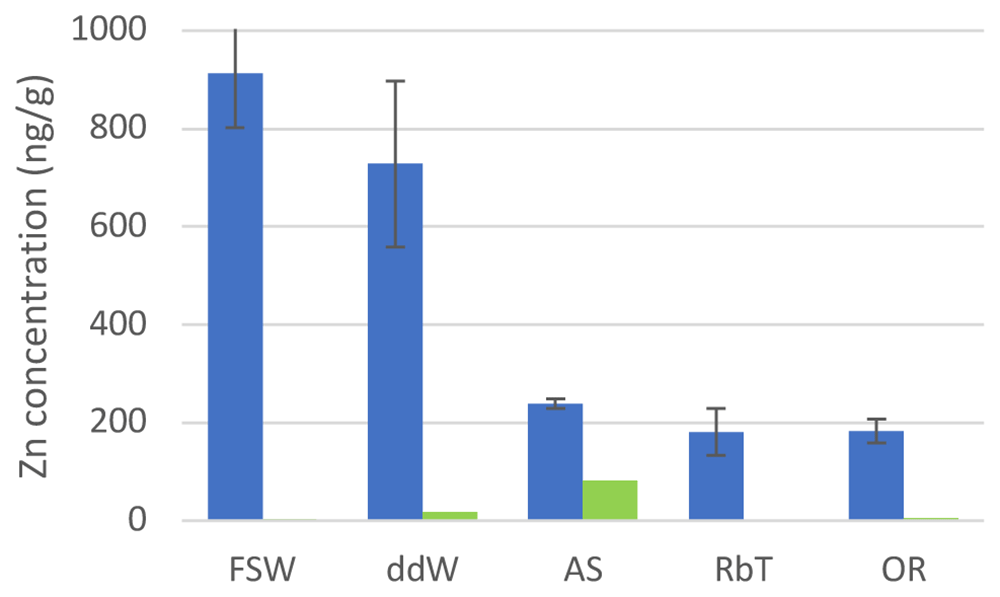
Figure 1. Zn concentrations in water.
Concentration of Zn in 10% pre-production PVC nurdle leachates obtained in different natural and artificial waters (blue) and in their clean (with no pellets added) counterparts (green). FSW: filtered sea water; ddW: double distilled water; AS: Instant Ocean (Aquatic Systems) artificial sea water; RbT: Reef by TMR artificial seawater; OR: Ocean Reef Artificial sea water. See Methods for full artificial sea water information.
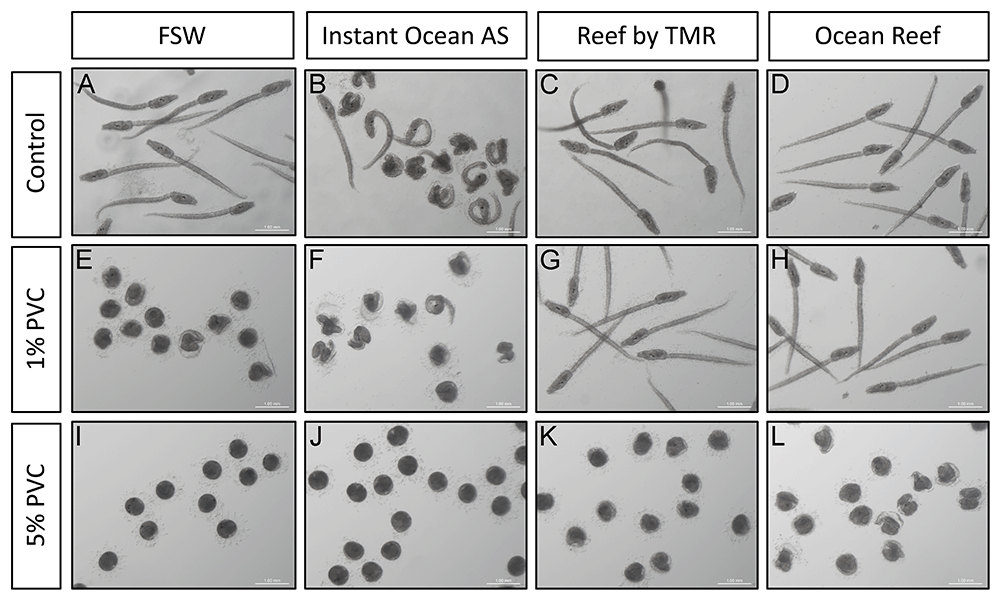
Figure 2. Effect on C. intestinalis development.
22 hpf larvae of C. intestinalis grown in four types of clean seawater (A–D) and in 1% (E–H) and 5% (I–L) PVC leachates obtained adding PVC pellets to those waters. Scale bar is 1 mm. Individual panels have been level balanced to unify background colors.
We have previously shown high amounts of Zn leaching from PVC plastic pre-production nurdles into filtered sea water9. Here, we repeat those experiments to find similar concentrations to the ones reported in that work (Paganos et al., 2023: n = 4, range = 0.78 to 1.18 μg/g, this work: n = 3, range 0.81 to 1.03 µg/g). These Zn concentrations are in average about one thousand times higher than that found naturally in seawater21. However, the concentration of Zn due to PVC leachates found in the water is at least five times less when using any of the ASWs (Figure 1, Extended data). An increase of Ba linked to Zn increase has previously been related to the use of Zn-Ba mixed metals as liquid stabilisers. Indeed, the amount of Ba in PVC leachates increases as well in all water samples, except in AS where the baseline Ba content is unusually high. Water composition for the elements analysed is similar in all seawaters, expect for Mn, where RbT and OR have about ten times higher amount than for natural seawater and AS, and Ba, where AS and OR have at least ten times more than RbT and FSW. However, we do not relate this increase to the differences in Zn contents in our different seawater samples. Interestingly, AS has an increased baseline of Zn of at least ten times higher than any of the other sea waters (Figure 1 (green bars)).
Leachates from PVC pre-production nurdles in FSW and ASW cause different intensity of developmental abnormalities in the tunicate C. intestinalis
We have previously shown that embryos from several species of marine invertebrates fail to grow properly when left to develop in these pre-production PVC pellet leachates20. The tunicate Ciona robusta is particularly sensitive and displays aberrant phenotypes at lower concentrations of plastics than other animals. Here, we use the sister species Ciona intestinalis to see the effect the leachates in different waters have on embryo development.
C. intestinalis larvae exhibit two primary structures: the trunk, housing the adhesive organ, brain vesicle with pigmented sensory organs (otolith and ocellus), endoderm, and mesenchyme; and a straight tail for locomotion, containing the neural tube, notochord, endodermal strand, and muscles, all enveloped by the larval tunic. All control water treatments except AS displayed a typical trunk and straight tail and vacuolated notochord cells (Figure 2. A, C, D). However, larvae grown in AS ASW displayed strong abnormalities (Figure 2. B): they developed shorter, coiled tails, and abnormal trunks, with misshaped adhesive organs and deformed sensory vesicles. We believe these abnormalities could be due to the high concentration of Zn found in this water (more than 80 ng/g; Figure 1, green bars). Indeed, 1% PVC leachates in FSW displayed aberrations equivalent, if more intense, to the ones described for AS water before (Figure 2. E): the tails were totally coiled and most larvae had not managed to hatch from the chorions. Despite this, malformed trunks displayed sensory organs, demonstrating that morphogenesis had, to a certain extent, proceeded. These phenotypes were equivalent of those seen before in PVC leachate treated C. robusta larvae20. 1% PVC leachate treatments in TMR or OR did not give rise to any aberrations in the larvae (Figure 2. G, H), showing that the concentration of Zn in these leachates (of around 18 ng/g) is not enough to create aberrations. Once the concentration of PVC particles increased to 5%, larvae failed to form in all treatments (Figure 2. I-L), resulting in unhatched round individuals with pigmented spots, hinting at otolith and ocellus structures. Despite the strong malformations, larvae grown in 5% PVC leachates in TMR or OR ASW displayed marginally less aberrant structures (Figure 2. K, L).
The aberrations observed in this context follow a pattern of increased malformations with increased concentration of Zn in the water (Figure 1, Figure 2). Hence, the malformations clearly correlate with the amount of Zn present in the leachates. We show that, if artificial sea water is used to obtain the leachates, the phenotypes observed can be less severe than in FSW, putatively leading to false negative results. Moreover, in highly sensitive animals like C. intestinalis, variations in the artificial sea water composition, like the one observed for AS which contains increased amounts of Zn, can cause developmental problems that are not due to the treatments but to the experimental setup, potentially leading also to false positive results.
Consequences for plastic contamination research
Extensive efforts are being made to catalogue the consequences of plastic contamination in different animals species, at different life cycle points (adults11,22–24, embryos5,6,8,9,13), using different toxicity routes (ingestion25–28, leachates5,8,11,13,16,29–31, contact32,33) and physiological states (immunology11,22,34–37, reproduction11,23,38, embryology5,8,9,12,13,16,30 or behaviour39–41). A substantial part of this research is laboratory based, and scientists have so far been using indistinctively natural sea water and artificial sea water (formalised in Almeda et al., 202317). Our results here show that research groups studying plastic toxicology may need to carry out additional tests to ensure that the water they are using reflects either environmental conditions or, at least, does not hinder their results and the conclusions they reach. If utilising artificial sea water can change the concentration of Zn retrieved from plastic preproduction pellets, like we demonstrate here, it may have other behaviours that may also change the dynamics of action of plastic leachates for other chemicals, including molecules known to leach from plastics such as PAH, phthalates, PCBs and others4. In the case of plastic leachates, if what researchers intend is to mimic environmental conditions, it would be important to ascertain the chemical composition of such waters, and if this is artificial sea water, to be able to contrast it with the composition of natural sea water. We cannot comment on the reach of our findings for other types of experiments, for instance when the studied interaction is using other types of plastic particles or nanobeads.
Conclusions
Artificial and natural sea water have different behaviours when leaching heavy metals from pre-production PVC particles. This may be extendable to other chemicals leaching from these particles, and also to other particles or types of plastic material. The leachates obtained in artificial and natural seawater using these plastics do not have the same effects on the development of the tunicate C. intestinalis. Moreover, some artificial water compositions may not be ideal for embryo-toxicology tests and may lead to increased aberrations. Our findings suggest that artificial and natural sea water types are not comparable, emphasizing the need for caution or additional tests when drawing conclusions from data obtained in artificial seawater.
Ethics and consent
C. intestinalis were collected from Mylor Yacht Harbour (UK) with permission of the company. C. intestinalis is not covered under EU Directive 2010/63/EU of the European Parliament and the Council of 22 September 2010 on the protection of animals used for scientific purposes nor in the Animals Scientific Procedures Act (ASPA) (UK). Animal handling was in accordance with the guidelines of our academic institutions. The least number of animals were used to perform the experiments while still permitting to have sufficient replicas to validate the results.
Acknowledgements
The authors thank Chris Lowe for supplying artificial sea salts, and Periklis Paganos and the Arnone Lab for helpful discussions.
Faculty Opinions recommendedReferences
- 1.
von Moos N, Burkhardt-Holm P, Koehler A:
Uptake and Effects of Microplastics on Cells and Tissue of the Blue Mussel Mytilus edulis L. after an Experimental Exposure.
Environ Sci Technol.
2012; 46(20): 11327–335. PubMed Abstract
| Publisher Full Text
- 2.
Mathalon A, Hill P:
Microplastic fibers in the intertidal ecosystem surrounding Halifax Harbor, Nova Scotia.
Mar Pollut Bull.
2014; 81(1): 69–79. PubMed Abstract
| Publisher Full Text
- 3.
Mato Y, Isobe T, Takada H, et al.:
Plastic resin pellets as a transport medium for toxic chemicals in the marine environment.
Environ Sci Technol.
2001; 35(2): 318–324. PubMed Abstract
| Publisher Full Text
- 4.
Teuten EL, Saquing JM, Knappe DRU, et al.:
Transport and release of chemicals from plastics to the environment and to wildlife.
Philos Trans R Soc Lond B Biol Sci.
2009; 364(1526): 2027–2045. PubMed Abstract
| Publisher Full Text
| Free Full Text
- 5.
Oliviero M, Tato T, Schiavo S, et al.:
Leachates of micronized plastic toys provoke embryotoxic effects upon sea urchin Paracentrotus lividus.
Environ Pollut.
2019; 247: 706–715. PubMed Abstract
| Publisher Full Text
- 6.
Martínez-Gómez C, León VM, Calles S, et al.:
The adverse effects of virgin microplastics on the fertilization and larval development of sea urchins.
Mar Environ Res.
2017; 130: 69–76. PubMed Abstract
| Publisher Full Text
- 7.
Sarker I, Moore LR, Paulsen IT, et al.:
Assessing the Toxicity of Leachates From Weathered Plastics on Photosynthetic Marine Bacteria Prochlorococcus.
Front Mar Sci.
2020; 7: 1–14. Publisher Full Text
- 8.
Rendell-Bhatti F, Paganos P, Pouch A, et al.:
Developmental toxicity of plastic leachates on the sea urchin Paracentrotus lividus.
Environ Pollut.
2021; 269: 115744. PubMed Abstract
| Publisher Full Text
- 9.
Paganos P, Ullmann CV, Gaglio D, et al.:
Plastic leachate-induced toxicity during sea urchin embryonic development: Insights into the molecular pathways affected by PVC.
Sci Total Environ.
2023; 864: 160901. PubMed Abstract
| Publisher Full Text
- 10.
Jeong CB, Kang HM, Lee MC, et al.:
Adverse effects of microplastics and oxidative stress-induced MAPK/Nrf2 pathway-mediated defense mechanisms in the marine copepod Paracyclopina nana.
Sci Rep.
2017; 7: 41323. PubMed Abstract
| Publisher Full Text
| Free Full Text
- 11.
Jimenez-Guri E, Murano C, Paganos P, et al.:
PVC pellet leachates affect adult immune system and embryonic development but not reproductive capacity in the sea urchin Paracentrotus lividus.
Mar Pollut Bull.
2023; 196: 115604. PubMed Abstract
| Publisher Full Text
- 12.
Nobre CR, Santana MFM, Maluf A, et al.:
Assessment of microplastic toxicity to embryonic development of the sea urchin Lytechinus variegatus (Echinodermata: Echinoidea).
Mar Pollut Bull.
2015; 92(1–2): 99–104. PubMed Abstract
| Publisher Full Text
- 13.
Gandara e Silva PP, Nobre CR, Resaffe P, et al.:
Leachate from microplastics impairs larval development in brown mussels.
Water Res.
2016; 106: 364–370. PubMed Abstract
| Publisher Full Text
- 14.
Gardon T, Huvet A, Paul-Pont I, et al.:
Toxic effects of leachates from plastic pearl-farming gear on embryo-larval development in the pearl oyster Pinctada margaritifera.
Water Res.
2020; 179: 115890. PubMed Abstract
| Publisher Full Text
- 15.
Beiras R, Tato T, López‐Ibáñez S:
A 2‐Tier standard method to test the toxicity of microplastics in marine water using Paracentrotus lividus and Acartia clausi larvae.
Environ Toxicol Chem.
2019; 38(3): 630–637. PubMed Abstract
| Publisher Full Text
- 16.
Ke AY, Chen J, Zhu J, et al.:
Impacts of leachates from single-use polyethylene plastic bags on the early development of clam Meretrix meretrix (Bivalvia: Veneridae).
Mar Pollut Bull.
2019; 142: 54–57. PubMed Abstract
| Publisher Full Text
- 17.
Almeda R, Gunaalan K, Alonso-López O, et al.:
A protocol for lixiviation of micronized plastics for aquatic toxicity testing.
Chemosphere.
2023; 333: 138894. PubMed Abstract
| Publisher Full Text
- 18.
Volpi Ghirardini A, Girardini M, Marchetto D, et al.:
Microtox® solid phase test: Effect of diluent used in toxicity test.
Ecotoxicol Environ Saf.
2009; 72(3): 851–861. PubMed Abstract
| Publisher Full Text
- 19.
Luo H, Xiang Y, He D, et al.:
Leaching behavior of fluorescent additives from microplastics and the toxicity of leachate to Chlorella vulgaris.
Sci Total Environ.
2019; 678: 1–9. PubMed Abstract
| Publisher Full Text
- 20.
Jimenez-Guri E, Paganos P, La Vecchia C, et al.:
Developmental toxicity of pre-production plastic pellets affects a large swathe of invertebrate taxa. Publisher Full Text
- 21.
Middag R, Rolison JM, George E, et al.:
Basin scale distributions of dissolved manganese, nickel, zinc and cadmium in the Mediterranean Sea.
Mar Chem.
2022; 238: 104063. Publisher Full Text
- 22.
Murano C, Agnisola C, Caramiello D, et al.:
How sea urchins face microplastics: Uptake, tissue distribution and immune system response.
Environ Pollut.
2020; 264: 114685. PubMed Abstract
| Publisher Full Text
- 23.
Sussarellu R, Suquet M, Thomas Y, et al.:
Oyster reproduction is affected by exposure to polystyrene microplastics.
Proc Natl Acad Sci U S A.
2016; 113(9): 2430–2435. PubMed Abstract
| Publisher Full Text
| Free Full Text
- 24.
Cole M, Lindeque P, Fileman E, et al.:
The impact of polystyrene microplastics on feeding, function and fecundity in the marine copepod Calanus helgolandicus.
Environ Sci Technol.
2015; 49(2): 1130–1137. PubMed Abstract
| Publisher Full Text
- 25.
Desforges JPW, Galbraith M, Ross PS:
Ingestion of Microplastics by Zooplankton in the Northeast Pacific Ocean.
Arch Environ Contam Toxicol.
2015; 69(3): 320–330. PubMed Abstract
| Publisher Full Text
- 26.
Cole M, Galloway TS:
Ingestion of Nanoplastics and Microplastics by Pacific Oyster Larvae.
Environ Sci Technol.
2015; 49(24): 14625–14632. PubMed Abstract
| Publisher Full Text
- 27.
Rist S, Baun A, Hartmann NB:
Ingestion of micro- and nanoplastics in Daphnia magna - Quantification of body burdens and assessment of feeding rates and reproduction.
Environ Pollut.
2017; 228: 398–407. PubMed Abstract
| Publisher Full Text
- 28.
Jovanović B:
Ingestion of microplastics by fish and its potential consequences from a physical perspective.
Integr Environ Assess Manag.
2017; 13(3): 510–515. PubMed Abstract
| Publisher Full Text
- 29.
Lithner D, Damberg J, Dave G, et al.:
Leachates from plastic consumer products--screening for toxicity with Daphnia magna.
Chemosphere.
2009; 74(9): 1195–1200. PubMed Abstract
| Publisher Full Text
- 30.
Gardon T, Huvet A, Paul-Pont I, et al.:
Toxic effects of leachates from plastic pearl-farming gear on embryo-larval development in the pearl oyster Pinctada margaritifera.
Water Res.
2020; 179: 115890. PubMed Abstract
| Publisher Full Text
- 31.
Lithner D, Nordensvan I, Dave G:
Comparative acute toxicity of leachates from plastic products made of polypropylene, polyethylene, PVC, acrylonitrile-butadiene-styrene, and epoxy to Daphnia magna.
Environ Sci Pollut Res Int.
2012; 19(5): 1763–1772. PubMed Abstract
| Publisher Full Text
- 32.
Beiras R, Bellas J, Cachot J, et al.:
Ingestion and contact with polyethylene microplastics does not cause acute toxicity on marine zooplankton.
J Hazard Mater.
2018; 360: 452–460. PubMed Abstract
| Publisher Full Text
- 33.
Hwang J, Choi D, Han S, et al.:
Potential toxicity of polystyrene microplastic particles.
Sci Rep.
2020; 10(1): 7391. PubMed Abstract
| Publisher Full Text
| Free Full Text
- 34.
Espinosa C, Cuesta A, Esteban MÁ:
Effects of dietary polyvinylchloride microparticles on general health, immune status and expression of several genes related to stress in gilthead seabream (Sparus aurata L.).
Fish Shellfish Immunol.
2017; 68: 251–259. PubMed Abstract
| Publisher Full Text
- 35.
Green DS, Colgan TJ, Thompson RC, et al.:
Exposure to microplastics reduces attachment strength and alters the haemolymph proteome of blue mussels (Mytilus edulis).
Environ Pollut.
2019; 246: 423–434. PubMed Abstract
| Publisher Full Text
- 36.
Détrée C, Gallardo-Escárate C:
Single and repetitive microplastics exposures induce immune system modulation and homeostasis alteration in the edible mussel Mytilus galloprovincialis.
Fish Shellfish Immunol.
2018; 83: 52–60. PubMed Abstract
| Publisher Full Text
- 37.
Murano C, Nonnis S, Scalvini FG, et al.:
Response to microplastic exposure: An exploration into the sea urchin immune cell proteome.
Environ Pollut.
2023; 320: 121062. PubMed Abstract
| Publisher Full Text
- 38.
Ogonowski M, Schür C, Jarsén Å, et al.:
The Effects of Natural and Anthropogenic Microparticles on Individual Fitness in Daphnia magna.
PLoS One.
2016; 11(5): e0155063. PubMed Abstract
| Publisher Full Text
| Free Full Text
- 39.
Bråte ILN, Blázquez M, Brooks SJ, et al.:
Weathering impacts the uptake of polyethylene microparticles from toothpaste in Mediterranean mussels (M. galloprovincialis).
Sci Total Environ.
2018; 626: 1310–1318. PubMed Abstract
| Publisher Full Text
- 40.
Botterell ZLR, Beaumont N, Dorrington T, et al.:
Bioavailability and effects of microplastics on marine zooplankton: A review.
Environ Pollut.
2019; 245: 98–110. PubMed Abstract
| Publisher Full Text
- 41.
Cuthbert RN, Al-Jaibachi R, Dalu T, et al.:
The influence of microplastics on trophic interaction strengths and oviposition preferences of dipterans.
Sci Total Environ.
2019; 651(Pt 2): 2420–2423. PubMed Abstract
| Publisher Full Text
- 42.
Jimenez Guri E, Ullmann C, Arnone MI:
Extended data for Natural sea water and artificial sea water are not equivalent in plastic leachate contamination studies. figshare, Dataset, 2024. http://www.doi.org/10.6084/m9.figshare.25127069.v1