Introduction
Over the last few decades the estimated burden of Clostridioides difficile1 infections (CDI) among patients in the United States reached half a million per year, becoming a major health threat due to its high recurrence and mortality rates2. Moreover, this spore forming organism seldom resides in the normal gut and is resistant to regular disinfectants, representing an infection control challenge in health care centers and nursing homes. Not surprisingly, in this antibiotic associated infection, failure of the standard antibiotic treatment for primary CDI1, usually with metronidazole or vancomycin, is high, with recurrence rate of 20–30%3. These antibiotics have also been reported to increase the risk of CDI and carries the risk of collateral destruction of the resident intestinal microbes, that are responsible for the colonization resistance against this pathogen3. Although the latest Infectious Diseases Society of America (IDSA) and the Society for Healthcare Epidemiology of America (SHEA) guidelines recommendation to treat primary and recurrent CDI with fidaxomicin, vancomycin remains an acceptable treatment4, due to costs and accessibility.
Primary CDI is often a consequence of exposure to antibiotic disrupting the bowel healthy microbiota composition. The administration of antibiotics as treatment for an already imbalanced microbiome, leads to further dysregulation of homeostasis (dysbiosis). Antibiotic related dysbiosis has been shown to carry significant impact on individuals’ health and risk for the emergence of multi-drug resistant bacteria.
Several years ago, van Nood et al. published a study with unprecedented results: the successful treatment of refractory and recurrent CDI (RCDI), with fecal microbiota transplantation (FMT) from healthy donors5. As opposed to the low cure rates (30%) of vancomycin documented in the study, FMT reached a 90% cumulative success rate, with mild to no adverse events5. These results were reproduced by multiple study groups, which have proven efficacy when FMT was administered through nasogastric or duodenal tubes, colonoscopy, enema, or capsules containing frozen liquid material6. FMT is an ecological and antibiotic sparing treatment, and although its efficacy has been largely demonstrated for RCDI, and lately for decolonization of multidrug resistant bacteria7,8. The effects of FMT on primary CDI have not been thoroughly investigated in large studies. One small randomized trial compared the treatment of primary CDI with a single enema of FMT (n=9) to oral metronidazole (n=11). Outcomes at the FMT group were slightly better but not statistically significant compared to the antibiotic group. In this study, however, the FMT was a suspension of cultivated human intestinal microbiota that has been maintained in strict anaerobic conditions for over 20 years called ACHIM (Anaerobically Cultivated Human Intestinal Microbiota)9, and not the known fecal slurry with high cure rates for recurrent CDI5. Another RCT compared vancomycin (n=9) to FMT mostly administered endoscopically though the upper GI tract (n=7)10. In that study, a pool of three donors was used and the results favored vancomycin with 90% cure rates while FMT reached 71% cure (5/7, one case was cured with second FMT). Collateral effects of both treatment groups was not reported. With the advances of FMT, an oral formulation of frozen capsules show a significant decrease in adverse events compared to the invasive procedures, as well as a significant reduction in hospitalization costs11,12. Lately, a few groups started to manufacture FMT by lyophilization (Lyo-FMT), a powdery compound that improves patients' swallowing experience and prolongs shelf time of the product, but this has not been tested in a randomized fashion for primary CDI.
We hypothesize that a disturbed microbiome leading to CDI predisposition and persistence may be optimally restored by implanting a whole ecosystem of healthy gut content such as fecal microbiota, rather than a pool of unrelated stool samples or isolated anaerobic bacteria. This in turn, will reduce the need for antibiotic therapy and in the current post-antibiotic era.
We aim to assess the efficacy of fecal microbiota transplantation (FMT) from healthy individuals for primary CDI in comparison to standard antibiotic therapy.
Methods
Ethical considerations
Each medical center will submit the same study protocol (RMB-0176-22, V4, 06/02/2023) to the local ethics committees. All clinical centers have extensive experience in the recruitment of patients with C. difficile infection and treatment with FMT, and each center will use the recruiting strategies that are best for their settings. Randomization will be stratified according to disease severity and to each recruiting center. Patients will sign informed consent and randomized to either Lyo FMT or vancomycin arms. Randomization must occur in the first days of vancomycin treatment, and on day 6 each arm will receive the respective treatment.
Protocol modifications will be discussed and communicated to all study sites. Each site will receive approval of the local IRB. Trial registries (e.g. clinicaltrials.gov) will be updated accordingly. Trial participants will be informed of modifications, if necessary, by the enrolling team.
Study design
This will be a prospective randomized multicenter trial to compare the treatment of adults with primary CDI, with short course vancomycin therapy followed by oral lyophilized FMT capsules (intervention group) or vancomycin mono-therapy group (control group).
Settings
This is a multicenter, transnational randomized controlled trial. The target population will be adult patients with non-fulminant pCDI in the community/hospital settings, according to the recruiting center.
The study has been granted by ERA-net 2022, JPIAMR, and the involved centers are detailed in the cover page. Rambam is the coordination center, headed by Dr. Pitashny.
Study population
Inclusion criteria
• We will include consenting adults ≥18 years old with non fulminant primary CDI.
• Both non-severe and severe patients will be included.
• Primary CDI (pCDI) will be defined as the patient’s first event of CDI in the past 6 months: New-onset diarrhea (≥3 unformed bowel movements (UBM) per day for more than 24 hours) and laboratory detection of toxigenic C. difficile in feces.
• A positive CD stool sample will be defined per study center according to international guidelines, with an obligatory positive toxin test to assure the presence of an active toxigenic CD strain.
Exclusion criteria - We will exclude:
• Patients who cannot provide informed consent and do not have a legal guardian;
• History of CDI 6 months prior to screening
• Known presence of other stool pathogens known to cause diarrhea;
• Patients who cannot swallow;
• Background diagnosis of inflammatory bowel disease, irritable bowel syndrome (IBS), or any other chronic diarrheal disorder;
• Active gastrointestinal graft versus host disease (GI-GVHD);
• Neutropenia <500/ml3;
• Food allergy leading to anaphylaxis;
• Prior total colectomy or have a proximal enteral stoma;
• Perforated intestine or intestinal fistula or major abdominal surgery in the last 30 days;
• Fulminant or life-threatening CDI defined as the occurrence of ileus, septic shock or toxic megacolon. Signs of fulminant disease are: white blood cell count >30,000 cells/mL; temperature >40°C; evidence of hypotension [systolic blood pressure <90 mmHg], peritoneal signs, and significant dehydration;
• Early fulminant CDI (ICU patients) defined as patients showing progression despite treatment with a sequential organ failure assessment score (SOFA score) ≥ 4 due to CDI13 at day 2 of treatment (prior to randomization);
• Patients who receive systemic antibiotics due to other reasons which cannot be stopped until randomization;
• Patients that were not recruited to the study by day 4 of CDI therapy will be excluded from participation;
• Patients with <3 months life expectancy;
• Inability or unwillingness to comply with the study protocol, including ingesting capsules, and providing blood or stool samples as scheduled;
• Participation in another interventional study;
• In the opinion of the investigator, inappropriateness for the trial (eg, patients with known hypersensitivity to vancomycin);
• Pregnancy and breastfeeding.
Subject withdrawal or termination
• Subjects will be withdrawn from the trial in the following situations:
• Withdrawal of consent. The subject is free to withdraw from the trial without prejudice to further medical care
• Pregnancy
• Need for urgent colectomy
Study groups
Participants will be enrolled and allocated by each study site. Consenting patients will be randomly assigned to one of two treatment modalities: vancomycin followed by oral lyophilized FMT capsules (intervention group) or vancomycin monotherapy group (Figure 1). A randomization table was generated using the R package redcapAPI version 2.214, and uploaded to the RedCap randomization module by the coordinating center which will oversee the study RedCap project. Randomization will be performed on permuted blocks of 2 and 4, stratified according to CDI severity (severe/non-severe as defined below) and by study site at the time of randomization.
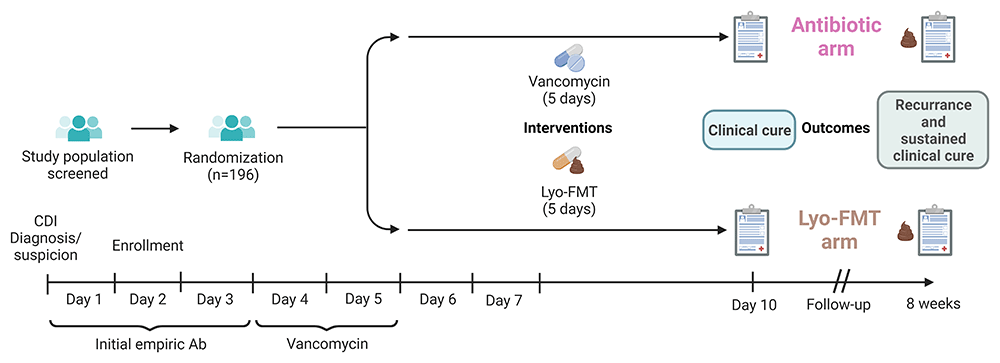
Figure 1. Study groups and timeline.
LYO-FMT group (intervention group) – vancomycin will be given orally in 125 mg capsules 4 times daily for a total of 5 days (day 1 - initiation of therapy by the clinical team, not from randomization), followed by a loading dose of oral lyophilized FMT capsules on day 6 (15 capsules). On days 7–10, patients will receive 10 Lyo-FMT capsules per day. A total of 55 capsules, derived from ~30–40gr of the original material, will be administered. Prior to each FMT administration, patients will be asked to fast for 8 hours. Bowel preparation or proton pump inhibitor use will not be required per protocol. The loading dose will be administered under medical supervision, while further dosing can be administered at the patient’s home/institute, after training and guidance.
Antibiotic monotherapy group (control group) - vancomycin will be given orally in 125 mg capsules 4 times daily for a total of 10 days (day 1 - initiation of therapy by the clinical team, not from randomization).
If symptoms persist on day 10 from the initiation of therapy, further treatment will be given according to study group allocation. In the Lyo-FMT group, FMT will be repeated in the form of 15 FMT capsules per course as clinically indicated. If no resolution of symptoms are documented after 2 days of FMT, the same FMT course (15 capsules) will be repeated, up to 3 times. For patients in the antibiotic monotherapy group, an extension of the vancomycin treatment with the same doses will be given for 7 more days. Laboratory testing for the presence of C. difficile will not be required for the administration of repeated treatment, but will be annotated if performed. If symptoms persist beyond day 18 of the study in both groups (8 days after the end of first treatment), we will allow treatment according to clinical judgement at the local study center. Patients will be free to decide if they want to stop their participation in the study at all times. Persistent symptoms beyond day 20 of the study will be considered as a clinical failure for the purposes of secondary outcome analysis. At any point, if there is a deterioration of the patient towards fulminant disease (see definition above), clinical judgement will prevail as per protocol for fulminant cases.
Comments relevant for both groups
During the study period and across study centers, we will encourage clinicians to use vancomycin as empiric treatment for pCDI. However, according to local clinical practice, patients may receive an antibiotic other than vancomycin (e.g. metronidazol). In both study groups, patients that were treated with another antibiotic agent in the first 24 hours, will be switched to vancomycin prior to day 3 of the study. The day of initiation of therapy will be considered from the first day of any antibiotic therapy that was administered. Randomization will be done within 72 hours from the initiation of any therapy for CDI.
In both groups, if a patient receives concurrent systemic antibiotics for other indications, the research team will contact the clinical team to understand if these antibiotics can be safely stopped 24 hours prior to randomization (day 3 from initiation of therapy). If systemic antibiotics cannot be stopped, then the patient will be excluded from the study.
In case of a CDI recurrence, the patient will be considered as reaching the primary outcome (see below). We will permit treatment of CDI recurrences according to clinical judgement. We will provide Lyo-FMT for the treatment of recurrent CDI if available at the study center and required by the clinical team.
In case of the development of fulminant disease, we will allow any therapy judged by the clinical team as appropriate. All cases with fulminant disease will be assessed by a surgical team for a timely fashioned colectomy if indicated. The development of fulminant disease from day 8 of the study onwards (3 days on FMT treatment) will be considered as clinical failure for the purposes of secondary outcome analysis.
Outcomes (See also Figure 2)
Primary efficacy outcome - recurrence of CDI at week 8. Recurrence will be defined as the re-appearance of CDI symptoms (at least 3 unformed bowel movements per day for at least 2 days) with positive CD stool test more than 3 days after the resolution of symptoms and requiring anti-CDI treatment. The primary outcome will be assessed by an observer blinded to study group assignment.
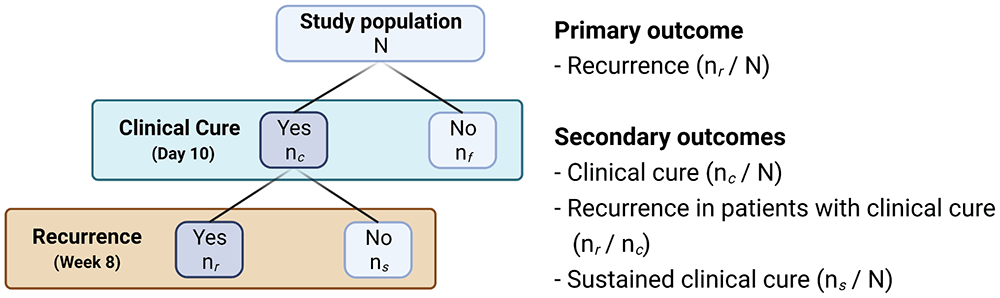
Figure 2. Outcome definition and calculations.
Secondary outcomes
• Clinical cure at day 10 - defined as cessation of CDI related symptoms by day 10 of the study with no further symptoms/conditions (persistent symptoms, fulminant disease, death and colectomy) needing additional therapy
• Recurrence in patients who achieved clinical cure at day 10
• Sustained clinical response at week 8 - defined as cessation of CDI related symptoms by day 10 of the study with no further symptoms/conditions (persistent symptoms, fulminant disease, death, colectomy and recurrence) needing additional therapy
• Serious adverse events defined as mortality, bacteremia attributable to FMT, and hospitalization due to CDI during study period
Exploratory outcomes
• Time to clinical cure (from day 1) and time to recurrence from reported clinical cure
• Antibiotic days per patient-days during the study period (8 weeks)
• Total adverse event rate
• Acquisition/persistent colonization of multidrug-resistant organisms (MDROs) carriage during the study. MDROs of interest will include carbapenem-resistant Enterobacterales (CRE), vancomycin-resistant Enterococcus (VRE) and Extended Spectrum Beta-Lactamase (ESBL) producing Enterobacterales (see definition of colonization below)
• Changes in intestinal resistome from the initiation of therapy to day 14 and week 8
• Shifts in the microbial community before and after interventions
Recruitment, randomization, data collection and follow-up
Recruitment: Patients will be identified by the study team based on daily reports from the local microbiology laboratory of positive toxigenic CD tests.
Initiation of any CDI therapy will be defined as the index date (day 1).
Final eligibility for the study and randomization will occur by day 3 from the initiation of therapy (see Figure 1 for study algorithm). To avoid loss of recruitings, especially during weekends, recruitment will be allowed until days 4–5 from the initiation of therapy, only if the randomization is performed immediately and treatment with FMT can be effectively given on day 6 (or vancomycin can be continued, depending on the study arm).
Data will be collected from the electronic medical records (EMR), or by Case Report Forms (CRF) filled at each study timepoints via phone, email or at clinic visits, and recorded into the RedCap database. Individual identifiers for all patients will be coded and detached from samples and RedCap data collection records. The codified database will be saved encrypted, with access only to the PI and research team.
Patients will be followed-up during the intervention period on day 5 and 10. Patients will be contacted by the research team by phone on day 5, day 10 (to document the outcome and confirm the follow-up visit), and week 4. An outpatient visit will be scheduled for day 14 +/- 4 and at 8 weeks, to be clinically assesed and to provide a stool sample to the researcher.
The minimun time for follow-up is 8 weeks. Mortality rates will be determined at 24 weeks (6 months) by chart review. If it is possible to assess the patient in a clinic appointment, and a stool sample can be provided, MDRO screening and metagenomic analysis will be performed.
We will collect data on risk factors for treatment failure, potential confounders and adverse events:
1. Patient demographics: age, sex, ethnicity, BMI, dwelling place before hospitalization, transfer from another hospital, hospitalization date
2. Comorbidities and background:
• Charlson comorbidity index
• Proton pump inhibitor use
• Functional status, categorized as independent with full activity, independent with limited activity, dependent in everyday activities and bedridden
• Cognitive status: patient or guardian signed informed consent
• Immunosuppression: immunosuppressive therapy [defined as the use of corticosteroids [prednisone equivalent >20 mg/day) for at least 14 days, chemotherapy or radiotherapy, hematopoietic stem cell transplantation (HSCT) or other recognized immunosuppressive therapy] or a disease state related to immunosuppression (e.g. hematologic malignancy, AIDS etc.)
• Type of immune modulation (steroids, chemotherapy, biologic therapy)
• Chronic diseases, not represented in the Charlson score: any chronic renal failure, solid organ transplantation, stem cell transplantation, the condition requiring immune suppression, previous abdominal surgeries (partial colectomy, cholecystectomy, others)
• Number of hospital admissions 6 months prior to current CDI episode (from day of diagnosis).
• Number of antibiotic days and antibiotic type in the month prior to CDI and the interval from last antibiotic treatment prior to current CDI episode (from day of diagnosis).
• Number of antibiotic days and antibiotic type after CDI treatment, and the interval between the end of CDI treatment and another antibiotic treatment
• Acquisition of CDI according to date of positive toxin test and stool collection date - where hospital-acquired infection will be defined as > 3 days after admission, community-onset <3 days, and if the patient arrived from long term care facility defined as LTHCF onset
• Disease severity at the onset of CDI -
◦ Severe disease will be defined with a leukocytosis ≥15000 cells/mL or a serum creatinine level >1.5 mg/dL.
◦ Pre-fulminant disease (exclusion criteria) will be defined as SOFA score ≥ 4 due to CDI.
◦ Fulminant disease will be defined with hypotension or shock (SBP> 90mmHg or 20mmHg drop from baseline), ileus or megacolon.
◦ All others will be defined as non-severe disease.
• All treatment directed against CDI from index date up to 8 weeks
• All systemic non-CDI-directed antibiotics administered until 8 weeks of follow-up.
We will document all potential study intervention-related adverse events (AE). AE will be defined as serious AE (mortality/bacteremia attributable to FMT/and hospitalization due to CDI during study period) and minor AE (nausea, vomiting, abdominal pain, and fever). The severity of AE and attribution to the intervention will be defined in accordance with accepted guidelines. Attribution will be defined on the basis of temporal relationships to study intervention and the presence or absence of underlying conditions that might explain the adverse event.
The study will be monitored for safety by an executive committee every 6 months, with an interim analysis after recruitment of 25% and 50% of the cohort.
Hemoglobin, total white blood cell count, albumin, C-reactive protein (CRP) and creatinine at the onset of CDI will be documented.
Quality of life and patient preferences questionnaires
The C. difficile health-related quality of life (HRQOL) questionnaire15, EuroQol 5 Dimensions 5 Level (EQ-5D-5L)16, and Work Productivity and Activity Impairment (WPAI) Questionnaire17 will be administered at screening visit and again at week 2, and week 8. The C. difficile HRQOL questionnaire is specifically developed and validated to assess patients with CDI. Although EQ-5D-5L and WPAI are not specifically designed for patients with CDI, they are well validated instruments and have been used in clinical research across a variety of conditions and health status. If follow-up visits are deemed non-essential and are conducted by phone, these questionnaires may be emailed out or mailed out to patients based on patient preference and to be returned to the study sites.
A patient preference questionnaire will be administered at screening and at week 8. The perception and satisfaction questionnaire were developed by investigators and used in a previous study11. We will also estimate patients’ willingness to accept the proposed intervention.
Stool and blood collection and analysis
Stool samples will be requested from each participant on the day of enrollement (before the LFMT arm receives FMT), and at the clinic visits on day 14 +/- 4 and at 8 weeks. If feasible, a blood draw of 5 ml blood will be also collected at the enrollement and 8 weeks.
Specimens that need immediate clinical testing will be sent to the hospital’s clinical laboratory. Remaining samples will be aliquoted to 4–5 cryovials and immediately flash frozen and stored at -80°C degrees until later use or shipping in dry ice. An aliquot from each sample will be bio-banked in each study center as a backup. Stool specimens will be de-identified and stored with a project specific code.
CDI - Positive toxigenic CD test will be defined according to the available clinical test that is being used in the study center according to international guidelines, with an obligatory positive toxin test to ensure the presence of an active toxigenic CD stain. The test is not required as test of cure, but will be repeated in case of suspected CDI recurrence.
MDRO colonization - Screening culture of swabs for the presence of CRE, ESBL and VRE will be performed on patient’s stool samples (not rectal swabs), when patients bring fresh samples on recruitment day and on week 8 (study end-point). The presence of MDRO will be determined by the local clinical microbiology lab. If possible, an additional sample will be requested at 24 weeks (6 months) follow up.
Metabolomic/metagenomic analysis- An aliquot from each stool sample will be shipped on dry ice every 6 months to IEO (Milan) for whole genome sequencing and analyzed in a centralized fashion to reduce batch/center variability. Shotgun metagenomic sequencing of microbial components will be performed by IEO (Milan).
Donor samples and a subpopulation of the stool and serum samples collected at each recipient's time point, will be shipped in dry ice to ICL (London) to perform metabolomic analysis.
Donor selection and stool processing for Lyo-FMT preparation
Screening of donors, sample handling and freezing will be performed at all study centers which have already established and functioning stool banks. All participating centers will follow the same standard operating procedures (SOP). This will be monitored by the study coordinator partner (MP) who is a certified clinical microbiologist with vast experience in training, FMT manufacturing and lyophilization.
In brief, healthy donors will undergo safety screening according to International guidelines, including COVID-19 testing18. For the purpose of this study, we will preferentially select donors with a history of limited antibiotic use in their life (if possible). Once accepted as potential donors, feces will be collected in a clean container and delivered to the local stool bank within 4–8 hours of passing. Each donation undergoes graft manufacturing starting with approximately 100g of donor stool. Samples will be homogenized with 200 ml of sterile normal saline with 5% pharma grade trehalose as a cryoprotectant, grossly filtered, and immediately stored at -80°c degrees until lyophilization, a protocol previously described by Staley and colleagues19. Lyophilization will be performed with vacuum at -40 to -80 degrees Celsius. The frozen material will be left 48–72 hours in the lyophilizer instrument until the material is completely depleted from water. Once lyophilized, the powdery material will be finely grinded and mixed with a dissicant (Neusilin, FujiChemical) and encapsulated in delayed-release capsules (DR Capsugel, roughly 0.5 g per capsule). It is estimated that each donation generates approximately 40–60 capsules, depending on the water content of the donor stool. Each batch of capsules will be stored in an air-tight conical tube with silica gel packets (Dry-packs), to avoid spoiling due to ambient moisture.
All donor sample-related characteristics will be recorded in the stool bank databases. From each donor, aliquots of fecal material will be stored for shotgun metagenomic analysis as stated above.
Calculated sample size and estimated timeline
Large effects of FMT have been observed in small randomized controlled trials, and the recurrence rate after antibiotic therapy is known, but data is missing regarding the effect of FMT on primary CDI. Furthermore, due to the administrative issues related to the intervention, most big RCTs in the FMT field did not recruit more than 150 patients20. Assuming a recurrence rate of 29% with antibiotics and 13% recurrence rate in the Lyo-FMT group with an expected drop-out rate of 10%, we aim to recruit 196 patients (98 intervention and 98 controls) over a period of 2.5 years (13 patients per center per year). This sample size will provide a power of 80% with an α=0.05. This is in line with the above assumptions, and will serve as one of the biggest FMT trials up to date. An independent monitoring committee will review the data after recruitment of 25% and 50% of the cohort in an interim analysis. A Haybittle–Peto boundary stopping rule will be applied using a threshold of p<0.001.
Statistical analysis
Characteristics and outcomes between the study groups will be compared using Chi-square test and Fisher’s test for the categorical variables and student’s t-test or Mann-Whitney test for continuous variables, according to distribution. The outcome analysis will be primarily performed according to intention-to-treat, supplemented with per-protocol analysis. Patients lost to follow-up status will be considered according to the last status under the carry-over assumption. The effect of initial clinical cure will be evaluated by both the analysis of the secondary outcome of recurrence only in patients who have achieved "initial clinical cure” and the secondary outcome of "sustained clinical cure”. Subjects discontinuing the trial prior to the end of the intervention (day 10) will be considered as not achieving an initial clinical cure. Time to cure will be compared with time-to-event analysis (Kaplan-Meier statistics). Antibiotic days during the study will be compared as antibiotic-treatment days per patient days. Antibiotic days during the study will be compared with time-to-event analysis (Kaplan-Meier statistics). Analysis of omics data will be performed by the partners that perform metagenomics (IEO) and metabolomics (ICL) analysis.Cost-effective analysis will be performed according to local pricing, grouping countries with similar health systems and costs of interventions. All samples will be analyzed with QIIME2 2023.9 fot metagenomic analysis and R studio 2023.09.1 Build 494 will be used for the correlations and statistical significances.
Data availability
Underlying data
No data are associated with this article.
Faculty Opinions recommendedReferences
- 1.
Lawson PA, Citron DM, Tyrrell KL, et al.:
Reclassification of Clostridium difficile as Clostridioides difficile (Hall and O'Toole 1935) Prévot 1938.
Anaerobe.
2016; 40: 95–9. PubMed Abstract
| Publisher Full Text
- 2.
Lessa FC, Mu Y, Bamberg WM, et al.:
Burden of Clostridium difficile infection in the United States.
N Engl J Med.
2015; 372(9): 825–34. PubMed Abstract
| Publisher Full Text
- 3.
Lewis BB, Buffie CG, Carter RA, et al.:
Loss of Microbiota-Mediated Colonization Resistance to Clostridium difficile Infection With Oral Vancomycin Compared With Metronidazole.
J Infect Dis.
2015; 212(10): 1656–65. PubMed Abstract
| Publisher Full Text
| Free Full Text
- 4.
Rewers M, Hyöty H, Lernmark Å, et al.:
The Environmental Determinants of Diabetes in the Young (TEDDY) Study: 2018 Update.
Curr Diab Rep.
2018; 18(12): 136. PubMed Abstract
| Publisher Full Text
| Free Full Text
- 5.
van Nood E, Vrieze A, Nieuwdorp M, et al.:
Duodenal infusion of donor feces for recurrent Clostridium difficile.
N Engl J Med.
2013; 368(5): 407–15. PubMed Abstract
| Publisher Full Text
- 6.
Pitashny M:
The Giving Microbiome: Share the Health.
Isr Med Assoc J.
2016; 18(10): 623–624. PubMed Abstract
- 7.
Adler A, Miller-Roll T, Bradenstein R, et al.:
A national survey of the molecular epidemiology of Clostridium difficile in Israel: the dissemination of the ribotype 027 strain with reduced susceptibility to vancomycin and metronidazole.
Diagn Microbiol Infect Dis.
2015; 83(1): 21–4. PubMed Abstract
| Publisher Full Text
- 8.
Huttner BD, de Lastours V, Wassenberg M, et al.:
A 5-day course of oral antibiotics followed by faecal transplantation to eradicate carriage of multidrug-resistant Enterobacteriaceae: a randomized clinical trial.
Clin Microbiol Infect.
2019; 25(7): 830–838. PubMed Abstract
| Publisher Full Text
- 9.
Juul FE, Garborg K, Bretthauer M, et al.:
Fecal Microbiota Transplantation for Primary Clostridium difficile Infection.
N Engl J Med.
2018; 378(26): 2535–6. PubMed Abstract
| Publisher Full Text
- 10.
Camacho-Ortiz A, María Gutiérrez-Delgado E, Garcia-Mazcorro JF, et al.:
Randomized clinical trial to evaluate the effect of fecal microbiota transplant for initial Clostridium difficile infection in intestinal microbiome.
PLoS One.
2017; 12(12): e0189768. PubMed Abstract
| Publisher Full Text
| Free Full Text
- 11.
Kao D, Roach B, Silva M, et al.:
Effect of Oral Capsule- vs Colonoscopy-Delivered Fecal Microbiota Transplantation on Recurrent Clostridium difficile Infection: A Randomized Clinical Trial.
JAMA.
2017; 318(20): 1985–1993. PubMed Abstract
| Publisher Full Text
| Free Full Text
- 12.
Youngster I, Russell GH, Pindar C, et al.:
Oral, capsulized, frozen fecal microbiota transplantation for relapsing Clostridium difficile infection.
JAMA.
2014; 312(17): 1772–8. PubMed Abstract
| Publisher Full Text
- 13.
Choi MH, Kim D, Jeong SH, et al.:
Risk Factors of Severe Clostridioides difficile Infection; Sequential Organ Failure Assessment Score, Antibiotics, and Ribotypes.
Front Microbiol.
2022; 13: 900681. PubMed Abstract
| Publisher Full Text
| Free Full Text
- 14.
Nutter B, Lane S:
redcapAPI: Accessing data from REDCap projects using the API. R package version 2.8.0, 2023. Publisher Full Text
- 15.
Garey KW, Aitken SL, Gschwind L, et al.:
Development and Validation of a Clostridium difficile Health-related Quality-of-Life Questionnaire.
J Clin Gastroenterol.
2016; 50(8): 631–7. PubMed Abstract
| Publisher Full Text
| Free Full Text
- 16.
EuroQol Group: EuroQol--a new facility for the measurement of health-related quality of life.
Health Policy.
1990; 16(3): 199–208. PubMed Abstract
| Publisher Full Text
- 17.
Reilly MC, Zbrozek AS, Dukes EM:
The validity and reproducibility of a work productivity and activity impairment instrument.
Pharmacoeconomics.
1993; 4(5): 353–65. PubMed Abstract
| Publisher Full Text
- 18.
Cammarota G, Ianiro G, Kelly CR, et al.:
International consensus conference on stool banking for faecal microbiota transplantation in clinical practice.
Gut.
2019; 68(12): 2111–21. PubMed Abstract
| Publisher Full Text
| Free Full Text
- 19.
Staley C, Hamilton MJ, Vaughn BP, et al.:
Successful Resolution of Recurrent Clostridium difficile Infection using Freeze-Dried, Encapsulated Fecal Microbiota; Pragmatic Cohort Study.
Am J Gastroenterol.
2017; 112(6): 940–947. PubMed Abstract
| Publisher Full Text
| Free Full Text
- 20.
Baunwall SMD, Lee MM, Eriksen MK, et al.:
Faecal microbiota transplantation for recurrent Clostridioides difficile infection: An updated systematic review and meta-analysis.
EClinicalMedicine.
2020; 29–30: 100642. PubMed Abstract
| Publisher Full Text
| Free Full Text