Disclaimer
The views expressed in this article are those of the authors. Publication in Open Research Europe does not imply endorsement of the European Commission.
What is the current situation?
October 2022 was one of the hottest in history, raising another time the interest on global warming. The clock is ticking, and strong actions have to be taken now to reduce emissions and prevent a further increase of the average temperature to more than 1.5°C above pre-industrial level, with the related negative impacts on our life1. Spain reduced its carbon emissions by 30% in the period 2005–2019 (we excluded data from 2020 onwards, as biased by the pandemics), well above the European average2. This means a reduction from nearly 400 Mtons in 2005 to around 300 Mtons in 2019. This was mainly achieved by cutting emissions from the energy sector, linked to the flourishing of renewable energy (solar and wind power). However, the road towards net-zero by 2050 is still long. Reducing emissions will be increasingly difficult when approaching the objective, as sectors such as transportation and certain carbon-intensive industrial processes, are difficult to decarbonize.
Where are these CO2 emissions from?
Emissions in Spain are dominated by the burning of fossil fuels, particularly in the transport, energy supply and industry sectors (Figure 1). Industrial emissions mostly derive from the manufacturing/construction sector (cement and steel factories). Domestic transport emissions are mainly associated with cars, whereas international transport emissions derive from aviation and maritime (around 7% each).
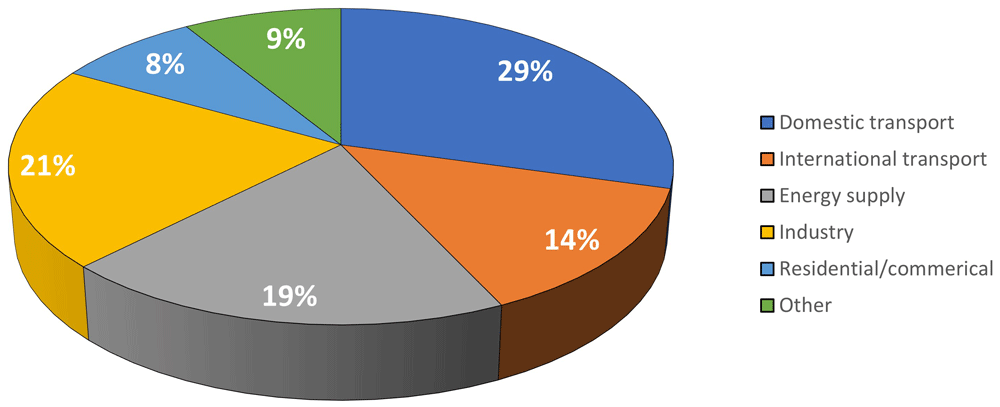
Figure 1. CO2 emissions in Spain in 2019.
Source: European Environment Agency.
What are the next steps planned?
The Spanish government is aiming at reducing ETS (European Trading Scheme), and non-ETS emissions by 61% and 26%, respectively, by 2030 (in comparison to 2005).3 The primary objectives are to achieve energy security and flexibility, pursue energy savings, and foster the energy transition by achieving a target of 42% share of renewable energy, mainly solar and wind power. By 2030, 74% of the electricity demand must be covered by renewable sources. A hydrogen roadmap4 has also been approved, being renewable hydrogen a key player to achieve decarbonization. For the transport, policies will be directed towards increasing its efficiency, promote the use of public transport and low-impact vehicles, both electric or powered by advanced biofuels, by means of incentives and the introduction of low emissions zones in every city above 50,000 inhabitants. Building renovation and energy upgrade are planned to improve energy efficiency in both the public and private residential sectors. A great effort will be also directed towards research and innovation to accelerate the deployment of highly efficient and low-carbon technologies.
What else can be done?
According to the National Energy and Climate Plan (NECP)5 projections, the current measures will allow to cut emissions by nearly 50% in comparison to 2005. However, this is not sufficient to achieve a full decarbonization by 2050. Great efforts have been directed towards decarbonization of the electricity production, which will result in 83% lower CO2 emissions from this sector. Further actions must be directed towards the decarbonization of the other most impactful sectors.
Despite the measures adopted, transport will be the most polluting sector by 2030, generating 57,7 MtonCO2 eq according to the forecast. In particular, the foreseen 28% reduction in the use of oil and its derivatives appears not sufficient. Besides pursuing electrification on transport, the development of advanced biofuels, both in gas (methane, hydrogen) and liquid (biodiesel, ethanol, methanol, butanol) is crucial, in particular for those sectors that cannot be electrified, such as maritime transportation and aviation. The production of advanced biofuels must be pursued from waste materials, and in particular from agricultural waste abundant in Spain (e.g. from the olive, cereals and wine production sectors), to avoid competition with food production. The current plan sets an objective of 3.5% energy for transportation from advanced biofuel, which is the bare minimum requested by the EU. Increasing this percentage will promote circular economy, as well as reducing energy dependency (still forecasted at 59% in 2030), and CO2 emissions (by displacing fossil fuels). Big companies such as Repsol already started to move towards this direction6, and the expected impact is huge (nearly 4 tons of CO2 displaced per ton of advanced biofuel produced).
Industry will remain one of the most polluting sectors in the country, with an expected 55.9 MtonCO2 eq emissions by 2030. Around 60% of those emissions will be related to combustion processes, and the remaining 40% will come from the manufacturing process itself (for example, from chemical reactions such as calcium oxide production from carbonates in the cement industry, or crude iron reaction with oxygen to produce steel). While combustion related emissions can be mitigated by reducing energy consumption or by using energy with a lower carbon footprint (primarily renewable electricity and H2), process emissions are, in most cases, unavoidable. The reforestation actions included in the Spanish Forest Plan 2022–20327 will increase the CO2 sink capacity of the environment, which will however remain insufficient to counteract the generated emissions. Considering this, the lack of attention on carbon capture, utilization and storage (CCUS) technologies in the Spanish NECP, other than a short mention in the Research, Innovation and Competitiveness dimension, appears evident.
CCUS solutions are part of the decarbonation strategy of other European countries such as Ireland8 and Germany9, and are considered by the EU essential bridging technologies to achieve a net-zero economy by 2050. Both public and private investment in CCUS have been growing over the few last years. Within the EU Innovation Fund, the EU has set a budget of € 3 billion for large scale CCUS project in 202310, and further calls for projects will come in the next years. Furthermore, private investments on these technology are starting to flourish, and are expected to reach € 150 billion by 203011, suggesting that some of these technologies might reach the market in the next seven years. Most of the investments will be directed towards installation of full-scale plants to decarbonize electric power generation, and carbon intensive industries such as cement, steel and petrochemical industry.
According to the NECP 2030 scenario, nearly 100 Mtons CO2 will still be emitted in Spain from electric power production plants an carbon intensive industries, and the way to Net-Zero appears hard. At the same time, these emissions represent an opportunity to attract public funding and private investments in the order of billion Euros. Hence, the efforts must be directed towards the development of decarbonization networks that include the necessary expertise to deliver such innovative and difficult projects. Collaboration between universities, research centers, industries, energy suppliers and investors is essential to achieve the 2050 decarbonization targets and turn CO2 into a business opportunity.
Our research on CCUS technologies
Research on CCUS technologies has been flourishing over the last few years, and novel technologies are under development with the aim of reaching the market by 2030. For over ten years, CCUS technologies have been a pillar of our research group in the Laboratory of Chemical and Environmental Engineering (LEQUIA)12 at the University of Girona. Our portfolio includes both national and European level projects dedicated at mitigating emission by transforming CO2 to biofuels and chemical commodities. Among the ongoing projects, the EU funded ATMESPHERE13 (Advanced Technology for Microbial Electro-Synthesis of Platform cHemicals and Efficient in-situ Recovery via Electrodialysis) aimed to develop a novel biorefinery concept (Figure 2) that uses CO2 from carbon intensive industries as a raw material for the production of hexanoic acid, a valuable chemical that finds application in the energy, food and chemical industry, and can be also upgraded to hexanol, an advanced biofuel.
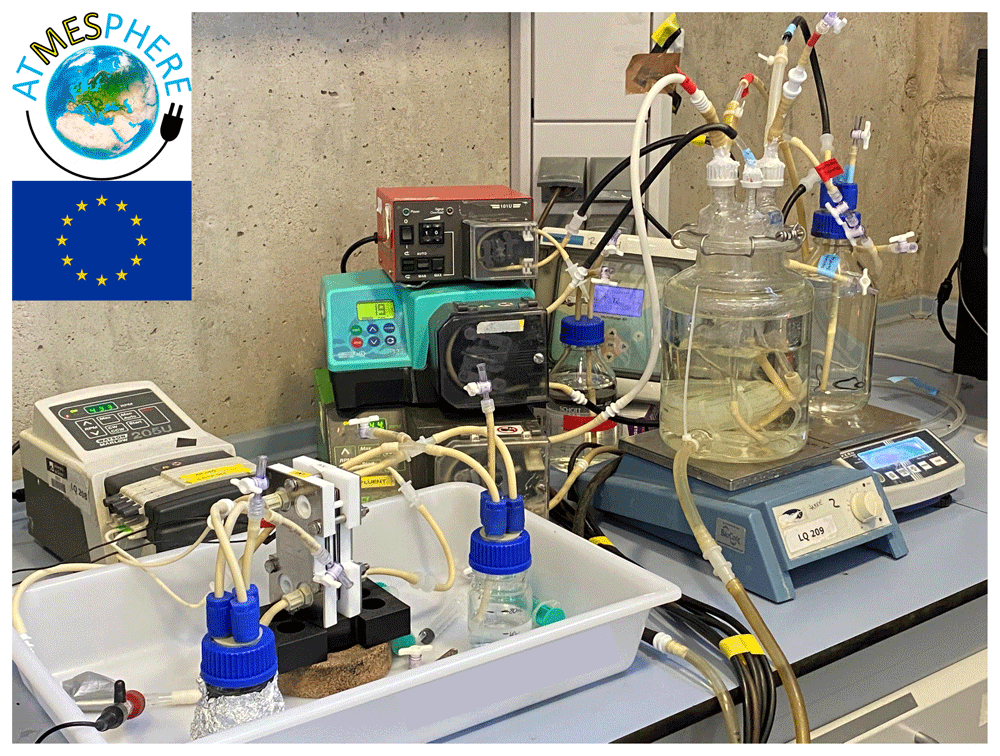
Figure 2. Lab-scale biorefinery to convert CO2 emissions to valuable caproic acid, developed within the framework of the EU-funded ATMESPHERE project.
Technologies like the one developed in the ATMESPHERE project have the potential to simultaneously tackle greenhouse gas emissions and promote circular economy by converting CO2 to commodities that would be otherwise produced from fossil sources. Thus, their strategic relevance for achieving the NECP objectives, and in particular the 2050 objectives, is not debatable. Supporting these innovative projects now could make the difference to achieve a cleaner industrial production in the next decades, with positive impacts on environment, economy, and population well-being.
Ethics and consent
Ethical approval and consent were not required.
Data availability
No data are associated with this article.