Introduction
Tandem mass spectrometry (LC-MS/MS) has been widely used for untargeted or shotgun proteomics. A standard method for automated fragment ion spectra (MS2) generation is data-dependent acquisition (DDA). In a typical DDA experiment, precursor ions are selected for fragmentation using their intensities observed in full MS1 scans and user-defined parameters (the top N method)1. Three common fragmentation techniques include electron-transfer dissociation (ETD), collision-induced dissociation (CID), and higher-energy collisional dissociation (HCD); the latter two methods typically generate b- and y- ions due to the breakages of amide bonds during collision2. The resulting MS2 data are clean and ready for peptide-spectrum matching and database searching, as fragments are generally derived from a single precursor within a small isolation window below 2 mass-to-charge (m/z) ratios3. Overall, data-driven shotgun proteomics has been robust and provides high–resolution data.
The combination of DDA and database searching has been a powerful tool for the deep and global discoveries of proteomes. However, DDA is susceptible to the co-fragmentation of co-eluting, near-isobaric precursor ions, which may generate complex chimeric spectra4. Moreover, due to the stochastic nature of precursor sampling in DDA, peptide-level repeatability in technical replicates is reported to be below 60%, with low-abundance precursors often being under-sampled5. While features like dynamic exclusion (a mass spectrometer parameter that temporarily excludes most-abundant precursors), and match-between-runs (MBR, a bioinformatics algorithm that realigns unidentified peaks using retention time and other MS1 features) have been designed to mitigate the missing value problem6,7, it has been estimated that only 30% of DDA MS2 spectra may be identified using database searching8. This value is corroborated by the experimental observation of two large-scale analyses that just over 25% of MS2 spectra submitted to PRIDE and MassIVE are identified9,10.
Additionally, the efficiency of database searching may exacerbate the problem of unassigned spectra, leading to even lower rates of successful identification. This is primarily due to the limitations of the search space of a peptide matching algorithm, which is determined by a user-provided protein sequence database, digestion patterns, missed cleavages, a range of allowed peptide length, a predefined set of post-translational modifications (PTMs), and the mass tolerances of both precursors and fragment ions11. Since acquired MS2 data are searched against theoretical spectra generated in silico, sequences not covered by a database, miscleaved peptides, and large mass shifts due to unexpected PTMs will be overlooked during conventional database searching. The search space also affects the filtering of peptide-spectrum matches (PSMs), as target-decoy competition is widely used to calculate false discovery rates (FDRs), with decoys generated based on the same parameters as the target database12.
These limitations are pronounced in fields where managing the optimal search space is challenging due to the lack of a priori knowledge, non-model organisms, non-canonical variants, and the heterogeneity of PTMs. For example, in metaproteomics, it is difficult to anticipate which species may be present in samples, and not all microbial sequences are fully documented13. The search space is also substantial in immunopeptidomics due to variants and the non-tryptic nature of human leukocyte antigen (HLA) molecules, particularly class I peptides14,15. As a result, the average identification rates of HLA data are around 10%. Similarly, it has been highlighted that less than 5 % of the phosphoproteome is identified, since phosphorylation sites are complex and vary in abundance16.
These data analysis challenges are often summarised as the “dark matter of shotgun proteomics”9,10,17. While similar issues are anticipated in palaeoproteomics, given that ancient proteins may be fragmented, non-tryptic, heavily modified, low in abundance, and high in non-model organisms that are not covered by standard reference databases, it remains unclear how many ancient spectra are dark and unassigned. This research question is significant for three reasons. Firstly, the study of ancient proteins has provided invaluable information for constructing narratives about diets, culinary practices, social interactions, and evolutionary histories in the longue durée. Yet, these unassigned ancient mass spectrometry data are, figuratively, spectra without stories. They are untapped reservoirs of amino acid substitutions, novel peptides, and complex PTMs that almost certainly conceal insights into the human past and protein preservation pathways.
Secondly, archaeological materials are unique and often irreplaceable artefacts. Since ancient proteins need to be extracted, destructive sampling is inevitable without the development and optimisation of non-destructive extraction protocols. It is crucial to evaluate the efficiency of palaeoproteomics analysis considering the associated trade-offs between potential scientific gains and irreversible loss of valuable ancient materials. Lastly, the challenges of working with complex, damaged, and low-abundance ancient proteomes may require innovation in data acquisition, database management, scoring algorithms, and search strategies. These advancements may increase current analytical capabilities and may be applied to other fields dealing with similarly challenging datasets that require a large search space.
Methods
To address the question, we mined 15 high-impact datasets recently reviewed18 and published in Science and Nature Portfolio journals19–33, resulting in the collection of 14.97 million deposited, publicly available ancient MS2 spectra. These datasets represent the best practice of the field and the challenges of analysing a diverse range of unique ancient materials, including bones, teeth, dental calculus, paintings, and ceramic pots. Additional criteria were that only complete datasets that cover original peak lists (.mgf files) and search results (summary.txt or .mzid files) were included.
Specifically, Orbitrap™ hybrid mass analysers (Q Exactive™ or Exploris™ instruments), DDA, and HCD were employed by all 15 datasets. 73.33% (11/15) of the search results were obtained from MaxQuant34 while the remaining datasets (4/15) were analysed by Mascot35. Overall identification rates, defined as the ratios of total assigned MS2 spectra to submitted MS2 spectra, were collected as part of submitted MaxQuant outputs. For Mascot results, open-source Pyteomics36 was used to parse deposited .mzid outputs and determine the ratios of identified spectra. To contrast these identification rates of ancient proteome datasets with the general trend of identified MS2 spectra in public repositories, we obtained this metric from two recent meta-clustering analyses; these are the average identification rate of the PRIDE MS2 data (n= 256 million)9 and that of the MassIVE depository (n= 669 million)10. All figures were produced by non- proprietary python packages (Matplotlib37/Seaborn38) and annotated using Affinity Designer 239. A free alternative for annotation is Inkscape.
Results and discussion
We report that only 0.88 out of 14.97 million total submitted MS2 spectra are identified, indicating that 94.12% of the queries remain uncharacterised. The identification rates of palaeoproteomics datasets range from 0.47% to 12.61% (Figure 1). All of them consistently fall below the average identification rate of MS2 datasets deposited in PRIDE (25.78%) and MassIVE (26.28%). It should be noted that these identified MS2 spectra in the ancient datasets include peptides from both putative ancient proteins and contaminants, such as trypsin and human skin keratins. The validation of ancient proteins and how to effectively separate them from modern contaminants are ongoing debates27. However, it is assumed that the actual proportion of genuinely assigned ancient spectra is below the average identification rate of 5.88%.
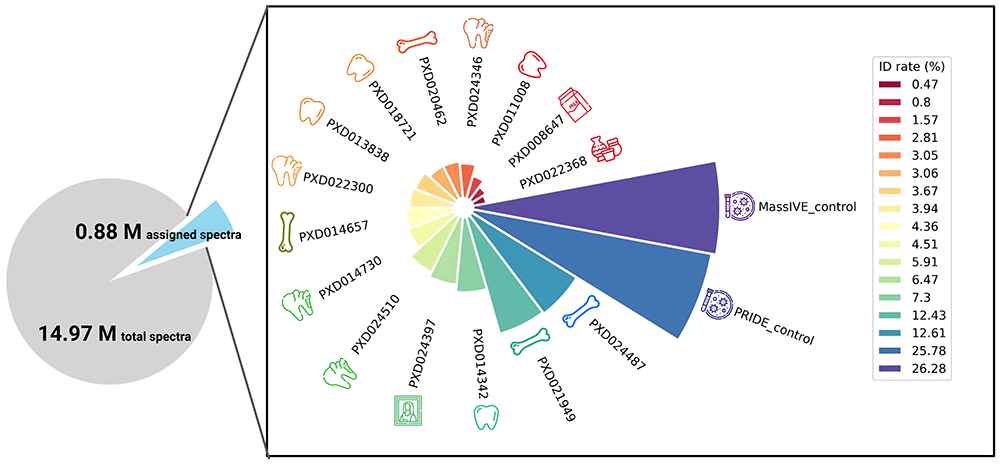
Figure 1. A pie chart of the total collected (14.97 million) and assigned MS2 spectra (0.88 million).
Across all the 15 palaeoproteomics datasets containing skeletal, painting, and pottery samples, the overall identification rates (ID rate %) are low in comparison to two large-scale proteomics analyses (over 25%).
Given that only 6% of the ancient MS2 spectra were successfully assigned, the 94% of dark, unidentified ancient proteomes highlights the need for widespread data sharing to facilitate methodological development and the re-evaluation of bioinformatics challenges inherent in the analyses of archaeological, palaeoanthropological, and palaeontological materials. Sharing data enables the re-analysis of often irreplaceable ancient materials, and fosters collaborative efforts in addressing the analytical challenges of complex archaeological data as seen in other related fields, especially ancient DNA40,41. While we acknowledge that the analysis of ancient MS2 data is often context-specific, depending on protein chemistry, preservation pathways, research questions, and the design of search space, we call for ongoing efforts to build comprehensive databases, refine search strategies for PTMs and ensure widespread data dissemination, to optimise search strategies and increase overall identification rates (summarised in Figure 2).
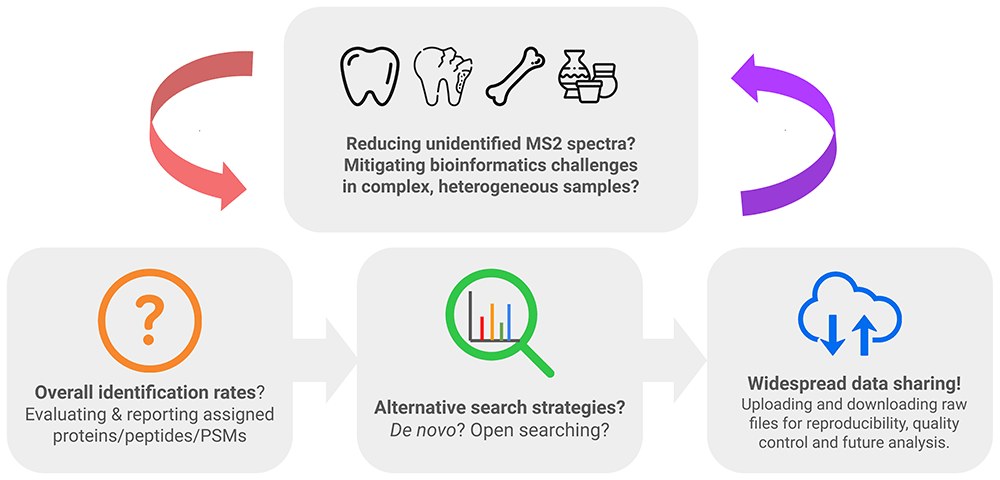
Figure 2. A flowchart that summarises key bottlenecks and suggested best practices to deal with the proteomics analysis of complex and heterogeneous samples.
How to build a relevant database?
Indeed, creating a comprehensive database for ancient proteins is significantly challenging without a priori information. Generally, ancient proteins may be derived from proteinaceous tissues, microbial communities, and past human activities, including cooking, crafting, parchment making, and leather tanning. An ideal database for searching includes all potential candidates without additional protein sequences. However, given the diversity and complexity of ancient proteins, often an entire UniProt knowledge database (Swiss-Prot and TrEMBL), up to about 251 million proteins and/or curated databases, typically consisting of hundreds of protein targets, are used in the database searching of ancient MS2 data18.
Using an extensive database like the entire UniProt generates a substantial pool of candidates and increases the search space exponentially. The issues with a large search space are well documented in metaproteomics communities where NCBI RefSeq (over 113 million non-redundant proteins) have been used for the annotation of complicated protein systems42. It has been reported that the utilisation of large databases (over 1 million sequences) results in decreased PSMs, increased risks of false positives, and difficulties in using FDRs to control for confident identification43. In contrast, a focused and targeted approach may inadvertently raise false positive rates and may not capture the full spectrum of ancient proteins present in samples. Hence, a paradox is prevalent in palaeoproteomics: the need to balance the comprehensiveness of a database to maximise identification against the risk of increasing false positives and computational complexity.
A multi-step approach to database management may be beneficial; in metaproteomics, this generally includes an initial survey of a broad database to identify targets, followed by a subsequent run using a narrowed-down database44. Machine learning and de novo sequencing without databases are other alternatives. Since novel and extinct sequences may be present in ancient samples, a de novo-centric approach may discover amino acid substitutions relevant to evolutionary studies and improve overall proteome composition45,46. Validation and optimisation may be required for these alternative approaches, and a substantial collection of quality ancient spectra is needed to train relevant machine learning models. Despite these hurdles, such alternative strategies may mitigate the limitations of database management.
How to manage protein degradation & PTMs?
Apart from selecting a suitable database, the preservation states of ancient proteins may enlarge search space due to the increasing number of allowed missed cleavages, semi-tryptic/non-specific searching, and a wide range of associated PTMs. While in living organisms, PTMs mediate protein functions, structures, and interactions47, in the context of palaeoproteomics, PTMs provide insights on the incorporation of proteins into archaeological materials, protein preservation pathways, and protein validation18. Indeed, ancient proteins are complex mixtures of multiple protein groups, minerals, and other organic molecules like carbohydrates and lipids. These complex mixtures are also subject to a wide range of environmental factors over time, including the pH of a burial environment, groundwater, soil chemistry, and temperature. The resulting complex and heterogeneous PTMs may complicate the analysis of MS2 data. For example, Maillard reactions and advanced glycation end products may alter cleavage efficiency during enzymatic digestion48. Glycation and lipidation are also labile PTMs, and they could be broken down during MS2 fragmentation, further affecting the assignment of PTM sites and PSMs49.
Given these analytical challenges, one strategy is to leverage open searching provided by software such as Fragpipe50. An open search is characterised by a wide precursor tolerance window, generally extending up to +500 Daltons, to account for mass shifts between experimental data and theoretical values. MSFragger manages the enlarged search space by using a fragment ion index, mass binning, and precursor mass ordering to optimise the retrieval and scoring during peptide-spectrum matching; then open searching outputs are annotated by PTM-Shepherd that utilises signal-to-noise ratio filtering, retention time shifts, MS2 spectra resemblance and the entirety of the Unimod modification database51. Fragpipe also offers a workflow optimised for labile PTMs49. While FDR controls are still challenging for open searching52, it could be advantageous for the global discoveries of PTMs and damage patterns.
Is palaeoproteomics data FAIR?
Lastly, like any other scientific datasets, palaeoproteomics data is progressing towards the FAIR principles53. Archaeological data is generally findable, accessible, and reusable thanks to the establishment and adherence to data-sharing practices. Acquired raw files from mass spectrometers, processed peak lists, and search results are often readily available to download from public repositories such as PRIDE and MassIVE. This fosters transparency and collaboration within the research community. We would urge the community to continue prioritising data dissemination, as mass spectrometry pipelines are rapidly advancing. It is crucial to ensure reproducibility and create possibilities for future research to build upon current findings, considering archaeological materials are finite resources and often cannot be resampled.
However, achieving true interoperability can be challenging due to the inherent complexity and diversity of palaeoproteomics experiments. We would highlight the usefulness of routinely reporting bulk identification rates for complex, heterogeneous materials. This simple quality control matrix is integral for the comprehensive evaluation of search engines and the performance of identification pipelines. In addition, it is advantageous to report the number of assigned PSMs under a predefined FDR, total identified peptides, and the total assignments of protein groups. These figures could be included as supplementary information and uploaded to public repositories. They may also be useful in evaluating the effectiveness of database searching strategies, and determining whether it is worth exploring open and de novo sequencing methods.
Overall, we demonstrate that low identification rates are consistently observed in the 15 million ancient spectra from the 15 high-profile palaeoproteomics studies. These spectra without stories potentially result from search space management, the absence of appropriate databases, and suboptimal search parameters due to the degraded and modified nature of ancient proteins. While the findability, accessibility, and reusability of archaeological data appear to align with the FAIR principles, simple and standardised quality measures are still needed to navigate the complexity of palaeoproteomics data and enhance interoperability. While open searching and de novo sequencing are promising approaches to tackle these analytical challenges, they will require benchmarking, validation, and optimisation. Overall, these bioinformatics advances offer a pathway towards uncovering the hidden stories within the 94% of unidentified ancient spectra, and lessons learnt in palaeoproteomics may be valuable in other fields facing similar challenges with complex datasets.
Ethics and consent
Ethical approval and consent were not required.
Data availability
All ancient datasets used in the paper are publicly available as follows:
ProteomeXchange Consortium: palaeoproteomics data. Accession number PXD00864719.
ProteomeXchange Consortium: palaeoproteomics data. Accession number PXD01100820.
ProteomeXchange Consortium: palaeoproteomics data. Accession number PXD01383822.
ProteomeXchange Consortium: palaeoproteomics data. Accession number PXD01434223.
ProteomeXchange Consortium: palaeoproteomics data. Accession number PXD01465721.
PRIDE: palaeoproteomics data. Accession number PXD01473024.
ProteomeXchange Consortium: palaeoproteomics data. Accession number PXD01872128.
ProteomeXchange Consortium: palaeoproteomics data. Accession number PXD02046230.
ProteomeXchange Consortium: palaeoproteomics data. Accession number PXD02194925.
ProteomeXchange Consortium: palaeoproteomics data. Accession number PXD02230026.
ProteomeXchange Consortium: palaeoproteomics data. Accession number PXD02236827.
ProteomeXchange Consortium: palaeoproteomics data. Accession number PXD02434632.
ProteomeXchange Consortium: palaeoproteomics data. Accession number PXD02439729.
ProteomeXchange Consortium: palaeoproteomics data. Accession number PXD02448731.
ProteomeXchange Consortium: palaeoproteomics data. Accession number PXD02451033.
Acknowledgments
We would like to extend our gratitude to our colleagues for their regular discussions on bioinformatics challenges and how to improve the analysis of palaeoproteomics data. These discussions were helpful during the early stages of the paper design. We especially thank Ismael Rodriguez Palomo (University of Cambridge), Bharath Anila Bhuvanendran Nair (University of Cambridge), Joannes Adrianus Antonius Dekker (University of Copenhagen/ University of York), Max Emil Ermter Ramsøe (University of Copenhagen), and Benjamin Dartigues (University of Bordeaux).
Faculty Opinions recommendedReferences
- 1.
Bateman NW, Goulding SP, Shulman NJ, et al.:
Maximizing peptide identification events in proteomic workflows using data-dependent acquisition (DDA).
Mol Cell Proteomics.
2014; 13(1): 329–338. PubMed Abstract
| Publisher Full Text
| Free Full Text
- 2.
Lau KW, Hart SR, Lynch JA, et al.:
Observations on the detection of b- and y-type ions in the collisionally activated decomposition spectra of protonated peptides.
Rapid Commun Mass Spectrom.
2009; 23(10): 1508–1514. PubMed Abstract
| Publisher Full Text
- 3.
Davies V, Wandy J, Weidt S, et al.:
Rapid Development of Improved Data-Dependent Acquisition Strategies.
Anal Chem.
2021; 93(14): 5676–5683. PubMed Abstract
| Publisher Full Text
| Free Full Text
- 4.
Houel S, Abernathy R, Renganathan K, et al.:
Quantifying the impact of chimera MS/MS spectra on peptide identification in large-scale proteomics studies.
J Proteome Res.
2010; 9(8): 4152–4160. PubMed Abstract
| Publisher Full Text
| Free Full Text
- 5.
Tabb DL, Vega-Montoto L, Rudnick PA, et al.:
Repeatability and reproducibility in proteomic identifications by liquid chromatography-tandem mass spectrometry.
J Proteome Res.
2010; 9(2): 761–776. PubMed Abstract
| Publisher Full Text
| Free Full Text
- 6.
Zhang Y, Wen Z, Washburn MP, et al.:
Effect of dynamic exclusion duration on spectral count based quantitative proteomics.
Anal Chem.
2009; 81(15): 6317–6326. PubMed Abstract
| Publisher Full Text
- 7.
Cox J, Hein MY, Luber CA, et al.:
Accurate proteome-wide label-free quantification by delayed normalization and maximal peptide ratio extraction, termed MaxLFQ.
Mol Cell Proteomics.
2014; 13(9): 2513–2526. PubMed Abstract
| Publisher Full Text
| Free Full Text
- 8.
Kreimer S, Belov ME, Danielson WF, et al.:
Advanced Precursor Ion Selection Algorithms for Increased Depth of Bottom-Up Proteomic Profiling.
J Proteome Res.
2016; 15(10): 3563–3573. PubMed Abstract
| Publisher Full Text
| Free Full Text
- 9.
Griss J, Perez-Riverol Y, Lewis S, et al.:
Recognizing millions of consistently unidentified spectra across hundreds of shotgun proteomics datasets.
Nat Methods.
2016; 13(8): 651–656. PubMed Abstract
| Publisher Full Text
| Free Full Text
- 10.
Bittremieux W, May DH, Bilmes J:
A learned embedding for efficient joint analysis of millions of mass spectra.
Nat Methods.
2022; 19(6): 675–678. PubMed Abstract
| Publisher Full Text
| Free Full Text
- 11.
Kumar D, Yadav AK, Dash D:
Choosing an Optimal Database for Protein Identification from Tandem Mass Spectrometry Data.
Methods Mol Biol.
2017; 1549: 17–29. PubMed Abstract
| Publisher Full Text
- 12.
Choi H, Nesvizhskii AI:
False discovery rates and related statistical concepts in mass spectrometry-based proteomics.
J Proteome Res.
2008; 7(1): 47–50. PubMed Abstract
| Publisher Full Text
- 13.
Duan H, Cheng K, Ning Z, et al.:
Assessing the Dark Field of Metaproteome.
Anal Chem.
2022; 94(45): 15648–15654. PubMed Abstract
| Publisher Full Text
| Free Full Text
- 14.
Caron E, Kowalewski DJ, Koh CC, et al.:
Analysis of Major Histocompatibility Complex (MHC) Immunopeptidomes Using Mass Spectrometry.
Mol Cell Proteomics.
2015; 14(12): 3105–3117. PubMed Abstract
| Publisher Full Text
| Free Full Text
- 15.
Vizcaíno JA, Kubiniok P, Kovalchik KA, et al.:
The Human Immunopeptidome Project: A Roadmap to Predict and Treat Immune Diseases.
Mol Cell Proteomics.
2020; 19(1): 31–49. PubMed Abstract
| Publisher Full Text
| Free Full Text
- 16.
Needham EJ, Parker BL, Burykin T, et al.:
Illuminating the dark phosphoproteome.
Sci Signal.
2019; 12(565): eaau8645. PubMed Abstract
| Publisher Full Text
- 17.
Chick JM, Kolippakkam D, Nusinow DP, et al.:
A mass-tolerant database search identifies a large proportion of unassigned spectra in shotgun proteomics as modified peptides.
Nat Biotechnol.
2015; 33(7): 743–749. PubMed Abstract
| Publisher Full Text
| Free Full Text
- 18.
Warinner C, Korzow Richter K, Collins MJ:
Paleoproteomics.
Chem Rev.
2022; 122(16): 13401–13446. PubMed Abstract
| Publisher Full Text
| Free Full Text
- 19.
Hendy J, Colonese AC, Franz I, et al.:
Ancient proteins from ceramic vessels at Çatalhöyük West reveal the hidden cuisine of early farmers.
Nat Commun.
2018; 9(1): 4064. PubMed Abstract
| Publisher Full Text
| Free Full Text
- 20.
Cappellini E, Welker F, Pandolfi L, et al.:
Early Pleistocene enamel proteome from Dmanisi resolves Stephanorhinus phylogeny.
Nature.
2019; 574(7776): 103–107. PubMed Abstract
| Publisher Full Text
| Free Full Text
- 21.
Tsutaya T, Mackie M, Koenig C, et al.:
Palaeoproteomic identification of breast milk protein residues from the archaeological skeletal remains of a neonatal dog.
Sci Rep.
2019; 9(1): 12841. PubMed Abstract
| Publisher Full Text
| Free Full Text
- 22.
Welker F, Ramos-Madrigal J, Kuhlwilm M, et al.:
Enamel proteome shows that Gigantopithecus was an early diverging pongine.
Nature.
2019; 576(7786): 262–265. PubMed Abstract
| Publisher Full Text
| Free Full Text
- 23.
Welker F, Ramos-Madrigal J, Gutenbrunner P, et al.:
The dental proteome of Homo antecessor.
Nature.
2020; 580(7802): 235–238. PubMed Abstract
| Publisher Full Text
| Free Full Text
- 24.
Wilkin S, Ventresca Miller A, Taylor WTT, et al.:
Dairy pastoralism sustained eastern Eurasian steppe populations for 5,000 years.
Nat Ecol Evol.
2020; 4(3): 346–355. PubMed Abstract
| Publisher Full Text
| Free Full Text
- 25.
Coutu AN, Taurozzi AJ, Mackie M, et al.:
Palaeoproteomics confirm earliest domesticated sheep in southern Africa ca. 2000 BP.
Sci Rep.
2021; 11(1): 6631. PubMed Abstract
| Publisher Full Text
| Free Full Text
- 26.
Wilkin S, Miller AV, Fernandes R, et al.:
Dairying enabled Early Bronze Age Yamnaya steppe expansions.
Nature.
2021; 598(7882): 629–633. PubMed Abstract
| Publisher Full Text
| Free Full Text
- 27.
Ramsøe A, Crispin M, Mackie M, et al.:
Assessing the degradation of ancient milk proteins through site-specific deamidation patterns.
Sci Rep.
2021; 11(1): 7795. PubMed Abstract
| Publisher Full Text
| Free Full Text
- 28.
Demeter F, Zanolli C, Westaway KE, et al.:
A Middle Pleistocene Denisovan molar from the Annamite Chain of northern Laos.
Nat Commun.
2022; 13(1): 2557. PubMed Abstract
| Publisher Full Text
| Free Full Text
- 29.
Di Gianvincenzo F, Peggie D, Mackie M, et al.:
Palaeoproteomics guidelines to identify proteinaceous binders in artworks following the study of a 15th-century painting by Sandro Botticelli’s workshop.
Sci Rep.
2022; 12(1): 10638. PubMed Abstract
| Publisher Full Text
| Free Full Text
- 30.
Ntasi G, Palomo IR, Marino G, et al.:
Molecular signatures written in bone proteins of 79 AD victims from Herculaneum and Pompeii.
Sci Rep.
2022; 12(1): 8401. PubMed Abstract
| Publisher Full Text
| Free Full Text
- 31.
Rüther PL, Husic IM, Bangsgaard P, et al.:
SPIN enables high throughput species identification of archaeological bone by proteomics.
Nat Commun.
2022; 13(1): 2458. PubMed Abstract
| Publisher Full Text
| Free Full Text
- 32.
Scorrano G, Nielsen SH, Vetro DL, et al.:
Genomic ancestry, diet and microbiomes of Upper Palaeolithic hunter-gatherers from San Teodoro cave.
Communications Biology.
2022; 5(1): 1262. PubMed Abstract
| Publisher Full Text
| Free Full Text
- 33.
Ventresca Miller AR, Wilkin S, Bayarsaikhan J, et al.:
Permafrost preservation reveals proteomic evidence for yak milk consumption in the 13th century.
Commun Biol.
2023; 6(1): 351. PubMed Abstract
| Publisher Full Text
| Free Full Text
- 34.
Cox J, Mann M:
MaxQuant enables high peptide identification rates, individualized p.p.b.-range mass accuracies and proteome-wide protein quantification.
Nat Biotechnol.
2008; 26(12): 1367–1372. PubMed Abstract
| Publisher Full Text
- 35.
Perkins DN, Pappin DJ, Creasy DM, et al.:
Probability-based protein identification by searching sequence databases using mass spectrometry data.
Electrophoresis.
1999; 20(18): 3551–3567. PubMed Abstract
| Publisher Full Text
- 36.
Levitsky LI, Klein JA, Ivanov MV, et al.:
Pyteomics 4.0: Five Years of Development of a Python Proteomics Framework.
J Proteome Res.
2019; 18(2): 709–714. PubMed Abstract
| Publisher Full Text
- 37.
Hunter JD:
Matplotlib: A 2D Graphics Environment. 2007; 9(3): 90–95. Publisher Full Text
- 38.
Waskom M:
seaborn: statistical data visualization.
J Open Source Softw.
2021; 6(60): 3021. Publisher Full Text
- 39.
Serif (Europe) Ltd: Affinity Designer 2 (Version 2)[Computer software]. 1987. Reference Source
- 40.
Anagnostou P, Capocasa M, Milia N, et al.:
When data sharing gets close to 100%: what human paleogenetics can teach the open science movement.
PLoS One.
2015; 10(3): e0121409. PubMed Abstract
| Publisher Full Text
| Free Full Text
- 41.
Der Sarkissian C, Velsko IM, Fotakis AK, et al.:
Ancient Metagenomic Studies: Considerations for the Wider Scientific Community.
mSystems.
2021; 6(6): e0131521. PubMed Abstract
| Publisher Full Text
| Free Full Text
- 42.
Park SKR, Jung T, Thuy-Boun PS, et al.:
ComPIL 2.0: An Updated Comprehensive Metaproteomics Database.
J Proteome Res.
2019; 18(2): 616–622. PubMed Abstract
| Publisher Full Text
| Free Full Text
- 43.
Jagtap P, Goslinga J, Kooren JA, et al.:
A two-step database search method improves sensitivity in peptide sequence matches for metaproteomics and proteogenomics studies.
Proteomics.
2013; 13(8): 1352–1357. PubMed Abstract
| Publisher Full Text
| Free Full Text
- 44.
Zhang X, Ning Z, Mayne J, et al.:
MetaPro-IQ: a universal metaproteomic approach to studying human and mouse gut microbiota.
Microbiome.
2016; 4(1): 31. PubMed Abstract
| Publisher Full Text
| Free Full Text
- 45.
Gutenbrunner P, Kyriakidou P, Welker F, et al.:
Spectrum graph-based de-novo sequencing algorithm MaxNovo achieves high peptide identification rates in collisional dissociation MS/MS spectra.
bioRxiv.
2021; 2021.09.04.458985. Publisher Full Text
- 46.
Welker F:
Elucidation of cross-species proteomic effects in human and hominin bone proteome identification through a bioinformatics experiment.
BMC Evol Biol.
2018; 18(1): 23. PubMed Abstract
| Publisher Full Text
| Free Full Text
- 47.
Mann M, Jensen ON:
Proteomic analysis of post-translational modifications.
Nat Biotechnol.
2003; 21(3): 255–261. PubMed Abstract
| Publisher Full Text
- 48.
Cho, S, Duong VA, Mok JH, et al.:
Enrichment and analysis of glycated proteins.
Rev Anal Chem.
2022; 41(1): 83–97. Publisher Full Text
- 49.
Polasky DA, Geiszler DJ, Yu F, et al.:
MSFragger-Labile: A Flexible Method to Improve Labile PTM Analysis in Proteomics.
Mol Cell Proteomics.
2023; 22(5): 100538. PubMed Abstract
| Publisher Full Text
| Free Full Text
- 50.
Kong AT, Leprevost FV, Avtonomov DM, et al.:
MSFragger: ultrafast and comprehensive peptide identification in mass spectrometry-based proteomics.
Nat Methods.
2017; 14(5): 513–520. PubMed Abstract
| Publisher Full Text
| Free Full Text
- 51.
Geiszler DJ, Kong AT, Avtonomov DM, et al.:
PTM-Shepherd: Analysis and Summarization of Post-Translational and Chemical Modifications From Open Search Results.
Mol Cell Proteomics.
2021; 20: 100018. PubMed Abstract
| Publisher Full Text
| Free Full Text
- 52.
Freestone J, Keich U:
Re-investigating the correctness of decoy-based false discovery rate control in proteomics tandem mass spectrometry.
bioRxiv.
2023; 2023.06.21.546013. Publisher Full Text
- 53.
Wilkinson MD, Dumontier M, Aalbersberg IJJ, et al.:
The FAIR Guiding Principles for scientific data management and stewardship.
Sci Data.
2016; 3: 160018. PubMed Abstract
| Publisher Full Text
| Free Full Text










