The roadmap proposed in the previous paragraph provided conceptual guidance for data collection, and a categorization and comparison analysis among the 8 countries involved in the international European Project MAIA (H2020-MSCA-RISE, www.maiaproject.eu). The 8 countries involved in the project and investigated by the authors are: Canada, France, Germany, Italy, Japan, New Zealand, Slovenia, and USA.
The roadmap provides a structure to examine the best-practices and policies analysed by the authors during the project activities according to the 6 action domains and 3 levels of intervention depicted in the roadmap (Figure 3). The full dataset collected by the authors is reported in our repository (Tables A1, A2, A3 in Katiraee et al., 2024). In the following paragraphs, the data collected and reported in repository will be discussed according to the three levels of the roadmap: international level, country/regional level, company level.
4.2 Country level
In this paragraph, we concentrate on the age-friendly policies developed by the 8 countries involved in this analysis: Canada, France, Germany, Italy, Japan, New Zealand, Slovenia, and United States of America. The analysis aims to highlight which countries have already started to develop age-friendly policies and guidelines along the six domains presented in road map in Figure 3.
In Table 1, we report the 74 age-oriented policies we were able to find concerning country level initiatives per each country. Table 1 does not represent the total number of age-friendly standards, laws, policies, and guidelines that exist in each country, it would rather report the number of contributions that we had easily access and we were able to analyse for this benchmark analysis. More details regarding the country level policies can be seen in Table A2 available in our repository (Katiraee et al., 2024).
Table 1. 74 age-oriented policies analysed per each country involved in the MAIA project.
| Country | # of occurrence |
|---|
| Canada | 15 |
| France | 9 |
| Germany | 13 |
| Italy | 4 |
| Japan | 8 |
| New Zealand | 12 |
| Slovenia | 5 |
| USA | 8 |
The following bar chart (Figure 5) represents the distribution of the age-oriented policies according to the six different domains of the roadmap per each country. The distribution that characterizes the countries provides information regarding the commitment that the country is putting on a particular topic toward the design of ageing workforce management practices.
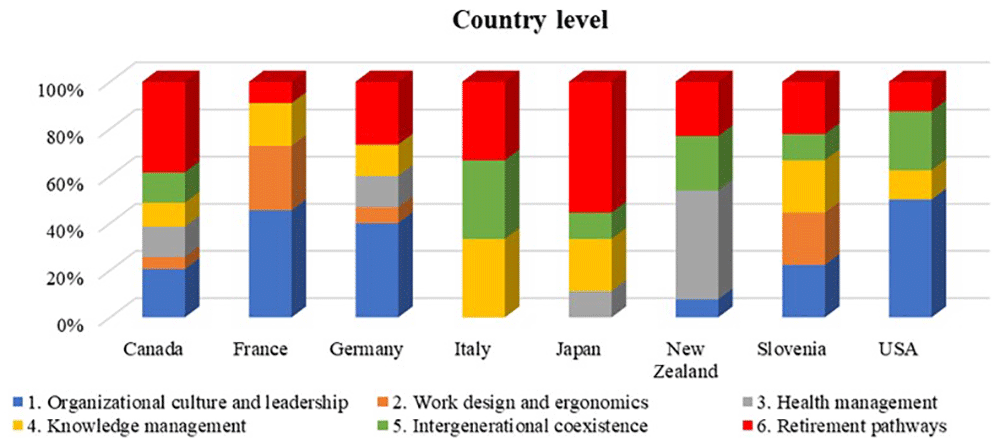
Figure 5. Age-oriented policies per country and roadmap domain.
The results of this analysis showed that the first domain of the roadmap, named “Organizational culture and leadership”, was addressed by almost all countries by developing specific age-oriented policies, except in Italy and Japan.
Furthermore, we could notice that the domain related to “Work design and ergonomics” (domain 2) was rarer, since age-oriented policies for ergonomic design of the workplace are usually derived from international standards (ISO 11228) methods for ergonomics design, that are conceived for any kind of workers. Only in France and Slovenia we found specific age-oriented workplace design guidelines.
The domain related to “Health management” for ageing workers (domain 3) was seen to be is quite developed for New Zealand and Japan, while “Knowledge management” (domain 4) is evenly attended among the partners: in fact, we were able to find some best practices and flexible retirement policies that facilitate the transfer of knowledge between ageing workers and new employees.
The domain related to “Intergenerational coexistence” (domain 5) represents an area that has partially been investigated for the analysed countries, with different country level initiatives, in particular in Italy and US.
Finally, “Retirement pathways” (domain 6) was the only domain where we did not face difficulty in obtaining information, since it appears to be a common programmatic initiative to foster ageing workforce retention in manufacturing work field.
The following sections provide some general insights concerning age-oriented initiatives in each country.
4.2.1 Canada. Canada is comprised of ten provinces and three territories, each functioning as sub-national administrative divisions under the Canadian Constitution's authority. These provinces each have unique histories, particularly concerning policies on ageing, notably in the realm of mandatory retirement regulations. The Canadian federal government abolished mandatory retirement for its employees in 1986. In a significant move, Ontario's government enacted Bill 211 in 2005, known as the Ending Mandatory Retirement Statute Law Amendment Act, 2005, thereby making age-based discrimination illegal under the Code. Similarly, the Alberta Human Rights Act prohibits employment discrimination based on age, effectively rendering mandatory retirement at 65 as a form of age-based employment refusal. There's notable variability among provinces concerning enforced retirement rules. For instance, Manitoba and Quebec abolished these rules in the 1980s, whereas Alberta, Newfoundland and Labrador, and Nova Scotia made amendments much later, between 2000 and 2009 (Messacar & Kocourek, 2019). During this transition phase in retirement age, Canada, alongside international bodies like the OECD, has been considering life-course approaches to policies that support older workers' participation in the labour force. Canadian provinces have been particularly attentive to transitions in the ageing workforce, focusing on aspects of work, education, family, and health (Bélanger et al., 2016). Strategies for easing into retirement include allowing employees to cut their workweek by up to 40% without impacting their benefits or pension. This approach facilitates knowledge transfer and quality family time (Joyce, 2007). Although Canadian companies' webpages often focus on retirement policies, less attention is given to other significant aspects such as intergenerational relations, and the psychological and physical well-being of ageing workers (Lagacé et al., 2015). Notably, the Federal Employment Equity Act of 1995 outlines employment opportunities and benefits for various disadvantaged groups, including people with disabilities, women, aboriginal peoples, and visible minorities. However, contemporary definitions of disability do not encompass age (McMullin & Shuey, 2006).
4.2.2 France. The current debate in France centres around the retirement age, especially after Prime Minister Emmanuel Macron's recent proposal to increase it from 62 to 64. France's retirement system includes a state pension and a workplace-related pension plan. A 2010 reform suggested a gradual rise in the minimum age for pension eligibility from 60 to 62 and for receiving a full pension from 65 to 67. The state pension allows for early retirement at age 60 for those who have completed the required contribution period and began employment before turning 20. Similarly, the workplace pension plan permits early retirement, typically with certain deductions based on retirement age and contribution years. Transition to retirement focuses on transferring knowledge, and studies indicate that managerial and professional roles receive more training opportunities than manual labourers. For instance, a vast majority of senior managers and professionals, about 89%, were informed about the "Bilan de compétences," a skills assessment provided by the government in 2016. In contrast, only 38% of older manual labourers were given this information. This disparity results in manual labourers facing a decrease in employability sooner, with reduced training opportunities beginning at 35, as opposed to 50 for managerial and professional employees. Employability loss is also linked to job type and the health and physical capabilities of workers. The French Ministry of Labour (Ministère du Travail) plays a key role in occupational health and safety policymaking and works in collaboration with various social partners within the Steering Committee on Working Conditions to shape national health policy strategies (EU-OSHA).
4.2.3 Germany. Investments in Germany's ageing workforce have led to significant shifts in part-time work and retirement trends, beginning with the endorsement of partial retirement incentives in 1996. These changes have resulted in an uptick in part-time work among older employees, particularly extending the working lives of women more so than men (Berg et al., 2020). The 2006 reforms, which shortened the duration of unemployment benefits, correlated with an uptick in employment among the elderly, especially in terms of the link between reduced unemployment benefit durations for older workers and both unemployment duration and labour market involvement (Riphahn & Schrader, 2020). Furthermore, the German Federal Ministry of Labour and Social Affairs has introduced the Federal Program, established in October 2005 across all federal states, to enhance the employability of older individuals. Regarding retirement, the standard old-age pension in Germany starts at age 65, given at least five years of contributions. Many seniors opt to continue working due to longer life expectancy, healthier lifestyles, and sustained work capacity. Early retirement is available from age 63 for those with a minimum of 35 years of insurance contributions (OECD, 2020). In terms of safety and health for older workers, German associations are dedicated to creating effective work environments through interdisciplinary research and design. The "Gesellschaft für Arbeitswissenschaft" (GfA) advocates for Human Factors and Ergonomics in German-speaking regions and on a broader European and international scale, offering platforms such as workshops, publications, and consultations to disseminate ergonomic knowledge. It has been shown that better education and training lead to more favourable conditions for retaining aging workers in their jobs, with higher qualifications and education being crucial factors for prolonged employment.
4.2.4 Italy. In 2012, Italy and other partners in the MAIA project implemented regulations that provided more flexibility in the criteria for retirement age. These policies included incentives for prolonging one's career and penalties for early retirement. The qualifying age for retirement was raised but also made more adaptable. Specifically, the age range for men was set between 66 and 70 years, while initially it was 62 years for women, which was then progressively increased to 66 years by 2018 (OECD). Additionally, the Italian government launched initiatives in 2004 and 2007. The latter year saw the Italian Ministry of Labour, Health and Social Policy introduce a scheme focused on helping disadvantaged workers, particularly those aged 50 and above, to find employment again. This program, known as Programma PARI – azioni per il rimpiego (2007), offered special employment benefits and encouraged participants to engage in training, re-qualification, and job hunting. Furthermore, following the European Union's declaration of September 14, 2011, as the "European Year of Active Aging and Solidarity between Generations," Italy participated with its own initiatives. These efforts aimed at fostering a more positive perception of old age, emphasizing the importance of learning and training, facilitating knowledge transfer between the old and young, and addressing any existing or potential intergenerational conflicts.
4.2.5 Japan. Our research reveals that Japan is focused on the retirement pathways domain. Late retirement is possible between aged 65 and 70. Since 2004, individuals over 65 can simultaneously earn a salary and receive a pension, provided their combined earnings and pension income do not surpass JPY 470,000. If this threshold is exceeded, the full pension is still paid, but half of the amount above the limit is deducted from the pension related to earnings. Additionally, workers who are over 70 years old are exempt from making contributions. This policy has resulted in Japan having the highest rate of employment among older adults within the OECD countries. In 2020, 50% of those aged 65 to 69 were employed. Additionally, the Japanese government offers different services encompassing consulting, guidance, and job placement for 55+ and 65+ years old, who are looking for job positions. To enhance the employment of ageing workers, the government also promotes flexible work practices and encourage employers to be productive in the design and development of best practices. In 1987, the Japanese government amendment the “Labour Standard Law” (1947), by which it requested organizations to design flexible working hours, including flex time and compressed work hours, although the adoption for employers was predominantly voluntary (Flynn et al., 2014).
4.2.6 New Zealand. New Zealand does not have a mandatory or defined retirement age. The analysis performed for New Zealand highlighted a strong focus on the country on health management domain. Demonstrating its strong commitment, the Ministry and District Health Boards (DHBs) in New Zealand are actively engaged in disseminating information about aged care plans to the aging workforce and their families. This effort is aimed at enhancing awareness and helping them make informed decisions regarding self-care and available health and disability support services. Additionally, this plan encompasses addressing workforce development issues to cater to the increasing numbers of older Pacific peoples and members of other ethnic communities. New Zealand consistently shows a high level of concern for ethnic groups. For instance, the Ministry of Health and DHBs advocate for hospital-based healthcare services that are tailored to the needs of the elderly Māori population. A primary goal of New Zealand's public health service is to promote and safeguard health, with a particular focus on enhancing wellbeing in older age. This includes initiatives to improve nutrition, boost physical activity, and coordinate efforts across various agencies concerning housing and transportation. The New Zealand Government has also shown its dedication to managing an aging workforce through various campaigns. These include the creation and enhancement of employment services, the formulation of the New Zealand Income Insurance scheme, and the evaluation of active labour market programs (ALMPs). Furthermore, the government is encouraging employers to research and provide more opportunities for older workers, particularly in terms of flexible working arrangements. Special attention is given to ethnic groups, aligning with other employment action plans focusing on Māori, women, Pacific people, disabled individuals, recent migrants, and ethnic communities.
4.2.7 Slovenia. Slovenia implemented a pension reform in 2020 to promote the participation of older workers in workplaces. This reform enables individuals to continue working beyond the age at which they qualify for an old age pension, without any restriction on their earnings or a limit on the amount which their pension payments are decreased. The 2020 reform brought some improvement in the flexibility to integrate employment and pensions as well as an increase the likeability of work even close to retirement age. While employed on a full-time basis, individuals are eligible to receive only 40% of their old-age pension for the first three years, and subsequently 20%. This indicates that there is a compulsory postponement of 60%, followed by an additional 80% reduction in the benefit when working. These regulations also apply to people who return to work after retiring (OECD, 2022). The Active Aging Strategy designed by the IMAD - Institute of Macroeconomic Analysis and Development of the Republic of Slovenia promotes flexible working hours and appropriate working conditions. In particular, the strategy addresses older workforce needs by adapting jobs and processes due to technological progress and digitalization. Consequently, longer working lives for ageing workers is possible through continuous education and training and more flexible forms of work for older people and retirees.
4.2.8 United States of America. The data collected United States of America (USA) age related policies shows an emphasis on organizational culture and leadership domain. In this regard, several laws were designed to avoid age discrimination inside companies, such as “The Age Discrimination in Employment Act (ADEA)” (1967) that bans age discrimination against employees who are 40 years or above. Moreover, to help business owners, managers, and government officials to in comprehending their legal responsibilities in preventing any kind of employment discrimination, Technical Assistance Programs (TAPS) were issued with a particular focus on age discrimination. With a special regard on people with physical and mental disabilities, the Americans with Disabilities Amendments Act (ADA) (2008) aims to protect affected people of all ages. USA also provides some initiatives special targeting ageing workers such as Senior Community Service Employment Program (SCSEP). In this last example, the Department of Labor program offers training, job placement aid and additional support services to unemployed aged 55 and above who have low income (Collins & McCaskill, 2016).
4.3 Company level
The company level in our roadmap involves the programs, best cases and best practices related to the approaches and methods for aging workforce management developed by companies. In this regard, a cross analysis was performed among the 8 countries involved in this project: Canada, France, Germany, Italy, Japan, New Zealand, Slovenia, and United States of America. The analysis examines how companies in the above-mentioned countries address the ageing workforce problems and in which of the 6 defined domains. Table 2 below reports 95 company best cases gathered in our research. Table 2 is not exhaustive, reporting just the number of contributions that we could access and analyse. More details on the 92 company cases analysed can be seen in Table A3 in our repository (Katiraee et al., 2024).
Table 2. 92 age-oriented company best cases/practices analysed per country.
| Country | # of occurrence |
|---|
| Canada | 11 |
| France | 15 |
| Germany | 18 |
| Italy | 10 |
| Japan | 9 |
| New Zealand | 3 |
| Slovenia | 7 |
| USA | 19 |
The following charts represent the distribution of the information that we were able to collect on the six different domains per country.
Figure 6 classifies the 92 best company cases according to domain and country. Our examination indicates an overall lack of priority for the organizational culture and leadership domain. For example, in Japan, none of the studied companies consider improving their culture towards ageing workforces.
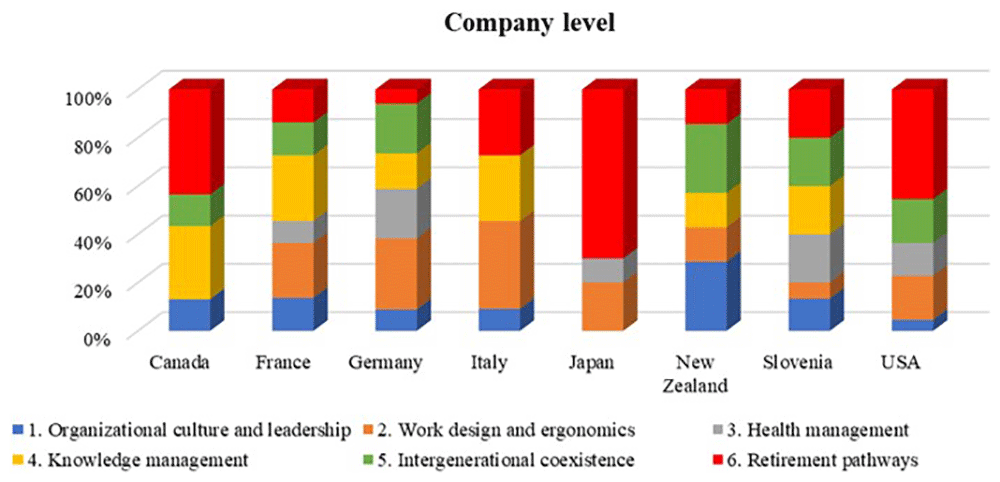
Figure 6. The distribution of ageing workforce management policies by companies in each country (Company level).
A considerable proportion of company’s report investing in work design and ergonomics to manage their ageing workforces. This proportion is relatively high in Italy, France, and Germany, but not so in Canada. Work design and ergonomics primarily provide ergonomically designed workstations for all workers and rotate physically demanding or repetitive tasks. These simple but practical actions can have a positive impact on the health and safety of older workers.
Knowledge management is a priority item for companies in Canada contrast to the companies in the US and Japan. Other domains such as retirement pathways and inter-generational coexistence have been considered in all the studied countries.
Figure 6 suggests that companies in Germany have a good presence in all domains. A possible reason is that Germany experiences a significant decrease in its natural working-age population, and as a result there is a heightened focus on enhancing the integration of older workers into the labour market. Hence, workers in Germany continue to benefit from a substantial pay-as-you-go public pension program with elevated effective replacement rates and comparatively early retirement ages when compared to workers in many other nations. Furthermore, in most of the countries, especially in Germany, unemployed older workers continue to face severe difficulties in finding a new job. The challenges lead to elevated levels of prolonged joblessness among older employees in many European countries. In addition, about 52% of the studied companies in Germany, have considered more than one domain to manage their ageing workforce which shows that German companies pay attention to the problems of the ageing workforce in multiple ways. All domains are also considered by the studied companies in the France and Slovenia, which shows the concern of these companies about all defined ageing workforce management. The same trend can be observed in other studied companies in Italy, New Zealand, and USA, where most of the domains have been considered in managing ageing workers. Relatively fewer domains find frequent mention in companies in Canada and Japan. A lack of access to detailed company data could be a reason for this finding.