Introduction
The use of archaeological heritage as a tourism resource offers a wide range of advantages that benefit both visitors and local communities, especially in the case of sites located in rural areas. In the knowledge society, heritage plays a clearly educational role, yet it also offers vast economic potential related to new industries and cultural activities (Hernández Cardona & Rojo Ariza, 2012a: 18), as well as for the development of marginalised areas.
Heritage management can act as an economic mainstay for regions, as it has the capacity to contribute added value to the geographical area and become a pull factor for tourism and the population. In addition to acting as a driver for a town or region, heritage enhancement contributes to the cultural identity of the area and its population and generates direct and indirect employment: examples include site or monument guides; specialised monitors for school visits, staff responsible for maintaining and cleaning the sites; archaeologists, restorers and heritage managers. In addition, it can impact positively on the retail and hospitality industries and recover lost or endangered trades (Cerdeño Serrano & Hernández Ruíz, 2007: 242). All of these issues have been addressed by one of the authors in studies centred on the analysis and management and dissemination strategies of fortified heritage, specifically the protohistoric walls of the Meseta and the Atlantic seaboard (Castelo Ruano et al., 2007), as well as the diagnosis and assessment of the impact of dissemination on the Vettone fortified settlements in the provinces of Ávila and Salamanca (Castelo Ruano & González Casarrubios, 2021).
Following the review of the national and regional legislation carried out by the authors of this paper, we can conclude that as a consequence of the rise of cultural tourism in recent years, and, by extension, tourism focused on historical and archaeological heritage within the general framework of tourist activity, has led to the introduction a plethora of cultural tourism legislation both on a Spanish and international level, intended to regulate the maintenance, conservation and protection of these heritage assets.
Spain is an excellent example of the many countries that have introduced laws and regulations that govern tourist-related aspects of archaeological site management, in an attempt to balance tourism promotion and the need for conservation. This requires management plans that consider aspects such as site carrying capacity, the training of specialised guides and sustainable tourism practices. This legislation also includes measures for educating and raising awareness among visitors of the value of these archaeological sites and the need to ensure adequate levels of conservation. As will be shown in the following sections, this is achieved through the creation of educational and interpretative materials, as well as communication campaigns in traditional media, social media and new mobile applications. Adopting all these measures could secure the conservation of this priceless heritage and living testimonies of the past for future generations, whilst also allowing today’s tourists to obtain full enjoyment of the unique historical wealth of each space, thereby also contributing to their sustainability.
It is widely acknowledged that the objectives of heritage sites include the conservation and exhibition of the environmental, moveable and immovable legacy that makes them truly unique, placing visitors at the centre of their work and providing opportunities for leisure and enjoyment, as well as significant and memorable learning experiences (Gándara Vázquez, 2015; Gándara Vázquez, 2018; Gándara Vázquez, 2020; Gándara Vázquez & Pérez Castellanos, 2016; Gándara Vázquez & Pérez Castellanos, 2018). It must be remembered that the learning that takes place in heritage centres is exploratory and adapted to individual interests in a relaxed and unpressured environment. It is therefore necessary to provide visitors with all the necessary educational resources that enable them to visit the sites independently (Gándara Vázquez, 2002, 351).
Efficient interpretive communication leads to education in a certain field, where visitors receive and comprehend the message, remember some of the contents and use them (Castaño Blanco, 2007, 48). Only when this occurs can we refer to Significant Dissemination, focused on audiences and developed for informal heritage education (Gándara Vázquez, 2016a, 79–80).
Archaeological heritage is characterised by seven values (Figure 1)
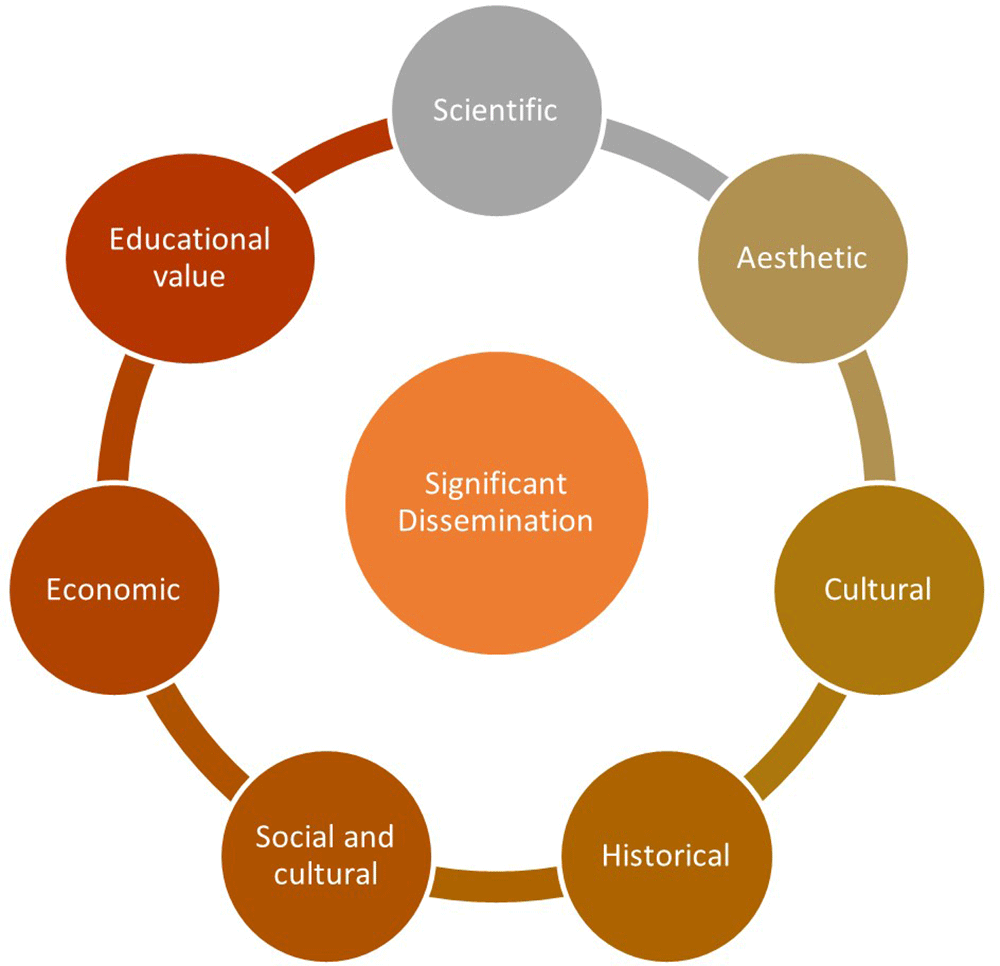
Figure 1. Table summarising the essential values that must characterise archaeological heritage.
Source: authors.
1. Scientific, the basis for all the other values, as archaeological sites are unique historical testimonies that provide essential information for past and present scholars (Cerdeño Serrano & Hernández Ruíz, 2007, 238);
2.- aesthetic, as archaeological sites and objects inspire, thrill and delight the senses, provided they possess the right elements to enjoy those codes;
3.- cultural, due to the importance it holds for the identity, society and economy of the region it is located in;
4.- historical, as it provides an insight into a period or lifestyle of a specific group that connects with the past: archaeological remains allow us to learn about our own past, that of earlier cultures and their historical legacy, promoting respect for cultural diversity and the appreciation of our heritage;
5.- social and cultural, providing visitors with the opportunity to interact with people living close to archaeological sites and learn about the traditions, customs and lifestyles of the local population, thereby creating a bridge supported by understanding and mutual appreciation, fomenting tolerance and respect for cultural differences;
6.- economic, once the opportunities for dissemination, education and access to archaeological heritage have been accepted, the next step requires an approach based on financial logic. The first stage is to include the site in the Cultural Tourism circuit. This will ensure the positive impact of archaeological tourism on the local population, as the sites may attract visitors from all over the world, generating income for neighbouring communities as a result of spending on accommodation, transport, food and shopping. This will drive the development of infrastructures (improved accessibility) and generate employment for local residents. Furthermore, the income generated can be used to protect and restore the sites, as well as for archaeological research;
7.- finally, and most importantly, educational value, as heritage sites provide an educational tool that complements activities in the classroom designed to develop attitudes and values, teaching the meaning and cultural value of the findings, learning about the discoveries and how they were made, excavation techniques and conservation methods, etc., thereby raising awareness and understanding of the importance of archaeology and recovered heritage.
Caring for the visit experience: quality criteria
Following M. Gándara Vázquez, there are two variables that affect the visitor experience in museums or at heritage sites: cognitive orientation and spatial orientation (2016, 101)1.
Regarding cognitive orientation, Gándara states that the introductory explanatory panels should be located at the start of the route, in the main rooms or areas comprising the exhibition or archaeological site, and in very specific cases, in themed sections or sub-areas. Themed sections or buildings on the site should have their own explanatory texts, with simplified titles comprising short phrases or sentences that summarise the key ideas underlying their significance. These explanatory panels should be positioned at the public entrance, in accordance with three principles: they must be placed where they are required; be both concise and relevant; and large enough to be read easily.
Large heritage sites should include a panel indicating how to make the most of the visit, indicating average visiting times, the approximate length of the various routes and highlighting key elements (“Don’t miss…”). Furthermore, digital or printed guides should answer a series of basic questions: what to see; what to do; how to get there; and the site’s heritage values.
Turning to spatial orientation, when drawing up plans for museums or visitable sites, Gándara advises isometric projection from the observer’s perspective, rather than a north-oriented plan. Characterised representation is better than a formal map, whilst a model with indicators would be the optimum solution. Irrelevant information should be avoided in the case of both maps and models, as efficiency must take priority over realism. They should include “what to see and do”, or indications on how to locate highlights that should be indicated on the map so that they can be identified along the route.
Signposts must be positioned appropriately at decision-making points (entrances and crossroads) and clear instructions must be given on how to reach specific points, indicating the estimated times and any difficulties that may be encountered along the way. In addition to the introductory map, there should be other simplified plans of the various areas of the museum or archaeological site indicating “You are here”, oriented to ensure that they are visible to visitors and show the landmarks that allow location by triangulation. Efficient routes must be indicated, together with landmarks that will guide visitors. The aim is to allow visitors freedom to organise their time, albeit in a controlled manner that will ensure they will understand the site and its significance almost without realising it, even though they may unwilling or reluctant to do so.
The so-called ‘museum artefacts’ of in situ educational intermediation, which may be permanent/portable or interpretative resources, have been classified by a number of authors, as discussed by Hernández Cardona and Rojo Ariza (2012b, 62–63). As an example, both authors cite Lilian Stewart in The Pros and Cons of Interpretative Media Choice, Interpretation and Visitor Division, National Parks Branco, Parks (Canada, 1981), who draws a distinction between personal and non-personal interpretative media.
The following non-personal interpretative media are mentioned: publications, mass media, self-guided trails, automatic audiovisuals and exhibitions, as well as signposts and markers or museum artifacts. In the later case, the author stresses that the information presented must be concise and clear, easy to construct, with low maintenance costs and enables visitors to read it at their leisure, thereby further contributing to the sensation of self-sufficiency, as well as being permanent and not subject to working hours. Regarding their drawbacks, the author highlights the fact that they are not tailored to specific segments of the public, are vulnerable to acts of vandalism, and on occasions may even have a negative visual impact on the landscape. As for the personal interpretative media, they require the presence of specialised staff on the trails and walks, which clearly remains one of the most appreciated and popular options. Hernández Cardona and Rojo Ariza also cite Keith Pennyfather who drew up a classification of interpretative media for the English and Scottish Countryside Commissions. His Guide to Countryside Interpretation (London, 1975) features five groups of intepretative media: staff services; participatory media such as huts and observation towers, with telescopes and binoculars; distance signs and orientation panels; live exhibition media; static exhibition media (models and dioramas); and what he refers to as “gadgets”: portable equipment with pre-recorded sound, listening points, devices activated by buttons, optical effects created with mirrors and lights, electronic or mechancial questionnaires, sound effects or movement effects (Arqué i Bertrán et al., 2012, 50).
To end this brief introduction, we wish to highlight that one of the key aspects for consideration for the enhancement of archaeological sites is the existence of an infrastructure that guarantees easy access. This must also be accompanied by control and surveillance services, as in addition to giving a sense of abandonment, poor conservation will lead to problems of visibility and will affect visitors’ mood, possibly causing them to abandon the visit and generating a sense of disappointment (Jimeno Martínez, 2007, 26).
Significant dissemination
The objectives of museology can be summed up in two: to present materials in a clear and methodical manner and to reveal their meaning. We must not forget that the heritage item or element has a threefold meaning: symbolic (in answer to the question “What is its value to me?”); contextual (in response to the situation or setting the heritage asset is located in); and functional (in answer to the question “What is it used for?”).
Interpretation is the art of presenting the story of a place to identified audiences in a way that informs, entertains and enlightens, all with the aim of giving the visitor an understanding as to why and in what way that place is important. Interpretation is therefore an educational activity which aims to reveal meanings and relationships. (Tilden, 1997).
Based on these premises, what follows describes the actions necessary to adapt archaeological sites to the principles of the so-called Significant Dissemination2 (Figure 2)
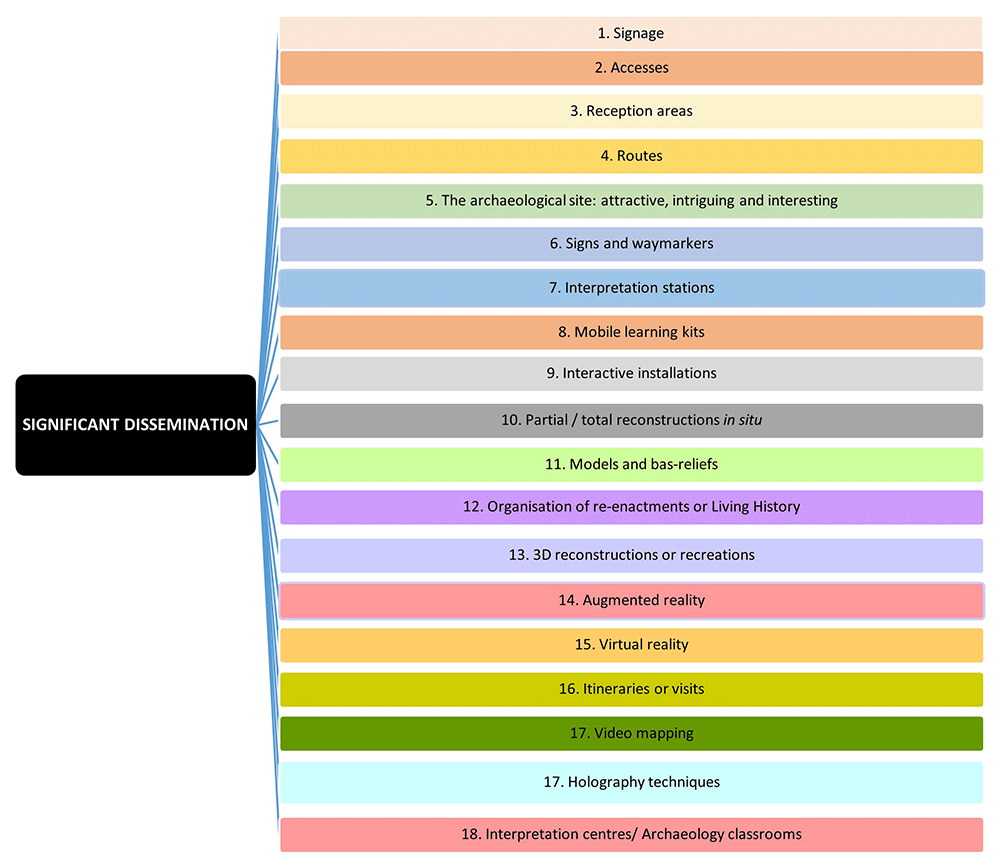
Figure 2. Table summarising the actions to adapt archaeological sites to significant dissemination.
Source: authors.
Signage
Given that the majority of archaeological sites are located outside centres of population, access routes must be correctly signposted. Moreover, the signs must be homogenous and sufficent in number to ensure that visitors do not get lost. As Mansilla Castaño (2004, 166) indicates, the definition of signage given in the Tourist Signage System manual approved by the Spanish Highway Agency3, states:
Signage is the science of signs in space that constitutes an instantaneous, automatic and universal language, whose purpose is to meet the information and orientation needs of itinerant individuals in situ.
This author also refers to a second definition that refers not only to the type of information included, but also to how it should be transmitted:
Signage, in the graphic world, is the discipline responsible for the design, creation and planning of information systems structured by means of signs. Its purpose is to guide users in their everyday mobility; the messages convey signals that require the use of clear language that is easy to perceive and communicates effectively ... Signs must provide information on three basic aspects: where to go, how to get there and when to go.
The information must be presented clearly and create a good impression, avoiding an overabundance of signs. This requires planning and appropriate assessment, as an excessive number may confuse drivers. Signs leading to heritage sites must therefore be appropriate, visible and clear (Gándara Vázquez, 2016b, 96) (Figure 3).
They must also comply with easy-to-read criteria, thereby making this signage accessible to all segments of the population: children, adults, foreigners or persons with cognitive disabilities.
Accesses
Access must be appropriate for all regular means of transport (cars/coaches). Although the roads may be unsurfaced, they must be in conditions that are suitable for vehicle traffic and/or pedestrians (Figure 4). Likewise, the accesses must be regularly cleaned and maintained. Opportunities should also be taken to create accesses to the sites via well signposted walking trails, equipped with duly signposted rest areas and drinking fountains, thereby encouraging visits to the area around the site.
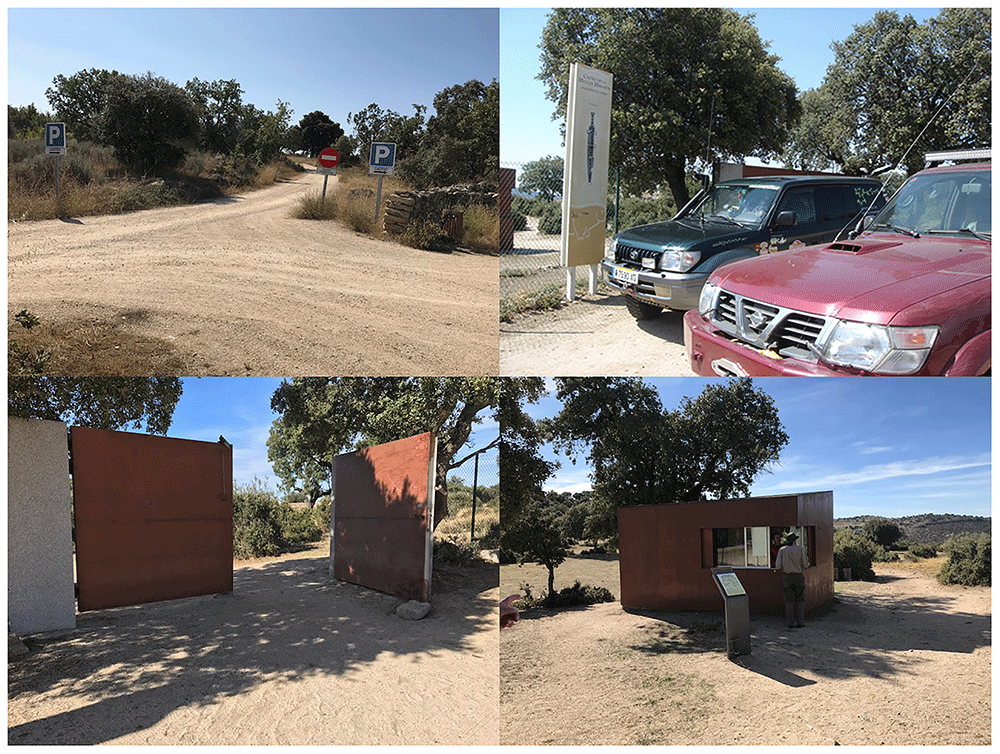
Figure 4. Photographs showing the accesses to various Vettone sites in Ávila and Salamanca.
The car park, entrance gate and visitor reception area are part of the Castro de la Mesa de Miranda visitable site (Chamartín). Photographs: R. Castelo.
Reception areas
Reception areas must offer a number of functions for organised visits.
They must include the car park and welcome centre, which is also known as the visitor centre. In this sense, the car park infrastructure must be adapted to the nature of the surrounding area and the physical layout and programme (Figure 4). The car and coach parks must be located at the end of the route leading to the site, and connect directly with the visitor centre or museum service buildings (where appropriate) that mark the start and end of the visit and include all the necessary facilities (drinking fountains, toilets and rest and shade areas) for the various actions programmed.
The reception4 centre, which acts as the transition between the urban and natural settings (Martín Piñol, 2009, 52; Martín Piñol, 2011, 32–33), must include the necessary tourist facilities and information for learning about the region, town or area. It must include a brief exhibition that contextualises the site for visitors in global historical and geographical terms. It must be brief, and therefore the discourse must be concise, effective and clear. It must also present a comprehensible overview of the surrounding areas in order to stimulate interest in exploring them, as well as providing visitors with information such as visiting times, websites, etc. Visitors must also be able to purchase a guide, pick up general leaflets or access digital codes providing information about the region, town or area. It is therefore a space where visitors can acquire sufficient knowledge of what there is to see and how to access the most interesting sites in the surroundings: in other words, it must provide the information tourists need in order to move effectively around the region (Gándara Vázquez, 2016b, 96) and distribute tourist flows around all the spaces of interest in the territory.
This space may also house interactive resources or IT applications providing further information about the facilities and services available in the area (trails, recommendations, visiting days and times). They must be permanently updated and promoted, and may also include support materials for spatial orientation (models, maps, leaflets, sketches). There may also be an area dedicated to the sale of merchandising, where visitors can purchase souvenirs of various types, but essentially consisting of original and typical local products, thereby contributing to the integration of the local productive and cultural fabric (Figure 5).
Routes
In the reception area and next to any fencing protecting the site, there should be a panel providing information on how to make the most of the visit and any possible routes, including their approximate duration and lengths and any difficulties involved, as well as the facilities available. It should also include those elements not to be missed by visitors, allowing them to select beforehand the route they wish to take based on the duration and degree of effort involved.
A further factor for consideration is accessibility: recommended routes for the elderly, children, or people with reduced mobility or any other form of disability should be clearly indicated. The idea is to guarantee a pleasant and productive experience, in accordance with visitors’ degree of mobility and cultural level, as well as the time they have available (Figure 6).
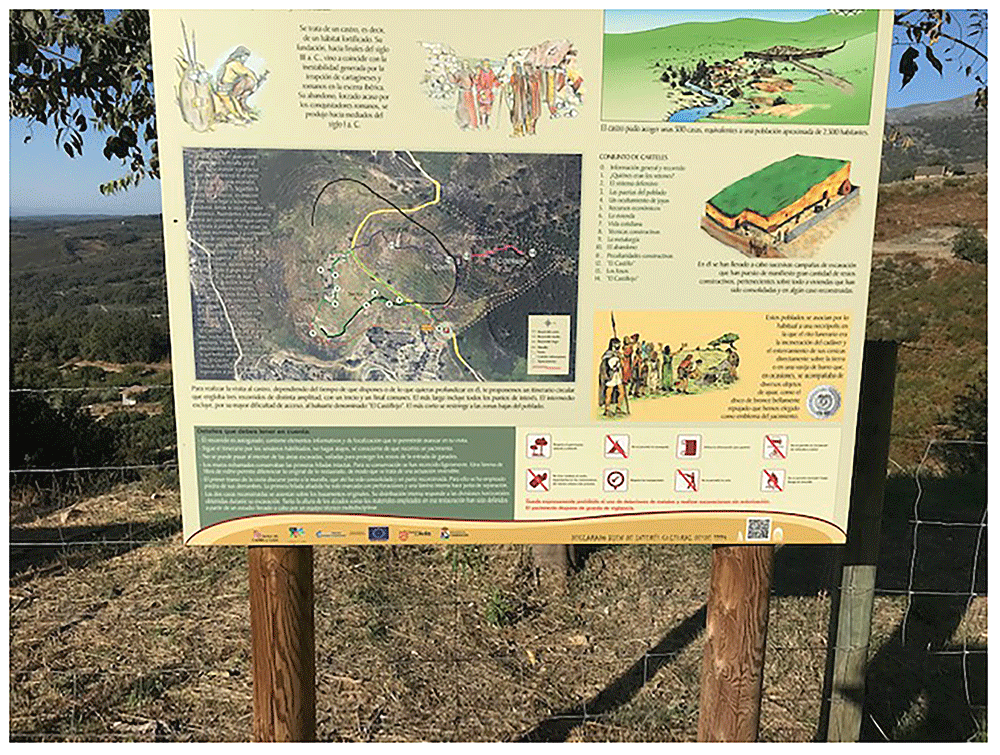
Figure 6. Photograph of the panel at the entrance to the Vettone fortified settlement of El Freillo (El Raso, Candeleda).
Photograph: R. Castelo.
In the case of guided tours, visitors must be informed of these aspects (difficulty/duration) before starting the route. When the visit does not include a guided tour, this information must be provided in the form of guidebooks, leaflets or online applications, and must be repeated at various points along the way. The paths (which must not affect the subsoil and must respect the archaeological remains) should be straight, as bends are more difficult to feature on cognitive maps. When necessary, waymarks must be placed at points where decisions must be taken (entrances and crossroads). This latter resource, i.e. waymarks, is intended to ensure that visitors do not lose their way in the archaeological sites, which may cause anguish and discourage them from returning to the site. Wayfinding is therefore an essential aspect for consideration, as visitors may miss out on key aspects of these sites, not of their own free will, but rather due to inadequate waymarking (Gándara Vazquez, 2016a, 92).
Making the archaeological site attractive, intriguing and interesting
It is essential for archaeological sites to be kept clean, which requires ongoing maintenance, in order to prevent transmitting a sense of abandon to visitors. Another vital aspect is setting up welcome panels that provide practical details of the visit, as well as information about any restrictions (expressed in a positive tone), calling on visitors to respect and care for the site. It is important to stress that the site belongs to the visitors, as people are far less likely to damage something they consider their own. An example of this type of text can be found in to the guide to the Castro de la Mesa de Miranda (Chamartín, Ávila), which reads as follows:
“The testimonies you will be seeing form part of our history, and belong to us all in equal measure. Take care of them, disseminate them, respect them, do not damage them in any way so that they can continue to occupy their rightful place. And do not allow anyone to harm them; otherwise, visits such as the one you are about to experience, will no longer be able to show you how the people of these lands lived more than 2,000 years ago” (Fabian García, 2005, 8).
Emphasis must also be placed on the unique nature of each site within its territory and in a wider context of time or space. The option of connecting past and present is also a tool which, without resorting to simplification or apriorism, can contribute to enhancing the visit and the understanding and enjoyment of a site.
Signs and waymarkers
The proposed route should be accompanied throughout by (numbered) explanatory panels installed at key points on the site, providing visitors with information about the essential aspects of the visit. They must include a map of the site with arrows or marks to guide them, indicating the suggested route. Connected in correlative order, they will articulate the recommended itinerary in a coherent and logical manner. Together with the route guide, leaflets and other digital educational materials, they will enable the public to learn about the principal elements of the site, its evolution and historical meaning, as well as its original appearance (Mansilla Castaño, 2004b, 162 and 163). Given that explanatory panels are one of the most common educational resources used in the museological adaptation of archaeological sites, they must allow for presentation, interpretation and communication of the principal characteristics of a site. It is therefore necessary to create texts suitable for the general public, relating them, through the use of reproductions or photographs, with the cultural material associated with each space within their corresponding historical and human context (Figure 7).
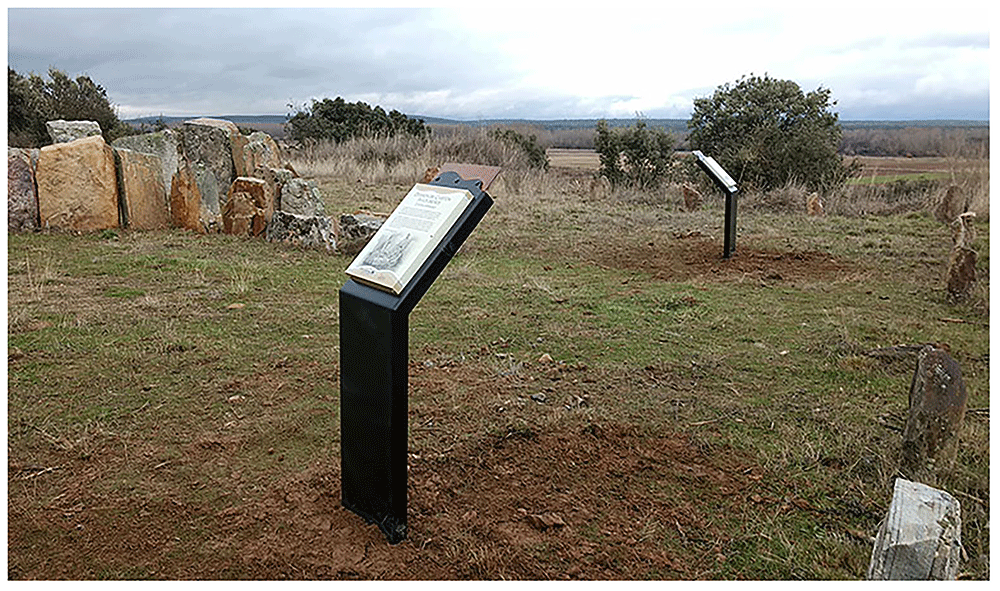
Mansilla Castaño (2004, 163–164) considers that there are various justifications for directed itineraries. These include the importance of conserving the remains and intellectual accessibility, as the itinerary sheds light on a site’s meaning and facilitates the visit, allowing the most striking elements to be highlighted.
At all events, there should not be a formal repetition of the information featured at the various points along the itinerary, since this option may be redundant and generate disinterest among visitors, who may consider that they repeat the same information. It is therefore necessary to strike a balance between providing insufficient or too much information. To achieve this, brief and easy-to-read texts should be combined with illustrations and suggestive, attractive and rigorous recreations, in which graphic aspects take precedence over texts, presenting basic, accessible and comprehensive information. In addition, there should be a hierarchy of texts that allows a range of audiences to understand the contents (Ruiz Zapatero, 1998, 15).
Following Ambrós Pallarés, Coma Quintana and Sospedra Roca (2012, 86–87) the factors for consideration when designing a panel are as follows:
a) Form. Spain’s various autonomous communities should have pre-established designs for the panels, in order to provide standardised information (Ruiz Zapatero, 1998, 15)5. In theory, rectangular-shaped panels positioned horizontally are ideal for interpretative signs. Square-shaped panels are considered to be visually rigid. When positioned vertically, rectangular-shaped panels transmit connotations of power and authority, but they may be suitable for use in certain contexts, as organisational elements providing explanations or initial information, such as directories or to list certain rules.
b) Size. There is no ideal size and this will depend on the purpose of the sign and the text and illustrations to be included. Care must be taken to avoid an excessive visual impact on the landscape.
c) Production materials. They must be resistent to the elements. Interpretation experts recommend the use of local materials that blend in with their surroundings and the topic for interpretation. However, the choice of material may also be determined by the degree to which it impacts on the surroundings, its resistance to weather conditions or vandalism. Wood is the most commonly advocated option, as it is reasonably durable, easy to work with and has a minimal aesthetic impact, although it is vulnerable to weather and vandalism. It should be noted that wood carving or pyrography are only useful for short texts, very specific signs or waymarkers, and not for cartography and iconography. Apart from wood, other popular choices include various types of plastics, cement or metals. Today, companies are supplying new options on which to engrave, print or silkscreen, such as treated wood (a solid and durable material, as well as being readily available on the market); metal profiles and plates; stainless steel; weathering steel and types of iron (economical but requiring constant maintenance to prevent rusting); glass, methacrylate or rigid transparent plastics; or trespa plates that deliver good performance at reasonable prices. Printed paper, cardboard or plastic sheets do not last long and must be constantly replaced.
d) Colour. The recommendation is the use of light colours on dark backgrounds in open and illuminated spaces. In dimly-lit or shady areas, the recommendation is for the use of dark letters on light backgrounds.
e) Typography. Again, the recommendation is for the use of simple formats. The panels must be easy to read from the users’ position. The standard reference is 1.5 cm for uppercase letters and 1 cm for lowercase letters. The use of a single style is advised, and no more than two, with sufficient margins and blank spaces to enable users to identify the various contents featured.
f) The illustrations must contribute to the interest of the message, be relevant to the topic and produced professionally, as they are one of the best ways of encouraging visitors to consult the panels.
Strategies must be put in place to address acts of vandalism. Any damage caused by these actions must be immediately repaired. It must not be forgotten that the sites belong to the visitors, who are responsible for caring for what they consider to be theirs. Repairing damage caused by vandalism must therefore be included in the maintenance budgets.
When deciding where to position explanatory panels, it must be remembered that their location must not generate any confusion regarding what they are interpreting or explaining. They must be located in a position where the text can be easily read (appropriate height and size) and where the visitor can observe the interpreted elements without having to move. The objective is to find a balance between optimum visibility and minimal visual or aesthetic impact on the surroundings, in addition to taking into consideration accessibility: visitors must not have to bend down or adopt uncomfortable postures in order to read the information. Interpretive signs must be positioned so that the base is between 60 and 80 cm from the ground and the panel surface forms a 90º angle with the line of vision, which in the case of low signs means that they must be placed at an angle.
Over time, and with the emergence of new technologies, panels have evolved. Initially, the focus was on adding mechanical interactive complements. The result was a type of hybrid panel that enabled visitors to play a more active role in the exploration process. Later, prototypes emerged featuring sound and moving images, although they soon presented problems related to wear and tear and maintenance. Consequently, panels and other types of educational resources in non-urban outdoor spaces have not evolved to any considerable degree, despite their widespread presence in musealised sites.
Educational interpretation stations or intermediation stations
Educational interpretation stations are the quantitative and qualitative evolution of traditional panels. The size of these stations may vary, although they rarely exceed 10 m2. Their visual impact on the territory must be limited to a minimum. They must be made of highly resistant materials, and therefore metallic structures are the most suitable option. Various types of mechanical interactive devices can be used. We therefore find windows with gates or shutters that return automatically to their original position by the force of gravity, allowing the use of question and answer options or before and after iconography. The empty spaces in the interpretation stations can be used to feature replicas or models or even still image viewers. They also allow the installation of sound resources powered by a small solar panel (Martínez Gil & Rojo Ariza, 2013; Romero Serra et al., 2013) (Figure 8).
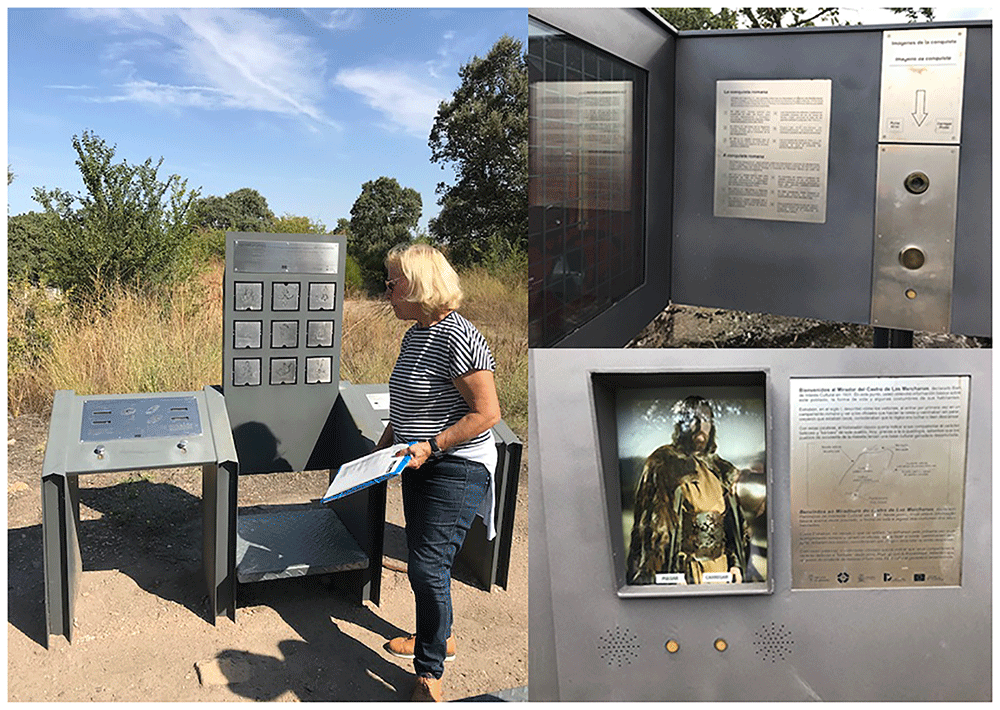
Figure 8. Photographs showing educational interpretation stations located in the Vettone fortified settlement of Las Merchanas (Lumbrales, Salamanca).
Photographs: R. Castelo.
Mobile learning kits
This term refers to an auxilary element that a monitor or tourist guide can use as a resource for a particular visit or itinerary. They must be easy to carry and the materials and resources they contain are used to carry out activities in a particular space and time. The contents can vary considerably and can be more or less interactive, depending on the nature and needs of the visit. They can hold objects, replicas, costumes, images, models or demonstration items.
We have observed the use of these mobile kits in http://www.salamancaterritorioveton.com/ hey consist of large format mobile modules that are particularly suited to group work, interaction with objects and the development of procedural activities and recreational learning (Figure 9). They were created in order to revitalise and enhance the archaeological spaces in the north-west of the province of Salamanca grouped under the brand name Territorio Vettón.
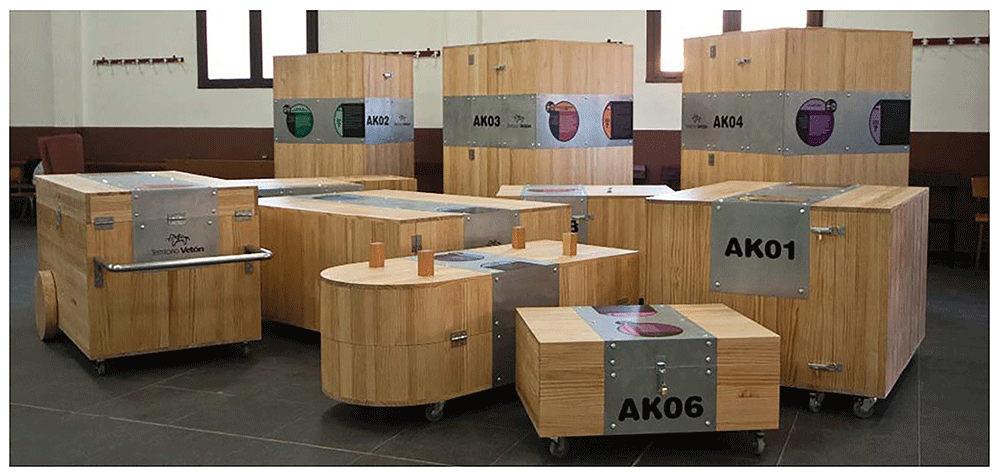
Figure 9. Photograph showing mobile learning stations known as Arqueokits.
Territorio Vettón (Salamanca).
This educational proposal comprises a set of ten cases on wheels that make them easy to distribute in various spaces. Each arqueokit corresponds to a different topic and contains a wide range of activities designed for both groups and individuals that facilitate the teaching and learning process, through learning based on experimentation, group work and full user interaction (Martínez Gil & Coma, 2012, 293–296).
Initially, the arqueokits were created for the fortified settlement and archaeological classroom at Yecla de Yeltes, as Lumbrales already had a series of cultural services to revitalise the town (La Casa del Conde Visitor Centre). Today, however, these materials are located in an educational classroom in this town. The modules are lightweight and easy to transport, as they are designed for use in both open and enclosed spaces.
Moreover, they must be sufficiently hard-wearing to withstand constant handling by users. They must be simple and functional structures where the design is conceived in accordance with the contents, guaranteeing their easy handling and the successful outcome of the activities. Constant attention must be given to their maintenance and any elements that are broken or damaged due to handling or use must be replaced.
These learning kits are not intended as a replacement for academic discourse or theoretical explanations; instead, they are concieved as a complement and reinforcement. Therefore, although they are designed to be handled freely, a monitor must be on hand to explain how they work, what they contain and the kind of tasks or activities that can be carried out. The kits favour the development and application of learning through the use of objects and learning through play. The game format of these kits stimulates interest and motivates users, predisposing them to learning. They were designed essentially for primary and secondary school pupils, although care was also taken to ensure that the activities were also suitable for all ages and segments (Martínez Gil & Coma, 2012, 293–296). Including educational interpretation stations and mobile learning kits undoubtedly favours interactivity, thereby moving beyond the merely cognitive concepts of learning (reading texts, viewing photographs and maps, etc.) and applying a series of proposals that favour and enable experimentation and sensorial experiences.
Interactive installations
This type of installation offers visitors the opportunity to enjoy new and unique experiences: they actively encourage visitors to explore and understand what they are seeing. Examples inlcude the photocall situated at the start of the Camino de Hierro or “Iron Way”, at Fregeneda station (Salamanca)6 (Figure 10) and the Puerta del Pasado viewpoint in Las Merchanas fortified settlement (Lumbrales, Salamanca), where visitors can sit on a bench and identify several of the settlement’s elements, such as the gateway, wall or the field of sharp stones. This physical entrance is conceived as a metaphor for the gateway to the past (Figure 11)
Partial/total reconstructions in situ
One of the actions most frequently applied to archaeological sites is the so-called “fossil model”: in other words, a model that preserves the archaeological remains in a similar state to that in which they were left by the excavation team. They are normally accompanied by interpretation systems based on panels featuring text and graphics, protected by a covering that transforms the landscape. Alternatively, there are monographic musuems or interpretaton centres adjacent to the site. Musealised sites retain the authenticity of the unaltered primary source (Santacana i Mestre & Masriera Esquerra, 2012, 113–114). However, there are alternative ways of exhibiting archaeological remains:
- Transfer model: this consists of dissembling the archaeological site and rebuilding it in a new space. This is sometimes the only option for safeguarding a site7.
- The construction of replicas in areas close to the original site.
- “Reconstructions in situ” (Santacana i Mestre & Masriera Esquerra, 2012, 115–118 and 154). The article entitled “Presentation, Information, Reconstruction of the The International Charter for the Protection and Management of the Archaeological Heritage adopted by ICOMOS in 19908, refers to reintegration in the following manner: Reconstructions serve two important functions: experimental research and interpretation. They should, however, be carried out with great caution, so as to avoid disturbing any surviving archaeological evidence, and they should take account of evidence from all sources in order to achieve authenticity. Where possible and appropriate, reconstructions should not be built immediately on the archaeological remains, and should be identifiable as such. Reconstruction in situ is common in European countries; however, this is not the case in Spain, although we can find an example in the Iberian fortress of Calafell (Figure 12), which allows visitors to enter an Iberian settlement (Masriera Esquerra, 2009). Another example is the reconstruction of the Vettone fortified settlement of El Freillo (El Raso, Candeleda).
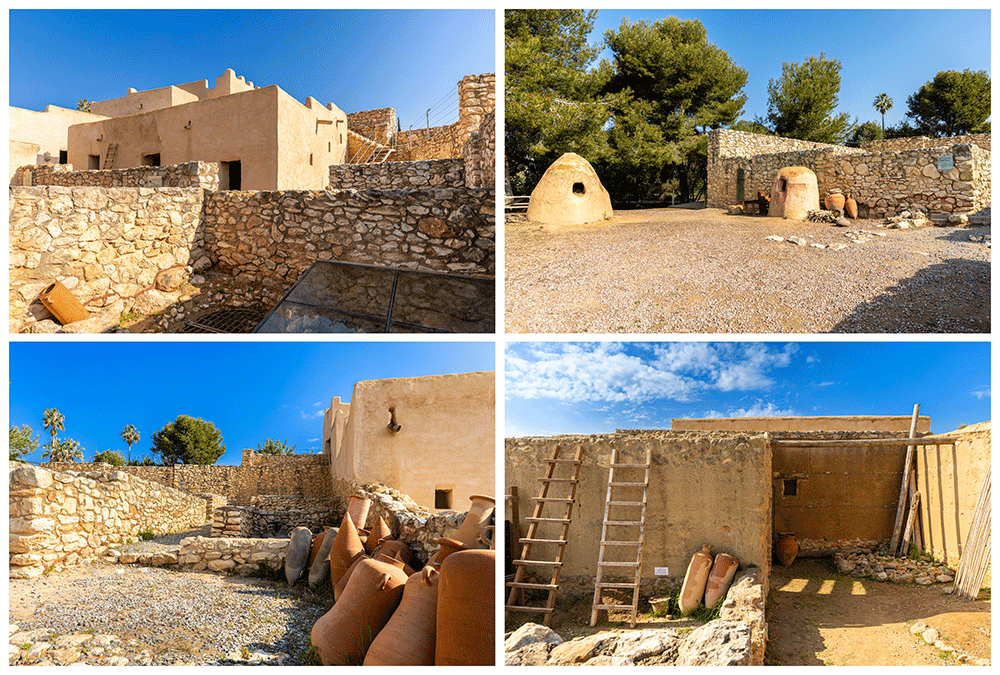
Such actions recreate settings where visitors can use all their senses, converting the activity into a learning experience of immense value. However, these actions have been severely criticised by the scientific community (Rivero & Feliú, 2017). It is necessary to take into account that reconstructive archaeology implies a series of actions including rebuilding (remaking that which has been destroyed); restitution (rebuilding by adding missing parts of sections; recreation (recreating or reproducing something); and interpretation (adding meaning to a construction, giving it functions and uses) (Martínez Gil & Santacana i Mestre, 2013, 17–18).
In situ reconstructive archaeology can be used to explain processes and techniques through the application of experimental archaeology criteria: the resistance of materials and structures; experimenting with coverings, forms and volumes; experiencing the habitability conditions, damp, smoke ventilation, duration, wear and tear, repairs, etc.; the analysis of pathologies that can affect buildings; the volume of the work involved and the materials used. However, it also involves a series of problems or disadvantages: these include high labour and material costs; partial experiments, due to the need for the precise reproduction of all the factors involved in the past, in addition to limitations in the explanation of hypotheses. From an educational or learning perspective, reconstruction or recreation in situ solves the problem that the public generally finds in conceptualising the space, understanding a plan or converting scales. Indeed, reconstruction is an effective way of conceptualising a space, generating an empathetic vision that produces emotional intelligence, thereby creating a situation of immersion (Santaca i Mestre & Masriera Esquerra, 2012, 121).
Nevertheless, these recreations pose a problem as they show moments that are fossilised in time or evoke time processes, and may also include elements from the present. Reconstructions or recreations involve the socialisation of knowledge, as they provide full visions that are comprehensible to practically all ages, produce an empathic effect as all the elements can be touched, stimulate the imagination and fix concepts in a practically permanent manner, and are also effective for the development of cultural tourism (Martínez Gil & Santacana i Mestre 2013, 32; Santacana i Mestre & Masriera Esquerra, 2012, 121). These authors consider that reconstructive archaeology in situ is useful once the sites have been fully exploited as primary source research sites, as they can contribute to the overall percpetion of the site in a controlled manner, provided that the reconstruction is as rigorous as possible. It is also useful when reconstruction is important for site conservation, contributes positively to research and the dissemination of archaeological heritage, or when it represents added value for the socialisation and awareness of the archaeological space itself. However, as we mentioned earlier, in Spain, this option is widely questioned.
Models or bas-reliefs
Models or bas-reliefs must include the necessary information to facilitate the perception of the visually impaired, but they are also extremely useful for the general public. Indeed, representations created ex profeso for each site provide an insight into the infrastructures for local residents as well as tourists, enabling them to appreciate the dimensions, location and complexity of the construction, as well as care and respect for nature (Figure 13).
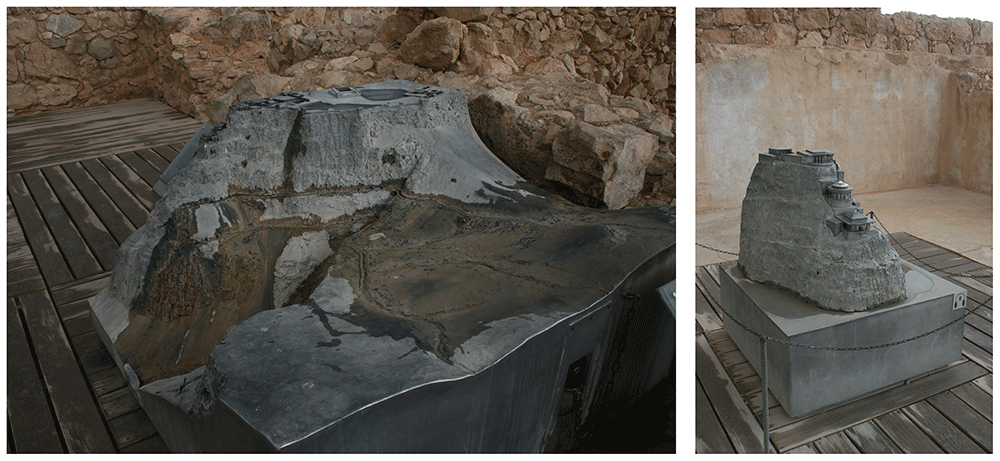
Figure 13. Metal model of Masada Hill, Israel, with options for exploring the hydraulic systems created to supply the settlement with water.
Photographs: S. González Soutelo.
Organisation of re-enactments or Living History
This consists of re-enactements based on the dramatisation of a historical event applying maximum scientific rigour (Hernández Cardona & Rojo Ariza, 2012a, 37). Over the last ten years, countless possibilities for historical re-enactment have emerged thanks to re-enactment groups (Figure 14, Figure 15) which have become extremely popular throughout Europe and North America, and in Spain, numerous initiatives have emerged. These events are effective in driving motivation and understanding.
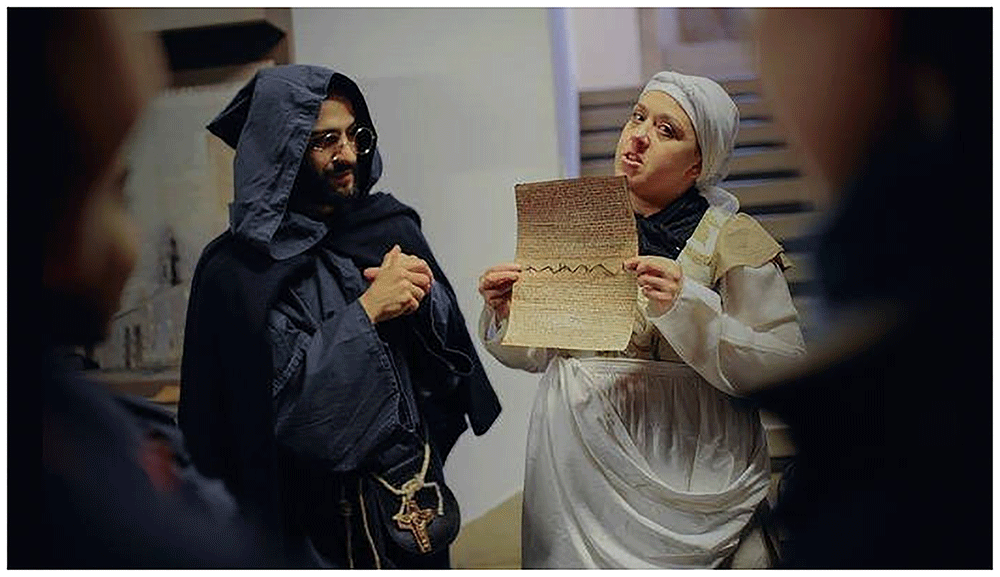
Figure 14. Photograph showing a historical re-enactment for a dissemination activity organised by the Historical Archives of Ourense.
www.xeitura.com.
The rise of cultural tourism and the technological advances of recent years have resulted in numerous projects to research, conserve, interpret and present elements of archaeological heritage, based on the use of hardware assisted visualisation. The number and type of questions lay visitors may ask is extensive: What were the houses like? What type of materials were used to build them? How high were the buildings? What were the excavated constructions used for?
Educational intermediation must provide the answers to all these questions. We have already addressed a number of the strategies deployed, but we must now turn to the question of new technologies. We subscribe wholeheartedly to the words of Gisbert Santaballa (2019, 143), who states the following: “new technologies transform the sites into active, dynamic and open centres of dissemination and education that are not limited to receiving visitors interested in the knowledge they offer, but which also attract, motivate and win over those members of the public with apparently no interest in visiting them”.
3D reconstructions and virtual recreations
As J. Santacana explains in Didáctica del Patrimonio Cultural (2013), archaeology can use 3D reconstructions that nurture education. In turn, education nurtures archaeology, providing a meaningful insight into the past. The aim is to facilitate an understanding of the morphology and function of the various parts or elements of a building, city or necropolis, etc. (Gisbert Santaballa, 2019, 127–129). The Seville Charter (2011)9 defines virtual reconstruction in the following manner: “this involves using a virtual model to visually recover a building or object made by humans at a given moment in the past from available physical evidence of these buildings or objects, scientifically reasonable comparative inferences and in general all studies carried out by archaeologists and other experts in relation to archaeology and history”. Virtual reconstructions and parallels can be used to include furniture, decorative or other types of elements at the site, giving rise to virtual recreations, which the Seville Charter defines as follows: “this involves using a virtual model to visually recover an archaeological site at a given moment in the past, including material culture (movable and immovable heritage), environment, landscape, customs, and general cultural significance”.
In addition to their educational value, virtual reconstructions offer a series of other possibilities related to aspects such as accessibility, conservation and restoration. They do not require contact with the original remains; they generate precise volumetries and restitutions; there are no limits to intervention as they do not occupy the territory or breach any regulations or laws. Furthermore, if the result is insatisfactory, they can be modified. In addition, they allow various hypotheses to be posed simultaneously; they provide mental images that stimulate the brain on observing the remains; they act as a driver for tourism; they make a notable contribution to archaeological research; they are reversible and costs are low (Figure 16).
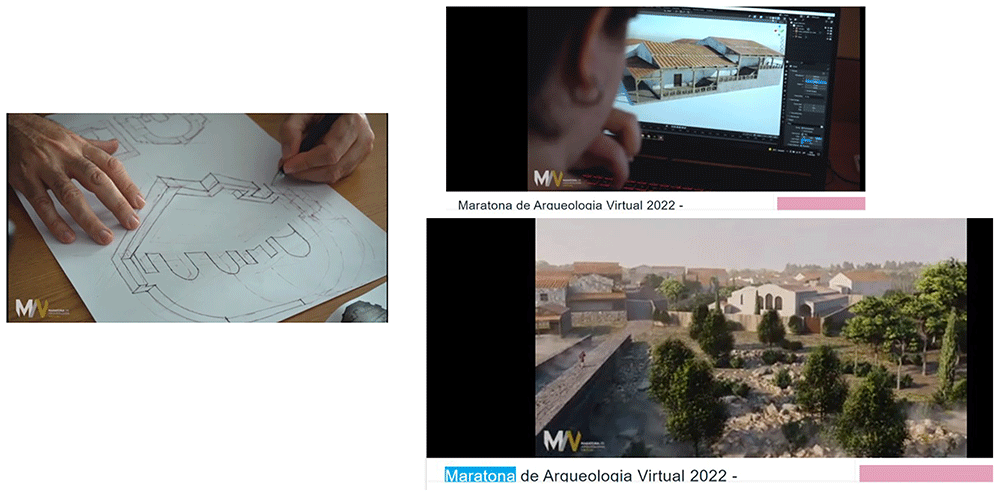
However, they also raise a series of considerable drawbacks: among other issues, they do not contribute to the conservation of the site and only rarely allow experimentation with materials or techniques. We share the opinion of Martínez Gil & Santacana i Mestre (2013, 24 y 33) that virtual reconstructions are of particular use when they suggest, insinuate and contribute plausible images of the past. Indeed, it must be stressed that any recreation of the past must be based on scientifically corroborated data and must not include present elements or exceed the limits of scientific knowledge. They are of use when they contribute to enhancing research and the dissemination of archaeological heritage and, naturally, when they help to promote the use of archaeological heritage for educational purposes.
Augmented reality
The lay public generally finds it hard to interpret the archaeological remains documented during excavation work, and therefore the use of augmented reality in the musealisation of archaelogical sites is an excellent means of enhancing and disseminating cultural heritage (Esclapés et al., 2013). Indeed, its use ensures highly satisfactory results due to its ability to combine the real and (reconstructed) virtual worlds, simply through the use of a smart phone, a tablet with GPS, a compass and camera, or with a free application such as layar, creating highly realistic augmented settings for users (Ruiz Torres, 2011a, 1).
As a result, augmented images can be created in real settings through virtual reconstructions. In addition, animations can be inserted, recreating the flora and fauna, and scenes from everyday life with the inclusion of real actors, etc. In this sense, augmented reality is capable of enhancing the real context around its use, producing and improved an enriched image of the historical reality (Del Pino Cutillas & Soriano Castro, 2012).
Virtual reality
Virtual reality generates virtual environments that users are immersed in, either by stimulating the senses or by interaction with the environment (Flores et al., 2010, 93). As with augmented reality, virtual reality helps the lay public to better understand the remains being observed. Visitors can thus have an immersive and interactive experience (Ruiz Torres, 2011a; Ruiz Torres, 2011b) that transports them in time and space. Virtual reality is therefore particularly recommendable for providing the general public and children in particular with an insight into the past. The public undoubtedly perceives it as a tool that improves the learning experience.
Multimedia itineraries or tours
Tours of this type combine the use of audiovisual media, augmented reality, immersive projections, videogames and interactive tours, etc., which, when applied to archaeological sites, improve heritage interpretation and provide as realistic an experience as possible, increasing enjoyment and facilitating acquisition of the knowledge each site has to offer.
Video mapping
This is a form of augmented reality that allows intervention in heritage without altering or modifying it in any way. The basis of this tool must lie in veracious historical sources and their respectful application. It consists of the projection of various tailored elements (audiovisual content, texts, 3D animations, etc.) on structures, volumetric elements or reliefs, using digital video projectors (Figure 17).
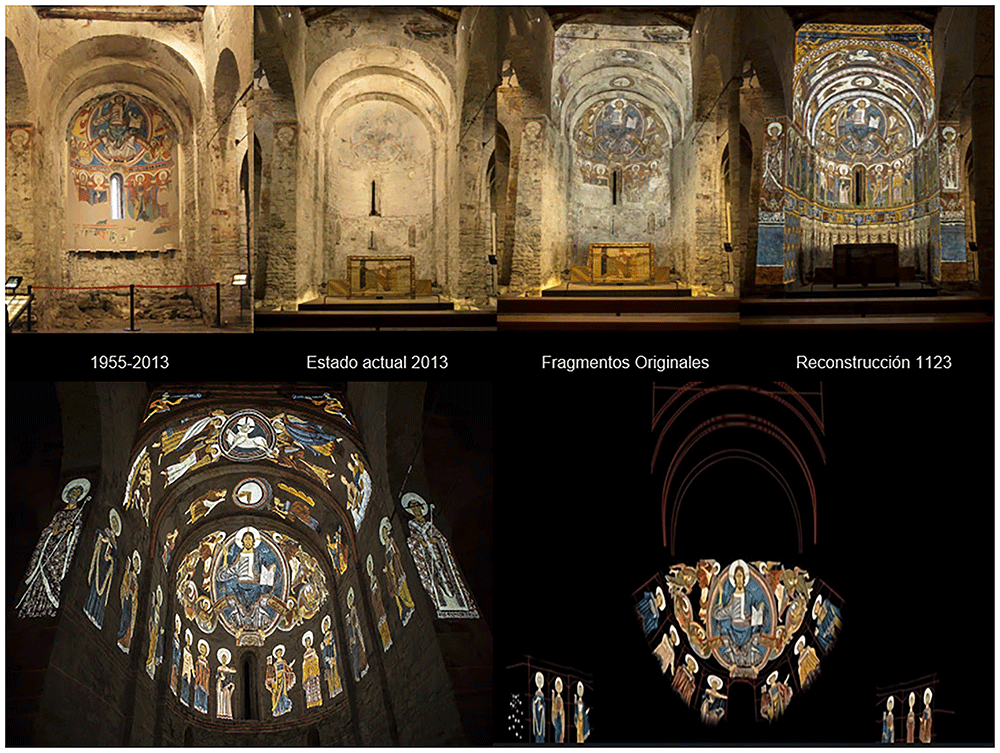
Figure 17. Video mapping images of the Romanesque paintings in the Church of Sant Climent de Taüll.
Consorci Patrimoni mundial de la Vall de Boi. Current state (2013); Original fragments; Reconstruction (1123) https://www.centreromanic.com/es/video-mapping/.
It is a highly immersive virtual environment in which a combination of images, animations and music create a sensorially stimulating, attractive and motivating experience (Gisbert Santaballa, 2019, 136–138). As a result of this experience, monuments or documents from the past lose their immovable nature thanks to the installation of a platform featuring countless images in movement. They tend to be seen as a kind of show, and are seen as entertainment, as they mobilise spectators’ attention and excitement.
Developing all these virtual archaeology projects also highlighted their weaknesses and incongruencies, which in turn led to a theoretical debate for the design of new models with increasingly high standards of scientific and historical rigour. The result was the signing of the London Charter10 (2006 and 2009) and the Seville International Principles of Virtual Archaeology11 (2011) (Husillos García, 2012; López-Menchero Bendicho, 2011, 65; López-Menchero Bendicho, 2013; López-Menchero Bendicho & Grande, 2011, 71). Hardware assisted visualisation works to truthfully and accurately reconstruct or recreate buildings, artefacts and settings from the past. For this reason, it should always be possible to know what is real, true and authentic and what is not. Authenticity should be an ongoing concept for all virtual archaeology projects. However, virtual reconstructions often lack those elements that allow us to identify the parts that are more likely to be truthful and those that are the result of less grounded hypotheses. In order to overcome this problem, Aparicio Resco and Figueiredo (2016) created a ‘School of Historical and Archaeological Evidence’ for virtual reconstructions whose application clearly sheds light on areas that possess more solid evidence and are therefore more likely to fit in with reality, in contrast to those lacking in solid foundations. Essentially, it comprises a scale of colours12, in which cool colours represent high levels of authenticity. The use of these images provides a greater understanding of the original virtual reconstructions.
Mobile technology applications
Mobile technology applications are an everyday tool that facilitates interaction with the environment. In the case of cultural tourism, the possibilities this technology offers (positioning, geolocalisation, cameras, scanners, sensors, internet, virtual reality, augmented reality, social media, etc.) allow the public to connect with the past and intangible heritage. They therefore fall within the scope of ‘mobile learning’ which can be defined as follows: “museographic solutions in the form of an app or other similar system created as heritage mediation tools. They are characterized by their portability, wealth and diversity of information, freedom, ease of use and personalized management; they are also versatile, dynamic and interactive and can be used before, during and after the visit.” (Imbert-Bouchard et al., 2013, 44 and 50). These are the lines on which the app from the European project rurAllure13 is based: the aim is to provide pilgrims, visitors or tourists with the information they need to explore, discover, access and enjoy the various heritage sites located in the area they are travelling through, as well as the services and opportunities offered by each territory. Through the use of (wireless) digital instruments, knowledge becomes accessible anywhere and at anytime. In this sense, m-learning is flexible, immediate and ubiquitous, making it a motivating, collaborative and accessible form of learning (Santiago et al., 2015).
Applying technologies to museographic proposals (various types of exhibitions, collections, museums or musealised archaeological sites) has been steadily introduced as they have been developed and adopted by society (Figure 18). Each new technological resource opens up new opportunities for knowledge, understanding or dissemination, improving the communication of the message with the added attraction of modernity and innovation that appeal to the lay public (Ibáñez Etxeberría et al., 2006; Ibáñez Etxeberría et al., 2007; Ibáñez Etxeberría et al., 2011; Ibáñez Etxeberría et al., 2012).
Following Martín Piñol & Castell Villanueva (2012, 121) and Imbert-Bouchard et al. (2013, 44 y 50), mobile learning may therefore offer a series of educational applications:
- Localisation of points of tourist or cultural interest through geolocialisation. The users’ location can be detected, and specific information regarding nearby heritage elements can be offered.
- Visualisation of buildings that are no longer standing: the combination of geolocalisation and augmented reality allows ancient buildings that have now disappeared to be presented in all their splendour.
- The graphic reconstruction of the past, with historical restitutions or simulations based on simple graphic elements (drawings or old photographs) is a highly effective resource when combined with the reality that can be observed.
- Recreations and historical simulations using images and audio, employing multimedia resources in the form of audio guides, which recover their potential when used in situ in these new devices.
- Recreations and interactive virtual historical simulations using 3D techniques that have been optimised by the new mobile formats that drive discovery and allow the creation of virtual visits through spaces that no longer exist, employing minute detail and even fictitious encounters with characters from history.
- The use of interactive games, as play is a strong motivator, particularly among younger audiences. These games can be used as a tool for discovery and experimentation, as they bring formal content into the sphere of entertainment and permit the development of special abilities.
- Combination with social media.
Given all of the above, “portable artefacts” help visitors to interpret what they are seeing and resolve the problem of the high degree of abstraction visits of this kind require: they enable tourists to travel back in time and contextualise and interpret any period of history. They are an informal form of learning in which the contents can be adapted to all types of public, enhancing communication and ensuring the acquisition of knowledge (Imbert-Bouchard et al., 2013, 50).
Finally, it must not be forgotten that audio guides are another resource for self-guided tours. Their appeal has been described by Mansilla Castaño (2004, 270), following Light and Bath: they are of a dynamic and changing nature; they allow the communication of more information than the public is willing to read and can therefore include greater detail; they draw attention to elements within the setting; they allow the inclusion of various itineraries covering various topics; they capture the public’s attention through the use of narration by famous characters from the past or present.
Interpretation Centres/Archaeology Classrooms
In 1956, UNESCO passed a recommendation regarding the importance of setting up learning centres close to visitable sites:
Close to important archaeological sites, a small establishment should be set up to help the visitor understand them better. For archaeological objects do not speak for themselves, even if they are well preserved, and if they are to become objects of consumption, they must receive intensive educational treatment.
Interpretation centres/archaeology classrooms are a key resource in publicising archaeological sites. They must take on the challenge of creating innovative strategies capable of actively involving visitors in learning about the proposed topic, ensuring their participation and placing them at the centre of the events described. These centres house exhibitions whose mission is to prepare the public for the site visit, offering information about the economy, society or religious beliefs that will provide visitors with a cultural, chronological or environmental context.
Generally small in size, these interpretation centres/archaeology classrooms prepare and promote the visit to archaeological sites and facilitate the dissemination of the concept of cultural heritage in small villages and rural areas that lack the resources necessary to create fully fledged museums. They are designed to reach a wide target market and must generate a high sense of satisfaction among visitors through the provision of information, education and entertainment (Figure 19).
They are a cultural phenomenon that was imported from the UK into Spain in the late 20th and early 21st centuries. They are associated with the mass leisure industry and a series of socio-economic and cultural circumstances that led to an adaptation of exisiting museum spaces, as well as the creation of other new ones in order to interpret (for the general public) Spain’s cultural and environmental assets.
Interpretation centres do not require the presence of a collection, as they are “facilities created to enhance the cultural and/or environmental heritage of a specific site or geographical area, transforming it into an educational, cultural and/or tourist product. They do not collect, conserve or study the original objects, but instead provide insights for a better composition of their natural and cultural value in order to raise awareness regarding this wealth of heritage. They employ a staged exhibition aided by the use of technological and audiovisual elements” (Martín Piñol, 2011, 21).
They are generally housed in disused rural or community buildings that have been specially conditioned, such as large country houses or schools (Fernández Moreno & Val Recio, 1999, 75). The aim is two-fold: on the one hand to support the recovery of rural architectural and historical and artistic heritage, and on the other, to secure the active participation of residents living in the vicinity of the heritage asset (Álvarez Echávarri & de la Torre Sanchís, 2007,138).
The most important aspects of an interpretation centre/archaeology classroom are the visitors and the topic to be interpreted. The focus must be on the visitors and not on the collections, which may or may not be present, as what matters most is what will occur when the visitors encounter the archaeological site (Gándara Vázquez & Pérez Castellanos, 2016). These spaces are designed to foment understanding of the heritage value and generate a culture of conservation, inviting visitors to commit to it by forging emotional and intellectual links.
Given that their principal function is communication and making a cultural asset understandable, the aim is to use simple language that makes for easy reading, combined with the use of new technologies and museographic techniques that offer visitors an enjoyable and efficient insight into the meaning of the heritage legacy of the assets to be interpreted.
Each archaeology classroom is unique, as many variables come into play when deciding a site exhibition, and are not limited to strictly archaeological values (Álvarez Echávarri & de la Torre, 2007,145).
Sites associated with interpretation centres/archaeology classrooms tend to be complemented by the reconstruction of structures based on the archaeological evidence revealed by excavation work, recreating the original spaces within the proximity of the archaeological site rather than on the site itself to prevent confusion among visitors (Fernández Moreno & Val Recio, 1999, 75).
In order to ensure the efficiency of an interpretation centre/archaeology classroom, it must meet the ten key principles defined by C. Martín Piñol (2009, 53–59 and 2011, 37– 44):
- Relate the object to be interpreted with users’ initial ideas. Based on D. Ausubel’s theory of learning, which states that in order for learning to be meaningful, the information must anchored to an existing cognitive structure. It is therefore necessary to seek concepts, ideas and emotions that are common to visitors and the information to be acquired. Any form of interpretation which fails to relate what is exhibited or described to part of the visitors’ personality or experience will prove fruitless.
- The objective is to instruct, enthrall and provoke or unleash ideas.
- Take visitors’ age into consideration, as the interpretation centre may be visited by families of widely varying characteristics seeking spaces that provide pleasure as well as education. This may range from an adult public which includes a large number of highly heterogeneous users, to pupils that discover theory through practice; teaching staff that may have proposals based on the syllabuses of various subjects related to a knowledge of history, art and nature; or even investigators from university and research centres that in many cases are opinion formers with interests in a wide range of topics.
- Remember that interpreting is not just about informing. The contents must be presented in a comprehensible manner that allows them to be read at various levels so that persons with or without an interest in the topic can understand the heritage asset and confer it with the value it deserves. Interpretation is a way of making known, understood and respected something that has always existed but has remained in obscurity.
- Organise the contents to be communicated to the public in a hierarchicacl manner so that they can be uderstood in accordance with the needs of each visitor.
- Select relevant concepts as there is insufficient room for countless explanations, concepts and descriptions. In this sense, museologists must take great care to select the concepts they consider to be most relevant.
- Include elements of play to make the visit more entertaining, thereby facilitating the learning process.
- Conceive interpretation as a global rather than a partial fact.
- Interpret heritage items without the need for their actual presence in the centre.
By way of a summary and based on the above, C. Martín Piñol (2011, 12) defined interpretation centres in the following way:
“Interpretation centres are facilities created to enhance the cultural and/or natural heritage of a given site or geographical area and transform it into an educational, cultural and/or tourist product. Unlike museums, these centres do not collect, preserve or study the original objects, but instead provide the means of enhancing the understanding of their natural and cultural value, nurturing sensitivity and culture by referring to one or more of the areas of local cultural heritage.
Their presentation strategy consists essentially of a scenographic exhibition, assisted by technological and audiovisual elements to allow the discovery of heritage. This is a possible solution for disseminating the concept of cultural heritage in small towns and rural areas that lack the resources necessary to create real museums and where this wealth can become a key factor in the development of the tourism sector and the recovery of the cultural identity of their inhabitants.”
The proliferation of this type of museum facilities responds on the one hand to the high demand from consumers for natural spaces, and on the other, to the trend for the recovery and conservation of rural areas based on an extensive cultural offer which, accompanied by a series of tourist facilities and services, allows these areas to position themselves in the tourism market. This activity is an additional source of income and generates employment, thereby meeting the objective of mitigating the dramatic abandonment of rural areas, whilst also acting as an instrument for rural planning and development (Castaño Blanco, 2007, 46–47 and 57). The outline below lists the components necessary for an interpretation centre/archaeology classroom to deliver meaningful and memorable experiences. As Pérez Castillo (2019, 123) states, exhibition space design is one of the most important and complex phases of exhibition management, which requires tackling the challenge of constructing an effective communication framework between the exhibit and the spectator (Figure 20).
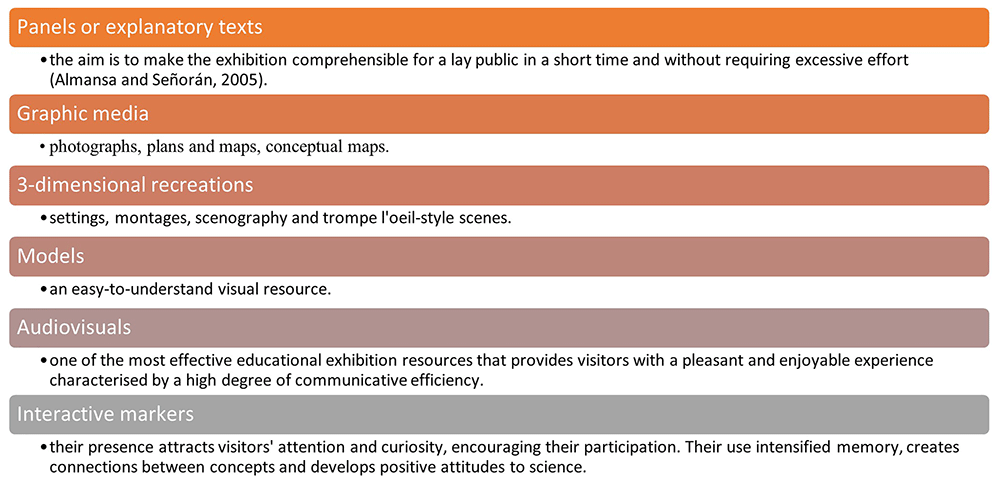
Figure 20. Chart summarising the key components for consideration when designing and setting up an interpretation centre/archaeology classroom.
Source: authors.
Some interpretation centres/archaeology classrooms could be mistaken for the so-called ‘site museums’, defined by ICOM as being “conceived and set up in order to protect natural or cultural property, movable or unmoveable on its original site”14. In this sense, as with interpretation centres or archaeology classrooms, site muesums must also communicate and disseminate archaeological and historical information in the most attractive way possible, based on the structural and object remains of each site, for, as we have stated on more than one occasion, this tends to elude the majority of visitors. They will fulfil their function if they are able to reconstruct history based on the site in question and its objects – not just the site’s own history – but also that of a specific period or culture. Site museums exist in and for their environment and their geographical and historical context (Arias Vilas, 1999).
Conclusions
Given all of the above, we wish to stress that cultural tourism in general, and tourism focused on historical and archaeological heritage in particular, occupy a consolidated position in the tourism activities of all territories, as we have evidenced in previous publications (Castelo Ruano et al., 2007; Castelo Ruano & González Casarrubios, 2021). In turn, this has led to significant changes in cultural tourism legislation, which highlights the need to conserve the cultural and natural heritage, as well as the way in which tourism can contribute to its maintenance and protection. In addition, these laws acknowledge that when managed correctly, cultural tourism can represent a major factor for development, as well as a driver for sustainable and responsible tourism.
In the case of Spain, the analysis of tourism legislation currently in force in the various autonomous communities reveals that it aims to conserve and protect, in accordance with the principles of sustainability, their unique historical, artistic, territorial, urban and environmental values, in harmony with other productive sectors. Generally speaking, these laws seek to offer an exceptional tourist experience, where the assets, customers and traditions, in addition to the cultural, ethnological, gastronomic, geographical and natural heritage, are protected from destruction or degradation thanks to their correct use.
They all place particular importance on promoting accessibility and the elimination of physical and intellectual barriers, thereby facilitating the incorporation of increasingly broader layers of the population. In this sense, they drive universal accessibility and access to information in equal conditions. Priority is also given to enhancing dissemination, and they all refer to the need for effective tourist signage that prioritises the creation of signage manuals and the design of pictograms that allow resources and destinations to be identified. Furthermore, they also naturally include the use of new technologies, not just for tourist signage, but also for historical recreations using 3D simulation systems that seek to boost tourism-generated profitability of museum spaces.
Ensuring spatial and cognitive accessibility is a social obligation, as all persons have the equal right to access public and private spaces, regardless of their physical and cognitive abilities (Gómez-Heras et al., 2023). It must be stressed that this goes beyond mere compliance with accessibility regulations and involves creating spaces that are truly inclusive and accessible to all. Moreover, both types of accessibility favour inclusion and diversity, driving equal opportunities for all citizens and ensuring an inclusive culture that is open to diversity.
For all these reasons, although the exploitation of archaeological sites for the purpose of tourism is an increasingly common practice, this use must be both responsible and sustainable, taking into account their historical and cultural value, as well as the potential impact of tourist activity on them. One of the strategies for achieving effective communications is the use of educational intermediation that will aid visitors’ understanding and learning. Therefore, opening an archaeological site to the public and offering maximum guarantees in terms of its scientific, aesthetic, cultural, historic, social and economic values requires the use of a series of measures that will ensure it is considered a meaningful dissemination resource that is comprehensible to broad sectors of the population.
It must be stressed that the communication and promotion of heritage sites play an essential role on a local, interregional and international level, as the strategies employed will depend on visitor numbers. In this sense, social media have earned a prominent place within the institutional communication policies of heritage site. Their emergence and widespread use have facilitated the implementation of the so-called ‘New Museology’, a phenomenon that first appeared in the 1980s, with an increasingly wide range of visitors (Costa, 2017, 104).
In short, we are faced with a large public that demands the visibility of heritage sites and knowledge about them. Their global scope, their capacity for creating attractive visual content and interaction with the public, have converted social media into an important tool for correctly disseminating proven information and promoting the importance of these historical and cultural sites. On the other hand, bloggers are playing an increasingly important role in the world of tourist and cultural promotion, and in this sense also have a place in the promotion of archaeological heritage. They can create appealing and personalised content, and their posts can highlight the unique features of each site, as well as offer recommendations and useful tips for visitors (clearly facilitating the experience of the potential public), answer questions and, provided it is done in a responsible manner based on contrasted and updated content, encourage the active participation of the local community and raise awareness of the need to protect and conserve heritage.
Through their videos, YouTubers can promote heritage sites in an effective and responsible manner, thereby favouring both the enhancement and protection of these spaces (Buitrago et al., 2022; Zaragoza Tomás & Roca Marín, 2020). Marketing and promoting spaces of all kinds linked to heritage are essential to attract visitors, generate income and boost their cultural and historical relevance.
However, in order to ensure the effectiveness of marketing and promotion strategies, it is necessary to identify the target market; in other words, to define the profile of the public we are addressing. Once visitors’ tastes, preferences and needs have been determined, actions can be drawn up in order to offer them an enjoyable and satisfactory experience. It is also essential to create a solid and identifiable framework that presents the essence of the heritage site, its mission and values, whilst also integrating the values and interest of the local community. Offline marketing actions must be able to attract the attention of potential visitors, although, as we have stated, today a consolidated presence in digital media is fundamental.
New mobile applications such as the one developed for the European rurAllure project, as well as strategic alliances with other cultural institutions or tourist companies, may be effective in promoting heritage assets and attracting visitors, mainly to more marginal areas where they can enjoy new experiences. In this sense, archaeological heritage is undoubtedly an attractive tourist resource that offers significant benefits by driving education, economic development, conservation, cultural exchange and sustainable tourism.
It is thanks to our valuable historical legacy that we are able to extend our knowledge, strengthen unity and the sense of belonging among local communities, as well as conserving the cultural wealth of our past for future generations.