Disclaimer
The views expressed in this article are those of the authors. Publication in Open Research Europe does not imply endorsement of the European Commission.
Introduction
The transition toward non-fossil fuels in the transportation sector is a significant and ongoing trend. This transition is happening concurrently with technological advancements that are reshaping the way humans, vehicles and infrastructures interact with each other. Transition to non-fossil fuels refers to the shift from traditional fossil fuels, such as gasoline and diesel, to alternative energy sources like electricity and hydrogen in the transportation sector as aligned with national strategies and European Green Deal goals1. The goal is to reduce greenhouse gas emissions, combat climate change, and decrease the reliance on finite fossil fuel resources. In the meantime, relationship between vehicle, user, and infrastructure is also changing indispensably. Advancements in technology, including the rise of electric and autonomous vehicles, are transforming how people interact with their vehicles and the infrastructure they use. This includes harmony of innovations like accessible charging networks for electric vehicle (EV), ride-sharing platforms, and autonomous driving features.
Traditionally, different actors in the transportation and technology sectors have concentrated on optimizing their specific domains. For example, automobile manufacturers have focused on vehicle efficiency, while infrastructure providers have focused on charging or refuelling solutions. The need for sustainability is a critical aspect of the transition towards electromobility. As the world faces environmental challenges, there's an increasing emphasis on sustainable practices in transportation. This includes not only transitioning to non-fossil fuels but also considering the efficient use of resources and reducing environmental impact.
OPEVA - OPtimisation of Electrical Vehicle Autonomy, is an EU co-funded project that presents a concept aiming to explore the benefits of aligning the efforts of various stakeholders involved in the modern mobility experience. This alignment is crucial for optimizing EV utilization and autonomy. OPEVA’s main focus area is assisting the Europe’s transition to non-fossil fuels in the transportation sector which is closely tied to technological advancements and changing user experiences. OPEVA explores the benefits that can be gleaned from aligning multiple actors involved in the modern ‘mobility experience’ to optimize electric car autonomy in a modern world that also needs to consider sustainability and resource optimization. This holistic approach acknowledges the interdependence of different actors and factors in the evolving mobility landscape.
OPEVA aims to accelerate the deployment of sustainable EVs by means of optimising their support in an ecosystem which has hitherto been almost exclusively focused on fossil powered mobility. The project has identified linked Technology Domains (TDs) and Non-Technical Domains (N-TDs) to move from Conventional EVs to Sustainable EVs as shown in Figure 1.
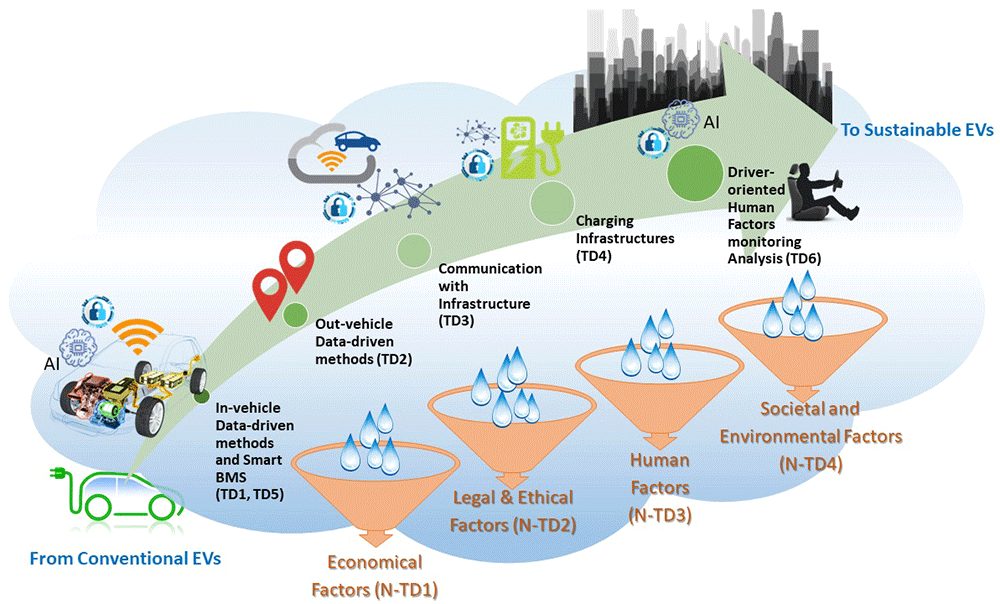
Figure 1. OPEVA’s improvement areas from Conventional EVs to Sustainable EVs.
The TD’s of OPEVA aims integration of technical domains for the success of Electrical Vehicle Autonomy. The innovation on aggregating information from the vehicle aims to create a model of performance and consumption specific to the individual vehicle and its driver (TD1). TD2 aims to optimize the individual driving episode using the out-vehicle data such as the state of the road, weather, charging station location and occupancy etc. that are collated from the back-end systems. OPEVA addresses the challenges associated with the communication between the vehicle and the infrastructure to gather data from the back-end systems (TD3). It aims for innovation in the use of recharging stations and related applications (TD4). OPEVA consortium aims to achieve a better understanding of what the battery and its constituent cells are doing during real-world use for an improved battery management system (TD5). Finally, TD6 covers the driver-oriented human factors for optimizing EV usage. The TDs, from the most deeply embedded in the vehicle to its support in the cloud, need to interwork optimally to deliver in one decade a better level of systemic optimisation for personal mobility that has taken ten decades to achieve with fossil fuels.
The social and nontechnical aspects are also be covered through four N-TDs. The economic factors, e.g., high cost (N-TD1), legal and ethical aspects, e.g., taxation (N-TD2), EV-related development by the human, e.g., charging duration (N-TD3), and societal and environmental factors, e.g., green operation (N-TD4) are taken into consideration in the OPEVA methods for a higher acceptance and the awareness of the society regarding these developments.
This paper has the specific goal of sharing the OPEVA’s mission with the automotive, transportation, energy and mobility communities and announcing how OPEVA will influence these sectors by introducing a set of key technologies and their portraying in demonstrations. Section 2 presents the OPEVA’s ambition and specific objectives by giving a brief overview of the state-of-the-art. Section 3 gives a literature overview and OPEVA’s ambition to go beyond state-of-the-art. Section 4 presents the OPEVA’s integrated solution strategy and high-level architecture addressing the objectives and the key technologies that are planned to be built throughout the project. Section 5 presents the progress so far concerning the project demonstrations associated with realistic use cases. Section 6 recapitulates the project impact and relevance with the EU goals and current state-of-play. Section 7 summarises the project identity and gives information about the project team and targeted competencies. Finally, Section 8 concludes the paper.
Objectives & ambition
OPEVA allows Europe to consolidate its advanced transport and mobility position by mobilising and incentivising a world-leading collection of industrial and academic partners towards a common objective. To maximise the impact of this work the project further supports Europe's energy independence strategy and addresses the increasing need to exploit non-polluting energy sources. The main high-level objective of OPEVA is to improve the lightweight EV market penetration and widespread adoption by tackling the limiting psychological factors such as range anxiety, high price, limited charging facilities, trustworthiness, and efficiency and duration of charging.
OPEVA has six specific objectives that are fully relevant to the high-level objective mentioned above. These objectives deal with the energy efficiency of the EV’s powertrain, effectiveness and efficacy of the dynamic routing of EVs in people or goods transportation operations, improving the accuracy of the range prediction techniques, enhancing the EV-grid integration, efficient charging, and finally wider adoption of EVs. Table 1 presents an overview of these specific objectives.
Table 1. OPEVA’s Specific Objectives.
Objective 1
Energy-efficient power train | Related domains
TD1, TD5, N-TD1 |
| Target: Improving the energy efficiency of the powertrain, considering intelligent integration of the battery, power electronics, advanced modelling and control in combination with AI techniques, by up to 10% (of the energy consumption in the drivetrain) concerning the baseline established during demonstrations. | Approach: OPEVA develops intelligent battery systems and power electronics to enable fast and efficient balancing of the cells in the function of in-vehicle data. Advanced model-based design of intelligent controller is planned to be used to achieve energy-efficient drives.
AI techniques are planned to be applied using the in-/out-vehicle data to achieve optimal operation conditions of the overall EV drives |
Objective 2
Energy-efficient dynamic routing | Related domains
TD2, TD6, N-TD3, N-TD4 |
| OPEVA Target: Reducing energy consumption by enabling dynamic route profile taking into account both external factors from out-vehicle data (e.g., weather conditions, road profile, traffic information, etc.) and internal factors (in-vehicle as well as driver-oriented internal data such as SoC and SoH, driver profile, vehicle power consumption, etc.), by more than 10% (of the total energy consumption of the vehicle for a given source and destination) concerning baseline established using the state-of-the-art strategies | Approach: OPEVA aims to utilise the data exchanged between the driver, EVs, and back-end systems in the ‘cloud’, the road infrastructure, and charging stations. These data can be available as in-vehicle and out-vehicle data. Energy-efficient low-complexity multi-objective routing algorithms will be developed considering both internal (e.g., SoC, SoH, driver profile, vehicle type) and external factors (e.g., weather conditions, road profile, traffic information). By courtesy of efficient route planning and possible land-use policies, OPEVA contributes to drivers’ comfort, concentration, and value of time (VoT). Moreover, reduced/even zero waiting time in charging queues also contributes to air quality, safety and public life in the city. |
Objective 3
Accurate range prediction techniques | Related domains
TD1, TD2, TD5, N-TD3, N-TD4 |
| OPEVA Target: Increase the accuracy of the predicted range of the EVs by fusing: i) Internal data: improved SoX monitoring of the battery, in-vehicle auxiliary power usage, driver profile, vehicle power consumption, etc.; and, ii) External data: weather conditions, road profile, traffic information, etc. using safe and secured in-vehicle and out-vehicle data acquisition technologies, at least 10% concerning the baseline established in demonstrations | Approach: OPEVA aims to predict the range using data-driven predictive algorithms based on accurate and extensive data from the backend systems obtained using safe and secure data acquisition technologies and fine-grained in-vehicle data obtained using advanced sensing technologies. Security is one of the key aspects while collecting data from other vehicles and infrastructure which are planned to be developed in OPEVA with the communication technology. |
Objective 4
Improved EV grid integration | Related domains
TD3, TD4, N-TD3, N-TD4 |
| OPEVA Target: Improving EV grid integration to reduce waiting time by novel vehicle-to-grid (V2G) interactions and smart charging management strategies, and systems for more secure and effective integration of a large volume of electric vehicles into power network planning and operation, by at least 10% concerning the baseline established in demonstrations | Approach: OPEVA aims to improve EV grid integration by developing energy infrastructure planning and operation management tools that enable optimal energy infrastructure allocation and operation management. A safe and secure cloud platform is planned to be used to share information among various actors in the value chain to enable optimal decision-making. Advanced charging facilities such as inductive charging will improve the uptake of EVs. |
Objective 5
Efficient charging technologies | Related domains
TD5, N-TD3 |
| OPEVA Target: Reducing the average charging time using advanced technologies like inductive charging, wireless battery communication technologies, and advanced sensing and diagnosis technologies, by at least 10% concerning the baseline established in demonstrations | Approach: OPEVA aims to improve the inductive charging deployability with novel power electronics. Wireless sensing technologies will help in terms of hazard management and reducing weight enhancing charging efficiency. Various alternative sensing technologies, diagnosis technologies and storage will improve the confidence on the overall EV systems. |
Objective 6
Wider EV adoption | Related domains
N-TD1, N-TD2, N-TD3, N-TD4 |
| Improving the science and technology, research, innovation and marketing capacity in EV penetration aligned with the European priorities to achieve CO2-neutral, sustainable mobility, enabling electrification, strengthened with dissemination, exploitation and outreach activities | The outcomes of the project are planned to be validated in effective demonstrators, that are being developed to increase the awareness and the acceptance of EVs through lessons learnt, best practices and refinements by end-user feedback. A wide range of dissemination, communication and exploitation activities will be performed. A comprehensive gap analysis will be performed to improve standards, GDPR and EU regulations compliance |
State-of-the-art and ambition
As fully aligned with the current state-of-the-art techniques OPEVA objectives indicate the ambition to redesign the overall power electronics architecture including the energy-efficient powertrain; adjustments in BMS and AI-powered smartification of energy optimisation techniques; in-vehicle power electronics; inductive power transfer and communication units to address the issue of suboptimal integration to the BMS; charging algorithms considering both in-vehicle and out-vehicle data using AI-supported methods to derive charging suggestions to the drivers. OPEVA also aims at preserving battery life and optimizing its usage; advanced energy infrastructure planning; AI-based and data-driven predictive algorithms with high prediction accuracy with live parameter updates from reliable and global data sources – e.g., wind direction, tire pressure, battery temperature, battery state of charge, shadows, solar irradiance, outside temperature. Secure communication between the EV, charging infrastructure and the cloud services over WWW will be maintained through a proactive cybersecurity protection mechanism.
As addressed in new generation EVs, powertrain is the key source of energy consumption and its topology, driving profile, and energy management systems play a crucial in the EV’s overall performance. Comparative studies of energy consumption in various powertrain topologies shows that the wheel-hub drive is the most energy efficient while it has other engineering challenges for being adapted in the industry2. While a considerable literature focuses on HEV/PHEV optimization, a limited focus has been given to optimize pure EV drivetrain3 other important factor is the driving profile. EV drivetrain optimization is done using the genetic algorithm considering various driving profiles4. The energy-efficiency of a specific topology highly depends on the driving speed profile and various vehicle parameters such as vehicle weight and motor specifications. A speed profile which can be optimized considering factors like traffic and road information5. It requires further investigation how these methods can be adapted to consider real-time data update from both in-vehicle and ex-vehicle data. On the other hand, Energy Management Systems that use battery models to optimize battery aging and energy consumption are present in research literature. They are mostly designed for Plug-in Hybrid Electric Vehicles or Fuel Cell hybrid Vehicles and use semi-empiric models in order to run fast enough6,7 but physics-based models start being investigated8. Physics-based models are proven to be more accurate, especially for the aging of the batteries and less dependent of the experimental results that are used for calibrating pseudo-empiric models9. Those models are considered as a necessary step toward battery digital twins10.
Either static or dynamic routing algorithms play a significant role in EV energy optimisation. A huge body of static routing algorithms solves EV Routing Problem (EVRP) at higher abstraction level considering availability of the certain static knowledge e.g., location of charging points and battery model/state. A single origin-single destination path is calculated for EV considering the unique characteristics of EVs such as limited cruising range, long recharge times, and the ability to regain energy during deceleration. As opposed to the static methods, there is a group of dynamic routing algorithms that consider dynamic factors such as status of charging station, traffic-road information and weather conditions. These dynamic factors have a strong influence on the overall routing performance11. There are real-time updates on state-of-the-charge (SoC) and state-of-the-health (SoH) which can be used for optimal routing decisions. A dynamic route optimization (for travel time minimization) considering the SoC and SoH update using mobile charging and V2V communication is considered in recent literature12. For instance13, proposed an energy-optimal path between two locations that allows stops at charging stations. The proposed approach enables flexible routing on routing due to updates in out-vehicle and in-vehicle data. Nevertheless, the studies above do not handle energy efficient or reliable route planning problem considering various out-vehicle and in-vehicle information simultaneously. Reliability (i.e. remaining useful life) is very important for reducing the risk of failures for the team. For example, in the smart cities, vehicles should operate without failure. Therefore, reliability becomes the most important metric for the long-term operation, and reliability based multi vehicle route planning is more realistic for fleet management in last-mile delivery.
Extensive research has been conducted to enhance the performance and augment the functionalities of the BMS such that the required standards can be met in EV applications. Designing BMS for EV applications can encounter many challenges and opportunities but the state-of-the-art mainly reports advancements in the following areas. First, to assure safe operation and long lifetime, battery charging strategies limit the charging power when battery operating limits are reached14. These boundary conditions are expressed in terms of maximum battery terminal voltage and temperature. While voltage measurements per each cell (or parallel connected cell blocks) are typically present in battery packs, temperature measurements are limited. Temperature sensors, when used, are placed on the cell surface, while under load, cell core temperature is typically higher than the surface. Second, Remaining Useful Life (RUL) Prediction Approaches play a significant role as Battery RUL information provides operators with a means in decision making by quantitatively knowing how much more time a battery can be used until its functionality is lost15. It is a key issue to accurately predict RUL for the battery health management system even though there are many challenges such as modelling insufficiencies, system noise, and degraded sensing fidelity. In recent years, many methods have been proposed and developed to predict battery remaining useful life. Third, Lithium-ion cell balancing methods, either passive or active balancing methods, are used to maximize capacity and service life of the pack by working to maintain equivalent state-of-charge of every cell, to the degree possible given their different capacities, over the widest possible range16. Passive balancing is relatively easy to achieve but it has a low efficiency. The extra energy stored in the overly charged cells is completely wasted as heat using a resistor. The balancing time is long. Active balancing transfers more charged cells to less charged ones. Circuit design is complicated, but it can reach a very high efficiency. Finally, thermal measurement and management can be considered as the fourth remarkable factor that affects the BMS performance17. In recent BMSs, temperature sensors are essential elements to ensure safety and performance of lithium-ion batteries. There are strong needs for advanced BMS that have real-time access to both local and distributed temperature information of each battery cell, enabling more precise estimations of SoC and RUL, as well as early detection and prevention of catastrophic events such as thermal runaway. Some research is devoted to improving the thermal stability of batteries; however, the precondition is to sacrifice battery capacity18. High capacity is essential to ensure the required mileage and power of an EV.
Second life of EV batteries refer to their energy storage potential and reuse after they reach their first end-of-life. The capacity of first end-of-life batteries on EVs is approximately 70-80% and the remaining capacity can be utilized till it reaches 30% battery capacity19. European Union (EU) announced zero emissions target for the new cars by the year 2035, and it is estimated that in EU countries, EVs will reach a market share of %75 by 203020. The yearly demand for lithium batteries is experiencing swift growth, nearing an annual consumption of 5.7 terawatt-hours by 203521. Consequently, opportunities exist to utilize battery capacity in their second life such as stationary applications like energy storage systems (ESS) and EV charging stations. However, challenges occur in handling of the second life batteries in stationary storage applications. These challenges can be categorized as follows: firstly, encompassing end-of-life battery collection, transport, and supply chain logistics; secondly, entailing screening and condition diagnosis procedures; thirdly, involving the meticulous processes of dismantling, processing, and subsequent integration into second-life systems; fourthly, addressing the techno-economic feasibility of such endeavours; and finally, addressing the legal and regulatory challenges inherent in this domain22. Among screening and condition diagnosis category, the batteries will experience a fast-screening and regrouping process so that healthy batteries could be differentiated from the unusable ones23. Due to the inconsistencies in the battery cells in the pack, direct utilization of batteries is not possible after first end-of-life, but rather screening tests are required to assess battery characteristics such as SOH assessment and capacity tests. Alternatively, batteries exhibiting low consistency may be prone to rapid over-discharge or overcharge, leading to scenarios such as thermal runaway or potential explosions24.
56% of the expenses linked to the reprocessing of batteries for usage in ESS pertain to the first end-of-life battery costs, while the remaining portion encompasses expenses related to packaging materials, testing equipment, labour, and other factors25. The potential market price, the profitability in stationary applications, the market potential of second life batteries, reduction of upfront costs for EVs, and profitability of early retirement from an EV are all topics of research to analyse adoption of second life batteries in industry and to establish competitiveness compared to brand-new batteries. In terms of the technical feasibility of second life batteries in ESS, it was observed that these batteries differ from brand-new ones in terms of energy, power capacity, energy density, and cell-to-cell variability. These performance differences can be mitigated through battery resizing, implementing control mechanisms via BMS, and ensuring effective energy management. Moreover, it is crucial to address concerns regarding functional safety and lifespan to ensure the technical viability of second-life batteries26. In OPEVA, the aim is to tackle the technical challenges regarding first end-of-life condition diagnosis, dismantling, and integration in an ESS and EV charger system.
EVs and charging facilities are two dependent systems, and their coherent interaction significantly influence the reduction in GHG emissions. The most common charging systems are plug-in charging and fast charging systems27; however, other systems such as inductive charging are becoming popular28. To improve the efficiency and reduce the volume of Fast Charging infrastructure, academic research in the field of power electronics is focusing on two aspects: i) The use of wide band-gap semiconductors (SiC and GaN devices) permits to reduce commutation losses and increase switching frequency29; ii) Partial converters that may reduce the need of Power Electronics components30. Another research dimension is based on the management of EV charging stations. The operation analysis and the effective management of charging stations have drawn the attention of the researchers. There is a range of approaches that apply analytical models based on queuing theory in order to estimate the load of charging stations, the QoS they provide to customers, as well as their profits31,32. To improve estimation reliability, multiple physical parameters should be sensed for each cell, which will further increase the cable number. Particularly, it has been shown that mechanical stress is able to provide useful information both on SoC and on battery aging32. However, no such monitoring systems have been developed yet33. On the other hand, contactless inductive charging has become a critical requirement for fully automatic charging that will be a key factor in the success of electrically powered mobility, as many experts agree34,35.
The research and innovations mentioned above indicate the significant effort in improving the efficiency and effectiveness of the EVs, whether they are autonomous or not. On the other hand, trustworthiness has become more critical in recent years as security, safety, privacy, fairness and accountability requirements in EV driving are getting more pressing in socio-economic, legal and ethical context. As the new United Nations Economic Commission for Europe (UNECE) regulations UNECE 15536 and 15637 force the automotive sector to get compliant with international consistency, and to enhance vehicle safety, reduce environmental impact, build consumer trust, encourage innovation, and foster global collaboration, all of which are vital for the industry's growth and sustainability in an increasingly interconnected world. Resilience against cyber risks both at vehicle and grid level, considering the vehicle and infrastructure cloud, should be met to ensure the accurate prediction and prevention of cyber-attacks or unintended failures38,39. As supported by the standards like ISO/SAE DIS 2143440, SAE J306141 and ISO 2626242, EVs and related digital infrastructures and services should comply with safety and security standards. Additionally, recent trends in development and deployment of AI systems in vehicles has brought the new concept of trustworthy AI. As addressed by the European Commission in ALTAI Framework, AI systems must be designed to prioritise not only safety and security, but also transparency, fairness, accountability and explainability of machine learning algorithms43. The recent AI-powered techniques should encounter the trustworthiness during any data transfer, service delivery and interaction between any node pairs in a transportation network including vehicles, drivers (if exist), passengers, pedestrians, other road users, charging or refuelling infrastructures, smart city services and mobility services44.
OPEVA solution strategy and architecture
In OPEVA, the proposed solution portfolio spans across these different but interconnected domains, pushing forward innovations which are catalogued into Key Technologies (KT). Figure 2 presents an overview on how these KTs, being developed in different OPEVA TDs and N-TDs work together to enable the envisaged integrated solution. The OPEVA solutions framework is linked with the needs of user and system needs at five major areas: I) Vehicle; II) Charging System in Urban Settings; III) Transportation System; IV) Urban System; V) Human & Society. The most direct and well-studied interactions occur at the vehicle level. Vehicle area is the first entity that deals with the vehicle electrification and BMS (See KT4, KT6, KT14 and KT19), vehicle operation units (See KT16), electro-mechanical design and cyber-physical components (See KT3, KT11, and KT23). At this level, connectivity, autonomy, and automation needs may physically alter the vehicle design and operation. The in-vehicle services mostly rely on the governance of actuators (e.g. speed controllers, valve potentiometers, etc.), sensors (perception, Lidar, proximity, camera, temperature, vibration, etc.) and control units (Electronic Control Units, ECUs for the control of various functions of vehicle such as telematics, brake system engine, immobilizer, transmission, chassis, suspension, tachograph, lights, etc.). The charging system forms the second level. This area deals with the smart and charging systems (See KT2, KT6), wireless charging enabling conventional and novel GaN-based chargers, trustworthy connectivity of the charging system with the vehicle and the urban system (e.g. through cloud-based architectures). At the transportation system level, vehicle and infrastructure technology can drastically change how vehicles interact with each other or other modes of transportation in the driving environment. Here, out-vehicle connectivity is built by gateways enabling trustworthy data communication among vehicles, charging stations, transportation infrastructures and mobility services. The transportation system is composed of vehicle connectivity and cyber-physical components (See KT5), connected driving (See KT8), travel-cost implications analysis (See KT17, KT21), vehicle utilisation, energy use and emission analysis (See KT7, KT18, KT22), and congestion and road capacity analysis (See KT12, KT17). At the urban system level, the transportation system interacts with a wide range of infrastructure in the urban environment such as roads, power grid, and buildings, thereby altering how urban systems utilize resources and energy and generate emissions and waste. Urban systems are usually defined in Sustainable Urban Mobility Plans (SUMPs) bridging the mobility services (for goods and person mobility) with smart city services. Finally, how the public perceives and how the government regulates mobility services, including new modes of mobility or new types of vehicles such as CAEVs can have profound effects at the society level.
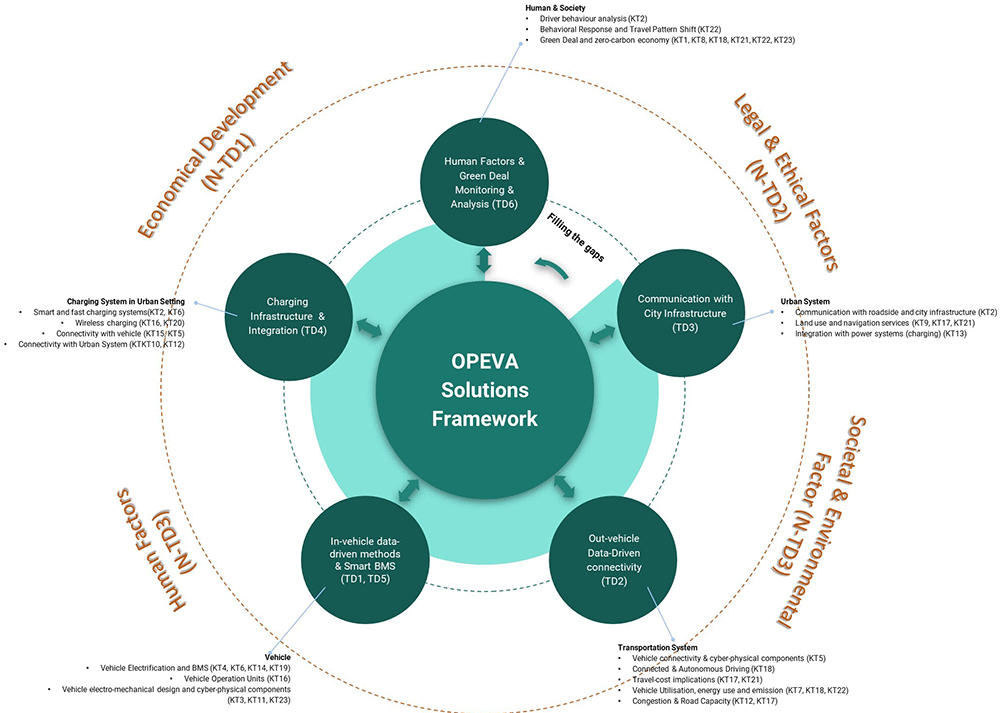
Figure 2. OPEVA solution portfolio and key technologies.
Key technologies in OPEVA project
OPEVA solution strategy is based designing, developing and integrating 23 key technologies (as listed in Table 1) and utilise the developed solutions in 7 demonstrations (as listed in Table 2). Table 1 describes the solution strategy and rationale behind the selection of these key technologies.
Table 2. OPEVA’s Key Technologies.
| Key Technology | Description |
|---|
| KT1 Accurate range prediction algorithms for both traditional and solar powered EVs | The OPEVA project aims to perform a sensitivity study to find the most important factors contributing to energy consumption and energy yield (expected: vehicle mass, wind direction, tire pressure, battery temperature, battery state of charge, shadows, solar irradiance, outside temperature). The goal is to increase range prediction under all circumstances from an accuracy of about ±30% (state of-the-art) to ±5%.
AI technologies such as Deep Learning systems will be used to provide predictive models that will help to implement innovative services for the driver such as optimized charging suggestions, Predictive Control System, driving suggestions for a better battery usage and charging. |
| KT2 Eco-charging strategies based on smart charging management systems | With the smart charging management, OPEVA partners consider various criteria in the optimization with in-vehicle and out-vehicle data, lowering the charging cost, increasing the autonomy and battery lifetime. Drivers' profiles will be created considering both the vehicle system (kind of vehicles, brakes, acceleration, average per day usage in terms of time and distance, driver status, passenger) and the context (wheatear, temperature, GPS location, traffic). Drivers' profiles and digital battery models will be analysed with a mix of AI-based algorithms to provide suggestions to the driver, aiming at preserving battery life and optimizing its usage. As one of the enablers to adapt eco-charging strategies, an effective IoT-enabled wireless inductive charging system will be implemented at lab-scale to monitor the efficiency of induction process for EVs |
| KT3 Cell-level multi-measurand and multi-sensor device with Electrochemical Impedance Spectroscopy (EIS), voltage, current, temperature measurements for improved estimation of SoX parameters and safety monitoring. | The OPEVA project will develop a fully operational Electrochemical Impedance Spectrometer (EIS), Potentiostat and sensors in a low-cost single microchip of 2x2mm and 1.5mW power consumption. In addition to the conventional voltage, current, temperature data acquisition, the chip allows to measure the cell internal Impedance Spectra, Temperature at the Anode, Cathode and body, cell strain/pressure and vibration/shock. In addition, integration of new multiparameter sensor chips capable to allow low-cost spectroscopy will be developed in OPEVA. The new BMS might allow to increase the number of cycles according to the chemistry, better monitor any faults, track the cell, and improve self-healing of the damaged cell. |
| KT4 Multicell battery cell controller with minimum lifetime drift | Today's battery cell monitors are sampling the cell voltage for up to 18cells in parallel. Due to the high accuracy and precision a large amount of data needs to be transmitted to the MCU through the internal battery bus. Due to the limited Baud rates the traffic is slow and thus the system latency already at the limit in view of the required safety needs. In the OPEVA approach, the number of channels and simultaneous measurements per cell controller will be increased. The data rate of the communication links will be increased as well as the number of cell controllers per MCU link to minimize the interface demand and thus safe cost. The new system shall effectively allow to measure more cells with higher precision in a shorter time. |
| KT5 Safe and Secured for multi-vehicle BMS communication network | In current EVs, BMS data is used by the vehicle energy management system to optimize overall EV energy management performance. For example, the battery packs master BMS may communicate to the vehicle energy management control unit how much mileage is available under certain loading conditions. Within OPEVA, we will connect the EV to the cloud for central monitoring of the EV status to subsequently use the cloud to perform, e.g. trend recognition, on BMS data of multiple EVs and use this data to improve in particular battery-health-related estimation values inside individual EVs. |
| KT6 AC battery system with smart integration of BMS and multi-level converter for active balancing | The OPEVA project will perform the integration of the multi-level converter and BMS into the vehicle that will help in improving the performance of managing the battery cells/modules through applying active balancing at cell level and the module level. This will help in increasing the reliability of the battery system by splitting the battery pack into battery modules. Moreover, the controller of the multi-level converter can handle any level of performance inequality among the battery modules, which in turn can lead to integrate different levels (i.e., size, capacity, and chemistry type) of the battery modules at the same time and in the same field of application. |
| KT7 Virtual prototyping of the system for fast design optimization | The design optimization is often done with simple constraints and few to no consideration of the actual system operation and control. This kind of integrated optimization is developed at early stages, mostly theoretically. In addition, virtual prototyping is a kind of Digital Twins models of key components with different fidelity levels. In OPEVA, partners will apply virtual prototyping for fast design optimization considering various criteria and the actual system operation in order to design the use case systems. |
| KT8 Solar energy yield prediction algorithm | In OPEVA, reliable and global data sources will be identified, and AI-powered techniques will used to predict the solar energy yield in charging operations. The algorithms will be tested and validated with actual weather data on multiple locations. The target of the project is to achieve 5% absolute accuracy (including shadows) for range prediction. |
| KT9 Last-mile delivery specific routing service | In OPEVA, we will develop a routing strategy for EVs to obtain routes considering both the historical data stored in cloud, the distribution demand, driver characteristics and the reliability of the vehicles. The problem will be handled combining different exact and metaheuristic approaches or even simulation with metaheuristics (simheuristics) using various real time data that gathered from both out-vehicle and in-vehicle. |
| KT10 Holistic security of in- and out-vehicle data | OPEVA aims to rely on a security-privacy threat modelling that is supported by the safety aspects. Any hacked component in a vehicle not only causes security problems but also privacy leakages. In addition to the in-vehicle attack surface, there is a strong need to cover the security and privacy countermeasures holistically also dealing with the out-vehicle attack surfaces. OPEVA will develop hardware and software-based cyber resilience tools, such as hardware security modules, secure CAN-bus gateways and cryptographic passporting to protect both in-vehicle and out-vehicle data. |
| KT11 Federated cloud/local platform for data processing for Smart BMS | The federated cloud/local platform follows the principles of the Federated Learning (FL) technique from AI and machine learning, where the computations and analysis are separated between local (personalized) and central (statistically aggregated) parts. Two parts synchronize with each other through short updates sent upon specified events in the processing phase. This allows to decrease the energy consumption associated with communications between central and local parts, thus sparing local energy resources to analyse personalized events. In OPEVA, BMS optimization algorithms will be implemented according to a FL approach. |
| KT12 Cloud platform to collect and share information of EV fleet, charging infrastructure and grid utility | A cloud platform based on Arrowhead tools will be extended to collect and share information of all EV fleet, support use cases, charging infrastructures, and grid utilities. The cloud will be based on micro services framework where the algorithms can run either on cloud or at edge seamlessly. |
| KT13 Secure and efficient integration of EV charging station to power systems | Secure integration of massive EVs penetration will have an impact on several areas of power systems. OPEVA reacts on expected impacts by development of information tools for power system planning and operation support. A decision support tool for energy infrastructure planning on a regional level have been developing, which embraces probabilistic assessment of relevant development scenarios and evaluates the commercial and technical impacts of strategic decisions. |
| KT14 Data-driven prognostic and health management tool for BMS | In current battery systems, battery state estimation, battery health, ageing and degradation provides nonlinear states for usable battery levels. In OPEVA, a prognostic and health management (PHM) tool will be developed that is based on data-driven methodologies. This will provide BMS for battery life extension and optimization in HEVs. Deep learning-based architecture will be designed and implemented for battery life extension and optimization and also contribute to the energy management inside the EV by estimating the health, capacity etc. of batteries. |
| KT15 Wireless battery sensors | Alongside typical measurements (e.g. voltage, current, temperature), different parameters provide useful information to determine the cells’ state, such as monitoring the mechanical stress of the battery (as cells expand and contract based on their SoC and abnormal expansion might indicate malfunctioning). In OPEVA, wireless sensors tailored for battery monitoring will be developed to reduce cable deployment and maintenance costs. Emerging low-power communication standards, such as Bluetooth low energy and RFID, and commercial transducers will be analysed |
| KT16 Integration of inductive charging and related communication with BMS and in-vehicle power electronics for improved charging efficiency, reliability, and cost reduction. | An IoT-enabled surface inductive charging system will be implemented both with conventional and GaN-based IGBTs aiming to observe and compare the charging efficiency of two alternative chargers. AI-based methods are planned to be used for optimising the BMS. Critical parameters like voltage, current, and temperature will be measured from the cells which are then used to estimate critical battery indicators such as SoC, SoH, RUL, etc. These indicators are then used to control battery charge, discharge and improve battery, capacity, health and lifetime |
| KT17 Learning-based prediction for optimal dynamic planning and routing | KT17 aims to integrate the energy consumption and yield prediction models and figure out what part of the computation should be done online, and what part can be preprocessed. Furthermore, partners will investigate what part of computation can be performed online (in the cloud) and what part offline (in the vehicle). Further, based on data collection from in-vehicle data as well as out-vehicle, partners will calculate driver profiles using Deep Learning systems to provide predictive models that will help implement innovative services for the driver such as optimized charging suggestions, predictive control system, driving suggestions for a better battery usage and charging. |
| KT18 Energy-efficient AI-based driver assistance system | Multi-sensor (e.g., vision, radar and so on) perception and control systems are common in modern semi-autonomous EVs in advanced driver assistance systems. In OPEVA, various approximate computing techniques in combination of Deep Neural Network algorithms will be developed to save energy and improve the performance of overall perception and control systems. |
| KT19 Functional safety for BMS cell controller to ensure safety integrity of the battery sensing data | The acceptability of the autonomous car cannot be possible without a disruptive innovation in the functional safety: the population can accept a fatal accident caused by human error but will not readily accept an accident caused by a defective autonomous car. Currently, functional safety architecture is limited to the vehicle, applied on standalone integrated circuits, BMS and On-board charger system level. OPEVA focuses on safety requirements and safety architectures for the complete EV charging system to merge these safety improvements from BMS sensors, controllers, and fast- Ethernet communication. |
| KT20 Secure wireless proximity protocol | A secure wireless proximity control is planned to be developed for I) Identification of the driver/vehicle in online (e.g. 4G/5G) and offline mode (e.g. underground parking); II) Evaluation of novel localization technologies for more precise identification of the driver/vehicle (e.g. UWB); III) Secure communication between the charging infrastructure and the driver/vehicle using secure channels including hardware-based security (Secure elements); IV) Intuitive charging process without interaction of the driver (conductive charging) and identification via company accounts (fleet management). |
| KT21 Energy-efficient routing for EVs | Green itinerary planning is a type of route planning based on energy consumption. KT21 focuses on improving the routing by considering several factors that affect the energy consumption: (i) internal car features, such as the electric vehicle’s weight, battery type, and engine map effectiveness; and (ii) external factors, such as air friction, wind, temperature, road elevation, traffic congestions, unexpected events, and driver habits. |
| KT22 Energy-efficient AI-based driver recommendation system | An efficient “driver recommender system” is a must in order to achieve the targeted objectives in terms of eco-driving and battery optimization. The driving behaviours influencing electrical vehicle usage, in terms of battery usage, need to be monitored as traces and analysed (in the way Human-Computer Interactions or Human-Systems Interactions are analysed). KT22 focuses on the use of more internal and external data as well as integration of the drivers’ behaviour to develop a new and efficient driver recommender system as well as an optimal intelligent speed advisory system. |
| KT23 Second life modular battery storage systems | Aligned with the Green Deal goals, to reduce the number of battery modules to be recycled after the first use, OPEVA aims to develop a second life battery solution to integrate different module types into a standalone battery storage solution. Therefore, partners will investigate and develop a new mechanical and electrical setup for second life battery modules. The basis for the reuse of second life battery modules are electrical and functional tests and classification procedures, which have to be defined e.g. SOH, SOC, visual inspection and usage history in combination with fundamental characteristics of battery cells and their possible applications in storage systems. The different type of battery cells will be managed and controlled via in-house designed battery management system (BMS). Energy management unit (EMU) and human machine interface (HMI) software application will be designed and developed for the control of the power electronics in the storage system. |
OPEVA solution framework
OPEVA solution framework is characterised by a set of main building blocks that forms the OPEVA’s high-level architecture and integrates the relevant KTs listed in Table 2 as (see Figure 3):
Cloud support and communication services:
Battery Management:
Energy-aware intelligence and prediction:
Charging and energy grid:
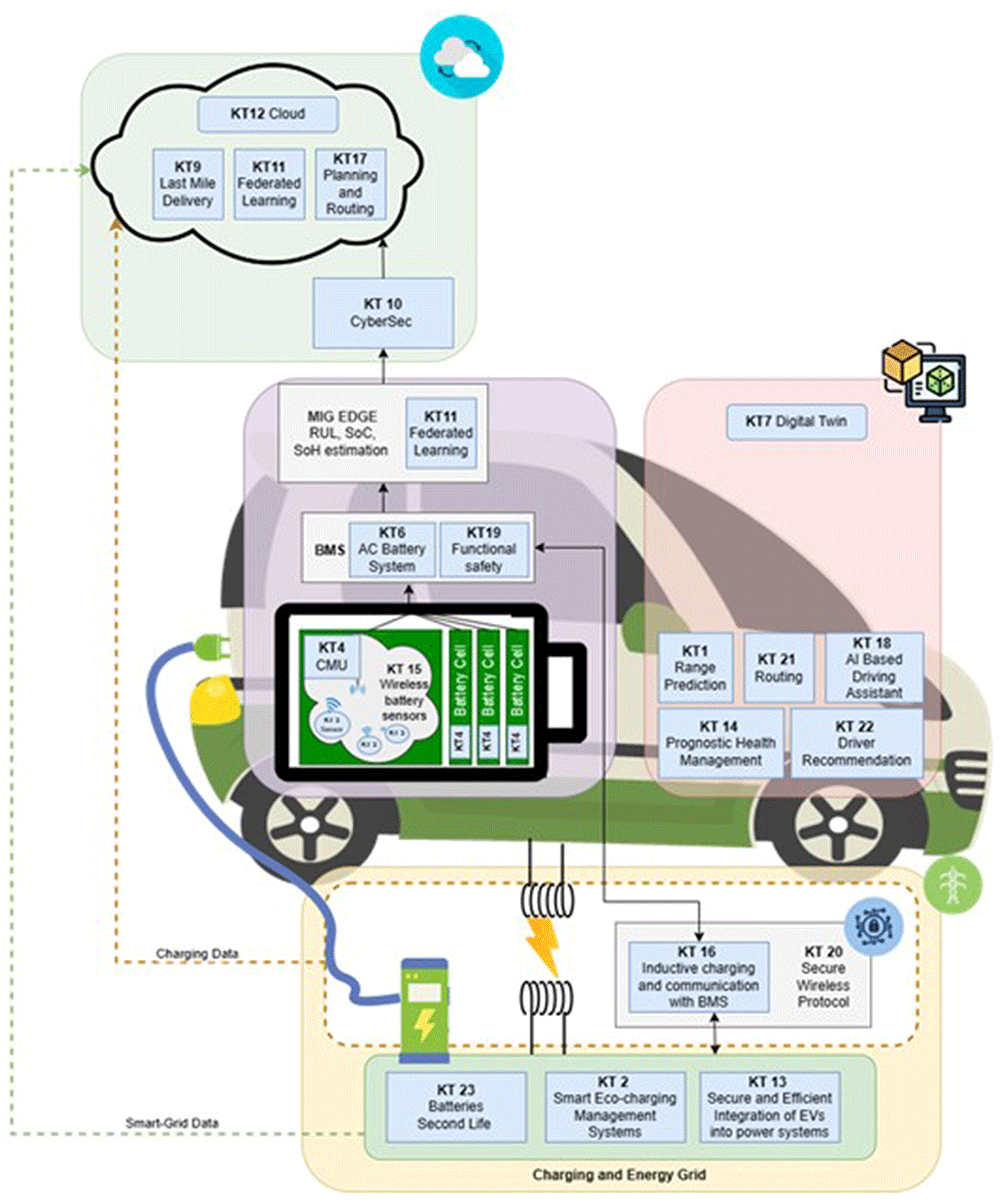
Figure 3. Main OPEVA architecture.
Vehicle is the main central integration point of the architecture that is also integrated with the charging infrastructure and the smart grid as well as the smart services at the cloud level. At the EV battery level, innovative wireless sensing solutions in KT3 and KT15 provide a finer and detailed real-time assessment of the battery status. The greater accuracy in the monitoring of a single battery cell is expected to enhance the implementation of the overall state of the battery, thus paving the way for further control techniques of the vehicle – aiming at energy efficiency through best operative conditions and efficiency-optimized thermal management. The vehicle connects to the smart energy grid via several key technologies. KT16 delivers inductive charging and BMS communications aided by a secure wireless protocol (KT20). Other technologies also address the charging process (KT2), particularly focusing on improving the usage of renewable energy on EV charging and on peak shaping. The energy grid integrates in an intelligent fashion with the vehicle via KT2 and KT13 exploring multiple optimization scenarios (energy cost, carbon footprint reduction, peak shaping), including integration of EVs into smart energy communities. Batteries’ second life usage is addressed in KT23, integrating the EV in the second-life battery module towards more sustainable and recyclable storage solutions.
Energy-aware intelligent algorithms are being developed at the vehicle level targeting high prediction accuracy with live parameter updates from reliable external and internal data sources. Such an intelligent approach focuses on improved range prediction (KT1), efficient routing decisions (KT21), and several in-vehicle energy efficiency improvements for ADAS (KT18 and KT22). Battery information acquired from the BMS is also used for accurate battery health prognostics. For more energy-aware solutions, more accurate simulation models are being developed in KT7. Clearly, this energy-aware intelligence and prediction building approach is highly dependent on in- and out-vehicle data collection, which additionally requires safe and secure communication between the vehicles, grid and the charging infrastructure. Furthermore, cloud infrastructure is to be leveraged to enhance services’ availability.
The Cloud support and communication services address the availability, accessibility and scalability challenges. For instance, the cloud platform will support last mile delivery (KT9) and AI-based predictive models that will help implement innovative services for the driver such as optimized charging suggestions, predictive control system, driving suggestions for a better battery usage and charging (KT17). OPEVA aims at developing a smart cloud platform where computation of AI-supported methods and analysis techniques are separated between local (personalized) and central (statistical aggregative) systems to reduce communication overhead (KT11, KT12). To complement this setup with enhanced communication functionalities, OPEVA develops a multi-interface gateway allowing seamless information flow between in-vehicle and out-vehicle systems (KT11, KT12).
KTs in OPEVA rely on a strong background on both embedded and system level solutions. For instance, a prototypical implementation of a Multi-Interface Gateway (MIG)45 and Secure IoT Gateways46 could be based on a Commercial-Off-The-Shelf (COTS) Single Board Computer (SBC) running a Unix-like operating system and equipped with heterogeneous wired and wireless communication interfaces (e.g., Ethernet, serial, Wi-Fi, BLE, cellular 4G, LoRaWAN). Use of Hardware Security Modules as master crypto-devices installed on servers and cloud services strengthened with widely-accepted open-source frameworks help partners to design and deploy secure cloud infrastructures. By relying on the legacy knowledge47, OPEVA partners have decided to design and develop a cloud infrastructure by utilising open-source frameworks like Arrowhead, Mimosa and IoFog. On the other hand, from a software point of view, the IoT gateways like MIG might feature smart routing policies for internally steering (through queues-based mechanisms) the traffic between the different communication interfaces. Then, since these gateways might logically act as a fog computing-like device, allowing an intelligent communication between the vehicle and cloud computing-based elements, it will aspire to exploit all the application protocols and security techniques that will be defined in the other architectural elements (targeting the best possible inter-components data exchange). Moreover, its presence inside the overall architecture would likely enhance the information exchange between EVs and the infrastructure, also targeting a processing offloading (through FL-oriented mechanisms) at the edge48,49, in order to move computational efforts where and when needed. With regard to FL, this offloading could apply in different directions, such as in distributing the computational load of the routing algorithm between the cloud and the EVs, evaluating (i) potential energy savings at the EV (owing to reduced transmissions to the cloud) and (ii) scalability of the proposed approach50. So as, given the aspiration for the edge systems to govern FL-based mechanisms to effectively combine data from multiple EVs, this would involve the following objectives:
Distributed traffic routing strategies, to improve the overall routing approach by using locally optimized strategies at the edge. In detail, this could be done exploiting the EVs’ position, battery status (charge), and carried weight, together with the position of the charging stations, in the end obtaining sub-optimal routing strategies at each EV – although sub-optimal, this approach has the advantage of being scalable to a number N of EVs potentially very large.
Distributed BMSs, to locally monitor the statuses of batteries on board the EVs (with embedded intelligence in the edge devices), while devising a hierarchical BMS approach beneficial for each EV and for the overall network composed by these mobile vehicles51. Battery packs re-use and accurate monitoring of battery status are the complementary topics that may be encountered as open research areas where AI-based techniques can be applied.
Distributed grid infrastructures, integrating wired or wireless charging infrastructures (e.g., inductive charging), transportation grids and connected vehicles, to present seamless integration of EVs in smart urban and rural transportation, logistics and mobility52.
Use cases and progress
OPEVA originally defines a set of different demonstrators in the following 6 areas of implementation to present how the KTs can be used effectively. OPEVA aims to prove the project concept and reach the objectives by testing and validating the KTs within a certain scope. The targeted technology readiness level (TRL) is 5 aiming to validate the KTs in relevant environment. The following subsections briefly present the demonstrations that have already planned and elicited in the first year of the project (as of December 2023).
Developing a battery pack with smart BMS, simulation on HIL system test and perform physical test with battery pack test machine
This demonstration focuses on the development of a Battery pack with an integrated BMS, which is planned to be tested by simulation in a Hardware in the Loop (HiL) system. KT2, KT4 and KT10 will play a central role in setting up a trustworthy HiL-based simulation environment. This simulation takes into account the road conditions and driver profile. These data will be used for the estimation of parameters like: RUL, SoH and SoC. The developed tools will also leverage on accurate cell measurement and reliable communication inside the battery pack. This demonstration will be tested on a last mile delivery service in the city of Istanbul by focusing on the functionalities of the MUSOSHI’s lightweight EV presented in Figure 4.

Figure 4. MUSOSHI’s lightweight EV.
Improved sensors for accurate battery monitoring
This demonstration focuses on the development of innovative sensing strategies for battery monitoring, which includes wireless custom sensors for temperature and pressure, and integrated impedance sensors. Sensors will be integrated in a small module, called Cell Management Unit (CMU) which will be used to calculate the cell impedance and also other common parameters like V, Ah and T, temperature measurements to the anode, cathode, body and environmental, as well as strain/pressure and vibration, supporting the module's balancing strategies. By mainly applying the KT2 and KT15, it will be possible to continuously evaluate the SoH of the cells, predict their residual life with greater precision and also derive assessments for their second life. The demonstrator will thus be able to show that it is possible to recognise the state of degradation even when deviating from the basic models. This implementation of the state determination will also be of assistance for higher level management techniques (thermal management, estimated vehicle range, and so on). The developed techniques will be showcased on ALKE’s EV prototype (Figure 5).

Figure 5. EV prototype developed by ALKE.
Digital twin for performance optimization of electric cars
This demonstrator will demonstrate and validate the effectiveness of the OPEVA key technologies related to enhancement of accurate range prediction, energy-efficient operation and dynamic routing and reliability. The demonstrator will integrate the various elements in OPEVA value-chain. Components are related to battery and data acquisition technologies. Hardware is composed of in-vehicle E/E components for application processing, in-vehicle communication and BMS architecture and its integration with battery cells and the related mechanical, electrical and thermal systems. Software refers to the (multi-sensor driver assistance) applications and routing algorithms. The final layer is the EV, users and environment (traffic, road, weather and so on). The demo will focus on validating OPEVA ambitions in the following directions – (i) accurate range prediction algorithms considering extensive in-vehicle and out-vehicle data with live parameter update (ii) energy-efficient multi-sensor (e.g., vision, radar and so on) driver assistance with AI and its influence on the range, and (iii) dynamic routing which has notable influence on the driving range and reliability. LOXO’s lightweight CAEV (Figure 6) will play a crucial role to monitor the in-vehicle data and optimisation of the energy consumption with respect to better routing in Autonomous Delivery as a Service (ADaaS) applications.
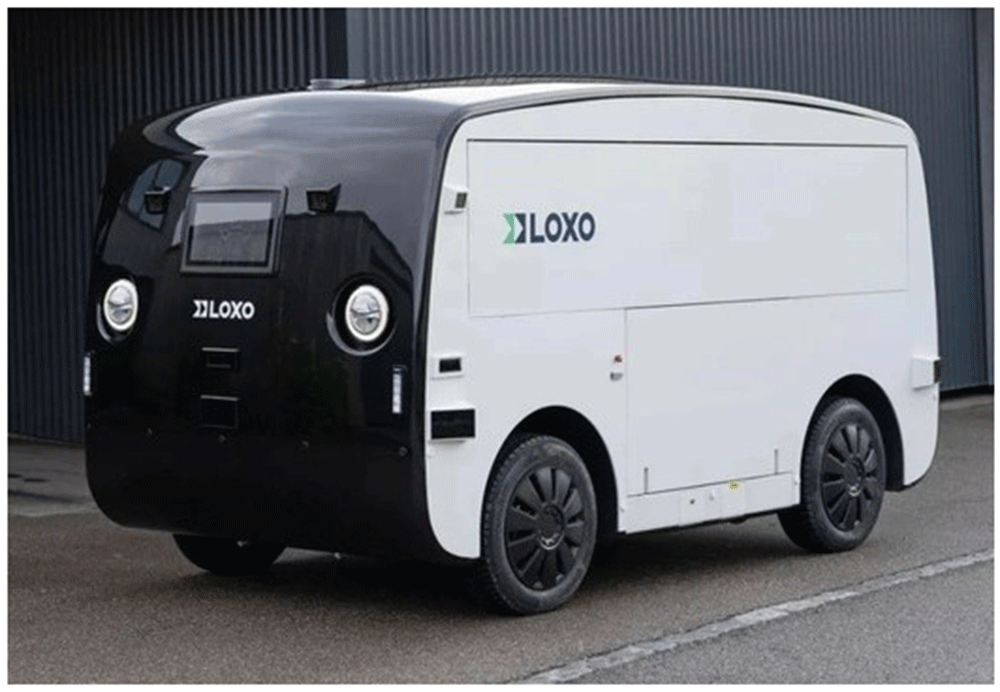
Figure 6. LOXO’s autonomous EV.
Energy efficient route planning for last mile delivery
This demonstration focuses on dynamic route planning of EVs for more energy-efficient last-mile delivery services. The energy consumption of EVs changes depending on many factors like the weight of load, weather and traffic conditions, driver characteristics, etc. The developed system will help obtain the energy efficient route for any start and end-demand locations considering the factors mentioned above. An Arrowhead-based cloud framework and Microservices-based hardware accelerated (GPU and FPGA) smart cloud containers (with Singularity and dockers orchestrated by Kubernetes) will be used for heterogenous data management. With this framework and containers, optimization algorithms can run seamlessly at accelerated GPUs and FPGA cards attached to servers on the cloud. This demonstrator will integrate the KT9, KT11, K12, KT14 and KT17 mainly. The field experiments will rely on the parameters of the MUSOSHI’s EV. For comparison purposes, the parameters will be measured for the situations where only EVs are used, only conventional vehicles are used, and both are used in the test environment (Eskisehir Osmangazi University Campus). So, noise and emission values in isolated and mixed traffic situations will be compared in various weather, road conditions, loading and operating speed conditions.
In-vehicle integration of inductive charging with BMS and power electronics & an effective gan-based IoT-enabled surface inductive charging system Demo 6 & 8
This demonstration targets to implement an integrated inductive charging solution, based on conventional architectures and the novel components like GaN-based LGBTs. This solution is intended to be transferable and applicable in various e-mobility segments, including automotive, logistics, public transportation, and autonomous mobility. The Galileo test field in Magdeburg is mentioned as a possible location for these demonstrations but alternative routes are being planned in Turkiye to demonstrate the outputs. It appears that the demonstrator vehicle will be MUSOSHI’s EV that is supposed to be charged through an IoT-enabled charging system and the utilisation of KT2, KT10, KT12, KT16 and KT20 mainly. The initial testing phase will occur in MUSOSHI's production facility, integrating the demo battery management system with the charger and assessing security by confirming node and user authentication and the deployment of AI-based techniques to optimise the BMS. Subsequently, 3D terrain, weather, and load factors will also be considered in optimisation algorithms affecting vehicle performance. This phase will employ the digital twin of MUSOSHI, leveraging real-time environmental data to enhance the demonstration's validity.
Modular batteries storage based second life EV module variants
The intensive turnaround in energy policy, e.g. the de-centralization of energy production, towards renewable energies requires big challenges regarding electrical modernisation and grid expansion. This demonstrator plans for implementing different types of second-life batteries as storage solutions for charging EVs. By highlighting the potential of these modules and demonstrating their viability in a commercial setting, the aim is to encourage manufacturers to prioritize second use integration in their storage systems. The second life battery storage system will include major components such as the battery modules, BMS, photovoltaic charging unit, power grid AC charging unit, energy management controller and the data provisioning telemetry unit. Second-life battery modules will be provided from different OEMs with corresponding system specifications and proper selection of second life batteries will be implemented via experiments at laboratory scale. In OPEVA, we propose to handle the challenge of utilizing different type of second life batteries in a standalone EV charger station. Specifically, LiFePO4 (LFP) prismatic battery cell type with different technical characteristics from national OEM suppliers will be utilized in the proposed system. These second life battery cells will be interconnected to form the battery module, which in turn will be connected in series to construct the battery pack. Two such battery packs will be connected in parallel to provide the required energy output of the EV charging system. A battery management system (BMS), energy management unit (EMU) and human machine interface system will be designed and developed to monitor and control the battery cells and power specifications in the storage system. The proposed system will facilitate the charging of two electric vehicles simultaneously, offering both AC and DC charging options via the battery pack and the electricity grid connection. Additionally, solar photovoltaic panels will be incorporated to support battery charging, while an AC/DC converter will enable the charging of second-life batteries and EVs through the electricity grid. Furthermore, crucial system parameters such as battery cell temperature, voltage or the current characteristics will be provisioned to the OPEVA cloud for real-time monitoring and charger scheduling system. The functional safety of the system will be implemented to the highest-level standards by the safety authorization body, CERTX (the certification body from Switzerland). The system will be designed at TRL level 5–6 in a laboratory-controlled environment.
Flexible charging scheduler
It is desirable that cars are charged when the electricity cost is lower, the impact to the grid is reduced and there is available self or community production of energy. A solution to mitigate these problems is to be able to schedule the car charging in a way that fulfils totally or partially some of these objectives. Partners in OPEVA propose a peer-to-peer energy trading and flex offer concept for enabling the use of the power consumption flexibility inherent to the usage of some electric devices and the prioritization of fleet EV chargers is being developed. The demonstrator will be structured upon a smart energy management platform, which is capable of supporting consumption and production flexibility and Demand Response, acting as an interface that intermediates the interactions between the consumer and the energy markets. This use-case will demonstrate three scenarios. Scenario 1 is based on connecting an electric charger with the electric grid on a residential/building setting, eventually on a local energy community. This setting might also serve the purpose of demonstrating Scenario 2, where the car battery will store energy, for example, from PV panels, and release it back to the local community grid when required by consumers. Scenario 3 is the most ambitious case, which can be used to further integrate the smart energy management platform with the real-time knowledge of the battery parameters of a car, predict its behaviour, in order to determine the best possible solution of where to stop for recharging, also taking into account the energy price on that charging station or buying the energy on the market (network or local Energy Community) at the best possible time.
Expected impact and relevance with KDT vision
OPEVA has wider impact covering the entire landscape of the ECS SRIA 202353 including the foundational technology areas, cross-sectional technologies, ECS key application areas, and long-term vision. The foremost areas on which OPEVA will have a direct impact are illustrated in Figure 7. The direct impact areas indicated as orange arrows (verticals) are listed below.
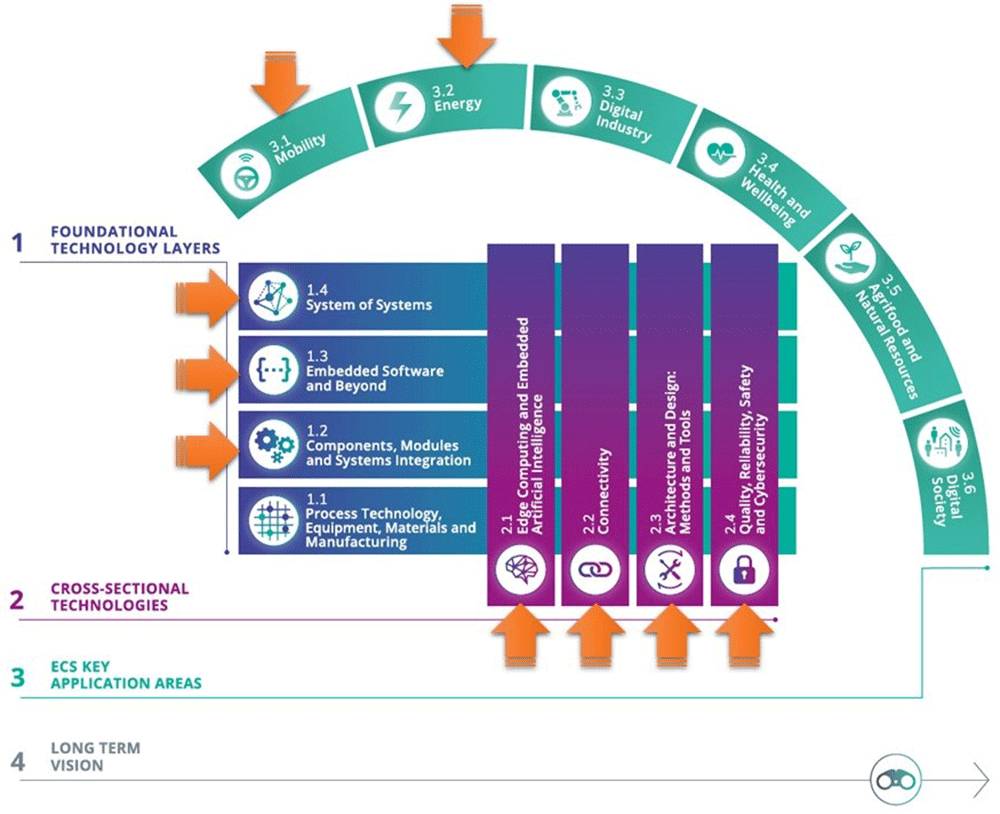
Figure 7. Structure of the ECS strategic research agenda 2023.
OPEVA has a direct impact on the two ECS Key Application Areas as in the following way:
3.1. MOBILITY: OPEVA’s main area of interest is obviously the transport and mobility domain. In the 2023 edition, SRIA is expanded with some new focus with neutral light vehicles and smart battery, and better connectivity. In the long-term vision, the European Union has issued ambitious policy statements regarding transport and smart mobility for reduction of the emissions, higher safety, and sustainability. OPEVA has a strong motivation to foster research and improve the European Research Area in close relation with the major challenges of Mobility such as: I) [3.1.1.3] Strong Contribution to CO2 neutral mobility; II) [3.1.3.4, 3.1.3.10] Protect strong position of European automotive industry; III) [3.1.3.5] Convergence of automotive and energy ecosystem; IV) [3.1.3.9] New resource optimised mobility modes; V) [3.1.3.11] Sovereignty for European mobility industry. OPEVA’s demonstrations and KTs stand as the baseline by presenting cutting-edge research outputs in the fields like smart battery management, efficient and fast charging, new control-extended lifetime, as well as their driving range in vehicles, urban light personal and freight mobility, collaborative and self-organised multi-agent systems, e.g., in logistics applications, centralised service/function-oriented hardware/software architecture, interaction between humans and vehicles, (Predictive) health monitoring and lifetime analysis for the perception and control system, trustworthiness of vehicles’ data, etc.
3.2 ENERGY: There is a strong emphasis on supplying clean, affordable and secure energy are in the focus of the European Green Deal. According to the ECS SRIA 2023, enabling decarbonization of mobility, industry, and thermal energy supply is important to reach the climate targets of 55% greenhouse gas reductions by 2030. In long term vision, Energy-efficient EVs and Energy management of batteries are stated to be some key approaches to reduce energy consumption and CO2 emissions. OPEVA will have a positive impact on these with the following major challenges of Energy: I) [3.2.4.1] Smart & efficient – managing energy generation conversion and storage systems; II) [3.2.4.2] Energy management from on-site to distribution system; III) [3.2.4.3] Future transmission grids; IV) [3.2.4.4] Achieving clean, efficient and resilient urban/regional energy supply; IV) [3.2.4.5] Cross-sectional tasks for energy system monitoring and control. OPEVA solutions will improve the resilience of EU against global energy problem by presenting concrete solutions like storage-optimized residential, commercial, industrial utilization of battery systems, smart energy management systems and efficient wireless charging infrastructures strengthened with secure electronic control units and storage components equipped with smart actuators and sensors for status and health monitoring.
OPEVA fosters cutting-edge research and innovation-oriented developments that are relevant with the following ECS foundational technology layers:
1.2 COMPONENTS MODULES, AND SYSTEMS INTEGRATION: OPEVA is indeed a system-of- systems project which targets hands-on experienced demonstrations in transportation ecosystems composed of vehicles, charging stations, communication infrastructures and smart electronic components and systems (ECS). Such a holistic approach requires physical and functional integration that shows high relevance with ECS- SRA 2023. OPEVA will develop embedded systems which are formed as assemblies of ECSs that will help IC-level chip manufacturers to observe how their products can effectively be used in the electrified transportation and automotive domain.
1.3 EMBEDDED SOFTWARE AND BEYOND: OPEVA project which targets practical demonstrations of Embedded and Cyber-Physical Systems (ECPS) that require embedded software. The ECPS-based implementation strategy makes OPEVA highly relevant with ECS-SRIA 2023 and impactful for further innovation-led commercialisation. OPEVA will develop embedded software in the products that may result in improved efficiency in the transportation and automotive domain. The OPEVA team has also strong ECS manufacturers and system designers which have the capacity to create a difference in applying research outputs at various levels of integration (hardware, software, system, cyber-physical system, etc.).
OPEVA has a direct impact on improving the European research and innovation capacity in strong alignment with the ECS SRIA 2023 Cross Sectional Technologies as in the following way:
2.1 EDGE COMPUTING AND EMBEDDED ARTIFICIAL INTELLIGENCE: OPEVA will present a realistic estimation of computing and storage needs of the mobility clouds dealing with the effective use of electrified and autonomous vehicles especially in the fields logistic. OPEVA will help researchers and engineers to understand how edge-computing technologies can be used to enhance AI in harsh cruises of CAEVs, making CAEVs more intelligent and better integrated with the real world (e.g. smart city services, logistics, or Intelligent Transport Systems).
2.2 CONNECTIVITY: Connectivity relies in the heart of OPEVA’s solution portfolio. OPEVA partners aim to underline new advancements combining AI in connected vehicles (out-vehicle) and the use of BMS and in- vehicle systems connected with the outer world. OPEVA will have a great impact on pushing advanced use of such solution stacks, combined with effective charging and better exploitation by smart city services, public and personal use.
2.4 QUALITY, RELIABILITY, SAFETY AND CYBERSECURITY: Ensuring the reliability, safety and security of new systems is one of the primary concerns of ECS-SRIA 2023. Especially for AI-based systems, the societal and individual benefits perceived by users highly depends on assurance of users. OPEVA will improve and realise a comprehensive security and safety scheme enabling the highest protection entirely within the targeted domains. OPEVA can be a role model in securing the connected and automated transport systems with its combined security-privacy-safety threat model.
The OPEVA innovations are not only related to the mobility, automotive and energy domain abut also lie at the heart of digital transformation and the Industry 4.0 era holding the key to building an inclusive global digital economy. At a time when governments must fight to restore the public’s faith in cross-border economic cooperation, the concepts like Digital Society, Digital Europe, Smart Economy (Smart {mobility, health, energy, industry, life, etc.}) and secure societies can play a critical role in strengthening economic resilience while ensuring the global economy works to the benefit of all. Aligned with the Europe’s strategic mission, OPEVA will have a direct impact on the policies related to the following European and international roadmaps (but not limited to):
Sustainable Urban Mobility/Logistic Plans (SUMP/SULP): Aligned with the new mobility trends in SUMP/SULPs, like mobility sharing, or Integrated Mobility- as-a-Service, OPEVA will have a direct impact on 3 sectors, automotive, transport and wider mobility market, as it is undergoing a transformational, social, technological and economic shift towards more optimised, electrified and smart vehicles for people and goods transport.
European Battery Alliance: This alliance aims at creating a competitive battery ecosystem in Europe with electric vehicles as one of the main applications. The deployment of electric vehicles that OPEVA will help trigger is expected to lead to a market of €250 billion a year from 2025 onwards.
European Commission – Clean Transport, Urban transport – Electric vehicles: OPEVA addresses safer and higher performing batteries as key requirements for a shift towards full electro-mobility. The European Commission recognizes the potential of EVs when compared to internal combustion engine vehicles. OPEVA will further encourage the deployment of electro mobility in Europe tackling social and economic challenge.
European Green Vehicle Initiative – EGVI: This initiative has the long-term objective to decarbonize the road transport sector with a reduction of CO2 emissions up to 60 % by 2050, when compared to the level of 1990. One of the main focuses is on developing user- friendly cars and infrastructures, which is in-line with the objectives of OPEVA. Also, the battery weight and volume are critical aspects of the initiative roadmap, which is reflected in OPEVA with the autonomy increase objective.
United Nations Environments Electric Mobility Program: In the frame of the expected increase of passenger cars in the future (double by 2050), especially in developing countries with no emission policies, the UN aims at supporting countries and cities for a clean and efficient development based on electric vehicles. This policy- oriented view on mobility will help the technologies developed in OPEVA to be integrated into the European countries so that they can play a major role soon.
The Paris Declaration on Electro- Mobility and Climate Change & Call to Action: This declaration was launched at the COP21 in Paris and involves partners at all governments, businesses and organizations levels. The objective is to have at least 20% of all road transport vehicles in Europe to be electrically driven. This supports the claims in OPEVA to push for a better integration of electric vehicles with strong technological improvements.
International Energy Agency – Electric Vehicle Initiative: This world-wide initiative from the major Energy Ministers supports various campaigns on the deployment of EVs, as addressed in OPEVA, also considering their integration into the grid with charging infrastructures.
The proposed second-life battery and EV charging system represents a significant technological advancement, incorporating various types of second-life batteries within an EV charging station equipped with solar photovoltaic panels, electricity grid connection, data provisioning, and functional safety protocols. Advanced AI/ML algorithms will also be developed for estimation of RUL and SoC/SoH of second life battery cells directly on the microcontroller of the BMS module. The objective of the proposed system is to decrease the charging station expenses by 20–30%, provide energy efficiency by 5% and extend the range and lifespan of the battery by 10%. To the best of our knowledge, such an EV charger system at TRL5-6 is not implemented either in academic literature or the industry. As a result, the utilization of various types of second-life batteries will offer increased efficiency, cost-effectiveness, and environmental friendliness throughout the entire battery life cycle. The extensive adoption of the second life batteries will build the confidence of the drivers, decrease EV costs, enhance the widespread acceptance of electric vehicles, and contribute to carbon zero initiatives of the EU. Second life battery storage implementation in OPEVA will assist the sustainability and circularity of batteries highlighted in the EU battery directive 2006/66/EC54.
OPEVA project information and consortium
OPEVA project (https://opeva.eu/) is planned as a 3-year Research & Innovation Action (RIA) that has received funding within the Key Digital Technologies Joint Undertaking (KDT JU) from the European Union’s Horizon Europe Programme and the National Authorities (France, Czechia, Italy, Portugal, Turkiye, Switzerland), under the grant agreement 101097267. Project has started in 1st of January 2023 and will end in 31st of December 2025.
The OPEVA consortium gathers the necessary experience, knowledge and resources to fulfil the project goals. The consortium is well geographically balanced and is composed from 35 partners from 10 European countries. The consortium covers the whole value chain needed for the research & development, industrialization and commercialization of the OPEVA solutions. All of the partners are highly active at both European and international levels and exhibit a core set of expertise in contributing towards medium- to large-scale European and national projects, while successfully managing and executing them and exploiting their results. The consortium consists of 4 large industrial enterprises, 18 small and medium-scale enterprises and 12 research and technology organisations including academic organizations (universities and research centres).
Although the partners have usually wider coverage of expertise, the partners have mostly complementary skills that can be categorised into seven main contribution areas: I) Communication technologies covering hardware-based and software-based communication systems and services and IoT; II) Battery and BMS technologies that deal with BMS architecture design, BMS control/active cell balancing, BMS performance optimisation, battery state estimation, diagnostic/monitoring, battery development and packing, and related semiconductor solutions and cell management unit development; III) Electronics that include hardware and embedded automotive systems design and HIL testing; IV) Charging technologies focusing on the charging infrastructure development, inductive charging, and wireless sensor development; V) Smart services and AI technologies that cover vehicle-to-grid data analysis, route planning, energy management optimisation, power system planning, digital twin modelling, AI/ML algorithm design and implementation, federated learning, functional safety, and data processing; VI)Driver-oriented technologies dealing with driver behaviour analysis, natural language processing and explainable interfaces, Vision-in-the-loop algorithms; and finally VII) cyber security and safety technologies employing secure cloud-based data management, hardware security modules and secure gateways, secure proximity control, intrusion detection and functional safety improvement.
Conclusion
This paper gives a brief information about the EU-funded OPEVA project. The authors aim to raise a manifestation flag describing the OPEVA concept, scope and objectives and the solution strategy addressing the long-term impact at national, EU and international level. The main objective of the OPEVA project is to explore the benefits that can be obtained from the interaction between the multiple actors involved in the modern “mobility experience” in order to optimize the autonomy of EVs in a modern world which also requires consider sustainability and resource optimization. This translates into developing an energy-efficient power train and dynamic routing, into improving accurate range prediction techniques, improving trustworthy EV-grid integration, developing efficient charging technologies and guaranteeing a wider EV adoption. To accelerate the deployment of sustainable EVs and improve the EV market penetration, the project aims to develop technological solutions involving the overall ecosystem, thereby addressing limiting psychological factors such as range anxiety, high price, limited charging facilities, and duration of charging. The described solution approach will contribute to the key application area on Mobility and a number of major long-term challenges including embedded software, edge computing and embedded AI. This paper does not include technical details as it only covers the first-year achievements dealing with the concept re-building, requirements elicitation and high-level architectural design studies. The authors intend to present the technical improvements especially during the second and third year of the project (2024, and 2025) that can be assumed as planned future studies.