1. Introduction
Research funding organizations (RFOs) across Europe are increasingly experimenting with forms of public engagement (e.g. citizen panels) in their efforts to set funding priorities, formulate funding calls, and evaluate project proposals (Den Oudendammer et al., 2019; Rowe et al., 2010). These experiments focus on including ‘non-traditional’ stakeholders such as citizens, communities, and civil society organizations, alongside ‘traditional’ ones like researchers, experts, and policymakers. These engagement processes take the forms of communication, consultation, and participation, granting the public a certain degree of power (Arnstein, 1969; Rowe & Frewer, 2000; Rowe & Frewer, 2005).
This emerging trend is inspired by various research fields, such as (Participatory) Technology Assessment (Durant, 1999; Schot & Rip, 1997), Responsible Research and Innovation (Stilgoe et al., 2013; Von Schomberg, 2013; Wiarda et al., 2021), Ethical Legal and Social Implications/Aspects Research (Fisher, 2005), and more. These fields endorse upstream public engagement on the basis of various normative, instrumental, and substantive grounds (Stirling, 2008; Wilsdon & Willis, 2004).
Engagement may lead to more competitive and desirable outcomes (Fraaije & Flipse, 2020) and allow funding organizations to explore societal values and worldviews that cannot be determined top-down or a priori (Bauer et al., 2021). Although the public may lack technoscientific expertise, they often possess complementary know-how and context-specific experiences that are crucial for solving societal challenges (Ravetz, 1999). For example, informal caregivers may have valuable insights into what innovations could improve a patient's quality of life and how to shape these innovations. Such ‘experts by experience’ can thus improve the social robustness of innovation (Nowotny, 2003).
However, it is essential that public engagement is meaningful, fair, and effective (Ayre et al., 2018; Meskens, 2020). The uptake of engagement in research funding frequently raises ethical issues requiring explicit consideration (Van Bekkum & Hilton, 2014). Concerns may relate to issues like exploitation, vulnerability, representation, and inequality. These concerns often do not have a clear-cut solution and are exacerbated by practical constraints. Addressing these challenges requires explicit attention in both academia and practice.
Over four years, eight European RFOs from Austria (FFG), Belgium (Innoviris), Czech Republic (TACR), Germany (VDI/VDE), Lithuania (RCL), Norway (RCN), Romania (UEFISCDI), and Spain (CDTI) cooperated in a consortium called PRO-Ethics to exchange experiences on the ethical preparation, implementation, and evaluation of public engagement in research funding. This practice paper highlights the challenges they faced when implementing engagement processes, targeting researchers by describing these challenges in depth and illustrating how they manifest in practice.
While these RFOs identified various ‘best practices’, this case study specifically highlights the challenges that they faced when implementing engagement processes. Such challenges were first identified by RFOs through self-reflections after which these difficulties were collectively discussed in three so-called ‘cross-learning workshops’. This paper targets researchers by describing these challenges in depth, and by illustrating how such challenges return in practice and can be addressed. This paper aims to stimulate academic efforts that could help RFOs organize public engagement more responsibly. In the upcoming section, we will first describe seven major challenges to public engagement, after which Section 3 illustrates some of these through the example of VDI/VDE (German RFO), before suggesting recommendations to address these challenges.
2. Challenges to ethical public engagement in research funding
Through a series of real-life experiments, several challenges to ethical public engagement have been reported by European RFOs. These challenges relate to seven themes (see Figure 1) that will be detailed in this section.
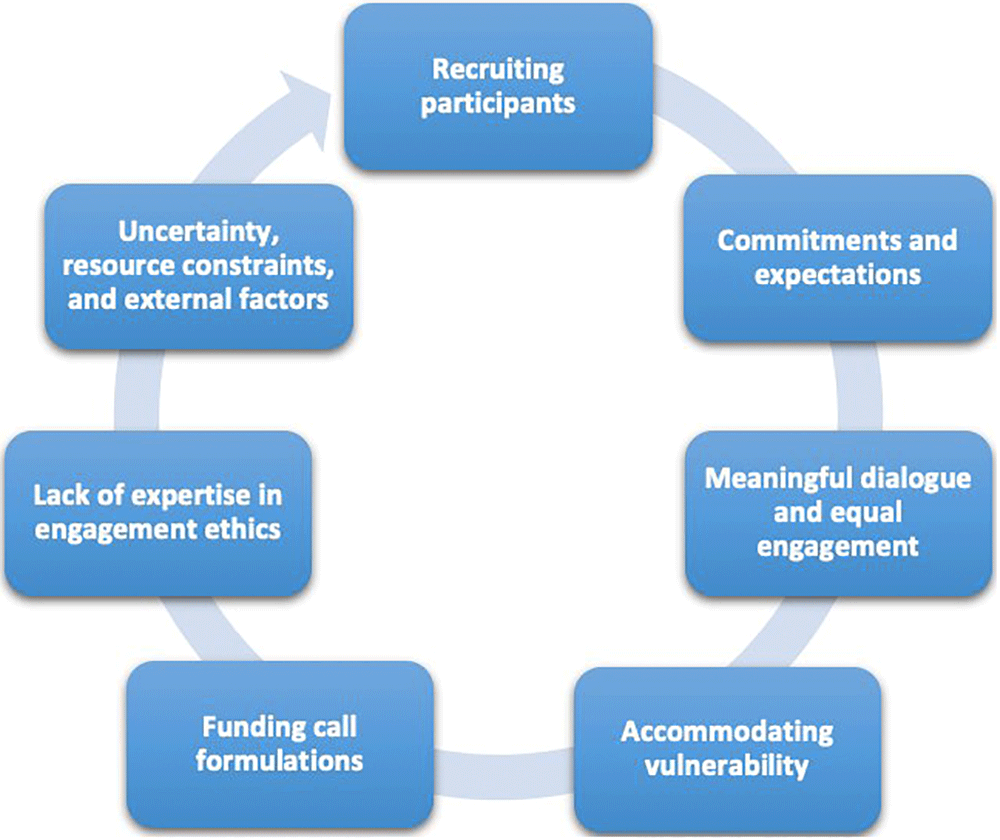
Figure 1. Seven main challenges identified in the ethical public engagement in research funding.
Challenge 1: Recruiting participants
RFOs experience significant difficulties in recruiting participants for public engagement activities (Van Bekkum & Hilton, 2014). These organizations strive to gather a diverse representation of the public to ensure a broad range of views on their funding activities. However, defining an appropriate representation for a given context is often unclear. RFOs select public representatives based on various socio-economic factors such as background, education, age, religion, ethnicity, and gender identity (Den Oudendammer et al., 2019).
This selection process raises several questions such as intersectionality, since individuals may identify with multiple characteristics. Potential representatives might categorize themselves according to their own understanding of their identity, leading to possible criticism and concerns about unequal treatment. The concept of ‘right’ public representation is therefore highly contested, and some argue that a representation accurately reflecting society may reinforce existing societal politics (Pratt, 2019). In some cases, an overrepresentation of minorities might even be necessary to mitigate power imbalances.
The context-specific nature of engagement means these challenges cannot be resolved with a standardized approach. Even when representation issues are addressed, potential participants may still be unwilling to engage. RFOs face a tension between which public actors should be represented and who is willing and able to participate, given their capacity and resources.
In practice, RFOs often use pragmatic approaches such as snowball sampling and partnering with multiplier organizations to recruit participants. However, these methods can lead to selection bias (Viswanathan et al., 2004). Engaging experienced recruiters might alleviate some of these challenges, but it is unlikely to resolve them all.
Challenge 2: Commitments and expectations
Managing commitments and expectations is a significant challenge for RFOs because their goals often differ from those of the public. Participants might have different views on how much influence they should have on research funding decisions, leading to potential disagreements and causing some to decline or withdraw from engagement processes.
Even when expectations align, participants' commitments might still suffer if RFOs do not adequately accommodate their needs. Participation often depends on specific engagement forms and whether these align with participants' characteristics–such as disabilities–, and resources–such as time. For example, participants with disabilities may require particular accommodations, and those with limited time may find it hard to commit to lengthy processes.
To address these issues, RFOs find it helpful to identify and communicate everyone's needs and expectations regarding the roles, scope, purpose, process, and outcomes of the engagement before launching the process. Establishing clear codes of conduct can also help ensure that all participants understand and agree on these aspects. By explicitly addressing and aligning commitments and expectations, RFOs can foster more effective and inclusive public engagement.
Challenge 3: Meaningful dialogue and equal engagement
Ensuring meaningful dialogue and equal engagement is crucial for obtaining the public's input, but it is often challenged by heterogeneous perspectives that can lead to misinterpretation and conflict. In deliberative formats, discussions between public representatives and traditional stakeholders are particularly prone to power imbalances. Some stakeholders may dominate conversations due to their personalities, knowledge, or institutional roles, creating an imbalance (e.g., citizens vs. scientists).
To address these challenges, several RFOs adopt strategies to mitigate knowledge-based power imbalances. These strategies include thematic warm-ups to prepare participants with introductory sessions on the topic to level the knowledge field and information management by selectively providing or withholding information to ensure all participants have a more equal understanding of the subject. Additionally, the use of neutral mediators helps guide dialogues, manage conflicts, and encourage participation from less vocal representatives.
The effectiveness of these strategies hinges on the presence of mutual trust between stakeholders and the mediators. Trust ensures that dialogues are constructive and inclusive, allowing for balanced and equitable engagement.
Challenge 4: Accommodating vulnerability
Engagement challenges also extend to the inclusion of vulnerable groups (Brown et al., 2017). This issue is particularly prevalent when funding processes address real-life problems, as public actors affected by these problems may face social injustice, financial issues, or other disadvantages. In these contexts, vulnerability is difficult to define and understand (Amann & Sleigh, 2021; Latif et al., 2018). It is helpful to consider aspects contributing to participants’ vulnerability, such as their resources, capabilities, experiences, and identities.
Participants generally have a better understanding of their own vulnerabilities. Therefore, it can be beneficial for RFOs to rely on participants’ self-assessments rather than making assumptions themselves. Similarly, RFOs could address vulnerability based on participants’ suggestions, or by compensating for the underlying aspects that create disadvantages. This could include financial compensation, providing translators, or improving the accessibility of meetings.
Challenge 5: Funding call formulations
RFOs develop calls and strategies to allocate public funding to recipients such as universities, consortia, and researchers (Lepori et al., 2023). Public engagement in this context often involves formulating these funding calls and strategies. RFOs frequently struggle to meaningfully involve both traditional stakeholders (e.g., scientists) and public participants (e.g., citizens) in creating calls and strategies that are scientifically and socially relevant (Den Oudendammer et al., 2019). RFOs generally consider three options for engagement: (1) public participants suggest strategies and calls, which are then selected and scientifically embedded by traditional stakeholders; (2) traditional stakeholders propose strategies and calls, which are then selected and contextualized by public participants; or (3) the proposal, selection, contextualization, and scientific embedding are done collectively.
Each option has its own advantages and disadvantages. The experience of RFOs in our consortium indicates that collective interactions (option 3) often lead to power imbalances due to differences in social status and expertise. When public participants propose socially relevant strategies and calls, their scientific relevance is often perceived as low. Conversely, allowing traditional stakeholders to suggest strategies and calls, followed by selection and contextualization by public participants (option 2), has proven helpful. However, this approach risks turning into tokenism if public participants have limited decision-making power. Therefore, the appropriate engagement method is context-dependent.
Challenge 6: Lack of expertise in engagement ethics
Ensuring the ethical soundness of public engagement requires an expertise in both ethics and public engagement. While the associated skills and knowledge may improve engagement, RFOs often lack this expertise (Giannelos et al., 2022). Organizing effective engagement benefits from a flexible, ‘learning-by-doing’ approach that is open to feedback from participants. Additionally, the ethical soundness of engagement is enhanced by practitioners who demonstrate qualities such as openness and people skills.
To safeguard the ethics of engagement, RFOs utilize protocols, guidelines, and codes of conduct. Often, they seek external expertise from ethicists, facilitators, and recruitment agencies to enhance the quality of engagement. However, this raises questions about when such expertise is warranted and the impact of outsourcing has on the distribution of responsibilities.
Challenge 7: Uncertainty, resource constraints, and external factors
Even when the previously mentioned challenges are addressed, ethical engagement can still suffer from organizational constraints (Amann & Sleigh, 2021). Comprehensive planning for engagement is beneficial, but RFOs often deal with high degrees of uncertainty. Nearly all RFOs in our consortium found their engagement processes more resource-consuming than initially anticipated.
Moreover, a wide range of external factors, such as regulations, significantly impact how RFOs prepare, implement, and evaluate public engagement. For example, some RFOs are required to follow strict governmental protocols that can make public engagement more rigid and less adaptable. These uncertainties, resource constraints, and external factors necessitate a high degree of organizational flexibility, which is challenging to achieve.
To navigate these issues, RFOs must develop adaptive strategies and be prepared to adjust their plans and resources as needed, ensuring that engagement processes remain ethical and effective despite external pressures.
3. Challenges in practice: The case of an RFO
The seven aforementioned challenges are difficult to address by RFOs. In relation to the first challenge, engaging experienced recruiters might alleviate some of these challenges, but it is unlikely to resolve them all. The diverse and often conflicting expectations between RFOs and the public, coupled with the difficulty of accommodating participants' varying needs and vulnerabilities, make managing commitments and expectations a significant hurdle. Ensuring meaningful dialogue and equal engagement is complicated by power imbalances and the need for effective mediation. Accommodating vulnerable groups requires a nuanced understanding and sensitive approach, which can be resource-intensive. Formulating funding calls that balance scientific and social relevance involves navigating complex stakeholder dynamics. The lack of expertise in engagement ethics further complicates the process, necessitating external input and ongoing learning. Lastly, the unpredictability of resource constraints and external factors such as regulatory requirements adds another layer of complexity. These multifaceted challenges necessitate adaptive, context-specific strategies and highlight the ongoing need for innovative solutions to foster ethical and effective public engagement in research funding.
To illustrate these challenges, we use the example of a German RFO (VDI/VDE Innovation + Technik GmbH, hereafter ‘VDI/VDE’) tasked with developing a call for project proposals to support informal caregivers through interactive technologies. The RFO set up a citizen advisory board consisting of 15 caregivers, responsible for evaluating and selecting proposals. This RFO faced several challenges, including difficulty in recruiting diverse caregivers, managing expectations and commitments, and accommodating vulnerabilities.
Recruiting caregivers was difficult due to selection bias (challenge 1) and potential participants' previous negative experiences with administrative bodies. Time constraints limited the input some caregivers could provide, exacerbating knowledge-based power imbalances. Additionally, mismatching expectations and rigid protocols demotivated some participants (challenge 2). What is more, joining the advisory board would inhibit them from providing care and would thus put their patient(s) at risk (challenge 4). Few caregivers could afford a substitute caregiver and as a response, VDI/VDE reimbursed any care expenses that caregivers incurred. Compensation was also available for travel and accommodation costs. Nevertheless, the RFO’s administrative processes caused substantial delays – of up to several weeks – in the reimbursements, again imposing a financial burden on some of the caregivers.
Also, some board members were consequently more familiar with the projects than others, thus exacerbating knowledge-based power imbalances (challenge 3). Several caregivers were therefore unable to convincingly voice their opinions, and a few acknowledged feeling undervalued or even intimidated. Other caregivers deemed their responsibilities too limited and pleaded for greater influence when mentoring projects. For example, some caregivers provided their professional expertise (i.e., knowledge of IT and engineering) even though they were invited by the board to provide their experiences as caregivers. As a result, rigid protocols (challenge 7) and mismatching expectations (challenge 2) may have demotivated some participants.
4. Discussion
The seven challenges identified from the aggregated feedback received by the RFOs during their public engagement processes underscore the need for context-specific guidance. Each difficulty encountered necessitates careful attention and scrutiny tailored to the specific circumstances of each case.
European RFOs are increasingly experimenting with public engagement in funding processes, aspiring to uphold ethical values such as justice, equality, and safety. Despite the benefits, challenges related to ethical public engagement persist, requiring context-adaptive insights and tools to meaningfully and inclusively engage the public. Despite decades of research on ethics and upstream engagement, RFOs still face challenges that are too context-specific to be addressed in a standardized manner. These challenges create gaps between how public engagement in research funding should be organized and can be organized.
Based on the analysis of our seven challenges faced by RFOs in ethical public engagement, several recommendations can be made to improve their current practices: see Table 1, below.
Table 1. Recommendations for ethical public engagement in response to the challenges detected.
| Challenges | Recommendations |
|---|
| Recruiting participants | Recruitment strategies with experienced
recruiters and community organizations |
| Commitments and expectations | Clear communication of roles, expectations, and
outcomes through codes of conduct |
Meaningful dialogue and equal
engagement | Training of mediators to address power
imbalances |
| Accommodating vulnerability | Flexible engagement methods and tailored
support |
| Funding call formulations | Collaborative feedback loops for inclusive
funding call formulation |
| Lack of expertise in engagement ethics | Enhancing ethical standards through internal
expertise and external advisory inputs |
Uncertainty, resource constraints, and
external factors | Developing adaptive strategies for flexible and
ethical public engagement |
Recommendation 1: Recruitment strategies with experienced recruiters and community organizations
RFOs should develop comprehensive recruitment strategies that leverage the expertise of professional recruiters and partnerships with local community organizations to ensure diverse and representative participation, thereby mitigating selection bias. This involves conducting thorough analyses to identify underrepresented groups, implementing outreach programs tailored to the specific needs and preferences of diverse populations, offering incentives and removing participation barriers such as providing compensation for the time dedicated. Additionally, this would involve establishing long-term relationships with community leaders and organizations to build trust and ensure sustained engagement.
Recommendation 2: Clear communication of roles, expectations, and outcomes through codes of conduct
RFOs should establish and disseminate detailed codes of conduct that clearly define the roles, expectations, and outcomes for all participants. This would typically include hosting preliminary orientation sessions to explain the engagement process and the targeted objectives. Additionally, it would involve providing written guidelines to ensure all participants understand their commitment and the impact of their involvement, and regularly updating participants on progress and outcomes. Furthermore, creating feedback mechanisms to allow all participants to voice any potential concerns or suggestions would ensure ongoing alignment and adaptation of expectations on both sides.
Recommendation 3: Training of mediators to address power imbalances
RFOs should invest in comprehensive training for mediators to foster equitable participation, or perhaps outsource this activity. This includes providing mediators with proper training in conflict resolution, active listening, and cultural competencies. Structured dialogue techniques should also be utilized to ensure balanced participation, and small group discussions and breakout sessions should be implemented to allow all participants to contribute equally. Regular assessment and refinement of mediation strategies through participant feedback and mediator reflections would also be essential.
Recommendation 4: Flexible engagement methods and tailored support
RFOs should design flexible engagement methods that accommodate the needs of vulnerable groups by offering various participation formats (e.g., in-person, virtual, hybrid), so as to take into consideration different preferences and constraints. This would imply providing tailored support such as sign language interpreters, accessible venues, and assistive technologies. Additionally, ensuring financial compensation for participants' time and expenses could also be beneficial, as is establishing dedicated support teams to assist vulnerable participants throughout the engagement process.
Recommendation 5: Collaborative feedback loops for inclusive funding call formulation
RFOs should implement collaborative feedback loops that integrate input from public participants and traditional stakeholders at multiple stages of the funding call formulation process. This could be achieved by conducting joint workshops and focus groups to co-create funding priorities and call criteria. Additionally, implementing iterative review cycles where drafts of funding calls are shared with stakeholders for feedback and improvement would be beneficial. Utilizing digital platforms to facilitate continuous input and collaboration would help ensure all voices are heard. Furthermore, ensuring transparency in how public input is integrated into the final funding calls, with clear explanations of the final decisions made, would also contribute to this aim.
Recommendation 6: Enhancing ethical standards through internal expertise and external advisory inputs
RFOs should enhance their ethical standards by developing internal expertise and incorporating external advisory inputs. This would imply establishing dedicated ethics committees within the organization to oversee engagement processes. Additionally, it includes providing ongoing ethics training for staff involved in public engagement activities, collaborating with external ethicists and advisory boards to review and enhance engagement strategies and practices, and implementing regular ethical audits and assessments to identify areas for improvement and ensure adherence to ethical principles.
Recommendation 7: Developing adaptive strategies for flexible and ethical public engagement
RFOs should develop adaptive strategies to manage uncertainty and resource constraints while maintaining ethical standards. This target could be achieved by creating flexible engagement frameworks that can be adjusted based on emerging needs and feedback, to address unforeseen challenges and ensure the continuity of engagement activities, to monitor and respond to external factors (e.g., regulatory changes, societal shifts), and regularly reviewing and updating engagement plans to incorporate lessons learned and best practices.
Implementing these practical recommendations could help RFOs to bridge the existing gaps, in view of ethical public engagement. This could in turn contribute to fostering more ethical, inclusive, and effective funding practices.
5. Concluding remarks
European Research Funding Organizations (RFOs) face multiple, interrelated challenges in executing ethical public engagement. These challenges stem from recruiting a representative public, managing diverse commitments and expectations, ensuring meaningful dialogue, accommodating vulnerable participants, formulating inclusive funding calls, and addressing a lack of engagement ethics expertise—all within the constraints of limited resources and external pressures. To bridge these gaps, RFOs must develop context-specific strategies and adopt adaptive, flexible approaches that prioritize ethical standards and inclusivity.
Further to the identification of these challenges, we outlined recommendations for each of the challenges. These seven recommended practices—leveraging experienced recruiters, clear communication through codes of conduct, mediator training, flexible engagement methods, collaborative feedback loops, enhancing ethical standards, and developing adaptive strategies—could help RFOs enhance their engagement practices. These improvements can lead to more ethical, inclusive, and effective public participation, ultimately fostering a more just and equitable research funding process.
This research would benefit from new iterative loops between academia and public participation practitioners to further address these persistent challenges and support RFOs in their mission. Such iterations could help them bridge the gap between the ideal and practical organization of public engagement.
Ethical approval and consent
Ethical approval and consent were not required.
Data availability
The primary data discussed in this paper, which served as the basis for our analysis and reflections, originates from the Pilots of PRO-Ethics, an H2020 project. These Pilots were internal to the consortium, and the results are publicly available on the project's website. See: https://pro-ethics.eu/outputs; and https://pro-ethics.eu/pilots/
Author contributions
- Kalli Giannelos: conceptualization; supervision; writing (original draft); writing (review & editing)
- Martijn Wiarda: conceptualization; supervision; writing (original draft); writing (review & editing)
- Neelke Doorn: conceptualization; supervision; validation; writing (original draft); writing (review & editing)
Acknowledgements
Acknowledgments
The authors of this manuscript would like to thank all the members of the PRO-Ethics consortium for their collaboration on what served as the initial basis of this study. Throughout this collaboration, feedback, iterative loops, and constructive dialogue served to outline the challenges described in this paper, test the assumptions, and refine the observations.
Faculty Opinions recommendedReferences
- Amann J, Sleigh J:
Too vulnerable to involve? Challenges of engaging vulnerable groups in the co-production of public services through research.
Int J Pub Admin.
2021; 44(9): 715–727. Publisher Full Text
- Arnstein SR:
A ladder of citizen participation.
J Am Ins Plann.
1969; 35(4): 216–224. Publisher Full Text
- Ayre ML, Wallis PJ, Daniell KA:
Learning from collaborative research on sustainably managing fresh water: implications for ethical research–practice engagement.
Ecol Soc.
2018; 23(1): 6. Publisher Full Text
- Bauer A, Bogner A, Fuchs D:
Rethinking societal engagement under the heading of Responsible Research and Innovation: (novel) requirements and challenges.
J Res Innov.
2021; 8(3): 342–363. Publisher Full Text
- Brown K, Ecclestone K, Emmel N:
The many faces of vulnerability.
Soc Pol Soc.
2017; 16(3): 497–510. Publisher Full Text
- Den Oudendammer WM, Noordhoek J, Abma-Schouten RY, et al.:
Patient participation in research funding: an overview of when, why and how amongst Dutch health funds.
Res Involv Engagem.
2019; 5(1): 1–10, 33. PubMed Abstract
| Publisher Full Text
| Free Full Text
- Durant J:
Participatory technology assessment and the democratic model of the public understanding of science.
Sci Pub Pol.
1999; 26(5): 313–319. Publisher Full Text
- Fisher E:
Lessons learned from the Ethical, Legal and Social Implications program (ELSI): planning societal implications research for the National Nanotechnology Program.
Technol Soc.
2005; 27(3): 321–328. Publisher Full Text
- Fraaije A, Flipse SM:
Synthesizing an implementation framework for responsible research and innovation.
J Respons Innov.
2020; 7(1): 113–137. Publisher Full Text
- Giannelos K, Reber B, Doorn N:
Responsive ethics and participation: science, technology and democracy. London/New York: ISTE Ltd/John Wiley & Sons, 2022. Reference Source
- Latif A, Tariq S, Abbasi N, et al.:
Giving voice to the medically under-served: a qualitative co-production approach to explore patient medicine experiences and improve services to marginalized communities.
Pharmacy (Basel).
2018; 6(1): 13. PubMed Abstract
| Publisher Full Text
| Free Full Text
- Lepori B, Jongbloed B, Hicks D:
Introduction to the handbook of public funding of research: understanding vertical and horizontal complexities. In: B. Lepori, B. Jongbloed, & D. Hicks (Eds.), Handbook of Public Funding of Research. Massachusetts: Edward Elgar Publishing, 2023; 1–19. Publisher Full Text
- Meskens G:
Ethical considerations on stakeholder engagement in radiological risk governance.
Radioprotection.
2020; 55: S259–S262. Publisher Full Text
- Nowotny H:
Democratising expertise and socially robust knowledge.
Sci Pub Pol.
2003; 30(3): 151–156. Publisher Full Text
- Pratt B:
Constructing citizen engagement in health research priority-setting to attend to dynamics of power and difference.
Dev World Bioeth.
2019; 19(1): 45–60. PubMed Abstract
| Publisher Full Text
- Ravetz JR:
What is Post-Normal Science.
Futures.
1999; 31: 647–653.
- Rowe G, Frewer LJ:
Public participation methods: a framework for evaluation.
Sci Technol Hum Val.
2000; 25(1): 3–29. Publisher Full Text
- Rowe G, Frewer LJ:
A typology of public engagement mechanisms.
Sci Technol Hum Val.
2005; 30(2): 251–290. Publisher Full Text
- Rowe G, Rawsthorne D, Scarpello T, et al.:
Public engagement in research funding: a study of public capabilities and engagement methodology.
Public Underst Sci.
2010; 19(2): 225–239. PubMed Abstract
| Publisher Full Text
- Schot J, Rip A:
The past and future of constructive technology assessment.
Technol Forecasting Soc Change.
1997; 54(2–3): 251–268. Publisher Full Text
- Stilgoe J, Owen R, Macnaghten P:
Developing a framework for responsible innovation.
Res Pol.
2013; 42(9): 1568–1580. Publisher Full Text
- Stirling A:
“Opening up” and “closing down”: power, participation, and pluralism in the social appraisal of technology.
Sci Technol Hum Val.
2008; 33(2): 262–294. Publisher Full Text
- Van Bekkum JE, Hilton S:
UK research funding bodies’ views towards public participation in health-related research decisions: an exploratory study.
BMC Health Serv Res.
2014; 14(1): 1–10, 318. PubMed Abstract
| Publisher Full Text
| Free Full Text
- Viswanathan M, Ammerman A, Eng E, et al.:
Community-based participatory research: assessing the evidence.
Evid Rep Technol Assess (Summ).
AHRQ Publication N° 4-E022-1. Agency for Healthcare Research and Quality, Rockville, MD, 2004; (99): 1–8. PubMed Abstract
| Free Full Text
- Von Schomberg R:
A vision of responsible research and innovation. In: R. Owen, J. Bessant, & M. Heintz (Eds.), Responsible Innovation: Managing the Responsible Emergence of Science and Innovation in Society. Newark: John Wiley & Sons, 2013. Publisher Full Text
- Wiarda M, van de Kaa G, Yaghmaei E, et al.:
A comprehensive appraisal of responsible research and innovation: from roots to leaves.
Technol Forecasting Soc Change.
2021; 172: 121053. Publisher Full Text
- Wilsdon J, Willis R:
See-through science. Why public engagement needs to move upstream. London: Demos, 2004. Publisher Full Text