Introduction
Hypertension (HTN) is a growing public health problem in Sub-Saharan Africa1. This burden overlaps with the HIV pandemic; yet the capacity to diagnose, treat and prevent HTN remains sub-optimal. PLHIV on antiretroviral therapy (ART) have a higher prevalence of HTN when compared to persons without HIV2, and PLHIV on ART have a 1.5-fold higher risk of developing cardiovascular disease compared with treatment-naïve PLHIV3. Further, the success of ART has resulted in unexpected consequences of a growing population of older PLHIV since many young PLHIV are surviving and ageing due to ART. Moreover, older PLHIV have been reported to be at higher risk of multi-morbidity including HTN than younger PLHIV4.
Currently, there is an estimated 1.4 million PLHIV on ART in Uganda5, and most of these receive HIV care at lower-level health facilities (S1 Table). The estimated HTN care cascade among PLHIV in Uganda varies broadly: prevalence at 15–30%6–9; awareness at 20–53%7,10; treatment at 1–83%8,11–13; and control at 5–39%11,13–16. Altogether, there is an unprecedented opportunity to integrate HTN and HIV care in primary care clinics. Indeed, significant investments in HIV-related infrastructure and capacity have resulted in major gains in HIV care and treatment, leading to reductions in HIV-associated morbidity and mortality in Sub-Saharan Africa17–19. This remarkable investment in HIV now presents an opportunity to improve the health of PLHIV for conditions such as hypertension and other chronic non-communicable diseases.
We are conducting an implementation science study to evaluate an integrated HIV and HTN care model among public health facilities in Southwestern Uganda20. The multi-component intervention is based on the PRECEDE framework21, and the ongoing trial [NCT04624061] aims to improve health outcomes of PLHIV, specifically reducing HTN-related morbidity and mortality and improving healthcare delivery for both diseases. Before implementation of the intervention, we conducted a baseline survey and interviews to ascertain the status and quality of hypertension screening, care, and treatment in 52 public health facilities. We hypothesized that there would be low levels of blood pressure screening overall and low levels of control among those previously diagnosed with HTN. We present results from our baseline assessment in this manuscript.
Methods
Overall design
Using a mixed methods approach, we performed a cross-sectional survey among patients active in HIV care at primary care clinics in southwestern Uganda. We reviewed clinical records on blood pressure (BP) and prior HTN diagnoses; sampled participants based on documented HTN diagnoses and surveyed sampled participants as well as performed BP measurements. We also conducted in-depth interviews among purposively selected patients and providers to obtain information on experiences with HTN screening.
Study setting
The cross-sectional survey was conducted in 52 selected public health facilities offering HIV care and treatment located in 26 rural districts in Southwestern Uganda (see Figure 1). All study districts provided a letter of commitment to participation. Within districts, we selected health facilities based on clinic volume of active PLHIV (high volume >500 PLHIV versus low volume <500 PLHIV) and level of care offered (health centres III versus IV). From each district, two health facilities with a combined approximate total of ≥ 1000 PLHIV were randomly chosen for participation. Participant enrolment and access to medical records took place from 13 November 2020 to 28 March 2021. Study staff had access to clinic medical records and information only during the data collection period.
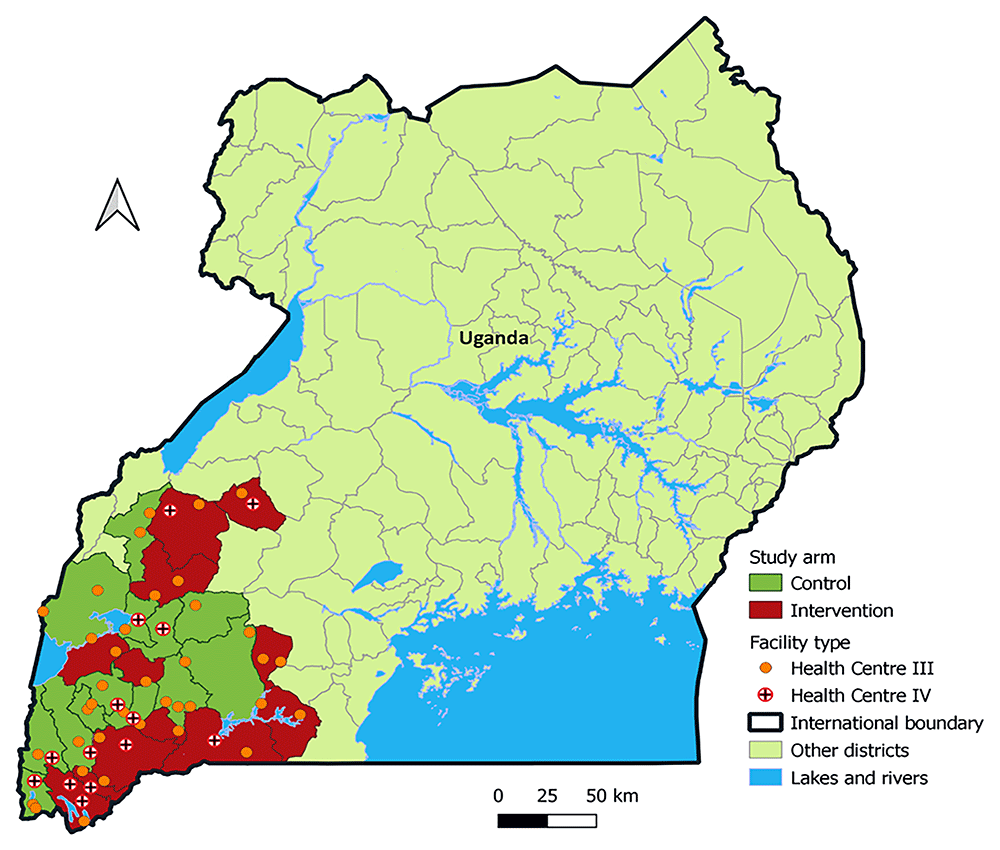
Figure 1. Map of Uganda showing the locations of study sites within selected districts in the south-western region that participated in the cross-sectional survey November 2020 to March 2021.
(Grey boundaries represent Districts)
Study population
The study population was PLHIV adults (≥ 18 years) who were active in care, defined as having had any clinic visit within six months before data collection. Using electronic medical record (EMR) systems at each health facility, we created a census list of PLHIV who were active in care as defined above and classified each potential participant as having a documented HTN diagnosis (defined as having a recorded elevated blood pressure or HTN treatment prescription documented in their medical record) or not. In each health facility, we then randomly selected 50 PLHIV without a documented HTN diagnosis and 50 PLHIV with a documented HTN diagnosis at each facility with sampling balanced evenly across four strata defined by the combination of age (≤40 years and >40 years) and by sex (male and female). For health facilities with fewer than 50 PLHIV with documented HTN, all persons in that category were selected to participate. To understand the patients’ and providers' experiences with HTN screening we conducted in-depth interviews on 12 PLHIV without a documented HTN diagnosis, 12 PLHIV with known HTN, and 24 healthcare professionals, including officers-in-charge of the health facilities, and care providers. Interview participants were from 8 (of the 52) health facilities, purposively selected based on geographical location and study arm allocation (intervention versus control).
Data collection procedures
From medical records, we collected data on basic demographics, blood pressure measurements within 6 months before the survey, and prescriptions for HTN medications. To assess the prevalence of HTN and its severity at the time of the survey, we performed blood pressure measurements and administered the study survey to all sampled participants. BP measurement was conducted using sphygmomanometers (Omron M2 IntellisenseTM Automatic Blood Pressure Monitor, Lake Forest, IL. USA) after an initial period of a seated 5-minute rest. When the first BP measurement reading was normal (<140/<90 mmHg), no additional BP readings were taken. However, when the first reading was 140/90 mmHg or higher, two additional readings were performed at alternate patient arms three minutes apart and all readings were recorded. If one of the subsequent readings were lower than the first, then that BP reading would be recorded as final. In circumstances where the lowest systolic result and the lowest diastolic result originated from two different measurements, the BP numerically closest to the normal (<140/<90mmHg) would be recorded as final. For in-depth interviews, a qualitative guide was used to collect data and responses were audio-recorded. Interviews lasted between 55 to 80 minutes.
Study outcomes
The primary outcome was screening for HTN within the last 6 months before the baseline survey and study BP measurement and assessed by documentation in medical records. The secondary outcomes included HTN severity and control among patients with a prior documented HTN diagnosis at the time of the survey assessed by blood pressure measurement, and HTN treatment assessed by self-report on the survey.
Data analysis
This analysis was based on the baseline data collected as part of an ongoing cluster randomized trial. For the parent trial and using standard sample size calculations for cluster randomized trials22. We calculated 52 health facilities (26 per arm) would provide an 80% or greater power to detect a significant improvement in HTN screening rates in the integrated HIV/HTN care model districts if the observed proportion in the implementation district clusters was 36% or greater compared to an estimated proportion in the standard of care district clusters of 20% and Intraclass-Correlation Coefficient of 0.1.
Quantitative analysis
Baseline information was collected and summarized using descriptive statistics. Specifically, the number and proportion of PLHIV who were screened for HTN in the last 6 months were reported. Additionally, the numbers and proportions with HTN as well as the severity of HTN at the time of the survey were reported. Prevalent HTN was defined as having a new HTN diagnosis, having a prior diagnosis documented in the medical record, or having a history of prior HTN diagnosis that was not documented in the medical record (i.e., self-reported prior diagnosis at survey). BP findings were categorized using the 2020 guidelines of the American Society of Hypertension and the International Society of Hypertension: Normal: <140/90 mmHg; Grade-1 HTN: 140-159/90-99 mmHg; Grade-2 HTN: 160-179/100-109 mmHg; Grade-3 HTN:≥180/11023. These metrics were reported overall and by age group (18–40 years and 41+ years), pooling over health facilities and other sampling strata. All quantitative analyses were conducted in R version 4.4.024.
Qualitative analysis
Audio recordings of interviews were transferred to password-protected computers. These were translated verbatim by research assistants to English and then transcribed. Thematic analysis was used to analyze the qualitative data. A codebook was developed and refined iteratively by an 8-member research team. The code list was developed based on a priori code lines of inquiry within the interview guides as well as emerging themes from the data. Initial coding of the transcripts was done by assigning meanings to fragments of data including words, lines, and segments to provide direction for the generation of codes that would comprise the coding framework. Focused coding where the initial codes were clustered into the a priori codes was followed. Codes were iteratively refined during the analytical process. Two research analysts coded data using Dedoose software Version 9.0.1725, a cloud application for managing, analyzing, and presenting qualitative and mixed-method research data.
Ethical consideration
This study was reviewed and approved by the ethics committees of Makerere University School of Medicine on September 8, 2020, approval number: 2020-156; the London School of Hygiene and Tropical Medicine on September 2, 2020, approval number 22196; and the Uganda National Council for Science and Technology on November 9, 2020, approval number: HS979ES. All participants provided written informed consent to participate in interviews and for data extraction from existing records at the health facility before study inclusion and participation. Strict confidentiality was upheld throughout the study. Unique numbers were used to identify eligible participants, and these were only linked to individual names when inviting participants for interviews. Patients who were newly detected with HTN and/or with a grade-3 HTN were referred to the clinician at the facility for further evaluation and appropriate management.
Results
Quantitative findings
Demographic characteristics. From November 2020 to March 2021, a total of 2,645 patients were enrolled from the selected 52 health facilities (Table 1). Approximately half (45.7%) were males, and the median age was 41 years [33, 50]. The median time on ART was 4.7 years overall, 3.8 years among younger (18–40-year-old) participants and 5.8 years among older (41+ years) participants. More participants (69.5%) enrolled from level III health facilities than from level IV. Any form of current smoking was reported by 10.1% of the participants and was more prevalent among older participants (11.7%) than younger participants (8.2%). Any alcohol use was reported by 29.2% of all participants and was similar by age group. The median body mass index (BMI) was 21.9 and was also similar by age group. A total of 553 (21%) participants were overweight or obese. Physical exercise including heavy or light workload was reported by 78.3% of the participants.
Table 1. Sociodemographic and clinical characteristics in N (%), unless noted, of Persons Living with HIV who participated in the survey from November 2020 to March 2021.
| Age 18–40 years | Age 41+ years | Overall |
|---|
| N=1255 | N=1390 | N=2645 |
|---|
| Male | 535 (42.6%) | 673 (48.4%) | 1208 (45.7%) |
| Age, median [Q1,Q3] | 33 [28,37] | 49 [44,56] | 41 [33,50] |
| Marital status |
| -Single (Never married) | 143 (11.4%) | 25 (1.8%) | 168 (6.4%) |
| -Married/Cohabitating | 859 (68.4%) | 824 (59.3%) | 1683 (63.7%) |
| -Divorced/separated/widowed | 253 (20.2%) | 540 (38.9%) | 793 (30%) |
| Years on ART, median [Q1,Q3]1 | 3.8 [2.1,6.1] | 5.8 [3.6,8] | 4.7 [2.8,7.1] |
| Health facility |
| -Health Centre III | 883 (70.4%) | 954 (68.6%) | 1837 (69.5%) |
| -Health Centre IV | 372 (29.6%) | 436 (31.4%) | 808 (30.5%) |
| Current smoking | 103 (8.2%) | 163 (11.7%) | 266 (10.1%) |
| Current alcohol use | 358 (28.5%) | 415 (29.9%) | 773 (29.2%) |
| BMI, median [Q1,Q3] | 22.1 [20.2,24.6] | 21.7 [19.6,24.4] | 21.9 [19.9,24.5] |
| -Overweight or obese | 266 (21.2%) | 287 (20.7%) | 553 (21%) |
| Reports any exercise | 997 (79.4%) | 1075 (77.3%) | 2072 (78.3%) |
Hypertension screening, prevalence, and severity among all participants. Overall, 20 (0.8%) participants had their blood pressure measured within 6 months prior to the survey with 8 (0.6%) in the younger age group and 12 (0.9%) in the older age group (Table 2). Among surveyed participants, the prevalence of HTN was 13.6% (359/2,645). Only 49 had a prior HTN diagnosis documented in their health record, and most (42/49) were in the older age group. An additional 32 participants reported a prior HTN diagnosis that was not documented in their health records. During the survey, 278 (10.5%) PLHIV were newly diagnosed with hypertension. During the survey, 2303 (87.1%) participants had normal blood pressure; 241 (9.1%) had grade-1 HTN; 75 (2.8%) had grade-2 HTN, and 26 (1%) had grade-3 HTN.
Table 2. Number and proportion of Persons Living with HIV screened for HTN in the last 6 months, with prevalent HTN at the time of the survey, and severity of HTN at the time of the survey, overall and by age group.
All metrics are reported as column percentages.
| Age 18–40 years | Age 41+ years | Overall |
|---|
| N=1255 | N=1390 | N=2645 |
|---|
| HTN screened in prior 6 months | 8 (0.6%) | 12 (0.9%) | 20 (0.8%) |
| Prevalent HTN | 104 (8.3%) | 255 (18.3%) | 359 (13.6%) |
Prior and documented diagnosis
in the medical record | 7 (0.6%) | 42 (3%) | 49 (1.9%) |
Prior, but undocumented
diagnosis in medical record | 13 (1%) | 19 (1.4%) | 32 (1.2%) |
| New Diagnosis | 84 (6.7%) | 194 (14%) | 278 (10.5%) |
| Severity of HTN during the survey |
| Normal | 1156 (92.1%) | 1147 (82.5%) | 2303 (87.1%) |
| Grade 1 | 72 (5.7%) | 169 (12.2%) | 241 (9.1%) |
| Grade 2 | 19 (1.5%) | 56 (4%) | 75 (2.8%) |
| Grade 3 | 8 (0.6%) | 18 (1.3%) | 26 (1%) |
Hypertension treatment and control among participants with a prior documented diagnosis. Among the 49 with a prior documented diagnosis of HTN, 31 (63.3%) were on HTN treatment (Table 3). The medication regimens were bendroflumethiazide plus nifedipine (48%), bendroflumethiazide alone (10%), bendroflumethiazide plus captopril (10%), nifedipine alone (6%), bendroflumethiazide plus nifedipine plus atenolol (6%), and other combinations (<4%). Nifedipine was present in 77% of all treatment regimens. Overall, 26 (53.1%) were controlled (i.e., had normal blood pressure during screening), and the proportion with HTN control was higher among younger participants (71.4%) than older participants (50%). The severity of HTN among participants with uncontrolled HTN was 12/49 (24.5%) with grade 1, 8/49 (16.3%) with grade 2 and 3/49 (6.1%) with grade 3.
Table 3. Among participants with a prior documented HTN diagnosis, the number and proportion on HTN treatment and the severity of HTN at the time of the survey, overall and by age group.
All metrics are reported as column percentages.
| Age 18–40 years | Age 41+ years | Overall |
|---|
| N=7 | N=42 | N=49 |
|---|
| On Hypertension treatment | 3 (42.9%) | 28 (66.7%) | 31 (63.3%) |
| Severity of HTN during the survey |
| Normal | 5 (71.4%) | 21 (50%) | 26 (53.1%) |
| Grade 1 | 0 (0%) | 12 (28.6%) | 12 (24.5%) |
| Grade 2 | 1 (14.3%) | 7 (16.7%) | 8 (16.3%) |
| Grade 3 | 1 (14.3%) | 2 (4.8%) | 3 (6.1%) |
Qualitative findings
Provider-related barriers to HTN screening in the HIV clinic. Healthcare workers reported a lack of BP machines in the HIV clinic as a critical contributing factor to the failure to perform routine HTN screening. Many healthcare workers explained that they had to borrow BP machines from other departments such as the maternity ward to screen patients. This led to the loss of time for both patients and staff when trying to access a BP machine. They further reported that when BP machines would be available, they often lacked batteries to power them, which resulted in missed opportunities for early HTN diagnosis and early treatment of HTN patients within the HIV clinics.
“The tools to use were very few. We had no BP machine in ART clinic; you would find someone picking the BP machine from OPD or from maternity ward and you find to move from ART clinic to the other departments tiresome and sometimes you could find the same BP machine is being used the other side.” (Provider_02_Kakoba Health center III).
“The biggest challenge we have is; the consumption of the dry cells is too much and sometimes you find we have the machine without cells and you can't use it. The consumption is too much but we have it in plan, we want to purchase rechargeable batteries and we have a machine where we can recharge those batteries. That is what we have in plan but purchasing these batteries is expensive and they can't last for two weeks because the machine is not only used for HIV patients.” (Provider_03_Kakoba_Health centre III).
High patient load coupled with inadequate BP machines often discouraged the healthcare providers from performing HTN screening. This was perceived to slow down work and affect overall productivity and patient flow. In addition, some providers also cited work overload due to staff shortages as one of the other factors contributing to the failure to conduct routine HTN screening among patients attending care at the HIV clinics.
“Work overload, we have many patients, I work and feel tired. Sometimes I find myself in ART clinic and when a woman in labour comes, I go and attend to her etc. we have shortage of staff. We have so many people here in need of services and yet we have few staff.” (Provider_01_Kakoba Health Center III)
“…we have a clinic of averagely 60 patients, sometimes we are overwhelmed by number and other people who come for treatment at the OPD. There is no enough time to work on ART patients as well as OPD patients.” (Provider_01_Kagongi Health Centre III)
Providers reported having limited technical skills to operate the BP machine and manage patients with HTN. They described having inadequate knowledge of prescription practice for HTN as well as drug interactions.
Due to limited technical skills, other providers described diagnosis for HTN to be based on clinical signs only. There was evidence of lack of knowledge among providers to manage patients both HIV and HTN, hence the need for training of providers in the management of non-communicable diseases.
“To tell you the truth, blood pressure we have not been taking it, we only take it if patients come complaining of heart palpitation, headache, and those with cardinal signs that can make someone think that they have hypertension or when they tell you that they urinate too many times.” (Provider_01_Kagongi Health center III).
“The most pressing challenge is inadequate knowledge of staff who are managing HIV with HTN. It requires one to have enough knowledge to avoid drug interactions. So we need confidence in that area.” (Provider_02_Katunguru Health Center III)
Patients’ concerns about HTN screening and care. Patients were concerned about more delays at the health facility if HTN screening is integrated with HIV care. Their concerns arose from previous experiences of delays due to extra services such as viral load testing. The fact that different services for HTN and HIV were provided by different people at different time points resulted in delays at the clinic. Another patient added that they would not be interested in hypertension screening services because of the long waiting period at the health facility.
“…. for instance, they tell you that you will get drugs at around 2pm and you even go into screening for hypertension, you lose interest and you start imagining that if I am to screen for hypertension and I was supposed to leave at around 2pm, but now I will leave at around 4pm. You find someone losing interest.” (Patient_871_ 21.02.2021)
On getting diagnosed with HTN, patients were worried about taking more pills in addition to HIV medicines.
“I am worried about taking two drugs i.e. for HIV and hypertension at a go once I am screened and diagnosed with hypertension. However, after getting used, I may not find any problem with it.” (Patient_0145_08.03.2021)
“They told us that the drugs for high blood pressure, diabetes, and HIV, should be taken daily. If you have all those conditions, it is not easy to take all those drugs; it causes one to get fed up with the drugs.” (Patient_1437_20.02.2021)
In-depth interviews of patients and providers revealed several challenges of HTN screening and care in HIV clinics such as lack of BP equipment, high patient numbers, limited technical HTN knowledge, patient’s fear of anticipated long waiting time, and pill burden.
Discussion
In this cross-sectional survey conducted before the integration of HTN and HIV care in Uganda, we found <1% of PLHIV who had been screened for HTN in the past 6 months. Only 49/359 (13.6%) PLHIV with prevalent HTN had a prior HTN diagnosis that was documented in the medical record. During the survey, 32 additional PLHIV reported a prior HTN diagnosis that was not documented in their medical record, and 278 PLHIV were newly diagnosed with HTN. The overall prevalence of HTN was 359/2,645 (13.6%). We observed several missed opportunities for HTN screening among the providers because of barriers to implementation such as a lack of BP machines in the HIV clinic, lack of routine BP monitoring among PLHIV, long waiting time and staff shortages. In addition, patients perceived that HTN screening would increase their waiting time during clinic visits. These results confirm the urgent need for novel strategies to integrate HTN screening into routine HIV care services.
The proportion of PLHIV (0.8%) recently screened for HTN was notably lower than earlier findings of 55% (783/1426) screened from a survey conducted in several urban clinics and one rural hospital in central Uganda26. The larger difference in HTN screening rates is perhaps due to the clinical setting in which these studies were conducted. The earlier study was conducted in large urban and semi-urban settings that included a higher-level health facility (district hospital), where the quality of health care delivery is likely better compared to rural and lower-level health facilities in which our study was conducted. In our study, healthcare providers cited limited training, inadequate BP machines and patient workload during HIV clinic days as reasons for not carrying out HTN screening. The barriers to HTN screening reported in our study were not any different to what was reported by studies conducted in similar settings26–28. These barriers, present missed opportunities for HTN screening, which we believe the proposed integrated HTN and HIV care model can address.
Before the survey, the healthcare providers were able to identify only 49 PLHIV with prior HTN diagnoses documented in the medical records. During the survey, an additional 32 PHLIV with prior HTN diagnoses were identified; however, these were not documented in their health record and, thus, not known to their healthcare providers. These previously diagnosed PLHIV were receiving HTN care from a different department within the same health facility or from a different health facility altogether. This finding reflects how fragmented HTN care delivery was and the level of documentation of PHLIV with HTN at the primary care facilities. This gap in documentation highlights the lack of tools available for monitoring PLHIV with HTN at these health facilities. Routine practice is that all the details of HTN care are recorded in a patient-held handbook, that the patient carries home. Thus, it is quite challenging for healthcare workers to monitor and provide optimal HTN care to these patients without appropriate Health Management Information System tools. Out of the random sample that participated in the survey, 278 (10.5%) PLHIV were newly identified with elevated blood pressure. This finding highlights the high burden of undiagnosed HTN among PLHIV and the gap in HTN screening during routine HIV care, as these new diagnoses would have been detected earlier.
Among the 49 participants with a prior, documented HTN diagnosis, 31 (63.3%) participants were on treatment and 26 (53.1%) had their blood pressure controlled. This is comparable to other studies conducted in the same rural settings, which reported 46% HTN control12,29. We also noted that most of the patients on treatment were on nifedipine a calcium channel blocker, listed as one of the first-line treatments for HTN30. HTN control is influenced by patient-related factors (adherence, drug interactions, diet, lifestyle), provider-related factors (drugs prescribed, prescribers’ knowledge), and health systems-related factors (drug availability and access issues). However, these factors were not evaluated in this study. Notably, 3/49 (6%) had severe hypertension, which is a life-threatening condition, with potentially far-reaching complications such as kidney damage, heart failure, stroke, and myocardial infarction if not treated. Patients with severe hypertension during the survey were referred to the clinician for further evaluation and appropriate management.
Limitations
The study had limitations. First, there were few very documented PLHIV with HTN, because providers were not systematically performing BP measurements at HIV clinics, given that it was never a priority. Second, most documentation about HTN in the HIV care card was scanty or non-existent. Instead, we observed, that healthcare providers recorded HTN care details in the patient-held handbooks, which is carried home. This also applied to the clinical monitoring of HTN care so: there was no systematic collection of such data. Third, given the limited number of participants with a prior documented HTN diagnosis, we reported statistics on screening, prevalent HTN, and HTN severity pooling across sampling strata and without sampling weights. However, within the subset that had a prior documented HTN diagnosis, we also reported treatment and control. Fourth, in our study, HTN diagnosis was determined through BP measurement on a single day. There is a possibility that a certain proportion of participants found to be hypertensive may have had ‘white-coat hypertension’31 The possible implication of these false-positive diagnoses would be overestimating the proportion of PLHIV with prevalent HTN.
Strengths
The survey was conducted in 52 public health facilities located in rural Uganda and provided a comprehensive understanding of HTN screening and care among PLHIV before care integration. In addition, the study sites had varying geographical and cultural characteristics, hence an opportunity to examine the HTN care delivery among PLHIV across the region.
Conclusion
In this cross-sectional study of 52 health facilities in rural Uganda, we found that regular screening for the detection of hypertensive patients was hardly performed. Our results emphasize the urgent need to introduce the integration of HTN care services in HIV clinics in primary health care settings in Uganda.
Data availability
Dryad: Low levels of hypertension screening in HIV care clinics in rural Uganda: A mixed methods study. https://datadryad.org/stash/dataset/doi:10.5061/dryad.9p8cz8wqg32
Data are available under the terms of the Creative Commons Zero "No rights reserved" data waiver (CC0 1.0 Public domain dedication) (http://creativecommons.org/publicdomain/zero/1.0/).
Extended data
Dryad: “Uganda Integrated HIV-HTN Baseline Data for EUopensci”, https://datadryad.org/stash/dataset/doi:10.5061/dryad.9p8cz8wqg
Qualitative interview guide Patient.docx – the qualitative interview guide used.
Integrated HIV_HTN patient survey tool v1.3 20220104 clean.docx – the study survey tool used.
English_Integrated HIV-HTN Survey Consent_cross sectional survey - v1.1 15Aug2020_clean.doc – the approved study consent form.
License
This data is shared un the CC0 license.
Canonical URL https://creativecommons.org/publicdomain/zero/1.0/ CC0 (aka CC Zero) is a public dedication tool, which enables creators to give up their copyright and put their works into the worldwide public domain. CC0 enables reusers to distribute, remix, adapt, and build upon the material in any medium or format, with no conditions
Contributors
The authors confirm their contribution to the paper as follows: MK, EC, JK, MA, HG, JN, EO and GM designed the study; MA, BT and EA supervised the study in the field; BT, MA, JT, WT, AA, and GL supervised data management; EC and LBB analysed the data. AB, CA and AM implemented the qualitative research component in the field. MA, EC and JK prepared the initial draft of this manuscript. All authors have read and approved the final manuscript.
Faculty Opinions recommendedReferences
- 1.
Global report on hypertension: the race against a silent killer. Geneva: World Health Organization, Licence: CC BY-NC-SA 3.0 IGO. Report No.: 9240081062. 2023. Reference Source
- 2.
Xu Y, Chen X, Wang K:
Global prevalence of Hypertension among People Living With HIV: a systematic review and meta-analysis.
J Am Soc Hypertens.
2017; 11(8): 530–40. PubMed Abstract
| Publisher Full Text
- 3.
Islam FM, Wu J, Jansson J, et al.:
Relative risk of Cardiovascular Disease among People Living With HIV: a systematic review and meta-analysis.
HIV Med.
2012; 13(8): 453–68. PubMed Abstract
| Publisher Full Text
- 4.
Roomaney RA, van Wyk B, Pillay-van Wyk V:
Aging with HIV: increased risk of HIV comorbidities in older adults.
Int J Environ Res Public Health.
2022; 19(4): 2359. PubMed Abstract
| Publisher Full Text
| Free Full Text
- 5.
Annual joint AIDS review report FY 2022/23. Uganda AIDS Commission, 2023. Reference Source
- 6.
Guwatudde D, Mutungi G, Wesonga R, et al.:
The epidemiology of Hypertension in Uganda: findings from the national Non-Communicable Diseases risk factor survey.
PLoS One.
2015; 10(9): e0138991. PubMed Abstract
| Publisher Full Text
| Free Full Text
- 7.
Kwarisiima D, Balzer L, Heller D, et al.:
Population-based assessment of Hypertension epidemiology and risk factors among HIV-positive and general populations in rural Uganda.
PLoS One.
2016; 11(5): e0156309. PubMed Abstract
| Publisher Full Text
| Free Full Text
- 8.
Lubega G, Mayanja B, Lutaakome J, et al.:
Prevalence and factors associated with Hypertension among People Living With HIV/AIDS on Antiretroviral Therapy in Uganda.
Pan Afr Med J.
2021; 38: 216. PubMed Abstract
| Publisher Full Text
| Free Full Text
- 9.
Byonanebye DM, Polizzotto MN, Parkes-Ratanshi R, et al.:
Prevalence and incidence of Hypertension in a heavily treatment-experienced cohort of People Living With HIV in Uganda.
PLoS One.
2023; 18(2): e0282001. PubMed Abstract
| Publisher Full Text
| Free Full Text
- 10.
Sander LD, Newell K, Ssebbowa P, et al.:
Hypertension, cardiovascular risk factors and antihypertensive medication utilisation among HIV-infected individuals in Rakai, Uganda.
Trop Med Int Health.
2015; 20(3): 391–6. PubMed Abstract
| Publisher Full Text
| Free Full Text
- 11.
Muddu M, Ssinabulya I, Kigozi SP, et al.:
Hypertension care cascade at a large urban HIV clinic in Uganda: a mixed methods study using the Capability, Opportunity, Motivation for Behavior change (COM-B) model.
Implement Sci Commun.
2021; 2(1): 121. PubMed Abstract
| Publisher Full Text
| Free Full Text
- 12.
Kwarisiima D, Atukunda M, Owaraganise A, et al.:
Hypertension control in integrated HIV and chronic disease clinics in Uganda in the SEARCH study.
BMC Public Health.
2019; 19(1): 511. PubMed Abstract
| Publisher Full Text
| Free Full Text
- 13.
Muddu M, Tusubira AK, Sharma SK, et al.:
Integrated Hypertension and HIV care cascades in an HIV treatment program in eastern Uganda: a retrospective cohort study.
J Acquir Immune Defic Syndr.
2019; 81(5): 552–61. PubMed Abstract
| Publisher Full Text
| Free Full Text
- 14.
Walugembe F:
Prevalence of uncontrolled Hypertension and associated factors among adult HIV-infected patients on integrated HIV and Hypertension care at Mulago National Referral Hospital. Uganda: Makerere University, 2023.
- 15.
Muddu M, Semitala FC, Kimera I, et al.:
Improved Hypertension control at six months using an adapted WHO HEARTS-based implementation strategy at a large urban HIV clinic in Uganda.
BMC Health Serv Res.
2022; 22(1): 699. PubMed Abstract
| Publisher Full Text
| Free Full Text
- 16.
Isaac Derick K, Khan Z:
Prevalence, awareness, treatment, control of hypertension, and availability of Hypertension services for Patients Living With Human Immunodeficiency Virus (HIV) in Sub-Saharan Africa (SSA): a systematic review and meta-analysis.
Cureus.
2023; 15(4): e37422. PubMed Abstract
| Publisher Full Text
| Free Full Text
- 17.
Kalyesubula R, Kayongo A, Semitala FC, et al.:
Trends and level of control of Hypertension among adults attending an ambulatory HIV clinic in Kampala, Uganda: a retrospective study.
BMJ Glob Health.
2016; 1(3): e000055. PubMed Abstract
| Publisher Full Text
| Free Full Text
- 18.
Kotwani P, Kwarisiima D, Clark TD, et al.:
Epidemiology and awareness of Hypertension in a rural Ugandan community: a cross-sectional study.
BMC Public Health.
2013; 13: 1151. PubMed Abstract
| Publisher Full Text
| Free Full Text
- 19.
Lunyera J, Kirenga B, Stanifer JW, et al.:
Geographic differences in the prevalence of Hypertension in Uganda: results of a national epidemiological study.
PLoS One.
2018; 13(8): e0201001. PubMed Abstract
| Publisher Full Text
| Free Full Text
- 20.
Atukunda M, Kabami J, Mutungi G, et al.:
Rationale and design of leveraging the HIV platform for Hypertension control in Africa: protocol of a cluster-randomised controlled trial in Uganda.
BMJ Open.
2022; 12(12): e063227. PubMed Abstract
| Publisher Full Text
| Free Full Text
- 21.
Gielen AC, McDonald EM, Gary TL, et al.:
Using the precede-proceed model to apply health behavior theories.
Health Behavior and Health Education: Theory, Research, and Practice.
2008; 4: 407–29. Reference Source
- 22.
Herrin J:
CLTEST: stata modules for performing cluster-adjusted chi-square and t-tests. 2022. Reference Source
- 23.
Schneider RH, Salerno J, Brook RD:
2020 international society of Hypertension global Hypertension practice guidelines - lifestyle modification.
J Hypertens.
2020; 38(11): 2340–1. PubMed Abstract
| Publisher Full Text
- 24.
Team RC:
R: a language and environment for statistical computing. R Foundation for Statistical Computing, Vienna, Austria, 2024. Reference Source
- 25.
Version D. 9.0.17, cloud application for managing, analyzing, and presenting qualitative and mixed method research data (2021). Los Angeles, CA: SocioCultural Research Consultants, LLC, 2021. Reference Source
- 26.
Buzaalirwa L, Nambala L, Banturaki G, et al.:
Implementing screening for Hypertension in archetypal HIV primary care: a mixed-methods assessment.
BMC Health Serv Res.
2022; 22(1): 1041. PubMed Abstract
| Publisher Full Text
| Free Full Text
- 27.
Muddu M, Tusubira AK, Nakirya B, et al.:
Exploring barriers and facilitators to integrated hypertension-HIV management in Ugandan HIV clinics using the Consolidated Framework for Implementation Research (CFIR).
Implement Sci Commun.
2020; 1: 45. PubMed Abstract
| Publisher Full Text
| Free Full Text
- 28.
Manavalan P, Wanda L, Galson SW, et al.:
Hypertension care for People With HIV in Tanzania: provider perspectives and opportunities for improvement.
J Int Assoc Provid AIDS Care.
2021; 20: 23259582211052399. PubMed Abstract
| Publisher Full Text
| Free Full Text
- 29.
Musimbaggo DJ, Kimera ID, Namugenyi C, et al.:
Factors associated with Blood Pressure control in patients with Hypertension and HIV at a large urban HIV clinic in Uganda.
J Hum Hypertens.
2024; 38(4): 345–351. PubMed Abstract
| Publisher Full Text
| Free Full Text
- 30.
Guideline for the pharmacological treatment of Hypertension in adults. Geneva: World Health Organization, Licence: CC BY-NC-SA 3.0 IGO. Report No.: 924003398X. 2021. Reference Source
- 31.
Nuredini G, Saunders A, Rajkumar C, et al.:
Current status of white coat hypertension: where are we?
Ther Adv Cardiovasc Dis.
2020; 14: 1753944720931637. PubMed Abstract
| Publisher Full Text
| Free Full Text
- 32.
Atukunda M, Charlebois E, Twinamatsiko B, et al.:
Low levels of Hypertension screening in HIV care clinics in rural Uganda: a mixed methods study.
Dryad.
2024. http://www.doi.org/10.5061/dryad.9p8cz8wqg