Introduction
Background
Clinical trials are research studies performed in people aimed at evaluating a medical, surgical, or behavioral intervention. They are the primary way that researchers find out if a new treatment, like a new drug or diet or medical device (for example, a pacemaker) is safe and effective in people (Vulcano, 2017). A clinical trial is often a clinical trial is used to learn if a new treatment is more effective and/or has less harmful side effects than the standard treatment (NIH, 2023).
Africa is home to 17% of the world’s population and carries 25% of the global disease burden (Hwenda et al., 2022). However, it contributes less than 3% of worldwide clinical trials conducted on the continent (Hwenda et al., 2022). Studies have shown that this is mainly due to limited clinical trial capacity, which is attributed to inadequate funding, poor research infrastructure, and a lack of trained personnel, including clinical trialists and laboratory researchers (Vischer, 2016). Furthermore, regulatory challenges, including ethical concerns, significantly hinder the implementation and expansion of clinical trials in Africa (Ndembi et al., 2024). Consequently, PTA practices are not as well established or widespread in Africa compared to other continents. Enhancing clinical trial application and review capabilities in African countries is crucial for revitalizing the continent's role in managing communicable and non-communicable diseases. It significantly improves PTA plans and practices among stakeholders and enhances the region’s preparedness for frequent pandemic onsets (Ogunleye et al., 2020).
Declaration of Helsinki, article 34 PTA states, “In advance of a clinical trial, sponsors, researchers, and host country governments should make provisions for post-trial access for all participants who still need an intervention identified as beneficial in the trial. This information must also be disclosed to participants during the informed consent process.” (DoH, 2013). The Declaration of Helsinki has been revised; there is a recent version of 2024 (DoH, 2024). Therefore, PTA should be planned and documented in the study protocol. The execution plan should be reviewed and updated during the clinical trial. PTA has various aspects. First, it refers to providing knowledge and intervention, if any. Second, it refers to the potential beneficiaries, which could be research participants and/or the intended patient group in the community and/or country. Third, PTA provisions for research participants must be free of charge. PTA for the community and/or host country usually comes in the form of availability and accessibility of the medicinal product within a reasonable time. Access to an investigational intervention is justified by the principle of beneficence, “which requires researchers and sponsors to safeguard the health of participants when it is in their power to do so.” (CIOMS, 2016) It is also supported by the principle of distributive justice: participants, and by extension, the community or host country, assist researchers in generating valuable data, and, in return, researchers should ensure that participants receive the needed care to safeguard their health.
Even though the number of clinical trials in LMICs has increased dramatically (Van Roessel et al., 2019), most of the trials are funded, sponsored, or otherwise influenced by private or public entities from high-income countries. The lack of PTA introduces the risk of exploiting study participants in low- and middle-income countries who otherwise have limited access to healthcare (Singh et al., 2019). In this case, national ethics committees and the relevant drug regulation agencies must ensure PTA is in place. While there is limited practical experience on PTA in clinical trials in LMICs, the concept of benefit-sharing, which acts as the theoretical foundation of PTA, is firmly stipulated in different international ethical guidelines (Singh et al., 2019). The UNESCO Declaration on Bioethics and Human Rights, for example, highlights the duty of benefit-sharing pertaining to scientific and technological innovations, in particular with developing countries (Chirac & Torreele, 2006; UNESCO, 2009).
The Declaration of Helsinki requires the sharing of benefits in medical research with the vulnerable group (DoH, 2013), and the CIOMS International Ethical Guidelines require multi-stakeholder cooperation to make the studied intervention and the knowledge gained available to the population or community (CIOMS, 2016).
Hence, ethical guidelines are clear that PTA, in the form of concrete plans and procedures for benefit-sharing and access (may it be in the form of reasonable pricing of an approved indication in the host country, free medicinal product for research participants, the provision of knowledge to the relevant patient population and the community), must be intrinsic to clinical trial planning. Despite these ethical guidelines, the general status quo of PTA is not encouraging: the provision of PTA is “rather the exception than the rule” (Jimenez et al., 2019; Schippe, 2015).
In line with the above principles, this manuscript will explore PTA planning and implementation on TB, Malaria, and NTDs clinical trials in Sub-Saharan African countries.
Methods
Study design
The study is a descriptive cross-sectional study. A self-administered online questionnaire was used to explore PTA planning and implementation practices among principal investigators, sponsors, and study coordinators who implemented TB, Malaria, and NTDs clinical trial studies between 2008 and 2019.
The selected studies were conducted between 2008 and 2019 in Sub-Saharan African countries and registered in the Clinical trials.gov or Pan African Clinical Trial Registry (PACTR; tiral.gov). We identified 242 completed clinical trial studies from the registers. From the identified studies, we selected a total of 300 participants and invited them to participate in the study. From the registry, 110 participants were registered as PI and sponsor, 122 were registered as PIs, and 78 were registered as trial coordinators. A total of 37 study participants agreed to participate by filling out the questionnaires. Of the 37 participants, 21 (56.8%) were principal investigators, 4 (10.8%) were sponsors, and 12 (32.4%) were study coordinators. Most participants were based in sub-Saharan African countries (56.8%).
We developed and distributed a survey questionnaire to collect information on the PTA, types, and implementation practices of PIs, Sponsors, and trial coordinators who conducted clinical trials on TB, Malaria, or NTDs across Sub-Saharan Africa based on a literature review of the literature (Cook, 2014).
Study setting
We sought clinical trial studies on Malaria, TB, and NTDs within SSA conducted between 2008 and 2019. We sought these studies in the clinicaltrials.gov and Pan African Clinical Trial Registry.
Sample and sampling strategy
The respondents were principal investigators (PI), Co-PI, sponsors, researchers, and clinical trial coordinators who conducted clinical trial research in TB, Malaria, and NTDs between 2008 and 2019 within sub-Saharan African countries. Purposive sampling was used to select the study sample. The recruitment of study participants entailed sending emails to PIs, co-PIs, sponsors, researchers, and trial coordinators who were involved in clinical trials on Malaria, TB, & NTDs between 2008 and 2019 within Sub-Saharan African countries. These individuals were registered on the clinicaltrials.gov or Pan African Clinical Trial Registry websites. We retrieved their contact information from the registries and emailed consent forms and questionnaires. Some of the contact information was not useful as some participants had moved on to other organizations, making it difficult to trace them and, as such, limiting the response rate. Only 37 respondents completed the questionnaire. Online surveys are known for poor response rates in low- and middle-income countries due to internet connectivity issues (Nayak & Narayan, 2019).
The search for TB, Malaria, and NTDs clinical trial studies was conducted from November 1, 2021, to January 31, 2022. The keywords used for the study were TB, Malaria, NTDs, trial ID, scientific trial title, disease name, clinical trial start time, completed time, recruitment country, PI contact address, sponsor email address, and 1st author name and address.
Data collection tool and procedures
Based on the research objective, a questionnaire with 17 questions on socio-demographics, PTA knowledge, PTA plans, discussions and arrangements, PTA implementation, stakeholder involvement, trial products, and roles were sent out. The survey questionnaire was pre-tested amongst the Armauer Hansen Research Institute (AHRI) researchers to check if the developed tool is linguistically meaningful, if all necessary questions are asked in the right way, or if any other challenges may have been overseen or undetected during the process of tool development. Afterwards, the questionnaire was distributed to the study participants through their email addresses. Unfortunately, the response rate was low, so we shortened the questionnaire to encourage study participation. The participant responses were stored on the AHRI server.
The shortened questionnaire contained a few questions on (i) socio-demographics, (ii) roles in the conducted clinical trials, (iii) PTA plans, types, and implementation practices, & (iv) the need for PTA training. It was combined with information sheets and consent forms and sent to 300 email addresses.
Data management and analysis
StataSE18 (https://www.stata.com) software was used to perform descriptive statistics in the form of frequencies and percentages, on anonymous data to maintain participants confidentiality The Fisher’s exact test assessed the relationship between two categorical variables. The findings are presented in tables and graphically. We considered p-values less than 0.05 as statistically significant. Though we used STATA version 18 software, we shared the dataset with Excel sheet- which can be used to perform similar descriptive analysis, or it can be exported to other freely available statistical software’s like R (RStudio Team, 2020). The R- or RStudio software is freely available language and environment for statistical computing and graphics that can be downloaded to most operating systems including Microsoft Windows, Linux, Mac OS, used to replicate the study result. (SCIRP) (http://www.rstudio.com/.)
Ethical considerations
This study received ethical approval from the Armauer Hansen Research Institute (AHRI) and the All-African Tuberculosis, Leprosy Treatment, Rehabilitation, and Training Centre Institutional Review Board (AHRI/ALERT IRB) with approval reference number PO/43/20 dated on 21/01/2021. Additionally, the Ministry of Education (MOE) National Ethical Review Board (NERB) of Ethiopia granted approval with reference number MOSHE/RD/04/246/84/21 dated on 10/06/2021. The study also got renewal for approval from the Ministry of Education (MOE) National Ethical Review Committee of Ethiopia with the reference number of MOSHE/RD/03/246/505/22 dated on 08/06/2022. Written informed consent was obtained from all study participants prior to their participation in the study. Within the data collection procedures, the applicant strictly maintained the participant’s confidentiality by using the study code number as identification for each participant for anonymity.
Results
Characteristics of the study population
A total of 300 potential participants were invited to complete the survey, 37 participants responded. Themes explored were trial sites, roles in conducted clinical trials, place of work at the time of the trial, PTA arrangements and discussions and need for PTA training.
The research team identified 242 completed clinical trials on malaria, TB, and NTDs across Sub-Saharan Africa countries. Among these, 114 trials focused on Malaria, 70 on tuberculosis, and 58 on NTDs. These clinical trials were conducted between 2008 and 2019 and were registered on clinical trials.gov or the Pan African clinical trial registry (PACTR).
Table 1 shows the distribution of the study participants and trial sites stratified by PTA arrangement. As shown in the Table 1, thirty-seven study participants completed the survey questionnaires. Out of the 37 study participants, 21 (56.8%) were principal investigators, 4 (10.8%) were sponsors, and 12 (32.4%) were study coordinators. Most of the PIs (57.1%) and sponsors (75.0%) were involved in PTA arrangements, whereas study coordinators were evenly distributed between those who facilitated PTA arrangements and those who did not. Twenty-six out of 37 participants (70.3%) indicated that they would like to receive PTA training. Among those who would like to be trained on PTA, 38.5% had facilitated PTA arrangements. Regarding trial sites, 70% conducted single-center clinical trials, whereas 30% carried out multi-center clinical trials across sub-Saharan African countries as illustrated in Figure 1. Six of the seven known multi-center sites participated in PTA arrangements as illustrated in Table 1.
Table 1. Distribution of the study participants stratified by PTA arrangement, (N = 37).
| PTA arrangement | Total | 1P-value |
|---|
| Yes (n = 21) | No (n = 16) | | |
|---|
| Role of the participants | | | | 0.72 |
| Principal Investigator (PI) | 12 (57.1) | 9 (42.9) | 21 (56.8) | |
| Sponsor | 3 (75.0) | 1 (25.0) | 4 (10.8) | |
| Study co-ordinator | 6 (50.0) | 6 (50.0) | 12 (32.4) | |
| Need for PTA training | | | | < 0.01 |
| Yes | 10 (38.5) | 16 (61.5) | 26 (70.3) | |
| No | 11 (100.0) | 0 (0.0) | 11 (29.7) | |
|
Trial sites
| | | | |
| Single-center: | | | | 0.94 |
| Burkina Faso | 2 (66.7) | 1 (33.3) | 3 (8.1) | |
| Cote d'Ivoire | 0 (0.0) | 1 (100.0) | 1 (2.7) | |
| Democratic Republic of Congo | 2 (100.0) | 0 (0.0) | 2 (5.4) | |
| Ethiopia | 2 (40.0) | 3 (60.0) | 5 (13.5) | |
| Ghana | 1 (33.3) | 2 (66.7) | 3 (8.1) | |
| Kenya | 2 (66.7) | 1 (3.3) | 3 (8.1) | |
| Malawi | 0 (0.0) | 1 (100.0) | 1 (2.7) | |
| Mozambique | 1 (100.0) | 0 (0.0) | 1 (2.7) | |
| Nigeria | 1 (50.0) | 1 (50.0) | 2 (5.4) | |
| Senegal | 1 (100.0) | 0 (0.0) | 1 (2.7) | |
| South Africa | 1 (100.0) | 0 (0.0) | 1 (2.7) | |
| Tanzania | 0 (0.0) | 1 (100.0) | 1 (2.7) | |
| Uganda | 1 (50.0) | 1 (50.0) | 2 (5.4) | |
|
Multi-center:
| | | | |
| Benin, Burkina Faso, Ethiopia, Kenya, Uganda, Malawi, Tanzania, Mali | 1 (100.0) | 0 (0.0) | 1 (2.7) | |
| Ethiopia, Kenya, Sudan, Uganda | 1 (100.0) | 0 (0.0) | 1 (2.7) | |
| Tanzania, Equatorial Guinea | 1 (100.0) | 0 (0.0) | 1 (2.7) | |
| South Africa, Tanzania, Mozambique, The Gambia | 0 (0.0) | 1 (100.0) | 1 (2.7) | |
| The Gambia, Sierra Leone, Senegal | 1 (100.0) | 0 (0.0) | 1 (2.7) | |
| Kenya, Uganda, Mozambique, Rwanda, Mali, Burkina-Faso, Gabon | 1 (100.0) | 0 (0.0) | 1 (2.7) | |
| The Gambia, Senegal, Nigeria, and Guinea Conakry | 1 (100.0) | 0 (0.0) | 1 (2.7) | |
| 2Unknown center (s) | 1 (25.0) | 3 (75.0) | 4 (10.8) | |
|
Trial site by size summarized
| | | | 0.43 |
| Multi-centered | 7 (63.6) | 4 (36.4) | 11 (29.7) | |
| Single-centered | 14 (53.9) | 12 (46.1) | 26 (70.3) | |
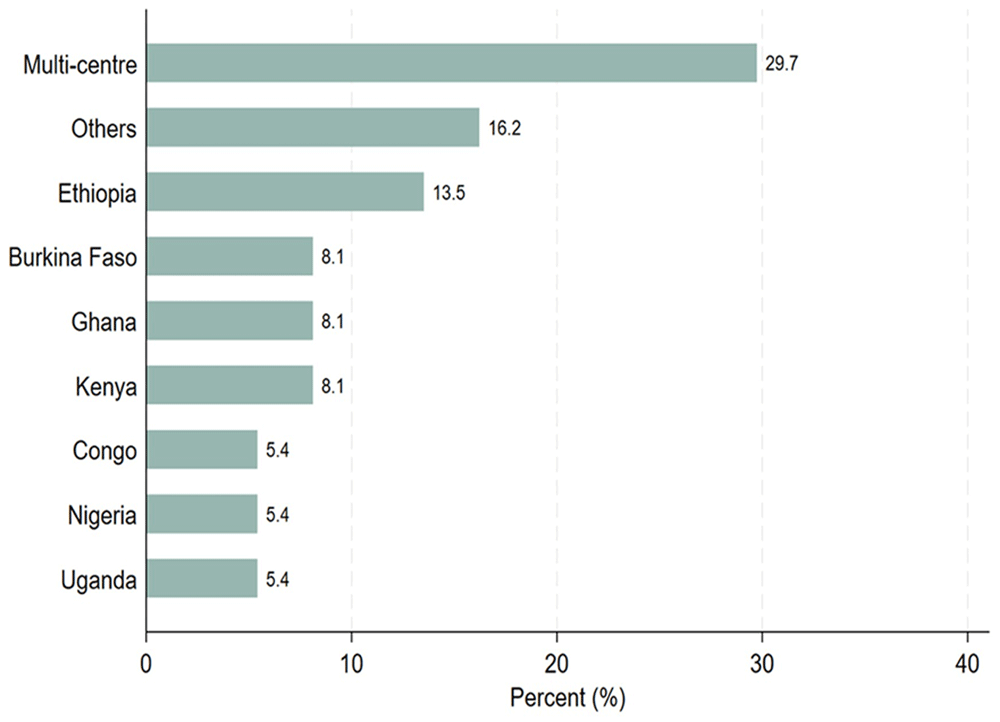
Figure 1. Distribution of the trial study sites, where the trial took place.
Post-trial access plans and arrangements
Respondents were asked whether they provided PTA plans, conducted discussions, or made arrangements in their clinical trials and, if yes, in what form. As shown in Figure 2, 21 (57%) study participants stated that they provided PTA plans, discussions, or arrangements. Figure 2 illustrates that 9 participants (24.3%) had developed PTA plans or arrangements, while 12 (32.4%) had implemented PTA. However, 16 participants (43%) reported no discussions or arrangements made regarding PTA in clinical trials related to malaria, tuberculosis, or neglected tropical diseases (NTDs) across Sub-Saharan African countries. These findings highlight a significant gap in PTA planning and provision, despite the steady increase in clinical trial studies conducted in the region within the last two decades.
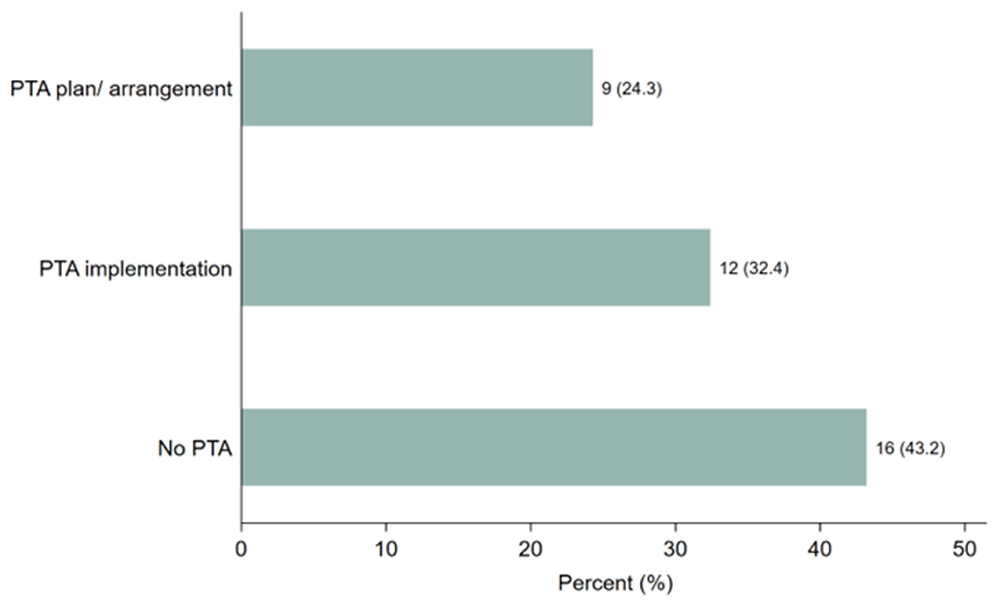
Figure 2. Distribution of the responses on PTA plans, discussion or arrangements made.
PTA training needs
PTA arrangements involve a process initiated by the sponsor, funder, or host country after the conclusion of a clinical trial to provide access to information or knowledge about the research, or newly identified drugs, vaccines, or medical devices. PTA training, on the other hand, refers to a short course focusing on planning, types, and implementation of research findings for the community or trial participants after the clinical trial ends. Study participants were asked about their need for PTA training. Twenty-six respondents (70.3%) expressed the need for PTA training, while eleven respondents (29.7%) were not interested as shown in Table 1. Most respondents were keen to learn about PTA planning, arrangements, and implementation. As shown in "Figure 3," the majority of Principal Investigators (61.9%), sponsors (75%), and study coordinators (83.3%) indicated a desire for PTA training.
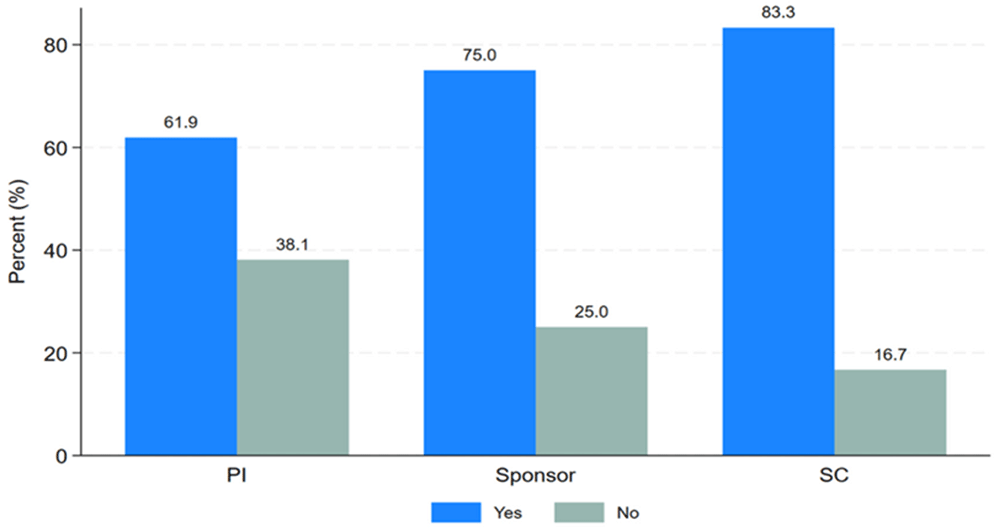
Figure 3. Clustered bar graph showing the desire for PTA training.
Discussion
This is the first study in SSA to explore PTA planning, arrangements, and implementation. The findings are key as they provide a glimpse of PTA, an underexplored concept in clinical trial research within SSA. Although more than half of the clinical trials had PTA plans, about 57.14% had implemented PTA.
These numbers indicate low PTA. However, they are slightly higher than the earlier findings of (Hellmann et al., 2022), which reported no PTA in LMIC and (Jimenez et al., 2019) which found that while the majority of clinical trial sponsors declared PTA, a closer examination of their responses revealed that no PTA was provided in the form of access to the medicinal product for research participants, the community, or the host country.
Institutional Review Board (IRB) members should request PTA plans during the review process of trial documents. The lack of a pan-African (or international) platform to follow up on whether researchers implement their PTA plans once the research is completed makes oversight difficult. In the case of at least some, if not most, of the Sub-Saharan countries, the absence of regulation and follow-up on the implementation process of PTA presents a significant challenge to its feasibility. The challenges related to PTA stem from limited knowledge, mutual agreement, and commitment from those responsible for ensuring the rights, safety, and well-being of study participants and the community.
Addressing these challenges can be achieved through PTA training for researchers, sponsors, and IRB members to update their perspectives on PTA and to consider it in the protocol development and review process. Active participation of research stakeholders in the planning, process, and implementation of PTA can maximize its feasibility in the region and help ensure the rights and benefits of research participants and their communities or countries.
Strengths and limitations of the study
This is the first study in SSA to explore PTA arrangements and their implementation. The study provides a glimpse into PTA, an under-researched topic in clinical trial research. The limited access to clinical trial vaccines during COVID-19 for LMICs that participated in the research necessitates capacity building on PTA to ensure they benefit from research. This study indicates a gap in clinical research where nearly half of the studies do not provide PTA and a dire need for PTA training. Despite the low response rate from selected study participants, the study contributes to filling a knowledge gap on PTA overview with SSA.
Conclusion and recommendations
PTA training should be offered to research stakeholders to address knowledge gaps in planning, discussions, and arrangements for PTA. National research guidelines should be updated to integrate PTA plans, ensuring fair access to medicinal products for study participants and communities in need. Furthermore, the principles of distributive justice and beneficence underscore the importance of mutual agreements among researchers, funders, sponsors, and host countries to guarantee PTA provision. This highlights the need for a collaborative framework where various stakeholders including governments, pharmaceutical companies, and global health organizations contribute to sustainable access solutions. A balanced approach is crucial to fostering innovation while ensuring that trial participants and their communities benefit from research outcomes.
Data availability
The data for this article consists of bibliographic references, which are included in the References section.
Zenodo: Post-trial access practice in Malaria, Tuberculosis, and NTDs Clinical Trial studies in Sub-Saharan African countries, quantitative study. https://zenodo.org/doi/10.5281/zenodo.13752053
Figure 1. Distribution of the trial study sites, where the trial took place.
Figure 2. Distribution of the responses on PTA plans, discussion or arrangements made.
Figure 3. Clustered bar graph showing the desire for PTA training.
Table 1. Distribution of the study participants stratified by PTA arrangement, (N = 37).
Information sheet for study participants.
PTA data Excel format.
Raw data survey 1
Raw data survey 2
Study survey questionnaires
Data are available under the terms of the Creative Commons Attribution 4.0 International license (CC-BY 1.0).
Authors contribution
1. Mrs. Yemisrach Zewdie Seralegne - contributed to design, acquisition of data, analysis, and interpretation of data, wrote the first draft of the manuscript, and revised the manuscript for important intellectual content.
2. Dr. Cynthia Khamala Wangamati - contributed to conception and design, analysis, interpretation of data, reviewing and editing the manuscript critically for important intellectual content.
3. Prof. Rosemarie de la Cruz Bernabe - contributed to conception and design, analysis, and interpretation of data, reviewing and editing the manuscript critically for important intellectual content.
4. Mr. Ibrahim Mdala - contributed to analysis and interpretation of data.
5. Dr. Martha Zewdie - contributed to design, acquisition of data and revised the manuscript for important intellectual content.
6. Dr. Hawult Taye - contributed to design, acquisition of data, analysis, and interpretation of data. All authors read and approved the final manuscript.
Acknowledgement
We would like to acknowledge the EDCTP2 programme for this research financial support.
We would like to acknowledge Dr. Ewenat Gebrehanna for helping us with recruitment.
We are grateful to all study participants.
For the purpose of open access, the author has applied a CC0 BY public copyright license to any Author Accepted Manuscript version arising from this submission.
Faculty Opinions recommendedReferences
- Chirac P, Torreele E:
Global framework on essential health R&D.
Lancet.
2006; 367(9522): 1560–1561. PubMed Abstract
| Publisher Full Text
- Cook KJ:
Exploring academic and REB members' attitudes toward post-trial access. 2014. Reference Source
- Council for International Organizations Medical Sciences (CIOMS): International ethical guidelines for health-related research involving humans. 2016. Reference Source
- Declaration of Helsinki (DoH): World Medical Association Declaration of Helsinki ethical principles for medical research involving human subjects.
JAMA.
2013; 310(20): 2191–4. PubMed Abstract
| Publisher Full Text
- Declaration of Helsinki (DoH): WMA Declaration of Helsinki – ethical principles for medical research involving human participants.
<wma-declaration-of-helsinki.pdf>, 2024. Reference Source
- Hellmann F, Bernabe RC, Homedes N:
Post-trial provisions in the Declaration of Helsinki: a watered-down principle that needs to be strengthened.
J R Soc Med.
2022; 115(11): 420–423. PubMed Abstract
| Publisher Full Text
| Free Full Text
- Hwenda L, Sidibe M, Makanga M:
The African medicines agency: the key to unlocking clinical research in Africa.
Lancet Glob Health.
2022; 10(8): e1088–e1089. PubMed Abstract
| Publisher Full Text
- Jimenez EB, Virtudazo JMP, Torres CE, et al.:
Availability of Post-Trial Access in clinical trials: a review of clinical trial protocols submitted to the research ethics board of the University of the Philippines Manila.
Curr Med Res Opin.
2019; 35(11): 1849–1855. PubMed Abstract
| Publisher Full Text
- Nayak MSDP, Narayan KA:
Strengths and weaknesses of online surveys. 2019. Reference Source
- Ndembi N, Mekonen TT, Folayan MO, et al.:
Strengthening and expanding capacities in clinical trials: advancing pandemic prevention, preparedness and response in Africa.
Nat Commun.
2024; 15(1): 8662. PubMed Abstract
| Publisher Full Text
| Free Full Text
- NIH: What are clinical trials and studies? 2023. Reference Source
- Ogunleye OO, Basu D, Mueller D, et al.:
Response to the novel Corona Virus (COVID-19) pandemic across Africa: successes, challenges, and implications for the future.
Front Pharmacol.
2020; 11: 1205. PubMed Abstract
| Publisher Full Text
| Free Full Text
- PACTR. Reference Source
- RStudio Team: RStudio: integrated development for R. RStudio, PBC, Boston, MA, 2020. Reference Source
- Schippe SCaI:
Post-trial access to treatment: how expanded access may offer a strategic solution. 2015. Reference Source
- SCIRP, R Core Team: R: A language and environment for statistical computing. R Foundation for Statistical Computing, Vienna, Austria, 2021. Reference Source
- Singh H, Rao SV, Kakkar AK, et al.:
Posttrial access to medical interventions: intricacies, challenges, and solutions.
Int J Appl Basic Med Res.
2019; 9(1): 3–8. PubMed Abstract
| Publisher Full Text
| Free Full Text
- tiral.gov.
Reference Source
- UNESCO: The UNESCO universal declaration on bioethics and human rights. 2009. Reference Source
- Van Roessel IMAA, Mazur NI, Shah SK, et al.:
Post-Trial Access in maternal vaccine trials.
Am J Perinatol.
2019; 36(S 02): S41–S47. PubMed Abstract
| Publisher Full Text
- Vischer N:
Efficiency and quality in conducting clinical trials in sub-Saharan Africa. University of Basel, 2016. Reference Source
- Vulcano D:
Current events in pre-approval access in the United States. 2017. Publisher Full Text