This Section presents the results of this systematic literature review that answers the four research questions set in the previous Section. As already noted, the final number of the included papers is 26, and the results gathered from each study are categorized and presented into the three following subsections: General Results, Business-related Results, Technical-related Results and Research-related Results.
4.2. Business-related Results
This Section presents the results of the business-related analysis from the SLR. This analysis aims to provide a comprehensive understanding of the various types of digital marketplaces presented in each primary study and their applicability to different industries. In addition, the business-related analysis also includes some specific details for the business targets and objectives for each marketplace. This information adds another layer of understanding and sheds light on how these marketplaces operate. Overall, this Section examines in detail the current state of digital marketplaces in terms of their business aspects and highlights trends and potential areas for future research. In this study, the classification of every marketplace to a certain type was based on their market offerings or to be more precise on the type of goods or services they offer. From the literature analysis, the identified types of marketplaces were classified into the following categories:
(1) Software Marketplace: Marketplaces that offer software applications, such as mobile, desktop, and web apps.
(2) Data Marketplace: Marketplaces that provide various types of data sets, such as weather data, through a digital platform.
(3) Product Marketplace: A type of marketplace that specializes in facilitating the exchange of physical goods and/or serving as an intermediary for procuring such products.
(4) Services Marketplace: Marketplaces that enable individuals, professionals, or companies to offer their services online.
(5) Multi-typed Marketplace: A marketplace type that combines two or more of the attributes of the above types of marketplaces.
Regarding the classification of every marketplace to the industry they were designed to operate in, it was also based on the type of goods or services offered that are related to various domains, such as cloud computing, healthcare, automotive, manufacturing, among others. Hence, this was the primary criterion used to categorize the industry of each marketplace in the primary studies. However, this categorization was not always strict, as many marketplaces could operate and be applicable in more than one industry. In cases where a marketplace did not have a specific industry focus, the term ”Generic” was used to classify it. In addition to the previous data features, this Section includes a brief overview of the primary objective and area of emphasis of each marketplace, thus providing further insight into the business goals that each marketplace aims to accomplish. Table 5 highlights the overall results of the business-related analysis regarding the aforementioned data features that were extracted and gathered from the selected primary studies.
Table 5. Categorization of each marketplace from every primary study per type and per industry.
| No. | Industry | Marketplace
type | Marketplace business targets and objectives |
|---|
| a1 | Generic | Software | A marketplace offering cloud services to business customers that
come attached with verifiable certificates of security properties. |
| a2 | Healthcare, IoT | Software | This one-stop-shop brings together business entities/developers
with end-users/health professionals by offering various IoT apps in
the field of Active \& Healthy Ageing (AHA). |
| a3 | Gaming | Multi-typed | This multi-typed marketplace is designed to become a knowledge
hub and a digital repository in the gaming community where
relevant software products and tools can also be exchanged. |
| a4 | Generic | Data | The platform enables data providers to publish, distribute and
monetize their data and simultaneously, facilitates data consumers in
discovering and accessing data available on the marketplace. |
| a5 | Circular Economy, HVAC-R | Product | Aims to change the way the industry handles used F-gases by
supporting the circular economy of refrigerants in the HVAC-R sector. |
| a6 | Cloud Computing, IoT | Services | A distributed and decentralized marketplace designed to deliver
computational, storage and network services. |
| a7 | Generic | Multi-typed | This multi-typed marketplace offers a variety of solutions (across
various domains), such as tools, matchmaking services, funding
opportunities, and educational material. |
| a8 | Urban Planning | Data | A data marketplace designed to not only support the buying and
selling of data but also foster knowledge and experience sharing
among the users, in smart and sustainable cities. |
| a9 | Automotive, Manufacturing,
Healthcare | Data | The primary objective is to establish equitable competition and
trust among various stakeholders, promoting the development of a
digital-data trading ecosystem in Europe. |
| a10 | Cloud Computing | Services | A Platform as a Service (PaaS) marketplace addressing the challenges
of cloud platform compatibility and the transferability of cloud
applications. |
| a11 | Cloud Computing | Multi-typed | A decentralized auction-based platform for the exchange of software
and data in a trustworthy ecosystem. |
| a12 | Cloud Computing | Multi-typed | This marketplace aims to act as a market in the context of Anything
as a Service (XaaS), in order to foster the creation of viable business
ecosystems. |
| a13 | IoT | Data | A blockchain-based IoT data marketplace to facilitate the access to
a wide range of data providers in a manner that is both simple and
compliant with privacy regulations. |
| a14 | Cloud Computing | Services | A services marketplace that aims to foster slice resource discovery
and information exchange. |
| a15 | Manufacturing | Multi-typed | A marketplace for the exchange of data, software and services
related to material modelling. |
| a16 | Urban Planning, IoT | Data | A blockchain-based data marketplace for the exchange of IoT sensor
data and media in an easy, secure and anonymous way. |
| a17 | Telecommunications | Services | A services marketplace based on blockchain and designed to enable
secure trade of various resources amidst the fast-evolving 5G
technology landscape. |
| a18 | IoT | Data | A data marketplace based on blockchain that enables data
consumers to acquire noisy data that can be utilized for extracting
meaningful statistics. |
| a19 | Cybersecurity | Services | This marketplace aims at fostering the exchange of knowledge
regarding cyber range services. |
| a20 | Cybersecurity | Services | This marketplace platform offers a variety of cutting-edge
cybersecurity services, introducing novel business scenarios and
significantly broadening potential markets. |
| a21 | Cybersecurity | Services | A marketplace acting as an intermediary between customers and
providers offering cyber range services. |
| a22 | Energy | Services | A marketplace acting as a flexibility market between Transmission
System Operators (TSOs), Distribution System Operators (DSOs), and
Prosumers in a secure, transparent, cost-effective manner. |
| a23 | Language Technology | Multi-typed | This multi-typed marketplace aims at enabling the upload, share, and
distribution of software, products, and resources in the European
Language Technology Landscape. |
| a24 | Generic | Multi-typed | A multi-typed marketplace that aims to act as a public directory
and search engine of free and open source software fostering the
exchange of knowledge in the community. |
| a25 | Generic | Product | A B2B marketplace addressing challenges in semantic annotation
and introducing a generic product classification taxonomy model
using eClass and Furniture Sector Taxonomy as examples. |
| a26 | Generic | Data | A cross-domain marketplace integrating diverse solutions and
assets, with a focus on storage, advanced search, retrieval, and
combining data assets into comprehensive offerings. |
Based on the analysis of Table 5 and as depicted in Figure 5, it was observed that most marketplaces (6 out of 26) had a more generic nature making them suitable for a wide range of domains, which could explain their popularity. The generic nature of a marketplace enables the exploration of synergies, the creation of new value propositions, and the realization of cross-domain innovations by connecting complementary products and services from multiple industries. Furthermore, our analysis showcased that the Cloud Computing and Internet of Things industries were found to be the second most commonly encountered industries, accounting together for one-third of the total number. This could be attributed to their growing importance and increasing adoption across domains, since the demand for cloud computing services and IoT-enabled devices has been on the rise, and this trend is expected to continue in the foreseeable future (Taha et al., 2020). As a result, many entrepreneurs, businesses, and researchers are exploring opportunities to develop marketplaces that cater to these industries. Finally, Cybersecurity emerged as the next most frequently occurring industry sector (3 respective marketplaces that specifically focus on ensuring the uninterrupted operation of critical systems and services). All the remaining industries showcased in Figure 5 were identified only once or twice.
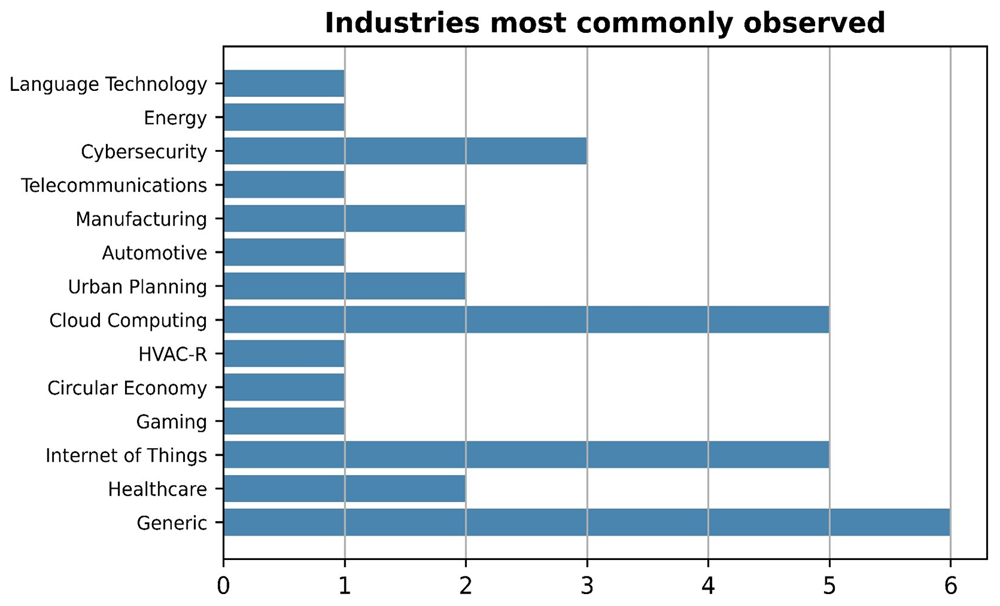
Figure 5. Column chart depicting the most frequently encountered industries.
In Figure 6, the classification of each platform into a marketplace type is presented. The results indicate that approximately one-third (30.8%) of the marketplaces are categorized as services marketplaces, either serving as intermediaries between service providers and consumers across various domains, or offering their own specific services. Another significant finding is that 26.9% of the marketplaces are multi-typed, providing a variety of software products, data sets, tools, services, and related items. This suggests an increasing trend toward hybrid marketplace models in multiple economic sectors. Additionally, the same percentage (26.9%) of the digital marketplaces are categorized as data marketplaces, with the majority of the encountered data marketplaces emerging after 2018, indicating a notable trend in the growing recognition and significance of data handling and distribution. Data marketplaces offer opportunities for businesses to unlock the untapped potential of data, foster collaborations, and leverage data-driven insights to drive growth and competitive advantage. Notably, only two marketplaces are classified as software marketplaces, and only two as well exclusively deal with product trading among stakeholders and across domains. All the above, highlight the current trends regarding marketplace type (services and data) in electronic marketplaces, resulting also in the fact that traditional product marketplaces, at least for the EU-funded projects, are of minor scientific importance and somehow old-fashioned, therefore eliminating geographical barriers and enabling convenient access to a wide range of products and services.
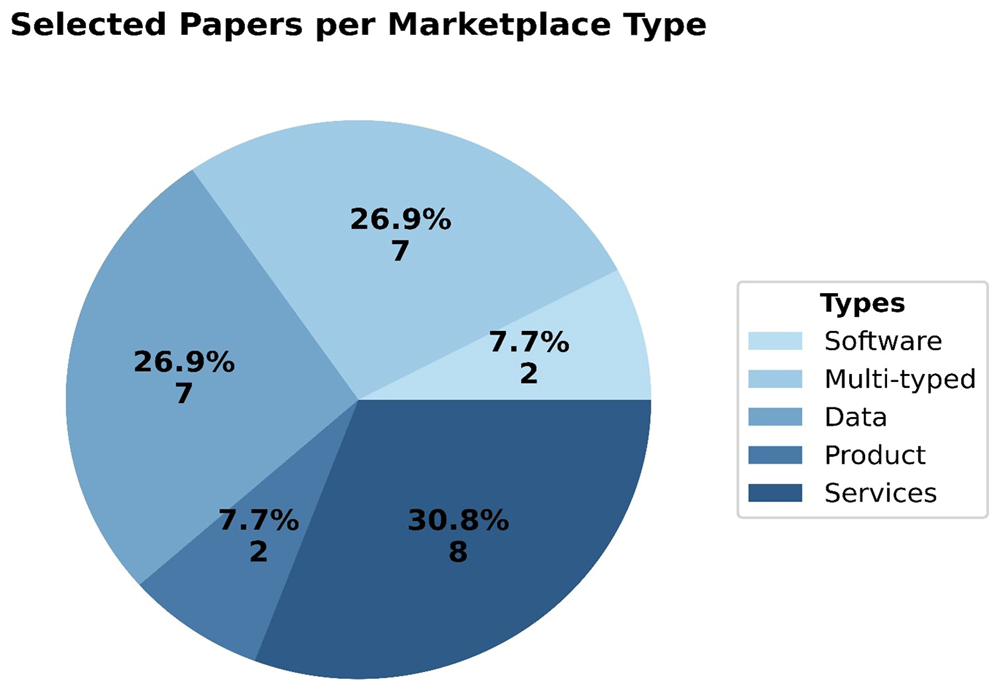
Figure 6. Pie chart depicting percentage per marketplace type.
4.2.1. Payment and pricing. The addition of "Payment and Pricing" as a distinct subsection within the broader context of business-related results stems from its critical role in shaping the operational and economic landscape of these platforms. Despite the exploration of types, industries, and business objectives of digital marketplaces presented earlier, the specific mechanisms of payment and pricing have a direct impact on marketplace sustainability, user adoption, and overall financial health. In spite of its critical importance, it was observed that only a limited number of papers within the systematic literature review explicitly investigate payment and pricing mechanisms. This selective coverage highlights the need for a focused examination to understand the subtle differences and impacts of these financial strategies on the digital marketplace ecosystem.
The payment and pricing methods used in digital marketplaces are a crucial aspect of their business model. However, the proposed SLR found that only one-third approximately of the 26 primary studies analyzed provided a detailed analysis of the payment methods used, limiting the ability to conduct a detailed and comparative analysis of this parameter. While this is a limitation, it is important to acknowledge that the primary studies did not always focus on business-related aspects of the marketplaces, and therefore may not have provided a dedicated analysis of the payment method. Overall, payment and pricing methods are essential components of the business model of digital marketplaces. The present analysis highlights the variety of payment methods used in non-blockchain marketplaces and the potential of blockchain technology to introduce digital tokens and decentralize the agreement mechanism.
There are papers in the literature detailing a specific case like subscription (Roman et al., 2017), while others cover a broader spectrum of payment methods with four different methods (Menychtas et al., 2014). A degree of flexibility for adopting various methods can help marketplaces’ adoption, as elaborated in Alvsvåg’s future work (Alvsvåg et al., 2022). Additionally, the business model for the marketplace has room to contemplate the payment means. Indeed, Europe has introduced the Single Euro Payments Area (SEPA) network, and marketplaces can benefit from cashless euro payments (Barmparitsas et al., 2022). Finally, the business model can dictate technical requirements to marketplaces for adopting various agreement mechanisms. For example, Barmparitsas et al. (2022) describe that the trade and payment mechanisms are based on a Bidding model quite different from a traditional Auction Model, as only one Bid can be submitted per Listing and grade.
For blockchain-based marketplaces, the use of blockchain technology provides promising opportunities to decentralize processes and introduce trust into a network without a central authority. Due to the monetary nature of marketplace transactions, digital tokens can serve as a means for exchanges between buyers and sellers. In the research works examined, there are European marketplaces allowing users to select between fiat methods (Genés-Durán et al., 2022; Mladenov et al., 2022), and digital token payment (Genés-Durán et al., 2022; Mladenov et al., 2022; Palaiokrassas et al., 2021). The papers introduce a native to the marketplace token by applying market-tested standards such as ERC-1155 (Genés-Durán et al., 2022) or ERC-223 (Palaiokrassas et al., 2021). Other works (Fernández-Fernández et al., 2021) abstract the notion of money to a numerical representation without specifying the currency to any digital or fiat one. Digital tokens may not be essential for the suggested applications as traditional payment methods remain applicable, and the application’s scope can differ from the payment method by suggesting other mechanisms. Apart from the payment, blockchain can decentralize the agreement mechanism. There are auction and bidding mechanisms accompanying the marketplaces, and there are ideas for automating the procedure with the use of smart contracts (Shi et al., 2022). Blockchain has the potential to decentralize procedures, but business models may require a revision. The business model should account for transactional settlement between individuals rather than devising a business case relying on central authorities. Business cases where the marketplace’s operator distributes the funds to the owners (Fotiou et al., 2021), confine the decentralization of the technology.
4.3. Technical-related Results
In this subsection of the SLR, a comprehensive overview of the technical aspects of the digital marketplaces from the selected primary studies is presented. The analysis of the technical features is a three-layered analysis including the following technical characteristics: a) the deployment-related features that examine the evidence and realization characteristics of the digital marketplaces; b) the classification of software technologies to broader categories based on the similarities or shared characteristics; and finally, c) the blockchain-related analysis that presents the technical features that are closely related to the blockchain technologies used in several marketplaces. The presentation of the technical features of every digital marketplace studied, allows for a deeper understanding of the digital marketplace ecosystem and can offer valuable insights that can help future research and provide guidance to practitioners and policy makers.
4.3.1. Analysis of Deployment-related features. As mentioned above, the first layer of the technical analysis is the presentation of the deployment related features that examine the maturity development level of each marketplace at the time having been presented and provide insights concerning the availability and accessibility of the marketplace. The information extracted from each primary study are presented in Table 6. Although the deployment features are presented as Boolean values (Yes/No), they allow for a clear, concise and simplified analysis, since they offer an easy comparison among the different marketplaces. This approach can also highlight any potential issues or areas for improvement in the deployment of these marketplaces.
Table 6. Deployment related features for each primary study.
| No. | Architecture
visualization | UI screenshots | Link for
open-source
repository | Link for
marketplace
website |
|---|
| a1 | No | Yes | No | No |
| a2 | Yes | Yes | No | Yes |
| a3 | No | Yes | No | Yes |
| a4 | Yes | No | No | No |
| a5 | No | Yes | No | Yes |
| a6 | Yes | No | No | No |
| a7 | Yes | No | No | Yes |
| a8 | No | Yes | No | No |
| a9 | No | No | No | No |
| a10 | Yes | No | No | No |
| a11 | Yes | Yes | Yes | No |
| a12 | Yes | Yes | No | No |
| a13 | Yes | No | No | No |
| a14 | Yes | No | No | No |
| a15 | No | Yes | No | No |
| a16 | Yes | Yes | Yes | No |
| a17 | Yes | No | No | No |
| a18 | No | No | Yes | No |
| a19 | No | Yes | No | No |
| a20 | No | Yes | No | No |
| a21 | Yes | Yes | No | No |
| a22 | No | Yes | No | No |
| a23 | Yes | Yes | Yes | Yes |
| a24 | Yes | No | No | Yes |
| a25 | No | Yes | Yes | No |
| a26 | Yes | Yes | No | Yes |
It is interesting to observe in Table 6 that out of the 26 primary studies analyzed, 57.69% (15 studies) have provided a visualization of the marketplace architecture. The distribution of architectural designs was found to be diverse across the 15 included studies. Architectural designs (Hofmeister et al., 2000) refer to the fundamental structure of a digital marketplace, which might include its components, modules, subsystems, infrastructure, and interfaces. From those 15 studies, multitiered architectural designs were utilized in the 33.33% (5 studies), while a more traditional component-based architecture was used in the 20% (3 studies). Service-oriented architecture (Valipour et al., 2009) was observed in the 6.67% (1 study), while the microservices architecture (Ghofrani & Lübke, 2018) was utilized in the 13.33% (2 studies). Finally, 4 studies (26.67%) have presented a visualization of their architecture and belong to the blockchain-based marketplaces in which a decentralized architecture was observed and can be considered a distinct category of architecture, as it differs significantly from traditional centralized or client-server architectures, since there is no central authority or intermediary controlling the network, but instead, the system is distributed among multiple nodes or devices. Based on the above results, the information regarding architecture can be critical in understanding the overall structure and design of each marketplace, and in identifying the different components and the interactions that occur. Additionally, it can help identify the level of complexity involved in the implementation of the marketplace and the type of infrastructure required to support it. Overall, the visualization of architecture constitutes a valuable tool in software engineering life cycle offering insight into the technical aspects of the marketplace, thus making it also an essential component of the present SLR study.
Regarding the rest of the results presented in Table 6, out of the 26 primary studies analyzed, 61.53% (16 studies) provided user interface (UI) screenshots. From those 16 studies, in 4 studies (25%) the screenshots were limited to the homepage, in 5 studies the screenshots focused on specific functionalities or services provided by the platform (31.25%), and in the majority of the studies both the homepage and some of the marketplace functionalities are presented in the screenshots (43.75%, 7 studies). The inclusion of UI screenshots is important as it provides insights into the overall user experience and helps to identify potential usability issues and areas for improvement.
On the other hand, only 7 studies (26.92%) provided a link to the marketplace website, while only 5 studies (19.23%) provided a link to an open-source repository. The provision of website links and open-source repositories can greatly facilitate the evaluation and replication of the marketplace, with the latter also being useful for evaluating the implementation details and potentially reusing the source code. Furthermore, providing access to the marketplace website and open-source repository, in addition to the UI screenshots, can significantly enhance the transparency and reproducibility of the research results. Finally, these two features are also crucial for exploitation reasons of the EU-funded projects, since they prove the existence and operation of a marketplace after the finalization of the project and thus, their usefulness for the community.
All of the aforementioned results are visualized in Figure 7, to better facilitate the reader in understanding the aggregated results.
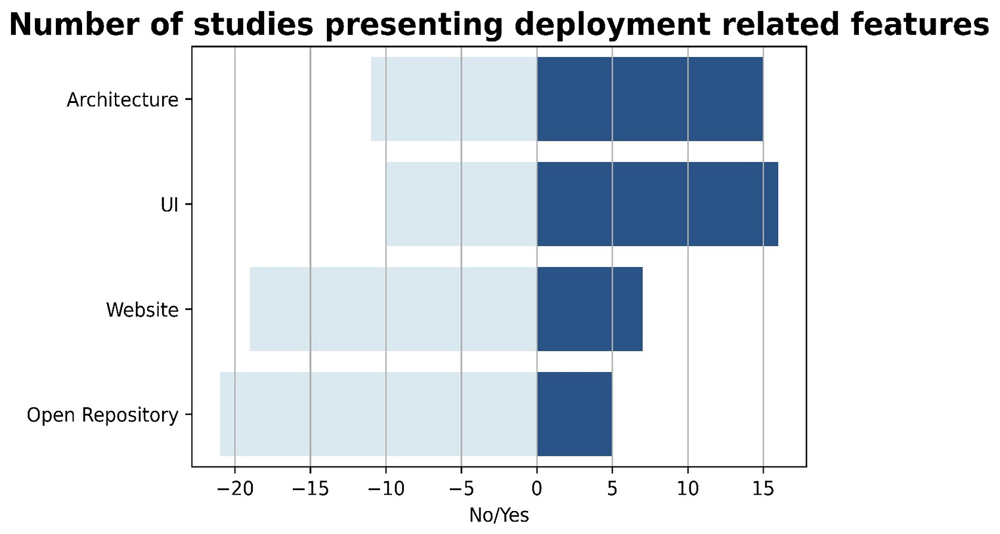
Figure 7. Chart presenting the number of studies that provided information of deployment related features.
4.3.2. Classification and Analysis of most prominent Software Technologies. The second layer of the technical characteristics analysis refers to the classification of the various technologies used for the marketplaces development and presented in the corresponding primary studies. It is evident that in several studies, not all or any of the technologies were showcased. Hence, the purpose of this analysis is to highlight the most prominent technologies used, allowing for the better understanding of the digital marketplace ecosystem in the field of EU-funded projects and for facilitating future research based on the State-of-the-Art technologies. Furthermore, since a significant number of papers (8 out of 26 studies) utilize blockchain technology, the analysis is divided into two parts: the first focuses on presenting the aggregated results gathered regarding the technologies used, while the second focuses only on the blockchain-related technologies and is thoroughly presented in Section 4.3.3. Overall, the technical analysis aims to provide a more focused and comprehensive examination of the technologies used in digital marketplaces.
The identified technologies were grouped into four broader categories:
(1) Frameworks (Edwin, 2014): A framework typically includes a set of standardized practices, concepts, rules, conventions, and best practices that guide the development process.
(2) Computer Languages (Lando et al., 2007): Formal languages used to communicate instructions to a computer. Several types of languages exist that serve different purposes. For instance, programming languages are used to create software applications and programs, while markup languages are used to store and transport data.
(3) Data & Storage technologies (Carullo et al., 2017; Siddiqa et al., 2017): Data and Storage technologies refer to the technologies and techniques used for managing and storing data, information, and objects in computer systems.
(4) Communication technologies (Lascano & Clyde, 2016): Communication technologies refer to several sets of protocols, rules, standards, and objects that enable two or more entities to exchange information and facilitate transfer of data or information between different systems or platforms, which may use different communication protocols or data formats.
Table 7 provides a summary of the technologies employed in each primary study, offering a comprehensive overview of the digital marketplace landscape across the literature reviewed. Additionally, the technologies that were most frequently utilized in the primary studies for each category are showcased in Figure 8. It should be noted that the frequency percentages presented for each category were based solely on the studies that provided information on technologies within that category and did not include those that did not.
Table 7. Classification of technologies.
| No. | Frameworks | Computer
Languages | Data & Storage technologies | Communication
technologies |
|---|
| a1 | Assert4Soa | SerDiQueL | - | - |
| a2 | Django; jQuery | Python; SASS; HTML | - | - |
| a3 | - | C#; C++; Java;
JavaScript | - | HTTP |
| a4 | - | SPARQL | - | REST APIs |
| a5 | - | - | - | - |
| a6 | Django | Python | JSON | - |
| a7 | Django; Spring;
ReactJS | Python; Bash;
JavaScript | SQL; NoSQL; MinIO; Elasticsearch | REST APIs |
| a8 | - | - | - | - |
| a9 | - | - | - | - |
| a10 | Spring; Hibernate
ORM | SPARQL; Java | MySQL; SQL; MongoDB; PostgreSQL;
NoSQL; GraphDB Free | - |
| a11 | - | - | JSON | - |
| a12 | - | - | MongoDB; XML; Open Virtualization
Format | - |
| a13 | - | JavaScript | JSON | Kafka stream; HTTP;
GraphQL |
| a14 | - | Python | - | FED4FIRE API |
| a15 | - | - | HDF5; RDF | - |
| a16 | Bootstrap; SASL;
jQuery | HTML; JavaScript | PostgreSQL; IPFS | LDAP; HTTP |
| a17 | - | - | - | REST APIs |
| a18 | - | - | - | - |
| a19 | - | - | YAML | HTTP |
| a20 | - | - | DRAM | OpenFlow; HTTP |
| a21 | - | - | MongoDB | Delayed Message Queue |
| a22 | - | - | XML | - |
| a23 | Django; ReactJS;
Angular | HTML; Python;
Typescript | PostgreSQL; MariaDB; XML;
Elasticsearch; JSON | REST APIs; HTTP |
| a24 | - | SPARQL; RDF Query
Language | RDF | - |
| a25 | - | - | - | - |
| a26 | Flask | Python; CSS; HTML;
PHP | MongoDB; NGINX; Gunicorn; NoSQL;
JSON | REST APIs; HTTP |
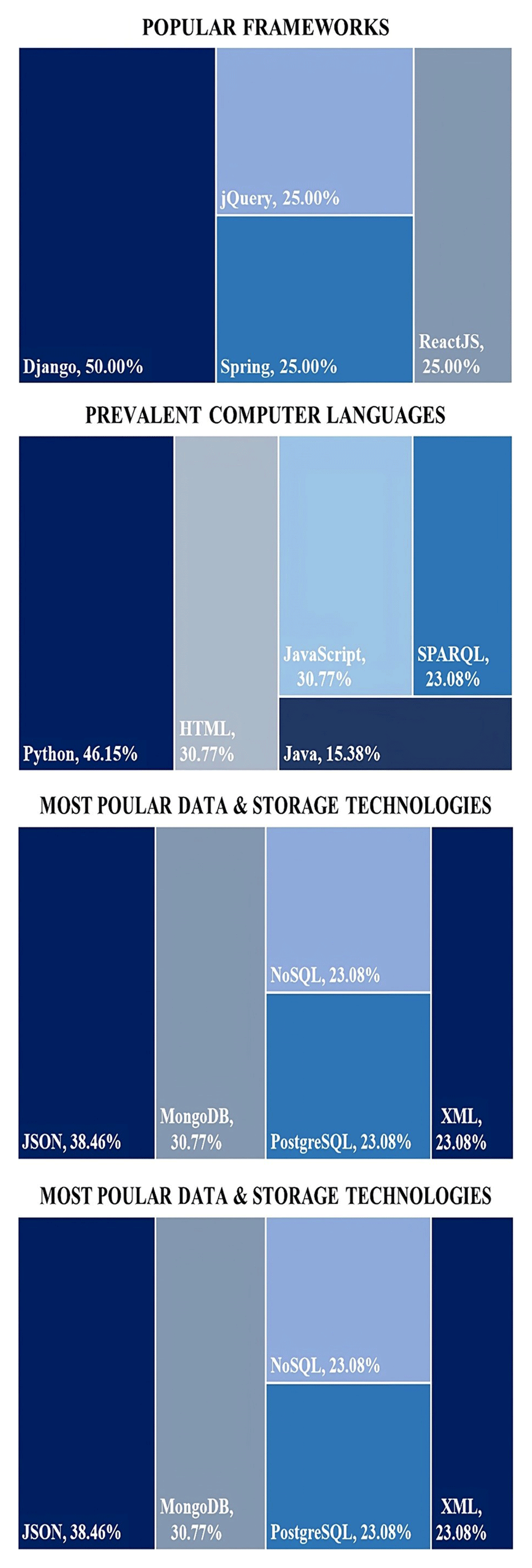
Figure 8. Multiple treemap charts depicting the most prevalent technologies used across the primary studies.
In the analysis of the primary studies, it was found that 50% of them utilized the Django web framework, making it the most commonly used framework. Django is a high-level Python web framework that enables the efficient and practical development of web applications. For example, Rehm et al. (2021) utilized Django to develop their web application, showcasing the capabilities and effectiveness of the framework in web development. The next most common frameworks used in the primary studies were jQuery, Spring, and ReactJS, each with a frequency of 25%. jQuery is a fast, small, and feature-rich JavaScript library that simplifies HTML document traversal and manipulation, and event handling, which was utilized by Palaiokrassas et al. (2021). Spring is a popular Java-based framework that provides a comprehensive programming and configuration model for modern Java-based enterprise applications (Bassiliades et al., 2018). Lastly, ReactJS is an open-source JavaScript library used for building user interfaces or UI components, utilized by Rehm et al. (2021).
The next category evaluated for this technical analysis refers to the most common computer languages observed among the primary studies. The broader term “Computer Languages” was used to encompass all different types of languages (i.e., programming, markup, query, etc.) used in the primary studies both for front-end and back-end development. The analysis of computer languages revealed that Python was the most prevalent language, with 46.15% of the studies utilizing it and this is quite anticipated also from the framework analysis. Python is a versatile language and is often used for full-stack web development, as described by Stavropoulos et al. (2020), or for executing certain services via REST API calls, as Rehm et al. (2021) mention. JavaScript along with HTML followed next with 30.77% of the studies utilizing them. JavaScript is primarily used for client-side web development, although it can also be utilized to handle the interaction with smart contracts (Palaiokrassas et al., 2021), while HTML is a commonly used standard markup language for creating web pages (Rehm et al., 2021). The next most common language was SPARQL which was utilized in 23.08% of the primary studies. SPARQL is a query language for handling RDF data, and was utilized accordingly by Bavota et al. (2014). Lastly, Java was used in 15.38% of the primary studies. Java is a popular general-purpose programming language often used for enterprise applications, utilized by Bassiliades et al. (2018). Overall, these findings suggest that Python, JavaScript and HTML are the most commonly used languages for developing applications related to the technologies covered in this systematic literature review and these findings are also in accordance with well-known indexes such as TIOBE Index6.
Data & Storage technologies were identified as a prominent category in the primary studies, with JSON being the most commonly used technology at 38.46%, followed by MongoDB at 30.77%. Other common technologies used include PostgreSQL, NoSQL and XML, all of which were utilized in 23.08% of the primary studies. JavaScript Object Notation (JSON), is a lightweight data interchange format that is easy for humans to read and write, while also being easy for machines to parse and generate, as Shi et al. (2022) describe. MongoDB and PostgreSQL are both popular database management systems, which can also be used in combination as presented by Bassiliades et al. (2018), with MongoDB being a NoSQL database, and PostgreSQL being a relational database management system. NoSQL (Not Only SQL) databases are used for storing and managing large volumes of unstructured or semi-structured data, and can handle flexible data models, provide horizontal scalability, and support high-performance data processing; thus, it was utilized accordingly by Mavrogiorgou et al. (2022). Lastly, XML, or Extensible Markup Language, is a markup language referenced by Bavota et al. (2014), as an example of its wide usage for storing and exchanging data on the web. The prevalence of these data and storage technologies highlights the importance of managing and storing data effectively in web-based applications.
The last category evaluated refers to Communication Technologies. The most common technology used in this category is HTTP at 58.33%. This is not surprising since HTTP is a fundamental protocol for data communication on the World Wide Web, which offers platform-independence and interoperability, and was utilized accordingly by Westera et al. (2019). RESTful APIs are the next most common communication technology used in the primary studies, with a percentage of 41.67%. As Pincheira, Vecchio, and Giaffreda (2020) describe, RESTful APIs have gained popularity due to their ability to offer a standardized approach for creating web services that enable diverse components to communicate with each other seamlessly, making them compatible with various client applications. HTTP and REST APIs are the most prevalent communication technologies due to their ability to provide a standardized, flexible, and efficient way for systems to communicate and to meet different needs.
4.3.3. Blockchain-related analysis. The last layer of the technical analysis pertains to the presentation of the blockchain-specific details gathered and examined from blockchain-based papers (as showcased in Figure 9). The papers relevant to blockchain are numbered to be eight, with the first one published in 2020 and the majority published in 2021. The works in the literature are related to different marketplace types, with the majority of them focusing on data (50%), reflecting the emergence of data marketplaces after 2018 (as analyzed in Section 4.1). Data marketplaces use blockchain to allow users to have control and incentives for sharing their data, by promoting disintermediation and democratization in data exchange. Similarly to data, there are suggestions in services (37.5%) and marketplaces with a wide variety of products (12.5%). The products’ complexity grows as the community gets accustomed to the blockchain. Conferences and journals accommodate the publications with an equal split (each source has 4 related publications).
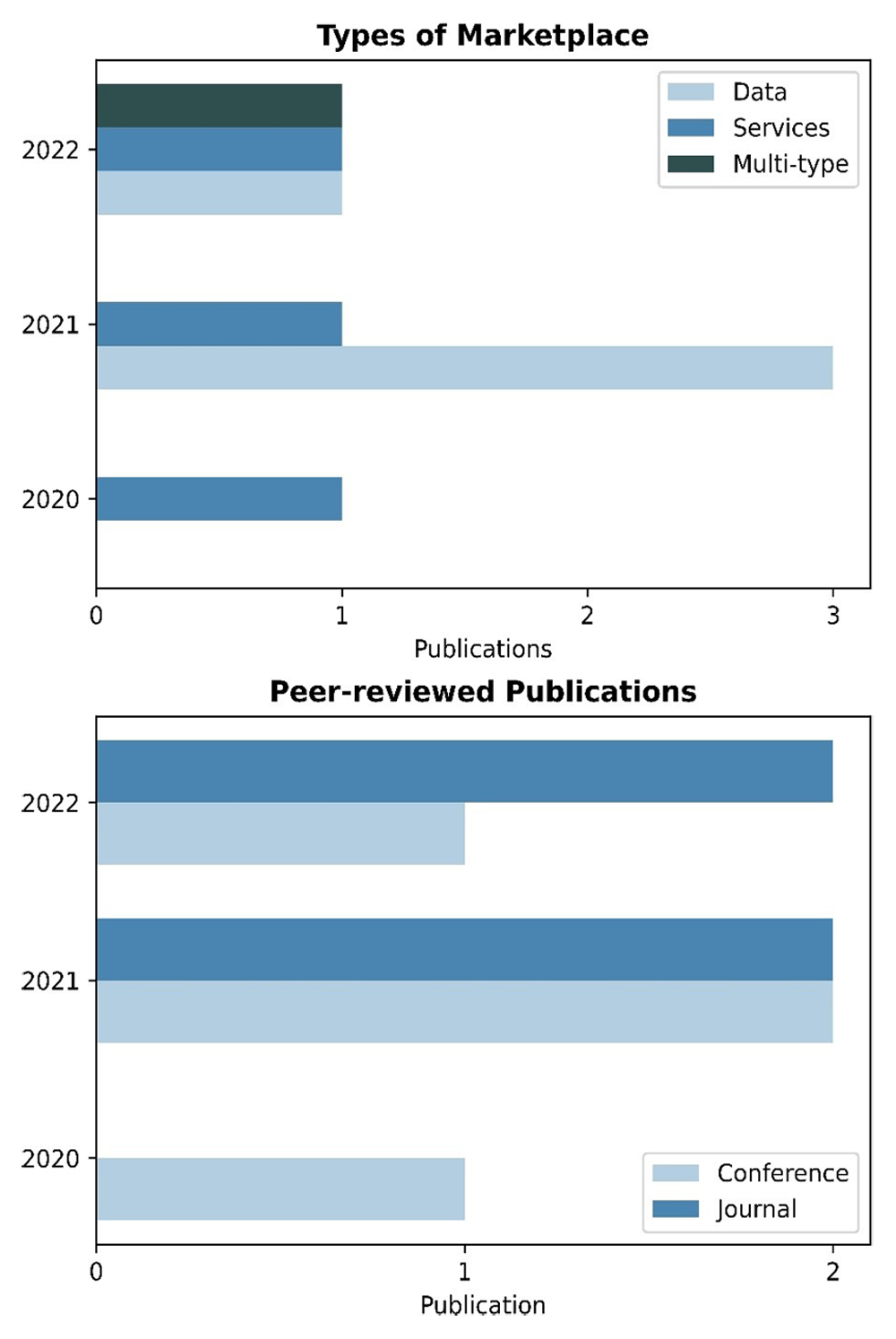
Figure 9. Blockchain-related papers distributions.
The aforementioned papers use a range of technologies for delivering a functional marketplace for end-users. Blockchain research divides the concepts into four categories for analysis based on the considerations of the blockchain features and user requirements for an intuitive DApp:
(1) Infrastructure
(2) Smart contract development
(3) Technologies for deploying a DApp
(4) Testing and debugging tools
Blockchain merges hardware and software with cryptography to establish a decentralized network where nodes can securely exchange information. Initially, the analysis commences with the review of the blockchain protocols, which provides a level of abstraction on the technology stack executed by the nodes. The applications suggested in the literature benefit from various blockchains varying in the network’s type and permissions. Ethereum7 is the first blockchain to implement a Turing-complete machine for executing smart contracts. As a result, it is the favored out of the public permissionless networks indicated by the concepts established on Ethereum (Fotiou et al., 2021; Niya et al., 2021; Pincheira et al., 2020). On the other hand, some concepts rely on private permissioned blockchains using frameworks to operate their networks, like Corda R3 (Fernández-Fernández et al., 2021), Quorum (Palaiokrassas et al., 2021), and Hyperledger Fabric8. Finally, an intriguing use case is the selection of Alastria (Palaiokrassas et al., 2021), which is a public-permissioned platform.
The introduction of smart contracts is vital for the distributed ledger technology as triggers the transition to the second generation of the blockchain. Essentially, smart contracts are the encoded logic of procedures executed in a decentralized manner by the network’s nodes. While developers can opt for new smart contract languages like Solidity (Palaiokrassas et al., 2021), there are frameworks in other languages like JavaScript (Genés-Durán et al., 2022) and Python’s web3 (Pincheira et al., 2020) for deploying smart contracts.
Despite blockchain being an integral component for developing a decentralized application, there is a need to implement other components for the completion. There are suggestions discussing the security and identity aspect of the marketplaces by implementing standards like OpenID and OAuth2 (Palaiokrassas et al., 2021) and frameworks like Keycloak (Palaiokrassas et al., 2021) to apply these standards. In the case of authentication based on blockchain, the identity management has been facilitated by the JavaScript’s Web3 library (Niya et al., 2021) in order to utilize Ethereum addresses. Finally, the literature refers to developing and testing smart contracts in a lab environment. Most of the tools used do not require their deployment on public networks but still provide metrics like gas and associated fees, and Frameworks for development and testing are mainly Ganache (Palaiokrassas et al., 2021; Pincheira et al., 2020) and Remix (Palaiokrassas et al., 2021).
4.3.4. Rest of technical-related analysis. This Section delves into further technical-related analyses beyond deployment features, software technologies, and blockchain specifics, touching on areas vital for enhancing marketplace functionality and user experience. It is essential to mention that, although a similar detailed and aggregated analysis as conducted in previous subsections was not feasible for following technical aspects due to the limited number of studies directly addressing them, these elements have been included due to their importance in the development and operation of digital marketplaces. The topics that are analyzed in the following paragraphs play pivotal roles in the secure, efficient, and user-friendly operation of digital marketplaces.
OAuth
In the context of digital marketplaces, OAuth has emerged as a powerful tool and is often the first step in the process of accessing a web platform (or marketplace in our case), providing both authorization and authentication to ensure secure and seamless integration between multiple platforms and applications. While only a few papers provided details on how they handle authentication and authorization processes, the topic was still explored in primary studies. OAuth is particularly relevant for digital marketplaces that rely on external APIs to access user data (Stavropoulos et al., 2020), as it provides a secure and standardized way to delegate access to these resources. OAuth can also be used in conjunction with other technologies, such as JSON Web Tokens (JWTs), to securely transmit information between parties, further enhancing the security and usability of OAuth in digital marketplaces (Rehm et al., 2021). In addition, by allowing users to grant controlled access to their protected resources, OAuth provides a standardized framework for digital marketplaces to share access and functionality in a way that benefits all parties involved (Palaiokrassas et al., 2021). For digital marketplaces, the use of OAuth can offer several benefits, including increased interoperability, improved user experience, and enhanced security. By leveraging the power of OAuth, these marketplaces can enable seamless data exchange between different systems and applications, facilitating the creation of a vibrant and interconnected digital marketplace ecosystem.
Ontologies
Ontologies were identified as a relevant aspect in this SLR, however only a limited number of studies provided information about them, making it difficult to conduct an aggregated analysis. Despite the limitations, the topic of ontologies was still explored in the primary studies, and it is worth noting that their absence in some domains may be attributed to their resource-intensive nature and that they require significant expertise, which may lead to difficulties in their use. Digital marketplaces are evolving to become increasingly complex, considering the diverse range of products and users they accommodate. This new paradigm allows for the inclusion of both tangible products such as sensors (Stavropoulos et al., 2020), as well as intangible products such as software applications. Users set their requirements and desire to query the products based on their individual features (Ali et al., 2013). The marketplaces’ complexity increase as the target audience can be global and have different backgrounds. For example, healthcare marketplaces (Stavropoulos et al., 2020) accommodate services and products for developers and other stakeholders.
Ontologies are deployed in the marketplaces to address the above issues, as they enhance the interconnection and openness of the marketplaces’ resources and ultimately result in their findability, and also provide a structured way to represent knowledge. For instance, Bassiliades et al. (2018) utilize the DUL upper level ontology, a domain-independent ontology, to enhance semantic interoperability with similar projects and research endeavors, favoring extensibility since adding new classes and properties is made easier. One of the most known ontologies is OWL, utilized by Horsch et al. (2020), to better define concepts, relationships, and properties in a structured and systematic manner, enabling thus greater interoperability and reusability of data. Finally, ontologies can also help users link and monetize their resources like data marketplaces (Roman et al., 2017).
Data & Storage
As already presented in Section 4.3.2, the primary studies reviewed detail the text file formats for facilitating the storage and exchange of data between applications and systems, with JSON being the most popular. However, there are similar technologies found across the literature that facilitate different needs. For example, YAML is a human-readable data serialization format that is often used for configuration files (Bernardinetti et al., 2021) and data exchange between programming languages.
The data format is essential for standardizing the format for facilitating communications and reducing errors’ likelihood, while the file formats relate to the underlying storage infrastructure permitting information to be stored and transmitted. The storage infrastructure requirements differ in each work, as the stored data can be structured and unstructured. For example, there are contemporary deployed platforms that utilized relational databases, but there are also works in the literature with the more flexible approach provided by NoSQL platforms. However, a combination of both technologies is observed across the literature (Bassiliades et al., 2018; Faliagka et al., 2022). The combination of SQL and NoSQL databases is often referred to as NewSQL or hybrid databases, where the benefits of both SQL and NoSQL databases are combined to achieve improved scalability, performance, and flexibility. In this approach, SQL databases are typically used for transactional processing and complex queries, while NoSQL databases are used for high-speed data ingestion, processing, and retrieval. The two types of databases can be integrated using a variety of approaches, including data replication, data synchronization, and data sharding.
Furthermore, there are decentralized systems implemented in the literature for storing data, like IPFS (Palaiokrassas et al., 2021), which is a protocol and network designed to create a distributed file system that allows users to access and store files in a decentralized manner. Finally, storage systems should be considered alongside blockchain implementations. The aforementioned platforms are viable as off-chain storage, while blockchain can store transactional data.
Containerization
Containerization is a method that is frequently used in the process of software deployment. This method bundles an application’s source code, files, and libraries so that it can run on any infrastructure (Watada et al., 2019). In terms of marketplace deployment, containerization can have two distinct applications covered in the literature. The marketplace is a software of different components interconnected to each via their logical architecture. All these components composing the marketplace can use containerization to simplify the deployment. The second use case for containerization is associated with the distribution of applications to be utilized in the market. There are marketplaces encouraging developers to publish their applications. Containerization is basically the standard that marketplaces provide to developers to follow when they publish their applications and ensure the execution on the user’s infrastructure.
The two most commonly used technologies that were found in the primary studies of this SLR are Kubernetes and Docker. Docker is a platform for building, packaging, and distributing containerized applications (Rehm et al., 2021), while Kubernetes is an orchestration system for automating the deployment, scaling, and management of containerized applications across a cluster of nodes (Faliagka et al., 2022). Hence, Docker provides the tools to create and manage containers (Faliagka et al., 2022), while Kubernetes provides the tools to manage and orchestrate multiple containers across multiple hosts (Niya et al., 2021). Continuous integration (Rehm et al., 2021) is an important aspect of software engineering that can be facilitated through the use of deployment software such as Jenkins and Kubernetes’ Helm (Rehm et al., 2021). When combined with containerization, these tools can help to further streamline the deployment process and improve the overall efficiency of marketplace deployment.
As the marketplace relies on different components, there is a need to document the changes and details for all the deployed ones. For this reason, literature papers include tools for aiding developers in versioning their code, as analyzed in the following subsection.
Collaboration tools
The use of collaboration tools in software development has been found to facilitate teamwork and increase productivity. However, it is important to note that not all projects or teams may find collaboration tools suitable or effective, especially those that require strict access controls, have concerns about intellectual property, or have difficulties with version control and coordination among team members.
The suggested review found that the most commonly used tools found across the literature, are GitHub (Palaiokrassas et al., 2021) and GitLab (Faliagka et al., 2022; Rehm et al., 2021). These platforms provide a centralized location for developers to work together on code, track changes, and manage the development process, and through their use, teams can streamline their software development process and increase productivity. Finally, another tool found across the literature was Figma (Alvsvåg et al., 2022), which is a design and prototyping tool that enables teams to collaborate on user interface (UI) and user experience (UX) design, and also provides features such as real-time collaboration, commenting, and version history.








