Introduction
In the packaging industry, a large majority of multi-material (multilayer) structures are used to achieve a high barrier against different factors, such as oxygen, water vapor, and CO2, thus increasing the shelf life of packaged goods (e.g., food products). These structures have variable compositions, but are mainly based on polyolefin (PO): polyethylene or polypropylene. Polyolefins are laminated with different barrier materials, such as polyamide (PA), polyethylene-terephthalate (PET), ethylene-vinyl alcohol (EVOH), polyvinyl alcohol (PVOH), and aluminum; most structures also contain adhesives, labels, inks and pigments, fillers, lacquers, and other components, to ensure functionality and branding. All these materials hamper the mechanical recycling of PO, resulting in low-quality (downcycled) recyclates. To improve the recycling yield and quality of multilayer and multimaterial packages, novel recycling technologies, such as physical recycling (with the aid of solvents), are being implemented. One of these processes is the TNO Möbius dissolution process, developed by TNO.
In the TNO Möbius physical recycling process, PO is recovered from metallized multilayers using a solvent that selectively dissolves PO, whereas other non-PO components remain undissolved. This means that the other layers comprising metal, other polymers, and pigments remained intact and shrank somewhat. The undissolved residue was separated from the polymer solution using a coarse filtration step. The amount of recovered residue after the coarse filtration step varied depending on the composition of the waste, that is, the content of the non-PO material. Typically, 98% of non-PO material was recovered in this step. The polymer solution was further purified via a fine filtration step using a filtration aid. In this step, all the remaining fine particles, such as pigments and metals, were retained. The residue was then dried and weighed.
This work presents the characterization of the recovered residue and the possibilities for secondary recovery of the potentially valuable materials contained therein.
Methods
The residue collected from the PO physical recycling process of metallized packaging waste was treated and tested according to the following methods: Fourier Transform Infrared Spectrophotometry (FT-IR), Differential Scanning Calorimetry (DSC) Thermogravimetric analysis (TGA) and Thermogravimetric analysis (TGA). A preliminary evaluation was performed on five randomly selected flakes using FT-IR to verify the composition of the residue, followed by a homogenization step and a full characterization of the material.
Homogenization of the residue
The residue was micronized to obtain a homogeneous powder. The process was performed in a laboratory cutting mill SM 300 (Retsch) with a particle size of less than 1 mm. To prevent melting/sticking during micronization, the samples were frozen in liquid nitrogen.
Characterization of the residue
Residue was analysed according to the following laboratory techniques:
Fourier-transform infrared spectrophotometry (FT-IR) was performed to verify the composition of the residue. A Perkin Elmer Frontier Spectrophotometer was used, and the measurement method was attenuated total reflection (ATR) on GLADIATR with diamond crystal, with a resolution of 4 cm-1, and a scan range of 4000 to 400 cm-1.
Differential Scanning Calorimetry (DSC) analysis was performed on the residue using a POLYMA 214 calorimeter, according to standard UNE-EN ISO 11357, with the following heating program: 1st heating rate of 0 °C to 300⍛C at 20⍛C/min; Isothermal for 5 min at 300 °C; cooling rate of 300⍛C to 0⍛C at 20⍛C/min; 2nd Heating rate of 0 °C to 300⍛C at 20⍛C/min.
Thermogravimetric analysis (TGA) was performed on the residue in a QIR5000 TA INSTRUMENTS thermogravimeter, under air conditions, with a temperature range of 40⍛C–600⍛C.
Results and discussion
This residue consists of a mixture of non-PO materials present in flexible packaging, such as barriers, adhesives, inks, coating lacquers, and metallization. The material was heterogeneous with fluffy flakes (see Figure 1).
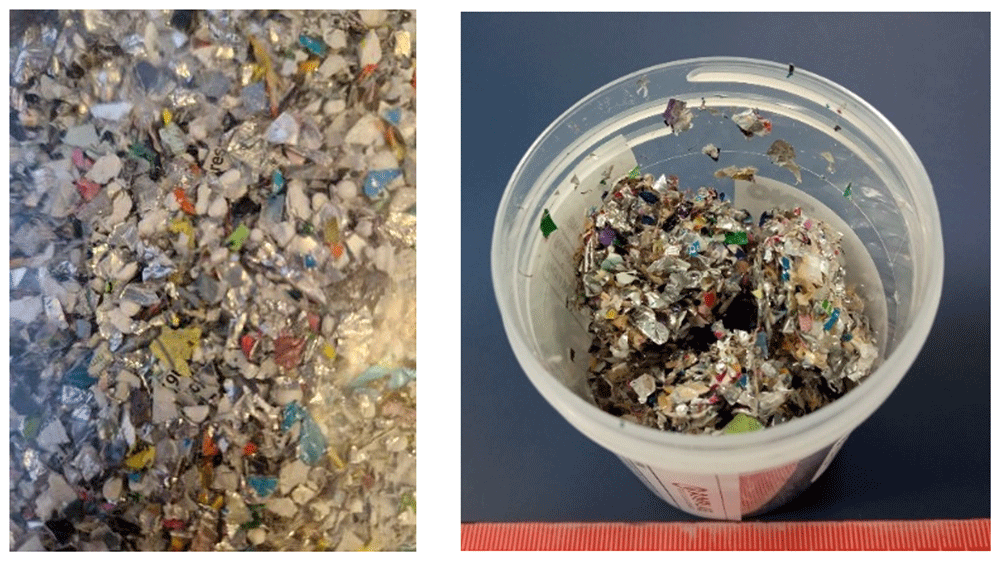
Figure 1. Left: Pre-treated metallized waste.
Right: Residue collected from the Möbius process at TNO. Scale in millimetres.
Preliminary evaluation
The following results, shown in Figure 2, were obtained from the preliminary characterization of individual flakes.
The summary of the composition of each flake is the following:
- For flakes #1 and #2, the FTIR spectra show characteristic bands of polyethylene terephthalate (PET) and bands that can be associated with calcium carbonate.
- The FTIR spectrum of flake #3 showed bands characteristic of polyethylene terephthalate (PET).
- Finally, for flakes #4 and #5, the FTIR spectra showed bands characteristic of ethylene-vinyl alcohol (EVOH).
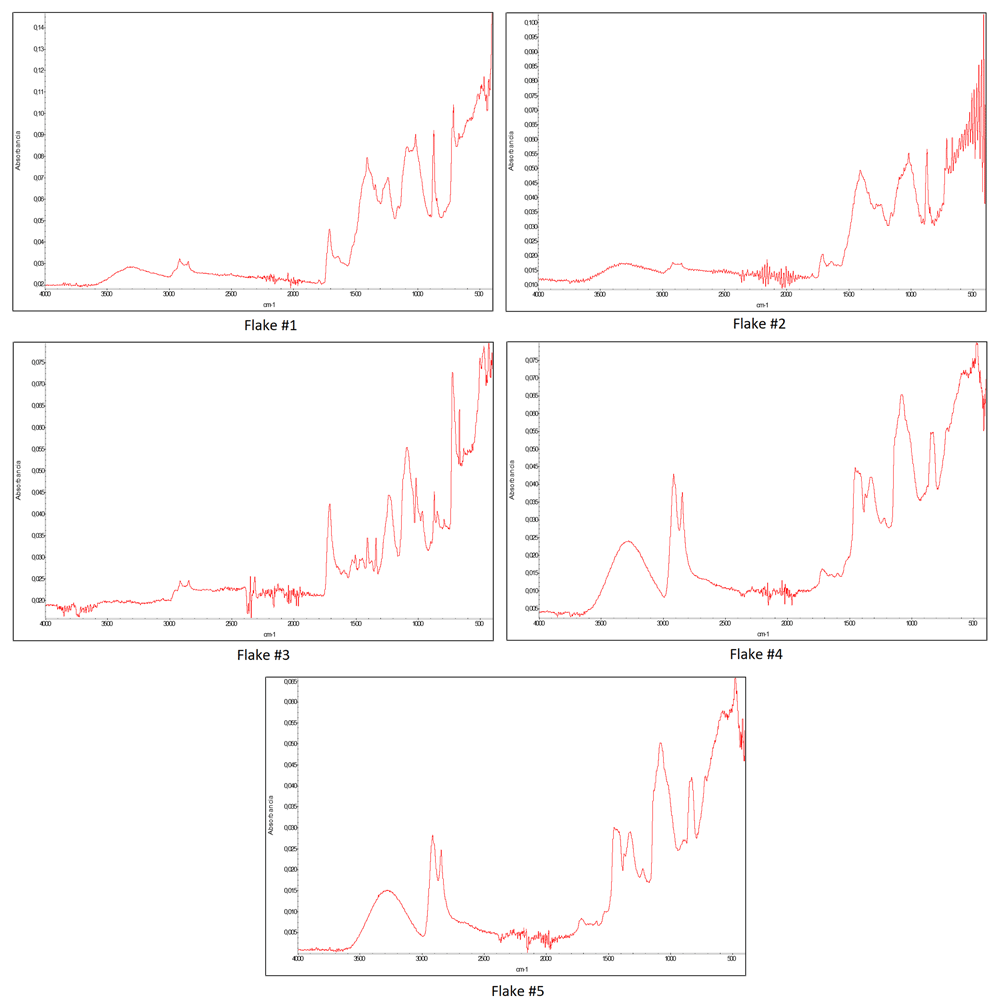
Figure 2. Fourier Transform Infrared Spectrophotometry (FT-IR) spectra form individual flakes tested.
The results obtained in this preliminary evaluation demonstrate the heterogeneity of the residue, which depends on the respective packaging foil from which it was recovered.
Homogenization
To obtain a more general impression of the main composition of the residue obtained from the physical recycling process, a micronization process was performed to obtain a homogeneous powder (Figure 3).
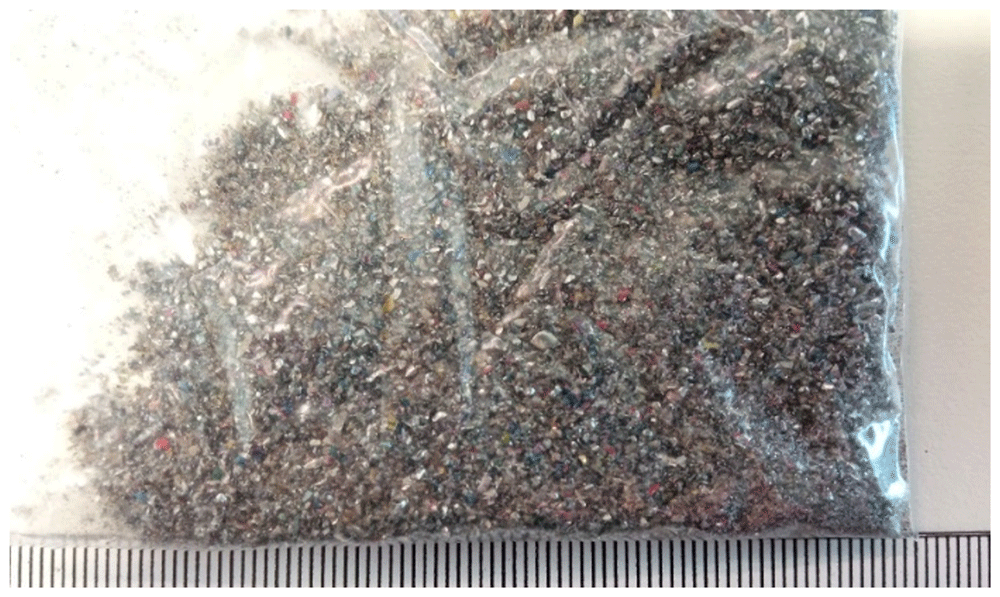
Figure 3. Homogenized residue.
Scale in millimetres.
Characterization of the residue
The micronized residue was tested again by FTIR using the same methodology as in previous tests. Three samples of the micronized residue were collected randomly and tested, and the results are shown in Figure 4.
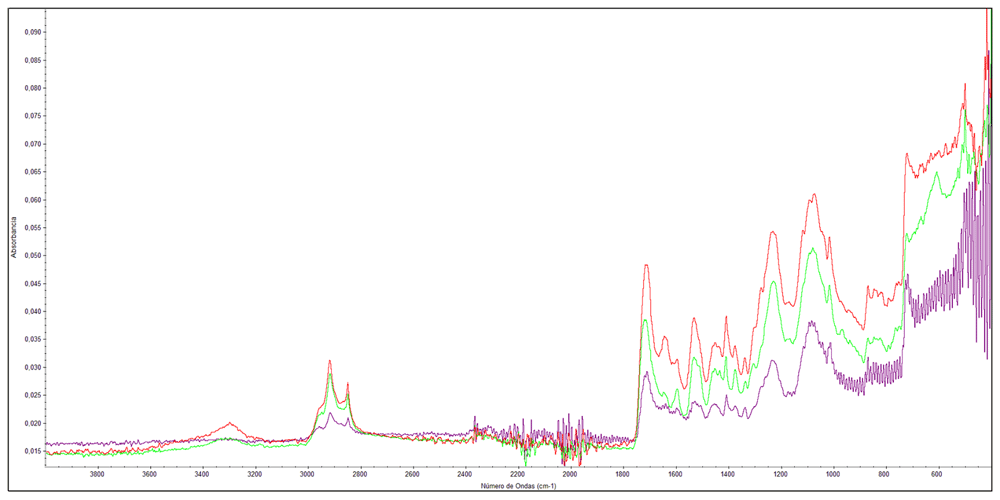
Figure 4. Fourier Transform Infrared Spectrophotometry (FT-IR) spectra form micronized residue.
The FTIR spectra of the three samples from the micronized residue showed the characteristic bands of polyethylene terephthalate (PET) and polyurethane (PU). Other polymers, such as EVOH, detected in the previous analysis, could be masked by the spectrum bands from the previously identified materials. These results are in line with previously identified flakes, showing the majority of PET in the residue.
To verify the presence of other polymers, Differential Scanning Calorimetry analysis was performed on a randomly collected sample from the homogenized residue. The results of the second heating cycle are shown in Figure 5.
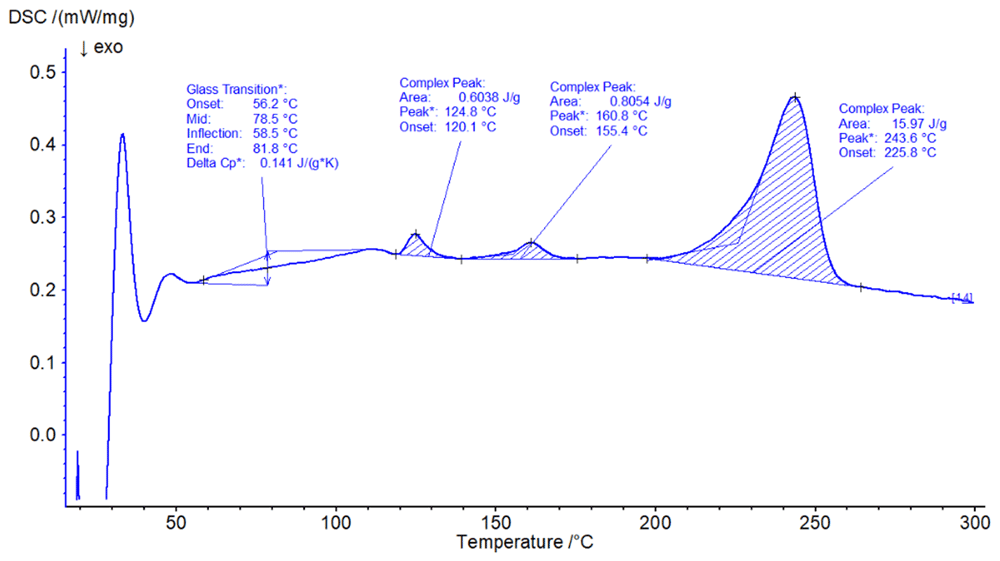
Figure 5. Second heating rate thermogram of micronized residue sample.
The following transitions are identified from the above thermogram:
Glass Transition – 78.5⍛C (associated to PET).
Melting point 1 – 124.8⍛C (associated with LDPE/LLDPE) – enthalpy: 0.6038 J/g.
Melting point 2 – 160.8⍛C (associated with PP) – enthalpy: 0.8054 J/g.
Melting point 3 – 243.6 ⍛C (associated with PET) Enthalpy: 15.97 J/g.
According to the enthalpies from each identified transition, the PO fractions (LDPE and PP) were present in very small amounts (residual from the dissolution process), indicating that PET was the major component. Transitions corresponding to EVOH, PA, or other polymers were not identified or were below the detection limit of the test. Thus, these transitions can also be masked.
The presence of other possible components in the residue was verified by thermogravimetric analysis (TGA). The thermograph and key weight losses are shown in Figure 6.
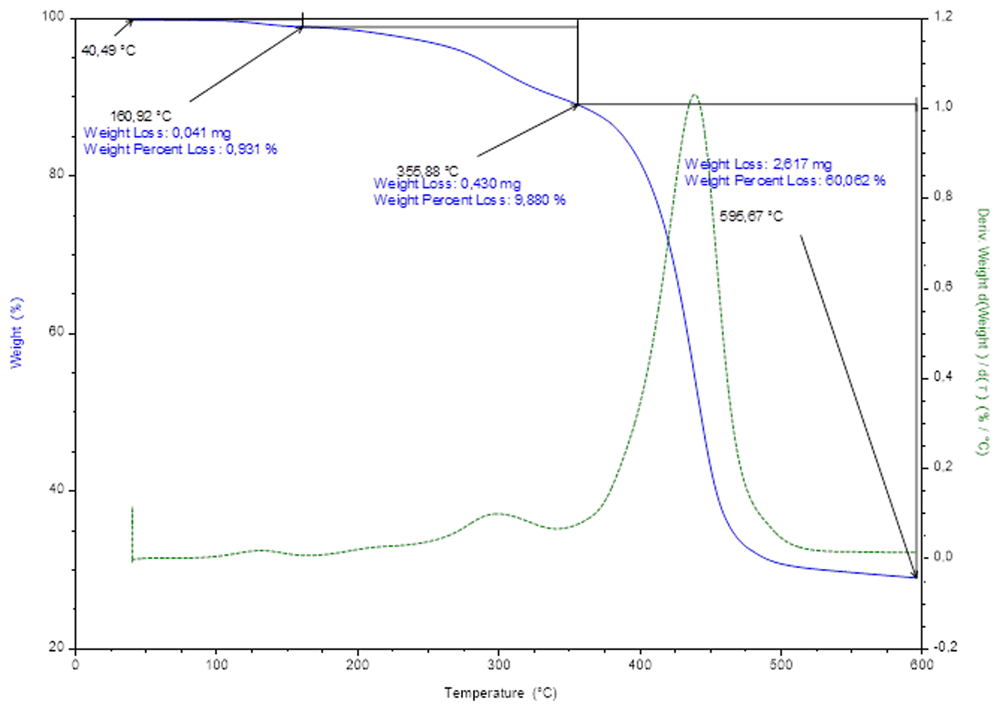
Figure 6. Thermogravimetric analysis (TGA) of the micronized residue.
The main weight losses detected in the TGA analysis are listed in Table 1. A possible correspondence to each loss is also noted in the table.
Table 1. TGA weight losses detected and possible correspondence.
Temperature
range (⍛C) | Weight
loss (%) | Possible correspondence |
|---|
| 40.49 to 160.92 | 0.931 | Residual solvents, organic
inks and pigments, lacquers |
| 160.92 to 355.88 | 9.880 | Adhesives, EVOH |
| 355.88 to 595.67 | 60.062 | PET |
| 595.67 | 29.030 | Aluminium, inorganic inks
and pigments |
The results in Table 1 confirm once more the majority of PET components, reaching 60% of the composition of the residue, followed by the inorganic fraction (29%), which, in principle, is composed of aluminum, together with inorganic pigments, fillers, and other non-polymeric materials.
Owing to the composition of the residue and the high content of the inorganic fraction, its direct use could not be expected. For this reason, a secondary recovery is proposed to isolate and use the main components detected with potentially high market value: PET and aluminum.
The testing data related to the presented graphics (FTIR, TGA and DCS) is collected in the Underlying Data1
Secondary recovery options
Considering the existing industrialized process, from an economic point of view, PET chemolysis via hydrolysis and methanolysis are very capital-intensive processes; hence, they are not economically viable for small-scale production, and the residue must be mixed with other existing PET waste streams to reach a suitable scale. However, this is not the case for PET chemolysis via glycolysis, which may be economically viable for small- and medium-scale production2–5.
According to the composition of the residue obtained after physical recycling of the PO waste (ca. 60% PET), the better choices of treatment are glycolysis and alkaline hydrolysis, due to the lower sensitivity to contaminants, together with the possible availability of stakeholders for direct treatment.
Alternative pyrolysis or gasification processes can be used, in which plastic mixtures are heated with air or oxygen to obtain synthesis gases, liquid residue (called pyrolytic oil), and separation and recovery of the inorganic fraction, such as metals, fillers, and fibers.
Although PET cannot be recovered during these processes, it is converted into other valuable materials, and Al can be collected from the solid fraction after pyrolysis. From this process, it has been reported that aluminum with a purity of 95.80% can be recovered from aluminized plastic packages such as flexible packages and TetraPAK containers6,7. At the industrial level, pyrolysis is already being used to recover aluminum from metallized plastic waste, which is an interesting option to recycle the residue.
Conclusions
Physical recycling of metallized flexible PO structures using TNO Möbius dissolution technology for recovering PO leaves a residue. Characterization of this residue was performed to select the potential applications, stakeholders, and/or secondary valorization routes. The residue was found to be a heterogeneous material composed of PET (60%), inorganic fraction (28%), and other organic components (12%). The potentially valuable materials from this residue are the PET and aluminum fractions. After a desk study, considering the possible secondary recovery techniques for PET and aluminum, the following technologies were selected as the most promising:
1. First, chemical recycling is used to recover the PET fraction, especially alkaline hydrolysis and glycolysis, owing to the low interference of the contaminants in the process, industrially available technologies, and the existence of potential stakeholders.
2. Second, pyrolysis is used to recover the aluminum fraction, turning PET and other components into oil and char for other chemical applications. For this process, there is also the potential application of the residue as a direct input for a stakeholder’s plant.
A combination of the above could also be implemented with other technology, e.g., the “new” residue obtained from the chemical recycling process can be fed to a pyrolysis plant to recover the aluminum fraction.
Ethics and consent
Ethics and consent are not required for this study
Data availability statement
Underlying data
Zenodo: Recovery and potential use of non-polyolefin materials after physical recycling of complex multilayers: underlying data (https://doi.org/10.5281/zenodo.13767836)1
This project contains the following underlying data:
FT-IR spectra. (Report FT-IR analysis of residue)
DSC. (Report Thermogram of micronized residue sample).
TGA curve. Report Thermogravimetric analysis of micronized residue sample)
Data are available under the terms of the Creative Commons Zero "No rights reserved’ data waiver (CC0 1.0 Public domain dedication).
Author roles
Gutierrez V: Conceptualization, Investigation, Methodology, Visualization, Writing – Original Draft Preparation, Writing – Review & Editing; Mafé M: Investigation, Methodology; Prins L: Investigation, Methodology, Visualization, Writing – Review & Editing; Runstraat A: Investigation, Methodology, Writing – Review, & Editing.
Faculty Opinions recommendedReferences
- 1.
Gutierrez V:
Recovery and potential use for non-polyolefin materials after physical recycling of complex multilayers - Underlying data. Zenodo. [Dataset], 2024. http://www.doi.org/10.5281/zenodo.13767836
- 2.
Shojaei B, Abtahi M, Najafi M:
Chemical recycling of PET: a stepping-stone toward sustainability.
Polym Adv Technol.
2020; 31(12): 2912–2938. Publisher Full Text
- 3.
Oku A, Hu LC, Yamada E:
Alkali decomposition of poly(ethylene terephthalate) with sodium hydroxide in nonaqueous ethylene glycol: a study on recycling of Terephthalic acid and ethylene glycol.
J Appl Polym Sci.
1997; 63(5): 595–601. Publisher Full Text
- 4.
Siddiqui MN, Achilias DS, Redhwi HH, et al.:
Hydrolytic depolymerization of PET in a microwave reactor.
Macromol Mater Eng.
2010; 295(6): 575–584. Publisher Full Text
- 5.
Sheel A, Pant D:
Chemical depolymerization of PET bottles via glycolysis. Recycling of polyethylene terephthalate bottles. William Andrew Publishing, 2019: 61–84. Publisher Full Text
- 6.
Irawan C, Jelita R, Nata, FI:
Recovery of aluminum from aluminum coated plastic waste using pyrolysis process.
Reaktor.
2018; 18(1): 38–44. Publisher Full Text
- 7.
Muñoz-Batista MJ, Blázquez G, Franco JF, et al.:
Recovery, separation and production of fuel, plastic and aluminum from the Tetra PAK waste to hydrothermal and pyrolysis processes.
Waste Manag.
2022; 137: 179–189. PubMed Abstract
| Publisher Full Text








