Plain language summary
Lexical borrowing, the transfer of words from one language to another, is one of the most prominent aspects of language evolution. Despite its prominence, only a few attempts have been made to create computational methods that would identify borrowings automatically from linguistic datasets. In this study, we propose a new method which is straightforward and easy to apply. We test it on a dataset of 48 languages from South-East Asia and find that it yields good results. We conclude that the method may be useful for future computer-assisted studies on lexical borrowing.
Introduction
Few phenomena in linguistics are as pervasive as language contact (Onysko, 2019). It is the first factor that needs to be excluded when searching for genealogical language relationships or universals in the languages of the world. It is an indispensable aspect of studies on human cognition, since any study trying to explain the human language faculty must explain how humans can master a multitude of languages. Language contact is so widespread that it was the first factor of language change identified by early philosophers (compare Plato's Kratylos dialogue), more than two millennia before scholars began to understand that all languages are subject to change even without contact (Schleicher, 1863). Due to its pervasiveness, language contact is also a powerful witness to human prehistory, as illustrated by phonetically similar names for the sweet potato in Polynesian and Quechuan languages, which provide evidence that its transfer to Polynesia was due to human contact (Montenegro et al., 2008).
While comparative linguistics has experienced a quantitative turn during the past decades, studies on language contact are still almost exclusively carried out manually, and quantitative studies of language contact phenomena are still in their infancy (List, 2019a). This also applies to automated methods for the identification of lexical borrowings. Although some methods have been proposed, none of them deal with multilingual wordlists. In this study, we propose a new method for this task and test it on a newly compiled dataset of South-East Asian languages. The method yields very promising results, while it is conceptually straightforward and easy to apply. This makes the approach a perfect candidate for computer-assisted exploratory studies on lexical borrowing in contact areas.
Background
Since historical linguists typically try to exclude borrowings from their analysis rather than making borrowings part of their analysis, methods for the identification of language contact situations have never really left the shortcut status. It is therefore not surprising that computational methods for the identification of borrowed traits are still in their infancy (List, 2019a), although computational methods in historical linguistics have been flourishing in the past decades. Of the few methods which have been proposed so far, there are phylogenetic network approaches which do not require a strict tree-like phylogeny to model language evolution, but instead assume that certain traits can also be transferred laterally through contact (List, 2015; List et al., 2014a; List et al., 2014b; Nakhleh et al., 2005; Nelson-Sathi et al., 2011). While most phylogenetic network approaches deal with lexical data and try to infer lexical borrowings, recent studies have shown that these approaches can likewise be used to study the areal spread of grammatical traits (Cathcart et al., 2018).
On the other hand, scholars have tried to identify borrowings directly with techniques for automated sequence comparison. These methods treat phonetically transcribed words in spoken languages as sound sequences and then seek to identify similar sequences by using techniques originally designed for computer science and evolutionary biology (List, 2014). Since sequence comparison techniques are primarily applied to identify cognate words (words shared by common inheritance), most methods that make use of them can only identify borrowings between genetically unrelated languages (van der Ark et al., 2007; Mennecier et al., 2016; Zhang et al., forthcoming) and only a few attempts have been made to identify borrowings in genetically related languages (Hantgan & List, forthcoming).
Materials and methods
Materials
For this study, a new dataset was compiled by aggregating several existing datasets on South-East Asian languages. The core of the dataset is a collection of 25 Hmong-Mien language varieties documented by Chén (2012). This dataset was standardized in an earlier study (Wu et al., 2020) by converting it to the standard formats recommended by the Cross-Lingustic Data Formats initiative (CLDF, Forkel et al., 2018). Using the CLDFBench toolkit (Forkel & List, 2020) allows regular and transparent data conversion to CLDF including links to reference catalogs, such as Glottolog for language varieties (Hammarström et al., 2021) and Concepticon for concepts (List et al., 2021a). In addition, CLDF makes transcriptions transparent by linking segments to the B(road)IPA transcription system, which is a stricter version of the standard International Phonetic Alphabet (IPA, 1999), for the representation of speech sounds (Anderson et al., 2018; List et al., 2021b).
Having shown earlier that CLDF greatly facilitates the aggregation of data from diverse sources (List et al., 2018), we assembled data on additional South-East Asian language varieties from sources which were either already converted to CLDF in earlier works (Běijīng Dàxué, 1964) or prepared specifically for this study (Wang, 2004). Table 1 shows the eight core datasets that were used in this study. In addition, Chinese dialect data is available in the form of lists of character pronunciations. While these do not provide any strict information on actual words, since individual characters correspond to morphemes in Chinese, it can still be useful to include them in larger multilingual collections, since they may fill gaps where the available data on words in Chinese dialects is sparse. For this reason, the character readings from two datasets (Běijīng Dàxué, 1962; Hóu, 2004) were roughly linked to common concepts in our base datasets in order to increase the coverage for individual language varieties.
Table 1. Sources of the data selected for this study.
Note that due to the rather low coverage of data withour base list of 250 concepts in some datasets, several varieties were aggregated from two or more sources. This is indicated in the CLDF version of the dataset. For character readings, where rudimentary Concepticon mapping was carried out on a very selective basis, only the number of concepts linked to Concepticon is shown in the Source column, also indicated by an asterisk.
| ID | Source | Family | Varieties | Concepts |
|---|
| Source | Selected | Source | Selected |
|---|
| beidasinitic | Běijīng Dàxué (1964) | Chinese dialects | 18 | 6 | 905 | 146 |
| beidazihui | Běijīng Dàxué (1962) | Chinese dialects (characters) | 19 | 4 | *518 | 171 |
| castrosui | Castro & Pan (2015) | Sui dialects (Tai-Kadai) | 16 | 3 | 608 | 211 |
| castroyi | Castro et al. (2010) | Loloish dialects (Sino-Tibetan) | 6 | 1 | 540 | 222 |
| castrozhuang | Castro & Hansen (2010) | Zhuang dialects (Tai-Kadai) | 20 | 8 | 511 | 243 |
| chenhmongmien | Chén (2012) | Hmong-Mien | 25 | 23 | 888 | 250 |
| housinitic | Hóu (2004) | Chinese dialects | 40 | 10 | 180 | 61 |
| houzihui | Hóu (2004) | Chinese dialects (characters) | 40 | 9 | *155 | 77 |
| liusinitic | Liú et al. (2007) | Chinese dialects | 19 | 5 | 201 | 130 |
| wangbai | Wang (2004) | Bai dialects (Sino-Tibetan) | 9 | 1 | 471 | 144 |
From these datasets, a subset of 48 language varieties (23 Hmong-Mien languages, 11 Tai-Kadai languages, and 14 Sino-Tibetan languages) and 250 concepts was selected. The criterion for data and concept selection was the general coverage of individual language varieties with respect to the 250 concepts chosen, and the geographic proximity of the languages in the sample. While the coverage with respect to the concepts for which there is a word form in individual language varieties is reasonably high in most cases, there are some outliers, mostly from Chinese dialects, in which more than 40% of the concepts are missing. While a low coverage for certain varieties would be problematic for phylogenetic studies (Sagart et al., 2019), it was nevertheless decided to keep these language varieties in the sample, mostly because their geographic position makes them interesting candidates for donor and recipient languages in the current sample. Figure 1 shows the geographic distribution of the languages in our sample.
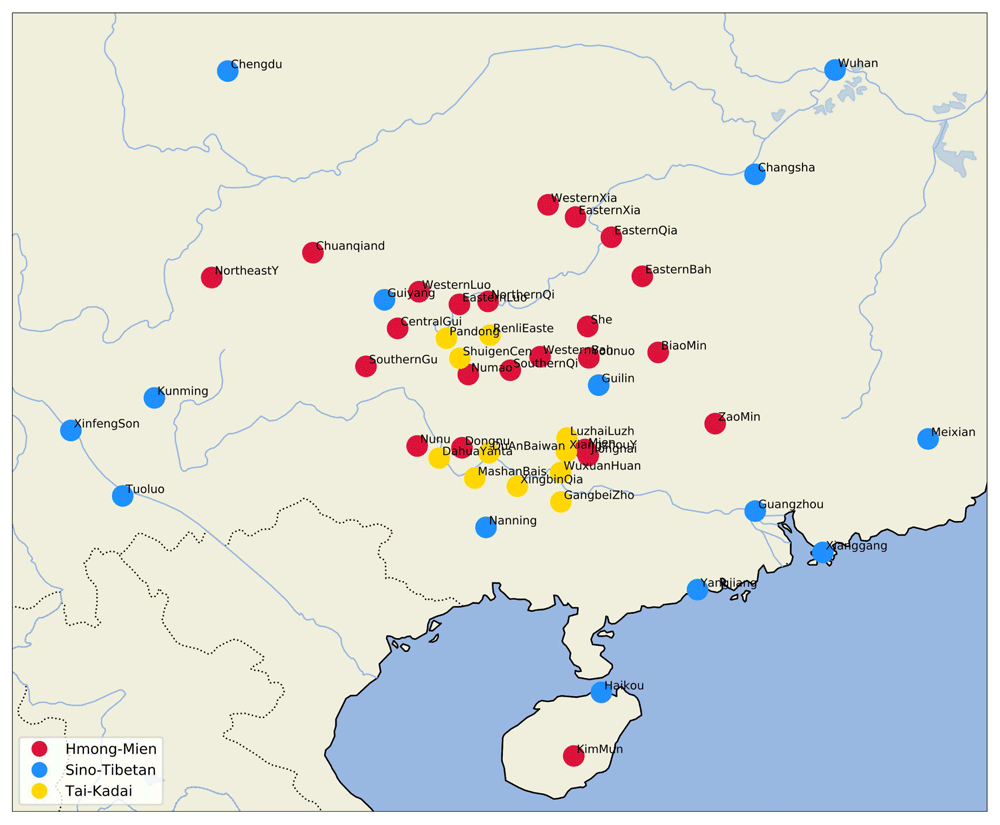
Figure 1. Languages in the sample.
Methods
Automated borrowing detection. The new method for the identification of borrowings in multilingual wordlists is based on a very straightforward workflow that proceeds in two steps. In the first step, traditional methods for cognate detection are used to identify language-family-internal cognate sets in the data. In the second step, all language-internal cognate sets are compared across language families and clustered into sets of potentially borrowed words once the overall average distance among the cognate sets is below a certain threshold. For the first step, it is useful to use a conservative cognate detection method which searches for deep genealogical similarities among word forms. An example for such a method is the LexStat algorithm for automated cognate detection, which has been proposed earlier (see List, 2012a and List et al., 2017), or its modification, which searches for partial cognates (List et al., 2016) instead of full cognates. For the second step, it is useful to employ a less conservative method for cognate detection that searches for superficial phonetic similarities rather than deep similarities based on regular sound correspondences. Here, the sound-class-based alignment (SCA) method for pairwise and multiple phonetic alignment (List, 2012b) is a good candidate, specifically also because studies on pairwise borrowing detection have shown that SCA outperforms edit distance in this task (Zhang et al., forthcoming).
For our specific use case, we decided to use the LexStat algorithm adjusted for partial cognate detection (List et al., 2016), since it is well known that South-East Asian languages show frequent compounding patterns which cannot be captured when searching for full cognates in the data. Since one would expect, however, that borrowings involve full words, it seems useful to employ a full word alignment algorithm for the second stage. When searching for partial cognates in a first instance, this means that one needs to find a way to convert partial cognates to full cognates later. For this purpose, we decided to use a new method that we recently developed (Wu & List, 2021). This method is based on a greedy algorithm that assigns partial cognates to full cognate sets which have at least one cognate set in common.
In order to compare two cognate sets expressing the same meaning from two different language families, the new method proposed here first computes pairwise SCA distances for each possible word pair assembled from languages from different language families. The distances are all stored in memory and then averaged. If the average distance is lower than a user-defined threshold, a link between the cognate sets is drawn. After all cognate sets from different languages have been compared in this fashion, the method searches for all connected components in this cognate set network and assigns all cognate sets appearing in the same connected component to the same set of potentially borrowed words.
This method does not resolve the direction of borrowings. But instead of earlier approaches, which only identify pairs of potentially borrowed words, it allows to cluster words into xenologs, that is, sets of words which are not entirely related by common descent, but also by lateral transfer (List, 2016).
Annotation of borrowings in multilingual wordlists. In order to allow us to test the new method against human judgments, the data was annotated manually, using the EDICTOR (List, 2017), a web-based tool for curation of etymological data in historical linguistics. The data was annotated in two stages. First, cognate sets were identified inside all language families in our sample. In a second stage, cognate sets were themselves assembled into larger sets of potentially borrowed words.
An example for this annotation is shown in Figure 2, where words for "face" in Hmong-Mien and Sino-Tibetan are compared with each other. The table shows our annotation procedure. The ID is used to refer to the original data point and allows us to trace the data from the original sources and across different files. The DOCULECT column provides a language identifier, which also provides rudimentary subgroup information, which was made available with the most recent version of EDICTOR. The column TOKENS shows the sound sequences in segmented, normalized form, and the column MORPHEMES indicates which parts of the word express the main meaning "FACE". Columns UCOGID and UBORID store information on the language-family-internal cognacy (UCOGID), as defined by the user, and the user judgment on potentially borrowed words. Where known, the SOURCE of a borrowing was also indicated, as illustrated for the FACE by 面, Middle Chinese mjuwk (Baxter, 1992).
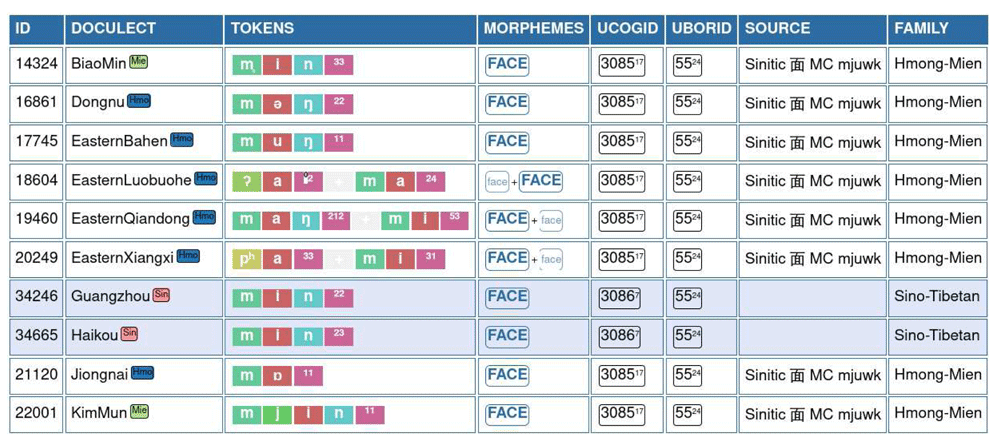
Figure 2. EDICTOR annotation of borrowings.
Implementation. The new method was implemented as part of the LingRex Python package (List & Forkel, 2021a, Version 1.1). LingRex is an extension of LingPy which offers code that is specifically useful for the detection of sound correspondence patterns (List, 2019b) and the prediction of words which have not been elicited from cognate sets (Bodt & List, 2021). With this study, LingRex was further extended by the new method for the identification of borrowed words. The methods used for the efficient manual annotation of borrowed words were introduced as part of the most recent version (2.0.0) of the EDICTOR tool (List, 2021). The supplementary material accompanying this study offers both the data and the code needed to replicate the experiments which are reported in this study.
Results
In order to test the new method for the identification of borrowings in multilingual datasets, the data was analyzed by using the default settings of the partial cognate detection algorithm (threshold of 0.50 and 10000 iterations in the permutation test) in order to search for language-family-internal cognates.
General results
As a first test of the methods, I compared my manually annotated cognates and borrowings with the cognates and borrowings which the automated method identifies, using the B-cubed scores (Amigó et al., 2009) as a measure to compare automated with manual cognate and borrowing judgments in terms of precision, recall, and F-scores (see List, 2014 for details). This revealed that the method works sufficiently well, as shown in Table 2, reaching F-scores of 0.88 for the automated cognate detection task, and 0.86 for the automated borrowing detection task.
Table 2. Results for the evaluation of the automated workflow compared to the gold standard.
| Method | Precision | Recall | F-score |
|---|
| automated cognate detection | 0.90 | 0.87 | 0.88 |
| automated borrowing detection | 0.91 | 0.82 | 0.86 |
While these results should be taken with a certain care, since no further test sets are available, and no proper division into test and training data has been carried out, the scores can be considered sufficient to prove that the method proposed here is basically useful when searching for words shared across different language families.
Specific results
Assuming that the method works well enough to capture at least recent borrowing events in our dataset on South-East Asian languages, it is interesting to check whether these borrowings reflect specific patterns. In the linguistic literature it has, for example, for a long time been assumed that certain words are more resistant to borrowing than other words, mostly due to the meanings they express (Swadesh, 1952; Swadesh, 1955). Given that the dataset was assembled from individual CLDF datasets which are themselves linked to the Concepticon project (List et al., 2021a) which in turn provides direct access to a large amount of concept lists that have been proposed in the past, it is not difficult to compare to which degree concepts which have been assigned to lists of supposedly stable items behave differently with respect to the automatically inferred borrowings in this sample.
Two supposedly stable concept lists with a high resistance to borrowing are Swadesh's list of 100 items (Swadesh, 1955) and the so-called Leipzig-Jakarta list derived from the World Loanword Database which lists manually identified borrowings for a sample of 41 genetically diverse language varieties (Haspelmath & Tadmor, 2009). In Table 3, we have calculated the average amount of non-borrowed items (words which occur uniquely in one language variety and words which are shared within one language family alone) for the traditional Swadesh list of 100 items, the Leipzig-Jakarta list of 100 items (Tadmor, 2009), their respective counterparts (the subset of items which do not occur in the 100-item Swadesh list and the Leipzig-Jakarta list), as well as the base list of 250 concepts. As we can see from the table, there is a considerable difference in terms of supposed stability (or resistance to borrowing) when comparing the supposedly stable, borrowing-resistant sublists with their respective counterparts. While the amount of supposedly borrowed words in this sample may seem to be remarkably high, exceeding 15% for both the sublists and the list of all concepts, it should be kept in mind that our approach does not control for directions and inheritance. Since the source and target words of borrowings are not distinguished, the numbers do not indicate the amount of borrowed words, but the amounts of xenologs, that is, sets of etymologically related words which have experienced lateral transfer events in their past (see List, 2016).
Table 3. Proportion of potential borrowings in the data and various sublists.
| Concept list | Proportion of non-
borrowed items | Number of
items |
|---|
| Swadesh (1955) | 0.80 | 78 |
| No Swadesh | 0.70 | 172 |
| Leipzig-Jakarta | 0.78 | 61 |
| No Leipzig-Jakarta | 0.72 | 189 |
| All items | 0.73 | 250 |
In order to test whether the observed differences between the proportions of xenologs are significant, or whether they could have alternatively arisen by chance, we ran 10000 trials in which the concept list was split into two parts, reflecting the proportion of the Swadesh list (with 78 items vs. 172 items) and the Leipzig-Jakarta list (61 items vs. 189 items). In all trials, we tested whether one could observe the same or a higher difference between the amount of non-borrowed items and potential xenologous words. The results suggest that it is not very likely to obtain the differences for the Swadesh list by chance. We obtained similar differences in only 3% of all cases. For the Leipzig-Jakarta list, however, the results were slightly different, and we obtained similar results in 7.1% of all trials. While this number is still low, it would not pass a classical significance test, where thresholds are typically set to 5%.
That there are — at times even striking — differences between supposedly stable concepts and concepts more prone to borrowing can also be directly seen when visualizing the characteristics of individual words in each language with the help of geographic plots inspired by "admixture plots" in genetics (Pritchard et al., 2000). In this visual representation, we inspect the words in each language in separation and distinguish (1) missing data (no word form for a given concept available), (2) singletons (words occur only in this specific variety), and (3) language-family-internal words (words that are cognate with words from related languages), from (4) words shared among two language families (e.g., Sino-Tibetan vs. Tai-Kadai), and (5) words shared among all three language families in our sample. Such a plot is shown in Figure 3 for all 250 concepts in the sample. On the bottom left of the figure, three varieties (Zao Min, Gangbei Zho, and Guangzhou) have been additionally contrasted with respect to the distribution that they would show for the non-basic items of the 250 concept list and the basic items from Swadesh's list from 1955. As can be seen, all varieties show a much-increased amount of etymologically non-relatable singletons and language-family-internal cognates.
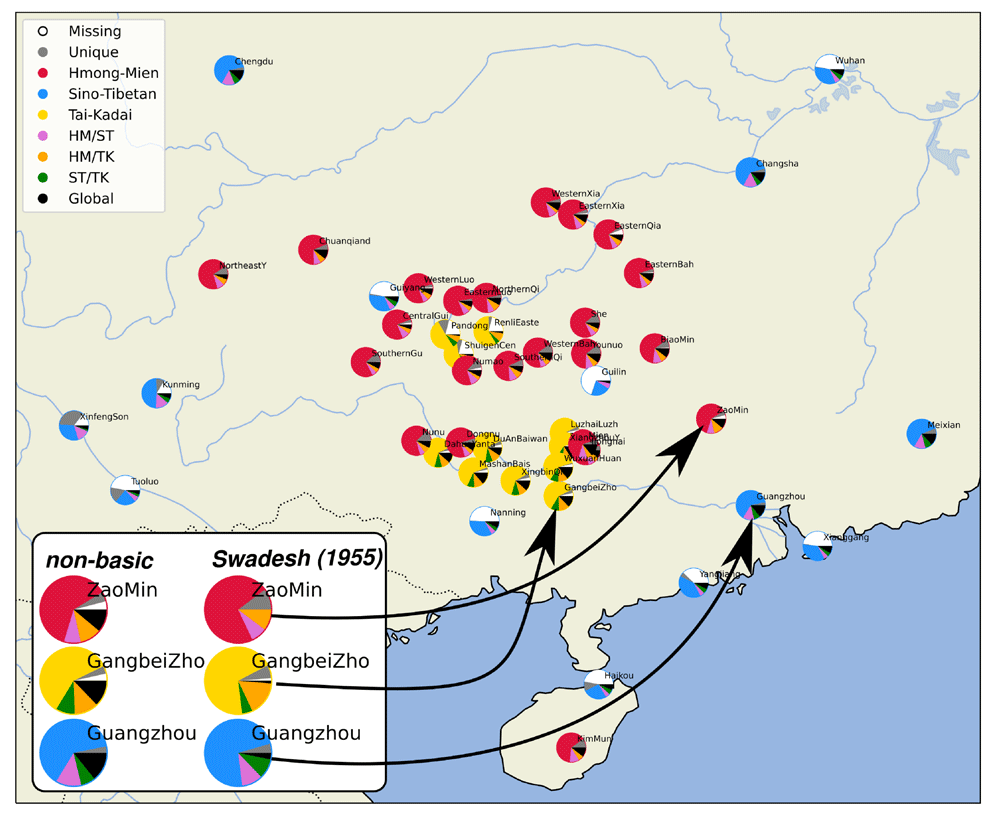
Figure 3. Admixture plots of shared lexemes between the major language families.
Examples
While numbers and plots can to some degree help us to assess how well a certain method works, it is always important to inspect individual case studies as well in order to explore where the specific weaknesses of a method lie and how this could be overcome in future work. While the EDICTOR interface, introduced earlier, already greatly facilitates the manual inspection and correction of automatically generated cognate judgments (including judgments on potential borrowings), specifically for the detection of borrowings it can be useful to inspect the data in geographic space. For this reason, we created a small routine which plots the inferred sets of words shared across more than one language family on a map and contrasts them with those words which were not assigned to the same cluster.
A first example of this visualization can be seen in Figure 4, showing inferred sets for the concept "name", which are — as we know well — all borrowed from Chinese míngzì 名字 (Middle Chinese mjieng dziH). While most of the cases inferred by the algorithm are striking (all Tai-Kadai languages have almost literal copies of the Mandarin form), we also find a couple of surprising cases of false negatives in this sample. Thus, the word form [m ei ²² + ts ɿ] in the Chinese dialect of Guilin (15 in the center of the map) clearly belongs to the cluster, as does the form [m j ɛ ⁵⁵ + ts ʰ ɿ] in Xinfeng Sonaga (a Loloish variety of Sino-Tibetan), or the form [m i ¹] in Tuluo Bai (a Sino-Tibetan variety whose deeper affiliation remains unclear so far). Since there are two forms in which the Chinese word for "name" can be borrowed, as simplex form míng 名, meaning "name", which points to more archaic borrowing events, and in the modern Mandarin form míngzì 名字, lit. meaning "name sign", and since the major cluster consists of the bisyllabic form, the algorithm for sequence alignment has problems of identifying short words which lack the final nasal as belonging to the cluster.
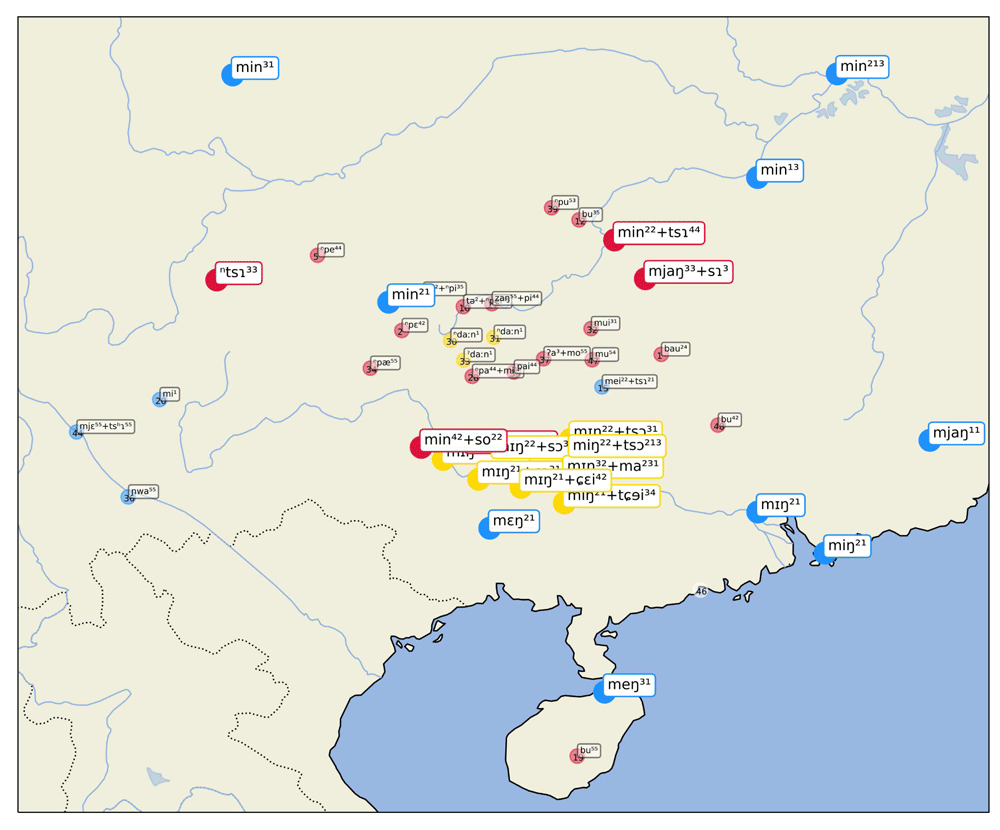
Figure 4. Automatically inferred cluster of potential borrowings for "name".
As a second example, consider words for "flower" in Figure 5. Here, the algorithm correctly identifies the similarity between forms like [w a ²⁴] in the Zhuang varieties of Tai-Kadai, which also occurs in the Hmong-Mien variety Nunu as [v a ³³] and is a rather obvious borrowing from Chinese huā 花 (Middle Chinese xwae), which shows the sound change [xw] > [f] in many Southern varieties of Chinese.
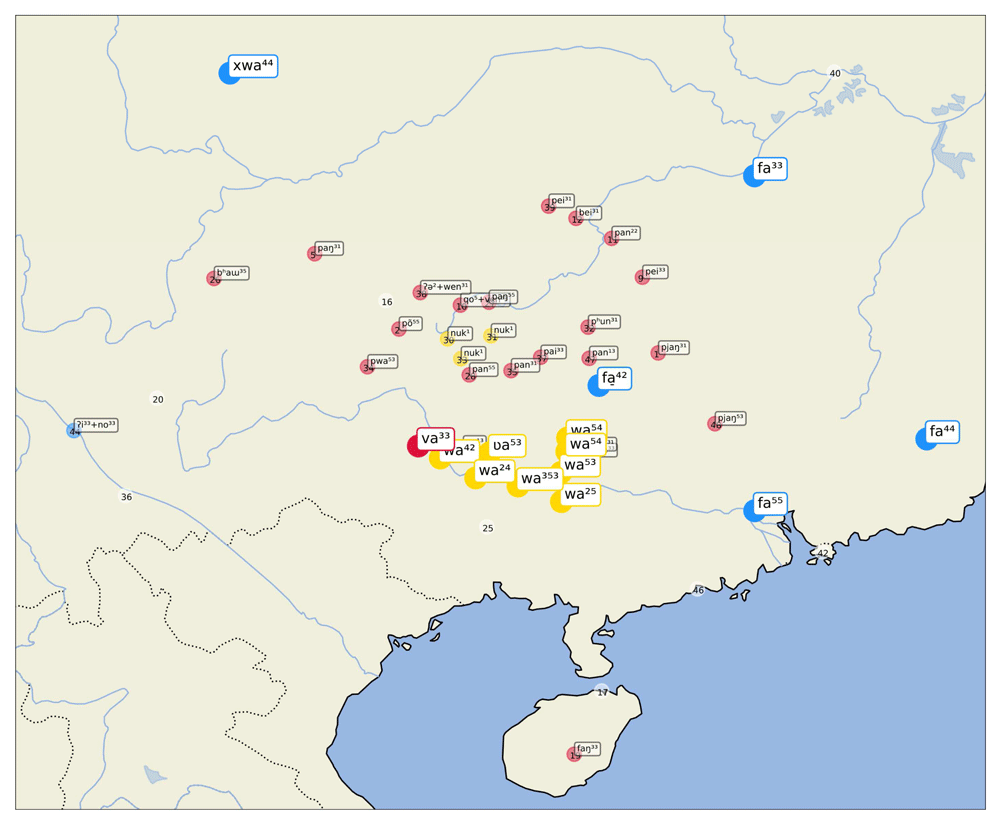
Figure 5. Automatically inferred cluster of potential borrowings for "flower".
As a last example, consider similar word forms for "correct (right)" in Figure 6. Here the algorithm clusters word forms such as [t ɔi] in BiaoMin (from the Mienic branch of Hmong-Mien) and [t oːi ⁴⁴] in DahuaYantan (from the Zhuang branch of Tai-Kadai). The source word, however, is again from Chinese, where duì 對 (Middle Chinese twoijH) is still the basic way to express "correct (right)" in Mandarin Chinese and many other Chinese dialect varieties. The majority of the sources in the sample selected here provide different words in the Chinese dialects, and we find expressions such as [ts ə n ¹³ + x au ⁵³] (Mandarin Chinese zhēnhǎo 真好 "totally right") in Chengdu. The fact that we find different word forms in the data does not mean, however, that there have been recent events of lexical replacements in many Chinese dialects. It seems instead that this variation is due to the elicitation process. Since the dialect data for Chinese comes from a variety of sources, it is either possible that the mapping of the concepts to the Concepticon project is not entirely correct, or it may be due to the fact that the elicitation process forced the use of longer or more specific expressions, different from the extremely common duì.
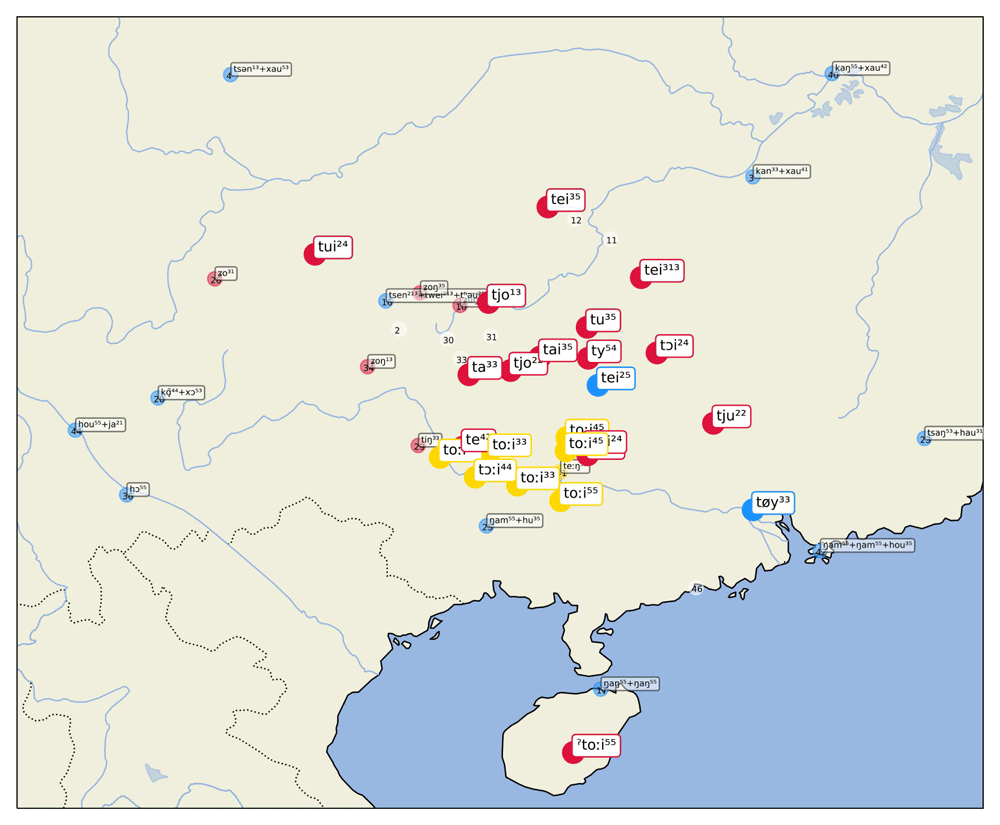
Figure 6. Automatically inferred cluster of potential borrowings for "correct (right)".
It would go beyond the scope of this study to discuss all individual findings made by the algorithm in detail. All plots, however, are shared along with the supplementary material accompanying this study, so that interested readers can dive into the individual results and criticize and improve them. What is important to note, however, is that the inspection has shown that there are definite points where the method proposed here could be further improved. The major problem of the scoring procedure used is that it is very sensitive to phonotactic representations. As a result, two-word forms which sound rather similar but are represented phonotactically quite different, can be easily judged to be unrelated for the scoring procedure, while human linguists immediately spot the overall similarity. As an example, consider the form [t w əi ⁵¹] which is one possible way to represent the word duì "correct" in Mandarin Chinese and the form [t oːi ⁵⁵] in Gangbei Zhongli (Zhuang branch of Tai-Kadai). Phonotactically (for the scoring function), the first form consists of two consonants and one vowel, while the second form only consists of one consonant and one vowel. While humans judging the similarity between both forms would probably ignore the medial [w] as being irrelevant and put more emphasis on the striking match of the diphthongs, the distance scoring employed by the method here is not yet capable of providing such a fine-grained weighting.
Conclusion
Although there has been a lot of research in the field of computational historical linguistics of late, no major improvements in the field of automated borrowing detection have been made so far. The method proposed in this study is very simple and can only detect potential borrowings between languages from different language families. However, as we have tried to show, the method can still be quite useful, both for the automated investigation of contact phenomena in large lexical datasets, and for the more detailed development of computer-assisted case studies, where the method can be used to preprocess the data in order to make the manual annotation more efficient. We therefore consider the new method as a first step towards a more intensive treatment of language contact phenomena in the field of computational historical linguistics.
Data availability
Zenodo: CLDF dataset accompanying List and Forkel's "Borrowing Detection in Multilingual Wordlists" from 2021. https://doi.org/10.5281/zenodo.5037101 (List & Forkel, 2021b)
Data are available under the terms of the Creative Commons Attribution 4.0 International license (CC-BY 4.0).
Concrete instructions on reproducing the study can be found at https://github.com/lexibank/seabor/blob/v1.0/workflow.md.
Software availability
Source code available from: https://github.com/lexibank/seabor
Archived source code at time of publication: https://doi.org/10.5281/zenodo.5037100 (List & Forkel, 2021b)
License: Creative Commons Attribution 4.0 International