Introduction
The Gender Discrimination in the Tarim Basin project (GENDISC) aimed to identify and investigate the presence, types, and extent of gender bias and gender discrimination in a collection of over 900 documents and document fragments known as the Niya documents. These documents are part of a wider corpus of thousands of documents, inscriptions, and manuscripts discovered since the late-19th century in the ruins of ancient oases settlements encircling the Taklamakan Desert, which dominates the Tarim Basin region of Central Asia, now part of the Xinjiang Uyghur Autonomous Region of the People’s Republic of China (Høisæter, 2017: 80; Yaldiz, 2003). The Tarim Basin, bounded by three mountain ranges and bordering the Gobi Desert, was a crossroads for the ‘Silk Road’, connecting China to Central Asia, South Asia, Iran, and beyond (Guang-da, 1996: 293–294; Neelis, 2011: 289–290). At the heart of Asia, the Tarim Basin was therefore an important hub for trade, ideas, culture, languages, and religions, which is reflected in the material remains of the archaeological sites. These networks were possible due to the agriculturally-viable oases in the otherwise harsh terrain (Guang-da, 1996: 282–297). However, the region was also politically unstable from the first century CE onwards: power transferred intermittently between Chinese and regional rulers, some of Indo-European, Saka, Iranian, and South Asian origin (Neelis, 2011: 293–294), before the arrival of the Uyghurs, Islam, and other Turkic-speaking populations from the seventh century CE onwards. Thus, it was a culturally dynamic area, with the documents providing a valuable source to understand the complex history of the ancient Tarim Basin. They have aided in reconstructing historical, economical, religious, and geopolitical conditions in the first millennium CE, but they also provide an insight into life in early historic Central Asia.
Aims and objectives
GENDISC aimed to investigate instances of potential gender bias or discrimination in the ways that people were treated, as could be discerned from the legal correspondence in the Niya documents. The focus was on gender and society using statistical, linguistic, and comparative approaches for an interdisciplinary and comprehensive study. The first objective was to write women into histories that have been dominated by studies of men, elites, religions, and politics, by identifying the societal roles of people and the ways that they came to be associated with the law, using statistical and linguistic approaches to the documents. The second objective was to investigate the issues raised in the complaints and their legal outcomes, to find out if they provide evidence for gender discrimination in terms of the ways people were treated by others, by the law, and in relation to (potential) legal outcomes. The third objective was to investigate and contextualise the attitudes towards (perceived) discriminatory practices in the Tarim Basin in comparison to other cultures and regions. This article addresses the first objective. It summarises the sources used to investigate the documents and collate relevant information and data, with a literature review and consideration of the state of current research. It then presents and discusses some of the observations and findings from preliminary readings and statistical analyses of the documents.
The Niya documents
The full corpus of Tarim Basin documents were written in different scripts and languages, some previously unknown, and on otherwise perishable, organic materials, which were preserved by the arid climate. Subsequent finds, both archaeological and illicit, have added to the repertoire (Baums, 2018). Most of the Niya documents were discovered by the British-Hungarian archaeologist Sir Marc Aurel Stein in the early-20th century at three main sites: the ‘Niya Ruins’ or Niya site, an ancient oasis settlement on the southern edge of the Tarim Basin, named after a modern settlement but identified as Caḍota in the documents (there was also an ancient settlement known as Niña in the documents referred to as Niya); Endere, an ancient fortified site and military garrison located to the east of Niya, perhaps associated with Saca of the documents; and Lou-lan, also known as Kroraïna and Shanshan, an ancient oasis city settlement and capital of a kingdom of the same name to the east in the Lop Desert, near Lake Lop Nor (Figure 1; see Atwood, 1991: 166; Høisæter, 2020: 84; Rapson & Noble, 1929: 324–325; Walter, 2014: 27). The documents also mention several other settlements and communities. Around three-quarters of the Niya documents were written in the South Asian Kharoṣṭhī script, which developed after the fifth century BCE and was initially used in parts of northern Pakistan and Afghanistan (the ancient region of Gandhāra), and northern India, before spreading into Central Asia (Figure 2). The language of the documents has been identified as a dialect of Gāndhārī, a Middle Indo-Aryan Prakrit language of the Indo-European language family, but with loanwords from Iranian, Greek, Chinese, and a Tocharian language (Salomon, 1998: 42–56, 72–80, 159–160). Chinese documents discovered at the Niya site helped date the larger Kharoṣṭhī corpus to the third century CE (Brough, 1965).
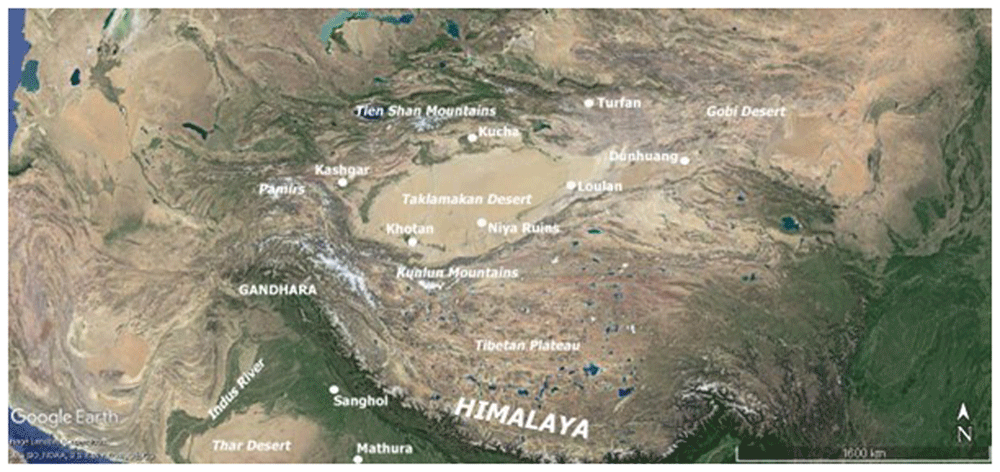
Figure 1. Location of the Niya Ruins in Central Asia.
Map data © Google Earth, Landsat / Copernicus, Data SIO, NOAA, U.S. Navy, NGA and GEBCO (2015–2021). Annotated by author (2020). This figure has been produced under fair use guidelines.
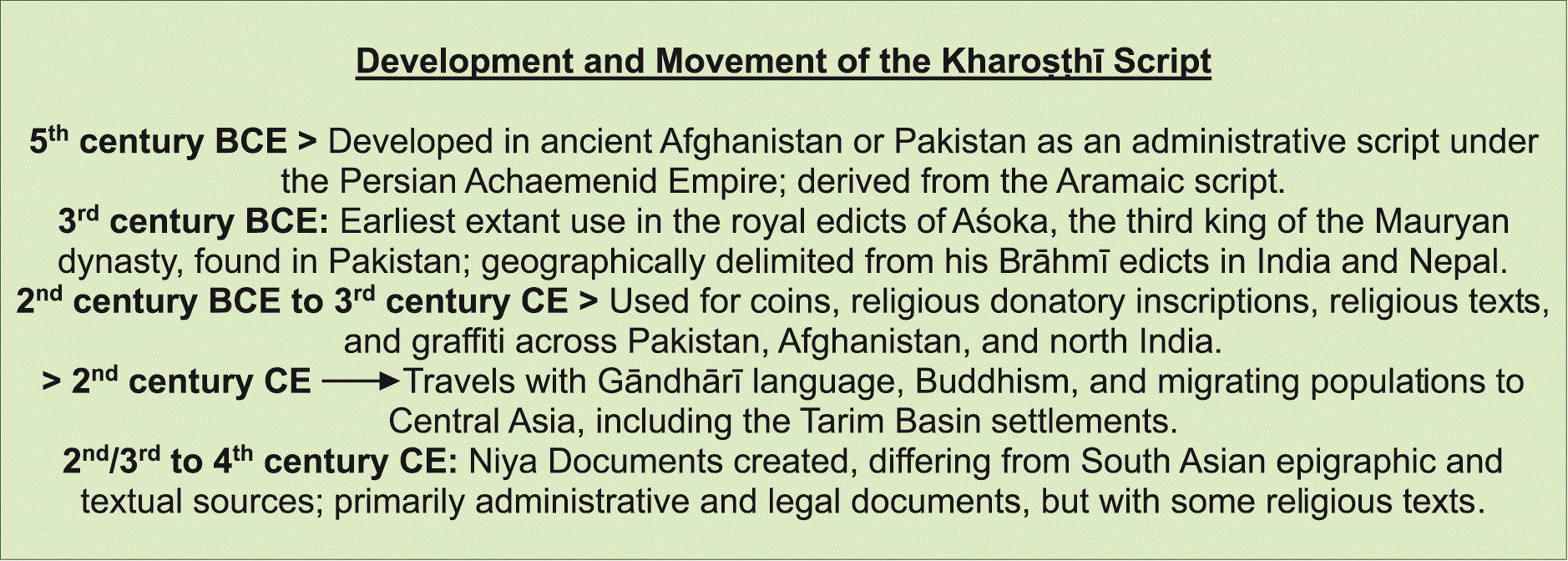
Figure 2. Development and spread of the Kharoṣṭhī script from South to Central Asia and historical significance of the Niya documents © Author (2020).
In contrast to earlier South Asian epigraphic and textual sources, the Niya documents consist of administrative documents, detailing public or private business, and correspondence between a king and his officials, detailing legal disputes or complaints that required investigating. This correspondence was private, semi-private (Agrawala, 1955a: 51; Thomas, 1921), and/or semi-official (Thomas, 1934: 62). The wooden tablets on which many of the documents were written were bound with string and sealed. Agrawala (1955a: 50) highlighted that the courteousness of the language and ‘conventional phrases’, previously noted by Stein (1907) and Thomas (1921; 1934: 63), were Indian in origin and unlike Chinese correspondence. Recent studies have continued to explore the connection of the documents to the language, inscriptions, and manuscripts of Gandhāra, and how and when the language and script were transported to Niya and the Tarim Basin (Kogan, 2017). Suggestions include through political expansion by South Asian rulers who had their origins in Central Asia (Lam, 2013); that they were carried with the migrations of Buddhists and/or refugees after political fragmentation in Gandhāra (Hansen, 2004); or because of interaction and borrowing through the exchange networks established between the neighbouring and interconnected territories of China, Iran, and South Asia (Høisæter, 2017: 81–82). The field has certainly been dominated by philologists, linguists, and those interested in broader Silk Road narratives, political histories, and Buddhist studies, but it has been previously noted that there has been less consideration of life and the social conditions at Niya when the documents have presented an opportunity to do so (Atwood, 1991). Thus, there are still few studies to suggest that the Niya documents have been examined in-depth for their sociological value. This neglect is partly because studies of ancient Asia use modern boundaries as their delimitation. Kharoṣṭhī is thus left to South Asian specialists, rather than incorporated into wider Central Asian and Chinese studies. A disparate opinion, however, questioned how much information the documents could provide on society because they were viewed as a restricted source material (Guang-da, 1996: 286).
Sources to investigate the documents
The publications of Stein provide information on the archaeological contexts of the key sites where the Kharoṣṭhī documents were collected over four expeditions to the region of ‘Chinese Turkestan’, as it was known then, between 1900 and 1930 (for the expedition between 1900–1901, see Stein, 1907; for 1906–08, see Stein, 1921; for 1913–1916, see Stein, 1928; the last expedition in 1930 was unpublished; see also Stein, 1904 and Stein, 1912 for his personal accounts of the first two expeditions; for a timeline of Stein’s life and travels, and a bibliography of publications by or about Stein, see Wang & Perkins, 2008: 48–60; see also Hansen, 2017). Transliterations of most of the documents discovered by Stein and his teams were published in three volumes: documents numbered 1 to 427, found at the ‘Niya Site’ on the first expedition, were published by Boyer, Rapson and Senart (1920); numbers 428 to 708 from the second expedition, including documents from Endere and Lou-lan, were also published by Boyer, Rapson and Senart (1927); and numbers 709 to 757 from the third expedition, again including Lou-lan, were published by Rapson and Noble (1929), along with numbers 758 to 763 acquired by Huntington (1907), and an addendum of number 764 to go with number 31. These three volumes were subsequently collated into one volume (Boyer et al., 1997). The documents from the fourth expedition, numbers 765 to 782, were transliterated and translated by Burrow (1937) from photographs, some of which were rediscovered (Falconer, 1998; Jiqing, 1998). Burrow (1940) also provided translations for many of the documents, but not fully. Other fragments and illegible documents collected by Stein were not published. Whilst documents and artefacts from the first three expeditions went to various collections around the world, most of the Kharoṣṭhī documents are housed in the British Library in London; the UK also has other significant ‘Stein collections’ (see Wang & Perkins, 2008 for a summary). Kharoṣṭhī and Chinese documents from Stein’s fourth expedition, along with manuscripts in other languages and various artefacts, were not allowed to be removed from China; their whereabouts are currently unknown (Jiqing, 1998).
All known Kharoṣṭhī written materials have been collated in an online database, the Catalog of Gāndhārī Texts, created by Baums and Glass (2002-present). Its primary objective is to create a dictionary of Gāndhārī language vocabulary and, as such, only provides transliterated forms of documents, inscriptions, manuscripts, and coins. The published Kharoṣṭhī documents from the Tarim Basin were added to the database in 2008 in the Catalog of Kharoṣṭhī Documents (hereafter CKD), which has been updated with later discoveries and publications of documents from Niya, Endere, Lou-lan, Khotan, Kizil, museum collections, and other known and unknown locations. The catalogue includes references and photographs, where available, and entries partially provide links to the dictionary for individual words. The dictionary can then be viewed to see a list of other documents containing the same word, but this is not complete. Since the earlier expeditions, almost 120 more documents have been discovered, either at Niya or other ‘Silk Road sites’ (Baums, 2018), bringing the total number of entries in the CKD to 901 (as of 2024). Two documents in the Serindia collection in Russia were only published recently, despite having been known about previously. Remarkably, one of these documents is connected to an already published one (see Ching, 2017). The last four documents (CKD 898 to 901), at the time of writing, have not been transliterated on the database and must be read from their original publication (see Fàn, 2020). Photographs of the site are available to view on a dedicated website for the International Dunhuang Project.
Challenges to investigating the documents
Although Salomon (1988: 98) was correct in stating that the earlier expeditions in Central Asia were not exhaustible after other documents in Indic scripts and languages were discovered in Xinjiang, Meicun (1990: 283) was perhaps over-ambitious in claiming that many Kharoṣṭhī documents had been discovered in the region from the 1960s onwards. Thus, even though there have been additional discoveries of documents in the field, rediscoveries in museum collections, and cataloguing of documents found from unknown provenances, these later discoveries are not so numerous when compared to the number of documents uncovered by Stein and his teams in the earlier part of the 20th century. Nevertheless, subsequent excavations, chance findings, and reviews of museum collections have added to the corpus. But it is the case that the Niya site and other Tarim Basin settlements have still not been excavated fully, and so there may be more documents yet to be discovered. This leads to a specific challenge: the field of archaeological study has become dominated by Chinese and joint Sino-Japanese expeditions for the most part, meaning that research published in Chinese or Japanese journals and books can be inaccessible to a wider international readership due to language barriers. Furthermore, an expedition in 2011 conducted by the British Library, in conjunction with archaeologists from Xinjiang, re-photographed the buildings at the Niya Site, but there were no new excavations or publications resulting from this trip (S. Whitfield, pers. comm. 2022).
The language of the documents also presents unique challenges due to borrowings and inflections from other languages, which leads to difficulties in interpreting their cultural context. For example, interpretations of the documents from a Chinese perspective include statements such as that Kharoṣṭhī was used extensively in Khotan, Kucha, Shan-shan, Dunhuang, and other Chinese cities along the Silk Road (Meicun, 1990: 283, emphasis my own), which ignores periods when some of these cities were not under Chinese hegemony. It has also been suggested that practices found in the documents were different from Chinese ones (Fàn, 2020: 83), but without then considering the other cultural influences present in the region. It is still not entirely clear how the oases cities and settlements in the Tarim Basin were connected to imperial China, although there are theories that local and regional kings acted as vassals for China, with evidence that some settlements were established as or occupied by Chinese military garrisons. It is also not always possible to consider all influences because of constraints to studies, but there is a need to explore intercultural connections more fully to enable a better understanding of life in the Tarim Basin. As Jamison (2000) noted, the language of the documents is connected to that of the Kharoṣṭhī edicts of Aśoka, the early Buddhist donatory inscriptions of Gandhāra, and Gāndhārī Buddhist texts, but their content differs because they were administrative. As such, they were not formulaic. However, as will be seen below, the documents did follow a general structure in which to convey information, and the writers did use some key phrases or vocabulary. And so, there does need to be consideration of how the documents were formulated.
Current research on the Tarim Basin
There has been renewed global interest in Silk Road, Chinese, and Central Asian studies, with the establishment of several research centres in the past decade (although some appear to no longer be active). But this has perhaps been influenced by global politics and the need for more research on China, which is politically and economically influential. A special focus has been on the ‘New Silk Roads’ and the ‘Belt and Road’ initiative, to examine the economic connections between modern nations and China. Environmental research on the Tarim Basin has focussed on tectonics (Xia et al., 2023), natural gases (Liu et al., 2024), oilfields (Wu et al., 2024), and hydrology (Li et al., 2024), indicating the importance of the region for natural resources. Recent archaeological projects have made use of scientific approaches, including radiocarbon-dating to establish the ages of settlements (Ma et al., 2024; Xu et al., 2017), which have contributed to knowledge of how the oases towns developed over time (Mallory, 2015). China leads in this aspect of research, but concerns do exist about nationalistic histories (Millward, 2009). Other projects have re-examined the genomic origins of the famous ‘Tarim Basin mummies’ (Zhang et al., 2021), urbanism and agro-pastoralism (Dang et al., 2022), trade, exchange, and interconnectedness across the ancient world (Høisæter, 2023a; Høisæter, 2023b), change and continuity in religious practices (Hansen, 2004), material culture in conjunction with the documents (Iyer, 2015), and the atypical behaviour of Buddhist monks who lived at the settlements (van Schaik, 2014). Much research since the discovery of the documents has focussed on linguistics, with a renewed interest in the Tocharian language. Some recent projects include ‘Niya Tocharian: language contact and prehistory on the Silk Road’ (2014–2016); ‘Tracking the Tocharians from Europe to China: a linguistic reconstruction’ (2016–2023); and ‘The Tocharian Trek: A linguistic reconstruction of the migration of the Tocharians from Europe to China’ (2018–2023; Schoubben, 2024). Other studies on the Niya documents have examined the presence of Bactrian etymologies (Schoubben, 2021), the Prakrit phonology and grammar (Schoubben, 2022), and Indo-Iranian sound changes (Schoubben, 2023). A new project, ‘The Silk Road Language Web: A linguistic prehistory of the Tarim Basin in Northwest China’ (2024–2029), has been established to investigate linguistic development in the Tarim Basin and its connection to migrational histories, which will answer important questions. In addition to the International Dunhuang Project and the Catalog of Gāndhārī Texts databases, another database project aimed to collate and transliterate the Tarim Brāhmī documents (2018–2021). Høisæter (2020: 103–105, and pers. comm. 2024) also created a searchable database of the Niya documents using FileMaker Pro, which includes entries for individuals detailing their name, gender, titles, group and kinship affiliations, and actions. When made available, this database will be invaluable for research on the documents. Therefore, the GENDISC project filled an important gap in research by offering new perspectives on life in the ancient Tarim Basin.
Context of the GENDISC Project
Earlier studies on the documents have highlighted the diverse occupational positions that people had in Caḍota and connected settlements, with the presence of different categories of nobles, aristocrats, officials, ‘free people’, householders, soldiers, warriors, scribes, artisans, craftspeople, ‘persons of the lower strata’, such as slaves, servants, labourers, wage-earners, porters, serfs and fugitives, Buddhist monks, Brahmanical priests, and different Central Asian and foreign communities (Agrawala, 1955b). It has also been noted that Caḍota was a rural settlement, with agriculture as the primary occupation of its people (Atwood, 1991: 167–169). Social hierarchies and restrictions existed with a separation between officials and ‘serfs’ (ibid: 175), which can further be distinguished between elite high officials, freeborn landholders of various wealth-levels, ‘half-free’ peoples, slaves kept in differing conditions, and the Buddhist monastic community (Høisæter, 2020: 146–148). Social structures were built on marriage, patrilineal descent, and kinship networks (Padwa, 2007; for discussion, see Høisæter, 2020: 142–144, 150). Gender has also been considered by Agrawala (1952), who examined identifiers used for women, but some of the gender issues identified were descriptive, generalised, and contradictory. Atwood (1991) explored gender and kinship, noting that society was ‘highly authoritarian’, but suggesting that women were perhaps less constrained as in other parts of the world: they could participate in the law as witnesses, own property, and work ‘onerous’ jobs (Atwood, 1991: 170). Yet, they were still subordinate to men and were part of marriage exchanges between settlements (ibid: 170–172). The issue of the preference of male heirs was also considered in adoption cases, and that girls may have been adopted to fulfil domestic labour needs (ibid: 172–173). Nevertheless, both sons and daughters could inherit property, with the possibility of holding it in common (ibid: 173). This can lead to presenting ideals of equal social participation in the over-enthusiasm for writing women and children into history (for example, Hansen, 2012: 48). One study aimed to understand the roles of lower status women in comparison to higher status women in the Chinese epigraphic and textual sources from the Tarim Basin (Xiaonan, 1999), but this did not make use of other sources. Høisæter (2020), too, has explored many of the documents that mention women, including examples of burials: one suggests that a woman may have been killed to join her husband in death. This study was in the context of understanding trade, exchange, economic life, and networks in the Tarim Basin.
Gender studies as a discipline is still a relatively novel approach to studying ancient civilisations and is somewhat of a niche specialism. Developing in the 1960s as part of ‘New Archaeology’, it only became prominent as a discussion point from the 1980s onwards (Conkey & Gero, 1997). Inherent biases thus remain when dealing with gendered narratives (Moen, 2019). There is either a tendency to focus on high status individuals, especially adults and men, because they are most represented in written records and wielded the most power, or to exclude them in trying to develop more inclusive narratives. For example, in examining early Buddhist donatory inscriptions from South Asian contexts, I found many studies to have an overarching conclusion that Buddhism was accessible, inclusive, and allowed for the equal participation of all social classes, male and female. Yet, upon further investigation and analyses of the inscriptions, I found that, on the contrary, there was change over time in who supported Buddhism. This reflected broader socio-cultural, socio-religious, and political developments in South Asia, which restricted ritual access and donatory participation (Kaur, 2021). The Niya documents also indicate that there were differences in the ways that people were treated, with the possible presence of discriminatory practices related to gender, some of which may have been influenced by cross-cultural contacts. The legal cases include criminal acts, such as attempted infanticide, allegations against and murdering of women suspected of being witches, the trading of men, women, and children for adoption, slavery, and marriage, and discrimination against other communities and refugees. Therefore, new perspectives can still be offered in examining social conditions in the Tarim Basin using the Niya documents.
Methods
GENDISC was an interdisciplinary project, incorporating studies of language, religion, gender, society, and law, within the broader fields of archaeology and Asian studies. It was transregional in scope, examining the influences of different cultures on society and the connections between what are now politically and culturally sensitive territories. A sociological approach was taken to address gender-related issues, with the contextualisation of the Niya documents with other textual sources. The historical context of the Tarim Basin region was examined through a literature review to understand the social, political, and religious changes that occurred in the period prior to and during the creation of the documents. This provided necessary background information to understand the complexity of society and the reasons behind societal and political changes, which could have led to the types of attitudes and disputes reflected in the documents.
For the purposes of GENDISC, the difficulty in navigating a large corpus of documents was apparent for identifying relevant material, leading to the creation of an initial working database from which more specific data could be collated or which helped identify additional data that needed to be collected. Therefore, this was the main task in the initial stages of the project, followed by some preliminary statistical analyses and selecting case studies to explore further. The documents were read and summarised in an Excel database using the translations of Burrow (1940), the transliterations of Boyer et al. (1997), and the Catalog of Kharoṣṭhī Documents (Baums & Glass, 2002-Present). They were divided between the earlier discoveries made by Stein, where proveniences were mostly known, and the later discoveries, where information on findspots was unclear or unknown. Different searchable fields were created in several spreadsheets, including the original document numbers created by Stein, and the numbers in the earlier transliterations, which have been retained in the CKD; the location where the document was found, with site name and building number; who the document was addressed to, including official titles; who the document was from; who was to retain the document; who the complainants were in legal cases, including gender and occupation, where known; what the document was about, with a summary of key words or identifiers; what the resolution or request was; and any dates. Entries that could be investigated as potential case studies were highlighted. The data collected was based on selection and interpretations of the documents in transliteration and translation, which means that any errors can affect the data collected. The Niya documents can also be examined for different criteria, which means that different information can be gathered and contextualised from the same source according to the interests of the researcher, what they are aiming to investigate, which sources they have selected, and how the materials are interpreted and analysed. This also means that replication of results or reproducibility of a study can be limited, more so in the arts and humanities where written or creative materials are being examined rather than numerical or scientific data. As such, the following results and observations reflect that the same documents can be investigated for different objectives.
Results and observations
From the data and information collated, it was possible to conduct some basic statistical analyses. First, it was established where most of the documents were found at the Niya site by building and room number, with the totals for each. Following this, the documents were examined in other ways, such as which kings were named and the titles they used; the types of complaints; the gender of the complainants; and the types of laws mentioned. Some of the findings are now presented.
Location of finds
The first dataset summarises where the documents were found at the Niya site, based on the discoveries recorded by Stein (see Kaur, 2025: 1. Buildings). Most of the documents were found in building N.V. in room xv, with a total of 186 Kharoṣṭhī documents and document fragments. Following this, rooms iv in N.I (94 documents), viii in N.XXIV (78 documents) and i in N.I. (68 documents) were significant. Thus, building N.I was also clearly significant, with around 166 documents discovered there. Stein noted that the buildings were mostly residential, and specific rooms were identified as offices. However, it appears that N.V.xv was repurposed for discarding rubbish because of structural damage (Stein, 1907: 338–341; see also Høisæter, 2020: 36–51, for an overview of the Niya site and significance of these rooms, with many Chinese documents also discovered in building N.V; Hanus, 2021, for a consideration of urban density at Niya and related sites, including the functions of buildings and rooms). Discarded documents were therefore presumably not needed anymore because they were related to cases that had been resolved or were no longer applicable. Conversely, documents that were found carefully stored and archived suggest that the people involved were still alive, that the dispute was still active, or that the record needed to be maintained for reference purposes. These archived documents remained in situ when the settlement was abandoned.
Kings, dates, titles, and local officials
Out of the 901 entries in the Catalog of Kharoṣṭhī Documents, ninety-nine included the name of a king with a date (less than 11%; see Kaur, 2025: 2. Kings). Most of these documents can be dated to the reign of Mayiri or Mahiri (total 39), followed by Aṃgoka (total 26, possibly 27), and Vaṣmana (total 16; see Figure 3). According to a chronological summary based on observations made by Salomon (2000), the kingdom of Kroraïna or Shan-shan flourished between 250 and 350 CE, with Mayiri and Aṃgoka ruling during the middle period (approximately the mid-third century CE), and Vaṣmana ruling towards the end (in the fourth century CE). Other kings have only been identified in one example each, except Pepiya, who was perhaps the earliest king and was named in four documents (see also Appendix in Boyer et al., 1997). This suggests that although a written legal and administrative system had been introduced, it was only during the second half of the settlement period of Caḍota when it was fully utilised. There are unnamed kings in the documents too, and therefore this observation is dependent on who they were. It also depends on the preservation conditions: many documents are fragmentary or had their writing erased, and it may well be that there were earlier documents from the reigns of other kings.
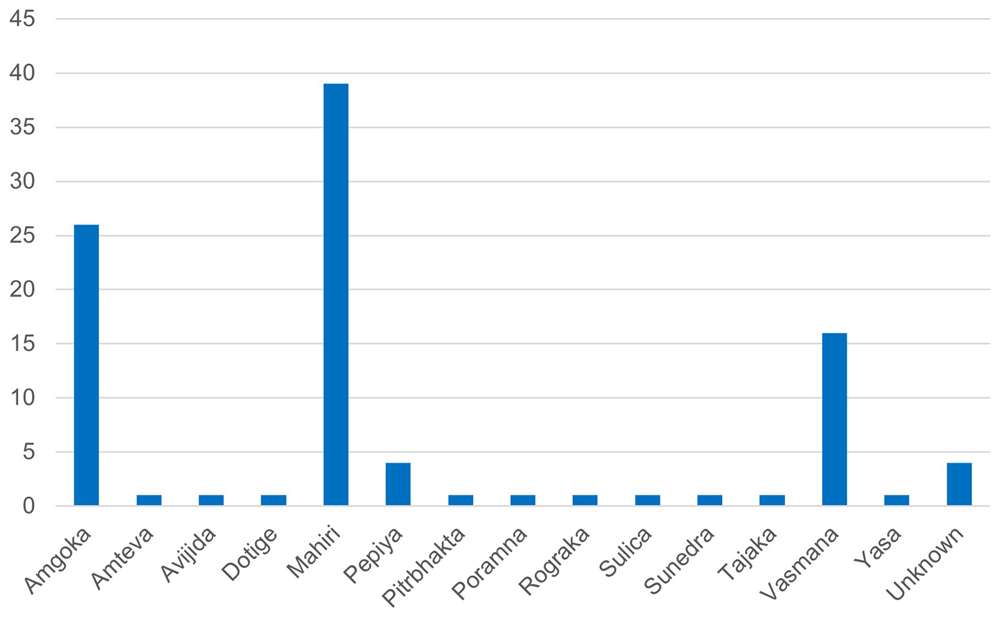
Figure 3. Total number of documents in which kings were named with dates.
When examined according to regnal years, documents mentioning Aṃgoka appear to have been presented one to two years apart, with a break in records in the first five years of his reign and between the years 11 and 16. Typically, one case appears to have been presented per year, with two in the years 17 and 21, and three in the year 34. The cases were perhaps heard and sent out to officials at different times of the year, but most of the surviving documents from his reign appear to have been commissioned in the second month, followed by the fourth and sixth months. It can be suggested the king heard up to two cases per month, except in the second month when he heard more. Most cases were also heard mid-month, increasing in frequency from the 12th to 15th days. A similar pattern can be observed for Mahiri. Cases begin from the fourth year of his reign, and were presented in intervals of one, two, or three years. Most were from the first and second months (12) and prepared throughout the month. Finally, during the reign of Vaṣmana, cases were recorded in almost every year after the first two years. The most popular months were the first, third, sixth, and 12th, and the first half of the month is more frequently represented. This can be examined collectively for all the kings (see Figure 4, Figure 5 and Figure 6). In summary, documents were created throughout the kings’ reigns, but it seems that the beginning and middle of reigns were when cases were presented most often. Kings were also mentioned in documents created throughout a given year, but apparently more so at the beginning, middle, and end of the year. The first half and last week of a month were when cases were most likely to be presented.
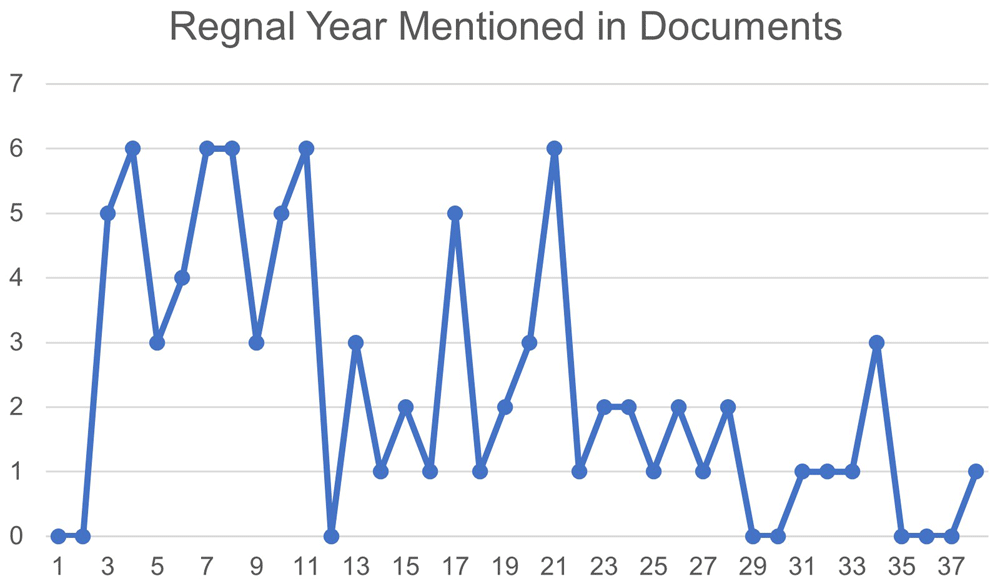
Figure 4. Total number of documents referring to a regnal year of a king when a complaint was made.
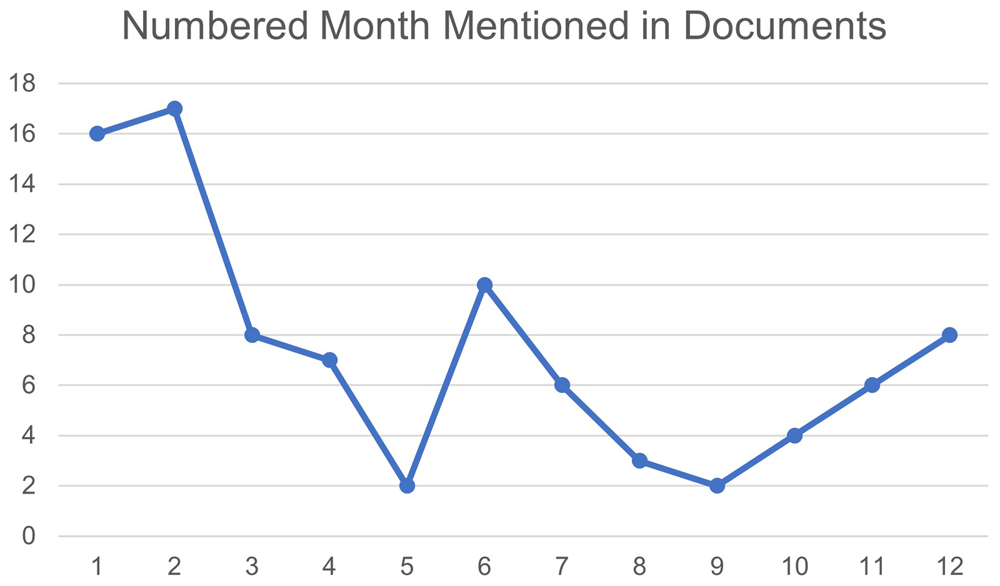
Figure 5. Total number of documents with a numbered month in which a complaint was made or document prepared.
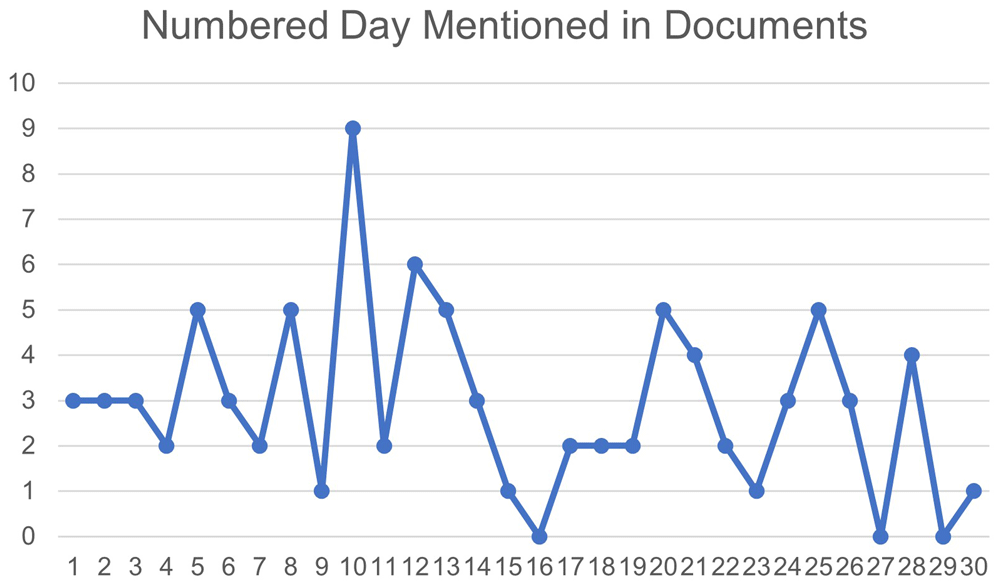
Figure 6. Total number of documents with a day in a king’s reign in which complaints were made or documents prepared.
This is a very general examination of the documents and only suggestive of patterns, but it could be that there were certain points in the king’s reign when more cases would be presented. He also likely held court at certain times of the year. These audiences could be connected to periods of difficulty, such as war or drought, or to secure the king’s authority. They could also have occurred when the king was on tour and heard cases at settlements. Thomas (1934: 41) suggested that the documents reflect a post-war period of hostilities with the kingdom of Khotan. There are references to plundering, attacks, refugees, and the abduction of people, which led to a concentration of people at Caḍota. Some of this concentration of people was due to displacement, but some was also due to enslavement. There were also the sending of envoys and exchanges of goods between the settlement and the kingdom to re-establish relationships. Thus, uncertain conditions and population pressures could have led to more social problems.
The kings used different titles, with variable spellings, which conveyed how they viewed themselves, how they wished to be viewed by others, or how others perceived them. The definitions of these titles, as given in A Dictionary of Gāndhārī by Baums and Glass (2002-present), are:
Nuava: abbreviated from mahanu(bh)ava, ‘having majesty’ (see Burrow, 1937: 135)
Mahanuava: from Sanskrit mahānubhāva, ‘having great majesty’
Raya: from Sanskrit rājā, ‘king’
Rayatiraya: from rājātirāja(n), ‘chief king of kings’
Maharaya: from Sanskrit mahārāja, ‘great king’
Maharayatiraya: ‘great king of kings’
Mahaṃta: from Sanskrit mahant, ‘great’
Kocimaharaya: ‘great king of Kuci’ (Kucha)
Khotanamaharaya: ‘great king of Khotan’
Jiṭuṃgha: from Chinese 侍中 shìzhōng, Old Northwest Chinese *dźətuŋ, ‘palace attendant’ (a Chinese title bestowed on the king of Kroraïna; see Brough, 1965: 600–601)
Mahajiṭuṃgha: ‘great palace attendant’
Deva: Sanskrit/Prakrit ‘god, king’
Devaputra: ‘son of a/the god(s)’
Pracakṣadevada: ‘having visible divinity’
Jayaṃta: from Sanskrit jayant, ‘being victorious’
Dharmiya: from Sanskrit dhārmika, ‘righteous’ (a common title found in Kharoṣṭhī Indo-Greek and Indo-Scythian coin legends)
Sacadhamastida: ‘firm in the true dharma’
Bhaṭaraga: from Sanskrit bhaṭṭāraka, ‘master’
Pitṛbhakta: ‘devoted to father/forefathers’
Hinaza: Iranian, cf. Khotanese hīnāysa‐ < *hai̯nā‐Hādza‐ (loan translation of Greek στρατηγός, ‘general’)
The basic formula of titles used by most kings, and in this order, was: mahanuava maharaya jiṭuṃgha [name of king] devaputra. There were variations with additional titles. Aṃgoka was also referred to as maharayatiraya mahatma jayaṃta dharmiya sacadhamastida in two examples, with the addition of mahajiṭuṃgha in one of these. Pepiya used these titles, but with the addition of pracakṣadevada in one and raya in another. Mayiri added maharayatiraya in two documents and bhaṭaraga in two others, otherwise he kept the basic formula. Vaṣmana only had the main titles. The kings of Kucha/Kuci used Kocimaharaya devaputra, with one king either adding or being named pitṛbhakta (CKD 883); this and another king (CKD 869) were also described as ‘producing compassion’. The king of Khotan used Khotanamaharaya rayatiraya hinaza deva (CKD 661). Most kings therefore used, at a minimum, four titles, although in some cases they used more. It appears that after the first two kings, Pepiya and Tajaka, the titles became shorter and standardised, with a few exceptions.
Most titles derived from Sanskrit and Prakrit titles used by South Asian kings, as found in inscriptions and on coin legends, although some were derived from Chinese or Iranian. These titles indicated various levels of kingship, with some suggesting military control. There were also titles indicating religious affiliations, particularly with the use of dharma, suggesting a relationship with Buddhism, and pitṛ, which was most associated with Brahmanism and worship of ancestral forefathers. Over time, there was a reduction in the use of the title ‘king of kings’, which suggests that the kings were probably not rulers over many kings or kingdoms. Kingship in South Asia was intimately connected to dharma, the moral, social or religious law according to which all people should live (see Kaur, 2024a). The Brahmanical ideal of kingship, as conveyed through political and legal treatises, the Sanskrit epics, which were carried to the Tarim Basin, and other religious, historical, and legendary accounts, were also supplemented by Buddhist ideals of personhood. These are reflected in some of the titles local officials used or were addressed with, which were additional to their official job titles and were of a greater variety than those of the kings:
Priyadarśana: ‘having a dear look’ or ‘pleasant to look at’ or ‘having a pleasing gaze’
Bhaṭaraga: ‘master’
Yogyadivyavarṣaśatāyuka: ‘having a life of a hundred proper divine years’
Yogyadivyavarṣaśatayupramana: ‘having a proper life span of hundreds of divine years’
Sunamaparikirtita: ‘praised for one’s good name’
Priyadevamanuṣasaṃpujita: ‘dear to and worshipped by gods and men’
Devamanuṣyasaṃpujita: ‘worshipped by gods and men’
Pratyakṣadevata/Pracakṣadevata: ‘having visible/illustrious divinity’
Priya -pitu, -matu, -bhratu, -jeṭhabhradu, -spasu, -putra, -dhitarana, -jamata, -sali, -mitra -nivasaga: ‘dear/beloved/favourable -father, -mother, -brother, -elder brother, -sister, -son, -daughter, -son-in-law, -brother-in-law, -friend, -neighbour’
Mahaṃta: ‘great’
Priyamanasu: ‘having a dear heart’
Priyasveta: unclear, perhaps connected to sveṣṭa, ‘dear to oneself’, or śveta, ‘white/bright’
Priyaapru: unclear, perhaps a title, or connected to aprāyu, ‘assiduous, not careless, attentive’
Piṃcaradivyavarṣaśatāyupramānana: ‘having a life span of hundreds of worthy and divine years’
Priyaatriptadarśana: ‘having a dear and eager look/gaze’
Pracakṣabodhisatva: ‘illustrious bodhisattva’
Mahayanasaṃprastita: ‘having set out in the great vehicle’ (the Mahāyāna doctrine of Buddhism)
Atriptapriyadarśana: ‘having an eager and dear look’
Atriptadarśana: ‘having an eager look’
Kalyanakarimitra: ‘virtuous friend’ or ‘friend who causes prosperity/good fortune’
Many of these titles can be connected to South Asian ideals of how a ruler or leader should be perceived, which reflected ideals of beauty and masculinity conveyed through the physical body. In Buddhism, a person had to be reborn as a man and have a perfect physical form to attain liberation from saṃsāra, the cycle of birth and rebirth. The ideal body, therefore, became that of a Buddha or a bodhisattva, an enlightened being who helps others to enlightenment. Thus, people with disabilities, physical deformities, hermaphrodites, and sexual ‘deviants’, including homosexual people, were (are?) not permitted to become monks or nuns (Powers, 2009: 85; see Theravāda Khandaka 1 and 20 for the ordination rules governing monks and nuns). Moreover, a Buddhist narrative states that women, because of their female form, cannot become the gods Brahma or Indra, a guardian deity of the four quarters, a great king, or an irreversible bodhisattva who could attain nirvāṇa. Only by adopting a male form could people attain these higher male states (Young, 2007: 34–35). Nevertheless, salutations in the Niya documents were also made to women, which indicates the importance of women in socio-political alliances, but they were identified primarily in association with their husbands (the officials) and through their kinship to the person sending the letter (also predominantly men). There are exceptions in the documents where elite women corresponded directly with each other, and there are references to one or more queens (devi) who owned property, went on tours, and had settlements established in their honour. For men, having divine titles and titles derived from those used by South Asian kings meant that they wished to be perceived as above other members of the community, and therefore worthy of being exalted. They were to be viewed as akin to the king as his local representative and akin to the gods as their earthly representative.
From the titles used by the kings in the Niya documents, there was a South Asian influence on royal and political ideologies, but whether this originated from South Asian kings or through religions is not clear. It has been suggested that the Tarim Basin settlements, particularly sites where Kharoṣṭhī documents have been discovered, were under Kuṣāṇa hegemony, even though the evidence is circumstantial (see Hitch, 1988; Høisæter, 2013: 5; Høisæter, 2017: 81–82). The Kuṣāṇa, who had their origins in Central Asian tribes, came to rule over northern parts of South Asia and adjacent parts of Central Asia from the first to fourth century CE, although the extent of their control and influence is still a matter of scholarly debate. The settlement of Caḍota, however, was governed by local officials in the name of the king, who was perhaps the ruler of the kingdom of Kroraïna. The royal court was in contact with the officials through the letters represented in the Niya documents or via designated representatives. Thus, ‘locals could appeal their grievances directly to the king or to a local representative who pronounced judgement according to established laws and regulations’ (Høisæter, 2017: 81). Administratively, oases settlements like Caḍota were structured in a way that households were centred around residences that served as public buildings, which housed an official as the local representative of the king (Hanus, 2021: 110). These officials, with various designations, were responsible for collecting taxes (see Agrawala, 1953b for a consideration of the taxation system). But, in the case of Caḍota, there appears to have been a limited concentration of households around administrative buildings because of the agricultural nature of the settlement (Hanus, 2021: 114). This may have had an impact on the extent to which issues were addressed directly within the settlement and the relationships that people had with the officials. It may have been easier or better to appeal directly to the king for a swifter or decisive resolution. But the full site has not yet been excavated nor have all buildings survived, and so the nature of the settlement is not fully understood.
People informing or complaining
Two key verbs were used in the documents to describe how cases were presented to the king, with variations according to the number and gender of the people involved (see Table 1 and Figure 7). In 102 of the documents (67%), the verb viṃñaveti (pres. sg. 3rd pers., Sanskrit vijñāpayati) and its variations was solely used to describe the complaint. The verb vijñāpayati (under विज्ञा in the Sanskrit-English Dictionary of Monier-Williams, 1899: 961) means ‘to make known’, ‘to declare’, ‘to report’, ‘to communicate’, ‘to ask or request anything’, ‘to apprise, teach, instruct, ask, beg’, and ‘to inform of or about’, with the related term vijñāpti also having the connotation of reporting or announcing to or addressing a superior. In contrast, the verb garahita (Sanskrit garhati, garhate) was used in forty-eight of the documents (32%). The verb garhate (under गर्ह्, ibid: 350) means ‘to lodge a complaint before anyone’, ‘to accuse, charge with, reproach, blame, censure anyone or anything’, or ‘to be sorry for, repent of’, with the related term garhita indicating something condemnable or despicable. This differentiates the two verbs and their intended meanings in relation to how complaints were made, with viṃñaveti indicating a need to make something known to a superior in order to receive assistance, and garahita indicating a need to make known that something unacceptable has happened and thus being more accusatory. Only two documents used both terms. Complaints were also presented with other verbs in some documents, such as variants of the Sanskrit pṛcchati, from the root pṛṣṭa, meaning ‘asked, inquired, questioned, interrogated, demanded’ and so forth (ibid: 647), or utthita, meaning to arise or come forth (ibid: 180). This shows an oral component to the complaint, where people were asked questions, and a physical action, with people standing up or coming forward to make their complaint. In a few documents, there were many officials who were part of the inquiry. Where the occupations of complainants were specified, these were people in official or administrative roles, including some Buddhist monks. Many documents did not record the occupation of the complainant (see Kaur, 2025: 3. Complaints).
Table 1. Documents using verbs for complaining (garahita) or informing (viṃñaveti) according to gender and number of people.
| Gender/Number | Garahita
(complain) | Viṃñaveti
(inform) | Garahita +
Viṃñaveti
(complain + inform) | Total |
|---|
| Male Individual | 28 | 92 | 1 | 121 |
| Male Pair | 9 | 5 | 1 | 15 |
| Male/Female Pair | 1 | 1 | 0 | 2 |
| Male Trio | 5 | 0 | 0 | 5 |
| Male Plural | 3 | 0 | 0 | 3 |
| Unknown/Unclear | 2 | 4 | 0 | 6 |
| Total | 48 | 102 | 2 | 152 |
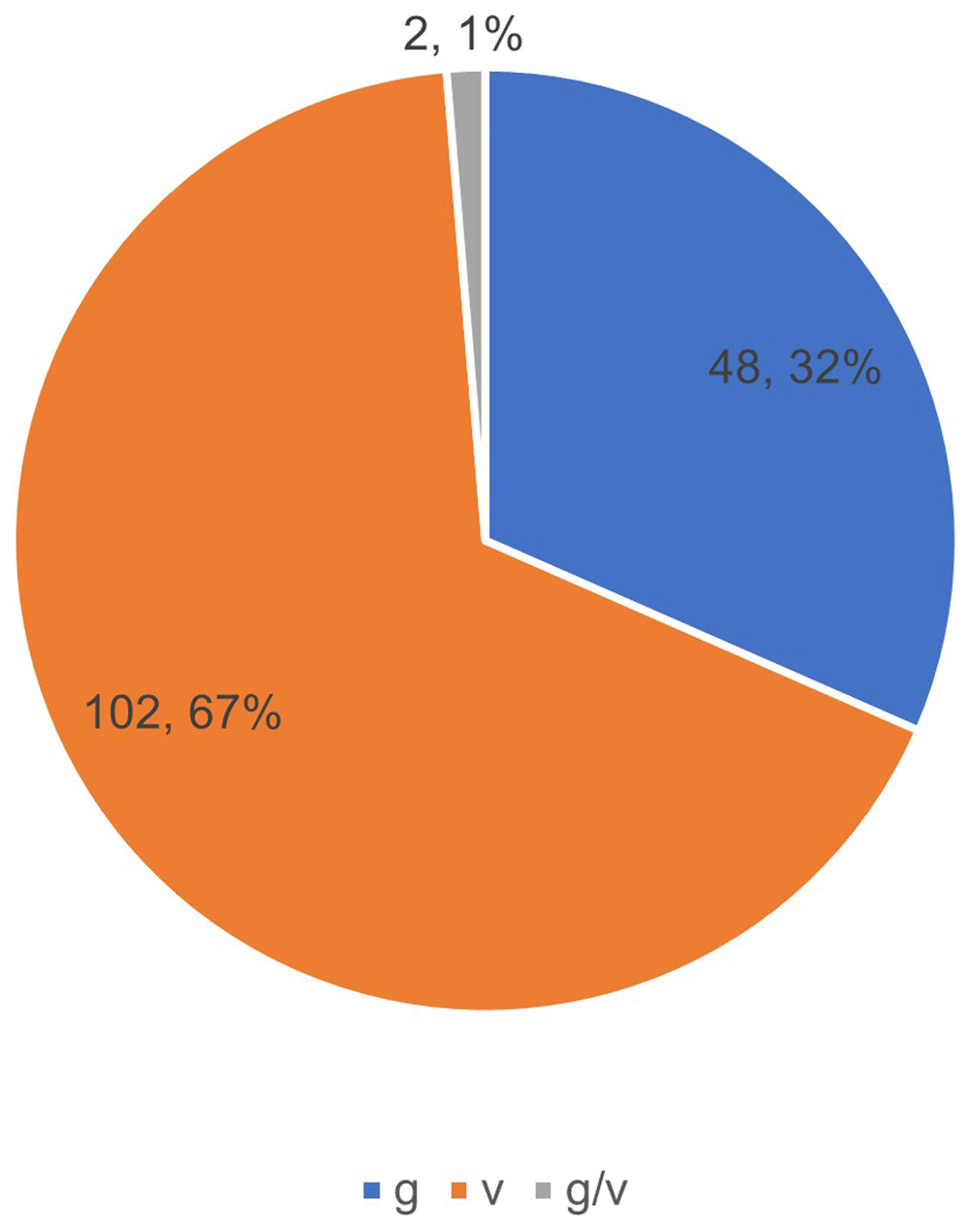
Figure 7. Percentage and total number of documents using the verbs garahita (g, complaining) or viṃñaveti (v, informing).
Gender of complainants
Examining the identifiable genders of the people who made the complaints shows that only two documents involved women making complaints directly to the king. Significantly, they made these complaints with a man rather than as individuals. All other documents with people making complaints to the king were presented by men, apart from one case presented collectively by a settlement (which presumably also included women). Individual men made the most complaints, with the verb viṃñaveti most used in the documents for these cases. Men in pairs or groups were less represented than individuals, but the verb garahita was more likely to be used for their cases (see Figure 8). The difference in language use suggests that individual men had to be more appeasing when making complaints and presenting information, perhaps because they were more vulnerable and helpless, and thus had to be more restrained, whereas pairs or groups of men may have had more confidence to directly accuse people. More complainants equalled more victims and witnesses, which perhaps strengthened claims against the accused. But it is difficult to gauge the emotions people may have felt when making their complaints and this can only be inferred from the types of cases presented. Additionally, although women were less represented as complainants in the documents, men did make complaints for cases where women and girls were involved, although the intentions varied. This suggests that the formal legal system, as can be discerned from the documents that have been discovered thus far, was not directly accessible to women. They either had to have male representatives or be present with a man to make a complaint. There may have been other, more informal, ways of dealing with issues within the home or the settlement, but it appears that, formally, only men had primary access to the king to make a complaint. Men also presented cases on behalf of other men, which demonstrates that complaints could have been made indirectly by the aggrieved person through a representative.
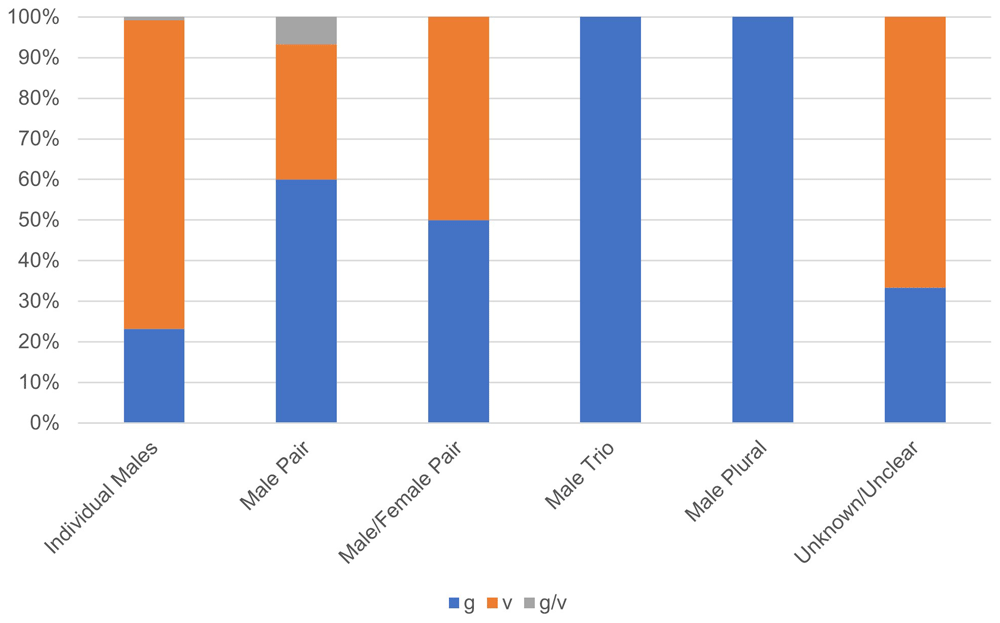
Figure 8. Percentage of people by gender and number making a complaint to the king using the verbs garahita (g, complaining) or viṃñaveti (v, informing).
Women in the documents
A key component of gender studies has been to investigate the lives of women to redress imbalances in scholarship where male lives have received more attention. In historical studies, gender imbalances are even more pronounced. Thus, it is not surprising that less than 12% of the Niya documents mention women or girls, at least as far as can be identified through interpretations of names and their grammatical genders. Furthermore, women were primarily identified with gender-specific or kinship labels, in contrast to men who also had occupational identifiers. There were exceptions, such as for slaves, witches, and the queen, and there are references to women being associated with work and receiving wages. Agrawala (1952) summarised the different categories of women and their kinship relations according to these labels, before suggesting some ways that women and girls may have been treated differently. But these interpretations are limited because they did not fully compare the differences in the ways that males and females were treated and were not based on a consideration of all documents. For example, Agrawala (1952: 338) stated that slave women could give daughters up for adoption but perhaps not sons, when there are documents that show sons too were given by women for adoption. Likewise, Agrawala summarised that women could be kidnapped and beaten (ibid: 336), but the documents also mention men being mistreated in such ways. Nevertheless, Agrawala did consider more positive aspects, such as women being able to own property and being able to function as court witnesses (ibid: 339). But, in conclusion, Agrawala stated that this was no recompense for the suffering women endured (ibid: 341). Studies of women in the past do have to acknowledge differences in treatment and mistreatment, but the situation was also not so black and white that only women and girls suffered. Conversely, Hansen (2021) overlooked the difference in language use in documents dealing with the sale of people as slaves. The documents clearly state that female slaves could be beaten, something that Agrawala (1953a) highlighted, but there was no such clause in the documents for the treatment of male slaves. Slaves and ‘serfs’ of different categories may have had different tasks and been expected to behave in certain ways (Agrawala, 1953a), and this may have been dictated by their gender, which then influenced the ways that they were (mis)treated.
Violence and assault
Most cases involving assault and violence involved men as the perpetrators, but with both men and women as victims. Exceptions include a case where a woman burnt a Buddhist monk’s robe, three documents where women were accused of witchcraft, and one related case where poison was alleged to have been used. Witchcraft accusations led to the killing of at least one woman, but men too were accused of practicing witchcraft, including Buddhist monks. This has been explored in more detail in another study (Kaur, 2024b). The reasons behind acts of violence varied and, where these were not stated, can be discerned through the ways that the complainants were treated by others. Some cases suggest extra-judicial punishments, including as a form of revenge, the targeted humiliation of men through direct attacks or indirect attacks on arguably more vulnerable members of the household, such as women and slaves, and jealousy. Violence included abductions, beatings, and breaking bones, and in the worst cases sexual assaults and homicide. One case also involved a woman suffering a miscarriage because of an assault. Some cases therefore suggest that women experienced more extreme sexual or gender-based violence in contrast to men, but men too could experience gendered violence. This will be explored further in another article (Kaur, unpublished).
The roles of Buddhist monks
The documents also detail the roles that Buddhist monks had in the settlement and show that they too were not above the law and could be mistreated by others. They were active members of the community and could both own and become slaves; be punished and fined; accuse others and be accused of crimes; act as witnesses; participate in transactions through buying, selling, leasing, and borrowing; marry and have children; give children up for adoption or arrange their children’s marriages; and have administrative roles as scribes and authorisers of documents with seals. They were very much integrated into society and lived somewhat as other citizens, but with the (sometimes) special privilege of being monks. Beyond the rules already existing for the monastic community, they were subject to additional regulations to be administered according to dharma, which were laid down and directly administered by the king (CKD 489). These laws came into force after it became apparent that some monks were not following the monastic rules, were disrespecting their elders, and were beating other monks. Fines and punishments were stipulated for not following the rules and for transgressing against their fellow monks. The different categories of Buddhist monks have been summarised by Agrawala (1955b). Although the Niya documents do not provide evidence for the presence of nuns at Caḍota, nuns were certainly present in other parts of the Tarim Basin region (Chunwen, 2010), including Kucha.
Dharma
In the Niya documents, investigations and decisions had to be made according to dharma and distinct categories of dharma existed that a decision had to be made or that people had to fulfil their duties according to (see Kaur, 2025: 4. Dharma). Dharma is a South Asian concept and universal to Indic religions. It can refer to civic, social, and moral duties for people, in addition to religious duties. The king in South Asia was invested with upholding dharma and, according to the Dharmaśāstra and Dharmasūtra texts (see Olivelle, 1999; Olivelle & Davis Jr, 2018), presided over all legal cases. He could also appoint officials to make decisions on his behalf, but there were restrictions as to who could mete out different punishments. In the Niya documents, fines and corporal punishment were standard, including disfigurement and mutilation. There are also indications of local laws where the death penalty could apply. Nevertheless, despite the existence of a legal system, people took the law into their own hands. Around 15% of the Kharoṣṭhī documents from the Tarim Basin mention dharma, and around half of these refer simply to dharma and do not specify exactly what type of dharma it was. Sometimes, it was highlighted when things were not being done according to dharma, where it was contrasted with what was thought to be adharma or na dharma (unlawful or not the law), which emphasised the correctness of the law being enforced. This can be assumed to mean that the case had to be investigated justly and fairly, and this was usually with witnesses who took oaths. Thus, dharma in the Niya documents referred to the various laws according to which officials were to make their enquiries, and usually it was the king who indicated to his subordinates to investigate cases. Each settlement and province perhaps had their own legal systems (Atwood, 1991: 167), which were separate from the ‘royal’ law or the general, unspecified law that officials had to investigate according to. In the absence of a document describing what was legal or illegal, the law(s) can only be inferred and reconstructed from the documents.
Dharma: the law
Adharma/Na Dharma: not the law, against the law
Rajadharma/Na Rajadharma/Rayaka Dharma Mahatva/Amna/Purva: the royal law, with indications of a great royal law, and another and former royal laws.
Purva/Puranaga Dharma/Na Purva Dharma/Na Dharma Purvi: the former or older law(s)
Klasemnadharma/Kilmidharma: laws related to estates and localities
Anurupadharma/Avaradhidharma/Aziadharma: other, suitable, and oral laws
Logadharma: the people’s law, perhaps informal social and community laws
Madudharma: the mother’s law, perhaps the law of the maternal locality
Kuladharma: the family or clan law
Palyidharma: the law governing taxes
Pamcaradharma: the law governing fodder
Presidharma: the servant’s law
Puranaga Utavala Dharma Na: not the former camel law
Samadharma: the same or equal law
Satammidharma: the law of the one hundred
Conclusions
From this preliminary examination of the Niya documents, along with the existing studies that have been reviewed, it can be discerned that men had a variety of status and occupational identifiers, whereas women were mainly identified through their kinship identifiers. This reflects how people were identified in the early South Asian inscriptions. Kings had various honorifics, some of which elevated their status to the divine, and local officials perhaps created their own epithets to be exalted by others, some of which demonstrate a Buddhist influence. This indicated the desire of the official or the person addressing them to elevate the official’s status through divine and spiritual qualities. In contrast, kings had a limited selection of titles to use, and these were more definitively official and hereditary. But, if following a South Asian model of kingship and law, kings and officials delivered earthly justice by divine right. The law was referred to as dharma, which also suggests that it was understood according to South Asian conventions. However, there was an understanding of local and former laws too. These different laws were named in some documents according to how cases should be investigated. There were two main ways to describe how cases were presented to the king: informing or complaining. In almost all legal-type documents, men presented cases directly to the king, both on their own behalf and on the behalf of others, with few women represented. Based on the surviving documents, therefore, cases appear to have had a gendered component as to who was allowed to approach the king and appeal for his support to have a matter investigated. Men were also the majority accused, but victims could be both male and female.
Implications for the GENDISC Project
The legal and administrative documents were in various formats, with the king addressing officials or officials writing directly to each other. In some cases, the people presenting cases were the primary complainants, but in other cases they were informing officials about a complaint or information received from a third party (the complainant or other officials). Therefore, it was necessary to establish who the complainants were. The messages were conveyed in the first, second, or third person, which then raised questions as to how the messages were conveyed and by whom. There was clearly an oral component to the documents, which was summarised, and so the full details can only be surmised. Thus, the documents are vague in some details. So what else was being conveyed that we do not know about? What did people want the king to think or believe? How authentic or truthful was the message? Verdicts are also limited in representation in the documents and are more often found in cases that were raised again. Therefore, not all details were recorded, and so ‘reading between the lines’ became necessary to attempt to understand the societal factors that influenced crimes and investigations.
These observations and findings shaped the way that gender discrimination was investigated through the Niya documents, with a focus on the way that men and women were treated in similar types of legal disputes. An investigation of vocabulary suggested differences in treatment. Cases were therefore examined thematically through a selection of documents describing violence. This also allowed for a consideration of the motivations of accused perpetrators and the potential emotional and psychological impacts on the victims. Religious and historical texts were reviewed to understand theoretical law in the ancient past, including the South Asian Dharmaśāstra texts, the Arthaśāstra, and various Buddhist and Brahmanical texts; Zoroastrian texts; Classical Greek texts; historical and hypothetical legal cases from the Greek and Roman worlds; and Mesopotamian religious sources. Cases involving the killing of alleged witches and accusations of practicing witchcraft became one case study; other cases involving assault and violence became another. This allowed for a consideration of harmful and negative behaviours, which are still an issue today. The documents are therefore unique as a source for studying the past because they give voices to people, albeit a miniscule percentage of people who have ever existed. They provide a glimpse into how the settlement operated. There is evidence for how people had their lives shaped and controlled by the environment and by other people, especially those in power. We can infer how people tried to navigate their own existence at a particular time and in a specific place. The Niya documents can therefore be used to explore specific challenges that people have faced in the past and continue to face in many parts of the world.









