Plain language summary
Building renovation is a complex process that involves an array of stakeholders. The SUNShINE platform aims to facilitate this process through standardization, efficiency, and transparency. It has been implemented in six different countries through two different H2020 funding schemes.
Introduction
Buildings are responsible for ~40% of EU energy consumption and ~36% of CO2 emissions1. The housing crisis and increasing energy poverty in Eastern Europe will worsen if deep renovations are not done for the long-term survival of these buildings. There is an increasing number of households facing evacuations, with forced closures and demolition of their homes as the deterioration of the buildings accelerates. In all of Eastern Europe, including Ukraine, there are over 500 million sq. meters of deteriorating buildings2, while Latvia, with a population of less than 2 million, has over 50 million sq./m of multifamily buildings. In Riga, alone, 15 buildings were condemned in 20163 and by 2017, the cumulative number of buildings closed was 874. This is a wrenching experience for the families and an added burden for society as a whole.
Many believe that these buildings have reached the end of their economic life. For example, a 2015 report by the European Commission described these as “obsolete blocks of flats”5. However, destroying these buildings to build new apartment buildings is not feasible6. With deep building renovation, residents are guaranteed healthy, safe and warm homes. Furthermore, if done correctly, the potential for large energy savings from renovating the building to be energy efficient means that this process is actually profitable in the long term.
Unfortunately, despite the applicability of deep renovation in cities across Europe, few building renovation pipelines exist in Europe today due to a range of interconnected factors. First, investment procurement remains difficult today because of the long refinancing periods, and a lack of aggregated data concerning all renovation projects. It is difficult to obtain credit from the banks, since they are interested in short-term return, while the residents can only afford to repay in the long term. Second, stakeholders are diverse and often unsure of the process because of a lack of transparency and trust. Third, there are unclear guidelines, creating no standards across Europe for process assurance, and high administrative costs and bureaucracy7.
This paper discusses the SUNShINE platform for building renovation - a multi-stakeholder platform that was developed out of the identified need for standardization and transparency and alignment of stakeholders during the building renovation process, specifically of multi-family buildings. The platform took shape in the Horizon 2020 project, SUNShINE, a multi-stakeholder project with the goal of refining and implementing financing schemes for guaranteeing energy efficiency and use of renewable energy in deep renovations of buildings, implementing the Building Energy Efficiency Facility (BEEF) business model used across Latvia8. Inspired by the multi-sided platform concept9, the SUNSHINE platform, therefore, came to be an online platform that aligns different stakeholders involved in the deep renovation projects. The success of the project led to the replication of the financial scheme BEEF as well as further development of the SUNSHiINE platform in the FinEERGO-Dom project10. Through involvement in these two projects, SUNShINE and FinEERGo-Dom, we have learned first-hand the importance of development based on fitting user needs and context and using technology to facilitate a solution to a real-world problem. Therefore, this paper discusses SUNShINE platform, its architecture and implementation in the building renovation process. The platform facilitates the entire process of building renovation projects from conception to monitoring and maintenance. It follows each step of project implementation from initial concept to aggregation while ensuring the highest levels of legal and financial security, transparency, and respect for the needs of each stakeholder. Key to the development of SUNShINE platform is that it creates efficiency, standardization and transparency among stakeholders and processes of building renovation.
Methods
Architecture
The platform is envisioned to be an integral part of multiple channels to allow for a variety of touchpoints for users, all leading back to a central database. The public site is only the first of a series of interfaces aimed at different groups. The platform will connect to Internet of things (IoT) devices for continuous monitoring. The interfaces will allow the municipalities and residents to follow up on the project, the project manager to manage the project and communicate with residents from his phone, and the maintenance company to receive reminders of the next planned maintenance tasks, for example (see Figure 1).
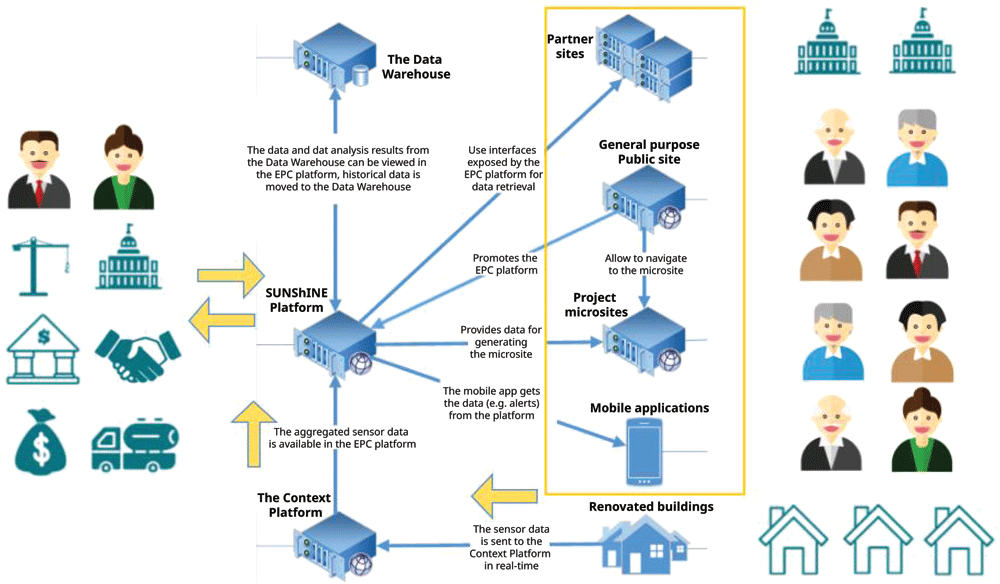
Figure 1. Architecture of the SUNShINE platform with stakeholders.
Operation
Minimal system requirements that need to be installed to run the platform:
Go 1.10+
PostgreSQL 10+
Set $GOPATH
Put $GOPATH/bin inside $PATH (e.g., export PATH=$PATH: $GOPATH/bin)
User with superuser access to the running PostgreSQL and do created sunshineMethods, providing details of Implementation and Operation.
Go has been chosen as the language for two reasons: 1) it is open source and 2) since it is supported by Google, we can assume the language will continue to be used for a while.
The application, file, web, and database server characteristics used by the current system are shown in Table 1. Dependencies of the platform are shown in Table 2.
Table 1. Servers.
|
Operating system
| Ubuntu Server 20.01 |
|
Application memory requirements
| Minimum 6 GB RAM |
|
Application CPU requirements
| ranging from 2.0GHz to 4GHz |
|
Functional characteristics
| 150 GB HDD and SSD |
Table 2. Platform dependencies.
Backend dependencies to run the platform from open
source code | Sunshine-react project
dependencies | Other
dependencies |
|---|
github.com/99designs/gqlgen v0.11.3
github.com/BurntSushi/toml v0.3.1
github.com/DATA-DOG/go-txdb v0.1.3
github.com/Masterminds/goutils v1.1.0
github.com/Masterminds/semver v1.5.0
github.com/Masterminds/sprig v2.22.0+
github.com/PuerkitoBio/goquery v1.5.1
github.com/agnivade/levenshtein v1.1.0
github.com/andybalholm/cascadia v1.2.0
github.com/certifi/gocertifi v0.0.0-2
github.com/coreos/go-systemd/v22 v22.1.0
github.com/denisenkom/go-mssqldb
github.com/dgryski/trifles
github.com/fatih/structs v1.1.0
github.com/friendsofgo/graphiql v0.2.2
github.com/getkin/kin-openapi v0.22.0
github.com/getsentry/raven-go v0.2.0
github.com/go-playground/universal-translator v0.17.0
github.com/golang/mock v1.4.4
github.com/google/uuid v1.1.2
github.com/gorilla/handlers v1.5.0
github.com/gorilla/mux v1.8.0
github.com/gorilla/securecookie v1.1.1
github.com/gorilla/sessions v1.2.1
github.com/gorilla/websocket v1.4.2
github.com/hashicorp/golang-lru v0.5.4
github.com/huandu/xstrings v1.3.2
github.com/imdario/mergo v0.3.11
github.com/jaytaylor/html2text
github.com/jinzhu/gorm v1.9.16
github.com/jinzhu/now v1.1.1
github.com/jordan-wright/emailv4.0.1-0
github.com/kr/pretty v0.2.1
github.com/kr/text v0.2.0
github.com/leodido/go-urn v1.2.0
github.com/lib/pq v1.8.0
github.com/matcornic/hermes/v2 v2.1.0
github.com/mattn/go-runewidth v0.0.9
github.com/mattn/go-sqlite3 v2.0.3+incompatible
github.com/microcosm-cc/bluemonday v1.0.4
github.com/mitchellh/copystructure v1.0.0
github.com/mitchellh/mapstructure v1.3.3
github.com/mitchellh/reflectwalk v1.0.1
github.com/niemeyer/pretty
github.com/olekukonko/tablewriter v0.0.4
github.com/pkg/errors v0.9.1
github.com/shopspring/decimal v1.2.0
github.com/spf13/cobra v1.0.0
github.com/spf13/pflag v1.0.5
github.com/stretchr/testify v1.6.1
github.com/vanng822/css v0.1.0
github.com/vanng822/go-premailer v1.8.0t
github.com/vektah/gqlparser/v2 v2.0.1
golang.org/x/crypto
golang.org/x/net
google.golang.org/appengine v1.6.6
gopkg.in/check.v1
gopkg.in/go-playground/assert.v1 v1.2.1
gopkg.in/go-playground/validator.v9 v9.31.0
gopkg.in/yaml.v3
rsc.io/quote/v3 v3.1.0
syreclabs.com/go/faker v1.2.2 | "@apollo/client": "^3.0.0-rc.8",
"@apollo/react-components": "^3.1.3",
"@apollo/react-hooks": "^3.1.3",
"@material-ui/core": "^4.9.10",
"@material-ui/icons": "^4.5.1",
"@material-ui/lab": "^4.0.0-alpha.54",
"@material-ui/pickers": "^3.2.10",
"@material-ui/styles": "^4.8.2",
"apollo-client": "^2.6.8",
"core-js": "^3.6.4",
"draft-js": "^0.11.4",
"graphql": "^14.5.8",
"graphql-tag": "^2.10.1",
"i18next": "^19.0.3",
"i18next-browser-languagedetector":
"^4.0.1",
"i18next-xhr-backend": "^3.2.2",
"leaflet": "^1.6.0",
"markdown-draft-js": "^2.1.1",
"material-ui-pagination": "^1.1.6",
"moment": "^2.24.0",
"react": "^16.12.0",
"react-apollo": "^3.1.3",
"react-date-range": "^1.0.0-beta",
"react-datepicker": "^3.1.3",
"react-dom": "^16.12.0",
"react-draft-wysiwyg": "^1.14.4",
"react-dropzone": "^10.2.1",
"eact-gar": "^2.7.0",
"react-helmet": "^5.2.1",
"react-i18next": "^11.3.0",
"react-infinite-scroller": "^1.2.4",
"react-js-pagination": "^3.0.2",
"react-leaflet": "^2.6.1",
"react-leaflet-markercluster": "^2.0.0",
"react-markdown": "^4.3.1",
"react-redux": "^7.1.3",
"react-router-dom": "^5.1.2",
"react-scripts": "^3.4.1",
"react-select": "^3.0.8",
"react-swipeable-views": "0.13.3",
"recharts": "^2.0.0-beta.6",
"redux": "^4.0.5",
"redux-form": "^8.2.6",
"redux-thunk": "^2.3.0",
"texjs-parser": "^0.8.5" | Docker
Nginx
PostgreSQL |
Implementation
The renovation process of multi-family buildings requires multiple stages, diligent management, understanding of complex legal documentation and contracts, and constant communication with stakeholders. Perseverance, organization and diligence are key to a successful renovation process as many aspects can be affected by a small human error, which may delay the process. These aspects of the process - paperwork, diversity in methods - mean that building renovation, despite the necessity, cannot scale to a bankable pipeline of different renovation projects because so many users and steps are involved.
The SUNShINE platform takes the renovation process and breaks it down into modules and phases that mimic the user journey of stakeholders normally involved in a renovation process (residents, municipalities, banks/financial institutions, energy service companies [ESCOs] and construction companies). Each user is key to the process but has a unique experience. The SUNShINE platform is built to lead the user through the different project phases of building renovation from the first desire to renovate a building, ensuring the financing, signing the contract, beginning the works/construction to the end of the maintenance and monitoring phase, when the contract is closed. The SUNShINE platform therefore develops cues and steps for each stakeholder to follow, log and organize this journey to ensure a successful renovation project that is as stress-free as possible.
The platform modules are all structured around serving the entirety of a renovation project (see Figure 2) and all the associated phases from initial asset acquisition (agreement that the building will be renovated) to the planning (financing) and the works phase (actual renovation). Depending on the requirements of each phase, the next phase will be accessible only after all information is entered and required documents are uploaded and confirmed by the required role. These different modules and required permissions take the complications out of the building renovation process. All organizations can keep track of the projects they are involved in and the status of that project. Documentation is uploaded and approved by project staff in one area, keeping track of any missing signatures or required documents. All meetings with building residents, decisions taken, and participants can be registered in the meetings module. GDPR compliant, this module ensures that the numerous meetings that occur between stakeholders remain organized. In summary, the SUNShINE platform has taken a complicated system of building renovation and created a process that can be applied to almost every context and every renovation project that requires financial investment, agreement of terms/contract, actual construction works, and final monitoring. By standardizing the renovation process, we can assure stakeholders an efficient process with results. In doing so, we aim to scale the renovation process.
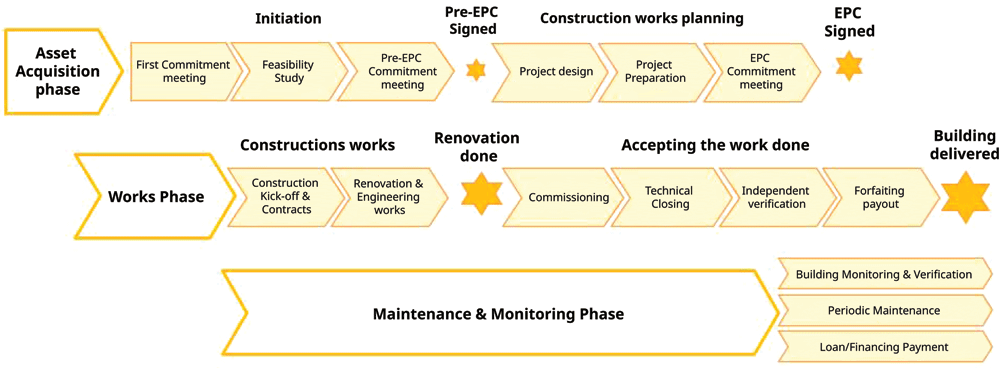
Figure 2. Building renovation phase mirrored by the SUNShINE platform.
Stakeholders
As discussed above, one of the main issues in the building renovation process is the diversity of stakeholders and their needs. A building renovation project unites building residents, construction companies, ESCOS, housing associations, municipalities, banks, and financial institutions. Achieving accordance among all these stakeholders usually requires large amounts of time and bureaucracy. The platform builds agile collaboration between these different stakeholders throughout the building renovation process. Permissions and access are defined by role, allowing for clear operations management during the whole project lifecycle. These roles are defined based on the user’s relationship with the different platform entities. For example, a user may be the legal representative of an organization, and therefore will be able to see all information related to her/his organization, as well as update its information in the system. Another user, however, may be only a member of the organization and will have view rights, but cannot edit. Such a delineation of permissions and access allows us to guarantee transparency and security while ensuring efficient interactions among stakeholders.
Super User Network
Such aspects of efficiency, transparency and standardization often do not function in a complex system, especially one involving so many stakeholders such as building renovation.
As actors and required actions (financing, construction, agreement, monitoring, etc.) influence the success of a building renovation process, we are keenly aware that regardless of the level of automation that is possible, in this context, the implementation of a purely technical tool would lead to little use and possibly erroneous information. Building renovation still depends on key stakeholders coming together and agreeing to begin a renovation process. Furthermore, stakeholders are responsible for entering key data points to ensure a successful renovation. Therefore, the SUNShINE platform depends on having accurate and up to date data, not only for the sustainability of the platform but for the long-term functioning of the BEEF model as a tool to ensure renovation results and financing.
In juxtaposition with the platform, we offer a Super User Network to ensure the accuracy of data, projects, and ultimately, success of the renovation project. The network accounts for human error or trust issues that can often derail even the most well-conceived process. A Super User is a person from the team who has a profound understanding of internal processes and is responsible for knowledge management inside of the team11.
In the SUNShINE platform, the Super Users represent the different types of stakeholders involved in the renovation process, each one having deep knowledge on how the renovation project happens from their perspective. With this we create a network of users that understand the key aspects of how a renovation process works in different locations to ensure the platform continuously meets the standards and demands of the local market. The Super User Network continuously improves the platform based both on the users’ needs and on changes in the ecosystem, which might need to be reflected in the system. Therefore, the Super User Network offers:
User support: starting with English, but eventually to be given to users on all platform languages. The Super User is the first go-to person for whatever issue the users might have. If needed, then the IT helpdesk is also involved.
Administration activities of approving the entities (such as organizations and their legal representatives), to guarantee they are real, and the information is accurate. This is done by the Super User for two reasons: (i) there is the need for local language, which we do not have in the IT helpdesk team, and (ii) onboarding and registration is the first process the users face in the platform, and having it happen smoothly is key to ensuring the person continues using the platform.
Continuous learning and sharing of experiences with the users and within the Super User network12.
Continuous improvement of the system based on the interaction with the users and other Super Users.
Integrating the SUNShINE platform with the Super User Network ensures sustainability and continuous improvement both of the process and the system. These two aspects are key to developing a European pipeline for building renovation.
Use cases
To facilitate the DEEP renovation of multifamily buildings, the SUNShINE platform is currently being used in six different countries (Poland, Romania, Slovakia, Austria, Bulgaria, and Latvia) through the funding of the EU project FinEERGo-Dom. Each pilot in the FinEERGo-Dom project implements the same methodology that structures the demand, review, and approval of financing of the renovation projects, all with attention paid to the local context – all digital and available online.
The platform has been translated into the six local partner languages to ensure the development of the stakeholder ecosystem and, the superuser capabilities. Currently, the SUNShINE platform enables partners to successfully standardize their building renovation projects through BEEF investment standards for energy efficiency, health, safety, and comfort. Each partner uses the platform to begin setting up their pipeline in building renovation, record meetings, and keep track of stakeholders throughout the renovation journey. The first step is for each partner and the stakeholders within their network to create an organization profile and register their assets (building) that will eventually become part of a building renovation project. These assets are displayed on a map for each country. The SUNShINE platform takes the legal BEEF contract used in each partner country and makes it accessible to specific stakeholders or users, enabling easier project management and transparency Once financing for the building renovation pipeline has been secured, the renovation process can now start. In this case, the platform enables partners to implement building renovation module section opens up, allowing building renovation projects to enter into the Works Phase. The users can interact with the Works Phase modules- uploaded documents, following steps required. These steps mirror the actual renovation process. When the renovation of the building is complete, the platform takes the users to the monitoring and verification phase to ensure energy savings. At this point, all partners are using the platform, but not all partners have secured a building renovation pipeline because of the complex ecosystem required to be established in each pilot country.
In the SUNShINE platform, partners use the platform, no matter what phase they are in on their renovation journey to ensure three aspects:
- Efficiency, by capturing all information concerning organizations, assets (public and private buildings), projects (technical and design) and transactions (legal and financial). In this way, the platform supports the operations of different stakeholders, such as ESCO companies, investment funds and financial organizations, homeowner associations and construction companies, helping to reduce transaction and administration costs, increase efficiencies and reduce ambiguities.
- Standards, by incorporating the BEEF guidelines, the rules approved by the supervisory body of the BEEF of each partner country, for the entire renovation process.
- Transparency, building a collaborative ecosystem of stakeholders (building residents, ESCOS, financial institutions, governments) empowered to drive an energy transition, ultimately resulting in a higher quality of renovation projects.
Conclusions
Building renovation is a priority for European countries if they are to meet Sustainable Development Goals set by the European Commission. However, despite its urgency, building renovation continues to lack in reaching its full capacity. The #Renovationwave12 expected throughout Europe will only be possible: first, through awareness, to give stakeholders control of information and options; and second, through easier financing13. With the SUNShINE platform, our goal is to do both by creating standardization, efficiency and transparency by creating opportunities for all stakeholders (residents, banks/financial institutions, ESCOS, construction companies, municipalities and governments) to contribute to the renovation project. Such an array of stakeholders, all with different roles in the renovation process, requires precision for roles that are well-defined and flexibility to ensure agile collaboration between stakeholders. The SUNSHINE multi-stakeholder platform is a core tool of any deep building renovation project: simple enough to use as a single entity, such as an ESCO tendering for future projects, but robust enough to serve as the core tool of financial and technical mechanisms.
Data availability
All data underlying the results are available as part of the article and no additional source data are required.
Acknowledgments
We would like to acknowledge the team of Stage AI for their dedicated work and advice to the SUNShINE platform for the past three years.
Faculty Opinions recommendedReferences
- 1.
European Commission: Energy performance of buildings. 2020. Reference Source
- 2.
Turcu C, Persson A:
Energy efficiency policy and action for multifamily residential building renovation in Central and Eastern Europe: the tale of four cities. 2015; 86–88. Reference Source
- 3.
Riga Municipality: Annual report. 2016; 4–21. Reference Source
- 4.
Riga Municipality: Annual report. 2016; 9–22. Reference Source
- 5.
European Commission: Energy efficiency in public and residential buildings. 2015; 40–41. Reference Source
- 6.
CITYnvest: SUNShINE. Summary. Reference Source
- 7.
Buildings Performance Institute Europe: A guide to developing strategies for building energy renovation. 2013; 14. Reference Source
- 8.
BUILD UP. The European Portal for Energy Efficiency in Buildings.: Latvian Baltic Energy Efficiency Facility (LABEEF). 2019. Reference Source
- 9.
Stancioff CE, Penev P, Galajevs S, et al.:
SHAREX platform. The 20-year journey from discovery to closure. Concept paper. 2019; 6–8.
- 10.
Pesoa LM:
The super user role: an extended concept. 2018. Reference Source
- 11.
Pesoa LM:
The super user role as a tool to progress in maturity in business process management – a study case of Cabot Latvia. Master thesis, University of Latvia, Riga, Latvia. 2017. Reference Source
- 12.
McPhie T, Crespo Parrondo A:
Renovation Wave: doubling the renovation rate to cut emissions, boost recovery and reduce energy poverty. 2020. Reference Source
- 13.
Causse E, Figueira M, Gutierrez B, et al.:
FINAL REPORT: European Property Owners' readiness and capacity to renovate. 2021. Reference Source
- 14.
AdminF3, StageAI: AdminF3/sunshine-server: First release (Version v1.0.0).
Zenodo.
2021. http://www.doi.org/10.5281/zenodo.4784978
- 15.
AdminF3, StageAI: AdminF3/sunshine-client: First release (Version v1.0.0).
Zenodo.
2021. http://www.doi.org/10.5281/zenodo.4784976








