Opening statement
Our food systems are facing significant challenges in ensuring the availability and consumption of healthy, affordable, safe, and sustainably produced food [Holt-Giménez, 2019]. Simultaneously, many planetary boundaries are being exceeded, and social inequalities are deepening [Campbell et al., 2017]. These interconnected crises highlight the urgent need for improved decision-making and new governance models to ensure more equitable and sustainable food systems. However, the concentration of decision-making power within food system governance is increasingly shifting towards a small number of multinational corporations that prioritize profit maximization over environmental and social well-being [Béné, 2022; Béné & Abdulai, 2024].
In response, the EU has funded numerous initiatives that integrate grassroots actions supported by living labs with a holistic Food Systems Approach to simultaneously drive environmental sustainability, social security, economic viability, and health-promoting transformations in food systems [Béné, 2022; IPBES, 2019; Kawarazuka et al., 2023]. These initiatives, including COREnet, CULTIVATE, EU4advice, FoodCLIC, FoodSHIFT2030, FoodTRAILS, and FUSILLI, aim to reconnect farmers with consumers, restore landscapes and biodiversity, and strengthen regional economies. Despite their successes, initiatives like these face systemic barriers such as misaligned incentive structures and resistance from entrenched interests [Srivastav & Rafaty, 2022]. Addressing these barriers and creating governance conditions that support bottom-up change agents is essential. Food system governance – defined as “a tailored process by which societies negotiate, implement, and evaluate collective priorities of food systems transformation while building shared understanding of synergies and trade-offs among diverse sectors, scales, and stakeholders” – emerged as a key theme during The United Nations Food System Summit 2021. There was a strong plea for “more coherence and consistency while diversifying and deepening stakeholder engagement.”
Achieving sustainable food systems necessitates a rebalancing of economic, environmental, and social dimensions, requiring profound changes in practices, cultures, and structures [Herrero et al., 2020; IPBES, 2019]. An integrated, intelligent food system capable of learning from its components and aligning incentives based on systems-thinking and diverse stakeholder data is crucial. Pairing systems-thinking and the emergent digital transformation presents an opportunity to fundamentally reshape governance paradigms, ensuring that food systems become more inclusive, resilient, and capable of adapting to emerging challenges [Tagkopoulos et al., 2024]. Digital innovations, including data-driven decision-making, blockchain for transparency, and AI-driven policy modeling, can facilitate an integrated, intelligent food system capable of learning from its components and dynamically aligning incentives based on diverse stakeholder data [Chen et al., 2023b].
This requires coordinated actions at multiple levels, including local, national, regional, and global, across the public- and private-sector and across various domains, including trade, policy, health, environment, education, transport, and infrastructure [Tagkopoulos et al., 2024]. A governance infrastructure that incorporates digital innovations to create informational symmetry, renewed value structures and collaboration mechanisms may help bridge these gaps, fostering synergies rather than perpetuating conflicts [Pandey, 2023]. By leveraging digital innovations, food systems can achieve more effective resource allocation, improved policy development, and enhanced collaboration across the food value chain, and ultimately, rewriting the underlying incentive structure around Food System Governance.
Challenges
A shift towards more integrated and transformative governance is crucial for unlocking synergies between sustainability objectives, urban-rural linkages, social inclusion, and cross-sectoral collaboration [Sonnino, 2023]. However, achieving such a shift demands a food systems approach rooted in systems thinking – acknowledging the complexity and interdependencies within food systems [Nature Food, 2020] – and enhanced collaborative capabilities among stakeholders, areas where existing governance mechanisms often fall short [Parsons & Hawkes, 2018]. Key challenges include:
• Market Concentration and Power Imbalances: The dominance of multinational corporations in the food system prioritizes profit over sustainability and equity, limiting opportunities for small-scale producers and alternative models [Béné, 2022; Candel & Pereira, 2017].
• Misaligned incentives: Local and regional initiatives aimed at reconnecting farmers and consumers face resistance from established market structures and misaligned incentive mechanisms [Srivastav & Rafaty, 2022].
• Governance Fragmentation: Food system governance often lacks holistic perspectives and is hindered by disjointed stakeholder communities lack of coordination across sectors, and rural-urban divides [Parsons & Hawkes, 2018; Singh et al., 2021].
• Lack of effective multi-stakeholder collaboration: Transformative food governance requires integrated action across public and private sectors, but cooperation remains limited due to disciplinary divisions and inadequate infrastructure [Sonnino et al., 2014].
• Complexity: Many challenges in food security, nutrition, and sustainability transcend traditional boundaries, making solutions contested and requiring interdisciplinary approaches [Loorbach et al., 2017; Zurek et al., 2022]
• Projectification: The stop-start nature of funding over relatively short time periods (3–4 years) has left many valuable project outcomes (such as tools, guidelines, lessons learnt) in siloed vast repositories [Wascher et al., 2023].
• Lack of trust for digital solutions: The adoption of novel digital solutions, including blockchain pilot implementations, is significantly impeded by high-profile instances of fraudulent activity within the sector [Briola et al., 2022].
COMMONSource, a support structure for transformative governance
In response to these challenges, the COMMONSource governance support structure has been developed. It aggregates a variety of management, technological and cultural innovations in an attempt to orchestrate many diverse groups toward a common goal, achieving transformative governance. The COMMONSource governance support structure revitalizes stakeholder collaborations, enhances competences, fosters continuous learning, and repurposes digital innovations to reinforce existing networks and sub-systems. By leveraging digital infrastructures coupled with curated deployment of Blockchain Technology (BCT), food system actors can enhance their agency, pursue mutually beneficial equity targets, and drive more effective governance mechanisms.
The COMMONSource governance support structure not only adopts a food systems approach as its guiding principles but also actively contributes to its evolution by embedding digital innovations into governance structures and vice-versa, creating a positive feedback loop of self-learning and improvement. The convergence of systems thinking and digital transformation has the potential to redefine governance paradigms, ensuring that food systems become more inclusive, resilient, and capable of adapting to emerging challenges [Tagkopoulos et al., 2024].
The COMMONSource ecosystem is designed to address critical needs by:
• Connecting System Actors: COMMONSource functions as a cluster of support tools connecting system actors, orchestrating the exchange of data, knowledge, resources, talent, and finances to facilitate a dynamic and interconnected ecosystem.
• Orchestrating Resources and Competencies for Collective Benefit: COMMONSource orchestrates complementary resources and competencies to cultivate value for all participants. By connecting system actors and facilitating the exchange of data, knowledge, resources, talent, and finances, the platform promotes collective value creation and shared prosperity. This approach aligns with emerging concepts in food systems governance that emphasize the importance of inclusive, multi-stakeholder collaboration and resource sharing [Donner et al., 2024].
• Reframing incentive structures: COMMONSource utilities blockchain tools to calibrate incentives towards just, sustainable and effective food systems transformation, since the creation of new pathways within food systems requires new incentive structures [Ruggeri Laderchi et al., 2024.]
• Incentivizing Innovation and Co-creation: COMMONSource fosters a culture of innovation and co-creation by incentivizing actors to develop new solutions collaboratively. This is achieved through a gamified model based on the principles of Inspiration, Activation, and Co-creation, encouraging progressive engagement and value exchange [Moore et al., 2022].
• Facilitating Informed Decision-Making: By providing a comprehensive view of the system and its dynamics, COMMONSource empowers governing bodies to make better-informed decisions about resource allocation, policy development, and strategic interventions [Carrubbo et al., 2025].
• Enabling Data Sovereignty and Collective Infrastructure: The platform enables organizations to share data, information, and resources within a collective infrastructure while maintaining their sovereign rights . This is crucial in an era where data ownership and control are increasingly concentrated in the hands of a few powerful entities [Birch, 2023].
• Promoting Transparency and Trust: Recognizing the pitfalls of centralized data aggregation and monopolistic practices [Zuboff, 2019], COMMONSource prioritizes transparency, trust, and user ownership. By leveraging blockchain tools, the platform ensures that individuals retain control over their data, knowledge, and ideas, fostering a more equitable and sustainable ecosystem.
In contrast to conventional zero-sum ownership and profit models, COMMONSource offers a counter-model that prioritizes co-creation, collective problem solving, data sovereignty, transparency, and collaborative value creation. By empowering individuals and organizations to own their data and participate in a decentralized ecosystem, COMMONSource seeks to mitigate the risks of data monopolies and promote a more equitable and sustainable future. In the European governance space and specifically within food systems, COMMONSource facilitates productive interactions amongst stakeholders across sectors, allowing them to co-create, solve problems, and share resources to foster innovative solutions. It is an ecosystem with refined rules that respect planetary boundaries and local action. The following section explores the various components of the COMMONSource that enable the process of food systems transformation.
Elements within the COMMONSource governance support structure
While individual components analogous to those within COMMONSource exist in broader food systems, what sets COMMONSource apart is the deliberate integration and synergistic interaction of these elements, underpinned by a transformative technological and value system. Traditional approaches to food system interventions often focus on isolated parts, missing the complex interplay of power dynamics, institutions, and values that shape system outcomes [Leeuwis et al., 2021]
The individual nodes of COMMONSource operate on two core mechanisms designed to proactively address transformation as a non-linear, multi-actor and contested political arena, shifting power and levelling playing fields. First, a culture of cooperation is cultivated through components like the Writing Office, Roll-Out Process, Co-Creation Platform, and Youth Academy. Here COMMONSource deliberately fosters interdependent stakeholder relationships and overlapping visions. Second, blockchain integration reinvents value exchange, establishing transparent and immutable records of contributions and rewards, detailed in the following section.
The developmental stage of each component of the COMMONSource is assessed based on the Technological Readiness Level [Directorate-General for Research and Innovation, European Commission, 2017]
Networks - TRL 7: System prototype demonstration in an operational environment
COMMONSource networks connect local networks aiming to make food systems more sustainable, facilitating peer learning and joint action. This function supports grassroots leaders and thought leaders in the mission while facilitating the onboarding and journeys of participants in their network. These networks serve as vital conduits for sharing knowledge, best practices, and resources among diverse actors within the food system. Drawing inspiration from community of practice models, COMMONSource networks foster a collaborative environment where participants can learn from each other's experiences, adapt successful strategies to their unique contexts, and collectively address common challenges. By fostering a sense of community and shared purpose, COMMONSource networks promote a more resilient and collaborative ecosystem.
This component's development is driven by the recognition that distributed knowledge and collective action are essential for achieving sustainable food systems [Caleman et al., 2017]. Examples of COMMONSource networks utilised in previous initiatives such as "Utreg, wat maak je me nou!", an area-based collaboration process with the local food movement in Utrecht aimed at developing joint action plans. [AMPED, n.d.a].
Living Labs - TRL 9: Actual system proven through successful mission operation
COMMONSource brings together regional living labs to test innovative business models and solutions for collaborative action-reflection. Living labs are user-centered, open innovation ecosystems that operate in real-life settings, integrating research and innovation processes [Almirall & Wareham, 2008]. By bringing together diverse stakeholders, including researchers, businesses, and end-users, living labs facilitate the co-creation and evaluation of new solutions in a participatory and iterative manner. This component's development is motivated by the need to accelerate the translation of research findings into practical applications and to ensure that solutions are tailored to the specific needs and context of the region.
Examples of Living Labs being utilised under COMMONSource principles include the EU4Advice living lab in Amsterdam, Netherlands [EU4Advice, n.d.].
Youth Talent Academy - TRL 5: Component and/or partial system validation in a relevant environment
The Youth Talent Academy designs fair, just and continual pathways for youth to develop and share skills, knowledge, networks and opportunities to facilitate food systems transformation. Despite growing interest in building careers in regenerative food systems and the need to supplement this desire with concrete measures of skill development and mobility of knowledge, skills and talent there exists a lack of pathways into regenerative careers [Duncan et al., 2020; European Policy Centre, 2020] Further exacerbated by the misaligned incentives of business models that view talents as a static means of production as opposed to human capital capable of innovation, growth and deserving of long term security and development [European Policy Centre, 2020; Lazear & Shaw, 2007].
The COMMONSource ecosystem conceptualises talent pathways as a critical cornerstone of food systems transformation. Methodologically, it invites talents to build a dynamic profile on 7vortex’s platform [7Vortex, n.d.] allowing individuals and systems actors to visualise its relationships and understanding the value that every network agent brings to the ecosystem, logging information concerning their experience, skills, knowledge, interests and networks. This allows talents to seek inspiration from other journeys, find projects, engage with other actors and craft a pathway for themselves. Organisations within the COMMONSource do the same, aiding transparency and swift relay of information. Furthermore, the culture underpinning COMMONSource addresses the need for strengthening horizontal and inter- and intra-generational networks [Huambachano et al., 2022].
Similarly, COMMONSource utilizes blockchain technology to establish a dynamic framework for valuing, incentivizing, and rewarding contributions within food systems. This system employs service tokens to remunerate student hours, bonds invested in land positions to allocate profits within COMMONSource, and utility tokens to recognize innovations. These mechanisms collectively transform the socio-economic landscape of work in food systems by promoting active engagement and collaboration [Udokwu, 2024].
Co-creation platform - TRL 2: Technology concept and/or application formulated
The Co-creation platform encourages inclusive knowledge exchange to analyze, strategize, and reflect, involving marginalized groups (e.g., vulnerable populations, small-scale farmers). This platform provides a virtual space for diverse stakeholders to share their perspectives, experiences, and insights, fostering a more comprehensive understanding of the challenges and opportunities facing the food system by extracting data and information across various platforms and connecting as an integrated learning ecosystem. Drawing inspiration from participatory design principles, the co-creation platform actively involves bottom-up networks to address the needs of all members of the community. The development of this component is motivated by the recognition that inclusive knowledge exchange is essential for promoting social justice and equity in the food system.
Writing office - TRL 9: Actual system proven through successful mission operation
The Writing Office facilitates access to networks, knowledge, resources and funding through coordination, network mapping, grant identification, matchmaking, and hands-on writing capacity.
This office plays a critical role in supporting knowledge proliferation and cocreation across multi-scale actors by assessing the needs of grassroots initiatives, businesses, governments, knowledge institutions and thought-leaders, amongst others. It builds inventories by identifying the resources available within the network, coordinating the process of sharing those that are available, in a mutually beneficial fashion and writing project proposals and grants for those that are missing. Driven by the recognition that access to funding is a major barrier to innovation and sustainability in the food system [Food and Agriculture Organization, 2021], the writing office organises hand-on capacity for actors to co-create systemic solutions. The Writing Office acknowledges that the process of systems change necessitates the creation of intentional spaces for sharing and mutual support fostering relational proximity. Currently, the writing office is being as a service to the grassroot networks servicing ecosystem restoration, nutrition density of food and re-wilding across Europe, Asia and North-America [AMPED, n.d.b].
Playbook - TRL 2: Technology concept and/or application formulated
The Playbook translates best practices into actionable tools and lessons and monetizes the input of value that gets incorporated into sharable lessons with economic agreements, ensuring incentives for innovation and collaboration, while avoiding indefinite exploitation. This playbook serves as a central repository of knowledge and resources, providing stakeholders with practical guidance on implementing sustainable and equitable food system practices]. By synthesizing research findings, case studies, and expert insights into accessible and user-friendly formats, the Playbook accelerates the adoption of best practices and promotes continuous improvement across the food system. The development of this component is motivated by the need to bridge the gap between knowledge and action, empowering stakeholders to implement effective solutions in their own contexts.
A key example is the effort to establish nutrient density as a food system standard, integrating networks such as the Bionutrient Institute, EARA, and AMPED to connect regenerative farmers, enhance market accessibility, and facilitate knowledge exchange [Bionutrient Institute, n.d.]. The Writing Office identifies gaps and outlines challenges, while stakeholders contribute by providing data, activating farming networks, supporting research, and facilitating market transitions. Technological integration, including transaction systems, data storage, nutrient meters, and farmer software, streamlines adoption and ensures transparency. The Playbook documents solutions, designs smart contracts, and ensures fair monetization, ultimately fostering trust-based partnerships that embed economic sustainability and reward innovation in food system transformation.
IT & blockchain platform - TRL 1: Basic principles observed and reported
COMMONSource leverages blockchain technology to create novel incentive structures that promote cooperation and innovation among diverse stakeholders, including industry actors, farmers, knowledge producers, young talents, and implementing organizations. These incentive structures are designed to address the inherent challenges of coordinating complex, multi-actor systems, where conflicting interests and a lack of trust can hinder collaboration [Chen et al., 2023a].
The platform employs a tokenized ecosystem where contributions of value, such as data sharing, knowledge creation, and collaborative problem-solving, are rewarded with digital tokens. These tokens can then be used to access resources, participate in governance decisions, or be exchanged for other goods and services within the COMMONSource ecosystem. The gamified principles of Inspiration, Activation, and Co-creation further enhance these incentive structures by providing a clear pathway for engagement and rewarding progressive contributions.
Roll-out process - Level 9: Actual system proven through successful mission operation
The Roll-Out process supports the continuity and scaling of initiatives and programs for organizations and networks within the COMMONSource ecosystem. This element draws significant inspiration and adapts key principles from the GAIN model developed by AMPED [Moore et al., 2022]. The Roll-Out process adapts the actionable framework, enabling food system actors to coalesce and strategize around a common vision of a more sustainable, equitable, and resilient system. Central to the Roll-Out process is “the recognition that achieving systemic change in food systems requires more than just individual actions; it necessitates multi-level cooperation across interconnected ecosystems” [Moore et al., 2022]. Drawing from GAIN's actionable framework, the Roll-Out model proposes engagement and action across interconnected ecosystems:
Individual Level (Inspiration): This level focuses on inspiring individual actors (farmers, consumers, policymakers, researchers) to champion and support sustainable food system practices. Roll-out activities at this stage involve awareness campaigns, educational initiatives, and showcasing success stories that highlight the benefits of a more sustainable food system. This includes understanding individual motivations and barriers to adopting sustainable practices and supporting local leaders to transition towards a new governance framework [Moore et al., 2022].
Inter-Organizational Level (Activation): At this level, the focus shifts to enabling organizations to actively participate in and contribute to the broader transformation of the food system based on forging connections and fostering trusted relationships. Roll-out activities involve providing training, resources, and tools to support organizations in developing and implementing initiatives that align with sustainable food system principles. This includes helping organizations identify their unique value proposition within the larger ecosystem and develop sustainable operating models by recognising existing networks, resources, data and expertise. [Moore et al., 2022].
Network Level (Co-creation): This level emphasizes building and strengthening relationships between different actors within the food system ecosystem. Roll-out activities involve facilitating networking events, workshops, and collaborative projects that bring together diverse stakeholders to co-create innovative solutions and address shared challenges facing the food system This is where bottom-up and top-down partners meet for incidental challenge based collaboration [Moore et al., 2022].
Systemic Level (Institutionalization): The final level focuses on embedding sustainable practices into the broader institutional landscape by influencing policy, regulations, and market structures. Roll-out activities involve advocating for supportive policies, promoting sustainable certification schemes, and fostering a cultural shift towards valuing sustainable and equitable food systems [Moore et al., 2022].
Blockchain enabled COMMONSource support structure
The open nature of blockchains allow for accessible participation and cooperative creation of new rules for these governance systems, and allow for new and efficient incentive schemes to drive better decision making [Chen et al., 2023a]. By leveraging blockchain technology, the COMMONSource framework allows for radical transparency, enabling compliance and oversight.
A scalable public blockchain, such as the BSV Blockchain, offers several advantages to the COMMONSource framework. One of the key benefits is its protocol stability, which ensures that newly created contracts and tokens remain reliable and functional over extended periods, thereby fostering long-term trust and continuity within the system [Brothwell, 2024a]. Additionally, the BSV Blockchain's capacity for high transaction throughput, coupled with minimal transaction fees (often below a single USD cent), facilitates broad accessibility by lowering barriers to participation [Brothwell, 2024b]. This scalability supports open and inclusive engagement, which is essential for community-driven initiatives. Furthermore, the blockchain’s reliance on a Proof of Work consensus mechanism enhances network security and guarantees the immutability of recorded data. This ensures that all transactions and interactions are transparently documented on an incorruptible ledger [Liu et al., 2022; Nakamoto, 2008], reinforcing trust and accountability within the COMMONSource ecosystem
Identification
Blockchain transactions utilize digital signatures, providing an evidence trail for all interactions in the system [Liu et al., 2022; Nakamoto, 2008]. Identity can be managed in these systems and tied to these digital signatures, allowing for accountability and auditability for all actions taken in a workflow. While existing identity systems rely on centralized services subject to data breaches and information silos, new decentralized digital identities can be managed with blockchain technology, enabling open and secure participation among various groups. Implementing blockchain-based voting for governance systems offers enhanced security and transparency by recording each vote on an immutable ledger, thereby reducing fraud and bolstering public trust in the electoral process [Chen et al., 2023a].
Participants in the COMMONSource governance support structure will need an on-chain identity or account which could be linked to their real word identity if desired. This would enable intellectual property rights and any royalty payments that might be generated from contributions. An example of an on-chain identity solution currently available on the BSV Blockchain is the nChain Identity solution, which is a verifiable digital credential solution that streamlines the issuance, management, and verification of credentials, enabling users to carry verifiable credentials on mobile devices while ensuring enhanced data security and privacy [nChain, n.d].
Data management and streamlined procedures
Blockchain technology offers several critical advantages that enhance the functionality and integrity of decentralized ecosystems. One of its fundamental features is transparency and immutability, which ensures that all transactions and interactions within the system are recorded in a tamper-proof ledger, thereby enabling accurate tracking of contributions and fair distribution of rewards [Iansiti & Lakhani, 2017]. This inherent transparency supports trust and security among participants, as blockchain eliminates the need for a central intermediary, reducing the risk of manipulation or unauthorized alterations to the system [Kshetri & Voas, 2018]. The decentralized nature of blockchain further empowers individuals and organizations by granting them data sovereignty and control, allowing them to manage and share their data without fear of misuse or exploitation [Atzori, 2015]. Additionally, the integration of smart contracts streamlines the execution of agreements and reward mechanisms, automating processes to ensure that participants are fairly and efficiently compensated for their contributions without the need for manual oversight, thus minimizing errors and potential disputes [Szabo, 1997].
The BSV Blockchain has facilitated innovative solutions across various industries, exemplified by platforms such as UNISOT, mintBlue, and Tokenized. UNISOT leverages blockchain technology to enhance supply chain transparency by enabling the tracking and tracing of all components within food systems, while also implementing a novel identity solution that allows individuals and organizations to maintain sole ownership of their digital identities [Unisot, n.d.]. Similarly, mintBlue utilizes blockchain to ensure unified data integrity, streamlining compliance processes across enterprises [MintBlue, n.d.]. Additionally, Tokenized provides a robust framework for the creation of auditable smart contracts and digital assets, empowering the development of secure and efficient blockchain-based applications [Tokenized, n.d.]. These examples highlight the diverse applications of the BSV Blockchain in fostering trust, security, and efficiency in digital ecosystems.
Some blockchain projects are already pioneering applications designed for the shared management and ownership of resources as commons. Decentralized autonomous organizations (DAOs) are a common example, although these are usually designed for the management of blockchain systems themselves [Santana & Albareda, 2022]. Of more relevance to this case are projects such as Commonsstack, which has developed a ‘toolkit’ of techniques for the collective management of common resources via a blockchain system, such as augmented bonding curves, quadratic funding, and conviction voting [Commons Stack, n.d; Fritsch et al., 2024]. Similarly, Gitcoin leverages quadratic voting to allocate funding to small blockchain led projects, often with specific categories for regenerative, ecological, and community-oriented projects [Owocki & Lister, 2024].
Incentive structures
Blockchain technology provides a unique opportunity to enable trust and transparency in food systems [Wünsche & Fernqvist, 2022]. A public and permissionless blockchain, such as BSV, enables data to be timestamped and recorded on a distributed ledger, as well as enable efficient value transfer in the form of digital tokens. The open and trustless nature of BSV’s blockchain enables new governance systems to operate more efficiently in combination with incentive structures and digital tokens to foster collaborative innovation and securely managing relationships and reward mechanisms. Digital tokens relevant for activating the COMMONSource governance support structure will include:
Service and Utility Tokens for Contribution-Based Compensation. Service tokens function as digital assets designed to facilitate compensation for both past and future labor contributions, ensuring fair remuneration within decentralized ecosystems. Similarly, utility tokens serve as incentive mechanisms, rewarding unpaid contributors across key operational areas, such as writing offices and collaborative knowledge-sharing platforms. By leveraging blockchain technology, these tokens establish transparent and verifiable compensation structures, fostering sustained engagement and equitable value distribution within decentralized communities. An example of similar concepts from BSV ecosystem can be found in the Tokenovate platform [Tokenovate, n.d.].
Smart contract-based bonds for Sustainable Investment and Incentives. Smart contract-based bonds facilitate long-term investment, mitigate financial risks, and incentivize sustainable practices through decentralized mechanisms. These digital bonds can serve as funding instruments for long-term research initiatives and function as future pension funds, ensuring financial stability for participants. Additionally, blockchain-based bond issuance reduces reliance on traditional banking institutions, enabling direct refinancing for farmers and enterprises committed to market innovation and ecological regeneration. By leveraging tokenized bonds, this model promotes financial inclusion, transparency, and resilience in sustainable economic development. An example of similar concepts from BSV ecosystem can be found in the Tokenovate platform [Tokenovate, n.d.].
Stock Tokens as Financial Instruments for Investment and Market Participation. Stock tokens function as blockchain-based financial instruments designed to attract rapid investment from market participants. These tokens enable external investors to engage in the ecosystem without direct participation, leveraging a vesting model to distribute ownership over time. The issuance and distribution of stock tokens via blockchain facilitate transparent and decentralized capital allocation, reducing reliance on traditional financial intermediaries while enhancing liquidity and market accessibility. This mechanism offers a speculative yet structured investment avenue, fostering financial engagement from a broader range of stakeholders. An example of similar concepts from BSV ecosystem can be found in the Tokenovate platform [Tokenovate, n.d.].
Non-Fungible Tokens (NFTs) for Intellectual Property (IP) Protection. NFTs offer a novel mechanism for securing intellectual property (IP) by establishing verifiable ownership of digital assets, including original ideas, concepts, and visualizations. Through blockchain technology, NFTs enable immutable identity verification and ownership rights, ensuring that creators maintain control over their intellectual contributions. The COMMONSource framework leverages NFTs to facilitate the formalization and protection of IP, allowing individuals to regulate access, enforce ownership claims, and monetize their intellectual assets. Additionally, the tokenization of knowledge can establish legally recognized IP rights while enabling future royalty payments through smart contract mechanisms. This approach enhances transparency, prevents unauthorized reproduction, and fosters a decentralized model for intellectual property governance. An example of similar concepts from BSV ecosystem include the Digital Passport Product from Gate2Chain [Gate2Chain, n.d.].
Regulatory compliance
MiCA (Markets in Crypto-Assets Regulation) compliance is crucial for new blockchain projects emerging within the EU, as it establishes a clear legal framework for crypto-assets, including stablecoins, utility tokens, and asset-referenced tokens. The MiCA framework provides key guidelines to ensure that any blockchain-enabled COMMONSource test case created on the BSV protocol is developed in full compliance with the latest EU regulations.
Furthermore, the BSV Blockchain is a fork of the original Bitcoin ledger, meaning it is not a newly issued token and is treated the same in regulatory circles as the Bitcoin blockchain. BSV is committed to regulatory compliance through the introduction of its Network Access Rules [Brothwell, 2024c] which brings clear terms and conditions to its usage. Alongside the Network Access Rules, the BSV Blockchain also has introduced its Digital Asset Recovery (DAR) process [Brothwell, 2024d], enabling the freezing and recovery of lost or stolen assets.
Hypothetical EU-wide Food Systems Test-Case
The following section presents a conceptual framework for an EU-wide Food Systems Test-Case, integrating the COMMONSource governance support structure, depicted in Figure 1. The interlinked COMMONSource components are separated into three subsections, i) stakeholder groupings to the COMMONSource infrastructure (Networks, Living Labs and Youth Talent Academy), ii) functions and applications are the next category which are highlighting the various interactive components of the COMMONSource governance support structure (Co-creation platform, Writing Office and the Playbook Office, iii) the third subsection is processes and protocols that makeup the foundation base-principles for the COMMONSource governance support structure to function (the blockchain platform and the GAIN model roll out phase). The following section outlines how the COMMONSource governance support structure can be hypothetical applied and integrated with existing Food System Transformation workflows.
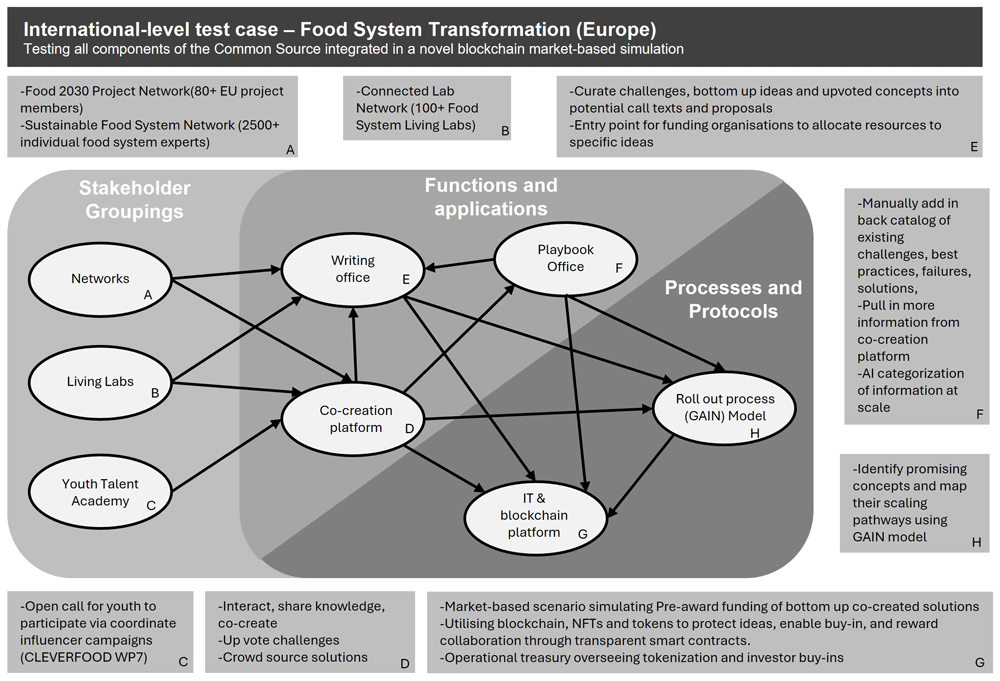
Figure 1. Integration of the Common Source support structure with European Food Systems experts, author's own figure.
Networks - Leveraging the Food 2030 Project Network, VIV farm industry network, EARA network and the Sustainable Food System Network, stakeholders will be invited for direct participation through virtual forums and knowledge-sharing platforms to address systemic challenges and amplify successful initiatives.
Living Labs - Utilising the FOOD 2030 Connected Lab Network and the VIV roadshow, which is an existing network of over 100 Food System Living Labs as a base for crowdsourcing best practices as well as incentive new pilot experimental interventions coupled with better access to direct-funding for initiatives.
Youth Talent Academy - Through CLEVERFOOD’s WP7 initiative, influencers can be leveraged to generate content about the international test case and focus specifically on mobilizing youth to engage with food system challenges. Youth will be invited to participate in the co-creation innovative solutions alongside industry experts, thus, channeling their energy and novel ideas into actionable strategies within the broader transformative framework. Similar to the Youth Talent Academy, citizens and individual experts interested in Food System Transformation will be invited to participate in the COMMONSource governance support structure by direct public promotions of the opportunity via CLEVERFOOD’s WP7 influencers initiative and other public made dissemination campaigns.
Hypothetical stakeholder pathways
Experts and personnel from existing Networks and Living Labs - In a hypothetical test case, project personnel from initiatives within the Food 2030 Networks and Connected Lab Network would leverage their expertise to contribute to the COMMONSource Governance Framework, integrating insights into its operational structures. Contributions would undergo a co-creation process, including plenary discussions with experts and stakeholders, and be submitted to the Writing Office to shape call texts and proposals addressing sustainability challenges.
To ensure intellectual property (IP) protection and transparent attribution, stakeholder contributions would be secured via NFTs, while utility tokens would incentivize participation. Additionally, experts could form consortia to address challenges, linking their solutions to the Playbook Office. If selected for funding, projects would receive automatic financing through smart contracts. If an idea remains unfunded but is later adopted by another consortium, its originators would still receive recognition and potential royalties via IP NFTs.
Youth and Citizens - Youth, citizens, and practitioners such as farmers and chefs can engage with COMMONSource through public outreach or invitations from existing members. While they may lack formal credentials, their practical experience offers valuable insights. However, career pathways often lack mechanisms for long-term security and fair livelihoods.
Participants enter through networks, living labs, or open calls, creating profiles that document their skills and networks. Verified profiles enable direct recruitment, allowing them to tackle challenges identified by system actors or organizations within COMMONSource.
By integrating a regenerative economy model, this approach fosters job creation, funding access, and professional recognition. Contributions—direct or indirect—strengthen Writing Office proposals, improve practices, and enhance commercial viability. For unemployed youth and citizens, submitting ideas can lead to collaboration opportunities. NFT-based IP protection ensures ownership, allowing contributors to earn royalties if their ideas are adopted. This model democratizes access to opportunities while rewarding skills and innovation.
Funding agents - Philanthropic organizations, private foundations, high-net-worth individuals, and public institutions can engage with the COMMONSource Governance Framework to strategically allocate funds. By collaborating with professionals in the Writing Office, funders can define priorities, identify critical challenges, and co-develop call texts aligned with their objectives.
This streamlined funding model allows pre-defined investment criteria to be matched and optimized through smart contracts, ensuring automatic disbursement upon fulfillment of stipulated conditions. By integrating this approach, funding bodies enhance efficiency, transparency, and targeted impact while maintaining direct influence over resource allocation.
Investors - The COMMONSource Governance Framework enables external investors to engage in a community-driven investment model. Investment occurs through stock tokens issued by the blockchain treasury, with valuation linked to ecosystem growth, member engagement, and real-world solutions.
Investors can also fund specific solutions by selecting ideas from the Playbook, aligning financial contributions with business objectives or impact-driven initiatives. While traditional investors may seek financial returns, this model primarily supports impact investment, balancing economic, social, and environmental gains.
Professionals maintaining the COMMONSource Components - Key professionals responsible for maintaining and operating the COMMONSource Governance Framework require appropriate incentives to sustain engagement and efficiency. Utility tokens serve as compensation, functioning similarly to a Reddit-style recognition system, where contributions to governance and content development are rewarded.
Among these roles, Writing Office Analysts aggregate and structure challenges into actionable solutions, while Playbook Office Experts curate and refine proposals for funding. Community Managers facilitate stakeholder dialogue and foster collaboration, ensuring continuous co-creation. Blockchain Programmers oversee the technical integrity of the protocol, while Treasury Operators manage financial mechanisms and token issuance.
Beyond utility tokens, key personnel may receive stock tokens, similar to private equity incentives, aligning their long-term interests with the success and sustainability of the governance framework.
Limitations to address in concept developments
Socio-technical transformations like the COMMONSource require regime actors and their institutional settings to accommodate new relational and technological practices, a process often met with resistance [Geels, 2011] Notable amongst these actors are those leading the process of agricultural digitalization [Lioutas et al., 2021] Large technology companies such as Amazon Web Services (AWS), Google Cloud, Microsoft Azure, and other centralized platforms have invested heavily in digital transformation initiatives [ETC Group & IPES-Food, 2021]. Any attempt to introduce a decentralized, cooperative model for digital innovation may face substantial pushback from these corporate entities, particularly if such initiatives threaten their existing business models or disrupt their proprietary control over data and infrastructure [ETC Group & IPES-Food, 2021]. Furthermore, these corporations often employ aggressive acquisition strategies, where emerging disruptive models are either assimilated or suppressed through market dominance, thereby limiting the adoption of alternative digital infrastructures [ETC Group, 2021].
Resistance from corporate stakeholders - Corporate resistance extends beyond economic and technological barriers to include regulatory and lobbying efforts that hinder cooperative digital transformation, while neoliberal policies emphasizing market deregulation, privatization, and corporate profit over public health [Freudenberg, 2019] intensify socioeconomic inequalities and contribute to food insecurity [Long et al., 2020]. Many established corporations have a vested interest in maintaining a centralized, profit-driven approach to digitization, ensuring that data ownership remains within their control. Existing digital transformation initiatives by corporations are deeply entrenched in proprietary software, cloud computing services, and paywalled infrastructures, making integration with decentralized cooperative models inherently difficult [ETC Group & IPES-Food, 2021]. Additionally, corporate influence over public policy and regulation may further complicate efforts to establish decentralized governance structures, as regulatory agencies may align with existing industry players rather than emergent cooperative frameworks [Freudenberg, 2019]. These factors create a significant conceptual roadblock to the widespread adoption of cooperative digitalization efforts.
Social resistance - Beyond corporate pushback, there are considerable social and cultural barriers to shifting towards a broad-scale cooperative approach. In contemporary economic systems, competition is deeply ingrained, shaping both business strategies and individual career trajectories. Transitioning from a competitive to a cooperative model necessitates a fundamental shift in trust-building mechanisms, community governance, and collective participation [Khalfan et al., 2023]. Unlike traditional capitalist models, where incentives are often aligned with individual gain, cooperative structures require mechanisms to fairly distribute value while maintaining engagement from all participants [Camargo Benavides & Ehrenhard, 2021].
Building trust in a system that diverges from dominant economic paradigms requires demonstrable success, transparent operations, and clear incentives for participation [Pandey, 2023]. Without these, the cooperative model risks being perceived as an idealistic alternative rather than a viable mainstream approach. Additionally, there is an inherent challenge in ensuring broad accessibility to these cooperative platforms, particularly in regions where digital literacy and cooperative models are less established [Camargo Benavides & Ehrenhard, 2021].
Blockchain adoption limitations - Public perception of blockchain is often ambivalent, shaped by its association with cryptocurrency-related fraud, speculative trading, and high-profile security breaches [Komulainen & Nätti, 2023]. Addressing these negative perceptions and demonstrating blockchain's potential as a reliable and cooperative technology is essential for facilitating its broader acceptance and integration into mainstream food system practices.
While applications of blockchain in food systems are in a relatively early stage of development [Rejeb et al., 2020], key insights can still be drawn from research on and existing blockchain projects such as Howson’s studies that highlight the negative consequences of applying blockchain to REDD+ systems [Howson, 2020; Howson, 2021; Howson et al., 2020]. Howson highlights concerns that while Blockchain Technology (BCT) may ostensibly be a tool to provide financial support to vulnerable actors, it often enables exploitation and extraction. Such concerns that are shared by Calvão & Archer [2021]. Stuit et al. [2022] extend this critique, arguing blockchain projects may reproduce neoliberal models of environmental governance that often fail to address root causes of environmental degradation, although more collectivist and community-oriented perspectives are also identifiable within blockchain communities [Husain et al., 2020]. Moreover, The open nature of many blockchains can destabilize markets, leading to resistance from some actors [Thompson & Rust, 2023] and sow an unwillingness to share information transparently [Singh et al., 2022]. These factors are driving a transition towards permissioned, privately-owned blockchains [Bernards et al., 2024; Calvão & Archer, 2021; Scott, 2022].
Private blockchains attempt to address the perceived scalability limitations of blockchain protocols, they often compromise the transparency and auditability inherent to public and permissionless blockchains [Tripathi et al., 2023]. This trade-off presents challenges for cooperative models seeking to leverage blockchain technology, as failure to effectively integrate with evolving technological paradigms risks rendering these models obsolete or non-competitive. Additionally, the reliance on decentralized technologies raises concerns about interoperability with existing corporate ecosystems, potentially creating barriers to adoption if integration challenges are not adequately addressed.
The rise of privately owned blockchains and digital agriculture solutions are exemplified by platforms like Bayer Monsanto's Climate FieldView and Nutrien Ag Solutions' Climate FarmRise, presents both opportunities and challenges. While these platforms offer the potential to optimize agricultural practices and improve yields, they also raise concerns about data privacy, control, and potential exploitation of farmers [Rotz et al., 2019]. The involvement of tech giants like Google, Meta, and Amazon (e.g., FarmBeats) in digital agriculture further exacerbates these concerns, echoing the trends observed in other sectors such as retail and media, where data concentration has led to monopolistic practices and regulatory challenges [Khan, 2019].
Operational limitations - Beyond technological and conceptual constraints, there are several operational limitations that must be considered. One of the primary concerns is the potential for the cooperative system to remain anchored to the existing economic model, thus inheriting many of its flaws [Meadows, 2008]. While cooperative structures aim to disrupt exploitative systems, they still operate within a broader capitalist framework, making them susceptible to similar patterns of economic exploitation and power consolidation leading to loss of trust [Schippers et al., 2024]. New economic frameworks prioritizing collective well-being, social equity and environmental sustainability are essential for addressing rising inequality and climate change [Khalfan et al., 2023]. Without clear safeguards, cooperative models could inadvertently replicate traditional hierarchies, undermining their core objectives.
Additionally, decentralized cooperative platforms must contend with common online issues such as idea-spam, bot-driven content, and potential pyramid schemes emerging over time]. Open innovation and idea-sharing platforms often face the challenge of distinguishing genuine contributions from low-quality or spam content. There is a potential for malicious actors may exploit the system to flood it with low-value proposals, creating a bottleneck in the decision-making process and eroding trust in the system. Furthermore, there is a potential risk of pyramid-like structures emerging within cooperative networks could lead to exploitative dynamics, where early adopters or those with greater influence benefit disproportionately from the system, contradicting the core principles of equity and shared governance.
Addressing these operational challenges requires a combination of robust governance mechanisms, technological safeguards, and adaptive regulatory structures. Without such measures, the cooperative digital model may struggle to scale effectively and achieve its intended goals.
Conclusion
The transformation of food system governance requires a paradigm shift from centralized, profit-driven models to inclusive, participatory, and sustainable frameworks. COMMONSource represents a step toward this vision, integrating digital innovations, systems thinking, and stakeholder collaboration to create more resilient and equitable food systems. By leveraging blockchain technology, incentive structures, and decentralized decision-making, COMMONSource fosters transparency, accountability, and long-term sustainability.
However, the success of this governance model depends on overcoming critical challenges such as power imbalances, resistance from entrenched corporate interests, and skepticism surrounding digital solutions. Addressing these barriers necessitates strong regulatory support, cross-sector collaboration, and continued investment in digital literacy and trust-building measures. Furthermore, ensuring accessibility and scalability will be essential for enabling widespread adoption and sustained impact.
The COMMONSource framework can serve as a catalyst for broader food system transformations, offering a replicable and adaptable model for governance innovation. By fostering multi-stakeholder cooperation, reinforcing shared values, and aligning incentives toward sustainability, COMMONSource provides a foundation for reimagining food system governance in a way that benefits people, the environment, and future generations. Through continued refinement and real-world implementation, this approach has the potential to redefine the governance landscape of food systems, ensuring resilience, inclusivity, and long-term success.
Declaration of Generative AI and AI-assisted technologies in the writing process
During the preparation of this work, the authors used OpenAI. (2025). ChatGPT (March 3 Version) [Large language model]. https://chat.openai.com, in order to correct sentence structure and grammatical errors. After using this tool, the authors reviewed and edited proposed changes and take full responsibility for the content of the publication.
Disclaimer
The views expressed in this article are those of the author(s). Publication in Open Research Europe does not imply endorsement by the European Commission.







