Introduction
Human perceptions of landscapes are often shaped more by tradition, anecdote, and cultural narratives than by scientific knowledge. Many people hold deep-seated views about their environment—its climate, natural hazards, resources, and ecological balance—that persist despite evidence to the contrary (Buijs et al., 2011;
Kahan, 2015). These misunderstandings, reinforced by generational beliefs and selective personal experiences, create resistance to new information and hinder the uptake of scientific insights in both public consciousness and political decision-making (Leiserowitz et al., 2021). Within this context, it is important to distinguish between misconceptions and biases. Misconceptions are factually incorrect ideas, whereas biases are ingrained cognitive shortcuts that perpetuate those misconceptions and shape judgments in systematic ways (Kahneman, 2011). Together, they contribute to policy inertia: even well-documented realities—such as the role of floodplains in buffering extreme events or the benefits of riparian biodiversity—often struggle to gain political recognition, despite strong scientific consensus (IPCC, 2022; Oreskes & Conway, 2010).
Cultural biases against science often influence politicians more strongly than scientists, since political actors operate within systems driven by public opinion, ideology, and electoral pressures (Jasanoff, 2010). While scientists are trained to evaluate knowledge through peer review and empirical testing, politicians must balance evidence with the values, beliefs, and norms of their constituents. In societies where scepticism toward science—on issues such as climate change, vaccination, or biotechnology—is closely tied to cultural identity or political ideology, elected officials may downplay or reject scientific consensus to preserve legitimacy and support (Gauchat, 2012; Hornsey et al., 2018).
This letter examines the biases surrounding riparian vegetation, despite their crucial function and services, and highlights the role of citizen science in bridging the gap between scientific knowledge and public perception. A citizen-science monitoring approach is presented as a case study, followed by practical suggestions for strengthening stakeholder engagement.
Riparian forest: a fundamental component of watercourses
Watercourses represent dynamic sequences of ecosystems that vary longitudinally, from source to mouth, and laterally across their floodplains. Riparian corridors—well-vegetated transition zones along streams and rivers—are integral components of these systems and function inseparably from the watercourse itself. Their structure and dynamics are strongly shaped by flooding regimes characterized by high temporal and spatial variability, which influence soil texture, water availability, and nutrient cycling. Under natural conditions, such regimes create a shifting mosaic of vegetated and unvegetated fluvial landforms that serve as hierarchically organized habitats (Gurnell et al., 2016). Riparian zones host distinctive biotic communities, including species adapted to high water and nutrient availability, as well as to disturbances such as shear stress and periodic submersion (hygrophilous forests (Del Tánago et al., 2021). They occur in all biomes—from tropical rainforests to arid and arctic deserts—and across all scales, from vast continental river–floodplain systems draining millions of cubic meters annually to small, ephemeral streams (Tockner et al., 2000).
The unique ecological position of riparian zones, bridging aquatic and terrestrial environments, underpins a wide array of functions and ecosystem services vital to both ecosystems and society (Basak et al., 2021; Cole et al., 2020; Smith et al., 2014; Vermaat et al., 2016). Ecosystem functions refer to natural processes and interactions, while ecosystem services denote the benefits humans derive from them. In essence, functions are what ecosystems do, whereas services are how those functions benefit people (Figure 1).
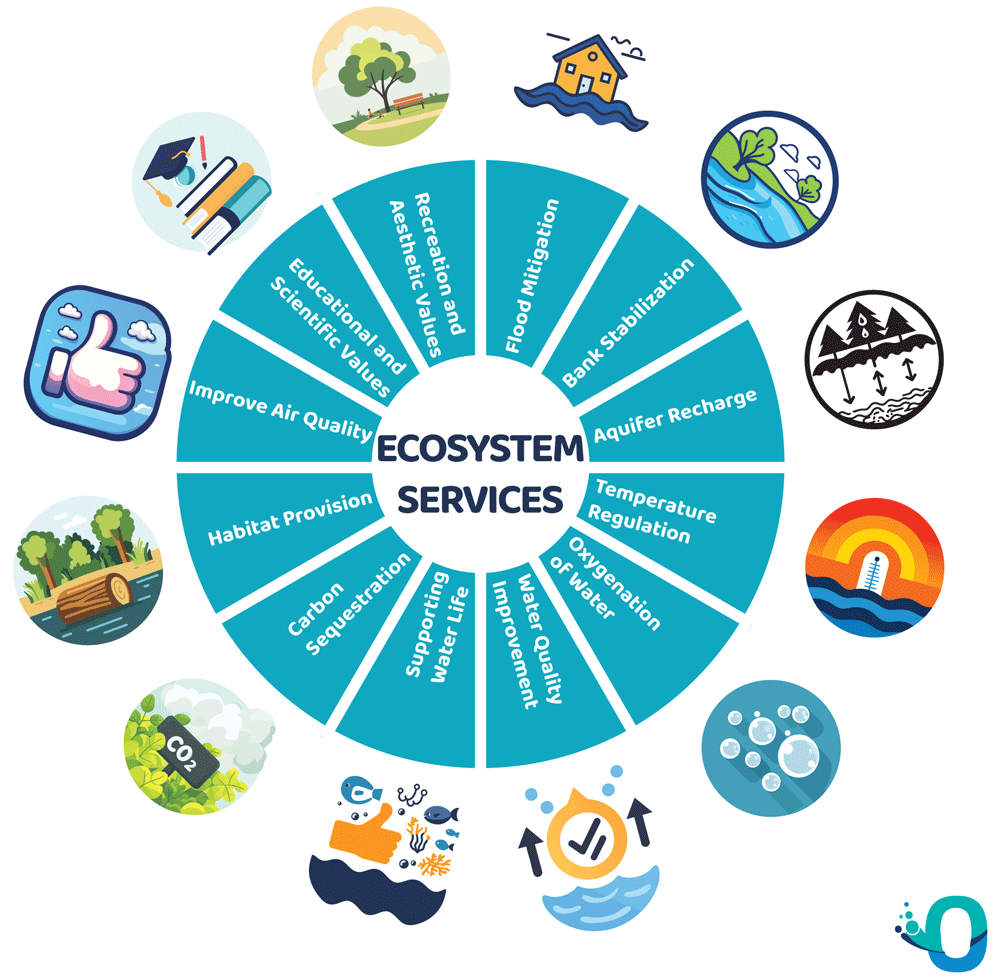
Figure 1. Main Ecosystem Services of Riparian Forest.
Key functions and services provided by riparian vegetation include:
Flood regulation and mitigation. composed of trees, shrubs, and grasses adapted to inundation—enhances surface roughness, which slows water flow and dissipates energy. This reduction in velocity promotes infiltration and aquifer recharge (Keesstra et al., 2018; Riis et al., 2020), while also lowering downstream flood peaks (Rak et al., 2016). During dry periods, riparian zones act as natural reservoirs, gradually release stored water, to sustain streamflow and support irrigation.
Sediment control and bank stabilization. Dense root systems stabilize soils and limit erosion, with native riparian species proving especially effective compared to occasional colonizers (Feld et al., 2018; Simon & Collison, 2002). Mixed woody–herbaceous vegetation markedly reduces soil runoff, while large woody debris (LWD) influences sediment deposition, riverbed morphology, and channel stability (Dunn et al., 2022; Swanson et al., 2021).
Shading and microclimate Regulation. Riparian canopies reduce wind speed, evapotranspiration, and excessive light penetration. Shading moderates stream temperature, preventing thermal stress and algal blooms, while cooler waters maintain higher dissolved oxygen levels essential for aquatic life (Garner et al., 2017; Trimmel et al., 2018). Such microclimatic regulation fosters diverse fish and macroinvertebrate communities (Rios & Bailey, 2006)
Water quality improvement. Acting as buffer zones, riparian areas filter sediments, nutrients, and pollutants via physical retention and biological processes (Gumiero et al., 2013; Gumiero et al., 2015; Pinay et al., 2000). They play a central role in nitrogen removal through denitrification, a microbial process that converts nitrate into atmospheric N2 under anaerobic, carbon-rich conditions (Gumiero et al., 2011). Riparian vegetation supports this process by supplying organic matter to microbial communities. Additional pathways, such as plant uptake and microbial assimilation, further reduce nitrogen and phosphorus, albeit temporarily. Riparian zones also degrade pesticides and contaminants through metabolic and adsorption processes (Aguiar et al., 2015).
Energy Inputs to food webs. Riparian vegetation contributes coarse particulate organic matter (CPOM)—such as leaves and woody debris—that serves as a primary energy source for aquatic detritivores and decomposers. Many aquatic organisms synchronize their life cycles with seasonal CPOM availability (Deegan & Ganf, 2008; Giri & Laub, 2025).
Habitat diversity and channel morphology. By shaping bank and channel structures, riparian vegetation enhances habitat heterogeneity and provides refuges and nursery areas for numerous aquatic and terrestrial species (Bateman & Merritt, 2020). Large woody debris creates pools and shelter that are critical during floods and droughts (Tabacchi et al., 2003).
Ecological connectivity. Functioning as ecological corridors, riparian zones facilitate species movement and ensure longitudinal, lateral, and vertical connectivity in riverine ecosystems (Naiman & Décamps, 1997). This connectivity reduces habitat fragmentation, enhances genetic exchange, and strengthens ecological resilience (Camporeale et al., 2013). The EU Biodiversity Strategy for 2030 highlights riparian corridors as key elements in a trans-European nature network (European Commission, 2021).
Carbon Sequestration and ait quality improvement. Like other forests, riparian vegetation contributes to climate change mitigation by reducing atmospheric CO2 and sequestering carbon in biomass and soils.
Educational and scientific value. Riparian ecosystems provide opportunities for ecological research and environmental education, advancing knowledge of biodiversity and hydrological processes.
Recreational and cultural service. These landscapes offer recreational activities such as fishing, canoeing, hiking, and birdwatching. Their aesthetic appeal enhances human well-being and cultural identity (Cameron et al., 2020; Thiele et al., 2019).
Societal perception of riparian zones and related biases
Despite the well-documented ecosystem services provided by riparian zones, persistent misconceptions continue to shape public opinion and policy. Common beliefs include that riparian vegetation causes flooding, harbors dangerous wildlife, or reduces usable land. These perceptions have long justified interventions such as clear-cutting, channelization, and the “tidying up” of riverbanks, reinforcing the cultural expectation that “clean” rivers are safer (Figure 2).

Figure 2. Contrasting landscapes along a river: on the left, dense riparian forests buffer the waterway; on the right, urban development closely borders the river, reducing the extent of natural vegetation.
The Emilia-Romagna floods of 2023–2024 illustrate this gap between perception and science. While experts identified rainfall intensity, land use, and climate change as key drivers, local leaders and media attributed the disaster to a “lack of river cleaning.” Environmental groups advocating restoration were even accused of threatening public safety. Such rhetoric misrepresents ecological principles and obstructs evidence-based management. The real issue lies in human occupation of natural floodplains. In Emilia-Romagna, levees, roads, and housing confined flows, making vegetation appear more hazardous than it is. Most large woody debris threatening infrastructure, like bridges, originates from upstream landslides or unstable banks, not intact riparian forests. Well-structured forests stabilize riverbanks and intercept debris before it reaches vulnerable sites.
Blaming vegetation is politically appealing: it is visible, tangible, and inexpensive to remove. Mature forests can even provide biomass for Renewable Energy companies with valuable wood, turning clearance into an economic opportunity. Yet research shows that well-managed riparian zones mitigate, rather than exacerbate, flood risks. Restoration—not wholesale vegetation removal—is the sustainable pathway. Expanding floodplains, reconnecting rivers to natural corridors, and restoring space for water to spread are proven strategies to reduce flood peaks while preserving ecological integrity. Selective interventions may be justified in urban contexts, but large-scale clearance undermines resilience. Even in dammed or channelized rivers, riparian trees can be partly maintained if the space between banks allows.
Socio-cultural values strongly influence perceptions of rivers (Garcia et al., 2020). Historical practices reinforce biases, but restoration can shift public attitudes. For example, a Dutch community surveyed near a planned restoration project reported not only greater feelings of safety but also improved scenic value, social connection, and recreational opportunities (Verbrugge & van den Born (2018)). Engaging stakeholders in co-creation is central to fostering such change. Participatory approaches, emphasized by the EU Water Framework Directive, help integrate cultural values, strengthen legitimacy, and ensure success (Polednikova & Galia, 2021; Schultz et al., 2022).
Policy integration
In Europe, riparian zones remain underrepresented in key policies such as the EU Water Framework Directive (WFD 2000/60/EC). Fragmented and sometimes conflicting frameworks—such as the WFD, Floods Directive, and Renewable Energy Directive—hinder integrated management (Gumiero et al., 2013). Defining riparian zones by fixed widths, for instance, overlooks their ecological complexity, limiting sustainable management (see CAP 23–27 https://agriculture.ec.europa.eu/common-agricultural-policy/cap-overview/cap-glance/key-policy-objectives-cap-2023-27_en ). A river basin approach based on “designing with nature” offers a more effective balance between ecological and social needs, reducing reliance on heavy-handed “river cleaning” (Lilli et al., 2020).
A coordinated policy framework is essential, integrating conservation, agriculture, and water management while recognizing riparian zones as part of broader ecosystems. In water-scarce regions, competition from agriculture and urban development places additional stress on these biodiversity hotspots (Singh et al., 2021; Urbanič et al., 2022). Degradation of riparian vegetation and floodplains heightens flood risks and causes significant economic and ecological costs (Hallegatte et al., 2013; Poff et al., 1997). Policymakers often underestimate these indirect costs, underscoring the need for broader recognition of riparian functions.
To protect both people and ecosystems, policy must move from reactive maintenance to proactive restoration, treating riparian zones as natural infrastructure for climate resilience (Feld et al., 2011; Wohl et al., 2005).
Initiatives such as the COST Action CONVERGES had highlight the value of synthesizing knowledge, improving stakeholder communication, and co-developing management tools (https://converges.eu/converges/). To overcome entrenched biases and misinformation, scientists and policymakers should:
1. Communicate evidence transparently, countering myths with accessible explanations.
2. Engage communities through participatory processes that respect socio-cultural values.
3. Demonstrate benefits through visible examples of successful restoration.
4. Align policies across sectors to reduce contradictions and strengthen ecosystem-based management.
Adaptive, socio-ecological strategies emphasizing collaboration, stakeholder engagement, and ongoing monitoring are essential. Without addressing societal biases, decision-makers risk perpetuating outdated practices that degrade both ecosystems and resilience. Confronting climate and biodiversity crises requires moving from conflict toward co-creation, securing long-term benefits for both biodiversity and society.
The role of citizen science in increasing science in riparian vegetation management
Citizen science plays a pivotal role in strengthening communication between researchers, policymakers, and the public. By engaging non-experts in data collection, it makes scientific information more accessible and socially relevant, while facilitating its integration into decision-making processes (Bonney et al., 2009; Hecker et al., 2018). Such engagement also fosters trust in science, as individuals directly observe results in their own environments rather than perceiving scientific knowledge as distant or imposed (Shirk et al., 2012).
Data generated through citizen science should be curated in open-access repositories, validated by experts, and made available to all stakeholders (European Commission, 2022). Importantly, participants should also be involved in interpreting results, combining local knowledge with scientific expertise to improve accuracy and legitimacy (Danielsen et al., 2005). Transparent sharing of outcomes with local authorities and communities ensures that results contribute to actionable policies and management strategies.
European initiatives such as OTTERS (https://otters-eu.aua.am/), the Mission Ocean and Waters 2030, and the EU Citizen Science Platform are advancing standardized methodologies, allowing cross-country comparison and data aggregation at european scale. Such harmonization enhances scientific robustness, supports policymaking, and maximizes the impact of citizen science in addressing complex challenges such as riparian zone management, biodiversity loss, and climate adaptation (Bonn et al., 2016; Pocock et al., 2019).
Participation further cultivates a sense of ownership and responsibility. When people actively contribute to monitoring and/or research, they are more likely to support conservation measures grounded in their own observations (Dickinson et al., 2012; Jordan et al., 2012). For example, when local experiences—such as increased flooding following the removal of riparian vegetation—align with scientific predictions, communities become powerful advocates for evidence-based policies.
Well-designed citizen science projects for riparian zones should therefore aim to raise awareness about the ecological importance of riparian forests and their role in delivering essential ecosystem services (Felitti et al., 2020; Naiman & Décamps, 1997). Educational components are key to fostering deeper connections between people and rivers, while scientifically valid yet accessible monitoring protocols ensure inclusivity and reliability (Kullenberg & Kasperowski, 2016).
RiVe methodology
Although several large-scale initiatives exist to monitor water quality, hydrology, geomorphology, and biodiversity, no dedicated citizen science project has specifically focused on riparian forests—at least until now. To fill this gap, the RiVe methodology was developed in Italy, an innovative approach for monitoring riparian forest quality through the systematic collection of targeted data. It was created in 2020 in Italy by the National Biodiversity Network – ISPRA and the Citizen Science Observatory (Gumiero et al., 2024) (https://www.nnb.isprambiente.it/vegetazioneriparia/inviasegnalazioni-it.html).
RiVe is structured around four key phases: volunteer training, data collection, data analysis, and dissemination of results to decision-makers and society (Figure 3). Data collection is supported by an open-source smartphone app (ODK). During fieldwork, volunteers define a sampling area of approximately 10 × 15 meters and complete a form whose first four questions concern the river section, maximum height, presence of deadwood, and forest structure. Two additional questions address the presence and abundance of 12 target woody species across two layers (>3 m and 1–3 m). The 12 target species are selected by the local project expert following a common rationale: 4 softwood species (hygrophilous), 4 hardwood species (mesophilous), and 4 invasive species capable of reflecting the hydrological conditions and disturbance levels of the area. By diversifying the 12 target species in each local project according to the characteristics of the geographical area, the method can be applied on a European scale.The data collected are validated by project coordinators, ensuring scientific rigor. Finally, two indices can be calculated from the collected data: the Invasiveness Index (iRI) and the Riparian Forest Quality Index (iRiVe) (for mor details see the RiVe handbook https://otters-eu.aua.am/wp-content/uploads/2025/08/OTTERS_Monitoring_Riparian_Vegetation_through_Citizen_Science.pdf)
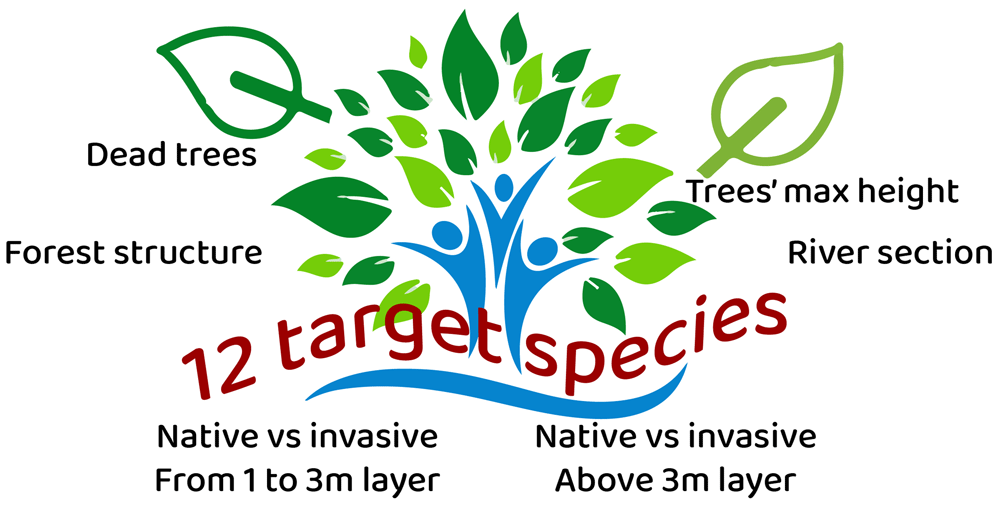
Figure 3. Questions asked in monitoring riparian forest with the RiVe method.
Moreover, the RiVe methodology can be integrated with other large-scale monitoring methods for riparian zones, such as remote sensing (see the QBR-GIS introduced by Segura-Méndez et al., 2023).
Conclusions – the way forward
The debate over riparian vegetation reflects a broader challenge: aligning scientific evidence, societal values, and political decision-making under increasing climate stress. For operational research, this is an opportunity to demonstrate the value of integrative, systems-based approaches that balance ecological, social, and economic dimensions.
Blaming riparian forests while ignoring the true drivers of flood risk — land-use change, urban encroachment, and insufficient restoration — will leave future generations with degraded rivers, heightened risks, and diminished ecosystem services. In contrast, embracing restoration offers the prospect of resilient rivers that enhance safety, biodiversity, and human well-being, often at lower long-term cost.
Operational research and policy integration can play a decisive role in bridging this divide by:
✓ Multi-objective modeling – weighing trade-offs between short-term interventions (e.g., dredging, cutting) and long-term resilience (restoration, floodplain reconnection).
✓ Cost–benefit integration – incorporating ecosystem services such as water purification, biodiversity, and carbon storage, often overlooked in traditional analyses.
✓ Scenario analysis under climate change – testing outcomes of “river cleaning” versus “room for rivers” approaches under extreme rainfall conditions.
✓ Stakeholder engagement frameworks – enabling participatory processes where communities, policymakers, and scientists co-design solutions, fostering legitimacy and trust.
The choice is clear:
Within this context, the OTTERS Project highlights the vital role of citizen science in bridging communication gaps between researchers, policymakers, and the public. It advances scientifically robust, standardized methods to build a European network of comparable data and strengthens the role of participatory monitoring in decision-making. Central to this effort is the RiVe method, currently the only European approach dedicated to assessing riparian forest quality through a semi-quantitative framework. The method is being refined for continent-wide applicability and complemented by remote sensing, creating a powerful synergy between field-based and technological assessments.
Ultimately, citizen science is more than an educational tool: it is a driver of social change. By transforming passive observers into active participants, it reduces resistance to scientific recommendations, nurtures environmental stewardship, and contributes to more informed policies and sustainable river management.
Disclaimer
The views expressed in this article are those of the authors. Publication in OPEN RESEARCH EUROPE does not imply endorsement by the European Commission’s Horizon Europe funding programme.
Ethics and consent
Ethics and consent were not required.
Data availability
No data are associated with this article.
Acknowledgements
The authors would like to thank the citizen scientists who helped support the development of the RiVe method. The authors would also like to acknowledge the important work of Cristian Di Stefano from the NNB National Network of Biodiversity and the Istituto Superiore per la Protezione e la Ricerca Ambientale in Rome for his support in developing an appropriate database for riparian vegetation monitoring.
Faculty Opinions recommendedReferences
- Aguiar TR Jr, Bortolozo FR, Hansel FA, et al.:
Riparian buffer zones as pesticide filters of no-till crops.
Environ Sci Pollut Res Int.
2015; 22(14): 10618–10626. PubMed Abstract
| Publisher Full Text
- Bateman HL, Merritt DM:
Complex riparian habitats predict reptile and amphibian diversity.
Glob Ecol Conserv.
2020; 22: e00957. Publisher Full Text
- Basak SM, Hossain MS, Tusznio J, et al.:
Social benefits of river restoration from ecosystem services perspective: a systematic review.
Environ Sci Policy.
2021; 124: 90–100. Publisher Full Text
- Bonn A, Richter A, Vohland K, et al.:
Exploring citizen science in sustainability research.
Ecology and Society.
2016; 21(3): 13.
- Bonney R, Cooper CB, Dickinson J, et al.:
Citizen science: a developing tool for expanding science knowledge and scientific literacy.
BioScience.
2009; 59(11): 977–984. Publisher Full Text
- Buijs AE, Arts BJM, Elands BHM, et al.:
Beyond environmental frames: the social representation and cultural resonance of nature in conflicts over a Dutch woodland.
Geoforum.
2011; 42(3): 329–341. Publisher Full Text
- Cameron RWF, Brindley P, Mears M, et al.:
Where the wild things are! Do urban green spaces with greater avian biodiversity promote more positive emotions in humans?
Urban Ecosyst.
2020; 23: 301–317. Publisher Full Text
- Camporeale C, Perucca E, Ridolfi L, et al.:
Modeling the interactions between river morphodynamics and riparian vegetation.
Rev Geophys.
2013; 51(3): 379–414. Publisher Full Text
- Cole LJ, Stockan J, Helliwell R:
Managing riparian buffer strips to optimise ecosystem services: a review; Agriculture.
Ecos Environ.
2020; 296: 106891. Publisher Full Text
- Danielsen F, Burgess ND, Balmford A, et al.:
The value of local knowledge in monitoring biodiversity.
Conserv Biol.
2005; 19(3): 975–985.
- Deegan BM, Ganf GG:
The loss of aquatic and riparian plant communities: implications for their consumers in a riverine food web.
Austral Ecol.
2008; 33(5): 672–683. PubMed Abstract
| Publisher Full Text
| Free Full Text
- Del Tánago MG, Martínez-Fernández V, Aguiar FC, et al.:
Improving river hydromorphological assessment through better integration of riparian vegetation: scientific evidence and guidelines.
J Environ Manage.
2021; 292: 112730. PubMed Abstract
| Publisher Full Text
- Dickinson JL, Shirk J, Bonter D, et al.:
The current state of citizen science as a tool for ecological research and public engagement.
Front Ecol Environ.
2012; 10(6): 291–297. Publisher Full Text
- Dunn RM, Hawkins JMB, Blackwell MSA, et al.:
Impacts of different vegetation in riparian buffer strips on runoff and sediment loss.
Hydrol Process.
2022; 36(11): e14733. PubMed Abstract
| Publisher Full Text
| Free Full Text
- European Commission: Citizen science for environmental policy: development of an EU-wide inventory and analysis of selected practices. Publications Office of the European Union, 2022. Publisher Full Text
- European Commission: Directorate-general for environment, EU biodiversity strategy for 2030 – Bringing nature back into our lives. Publications Office of the European Union, 2021. Publisher Full Text
- Feld CK, Birk S, Bradley DC, et al.:
From natural to degraded rivers and back again: a test of restoration ecology theory and practice.
Adv Ecol Res.
Academic Press, 2011; 44: 119–209. Publisher Full Text
- Feld CK, Fernandes MR, Ferreira MT, et al.:
Evaluating riparian solutions to multiple stressor problems in river ecosystems - a conceptual study.
Water Res.
2018; 139: 381–394. PubMed Abstract
| Publisher Full Text
- Felitti M, Silva TSF, Jarenkow JA:
Riparian ecosystem services and human well-being: a review of current knowledge and research needs.
Ecol Indic.
2020; 115: 106428.
- Garcia X, Benages-Albert M, Buchecker M, et al.:
River rehabilitation: preference factors and public participation implications.
J Environ Plan Manag.
2020; 63(9): 1528–1549. Publisher Full Text
- Garner G, Malcolm IA, Sadler JP, et al.:
The role of riparian vegetation density, channel orientation and water velocity in determining river temperature dynamics.
J Hydrol (Amst).
2017; 553: 471–485. Publisher Full Text
- Gauchat G:
Politicization of science in the public sphere: a study of public trust in the United States, 1974 to 2010.
Am Sociol Rev.
2012; 77(2): 167–187. Publisher Full Text
- Giri N, Laub BG:
Spatiotemporal dynamics of basal food web resources and diatom and macroinvertebrate communities in a subtropical stream.
Hydrobiologia.
2025; 852: 107–125. Publisher Full Text
- Gumiero B, Boz B, Cornelio P, et al.:
Shallow groundwater nitrogen and denitrification in a newly afforested, subirrigated riparian buffer.
J Appl Ecol.
2011; 48(5): 1135–1144. Publisher Full Text
- Gumiero B, Cossu M, Di Grazia F, et al.:
Remote sensing and citizen science: possible combination for monitoring the riparian forest.
Reticula.
2024; 35: 7–21.
- Gumiero B, Mant J, Hein T, et al.:
Linking the restoration of rivers and riparian zones/wetlands in Europe: sharing knowledge through case studies.
Ecol Eng.
2013; 56: 36–50. Publisher Full Text
- Gumiero B, Rinaldi M, Belletti B, et al.:
Riparian vegetation as indicator of channel adjustments and environmental conditions: the case of the Panaro river (Northern Italy).
Aquat Sci.
2015; 77: 563–582. Publisher Full Text
- Gurnell AM, Corenblit D, García de Jalón D, et al.:
A conceptual model of vegetation-hydrogeomorphology interactions within river corridors.
River Res Appl.
2016; 32(2): 142–163. Publisher Full Text
- Hallegatte S, Green C, Nicholls RJ, et al.:
Future flood losses in major coastal cities.
Nat Clim Chang.
2013; 3(9): 802–806. Publisher Full Text
- Hecker S, Haklay M, Bowser A, et al.:
Citizen science: innovation in open science, society and policy. UCL Press, 2018. Publisher Full Text
- Hornsey MJ, Harris EA, Fielding KS:
Relationships among conspiratorial beliefs, conservatism and climate scepticism across nations.
Nat Clim Chang.
2018; 8(7): 614–620. Publisher Full Text
- IPCC:
Climate change 2022: impacts, adaptation and vulnerability.
Contribution of Working Group II to the Sixth Assessment Report of the Intergovernmental Panel on Climate Change. Cambridge University Press, 2022. Publisher Full Text
- Jasanoff S:
Science and democracy: expert knowledge and public order. Routledge, 2010.
- Jordan RC, Ballard HL, Phillips TB:
Key issues and new approaches for evaluating citizen-science learning outcomes.
Front Ecol Environ.
2012; 10(6): 307–309. Publisher Full Text
- Kahan DM:
Climate-science communication and the measurement problem.
Polit Psychol.
2015; 36(S1): 1–43. Publisher Full Text
- Kahneman D:
Thinking, fast and slow. Farrar, Straus and Giroux, 2011. Reference Source
- Keesstra S, Nunes J, Novara A, et al.:
The superior effect of nature based solutions in land management for enhancing ecosystem services.
Sci Total Environ.
2018; 610–611: 997–1009. PubMed Abstract
| Publisher Full Text
- Kullenberg C, Kasperowski D:
What is citizen science? – A scientometric meta-analysis.
PLoS One.
2016; 11(1): e0147152. PubMed Abstract
| Publisher Full Text
| Free Full Text
- Leiserowitz A, Maibach E, Roser-Renouf C, et al.:
Climate change in the American mind: national survey data. Yale Program on Climate Change Communication, 2021. Reference Source
- Lilli MA, Nerantzaki SD, Riziotis C, et al.:
Vision-based decision-making methodology for riparian forest restoration and flood protection using nature-based solutions.
Sustainability.
2020; 12(8): 3305. Publisher Full Text
- Naiman RJ, Decamps H:
The ecology of interfaces: riparian zones.
Annu Rev Ecol Syst.
1997; 28(1): 621–658. Publisher Full Text
- Oreskes N, Conway EM:
Merchants of doubt. Bloomsbury Press, 2010. Reference Source
- Pinay C, Gumiero B, Brancucci M:
Ecological engineering strategies for riparian restoration in mediterranean watersheds. In: Riparian Ecology and Management in Multi-land Use Watersheds. Proceedings of the International Conference on Riparian Ecology and Management in Multi-land Use Watersheds, 2000; 67–78.
- Pocock MJO, Roy HE, August T, et al.:
Developing the global potential of citizen science: assessing opportunities that benefit people, society and the environment in East Africa.
Advances in Ecological Research.
2019; 59: 187–223.
- Poff NL, Allan JD, Bain MB, et al.:
The natural flow regime: a paradigm for river conservation and restoration.
BioScience.
1997; 47(11): 769–784. Publisher Full Text
- Poledniková Z, Galia T:
Photo simulation of a river restoration: relationships between public perception and ecosystem services.
River Res Appl.
2021; 37(1): 44–53. Publisher Full Text
- Rak G, Kozelj D, Steinman F:
The impact of floodplain land use on flood wave propagation.
Nat Hazards.
2016; 83: 425–443. Publisher Full Text
- Riis T, Kelly-Quinn M, Aguiar FC, et al.:
Global overview of ecosystem services provided by riparian vegetation.
BioScience.
2020; 70(6): 501–514. Publisher Full Text
- Rios SL, Bailey RC:
Relationship between riparian vegetation and stream benthic communities at three spatial scales.
Hydrobiologia.
2006; 553(1): 153–160. Publisher Full Text
- Schultz M, Jamieson H, Piontek E, et al.:
The importance of cultural values in ecological restorations: a systematic review.
Soc Nat Resour.
2022; 35(9): 1021–1039. Publisher Full Text
- Segura-Méndez FJ, Pérez-Sánchez J, Senent-Aparicio J:
Evaluating the riparian forest quality index (QBR) in the Luchena River by integrating remote sensing, machine learning and GIS techniques.
Ecohydrol Hydrobiol.
2023; 23(3): 469–483. Publisher Full Text
- Shirk JL, Ballard HL, Wilderman CC, et al.:
Public participation in scientific research: a framework for deliberate design.
Ecol Soc.
2012; 17(2): 29. Publisher Full Text
- Simon A, Collison AJC:
Quantifying the mechanical and hydrologic effects of riparian vegetation on streambank stability.
Earth Surf Process Landf.
2002; 27(5): 527–546. Publisher Full Text
- Singh R, Tiwari AK, Singh GS:
Managing riparian zones for river health improvement: an integrated approach.
Landscape Ecol Eng.
2021; 17: 195–223. Publisher Full Text
- Smith B, Clifford NJ, Mant J:
The changing nature of river restoration.
WIREs Water.
2014; 1(3): 249–261. Publisher Full Text
- Swanson FJ, Gregory SV, Iroumé A, et al.:
Reflections on the history of research on large wood in rivers.
Earth Surf Process Landf.
2021; 46(1): 55–66. Publisher Full Text
- Tabacchi E, Coring E, Edwards PJ:
Habitat structure and diversity in river landscapes.
Freshw Biol.
2003; 40(4): 597–607.
- Thiele J, van Haaren C, Albert C:
Are river landscapes outstanding in providing cultural ecosystem services? An indicator-based exploration in Germany.
Ecol Indic.
2019; 101: 31–40. Publisher Full Text
- Tockner K, Malard F, Ward JV:
An extension of the flood pulse concept.
Hydrol process.
2000; 14(16–17): 2861–2883. Reference Source
- Trimmel H, Weihs P, Leidinger D, et al.:
Can riparian vegetation shade mitigate the expected rise in stream temperatures due to climate change during heat waves in a human-impacted pre-alpine river?
Hydrol Earth Syst Sci.
2018; 22(1): 437–461. Publisher Full Text
- Urbanič G, Politti E, Rodríguez-González PM, et al.:
Riparian zones—from policy neglected to policy integrated.
Front Environ Sci.
2022; 10: 868527. Publisher Full Text
- Verbrugge L, van den Born R:
The role of place attachment in public perceptions of a re-landscaping intervention in the river Waal (The Netherlands).
Landsc Urban Plan.
2018; 177: 241–250. Publisher Full Text
- Vermaat JE, Wagtendonk AJ, Brouwer R, et al.:
Assessing the societal benefits of river restoration using the ecosystem services approach.
Hydrobiologia.
2016; 769(1): 121–135. Publisher Full Text
- Wohl E, Angermeier PL, Bledsoe B, et al.:
River restoration.
Water Resour Res.
2005; 41(10): W10301. Publisher Full Text