Introduction
Artificial Intelligence (AI) refers to systems designed to replicate aspects of human faculties, such as reasoning and language comprehension, enabling machines to operate autonomously and adapt to novel situations (Russell & Norvig, 2022). With the rapid advancement of AI technologies and their growing adoption by governments, cities are increasingly transitioning into intelligent cities (Kassens-Noor et al., 2022). Governments leverage AI to enhance decision-making processes (Van Noordt & Misuraca, 2022), improve the provision and quality of administrative services (Medaglia et al., 2023), optimize resource allocation (Zuiderwijk et al., 2021) and identify crime hotspots (Dakalbab et al., 2022). Furthermore, governments use AI to support policymaking and infrastructure and transportation planning (Sharma et al., 2020) as well as public health initiatives, such as digital surveillance systems to combat pandemics (Sarker et al., 2023).
Therefore, Medaglia, Gil-Garcia, and Pardo (2023); Fatima, Desouza, and Dawson (2020) argued that the power of AI in the public sector lies in its potential to improve internal efficiency, enhance and intensify citizen-government interactions, modernize public services, and foster innovation. However, the rapid integration of AI into government systems also presents significant challenges. For instance, it may reduce citizens’ trust in government, compromise privacy, and raise concerns about fairness (Sun & Medaglia, 2019). AI can also reinforce existing biases in datasets, leading to discriminatory predictions against minority groups (Larson et al., 2016). Additionally, the potential for large-scale workforce displacement due to automation is a growing concern (Valle-Cruz et al., 2022), and AI usage can lead to increased greenhouse gas emissions and a high carbon footprint (Liu & Yin, 2024).
The United Nations highlighted AI's dual potential—its ability to drive progress while posing significant risks—in relation to achieving the Sustainable Development Goals (SDGs). Recognized as a transformative tool for sustainable development, AI has the potential to accelerate advancements across a wide range of sectors, including climate action and poverty eradication (Jasper, 2024; UNSDG, 2024). However, the UN also cautions that unchecked AI deployment could exacerbate inequalities, undermine ethical standards, and heighten environmental challenges burdens (Jasper, 2024; UNSDG, 2024).
To fully harness AI’s potential for sustainable development, it is crucial to understand its specific implications for each SDG. Scholars have already begun systematically analyzing AI’s impact across SDG targets. For instance, studies have leveraged expert consensus to assess AI’s influence across all 169 SDG targets (Vinuesa et al., 2020), explored AI representation within diverse datasets to identify opportunities and gaps in aligning AI with sustainability goals (Nasir et al., 2023), and investigated AI and sustainable development goals in specific sectors, such as the construction industry (Regona et al., 2024).
However, a significant research gap persists in examining how government adoption of AI specifically affects the achievement of these goals. Understanding this relationship is crucial because governments play a central role in driving, coordinating, and implementing SDG efforts (Li et al., 2025; United Nations, 2015). As emphasized in the 2030 Agenda for Sustainable Development: “Governments have the primary responsibility for follow-up and review, at the national, regional and global levels, in relation to the progress made in implementing the Goals and targets” (United Nations, 2015). This paper addresses the gap by conducting a systematic review to evaluate whether the adoption of AI by governments hinders or supports the achievement of the SDGs. In addition, this study incorporates contextual information, such as the country and specific AI technologies mentioned in research articles, to provide a more comprehensive understanding of the findings.
Methods
We conducted a systematic review using the Preferred Reporting Items for Systematic Reviews and Meta-Analyses (PRISMA) protocol. We chose this method because of its transparency: the procedures make it easy for the reader to understand the selection process and improve the reporting quality of the systematic review (Knobloch et al., 2011). The PRISMA procedures are divided into four phases: (a) identification, (b) screening, (c) eligibility, and (d) inclusion (Moher et al., 2009).
(a) In the identification phase, we used Web of Science (WOS) and Science Direct (SD) to identify scientific studies. WOS, owned by Clarivate Analytics, is a large multidisciplinary citation database spanning all disciplines1 and SD, provided by Elsevier, is the world's leading database of peer-reviewed, full-text scientific, technical, and health literature.2 We searched both databases using titles and abstracts, with the search terms: (“AI” OR “artificial intelligence”) AND (“government” OR “public sector”).
Furthermore, we defined the scope of the studies of interest in alignment with our research aim, following Moher et al. (2009)'s outlined guidelines. The scope encompassed studies centered on narratives related to AI use cases and their overall implications (benefits or detriments), which we refer to as the AI Factor. This approach enabled us to clearly establish the research objective and set precise inclusion and exclusion criteria for database searches.
Inclusion criteria:
1. Academic research focusing on the adoption of AI by the public sector in all areas and at all levels of government (municipal, state, and federal) across all regions.
2. Articles written in English.
3. Research conducted between 2022 and 2024. We included ten literature review (LR) articles, as identified in Table 1. The most recent LR article covered studies up to 2021, forming the foundation of this research. Subsequently, we reviewed and included papers published from 2022 to the present to ensure incorporating up-to-date findings and insights.
Table 1. Summarizes information about included literature review articles.
| Author | Review Article Name | Analysis Period | Publication Type |
|---|
| (Medaglia et al., 2023) | Artificial Intelligence in Government: Taking Stock and Moving Forward | 2020 – 2021 | Academic journal. |
| (Zuiderwijk et al., 2021) | Implications of the use of artificial intelligence in public governance: A systematic literature review and a research agenda | 2018 to 2020 | Academic journal. |
| (Ahn & Chen, 2020) | Artificial intelligence in government: Potentials, challenges, and the future | NA | Conference proceedings. |
| (Sharma et al., 2020) | Artificial intelligence and effective governance: A review, critique and research agenda | 1983–2019 | Academic journal. |
| (Desouza et al., 2020) | Designing, developing, and deploying artificial intelligence systems: Lessons from and for the public sector | NA | Academic journal. |
| (De Sousa et al., 2019) | How and where is artificial intelligence in the public sector going? A literature review and research agenda | January 2000 – October 2018 | Academic journal. |
| (Reis et al., 2019a) | Artificial intelligence in government services: A systematic literature review | Not specified – October 8, 2018 | Book chapter. |
| (Reis et al., 2019b) | Impacts of artificial intelligence on public administration: A systematic literature review | Not specified – January 2, 2019 | Conference proceedings. |
| (Valle-Cruz et al., 2019) | A review of artificial intelligence in government and its potential from a public policy perspective | 1970 – 2018 | Conference proceedings. |
| (Wirtz et al., 2019) | Artificial intelligence and the public sector—Applications and challenges | NA | Academic journal. |
Exclusion criteria:
1. Academic research focused on solutions for private organizations.
2. Articles not specific to the public sector or lack a clear definition of benefits for the public.
3. Studies focused only on technical aspects: restricted to the technical aspect.
4. Articles that are not written in English.
5. Research conducted outside the period between 2022 and 2024.
(b) In the screening phase, we manually verified the alignment with the inclusion and exclusion criteria based on the titles and abstracts of the articles. (c) We carried out the eligibility phase on the sample yielded by the previous phase, applying the same criteria checks but on the full text of all samples. Finally, in the (d) inclusion phase, we analyzed the remaining included studies. One researcher performed the screening and eligibility assessments, applying the inclusion and exclusion criteria at each phase. The research team then reviewed the results to ensure consistency, address uncertainties, and validate the final selection of studies.
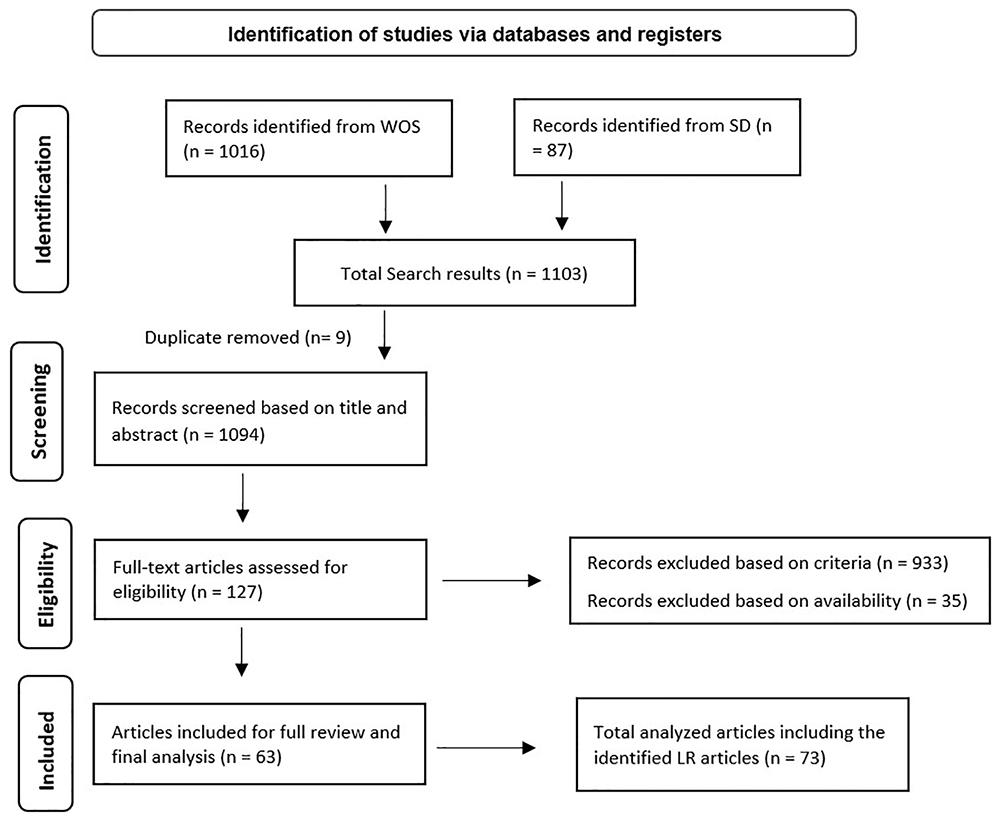
As illustrated in Figure 1, the search of the two databases conducted between March and May 2024 yielded 1,103 results. After removing duplicates, we retrained 1,094 studies. Applying the exclusion criteria to the titles, abstracts, keywords, introduction, and conclusion resulted in 127 studies qualifying for a full-text review. After thoroughly reviewing the full texts and considering only articles that met the inclusion criteria, 64 studies were excluded. Ultimately, 73 papers were selected for the final analysis. Refer to the Data Availability section for the complete list of included articles.
We followed these steps for the final analysis of the selected articles. First, we indexed the articles by documenting the title of each paper and assigning a unique index number to each one, facilitating efficient reference and organization without needing to repeatedly use the full title or author names. Second, we conducted content extraction, reviewing each article to extract the mentioned AI factors and listing each one separately when multiple factors were addressed. Third, we correlated each AI Factor to one or more Sustainable Development Goals (SDGs) based on the authors' evaluations of its direct contributions. Even if the articles did not explicitly mention any SDGs, we inferred potential direct linkages based on the characteristics of the AI Factor.
Fourth, we assigned each AI Factor a numerical score to evaluate its impact on the linked SDGs based on the content and narrative of the articles. The scoring was conducted relatively, meaning that each score was assigned in comparison to other factors rather than as an absolute measure. The scoring scale ranged from -3 to +3, with +3 indicating a significant positive contribution, +2 representing a positive contribution, and +1 reflecting a slight positive contribution. A score of 0 indicated no impact, while negative impacts were scored as -1 for a moderate negative contribution, -2 for a negative contribution, and -3 for a significant negative contribution. We assigned an "NA" score when the AI Factor was mentioned without any specified impact. Fifth, we documented the specific computational AI techniques employed in each AI factor, such as Machine Learning (ML) and Natural Language Processing (NLP). We grouped the AI technologies into broader categories based on the exact application mentioned in the articles. For instance, Chatbots use NLP technologies; however, we analyzed them as separate categories when they were explicitly mentioned.
Sixth, we identified and recorded the country in which each AI factor was mentioned, counting each country once per article. Lastly, we categorized the identified AI factors using the United Nations’ Classification of the Functions of Government (COFOG). COFOG is a widely recognized framework that encompasses the various roles and responsibilities of public sector entities in delivering services, maintaining order, and promoting societal well-being. These functions are broadly categorized into key areas: General public services, Defense, Public order and safety, Economic affairs, Environmental protection, Housing and community amenities, Health, Recreation, culture and religion, Education, and social protection (OECD, 2017). We used Excel to extract, organize, and analyze the data throughout this process. One researcher conducted the steps mentioned above. The research team then discussed the results to ensure consistency, resolve uncertainties, and validate the final scoring.
Results
Geographical context of ai in government research
Our analysis of the geographic distribution of AI research revealed dominance by high-income countries, resulting in a significant geographic imbalance. As illustrated in Figure 2, the United States accounted for nearly 15% of all mentions (13 out of 87 mentions), representing the largest share, while Australia and the Netherlands each contributed close to 7%. Other high-income countries, including Japan, the United Kingdom, Germany, and the European Union, accounted for between 4% and 6% of mentions.
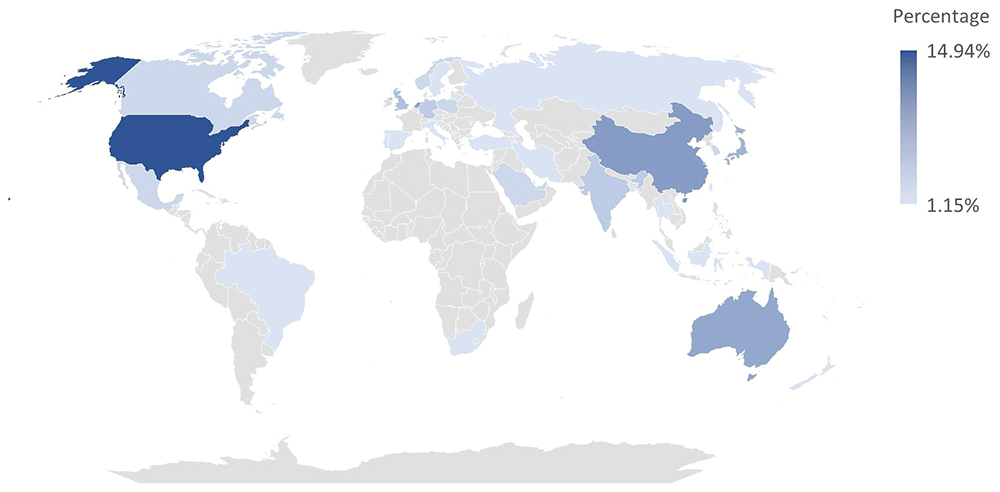
Figure 2. Global distribution of AI research in the reviewed articles, showing the percentage of mentions per country.
Source: The Authors.
Additionally, emerging economies were notably represented, with China ranking second at 8% of mentions and India at 4%. In contrast, low- and middle-income countries were minimally represented. Countries such as Bangladesh, Brazil, Indonesia, Iran, Sierra Leone, South Africa, and Vanuatu each appeared in only 1% of mentions. This disparity in representation highlights the stark global divide in AI research and development, with publications predominantly focusing on high-income countries.
AI in government applications
We identified a diverse range of AI technologies employed across various government sectors (see Figure 3). Chatbots and virtual assistants along with machine learning and predictive analytics emerged as the leading technologies, representing nearly 22% (82 out of 377 mentions) and 20% of mentions, respectively. This dominance highlights a strong focus on improving citizen engagement through automated interaction platforms and enhancing data-driven decision-making through predictive modeling. These were followed by big data and data analytics as well as natural language processing and sentiment analysis, each at just under 10% of mentions indicate a moderate but significant focus on tools for evidence-based development and social sentiment tracking. Robotics and autonomous systems along with IoT and smart city technologies each comprised nearly 7% of mentions.
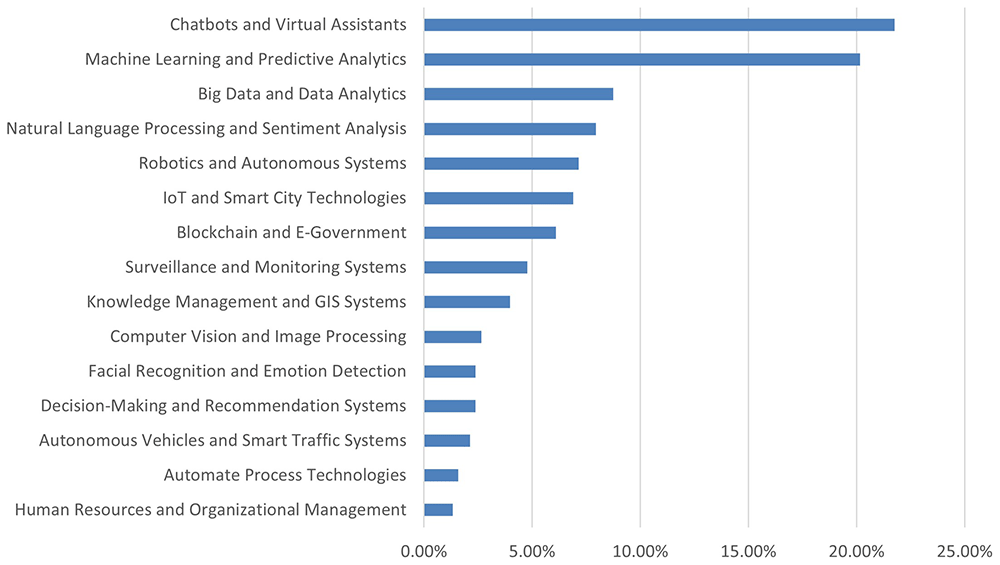
Figure 3. Percentage of discussed AI in government technologies within the reviewed articles.
Source: The Authors.
Notably, technologies like computer vision and image processing, facial recognition and emotion detection, and autonomous vehicles and smart traffic systems received just over 2% of mentions, suggesting they remain niche or context specific. Finally, the least frequently mentioned categories—automated process management and human resources and organizational management technologies—accounted for just over 1% of the mentions. Overall, the findings illustrate that government technology research has focused on technologies related to public service enhancement, data-driven development, and emerging infrastructure modernization. Moreover, our findings reflect a stronger emphasis on external-facing applications rather than internal administrative modernization, indicating that internal process automation remains yet to become a significant AI priority.
Overall prevalence of the SDGs mentions
There was a concentrated focus on SDG 16 (Peace, Justice, and Strong Institutions), which accounted for 50% of mentions (659 out of 1,307). This might suggest that scholars view significant potential for AI applications in governance and strengthening institutions. Following this, SDG 11 (Sustainable Cities) accounted for 13% of mentions, and SDG 9 (Industry, Innovation, and Infrastructure) accounted for 9%, reflecting a strong focus on AI’s role in urban and technological development. Other SDGs with moderate mentions percentage include SDG 3 (Good Health and Well-being), SDG 8 (Decent Work and Economic Growth), SDG 13 (Climate Action), and SDG 4 (Quality Education). (Figure 4)
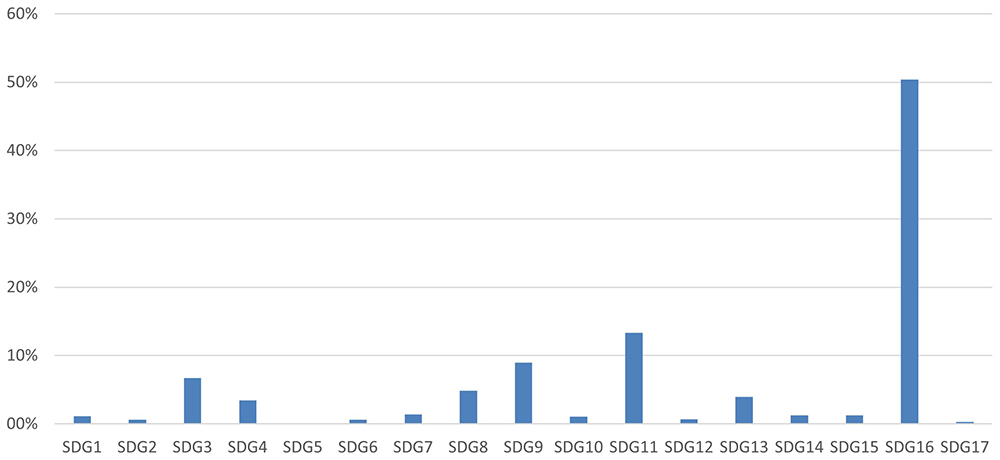
Figure 4. Percentage of AI factors mentioned per SDG in the reviewed articles.
Source: The Authors.
Lower mentions include SDG 7 (Affordable and Clean Energy), SDG 14 (Life Below Water), SDG 15 (Life on Land), SDG 1 (No Poverty), and SDG 10 (Reduced Inequalities), each slightly above 1%, indicating that these SDGs received limited research attention. At the lower end, SDG 12 (Responsible Consumption and Production), SDG 2 (Zero Hunger), and SDG 6 (Clean Water and Sanitation) each accounted for less than 1%. Notably, SDG 17 (Partnerships for the Goals) at 0.3% and SDG 5 (Gender Equality) at 0.08% of mentions ranked the lowest, signaling potential gaps in research linking AI with global partnerships and gender equality. Overall, the distribution suggests that the current body of AI research is more focused on applications in governance, urban development, and technological innovation, while its potential contributions to social equity and global cooperation appear to be underexplored and require further investigation.
Average AI in government impact across the SDGs
AI’s average impact across the SDGs demonstrated generally positive contributions, with notable variations across different goals. SDG 6 (Clean Water and Sanitation) recorded the highest average impact, nearing 2, highlighting a strong perceived potential for AI-driven improvements in water management and sanitation systems. Similarly, SDG 4 (Quality Education) and SDG 12 (Responsible Consumption and Production) recorded averages of just under 1.5. Mid-range impacts included SDG 2 (Zero Hunger), SDG 3 (Good Health and Well-being), SDG 7 (Affordable and Clean Energy), and SDG 9 (Industry, Innovation, and Infrastructure), each scoring around 1.3, indicating moderate AI contributions to sectors like healthcare, food security, and infrastructure.
We noted moderate averages scores of approximately 1 for SDG 5 (Gender Equality), SDG 11 (Sustainable Cities and Communities), SDG 13 (Climate Action), SDG 15 (Life on Land), SDG 16 (Peace, Justice, and Strong Institutions), and SDG 17 (Partnerships for the Goals). This suggests that while AI is recognized as beneficial in these areas, its impact may be constrained. At the lower end, SDG 8 (Decent Work and Economic Growth) and SDG 14 (Life Below Water) scored below 1, while SDG 1 (No Poverty) records an exceptionally low average of 0.2, reflecting minimal perceived relevance or effectiveness of AI in poverty reduction efforts. SDG 10 (Reduced Inequalities) is the only goal with a slightly negative average impact, indicating that AI has the potential to worsen inequalities. (Figure 5)
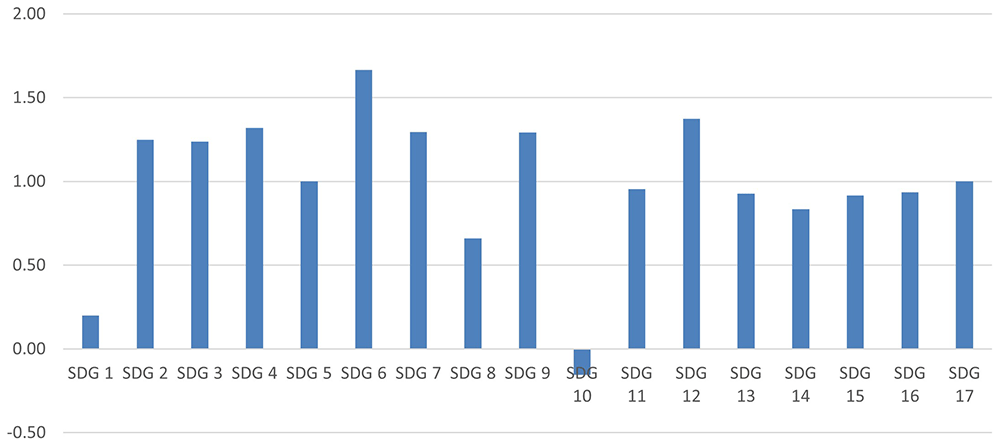
Figure 5. Average impact of AI in government across the SDGs.
Source: The Authors.
The recorded AI factors demonstrated a wide range of positive impacts across multiple domains. The most prominent benefit lies in the improvement of efficiency, achieved by enhancing decision-making through data-driven insights, streamlining service delivery via automation, and fostering stronger citizen-government interactions through personalized services and feedback mechanisms. AI also reduces administrative burdens and operational costs, resulting in substantial savings and creating public value. In the field of public health, AI has played a critical role in pandemic management by aiding disease tracking and diagnostics. Additionally, AI contributes to safety and security by supporting law enforcement, emergency response, and surveillance efforts. It drives economic growth and productivity by optimizing resource allocation and promoting innovation while advancing environmental sustainability through climate monitoring and resource management.
Conversely, we identified that about 15% of the AI factors (155 out of 989) are associated with negative impacts. These impacts highlight AI’s potential to increase unemployment by automating roles traditionally performed by humans, thereby exacerbating social inequality and economic disruption. Additionally, AI integration may intensify biases, reinforcing racial and social prejudices, which can erode public trust in institutions. Privacy concerns were also notable; AI systems might generate false positives or misidentify individuals, raising significant ethical and legal issues regarding personal data security. Furthermore, environmental challenges arise from the resource-intensive nature of AI operations, which can produce harmful externalities and strain natural resources.
Average AI impact on SDGs categorized by government functions
Out of the ten government functions, General Public Services dominated by receiving nearly 50% of the mentions (521 out of 1,082), indicating a significant emphasis on AI’s role in governance, administration, and public-sector efficiency, while Economic Affairs ranked second at 12% (see Figure 6). Areas like Public Order and Safety (10%), Health (7%), Environmental Protection and Housing and Community Amenities (each at 6%) received moderate attention. In contrast, Education and Social Protection received a smaller focus at 3% each, while Defense (1%) and Recreation, Culture, and Religion (almost 0%) registered only minimal mentions. The analysis highlights a strong emphasis on AI usage in public services, economic growth, and safety, while sectors like education, social protection, and recreation remain underexplored. This uneven distribution suggests opportunities to expand AI integration into less prioritized areas.
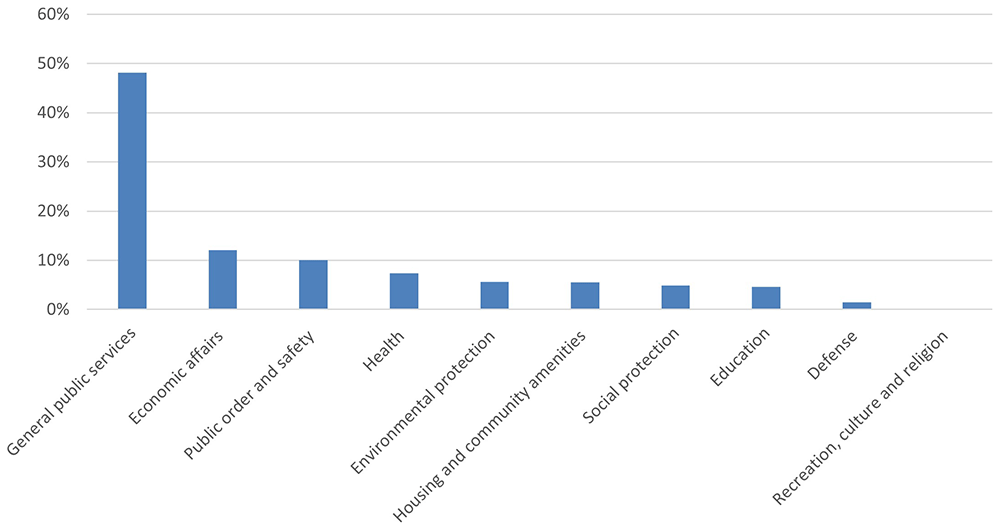
Figure 6. Percentage of government functions mentioned.
Source: The Authors.
AI application across government functions showed varying impacts on the SDGs. The distribution highlights a perception that AI use in the Housing and Community Amenities and Economic Affairs government functions yields the most positive impact on the SDGs, while its use in Health and Recreation, Culture, and Religion showed minimal impact, and we observed no measurable impact in Defense (see Figure 7).
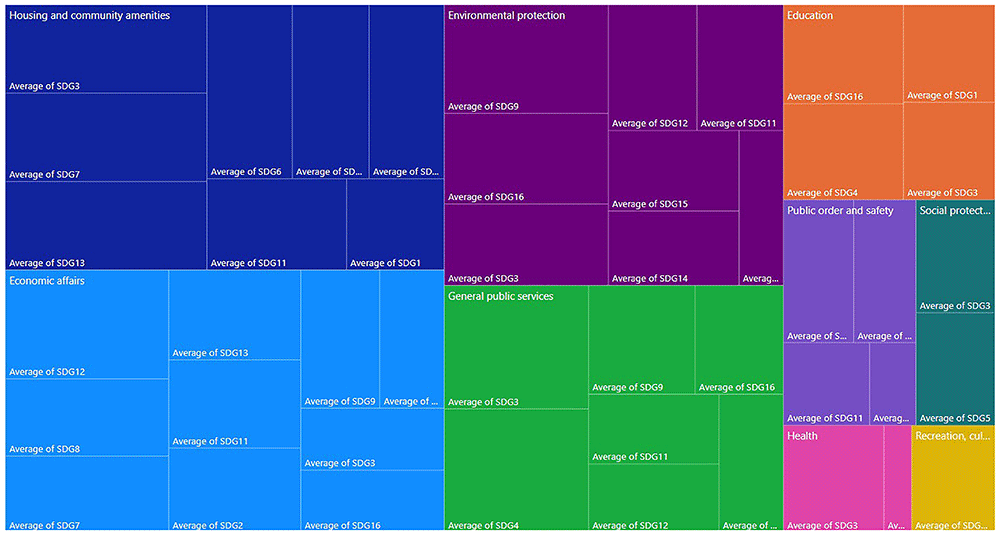
Figure 7. Average AI impact on SDGs categorized by government functions.
Source: The Authors.
Using AI in the Housing and Community Amenities government function achieved the highest overall average impact (1.63) on the SDGs, highlighting its significant contribution goals like SDG 3 (Good Health and Well-being), SDG 7 (Affordable and Clean Energy), SDG 11 (Sustainable Cities and Communities), and SDG 13 (Climate Action). This underscores AI’s capacity to enhance citizens’ well-being, improve urban planning, optimize resource management, and support environmental sustainability. Moreover, leveraging AI in Economic Affairs demonstrated a significant impact across multiple SDGs. These include SDG 7 (Affordable and Clean Energy), SDG 8 (Decent Work and Economic Growth), and SDG 12 (Responsible Consumption and Production), highlighting AI’s potential to enhance efficiency in economic planning and production. AI in Education aligns prominently with SDG 4 (Quality Education) and SDG 16 (Peace, Justice, and Strong Institutions).
AI usage in Environmental Protection demonstrated a moderate impact on the SDGs. For example, SDG 13 (Climate Action) recorded an impact score of 0.77, while SDG 14 (Life Below Water) and SDG 15 (Life on Land) each showed an average impact of 1.0. The low average impact is mainly attributed to the resource-intensive nature of AI operations and their environmental consequences. Other functions, such as Public Order and Safety and Health, also demonstrated moderate impact, suggesting untapped potential in these areas. Recreation, Culture, and Religion recorded an average impact of 1.00 only for one SDG (SDG16 Peace, Justice, and Strong Institutions). This suggests limited AI integration in cultural and recreational sectors, pointing to a potential area for further exploration.
The most mentioned government function, General Public Services, recorded a very low average impact of 0.2 and demonstrated negative impacts on SDG 1 (No Poverty) and SDG 10 (Reduced Inequalities). Similarly, at the lower end, the impact of AI in Social Protection was negative for multiple SDGs, including SDG 1 (No Poverty), SDG 8 (Decent Work and Economic Growth), SDG 9 (Industry, Innovation, and Infrastructure), SDG 10 (Reduced Inequalities), SDG 11 (Sustainable Cities and Communities) and SDG 16 (Peace, Justice, and Strong Institutions) suggesting an urgent need for greater focus on leveraging AI to address inequalities and improve welfare systems. Meanwhile, in Defense, AI showed an average impact of 0.0 for SDG 16 (Peace, Justice, and Strong Institutions), as the positive and negative outcomes were balanced.
Discussion
The concentration of AI research in high-income nations underscores the unequal global distribution of AI knowledge and applications, potentially reinforcing existing inequalities. A bibliometric analysis by Niu et al. (2016) of AI research patterns from 1990 to 2014 identified a similar disparity, with AI research heavily concentrated in the USA, Western Europe, and East Asia. Notably, the United States and the Chinese Academy of Sciences led in single-country and collaborative publications. This persistent imbalance raises significant concerns about the ability of low- and middle-income countries to harness AI’s transformative potential, particularly in advancing sustainable development. Addressing this inequality requires dedicated efforts to foster collaboration, build capacity, and ensure equitable access to AI resources on a global scale.
We observed further disparities in the adoption of specific AI technologies. Out of the 15 categories, two—Chatbots and Virtual Assistants, and Machine Learning and Predictive Analytics—collectively accounted for 42% of mentions in the literature. These findings indicate that while certain AI technologies received significant attention, others remain underexplored, potentially due to being in earlier stages of development or differences in readiness, resource availability, or perceived utility across government sectors.
We categorized nearly 25% of the AI factors analyzed (318 out of 1,307) as not applicable (NA) without a score, highlighting a significant gap in measurable impacts. None of the studies reviewed provided unequivocally positive conclusions, instead emphasizing potential positive impacts using terms like “reduce,” “improve,” or “increase.” 15% of AI factors were associated with negative outcomes. Furthermore, only 23% of AI factors explicitly referenced a specific country or a context, highlighting the limited availability of localized insights. This underscores an urgent need for empirical, context-specific research to validate claims and guide AI’s application in government.
Reflecting on the research question—does AI adoption by governments hinder or support the achievement of the SDGs?—our findings suggest that AI adoption generally facilitates SDG progress, though its impact varies significantly across goals. AI in government has the potential to play a pivotal role in advancing SDG 4 (Quality Education), SDG 6 (Clean Water and Sanitation), and SDG 12 (Responsible Consumption and Production). It also contributes to SDG 7 (Affordable and Clean Energy), SDG 9 (Industry, Innovation, and Infrastructure), and SDG 2 (Zero Hunger). Additionally, AI in government can moderately support SDG 5 (Gender Equality), SDG 11 (Sustainable Cities and Communities), and SDG 17 (Partnerships for the Goals).
However, some goals showed minimal or even negative impacts. For instance, SDG 1 (No Poverty) exhibited a very low average impact, and SDG 10 (Reduced Inequalities) stood out as the only SDG with a slightly negative average impact of -0.15. These disparities in the impacts of AI across SDGs highlight the need for deliberate intervention to ensure balanced progress. As governments have a unique mandate to prioritize societal needs, this makes it essential to leverage AI not only to achieve specific technological advancements but also to promote inclusivity, equity, and long-term sustainability.
While our findings identified SDG 16 (Peace, Justice, and Strong Institutions) and SDG 11 (Sustainable Cities and Communities) as the most frequently mentioned SDGs, their average impacts remain relatively moderate. This contrast suggests that while these goals are central to AI in government research, the impact of AI applications in these areas appears limited. On the other hand, SDG 6 (Clean Water and Sanitation), SDG 4 (Quality Education), and SDG 12 (Responsible Consumption and Production) showed the highest average impacts, despite being less frequently discussed in literature. This discrepancy indicates that AI applications in these sectors might be more transformative and effective when implemented.
Moreover, using AI across different government functions had a varied impact on achieving the SDGs. While AI usage in Housing and Community Amenities and Economic Affairs demonstrated strong support for goals like SDG 3 (Good Health and Well-being), SDG 7 (Affordable and Clean Energy), SDG 8 (Decent Work and Economic Growth), SDG 11 (Sustainable Cities and Communities) and SDG 13 (Climate Action), its integration into General Public Services and Social Protection showed limited or even negative impacts, particularly on SDG 1 (No Poverty) and SDG 10 (Reduced Inequalities). These disparities highlight AI’s potential to drive transformative changes in areas like urban planning and resource management but also underscore the need for more deliberate strategies to address inequalities and enhance welfare systems.
Overall, the extent to which AI supports or hinders the SDGs depends on its application, the government function, and the targeted goals. Our findings reveal both the transformative potential of AI and the urgent need for deliberate strategies to address disparities, especially for governments to align AI applications with broader societal goals. This research contributes to the growing discourse on AI in government and how their adoption of AI affects sustainable development.
Limitation
This study has several limitations. First, our approach treats SDGs as singular entities, limiting granularity; future research should analyze AI’s effects at the SDG indicator level. Second, the study reflects a language bias, as AI research is limited to English-language sources. Additionally, the database selection (WOS, ScienceDirect) may have excluded relevant studies from IEEE Xplore or Google Scholar. Lastly, the single-reviewer screening process introduces potential selection bias.
Ethics and consent
No ethics and consent were required.
Data availability
Zenodo repository: “Mapping AI's role in supporting or hindering the achievement of SDGs: A systematic review for AI in government” https://doi.org/10.5281/zenodo.14999967. (Karam, 2025)
This project contains following underlying data:
-AIinGovernment_Coding.xlsx- Contains the list of all included studies along with coding of AI factors for each paper, including government functions, AI applications, and SDG associations
Data are available under the terms of the Creative Commons Attribution 4.0 International license (CC-BY 4.0) (https://creativecommons.org/licenses/by/4.0/).
Faculty Opinions recommendedReferences
- Ahn MJ, Chen YC:
Artificial Intelligence in government: potentials, challenges, and the future.
The 21st Annual International Conference on Digital Government Research.
2020; 243–252. Publisher Full Text
- Dakalbab F, Abu Talib M, Abu Waraga O, et al.:
Artificial Intelligence & crime prediction: a systematic literature review.
Soc Sci Humanit Open.
2022; 6(1): 100342. Publisher Full Text
- Desouza KC, Dawson GS, Chenok D:
Designing, developing, and deploying Artificial Intelligence systems: lessons from and for the public sector.
Bus Horizons.
2020; 63(2): 205–213. Publisher Full Text
- De Sousa WG, de Melo ERP, De Souza Bermejo PH, et al.: How and where is Artificial Intelligence in the public sector going? A literature review and research agenda.
Gov Inf Q.
2019; 36(4): 101392. Publisher Full Text
- Fatima S, Desouza KC, Dawson GS:
National strategic Artificial Intelligence plans: a multi-dimensional analysis.
Econ Anal Policy.
2020; 67: 178–194. Publisher Full Text
- Jasper P:
Can AI help us achieve the SDGs?
SDG Action.
July 9, 2024. Reference Source
- Karam H:
Mapping AI's role in supporting or hindering the achievement of SDGs: a systematic review for AI in government.
Zenodo.
2025. http://www.doi.org/10.5281/zenodo.14999967
- Kassens-Noor E, Darcy K, Cojocaru AI, et al.:
Proposing the foundations of scAInce by exploring the future of artificially intelligent, sustainable, and resilient megaprojects.
Journal of Mega Infrastructure & Sustainable Development.
2022; 2(sup1): 5–20. Publisher Full Text
- Knobloch K, Yoon U, Vogt PM:
Preferred Reporting Items for Systematic reviews and Meta-Analyses (PRISMA) statement and publication bias.
J Craniomaxillofac Surg.
2011; 39(2): 91–92. PubMed Abstract
| Publisher Full Text
- Larson J, Mattu S, Kirchner L, et al.:
How we analyzed the COMPAS recidivism algorithm. [Independent, non-profit newsroom that produces investigative journalism in the public interest.]. ProPublica, 2016. Reference Source
- Li C, Chen Z, Jiang Q, et al.:
Impacts of government attention on achieving Sustainable Development Goals: evidence from China.
Geography and Sustainability.
2025; 6(2): 100233. Publisher Full Text
- Liu V, Yin Y:
Green AI: exploring carbon footprints, mitigation strategies, and trade offs in large language model training.
Discover Artificial Intelligence.
2024; 4(1): 49. Publisher Full Text
- Medaglia R, Gil-Garcia JR, Pardo TA:
Artificial Intelligence in government: taking stock and moving forward.
Soc Sci Comput Rev.
2023; 41(1): 123–140. Publisher Full Text
- Moher D, Liberati A, Tetzlaff J, et al.:
Preferred Reporting Items for Systematic Reviews and Meta-Analyses: the PRISMA statement.
PLoS Med.
2009; 6(7): e1000097. PubMed Abstract
| Publisher Full Text
| Free Full Text
- Nasir O, Javed RT, Gupta S, et al.:
Artificial Intelligence and sustainable development goals nexus via four vantage points.
Technol Soc.
2023; 72: 102171. Publisher Full Text
- Niu J, Tang W, Xu F, et al.:
Global research on Artificial Intelligence from 1990–2014: spatially-explicit bibliometric analysis.
ISPRS Int J Geo-Inf.
2016; 5(5): 66. Publisher Full Text
- OECD: Classification of the Functions of Government (COFOG). OECD, 2017; 256–257. Publisher Full Text
- Regona M, Yigitcanlar T, Hon C, et al.: Artificial intelligence and sustainable development goals: systematic literature review of the construction industry.
Sustain Cities Soc.
2024; 108: 105499. Publisher Full Text
- Reis J, Santo PE, Melão N: Artificial Intelligence in government services: a systematic literature review. In: Á. Rocha, H. Adeli, L. P. Reis, & S. Costanzo (Eds.), New Knowledge in Information Systems and Technologies. Springer International Publishing, 2019a; 930. : 241–252. Publisher Full Text
- Reis J, Santo PE, Melão N: Impacts of Artificial Intelligence on public administration: a systematic literature review.
2019 14th Iberian Conference on Information Systems and Technologies (CISTI).
2019b; 1–7. Publisher Full Text
- Russell SJ, Norvig P: Artificial Intelligence: a modern approach. (Fourth edition, global edition). Pearson, 2022. Reference Source
- Sarker F, Chowdhury MH, Ratul IJ, et al.: An interactive national digital surveillance system to fight against COVID-19 in Bangladesh.
Front Digit Health.
2023; 5: 1059446. PubMed Abstract
| Publisher Full Text
| Free Full Text
- Sharma GD, Yadav A, Chopra R: Artificial Intelligence and effective governance: a review, critique and research agenda.
Sustainable Futures.
2020; 2: 100004. Publisher Full Text
- Sun TQ, Medaglia R: Mapping the challenges of Artificial Intelligence in the public sector: evidence from public healthcare.
Gov Inf Q.
2019; 36(2): 368–383. Publisher Full Text
- United Nations: Transforming our world: The 2030 Agenda for Sustainable Development. (N1529189). United Nations, 2015. Reference Source
- UNSDG: UNSDG | Harnessing Artificial Intelligence for Sustainable Development Goals (SDGs). United Nations Sustainable Development Goals, 2024. Reference Source
- Valle-Cruz D, Alejandro Ruvalcaba-Gomez E, Sandoval-Almazan R, et al.:
A review of Artificial Intelligence in government and its potential from a public policy perspective. Proceedings of the 20th Annual International Conference on Digital Government Research. 2019; 91–99. Publisher Full Text
- Valle-Cruz D, Fernandez-Cortez V, Gil-Garcia JR:
From E-budgeting to smart budgeting: exploring the potential of Artificial Intelligence in government decision-making for resource allocation.
Gov Inf Q.
2022; 39(2): 101644. Publisher Full Text
- Van Noordt C, Misuraca G:
Artificial intelligence for the public sector: results of landscaping the use of AI in government across the European Union.
Gov Inf Q.
2022; 39(3): 101714. Publisher Full Text
- Vinuesa R, Azizpour H, Leite I, et al.:
The role of Artificial Intelligence in achieving the Sustainable Development Goals.
Nat Commun.
2020; 11(1): 233. PubMed Abstract
| Publisher Full Text
| Free Full Text
- Wirtz BW, Weyerer JC, Geyer C:
Artificial Intelligence and the public sector—applications and challenges.
International Journal of Public Administration.
2019; 42(7): 596–615. Publisher Full Text
- Zuiderwijk A, Chen YC, Salem F:
Implications of the use of Artificial Intelligence in public governance: a systematic literature review and a research agenda.
Gov Inf Q.
2021; 38(3): 101577. Publisher Full Text