Introduction
The European building stock is mostly outdated and energy-inefficient. Most buildings date back to periods when energy regulations were less stringent, resulting in high energy consumption and significant environmental impacts. This is a major obstacle to achieving the EU's climate goals of reducing greenhouse gas emissions by 2030 and climate neutrality by 2050. Although renovations of all kinds are carried out in about 11 percent of this stock every year, there is insufficient prioritisation of energy-saving measures. In addition, the deep renovation rate is very low: the annual rate of deep renovations in the EU27 is about 0.2 percent (BPIE, 2021), with relatively small variations among individual Member States. The weighted annual energy renovation rate for residential buildings has been estimated to be close to 1 percent within the EU. This rate is aligned with European Commission estimates (ranging from 0.4 percent to 1.2 percent depending on Member States (Hermelink et al., 2019) and confirms insufficient progress in decarbonising the building stock.
To achieve the ambitious EU decarbonisation goals, the European Union is mildly promoting the deployment of energy positive homes (EPH) through the recently adopted EPBD recast (European Parliament and Council, 2024). Thanks to the integration of innovative technologies and advanced design strategies, EPHs can produce more energy than they consume, and share the surplus clean energy within their district/neighborhood, thus actively contributing to the decarbonisation of the building sector.
However, transition to a sustainable building stock and EPH deployment are hampered by several barriers such as the fragmentation of the renovation/construction processes, which is compounded by the widespread lack of public appreciation of EPHs' long-term benefits. Overcoming these barriers and accelerating the transition to a sustainable building stock calls for an integrated approach involving all stakeholders in the building sector: institutions, businesses, professionals, and citizens.
In this framework, The Horizon Europe LEGOFIT Project is a groundbreaking initiative designed to develop and validate a flexible and comprehensive approach to Energy Performance Housing (EPH). This approach is centered on creating smart solutions that are easily adaptable and replicable, aiming to streamline building construction and renovation processes. To this end, LEGOFIT offers professionals and end-users an innovative holistic design platform with three main functions: 1) aiding decision-making; 2) assisting in the design process; and 3) establishing an innovative marketplace that enhances communication/experience exchange among stakeholders.
The aim of this paper is to present the results of the analysis of the barriers and drivers identified and mapped throughout the implementation process of EPHs. The identification and mapping activities took three main factors into account: (i) the LEGOFIT Pilot Countries (Hungary, Luxemburg, Spain, The Netherlands, and Turkey), (ii) the stakeholders facingor causing the barriers, and (iii) the project phases where the barriers occur. This analysis has provided the LEGOFIT Project with the information needed to create suitable services and solutions that can effectively tackle the barriers. A similar methodology was used to identify drivers and how LEGOFIT can exploit them. While LEGOFIT focuses on specific pilot countries, the barriers and drivers identified are generally relevant to most European countries, which face similar challenges in implementing EPHs due to the complex and fragmented renovation/construction landscape. The Project's findings can inform and guide other initiatives across Europe and help:
overcome common challenges. By analysing barriers and drivers, LEGOFIT contributes to a broader understanding of the challenges and opportunities associated with EPH implementation. This knowledge can help other countries and projects overcome common obstacles and accelerate the adoption of EPHs.
implement policy recommendations. The analysis of barriers and drivers can inform policy decisions and strategies at European level, thus leading to the development of supportive policies and frameworks that facilitate the wider implementation of systemic solutions for EPHs.
showcase best practice examples. LEGOFIT's approach to identifying and addressing barriers and drivers can provide a best practice example for other EPH projects. This encourages knowledge sharing and promotes the development of effective implementation strategies across Europe.
The analysis of barriers and drivers is essential for the success of LEGOFIT and for the broader adoption of EPHs in Europe. By understanding the challenges and opportunities associated with implementing systemic and systematic solutions, stakeholders can develop targeted strategies, overcome obstacles, and promote the effective sustainable use of EPHs.
The main novelty of the LEGOFIT approach lies in developing an innovative understanding of EPH and redefining the phases of renovation/new construction processes. Additionally, the LEGOFIT approach provides a comprehensive picture of the EPH ecosystem and the key actors by reliably identifying the stakeholders affected by or contributing to the barriers/drivers. Finally, the LEGOFIT approach offers targeted suggestions to overcome the challenges of EPH implementation in the different project phases and in diverse contexts.
This paper is structured in four main sections. The first section deals with the theoretical and methodological pillars on which the acceleration of EPH implementation is based, starting from the definition of EPH in the LEGOFIT Project context. The paper then explores the research methodology developed to identify and map barriers and drivers in the different real ecosystems. Thirdly, the results of the analysis are presented and the main findings outlined. A specific focus is put on the contribution which LEGOFIT potentially gives to tackling the barriers and exploiting the drivers. The final part of the paper summarises the key findings of the analysis, with specific references to the comprehensive implementation of EPHs.
Method
Theoretical and methodological pillars of the analysis
To achieve the final goal of EPHs, it is essential to focus on four main pillars, each playing a key role in identifying the barriers and drivers in the implementation of EPHs.
Pillar A: Developing a common definition of EPH
A comprehensive understanding of the EPH concept is essential to effectively identify and map the barriers and drivers inherent in EPHs. This requires a clear definition of the concept, encompassing its key characteristics and delineating the elements that distinguish it from conventional housing. EPHs represent a significant step forward in sustainable building design since EPHs use net zero energy and generate excess renewable energy, which in turn will reduce reliance on fossil fuels.
Several definitions of Positive Energy Buildings - PEBs - are available in the literature. (Kumar & Cao, 2021) provide a comprehensive review of the definitions currently available for PEBs. The authors point out that PEBs offer benefits over Net Zero Energy Buildings, including on-site and off-site renewable energy generation, renewable energy credits, reduced carbon and GHG emissions, lower building costs, and support for the utility grid. PEBs are defined using many criteria, including energy, energy, cost, emission, and grid connection. PEB focuses on maximizing energy performance through a systematic strategy, rather than just exporting excess energy and importing shortage.
(Ala-Juusela et al., 2021a) & (Ala-Juusela et al., 2021b), provide a full explanation of PEB, first addressing the set of terms used to define NetZEB and PEB principles, and then outlining the technological framework that is employed for the PEB definition. Furthermore, social and human-centric factors, which are not frequently addressed in the literature related to NZEBs and NetZEBs, are taken into consideration in the PEB definition.
Building on the previous definitions of PEBs developed in the framework of EU Projects (Belleri et al., 2023), LEGOFIT introduces a new concept of EPHs. This concept underlines the importance of a building's inherent bioclimatic performance, i.e., achieving high energy efficiency "without touching the button"—meaning without relying on mechanical systems.
To effectively implement the bioclimatic performance principle, LEGOFIT focuses on a staged-scenario approach as reported in Miguel Mitre, 2023, which can be applied not only to building renovation but also to new construction projects. This staged conceptual approach which can also be concretely implemented consists of three scenarios progressively driving the building towards net-zero energy consumption or even surplus energy production, as follows:
Scenario 0 is the baseline state of play scenario.
Scenario 1 is the most usual solution, only involving mechanical equipment improvement.
Scenario 2 proposes the most effective stage sequence to achieve energy self-sufficiency.
Scenario 0: Baseline Assessment (Figure 1)
This stage represents the building’s initial energy consumption profile. It serves as a benchmark against which improvements can be measured.
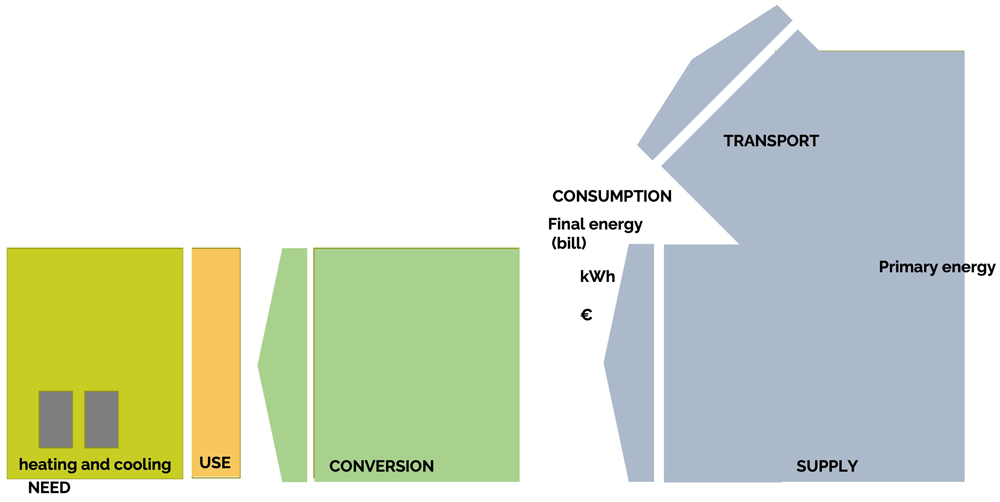
Figure 1. Baseline - Adapted from the literature.
This figure has been reproduced with permission from Miguel Mitre (2023).
Scenario 1: Improvement of the heating system (Figure 2)
Figure 2 shows the improvement of the building's heating system addressed alone by installing an air-source heat pump, without taking the envelope optimisation into account first. Although an improvement on the baseline scenario is shown, with a reduction of primary energy, this is not the most efficient way to achieve overall building energy efficiency.
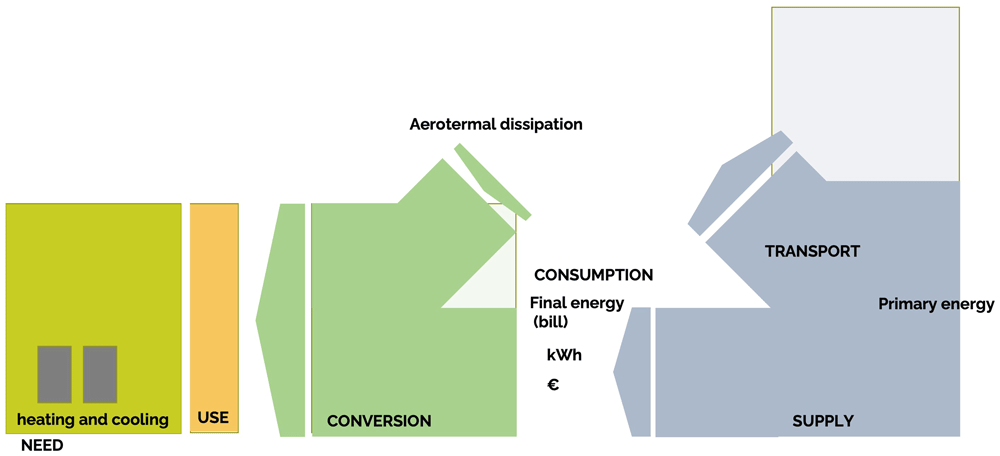
Figure 2. Installation of an aerothermal heat pump - Adapted from the literature.
This figure has been reproduced with permission from Miguel Mitre (2023).
Scenario 2.1: Building Envelope Optimisation (Figure 3)
On the other hand, if improvements are first carried out on the building envelope, the building's heating and cooling needs are reduced. Next, the aerothermal heat pump system is installed and the user is trained in optimal operation, thus leading to lower energy demand, and hence, consumption, as shown in the following figures.
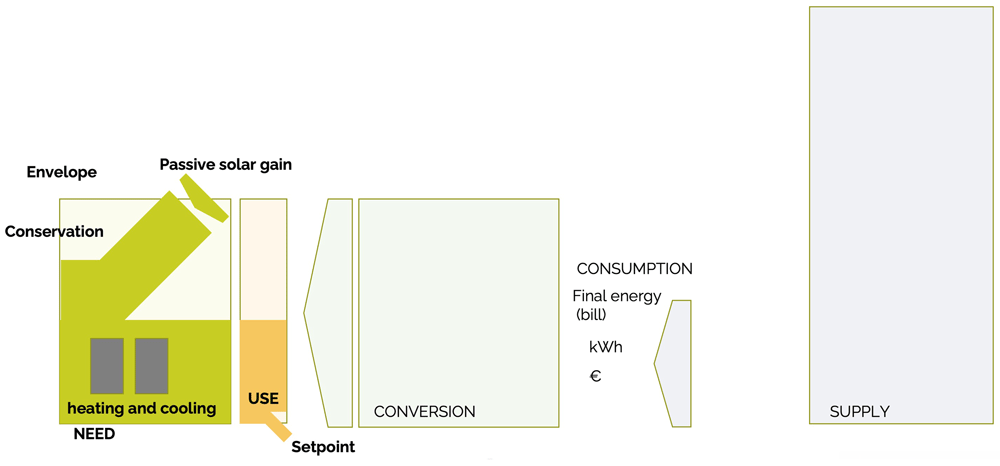
Figure 3. Key aspect: optimisation of the envelope before the installation of an aerothermal heat pump - Adapted from the literature.
This figure has been reproduced with permission from Miguel Mitre (2023).
Scenario 2.2: Heat pump optimization (Figure 4)
The top efficiency level of the building itself is achieved when the air-source heat pump is replaced with a ground-source geothermal heat pump. In this way, the external energy supply dependence can be further reduced, since geothermal systems offer higher efficiency due to the stable ground temperature, and the primary energy required is limited (Figure 2 compared to Figure 3). In addition, geothermal systems have a low heat island effect, which creates a virtuous circle around the building.
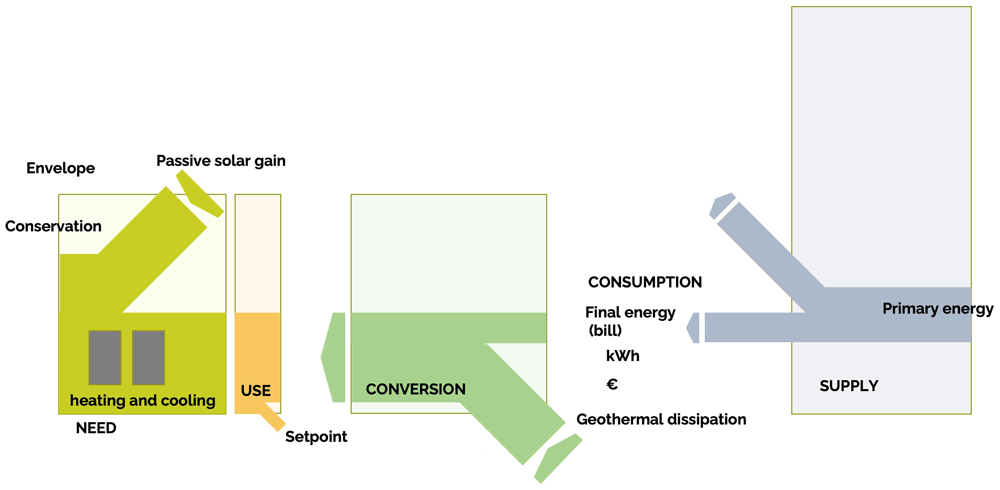
Figure 4. Installation of a geothermal heat pump in addition to optimisation of the envelope & building use - Adapted from the literature.
This figure has been reproduced with permission from Miguel Mitre (2023).
Scenario 2.3: Achieving Self-Sufficiency (Figure 5)
Finally, in this final stage (Figure 5), the potential for self-sufficiency emerges, as installing thermal solar/PV systems can enable users to achieve a net-zero or even a positive energy balance.
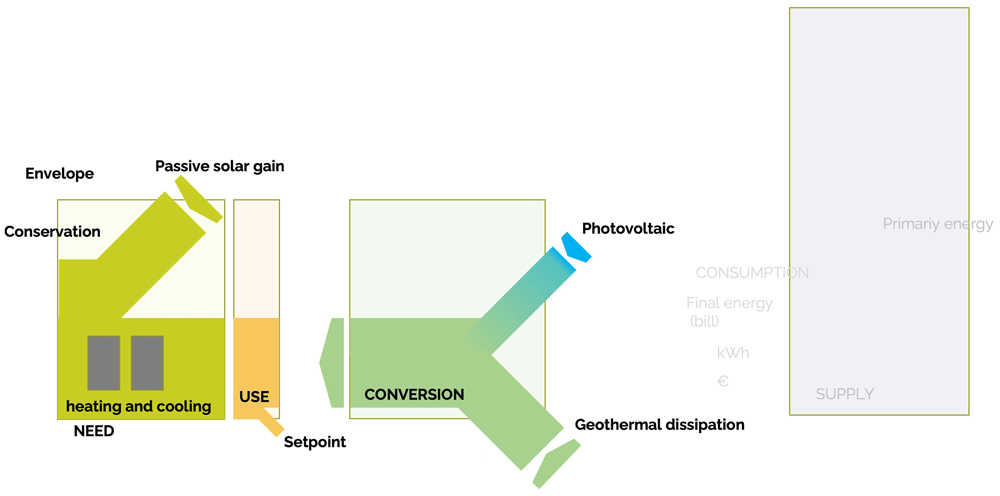
Figure 5. Solar energy (PV) in addition to installation of a geothermal heat pump in addition to optimisation of the envelope & building use - Adapted from the literature.
This figure has been reproduced with permission from Miguel Mitre (2023).
By following this step-by-step approach, building renovations can achieve significant energy savings and progress towards net-zero or positive energy goals. The key takeaway is the logical order of interventions:
Optimise the building envelope to minimise energy demand.
Right-size the heating system based on the reduced demand.
Integrate renewable energy sources to further reduce reliance on external energy.
Pillar B: Defining the Construction/Renovation Process Phases
EPH implementation is essential to boost energy efficiency, lower CO2 emissions, and improve living conditions. However, EPHs are hampered by different obstacles. To successfully overcome these obstacles an extensive understanding of the renovation and new construction process phases is required since each phase of the process poses different problems. Building on established expertise and frameworks such as the (Millin & Bullier, 2021; RIBA Architecture, 2020); Laghi et al., 2021), this granular approach allows for a thorough definition of the renovation/new construction process phases. A key innovation of LEGOFIT lies in integrating circularity principles into the process phases. By incorporating tools like the material passport and a dedicated end-of-process phase, the Project promotes material reuse and recycling, thus enhancing the EU decarbonization efforts. This comprehensive methodology is detailed in Table 1 by comparing the LEGOFIT approach with traditional approaches like the RIBA Plan of Work and the Millin Bullier research.
Table 1. Comparison between the RIBA Plan of Work, the Millin Bullier, and the LEGOFIT Approach.
| RIBA | MILLIN / BULLIER | LEGOFIT on the basis of the EOS
practice and experience |
|---|
| 01 | DEMAND GENERATION |
| | 1. INFORMATION / MARKETING | Information/marketing |
| | 2. DETECTION | Detection |
| | | Designer - client relationship
establishment |
| | | Initial information input |
| 02 | DIAGNOSIS |
| | 3. SIMPLIFIED DIAGNOSIS AND
RECOMMENDATIONS | |
STRATEGIC DEFINITION
(clients requirement
confirmation) | | Final specification definition |
| | 6. FINANCING PLAN | First Financial plan |
PREPARATION AND
BRIEFING | | Diagnosis, viability and alternatives |
| | | Form, performance and cost
agreement |
| 03 | DESIGN |
| | 5. SELECTION OF COMPANIES | Preselection of providers |
| CONCEPT DESIGN | 4. PROJECT DESIGN | Preliminary or concept design |
| SPATIAL COORDINATION | | Grants application |
| | | Grants awarding |
| | | Community contract confirmation |
| | | Schematic or basic design |
| | | Building permit application |
| | 7. FINANCING SOLUTIONS | Financial plan confirmation |
| TECHNICAL DESIGN | | Detailed, technical or executive design |
| 04 | INTERVENTION |
MANUFACTURING AND
CONSTRUCTION | 8. RENOVATION WORK | Building permits confirmation |
| | | Operative financing |
| | | Insurance |
| | | Final Providers selection |
| | | Builder selection |
| | | Builder contracting |
| | | Site preparation |
| | | Manufacturing |
| | | Construction (Intervention itself) |
| | 9. WORKSITE SUPERVISION/
RECEPTION OF THE WORK | Construction management and
supervision |
| | | Commissioning |
| | | Documentation |
| HANDOVER | | Reception of the building |
| | | Legalisation |
| | | Other administrative procedures |
| 05 | OPERATION |
| USE | 10. QUALITY ASSURANCE,
GUARANTEES AND FOLLOW-UP | Occupation |
| | | Operation startup |
| | | Energy management |
| | | Operation optimisations |
| | | Occupancy satisfaction |
| | | Operation results confirmation |
| | | Normalised operation |
| | | Maintenance |
| 06 | REPLICATION |
| | | STEPPED POSITIVE ENERGY
TRANSITION |
| | |
| | |
| | | Deconstruction & Reused Materials and
Components Market: This final, long-
term phase focuses on the building's
future. Deconstruction, a sustainable
dismantling approach, involves carefully
taking apart the building at the end of
its lifespan. |
LEGOFIT not only streamlines the renovation process but also offers a valuable model for new construction projects, thus providing a robust and adaptable framework and contributing to the advancement of sustainable and energy-efficient building practices.
Pillar C: Activating Different Testbeds to Demonstrate the LEGOFIT Viability
A key component of the LEGOFIT approach is the implementation of the Project across diverse pilot contexts - Hungary, Luxembourg, Spain, The Netherlands, and Turkey. These pilots provide real-world test cases, demonstrating the adaptability and effectiveness of the LEGOFIT framework across contexts characterised by different geographical locations, regulatory environments and Project scales. Therefore, findings from these pilot projects provide valuable feedback on common and specific barriers/drivers, allowing the refinement of the framework applicability and replicability across a wider range of contexts.
Pillar D: Setting up the LEGOFIT Stakeholder Community
This pillar focuses on establishing a community of stakeholders involved in the building renovation/new construction process. The LEGOFIT Stakeholders' Community aims to bring together diverse stakeholders, including local pilot actors, technology providers, public authorities, and research organizations, to connect the project with replication areas and the EU market. By bringing together diverse perspectives, the LEGOFIT process aims to identify and address potential barriers and drivers related to energy-efficient building practices. This collaborative approach ensures that the LEGOFIT solutions are practical, relevant, and widely applicable.
The members of the LEGOFIT Stakeholders Community belong to a wide variety of backgrounds, namely:
local pilot players, including government agencies, utility businesses, technology suppliers, and research groups that are directly associated with the LEGOFIT pilot initiatives.
professionals in the construction value chain, including contractors, architects, engineers, and material suppliers.
researchers and academics, including experts in energy efficiency, building technology, and sustainable construction.
end users and citizens e.g. people who live in energy-positive buildings.
The stakeholders of the LEGOFIT Community were identified according to the four-level approach devised within AÚNA, The Spanish permanent multilateral Smart Finance FORUM for Smart Buildings, Coordinated by Emilio Miguel Mitre on behalf of GBCE. EU’s Horizon 2020 Coordination and Support Action project# 957119 (November 2020 to October 2022). One example is the institutional side:
FIRST LEVEL (SECTOR): Public Sector
SECOND LEVEL (SUBSECTOR): Administration
THIRD LEVEL (CATEGORY): Central government
FOURTH LEVEL (SUBCATEGORY): Republic of Turkey Ministry of Environment, Urbanisation and Climate Change
LEGOFIT uses a two-step process to map the stakeholders and interact with them in an efficient way. The first step consists in devising stakeholder murals identifying important stakeholders in each pilot project, and showing their responsibilities, industries, and contact details. The second step is based on actor-network maps illustrating the stakeholder connections.
Each stakeholder is essential to the LEGOFIT project's success. The community fosters collaboration and knowledge exchange through activities like webinars, workshops, and training sessions. It encourages such as the adoption of EPH solutions by sharing best practices, addressing common challenges, and promoting innovative approaches across sectors.
During workshops and events Figure 6 held throughout the LEGOFIT project lifetime, key stakeholders are expected to actively participate in sharing, debating, and presenting their experiences and resources. Written informed consent was obtained from each stakeholder in the community'. They gave consent for the collection, recording, processing, storage and transfer of personal and sensitive personal data within the framework of the LEGOFIT project (Grant Number: 101104058). Members of the community put forward discussion points and share the main obstacles/drivers, give feedback on the LEGOFIT platform, increase awareness and spread information, thus promoting the LEGOFIT project.
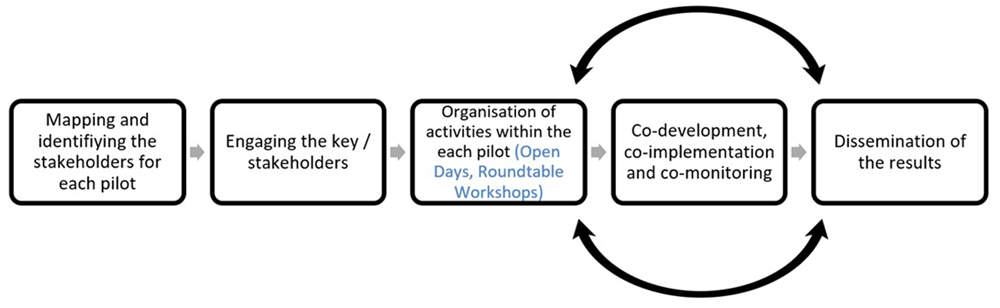
Figure 6. Mapping of the activities of the LEGOFIT Stakeholder community.
LEGOFIT methodology for identifying and mapping barriers and drivers toward EPH in the pilot countries
To address the complex challenges of EPH implementation, the LEGOFIT Project employs a comprehensive methodology in four main steps, shown in and described below (Figure 7).

Figure 7. Methodology to identify and map barriers and drivers towards EPH in the LEGOFIT Project.
Setting up the framework
Firstly, a structured framework was devised to categorize and map the barriers and drivers identified within the LEGOFIT project. The barriers and drivers were analysed based on the features listed in Table 2.
Table 2. Features of the barriers and drivers analysed within LEGOFIT.
| BARRIERS | DRIVERS |
|---|
Categorisation | Classification of the barrier
based on its inherent nature, such as technical,
regulatory, financial, or social. | Categorisation | Classification of the driver based on its inherent
nature, such as technical, regulatory, financial, or social. |
Description | Detailed characterization of
the barrier, outlining its key features, potential
consequences, and its influence on project outcomes | Description | Detailed characterization of the driver, outlining its
key features, potential consequences, and its influence on project
outcomes |
Contextual Factors | Identification of any
geographical, cultural, or project-specific factors
that may influence the manifestation or severity of
the barrier. | Contextual Factors | Acknowledges the unique context of the
pilot project locations and their role as crucial testing grounds for
proposed solutions. |
Stakeholder Category | Determination of
the stakeholders affected by or contributing
to the barrier, enabling the identification of
those requiring support or potentially hindering
progress | Stakeholder Category | Specifies the stakeholder groups who are
positioned to leverage the identified driver to their advantage. |
Phase of Occurrence | Assessment of the
barrier's impact relative to the project lifecycle,
categorizing it based on the stage where its
influence is most pronounced (e.g., design,
implementation, operation). | Phase of Occurrence | Determines the specific project phase(s) in
which the influence of the driver is most pronounced and when the
driver can be effectively exploited at most |
Project Contribution | Evaluation of the project's
potential to address the barrier through targeted
interventions and solutions. | Project Contribution | Explicates how the project can provide
enhanced support to stakeholders in effectively capitalizing on the
identified driver. This encompasses the design and refinement of
services or solutions that facilitate the optimal utilization of the driver's
potential. Furthermore, it underscores the project's role in amplifying
driver exploitation to achieve augmented project outcomes and
maximized benefits for all stakeholders. |
Scope of Applicability | Determination of the
barrier's relevance to standard project practices
versus its specificity to projects with ambitious
objectives or innovative approaches. | Scope of Applicability | Determination of the driver's relevance
to standard project practices versus its specificity to projects with
ambitious objectives or innovative approaches. |
By employing this comprehensive framework, the LEGOFIT project gains a deeper understanding of the barriers and drivers that will influence its implementation. This knowledge allows for the development of targeted interventions and solutions that will maximise the Project's positive impact while mitigating potential challenges.
Data collection
The data was collected in two main steps: literature review and collaborative mapping workshop with Pilot Leaders.
Firstly, the LEGOFIT Project Partners, in particular the Pilot Leaders, carried out a comprehensive review of existing literature, encompassing research papers (D‘Oca & op‘t Veld, 2018; European Environment Agency, 2023; Kangas et al., 2018; Lassandro et al., 2024) and reports developed within the framework of ongoing and past EU projects focused on building renovation and construction. This extensive research allowed the Consortium to gain an overview of established/innovative methodologies and best practices in building renovation/new construction processes and to be reliably informed about obstacles and challenges that may hinder the successful implementation of EPHs.
Secondly, the profiling of the barriers and drivers was completed by directly involving the LEGOFIT Pilot Leaders in a collaborative two-day mapping workshop. The workshop allowed the Consortium to validate the barriers and drivers identified through the literature analysis and to identify further barriers and drivers in the LEGOFIT Pilot Countries. It was also possible to collect suggestions for exploiting the potentialities/drivers and overcoming the barriers.
The methodology of the workshop was a brainstorming session, conducted by employing a Mural Online Platform with virtual sticky notes (Figure 8 and Figure 9) to represent the barriers and drivers identified within the framework established in the previous paragraph. This visual representation facilitated the identification of clear relationships and potential cause-and-effect chains between the identified factors.
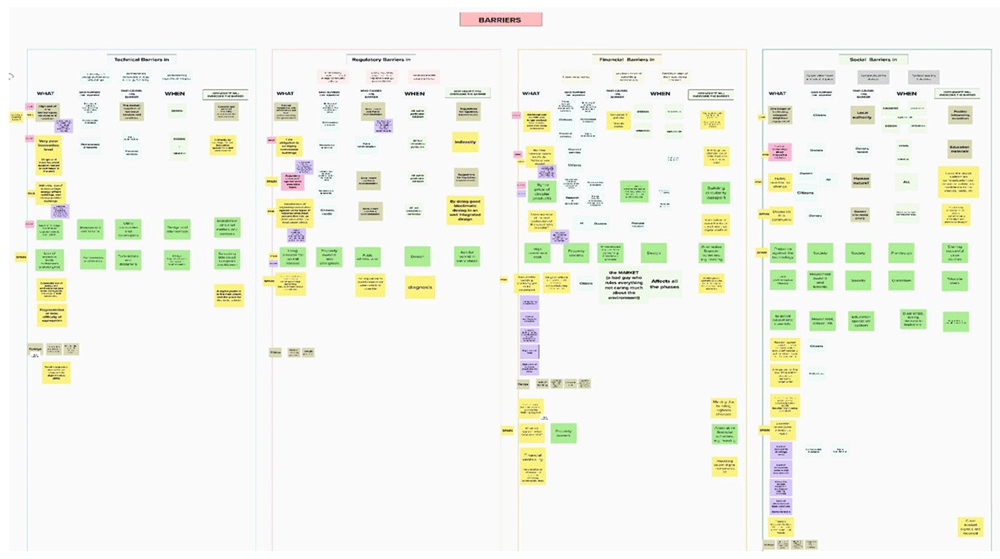
Figure 8. Barriers identified for each LEGOFIT Pilot Country- Mural Platform Screenshot.
The figure was prepared by the manuscript authors in response to feedback from the pilot leaders.
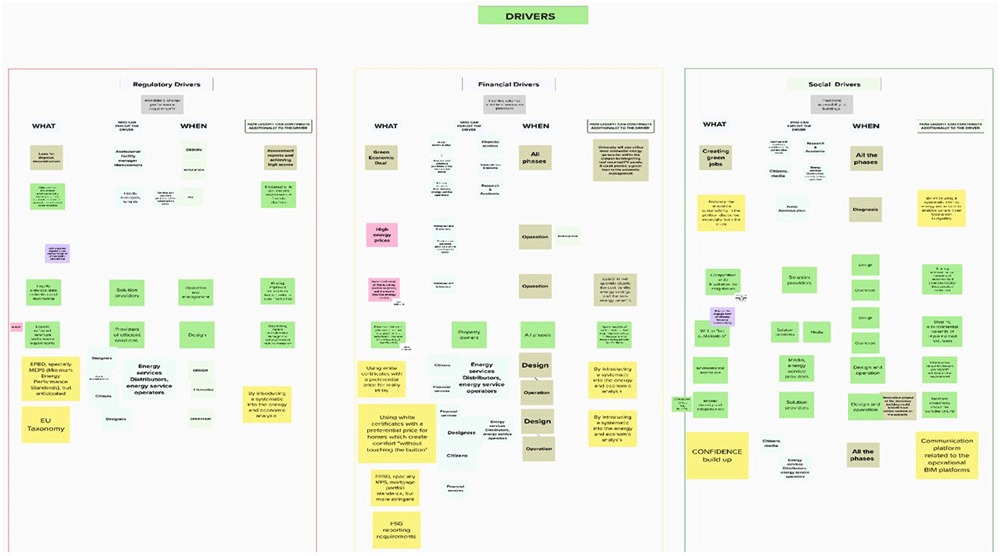
Figure 9. Drivers identified for each LEGOFIT Pilot Country - Mural Platform Screenshot.
The figure was prepared by the manuscript authors in response to feedback from the pilot leaders.
Data analysis
The project partners' productive collaboration during the workshop enabled the Consortium to effectively launch into the analysis phase of the barriers and drivers. This early start facilitated a comprehensive assessment and allowed categorising and prioritising the barriers/drivers based on their impact and potential for intervention. Following the workshop, a qualitative analysis was conducted to select the most frequent barriers/drivers and delve deeper into the insights collected from the brainstorming notes. This analysis provided the Consortium with valuable insights into the recurring key themes and the challenges behind the identified barriers and drivers, leading to more informed decision-making.
Validation and refinement
Following the collaborative workshop, the resulting Mural template was disseminated to all the Project partners for feedback and refinement. This key validation step ensured that the collected data accurately reflected the broader Project context and addressed potential blind spots. The following paragraph illustrates the outcomes of the validation phase.
This four-step LEGOFIT methodology provided a comprehensive approach which combines the outcomes of the literature research with real-life implementation. This knowledge about barriers/drivers can then be used to effectively develop targeted interventions and strategies for optimizing project outcomes, thus enhancing efficiency, and ultimately contributing to a more successful and sustainable built environment. Moreover, the methodology offered by LEGOFIT is adaptable, since it was implemented in very different renovation/new construction processes and contexts of the Pilots.
Results and discussion
This part of the paper focuses on the potential contributions that LEGOFIT offers to tackle the barriers and leverage the drivers characterising the extremely complex and fragmented renovation/new construction processes.
Technical barriers
Homeowners and asset owners are the stakeholders worst affected by technical barriers in deep renovation/new construction projects, particularly those aimed at implementing EPHs. This is due to limited awareness of the substantial benefits of highly efficient buildings (i.e. sustainable building does not occupy a high position in their interest rank) and a lack of the necessary knowledge to face the complexities of the process. While the design phase presents the most significant technical barriers to energy-efficient housing, the approaches of public institutions, financial institutions, and the construction industry could inadvertently amplify these challenges. Aligning energy efficiency targets with feasible solutions and equipping the workforce with the necessary skills will be crucial for advancing the adoption of energy-efficient housing solutions.
The LEGOFIT project aims to accelerate the transition towards EPHs by addressing key technical barriers hindering the EPH widespread adoption through a multi-faceted approach encompassing the following three main strategies.
1. Enhancing Innovation - BIM Integration, Digital Twins and Open Innovation Community
BIM Integration and Digital Twins. LEGOFIT utilises Building Information Modeling (BIM) and Digital Twin technology to create a holistic digital representation of buildings. This improves decision-making throughout the building lifecycle, addresses knowledge gaps by providing a centralised information repository, and enables detailed renovation designs.
Open Innovation Community - The Open Innovation Community is part of the LEGOFIT stakeholder Community and fosters collaboration amongst Building Energy Management (BEM) professionals. This platform facilitates knowledge sharing, accelerates the development of innovative solutions, and promotes best practices within the EPH sector.
2. Improving Efficiency
Streamlined Data Aggregation - The LEGOFIT platform addresses data fragmentation issues by streamlining data aggregation from the different sources relevant to the renovation/new construction process. This centralised approach provides a comprehensive understanding of building performance, leading to more informed decision-making and cost optimisation.
3. Upskilling
Targeted Training Programs - To address the shortage of skilled professionals in the BEM sector, LEGOFIT provides ad-hoc training for both industry professionals and construction workers. This upskilling initiative aims to bridge the skill gap and equip the workforce with the expertise needed to effectively implement and manage energy-efficient technologies.
4. Improving Collaboration Among Stakeholders
LEGOFIT Stakeholder Community: LEGOFIT establishes a dedicated Stakeholder Community to foster collaboration amongst the diverse actors involved in the building lifecycle, including architects, engineers, contractors, and building owners. This collaborative approach ensures alignment on project goals, facilitates effective communication and promotes coordinated action towards EPH implementation.
Regulatory barriers
Both homeowners and professionals across the construction value chain experience adverse effects. These regulatory barriers affect all stages of renovation and construction projects, with the design phase being particularly impacted.
Regulatory constraints in the building sector substantially hinder the deployment of energy-efficient approaches, limiting market development.
Using a three-pronged strategy, LEGOFIT promotes a proactive approach to tackle regulatory barriers hampering the implementation of EPHs by:
1. advocating for improved regulations and incentives – Since inadequate rules and limited incentives hinder the adoption of sustainable building techniques, LEGOFIT promotes the implementation of higher energy efficiency standards, resource conservation, and circular economy concepts in building codes and regulations to enhance sustainability.
2. recommending regulatory improvements - By leveraging real-world data and stakeholder input, the project identifies areas for regulatory improvement and proposes concrete changes in order to:
• streamline permit processes - Promoting best practices can simplify application procedures, reduce bureaucratic hurdles, and accelerate approval timelines for sustainable building projects.
• address regulatory constraints on renewable energy sources - LEGOFIT identifies and fosters the adoption of best practices for regulatory barriers that specifically hinder the integration of renewable energy technologies in buildings
• promote retrofitting vs new construction - LEGOFIT advocates for regulations that encourage and incentivise the renovation of existing buildings rather than new construction.
3. Promoting reuse and recycling of resources – LEGOFIT champions the development of effective regulations and certifications for re-used and recycled building materials, namely:
• Material Passports - Documents that provide detailed information about the composition, origin, and environmental impact of building materials, facilitating their reuse and recycling.
• Circular Building Passports - Comprehensive documents that track the lifecycle of building materials and components, enabling their reuse and repurposing in future construction projects.
Financial barriers
Financial barriers adversely affect all the stakeholders involved in the EPH retrofitting/construction value chain and hamper the whole process of renovation/construction. These barriers, already present in standard renovation/new construction processes, are amplified in EPH interventions, which are inherently more complex.
The LEGOFIT innovative platform aims to address the manifold financial barriers to EPHs by promoting cost reduction, enhancing financial transparency, fostering suitable business models, and encouraging a circular economy. The LEGOFIT strategy is founded on four main pillars.
1. Promoting Cost Reduction for Technology and Services
The LEGOFIT Platform counters the high costs of new technologies, services, and solutions associated with EPHs by conducting technical and financial assessments to identify cost-effective options, facilitating access to affordable efficient technologies, and promoting the use of standardised solutions to reduce implementation costs.
2. Enhancing Clarity and Potential Cost Reduction for EPHs
The LEGOFIT Platform addresses the lack of transparency regarding the costs and benefits of EPHs by promoting transparency in pricing and financing options. In addition, LEGOFIT offers clear information on the long-term financial benefits of EPHs and explores potential ways to decrease the additional costs associated with EPHs, particularly those related to longer payback periods. This increased transparency enables stakeholders to make informed decisions and potentially reduce costs associated with EPHs.
3. Overcoming the Lack of Suitable Business Models
LEGOFIT tackles the lack of suitable business models for EPHs and of financial space for Positive Energy Districts (PEDs) by replicating successful existing business models for renovations to demonstrate the financial viability of interventions. LEGOFIT also implements crowdfunding, which can be used alone or in association with existing business models to unlock alternative funding sources for building intervention. In any standard renovation intervention, the cost of the works is expected to produce a value increase of the home at least equal to the renovation cost. If it is an energy renovation, the value will evolve better in the future. This is less clear so far. Regarding the EPH interventions, the additional cost to achieve a positive balance does not yet have financial mechanisms to make it desirable.
4. Promoting Circular Economy and Material Reuse
Since the construction industry generates significant waste and contributes to environmental concerns, LEGOFIT promotes a circular economy approach by introducing Material Passports and Circular Building Passports to track and facilitate material reuse. The combined action of the LEGOFIT Platform, relevant marketplace and stakeholder community makes it possible to foster a reduction in the price of circular products through increased demand and accessibility. The synergy of the three LEGOFIT tools also facilitates reselling reused/recycled materials and components, thus creating a secondary market.
Social barriers
Social barriers in the EPH processes affect homeowners, asset owners, and, more generally, citizens. These barriers, already present in standard renovation/new construction throughout the process, are amplified in EPH interventions, inherently more complex and requiring additional upfront money. The LEGOFIT approach to tackling social barriers is based on five main tools.
1. User-Friendly Platform
The LEGOFIT Platform offers users tailored solutions based on individual needs, clearly presents the potential benefits/costs of EPH, and provides the necessary information for informed decision-making.
2. Resident-Centred Crowdfunding
LEGOFIT fosters a sense of community ownership and participation through resident-centred crowdfunding. This initiative involves residents directly in the financing of retrofitting/new construction projects, fostering a sense of collective responsibility and leading to greater acceptance of EPHs. By providing an alternative financing mechanism, LEGOFIT makes EPH retrofits more accessible to a wider range of residents.
3. POESY Tool
LEGOFIT employs the POESY tool to bridge the gap between theoretical predictions and actual user experience. POESY gathers real-time occupant feedback on comfort levels, thus allowing discrepancies between expected and actual performance to be addressed. By ensuring that EPHs meet the comfort and well-being needs of occupants, LEGOFIT builds trust and confidence in EPH technology.
4. LEGOFIT Stakeholder Community
The LEGOFIT stakeholder community plays a key role in fostering a collaborative environment which accelerates the widespread adoption of EPHs. The Community facilitates communication and collaboration among key stakeholders and provides a platform for exchanging information, best practices, and lessons learned, thus creating a supportive network for individuals and professionals.
5. Targeted and Accessible Training
LEGOFIT provides comprehensive training to ensure that stakeholders have the necessary knowledge and skills to implement EPHs effectively. Conducted with the support of the LEGOFIT Pilot leaders, these programs meet the specific needs of the different stakeholders, employ diverse formats and channels to reach a wide audience, and offer practical insights through real-world examples.
Drivers
The paper goes on to analyse the role external drivers, namely regulations, incentives, and social enablers, can play in supporting stakeholders' decisions regarding EPH. It highlights how these factors can be exploited by the LEGOFIT Project, thus driving innovation within EPH implementation.
Regulatory drivers
Regulatory drivers can be exploited throughout the renovation/new construction of EPHs, especially in the design and operation phase. By integrating a systematic methodology for energy and financial analysis into a holistic platform, LEGOFIT can effectively exploit the following drivers:
1. Anticipating Carbon Footprint Regulations
LEGOFIT anticipates future regulations on carbon footprints for buildings. The LEGOFIT platform allows assessing and optimising the carbon footprint of new constructions and renovations. This proactive approach supports the design of energy-efficient buildings that comply with future carbon regulations. By integrating carbon footprint analysis into the design phase, LEGOFIT enables stakeholders to make informed decisions that minimise environmental impact.
2. Rolling out Eco-Friendly Materials
LEGOFIT incorporates the wide use of eco-friendly materials into design and operational recommendations. This ensures that the Project aligns with existing and future regulations promoting environmentally responsible practices.
3. Addressing Forthcoming Minimum Energy Performance Standards
LEGOFIT proactively addresses forthcoming minimum energy performance standards by designing homes that meet the EU requirements in advance. This forward-thinking approach ensures that buildings designed using LEGOFIT comply not only with current regulations but also with future energy efficiency requirements.
4. Leveraging Legally Enforced Performance Monitoring
The LEGOFIT platform enables continuous tracking and optimization of building performance, thus facilitating compliance with legally enforced performance monitoring requirements. By providing tools for real-time data collection and analysis, LEGOFIT allows building operators to address performance gaps, ensuring that buildings meet regulatory requirements throughout their lifecycle. This data-driven approach promotes transparency and accountability in the building operational phase.
Financial drivers
Driven by factors like the European Green Deal and stricter building codes, EPHs offer a wealth of opportunities for various sectors, including finance, design, and energy, while providing homeowners with cost savings, enhanced comfort, and environmental benefits. This transition fosters a mutually beneficial environment where all stakeholders can contribute to and profit from a more sustainable future. The LEGOFIT project is strategically positioned not only to address the growing need for EPHs but also to capitalise on several key financial drivers. By integrating a systematic methodology for energy and financial analysis into the LEGOFIT comprehensive platform, LEGOFIT aims to accelerate the transition towards sustainable and financially viable housing solutions.
The LEGOFIT Platform supports the exploitation of the following financial drivers:
1. Capitalising on the Green Economic Deal
LEGOFIT aligns with the sustainable investment priorities of initiatives like the European Green Deal. This strategic alignment allows LEGOFIT to attract green financing opportunities and leverage public funding for sustainable development.
2. Exceeding Mortgage Portfolio Standards Related to Energy Performance
LEGOFIT designs homes that meet and exceed existing energy performance requirements. Besides ensuring compliance with current regulations, LEGOFIT homes potentially qualify for preferential mortgage terms or green mortgages, improving access to financing for homeowners and increasing the desirability of these properties.
3. Mitigating the Impact of High Energy Prices
In the context of rising energy costs, LEGOFIT promotes energy-efficient home designs and technologies that minimise energy consumption. This results in reduced energy bills for homeowners and increased resilience against fluctuating energy prices. By mitigating the financial burden of high energy costs, LEGOFIT makes EPH more appealing to potential homeowners and contributes to long-term cost savings.
4. Benefitting from Preferential Pricing for White Certificates
LEGOFIT incorporates bioclimatic principles into home designs, creating more comfortable and energy-efficient living spaces. This focus on passive design strategies and renewable energy sources enables LEGOFIT homes to qualify for white certificates (energy-saving certificates). White certificates can be traded for financial incentives, providing an additional revenue stream and further enhancing the financial viability of EPH.
Social drivers
By incorporating a systemic methodology for energy and financial analysis, the LEGOFIT platform is well-equipped to exploit the following social drivers and contribute to a more sustainable and resilient built environment.
1. Fostering Green Job Creation
By promoting EPH and supporting the development of the related industries, LEGOFIT stimulates demand for sustainable construction practices and technologies, thus contributing to the creation of green jobs within the building sector.
2. Elevating Sustainability in Political Discourse
LEGOFIT provides cities with concrete data and evidence of the benefits of EPH, empowering local authorities to make informed decisions and prioritise sustainability in their policies and initiatives. By showcasing the tangible advantages of EPH, LEGOFIT helps elevate sustainability to a prominent position in political discourse, encouraging policymakers to adopt effective regulations and incentives.
3. Increasing the Appeal and Desirability of EPH Leveraging Citizen Engagement Towards Sustainability
LEGOFIT actively engages citizens by demonstrating the tangible financial and environmental benefits of EPH. LEGOFIT raises awareness and showcases successful examples, encouraging individuals to adopt sustainable practices in their own homes and communities. This grassroots approach fosters a sense of collective responsibility and allows citizens to become active participants in the transition toward a more sustainable future.
4. Encouraging the Adoption of Sustainable Practices
LEGOFIT provides transparent and reliable data to support informed decision-making, demonstrating the financial viability and long-term value of sustainable practices and contributing to a shift towards a more sustainable construction industry.
5. Contributing to Energy Security and Independence
LEGOFIT contributes to increased energy security and independence at both the community and national levels by promoting EPHs that reduce reliance on external energy sources. EPH implementation reduces vulnerability to energy price fluctuations and geopolitical instability, leading to enhanced resilience and self-sufficiency in energy production.
Conclusion
The analysis highlights a multifaceted landscape of barriers and drivers influencing the adoption of EPHs across pilot countries. Common challenges, such as technical complexity and financial constraints, are particularly pronounced in projects targeting ambitious high-efficiency goals. These obstacles primarily affect stakeholders directly involved in the renovation or construction process, including contractors, architects, and homeowners.
The LEGOFIT Platform offers a comprehensive solution to tackle these challenges. It provides tailored financial and technical feasibility assessments for innovative solutions, leveraging Building Information Modeling (BIM) to enhance design and collaboration. A key component of the platform is the Stakeholders Community, a vibrant network of diverse stakeholders, including local technology providers, industry professionals, researchers, decision-makers, and citizens. This community fosters knowledge sharing, idea exchange, and the validation of the platform's effectiveness through talks, discussions, and events.
The analysis of drivers suggests that regulatory, financial, and social factors will primarily benefit service/solution providers and homeowners. LEGOFIT contributes by introducing a systematic methodological approach for energy and economic analysis, raising awareness of EPH benefits, and promoting efficient resource utilization throughout the renovation/construction process. By addressing barriers and leveraging drivers, LEGOFIT aims to accelerate the adoption of EPH and contribute to a more sustainable built environment.
Consent
Written informed consent was obtained from each stakeholder in the community'. They gave consent for the collection, recording, processing, storage and transfer of personal and sensitive personal data within the framework of the LEGOFIT project (Grant Number: 101104058).