Introduction
“The saddest aspect of life right now is that science gathers knowledge faster than society gathers wisdom.” Isaac Asimov
Researchers have been using a plethora of research approaches to explore, comprehend, develop, and test solutions for the progress of humankind (Williams, 2007). Even though the pace of producing data1 and the specialisation degree of experts (Young & Muller, 2015) have been increasing, there is a need for a better understanding of the long-term impact of such human activities (Mensah, 2019). We are witnessing a post-pandemic period in business and fashion is no exception. The trend is the decreasing fashion market growth for the next years. The fashion industry faces other numerous challenges, from the environmental cost of manufacturing (Bick et al., 2018; Pal & Gander, 2018), to the social issues (Adamkiewicz et al., 2022; Bick et al., 2018), and the economic unpredictable shifts (Castaneda-Navarrete et al., 2021; Fierro Hernandez & Haddud, 2018). These factors represent a global environmental justice dilemma supplemented with strong economic risks with no clear foreseen solution (Brydges et al., 2020; Galanakis et al., 2022; Pedersen et al., 2018).
Recently fashion brands like Zara and H&M have been under scrutiny due to their unsustainable practices (Dragomir & Dumitru, 2022). To meet a tentative solution, it is necessary to foster an enhanced research practice with standardised methodologies able to collect data, comprehend the patterns, and generate insightful conclusions that could be compared and widely disseminated. Therefore, scientific research might be seen as a useful tool to approach such issues. However, rigorous scientific standards must be present. To cite a wicked example, a broadly cited paper recently published in Nature Reviews Earth & Environment by Niinimäki and colleagues (2020) about the environmental impacts of the global clothing system used a reasonable amount of grey literature, presenting questionable methods and some contradictory estimations.
The objective of this systematic review is to critically analyse the most relevant fashion research methodologies published in scientific journals depicting the business, fashion, design, and sustainability arenas during the period ranging from 2015 and 2024. The decision to scope the search from 2015 onwards is justified by the Paris Agreement, since it was adopted by 196 Parties at the United Nations Climate Change (COP21) in Paris (France), on 12 December 2015. It represents “a landmark in the multilateral climate change process because, for the first time, a binding agreement brings all nations together to combat climate change and adapt to its effects”2. The Paris Agreement goal was to hold “the increase in the global average temperature to well below 2 ºC above pre-industrial levels (…) and to limit the temperature increase to 1.5 ºC above pre-industrial levels”2. Different from the Kyoto Protocol where the binding was signed to reduce greenhouse emissions, the Paris Agreement have no binding commitments, focusing on improving accountability (Doan et al., 2024). Despite its ambitious goals, the Paris Agreement reinforced the national sovereignty by recognising that there will not be forced and drastic emission cuts (Falkner, 2016). This light commitment cast doubts on the signatory’s ability to de-carbonise the global economy. Such superior aspirations and fade decisions may fail the expected and agreed goals depite recent optimistic results (Höhne et al., 2021; Meinshausen et al., 2022), mainly felt in developed countries (Salman et al., 2022). Still, these positive impacts are being questioned. Doan and colleagues (2024) found little effect on the green transition resulting from the commitments agreed for the Paris Agreement, pointing out the need for a greater effort to meet the terms.
This work ends by suggesting considerations that may guide future fashion research in terms of sustainable practice and production.
Method
The systematic approach here implemented was adapted from the PRISMA 2020 (Preferred Reporting Items for Systematic Reviews and Meta-Analysis) method (Page et al., 2021). The method consists of a checklist composed of 27 items and a flow diagram that guides the reporting of systematic reviews based on transparency, accuracy, and comprehensiveness. So PRISMA 2020 is used for clear and complete identification of the relevant literature under the objective of answering the research question: how has fashion research methodologies being implemented to achieve sustainability?
This question aims to challenge the numbness that the sustainability term has gained in the recent years (Free et al., 2024; He et al., 2022) and to highlight clues for a more rigorous research approach to achieve sustainability in the fashion practice. Deeply rooted in creativity fashion designers might be overlooking the research phase, jumping too fast to prototyping, decreasing the knowledge production that must be obtained throughout research. Since this study searches for reports about fashion research methods with the purpose of implementing sustainability projects, it intends to foster a more intensive reporting to allow critical evaluations, reproducibility and replicability.
Primary search - Identified studies via Scopus
Firstly, the records were identified through Scopus databases (Table 1). For the identification phase, a different combination of appropriate keywords was searched using “AND” or “OR” whenever applicable in the database. The first search on Scopus used the combination “fashion research” AND “fashion design” AND “sustainability”, resulting in 29,825 articles. The second search on Scopus used the combination “fashion research” AND “fashion design” AND “sustainability” AND (“methods” OR “methodology” OR “methodologies”) and was aimed at Business, Management and Accounting, and Environmental Science, due to the lack of fashion research papers in Scopus, resulting in 7,351 articles. Finally, the third search used the combination “fashion research” AND “fashion design” AND “sustainability” AND (“methods” OR “methodology” OR “methodologies”) AND (“limitations” OR “challenges”) AND “fashion industry” AND “environmental impact” AND “fashion research methods”, limited to the same fields, resulting in 3,144 articles. All searches found in Scopus were limited to Research Articles and Case Reports published between the years 2015 and 2023. Only Open access & Open archive were considered resulting in a total of 656 articles (Table 1).
Table 1. Primary research methodology description.
| Identification criterion | Description |
|---|
| Research objective | Investigate the impact of fashion research methodologies in sustainable design practice |
| Database | Scopus, assessed on April 15th 2023 |
| Article types | Research articles, Case reports |
| Keywords | Fashion research, sustainability, methods, methodology, methodologies, limitations, challenges, fashion industry, environmental impact, fashion research methods |
| Language | English |
| Research criteria | Based on 3 research criteria: (1) ‘fashion research’ and ‘fashion design’ and ‘sustainability’, (2) ‘fashion research and ‘fashion design’ and ‘sustainability’ and ‘methods’ or ‘methodology’ or ‘methodologies’ and limited to the subject areas ‘Business, Management and Accounting’ and ‘Environmental Science’, (3) ‘fashion research and ‘fashion design’ and ‘sustainability’ and ‘methods’ or ‘methodology’ or ‘methodologies’ and ‘limitations’ or ‘challenges’ and ‘fashion industry and ‘environmental impact’ and ‘fashion research methods’ and limited to the same subject areas. |
| Research years | 2015–2023 |
Secondary search - Identified studies via other databases
To overcome the limitation of the few entries recovered from Scopus focusing on fashion, design, and technology-related practice, an additional search was performed in Association for Computing Machinery (ACM) Digital Library, Design Research Society (DRS) Digital Library, and Taylor & Francis Online from 2020 to 2024. For the secondary search, the same strategy was performed. The scope of the search spanned from 2020 until 2024 to highlight the research performed in the post-COVID-19 pandemic period. Only Open Access Research Articles were included resulting in a total of 1,205 (n = 1,154 from ACM, n = 10 from DRS, and n = 41 from Taylor & Francis Online – 23 in CoDesign and 18 in International Journal of Fashion Design, Technology and Education (IJFDTE)) (Table 2).
Table 2. Secondary research methodology description.
| Identification criterion | Description |
|---|
| Research objective | Same as Primary search |
| Database | ACM and DRS Digital Libraries, and Taylor & Francis Online,
assessed on April 1st 2024 |
| Article types | ACM: Research articles, in Proceedings, PDF available;
DRS: Conference;
Taylor & Francis Online: Article, Design subject |
| Keywords | ACM: “Fashion” and “Sustainability” in Title, “Sustainable fashion” in Abstract;
DRS: “Sustainable fashion” and “sustainable fashion design” in Abstract
Taylor & Francis Online: “Sustainable Fashion” in the Codesign and IJFDTE |
| Language | English |
| Research years | 2020–2024 |
Studies screening and inclusion
To filter the retrieved records from the primary search, their titles and abstracts were assessed to check the relevance for the research objective. Using the PRISMA guidelines, from the initial 656 entries, a total of 49 were selected for relevance in answering the defined research question. From the initial 1,205 entries, 4 were selected from ACM, 6 from the DRS, and 8 from the Taylor & Francis Online (all from IJFDTE) based on relevance. A total of 67 records were analysed and the remaining 1,794 records were excluded (Figure 1).
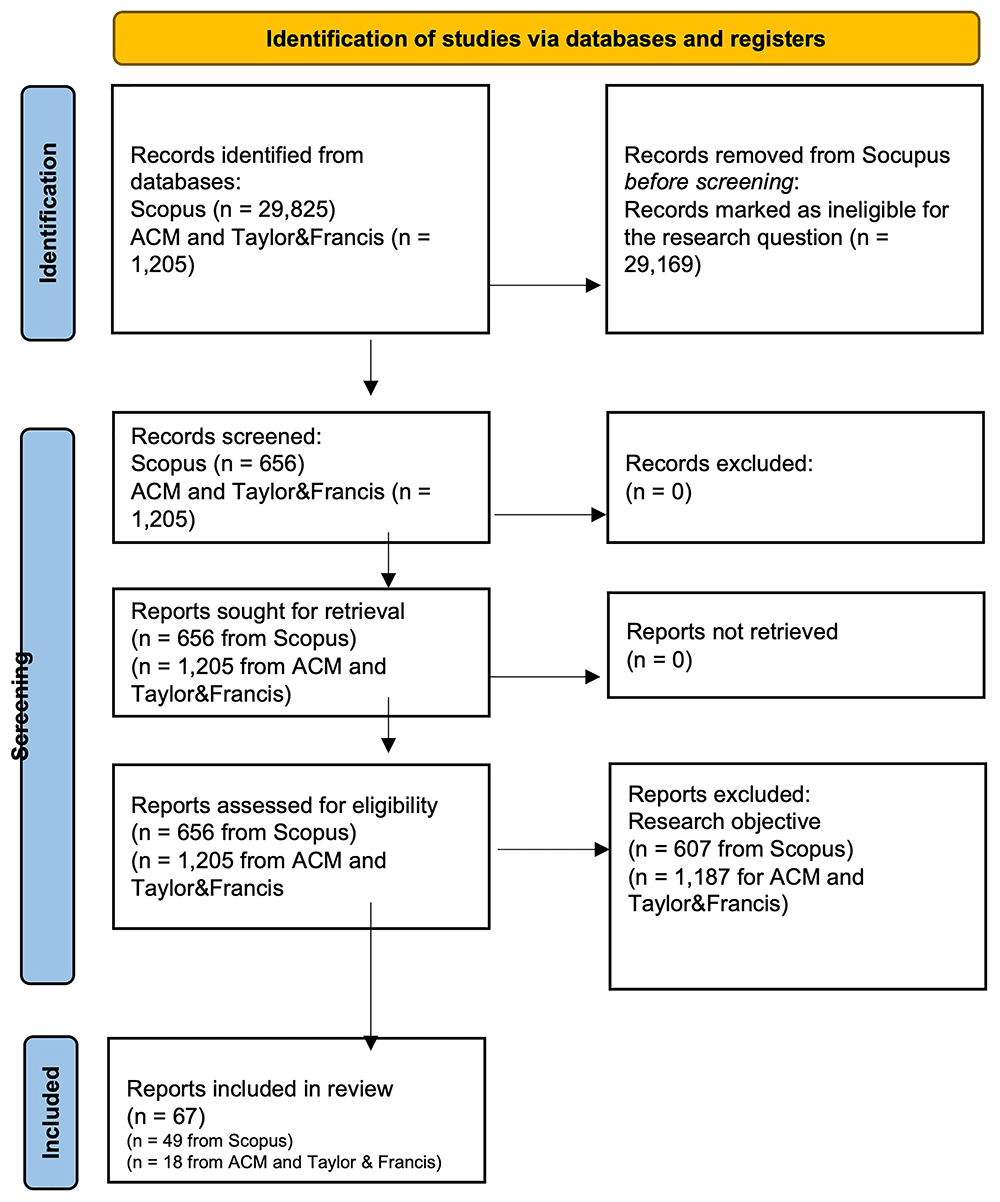
Figure 1. PRISMA flow diagram showing the identification, screening, and identification of studies to be included in the analysis.
Since the entries were filtered manually there is a potential risk of bias or exclusion of relevant papers. So, the results presented must be interpreted as not final. One important thing to be considered is the fragmentation of the literature in the scope of fashion research for sustainability. Of note is the fact that no open access article was retrieved by the search in CoDesign related to the sustainability of fashion, while 57 articles were retrieved by not selecting the open access mode. From these 57 records, not a single article matched the purpose of the research objective. Such fragmentation increases the challenge of reporting, comprehending, and comparing between research projects and increase difficulties in transferring the conclusions to non-academic contexts.
Results
The starting scope of this research was intended to span a longer timeline to consider initiatives about fashion design methodologies tackling sustainable challenges happening earlier than 2015. However, the high number of entries retrieved by the database in the recent years revealed that a strong interest in the sustainable aspect of fashion design and fashion industry is crescent. Despite the increased number of reports their content is fragmented and with reasonably documentation on the approaches.
Regarding the methods implemented and described by the analysed entries in the primary search, the most used research methods were interviews (n = 13), surveys (n = 11), and life cycle assessments (LCA) (n = 7). There were several research methods used by one study alone. They were the adaptive choice-based conjoint analysis, focus groups, and the two-round disaggregative Delphi approach (Table 3).
Table 3. Total number of studies retrieved in the primary search outlined per type of method.
| Type of method (n = total) | Reference |
|---|
| Adaptive choice-Based conjoint analysis (n = 1) | Fuchs & Hovemann, 2022 |
| Case study (n = 10) | Brydges, 2021; Camacho-Otero et al., 2019; Cooper & Claxton, 2022; Dragomir & Dumitru, 2022; Garcia-Ortega et al., 2023; Gossen & Kropfeld, 2022; López et al., 2023; Pal et al., 2021; Salmi & Kaipia, 2022; Valor et al., 2022 |
| Compositional analysis (n = 1) | Wesley et al., 2023 |
| Focus group (n = 1) | Aydin et al., 2023 |
| Framework development/ Theoretical model (n = 5) | Aydin et al., 2023; Kautish et al., 2023; Shamsuzzaman et al., 2023; Shou & Domenech, 2022; Turunen & Halme, 2021 |
| Index Decomposition Analysis through the Logarithmic mean divisia index, and decoupling analysis (n = 1) | Román-Collado et al., 2023 |
| Interactive action research (n = 1) | Sandberg, 2023 |
| Interview/ survey (n = 24) | Amasawa et al., 2023; Bhandari et al., 2022; Bocken & Konietzko, 2022; Dangelico et al., 2022; de Oliveira et al., 2022; Dhir et al., 2021; Dukovska-Popovska et al., 2023; Fontana et al., 2021; Fuchs & Hovemann, 2022; Gossen & Heinrich, 2021; Johnstone & Lindh, 2022; Laukkanen & Tura, 2022; Nayak et al., 2022; Padilha & Gomes, 2016; Pandey & Yadav, 2023; Persson & Hinton, 2023; Sandberg & Hultberg, 2021; Schmutz & Som, 2022; Scott et al., 2023; Siderius & Poldner, 2021; Singh et al., 2019; Shamsuzzaman et al., 2023; Xue et al., 2022 |
| LCA (n = 7) | Amasawa et al., 2023; Angelis-Dimakis et al., 2022; Martin & Herlaar, 2021; Mölsä et al., 2022; Shou & Domenech, 2022; Stone et al., 2020; Wesley et al., 2023 |
| Material flow analysis (n = 1) | Schmutz & Som, 2022 |
| Material flow analysis and carbon cost analysis (n = 1) | Millward-Hopkins et al., 2023 |
| Mathematical approach (n = 1) | Peters et al., 2021 |
| Scanning electron microscopy (n = 1) | Wesley et al., 2023 |
| Scenario development (n= 2) | Repp et al., 2021; Shou & Domenech, 2022 |
| Social LCA (n = 1) | Martin & Herlaar, 2021 |
| Stakeholder analysis (n = 1) | Singh et al., 2019 |
| Systematic analysis (n = 2) | Cooper & Claxton, 2022; Jain et al., 2021 |
| Systems model technique (Causal loop diagram (n = 1) | Singh et al., 2019 |
| Thematic analysis (n = 1) | Bocken & Konietzko, 2022 |
| Thermal transformation of waste cotton textile into carbon fibre (n = 1) | Wesley et al., 2023 |
| Thermo-gravimetric analysis (n = 1) | Wesley et al., 2023 |
| Two-round disaggregative Delphi approach (n = 1) | Luoma et al., 2022 |
| X-ray diffraction (n = 1) | Wesley et al., 2023 |
In terms of the limitations for sustainable fashion research during the primary search, they can be summarised by:
- Low number of participants/ objects under study, limited geographies included (namely one country or in the same region), and limited range of time of the participation (Aydin et al., 2023; Bhandari et al., 2022; Bocken & Konietzko, 2022; Brydges, 2021; Camacho-Otero et al., 2019; Dangelico et al., 2022; de Oliveira et al., 2022; Dhir et al., 2021; Fontana et al., 2021; Fuchs & Hovemann, 2022; Garcia-Ortega et al., 2023; Gossen & Heinrich, 2021; Gossen & Kropfeld, 2022; Kautish et al., 2023; Luoma et al., 2022; Nayak et al., 2022; Padilha & Gomes, 2016; Pandey & Yadav, 2023; Román-Collado et al., 2023; Salmi & Kaipia, 2022; Sandberg & Hultberg, 2021; Scott et al., 2023; Shamsuzzaman et al., 2023; Siderius & Poldner, 2021; Turunen & Halme, 2021; Valor et al., 2022; Xue et al., 2022).
- Limited knowledge and few technological tools from and for the stakeholders to enhance sustainability and/ or collaborative actions (Bhandari et al., 2022; Cooper & Claxton, 2022; Dragomir & Dumitru, 2022; Fuchs & Hovemann, 2022; Gossen & Kropfeld, 2022; Kautish et al., 2023; Laukkanen & Tura, 2022; López et al., 2023; Luoma et al., 2022; Millward-Hopkins et al., 2023; Nayak et al., 2022; Pal et al., 2021; Repp et al., 2021; Román-Collado et al., 2023; Shou & Domenech, 2022; Siderius & Poldner, 2021; Valor et al., 2022).
- Limited scope of the developed method (Angelis-Dimakis et al., 2022; Aydin et al., 2023; Bhandari et al., 2022; Bocken & Konietzko, 2022; Dhir et al., 2021; Dragomir & Dumitru, 2022; Fuchs & Hovemann, 2022; Kautish et al., 2023; Laukkanen & Tura, 2022; López et al., 2023; Martin & Herlaar, 2021; Millward-Hopkins et al., 2023; Mölsä et al., 2022; Padilha & Gomes, 2016; Repp et al., 2021; Sandberg, 2023; Schmutz & Som, 2022; Scott et al., 2023; Shamsuzzaman et al., 2023; Shou & Domenech, 2022; Turunen & Halme, 2021; Valor et al., 2022).
There was also observed that no critical discussion was presented regarding the limitations of any particular method (Jain et al., 2021; Johnstone & Lindh, 2022; Persson & Hinton, 2023; Schmutz & Som, 2022; Stone et al., 2020; Wesley et al., 2023). All the limitations summarised above were highlighted by the respective authors which means that there is a chance of an underrepresentation or bias. This is exemplified by Bocken and Konietzko (2022) and Dhir and colleagues (2021) where it is assumed the replicability limitation of their interviewing and surveying methodology which was not assumed by the other researchers who also perform similar approaches.
According to the secondary research it was observed that more practical methods were employed to research sustainability in fashion (Table 4).
Table 4. Total number of studies retrieved in the secondary search outlined per type of method applied.
| Type of method (n = total) | Reference |
|---|
| Mixed method (survey, semi-structured interviews; moodboard, sampling, prototyping; autoethnography, recrafting); participatory prototyping semi-structured interviews) (n = 4) | Aspinall & Holroyd, 2024; Bennetta & Oeppen Hill, 2022; Forst, 2022; Maione, 2023 |
| Prototyping (n = 4) | Bolzan et al., 2022; Pervez, 2023; Ravnløkke, 2021; Wood et al., 2022 |
| Interviews/ survey (n = 3) | Claussen et al., 2023; Potdar et al., 2024; Riesgo et al., 2023 |
| Case study (n = 2) | Baker & McNeill, 2024; Wenjing, 2021 |
| Simulation Model (forecasting tool; discrete event simulation, agent-based modelling, geographic information system) (n = 2) | Fani & Bandinelli, 2023; Sajja et al., 2021 |
| Action research (n = 1) | Wetherell et al., 2023 |
The main limitations of the methodologies applied throughout the retrieved studies during the secondary search are related to the following challenges:
- Resources (such as time, space, and equipment) (Bolzan et al., 2022; Forst, 2022; Maione, 2023; Pervez, 2023; Wetherell et al., 2023)
- Personal attributes and health (such as self-confidence, guilt, mental health) (Maione, 2023; Pervez, 2023; Wood et al., 2022)
- Efficacy and evaluation (Bolzan et al., 2022; Maione, 2023; Wenjing, 2021)
- Collaborative work (Forst, 2022)
- Future predictions (Claussen et al., 2023; Wenjing, 2021)
- Limited data and few variables (Aspinall & Holroyd, 2024; Baker & McNeill, 2024; Bennetta & Oeppen Hill, 2022; Claussen et al., 2023; Fani & Bandinelli, 2023; Potdar et al., 2024; Riesgo et al., 2023; Sajja et al., 2021).
The limitations identified by the secondary research are similar to the ones observed throughout the primary research. However, they may need further critical discussions in order to enhance the proper transfer of results and knowledge to business owners and non-academic fashion practitioners.
Discussion
Fashion is a complex system and it is becoming urgent and obvious the need for a radical shift (Jin & Shin, 2021). The current climate crisis is pushing all sectors to apply more efficient, and socially just processes to achieve sustainable goals. McLaren and colleagues (2016) argued that extending the garment’s lifecycle increases their maintenance and extended use thus reducing the need of buying more clothes. However, this strategy is lacking a broader implementation since the business models are hard to operate and it is not clear that the market is requesting them (Oxborrow & Claxton, 2016). This comes as a dilemma where the sustainable practices often conflict with the efficiency of business models (Dyllick & Muff, 2016; Lønne & Skjold, 2016). As an example, the fashion collections, designed season after season, in repetitive fast cycles, undermines the possibility of proper researching, developing, and disseminating of more sustainable materials and processes (Ræbild & Bang, 2018; Ræbild, 2020). To this end, Kapsali and Hall (2022) suggest that fashion designers shift from a “substance and energy” approach to a “structure and information” design practice, allowing a better assessment of requisites such as resource efficiency, material longevity and recovery.
The research practice is a tool to investigate complex challenges diminishing the effect of biases and established power structures (Popper, 1959). Intended as the application of a rigorous and scientific method, research aims to falsify hypotheses through replicable and strict experimentation. However, it is not trivial, and creative practices tend to overlook the scientific method. This is not an issue per si but it represents an handicap whenever designers seek for more robustness, efficacy, and comprehension in their research and development endeavors (Baskerville, 2008). Historically design practice stimulates a freer practice than the one expected from a transformative work. Therefore, there is no clear perspective on the implications of broad playfulness in the legitimacy and trustworthy of the designer as a professional equipped to solve complex challenges in flexible ways (Mukerjee et al., 2023; Statler et al., 2011).
The results here observed show that there must be an enhancement of the fashion research practice. This enhancement must entail:
- A wider participation (through the increase of participants’ numbers and diversity),
- More connectedness with relevant stakeholders (through the use of inclusive technology and of co-design methodologies), and
- To increase the scope of the research employed (through resilient interdisciplinary capacity building of fashion practitioners).
By applying these recommendations, the limitations related to the efficacy and evaluation, personal attributes, and future predictions might be tackled as well. Still, there is a need to increase the resource allocation to fashion research, which might not be an exclusive problem for the sustainability ambition, as seen in scaling business models from auto-defined sustainable fashion brands and, and new co-funding initiatives (Dyllick & Muff, 2016; Fani & Bandinelli, 2023; Lønne & Skjold, 2016). Additionally, the complexity of these challenges deserves a more attentive effort, where collaboration with other disciplines may achieve more robust solutions. This interdisciplinary vision is being implemented by the New European Bauhaus (NEB) initiative3 and could represent a new avenue for research, experimentation, and testing together with local communities.
Discussion using ChatGPT-generated critical assessment4
Large-Language Models have the potential to accelerate scientific research by increasing the speed of generation of insights (Birhane et al., 2023; Taylor et al., 2022). For this reason, ChatGPT 3.5 was used to generate a 3-year research plan to address the detailed limitations found through the primary search in the systematic analysis. The following prompt was used:
Assume you are a decision-maker with full powers in your region, country, and continent. You also have influence globally. You were asked to develop a research plan to create and validate a framework for fashion practitioners (designers and professionals in companies) to fully transform the field. You have control on the budget to perform the project and to hire the necessary people to help you throughout the process. The brief is the following: 1) timeline of 3 years; 2) the outcomes of the project must be easily actionable across the fashion industry, despite further necessary adaptations and particular validations and optimisations; 3) take into consideration the following limitations of current methodologies: i) Low number of participants/objects under study, limited geographies included (namely one country or in the same region), and limited range of time of the participation, ii) Limited knowledge and technological tools from and for the stakeholders to enhance sustainability and/or collaborative actions, and iii) Limited scope of the developed methodology. Now please develop the research plan in less than 1000 words.
The answer was divided in the following items: i) Research Plan, ii) Objective, iii) Detailed phases per year, iv) Budget and Resource Allocation, and v) Conclusion. The research plan was named “Developing a Transformative Framework for Sustainable Fashion Design”, and the objective was a repetition of the prompt. For the first year, a preparatory phase was delineated with the following tasks:
1. Assemble a multidisciplinary research team consisting of experts in sustainable fashion, supply chain management, consumer behaviour, and technology;
2. Conduct an extensive literature review to gather existing knowledge on sustainable fashion practices, methodologies, and frameworks; and
3. Identify and engage with key stakeholders in the fashion industry, including designers, manufacturers, policymakers, and non-governmental organizations, to understand their challenges, needs, and perspectives.
For the second year, the generated response focused on a framework development phase with the following tasks:
1. Design and implement a large-scale global research study that overcomes the limitations of current methodologies;
2. Ensure a diverse and representative participant pool from various countries and regions, involving designers, professionals, and other stakeholders from different fashion sectors;
3. Employ advanced technology tools, such as data analytics, machine learning, and blockchain, to enhance sustainability and collaborative actions within the study.
4. Develop an expansive and adaptable methodology that encompasses different geographies, cultures, and timeframes to capture a comprehensive understanding of sustainable fashion practices.
5. Collect data through mixed methods, including surveys, interviews, observations, and industry case studies, to generate rich insights into sustainable fashion practices, challenges, and opportunities.
6. Apply iterative and participatory design processes, involving stakeholders in co-creation sessions to refine and validate the framework's components.
7. Continuously assess the feasibility and practicality of the framework to ensure its actionability and adaptability across the fashion industry.
Lastly, for the third year, a validation and dissemination phase were defined to:
1. Validate the framework through pilot implementations in collaboration with selected fashion companies and organizations.
2. Assess the impact of implementing the framework on sustainability performance, consumer behavior, supply chain transparency, and collaboration within the participating organizations.
3. Gather feedback from practitioners and stakeholders involved in the pilot implementations to refine and optimize the framework.
4. Develop practical guidelines, toolkits, and training materials that distill the framework's key principles and actionable steps for easy adoption across the fashion industry.
5. Disseminate the research findings, framework, and associated resources through publications, industry conferences, workshops, and online platforms.
6. Collaborate with global fashion associations, NGOs, and policymakers to advocate for the adoption of the framework and support its implementation at a broader scale.
In terms of the budget and resource allocation a general answer was provided without much informative insights.
Conclusions
This study evidences the non-trivial nature of researching within the fashion discipline. The plethora of methods applied and their limitations make it hard to standardise the research frameworks. As more quantitative approaches are implemented the need of adding different competencies to the fashion design practice is becoming apparent. As conclusion it is suggested that a broad network of universities, companies, not-for-profit organisations, alongside informed citizens combine their interests and expertise to co-design and validate a powerful set of methodologies for fashion research purposes such as seen in order initiatives like the NEB.
Finally, this study may be helpful for policy making since it uncovers the limitations of performing relevant research in the realm of fashion when focusing a more sustainable practice. Lastly, it is suggested a ChatGPT-based preliminary plan to guide a fast and reliable discourse under the scope of this systematic review. Ideally, it would provide aid for fashion practitioners and fashion decision-makers for the implementation of more sustainable processes.
Ethics statement
During the preparation of this work the author used ChatGPT in order to add a contribution to the discussion based on a broad AI-based answers to a main question related to the areas and research methodologies to be explored in fashion-related studies to achieve sustainability. After using this tool, the author reviewed and edited the content. Still, the author takes full responsibility for the content of this publication.
Ethics and consent
Ethical approval and consent were not required.
Data availability
No data are associated with this article.
Reporting guidelines
Open Science Framework (OSF): PRISMA checklist “Investigating the limitations of fashion research methods in promoting a sustainable fashion practice and production: a systematic review”
DOI 10.17605/OSF.IO/9W64C (https://osf.io/9w64c/);
Data are available under the terms of the Creative Commons Zero “No rights reserved” data waiver (CC0 1.0 Public domain dedication).
Faculty Opinions recommendedReferences
- Adamkiewicz J, Kochańska E, Adamkiewicz I, et al.:
Greenwashing and sustainable fashion industry.
Curr Opin Green Sustain Chem.
2022; 38: 100710. Publisher Full Text
- Amasawa E, Brydges T, Henninger CE, et al.:
Can rental platforms contribute to more sustainable fashion consumption? Evidence from a mixed-method study.
Clean Respons Consump.
2023; 8: 100103. Publisher Full Text
- Angelis-Dimakis A, Whitehouse A, Vyrkou A, et al.:
Life cycle environmental impact and economic assessment of British Wool face masks.
Clean Environ Syst.
2022; 6: 100084. Publisher Full Text
- Aspinall M, Holroyd AT:
Fashion Fictions: student experiences of designing sustainable fashion worlds.
Int J Fash Des Technol Educ.
2024; 18(1): 26–36. Publisher Full Text
- Aydin N, Seker S, Deveci M, et al.:
A linear programming-based QFD methodology under fuzzy environment to develop sustainable policies in apparel retailing industry.
J Clean Prod.
2023; 387: 135887. Publisher Full Text
- Baker K, McNeill LS:
A five-stage framework for sustainability certification for fashion brands: can a standardised approach work in the fashion industry?
Int J Fash Des Technol Educ.
2024; 17(3): 287–301. Publisher Full Text
- Baskerville R:
What design science is not.
Eur J Inf Syst.
2008; 17(5): 441–443. Publisher Full Text
- Bennetta K, Oeppen Hill O:
Educating for change?: An investigation into consumers’ perception of sustainability and the educational drivers needed to support sustainable consumption.
Int J Fash Des Technol Educ.
2022; 15(3): 418–429. Publisher Full Text
- Bhandari N, Garza-Reyes JA, Rocha-Lona L, et al.:
Barriers to sustainable sourcing in the apparel and fashion luxury industry.
Sustain Prod Consump.
2022; 31: 220–235. Publisher Full Text
- Bick R, Halsey E, Ekenga CC:
The global environmental injustice of fast fashion.
Environ Health.
2018; 17(1): 92. PubMed Abstract
| Publisher Full Text
| Free Full Text
- Birhane A, Kasirzadeh A, Leslie D, et al.:
Science in the age of large language models.
Nat Rev Phys.
2023; 5(5): 277–280. Publisher Full Text
- Bocken N, Konietzko J:
Circular business model innovation in consumer-facing corporations.
Technol Forecast Soc Change.
2022; 185: 122076. Publisher Full Text
- Bolzan P, Casciani D, Regaglia A:
New perspectives in fashion sustainability through the use of bacterial cellulose. In: Lockton, D., Lenzi, S., Hekkert, P., Oak, A., Sádaba, J., Lloyd, P. (eds.), DRS2022: Bilbao, 25 June - 3 July, Bilbao, Spain, 2022. Publisher Full Text
- Brydges T:
Closing the loop on take, make, waste: investigating circular economy practices in the Swedish fashion industry.
J Clean Prod.
2021; 293: 126245. Publisher Full Text
- Brydges T, Retamal M, Hanlon M:
Will COVID-19 support the transition to a more sustainable fashion industry?
Sustain Sci Pract Policy.
2020; 16(1): 298–308. Publisher Full Text
- Camacho-Otero J, Boks C, Pettersen IN:
User acceptance and adoption of circular offerings in the fashion sector: insights from user-generated online reviews.
J Clean Prod.
2019; 231: 928–939. Publisher Full Text
- Castañeda-Navarrete J, Hauge J, López-Gómez C:
COVID-19’s impacts on global value chains, as seen in the apparel industry.
Develop Policy Rev.
2021; 39(6): 953–970. Publisher Full Text
- Claussen L, Lloyd A, Ruiz D, et al.:
Recycled versus virgin polyester sportswear–can a difference be perceived in actual use?
Int J Fash Des Technol Educ.
2023; 1–9. Publisher Full Text
- Cooper T, Claxton S:
Garment failure causes and solutions: slowing the cycles for circular fashion.
J Clean Prod.
2022; 351: 131394. Publisher Full Text
- Dangelico RM, Alvino L, Fraccascia L:
Investigating the antecedents of consumer behavioral intention for sustainable fashion products: evidence from a large survey of Italian consumers.
Technol Forecast Soc Change.
2022; 185: 122010. Publisher Full Text
- de Oliveira LG, Miranda FG, de Paula Dias MA:
Sustainable practices in slow and fast fashion stores: what does the customer perceive?
Clean Eng Technol.
2022; 6: 100413. Publisher Full Text
- Dhir A, Sadiq M, Talwar S, et al.:
Why do retail consumers buy green apparel? A knowledge-attitude-behaviour-context perspective.
J Retail Cons Serv.
2021; 59: 102398. Publisher Full Text
- Doan N, Doan H, Nguyen CP, et al.:
From Kyoto to Paris and beyond: a deep dive into the green shift.
Renew Energy.
2024; 228: 120675. Publisher Full Text
- Dragomir VD, Dumitru M:
Practical solutions for circular business models in the fashion industry.
Cleaner Logistics and Supply Chain.
2022; 4: 100040. Publisher Full Text
- Dukovska-Popovska I, Ivert LKJ, Jónsdóttir H, et al.:
The supply and demand balance of recyclable textiles in the Nordic countries.
Waste Management.
2023; 159: 154–162. Publisher Full Text
- Dyllick T, Muff K:
Clarifying the meaning of sustainable business: introducing a typology from business-as-usual to true business sustainability.
Organ Environ.
2016; 29(2): 156–174. Publisher Full Text
- Falkner R:
The Paris agreement and the new logic of international climate politics.
Int Aff.
2016; 92(5): 1107–1125. Publisher Full Text
- Fani V, Bandinelli R:
Sustainability assessment through simulation: the case of fashion renting. In: 2023 Winter Simulation Conference (WSC). IEEE, 2023; 899–909. Publisher Full Text
- Fierro Hernandez D, Haddud A:
Value creation via supply chain risk management in global fashion organizations outsourcing production to China.
J Glob Oper Strateg Sourc.
2018; 11(2): 250–272. Publisher Full Text
- Fontana E, Öberg C, Poblete L:
Nominated procurement and the indirect control of nominated sub-suppliers: evidence from the Sri Lankan apparel supply chain.
J Bus Res.
2021; 127: 179–192. Publisher Full Text
- Forst L:
Textile thinking in practice: creative textile design methods as research in a circular economy. In: Lockton, D., Lenzi, S., Hekkert, P., Oak, A., Sádaba, J., Lloyd, P. (eds.): DRS2022: Bilbao. 25 June - 3 July, Bilbao, Spain, 2022. Publisher Full Text
- Free C, Jones S, Tremblay MS:
Greenwashing and sustainability assurance: a review and call for future research.
J Acc Lit.
2024. Publisher Full Text
- Fuchs M, Hovemann G:
Consumer preferences for circular outdoor sporting goods: an adaptive choice-based Conjoint Analysis Among residents of European outdoor markets.
Cleaner Eng Technol.
2022; 11: 100556. Publisher Full Text
- Galanakis CM, Brunori G, Chiaramonti D, et al.:
Bioeconomy and green recovery in a post-COVID-19 era.
Sci Total Environ.
2022; 808: 152180. PubMed Abstract
| Publisher Full Text
| Free Full Text
- Garcia-Ortega B, Galan-Cubillo J, Llorens-Montes FJ, et al.:
Sufficient consumption as a missing link toward sustainability: the case of fast fashion.
J Clean Prod.
2023; 399: 136678. Publisher Full Text
- Gossen M, Heinrich A:
Encouraging consumption reduction: findings of a qualitative study with clothing companies on sufficiency-promoting communication.
Cleaner and Responsible Consumption.
2021; 3: 100028. Publisher Full Text
- Gossen M, Kropfeld MI:
"Choose nature. Buy less." Exploring sufficiency-oriented marketing and consumption practices in the outdoor industry.
Sustain Prod Consum.
2022; 30: 720–736. Publisher Full Text
- He Q, Wang Z, Wang G, et al.:
The dark side of environmental sustainability in projects: unraveling greenwashing behaviors.
J Proj Manag.
2022; 53(4): 349–366. Publisher Full Text
- Höhne N, Gidden MJ, den Elzen M, et al.:
Wave of net zero emission targets opens window to meeting the Paris agreement.
Nat Clim Change.
2021; 11(10): 820–822. Publisher Full Text
- Jain V, O'Brien W, Gloria TP:
Improved solutions for shared value creation and maximization from used clothes: streamlined structure of clothing consumption system and a framework of closed loop hybrid business model.
Cleaner and Responsible Consumption.
2021; 3: 100039. Publisher Full Text
- Jin BE, Shin DC:
The power of 4th industrial revolution in the fashion industry: what, why, and how has the industry changed?
Fashion and Textiles.
2021; 8(1): 31. Publisher Full Text
- Johnstone L, Lindh C:
Sustainably sustaining (online) fashion consumption: using influencers to promote sustainable (un) planned behaviour in Europe's millennials.
J Retail Consum Serv.
2022; 64: 102775. Publisher Full Text
- Kapsali V, Hall C:
Sustainable approaches to textile design: lessons from biology. DRS22: Bilbao, 2022. Publisher Full Text
- Kautish P, Purohit S, Filieri R, et al.:
Examining the role of consumer motivations to use voice assistants for fashion shopping: the mediating role of awe experience and eWOM.
Technol Forecast Soc Change.
2023; 190: 122407. Publisher Full Text
- Laukkanen M, Tura N:
Sustainable value propositions and customer perceived value: clothing library case.
J Clean Prod.
2022; 378: 134321. Publisher Full Text
- Lønne I, Skjold E:
Design as driver for understanding sustainability and creating value in the fur industry. In: Lloyd, P. and Bohemia, E. (eds.): Future Focused Thinking - DRS International Conference 2016, 27 - 30 June. Brighton,, United Kingdom, 2016. Publisher Full Text
- López B, Rangel-Pérez C, Fernández M:
Sustainable strategies in the luxury business to increase efficiency in reducing carbon footprint.
J Bus Res.
2023; 157: 113607. Publisher Full Text
- Luoma P, Penttinen E, Tapio P, et al.:
Future images of data in circular economy for textiles.
Technol Forecast Soc Change.
2022; 182: 121859. Publisher Full Text
- Maione D:
Recrafting textile futures: caring and repairing as a way to design. In: Tincuta Heinzel, Delia Dumitrescu, Oscar Tomico, Sara Robertson (eds.), Proceedings of textile intersections conference 2023. 20 – 23 September, London, United Kingdom. 2023. Publisher Full Text
- Martin M, Herlaar S:
Environmental and social performance of valorizing waste wool for sweater production.
Sustain Prod Consum.
2021; 25: 425–438. Publisher Full Text
- McLaren A, Goworek H, Cooper T, et al.:
The effect of consumer attitudes on design for product longevity: the case of the fashion industry. In: Lloyd, P. and Bohemia, E. (eds.), Future focused thinking - DRS international conference 2016. 27 – 30 June, Brighton, United Kingdom, 2016. Publisher Full Text
- Meinshausen M, Lewis J, McGlade C, et al.:
Realization of paris agreement pledges may limit warming just below 2 °C.
Nature.
2022; 604(7905): 304–309. PubMed Abstract
| Publisher Full Text
- Mensah J:
Sustainable development: meaning, history, principles, pillars, and implications for human action: literature review.
Cogent Soc Sci.
2019; 5(1): 1653531. Publisher Full Text
- Millward-Hopkins J, Purnell P, Baurley S:
A material flow analysis of the UK clothing economy.
J Clean Prod.
2023; 407: 137158. Publisher Full Text
- Mölsä KM, Horn S, Dahlbo H, et al.:
Linear, reuse or recycling? An environmental comparison of different life cycle options for cotton roller towels.
J Clean Prod.
2022; 374: 133976. Publisher Full Text
- Mukerjee J, Thurik R, Torrès O, et al.:
Measuring organizational play in small businesses.
Manag Rev Q.
2023; 74: 2443–2476. Publisher Full Text
- Nayak R, George M, Haq IU, et al.:
Sustainability benefits of RFID technology in Vietnamese fashion supply chain.
Cleaner Logistics and Supply Chain.
2022; 5: 100086. Publisher Full Text
- Niinimäki K, Peters G, Dahlbo H, et al.:
The environmental price of fast fashion.
Nat Rev Earth Environ.
2020; 1(4): 189–200. Publisher Full Text
- Oxborrow L, Claxton S:
Extending clothing lifetimes: an exploration of design and supply chain challenges. In: Lloyd, P. and Bohemia, E. (eds.), Future focused thinking - DRS international conference 2016. 27 – 30 June, Brighton, United Kingdom, 2016. Publisher Full Text
- Padilha CK, Gomes G:
Innovation culture and performance in innovation of products and processes: a study in companies of textile industry.
RAI Revista de Administração e Inovação.
2016; 13(4): 285–294. Publisher Full Text
- Page MJ, McKenzie JE, Bossuyt PM, et al.:
The PRISMA 2020 statement: an updated guideline for reporting systematic reviews.
Int J Surg.
2021; 88: 105906. PubMed Abstract
| Publisher Full Text
- Pal R, Gander J:
Modelling environmental value: an examination of sustainable business models within the fashion industry.
J Clean Prod.
2018; 184: 251–263. Publisher Full Text
- Pal R, Samie Y, Chizaryfard A:
Demystifying process-level scalability challenges in fashion remanufacturing: an interdependence perspective.
J Clean Prod.
2021; 286: 125498. Publisher Full Text
- Pandey M, Yadav PS:
Understanding the role of individual concerns, attitude, and perceived value in green apparel purchase intention; the mediating effect of consumer involvement and moderating role of generation Z&Y.
Cleaner and Responsible Consumption.
2023; 9: 100120. Publisher Full Text
- Pedersen ERG, Gwozdz W, Hvass KK:
Exploring the relationship between business model innovation, corporate sustainability, and organisational values within the fashion industry.
J Bus Ethics.
2018; 149: 267–284. Publisher Full Text
- Persson O, Hinton JB:
Second-hand clothing markets and a just circular economy? Exploring the role of business forms and profit.
J Clean Prod.
2023; 390: 136139. Publisher Full Text
- Pervez W:
Design for disassembly – exploring a critical designer’s agency through adversarial design to produce athleisure clothing within a circular economy. In: Tincuta Heinzel, Delia Dumitrescu, Oscar Tomico, Sara Robertson (eds.), Proceedings of textile intersections conference 2023, 20 – 23 September, London, United Kingdom, 2023. Publisher Full Text
- Peters G, Li M, Lenzen M:
The need to decelerate fast fashion in a hot climate-A global sustainability perspective on the garment industry.
J Clean Prod.
2021; 295: 126390. Publisher Full Text
- Popper KR:
The logic of scientific discovery. London: Hutchinson, 1959. Reference Source
- Potdar B, McNeill LS, McQueen RH:
An investigation into the clothing repair behaviour of fashion-sensitive consumers.
Int J Fash Des Technol Educ.
2024; 17(3): 321–335. Publisher Full Text
- Ræbild U:
Sustainable collection practices and life cycle strategies: a fashion design perspective.
Artifact: Journal of Design Practice.
2020; 7(1–2): 14.1–14.9. Publisher Full Text
- Ræbild U, Bang AL:
The fashion collection recalibrated-A design tool furthering sustainable strategies. 2018. Publisher Full Text
- Ravnløkke L:
Prototyping scales of knitwear design for sustainability.
Nordes.
2021; 1(9). Publisher Full Text
- Repp L, Hekkert M, Kirchherr J:
Circular economy-induced global employment shifts in apparel value chains: job reduction in apparel production activities, job growth in reuse and recycling activities.
Resour Conserv Recycl.
2021; 171: 105621. Publisher Full Text
- Riesgo SB, Lavanga M, Codina M:
Drivers and barriers for sustainable fashion consumption in Spain: a comparison between sustainable and non-sustainable consumers.
Int J Fash Des Technol Educ.
2023; 16(1): 1–13. Publisher Full Text
- Román-Collado R, Sanz-Díaz MT, Blanco LY:
Key drivers of the textile and clothing industry decarbonisation within the EU-27.
J Environ Manage.
2023; 334: 117438. PubMed Abstract
| Publisher Full Text
- Sajja S, Aggarwal N, Mukherjee S, et al.:
Explainable AI based interventions for pre-season decision making in fashion retail. In: Proceedings of the 3rd ACM India Joint International Conference on Data Science & Management of Data (8th ACM IKDD CODS & 26th COMAD). January, 2021; 281–289. Publisher Full Text
- Salman M, Long X, Wang G, et al.:
Paris climate agreement and global environmental efficiency: new evidence from fuzzy regression discontinuity design.
Energy Policy.
2022; 168: 113128. Publisher Full Text
- Salmi A, Kaipia R:
Implementing circular business models in the textile and clothing industry.
J Clean Prod.
2022; 378: 134492. Publisher Full Text
- Sandberg E:
Orchestration capabilities in circular supply chains of post-consumer used clothes – A case study of a Swedish fashion retailer.
J Clean Prod.
2023; 387: 135935. Publisher Full Text
- Sandberg E, Hultberg E:
Dynamic capabilities for the scaling of circular business model initiatives in the fashion industry.
J Clean Prod.
2021; 320: 128831. Publisher Full Text
- Schmutz M, Som C:
Identifying the potential for circularity of industrial textile waste generated within Swiss companies.
Resour Conserv Recycl.
2022; 182: 106132. Publisher Full Text
- Scott EL, Bhamra T, Mohammed MI, et al.:
Investigating knitwear product development in small and medium enterprises: a report of practices related to environmental sustainability.
Cleaner Logistics and Supply Chain.
2023; 7: 100105. Publisher Full Text
- Shamsuzzaman M, Islam MM, Hasan HRU, et al.:
Mapping environmental sustainability of knitted textile production facilities.
J Clean Prod.
2023; 405: 136900. Publisher Full Text
- Shou M, Domenech T:
Integrating LCA and blockchain technology to promote circular fashion – A case study of leather handbags.
J Clean Prod.
2022; 373: 133557. Publisher Full Text
- Siderius T, Poldner K:
Reconsidering the circular economy rebound effect: propositions from a case study of the Dutch Circular Textile Valley.
J Clean Prod.
2021; 293: 125996. Publisher Full Text
- Singh J, Sung K, Cooper T, et al.:
Challenges and opportunities for scaling up upcycling businesses – The case of textile and wood upcycling businesses in the UK.
Resour Conserv Recycl.
2019; 150: 104439. Publisher Full Text
- Statler M, Heracleous L, Jacobs CD:
Serious play as a practice of paradox.
J Appl Behav Sci.
2011; 47(2): 236–256. Publisher Full Text
- Stone C, Windsor FM, Munday M, et al.:
Natural or synthetic–how global trends in textile usage threaten freshwater environments.
Sci Total Environ.
2020; 718: 134689. PubMed Abstract
| Publisher Full Text
- Taylor R, Kardas M, Cucurull G, et al.:
Galactica: a large language model for science. arXiv preprint arXiv: 2211.09085. 2022. Publisher Full Text
- Turunen LLM, Halme M:
Communicating actionable sustainability information to consumers: the Shades of Green instrument for fashion.
J Clean Prod.
2021; 297: 126605. Publisher Full Text
- Valor C, Ronda L, Abril C:
Understanding the expansion of circular markets: building relational legitimacy to overcome the stigma of second-hand clothing.
Sustain Prod Consump.
2022; 30: 77–88. Publisher Full Text
- Wenjing Z:
Analysis on the operating condition of the foreign fast fashion company in China. In: Proceedings of the 2021 International Conference on E-business and Mobile Commerce. 2021; 88–92. Publisher Full Text
- Wesley C, Pahlevani F, Nur-A-Tomal S, et al.:
An investigation into the minimum energy requirements for transforming end-of-life cotton textiles into carbon fibre in an Australian context.
Resour Conserv Recycl Adv.
2023; 17: 200123. Publisher Full Text
- Wetherell SV, Nicholson TR, James AM:
Utilising 3D fashion design software to enable remanufacturing in sportswear.
Int J Fash Des Technol Educ.
2023; 1–11. Publisher Full Text
- Williams C:
Research methods.
J Bus Econ Res.
2007; 5(3). Publisher Full Text
- Wood J, Redfern J, Verran J:
Developing textile sustainability education in the curriculum: pedagogical approaches to material innovation in fashion.
Int J Fash Des Technol Educ.
2022; 16(2): 141–151. PubMed Abstract
| Publisher Full Text
| Free Full Text
- Xue X, Caiguo X, Yi L, et al.:
Consumption of traditional handicraft fashion: motivations, intentions and behaviours of Chinese consumers.
Clean Respons Consump.
2022; 4: 100046. Publisher Full Text
- Young M, Muller J:
Curriculum and the specialization of knowledge: studies in the sociology of education. Routledge, 2015. Publisher Full Text







