Introduction
Industrial lignin production
Lignocellulosic biomass is expected to play a major role in the provision of materials, chemicals and energy carriers1–4. Specifically lignin as the second most abundant polymer on earth is a valuable source of aromatic platform chemicals4–14.
The primary industrial source of lignin is the pulp and paper industry, which generates approximately 50–70 million tons of lignin annually15. In 2021, the global pulp and paper market was valued at $351.5 billion, with the Asia-Pacific region leading in market share (38%), followed by North America (27%) and Europe (22%)16.
Lignin separation is primarily achieved through two methodologies: chemical pulping and mechanical pulping. Chemical pulping involves dissolving wood chips in an aqueous solution under high temperature and pressure17,18. The chemical treatments can be categorized as alkaline (sulfate process) or acidic (sulfite process). In contrast, mechanical pulping employs physical processes such as refining, grinding, mechanical shearing, and disintegration to isolate individual fibers6. The primary lignin extraction methods—Sulfite, Sulfate, Soda, and Organosolv—are outlined in Figure 1. This report focuses on the sulfate process, widely known as the Kraft process, which is the predominant method for extracting lignin from lignocellulosic biomass19.
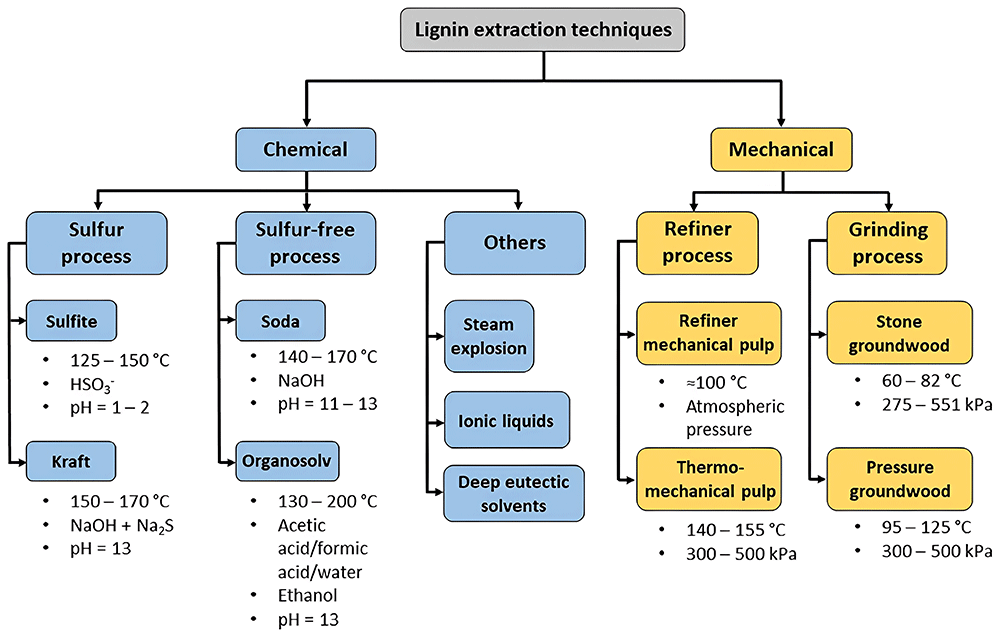
Figure 1. Lignin extraction technologies including process conditions, based on information provided by 20.
Despite the substantial quantity of dissolved lignin produced, much of it is not utilized externally. Instead, it serves as an internal fuel source within pulp mills, where it is combusted to generate heat for the pulping process and to recover cooking chemicals. However, ongoing advancements in pulp mill technologies have enabled partial separation and valorization of lignin dissolved in cooking liquors. In optimized Kraft mills, approximately 20% of lignin can be extracted for external applications. This percentage may increase with the adoption of heat pumps and renewable energy sources. Ethanol production by hydrolysis of lignocellulose also provides a secondary source of lignin-rich residues.
Kraft pulping process
The Kraft process involves cooking wood chips for approximately two hours at temperatures between 150–170°C and pressures of 800 kPa, using a highly alkaline solution known as white liquor (pH > 12). This method offers several advantages, including the production of high-strength paper, energy and chemical recovery during pulping, and its applicability to both softwoods and hardwoods as raw materials9. The recovery of chemicals is a crucial feature of this process, enabling recycling and enhancing cost efficiency.
The core chemical cycle of the Kraft process is the sodium cycle (Figure 2). In this cycle, wood undergoes pre-treatment, digestion, and washing to extract cellulose and produce pulp, which is later bleached to manufacture paper. During cellulose separation, a mixture of lignin and hemicellulose, referred to as "weak" black liquor, is collected. This liquor is processed through a series of evaporators to remove water and concentrate the solids, resulting in "strong" black liquor. The strong black liquor is then combusted in boilers to generate steam, power, or heat. The remaining residue, termed green liquor, is recycled through the calcium cycle by reacting with calcium hydroxide (Ca(OH)2) to regenerate white liquor, which contains sodium hydroxide (NaOH) and sodium sulfide (Na2S)5.
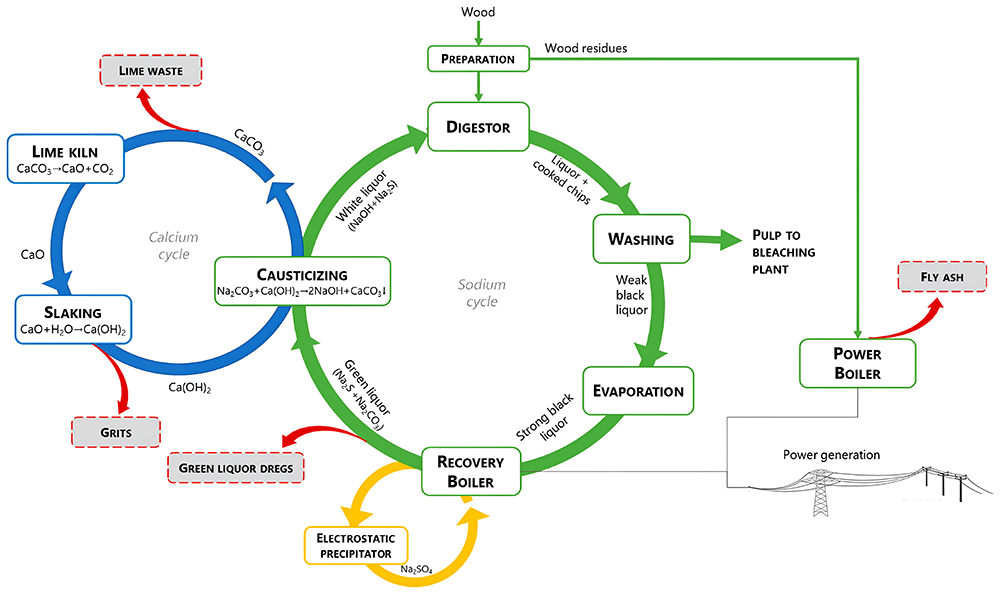
Figure 2. The Kraft process cycle to obtain pulp and generate energy.
Reused from 21 with permission from MDPI.
Globally, approximately 1.3 billion tons of weak Kraft black liquor (BL) are produced annually6. The composition of BL varies depending on wood type and operational conditions but generally consists of highly viscous, dark brown alkaline aqueous solutions. It has a significant organic content (e.g., lignin, soaps, tall oil) and inorganic content (e.g., pulping chemicals such as Na2CO3, NaOH, and Na2S). Its primary elemental composition includes carbon, oxygen, and sodium. Weak BL contains roughly 15% solids, whereas strong BL can reach up to 65% solids19.
Instead of directing weak BL to boilers, it can undergo lignin precipitation through acidification (e.g., using dissolved CO2), followed by filtration and washing to extract solid lignin. This approach could produce lignin feedstock and alleviate the load on the recovery boiler, a known bottleneck in the Kraft process, thereby enhancing pulp production capacity16. However, the harsh alkaline conditions of the Kraft process result in significant lignin degradation and repolymerization, yielding highly condensed lignin with a reduced number of β-O-4 bonds, which compromises its potential for valorization8. Consequently, it is preferable to convert lignin while it remains dissolved in Kraft BL22.
Conversion processes of lignin
Several lignin conversion processes are currently under investigation21,23–27.
a. Thermal Processes: Methods such as pyrolysis, gasification, and combustion effectively depolymerize lignin but require extreme conditions, typically exceeding 400°C and high pressures9,10.
b. Biological Processes: These involve lignin-degrading enzymes produced by fungi and bacteria, including bio-funneling pathways. Biological methods are appealing due to their mild conditions, eco-friendliness, and specificity. However, their efficiency is hindered by lignin's complex and heterogeneous structure26.
c. Chemical Processes: Catalytic reactions offer controlled reaction conditions and high product selectivity under mild conditions. However, the primary challenges are catalyst recovery and degradation, which add costs and necessitate additional purification steps3,19,24.
Electrochemical depolymerization
Electrochemical conversion represents a promising alternative to conventional approaches. This method is reagent-free and operates under mild and safe conditions, enhancing both eco-friendliness and economic feasibility27,28.
In this report, an electrochemical approach will be explored. The process involves direct electrooxidation of lignin and its chemical oxidation via reactive oxygen species (ROS) generated at the anode20. Electrocatalytic oxidation occurs at the anode, producing oxygen, while electrocatalytic hydrogenation takes place at the cathode, using electrons as the reagent and producing hydrogen (Figure 3). This dual reaction system could provide an efficient pathway for lignin depolymerization and valorization.
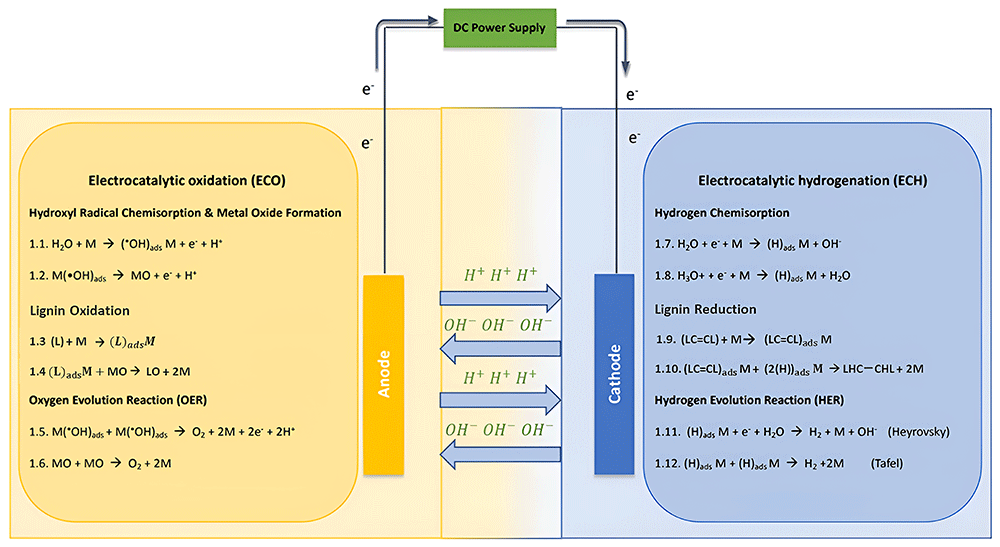
Figure 3. Simplified reaction scheme of electrocatalytic oxidation and electrocatalytic hydrogenation and water splitting.
Adapted from 27 with permission from the Royal Society of Chemistry.
Several critical factors influence the efficiency of electrochemical depolymerization of lignin: the surface area of the electrode, the solubility of lignin, proton/electron conduction, and the stability of the electrolyte9. The two main competing reactions during this process are surface functionalization (e.g., α-carbonylation) and the cleavage of C-C and C-O bonds. The cleavage of β-O-4 linkages, which are the most abundant bonds in lignin, is identified as the rate-determining step of lignin depolymerization27,29.
However, repolymerization of lignin through intermolecular condensation or radical coupling reactions poses a significant challenge, especially under high-temperature conditions, as these reactions diminish product quality20,30.
To frame the study, a detailed review of electrode materials and electrolytes was conducted. A schematic overview is shown in Table 1.
Table 1. Overview of electrochemical lignin conversion eletrolytes and electrode materials.
| | | Advantages | Disvantages |
|---|
| Electrolyte | Kraft Black Liquor | Largely available, by-product of the pulping industry Can be integrated to the Kraft process. Simultaneous hydrogen production at the cathode | Other compounds than lignin: analysis is difficult |
| Alkaline solutions31 | Good solubility for lignin High electron/ion conductivity | Destroy several chemical functionalities of lignin Further oxidations to undesired organic acids and carbon dioxide High pH: limits the use of metals as electrodes Low yields at mild conditions Poor selectivity |
| Lignin dissolved in: | Ionic liquids (IL)31,32 | High lignin solubility Thermal stability Good proton and ion conductivity Easily regenerated Promoting free radical reactions Selective formation of monomers Non-volatile, chemical inertness, low viscosity | High cost. Low amount of lignin required: limited for industrial scale High viscosity Possible toxicity Difficult formulation |
| Deep eutectic solvents (DES)29 | Easier to formulate than IL, less toxic Low price Can act as both solvent and catalyst Easily recoverable and recyclable | High viscosity |
| | Aqueous suspensions30,33–35 | Simple, green solvent | Limited by formation of oxygen Suspensions require higher potentials because of inhibition of the charge transfer |
| Sub- and supercritical fluids(not electrochemical) | Requires less toxic, recyclable, and easily recoverable solvents Use water and CO2 : cheap, non-flammable, eco- friendly, recyclable Act as catalyst at high pressure -> minimize the use of catalyst | Requires high temperature and pressure Requires special and costly instruments |
| Electrode | Carbon | RVC cathode36 | Inexpensive, easy construction High corrosion resistance Good catalytic activity Good selectivity High volume/area ratio | Fragile |
| Boron doped Diamond35,37 | High potential for the oxygen evolution reaction Inert surface with low adsorption capacity Chemical stability and corrosion resistance | Bad Eco-toxicity of heavy-metal electrodes |
| Metal/Metal Alloy | Ni22,30,38 | Low cost High stability in alkaline media High selectivity towards vanillin | Passivation of the electrode due to the adsorption of lignin on the active sites of the electrode |
| Co-based alloy22 | High electrocatalytic activity of Cobalt High yields of vanillin High selectivity towards vanillin | Corrosion instability -> loss of electrocatalytic activity |
| Noble metal | Pt30,34,38 | High electrocatalytic activity Better catalytic activity than Ni | Expensive, limited availability |
| Silver33 | Overoxidation products |
| Metal Oxide | PbO2-based39 | High conductivity and corrosion resistance High electrocatalytic activity Low cost, easy preparation | Toxicity (Pb): limited by environmental regulations |
| TiO2-based34 |
| Ir02-based40,41 |
Based on this analysis, experiments are designed to test diluted Kraft black liquor using various cathode materials (Nickel, Copper, Stainless Steel, and Lead), with Nickel serving as the anode. The study's objective is to optimize the electrochemical depolymerization reaction of lignin in Kraft black liquor through chronoamperometry using a small-scale electrochemical cell.
Methods
Experimental setup
The chronoamperometry step tests are performed with a PC-controlled power supply to track the obtained curent over time on the Test Bridge software1. The voltage applied to the electrochemical cell follows a sequence of constant steps in the range of 1 to 3V, whose duration varies between 20 and 80 minutes.
The experimental setup, shown in Figure 4, consists of an electrochemical cell through which a BL electrolyte flows thanks to a pump. The cell is connected to a power supply (Aim-TTi QPX600DP) that is PC-controlled to apply a defined voltage and produce current. The electrolyte is stored in a bottle (100 mL) which is heated by an oil bath, and the temperature of both is measured with probes. A valve outlet enables to manually collect BL samples.
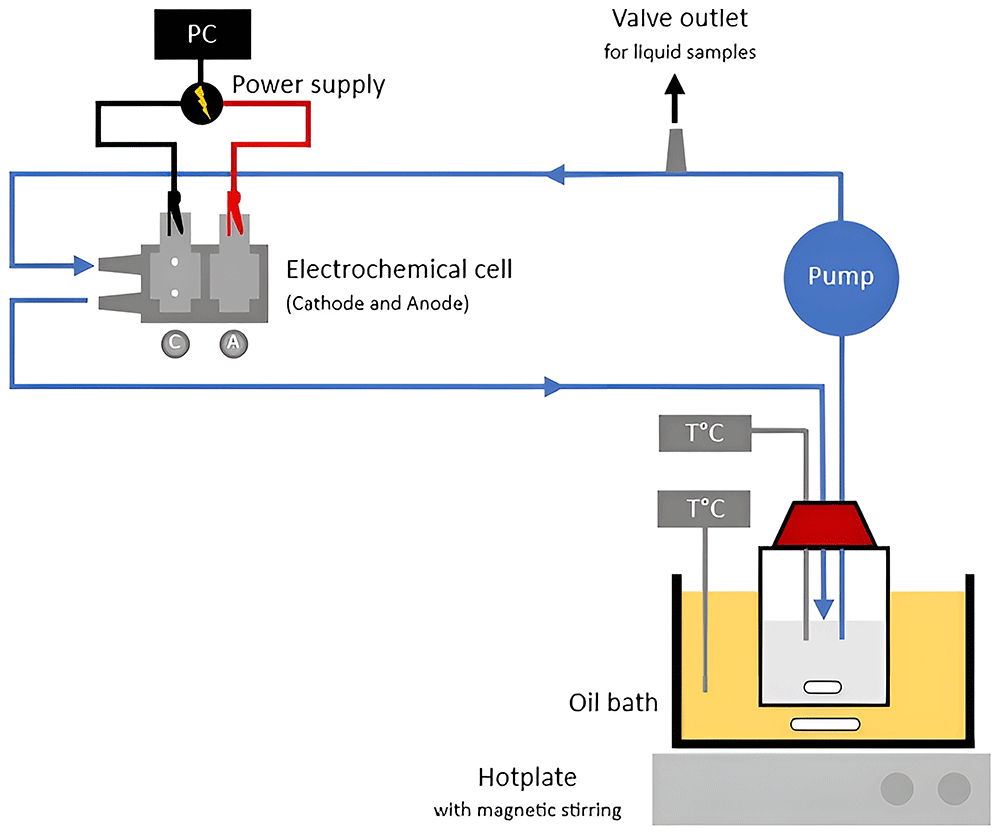
Figure 4. Scheme of the experimental setup showing the electrolyte flow and connections to the electrochemical cell.
DD
Electrolyte preparation
The electrolyte used in the experiments is an intermediate Kraft black liquor (BL) sourced from Stora Enso's Sunila pulp mill in Finland. This BL has been pre-concentrated through evaporation, resulting in a solid content of 30%, with tall oil soaps removed. The BL is diluted with water, white liquor (WL), and alcohol in various ratios.
White Liquor (WL): WL enhances the conductivity of the solution. Its composition is detailed in Table 2.
Alcohols: The alcohol acts as a capping agent, reacting with intermediates to prevent repolymerization. A range of alcohols tested is provided in Table 3.
Table 2. Composition of white liquor (aqueous solution of Na salts).
| Component | CAS No. | Supplier | Catalogue
number | Concentration
(g/L) |
|---|
| NaOH | 1310-73-2 | Merck | 567530 | 122,62 |
| Na2S | 1313-82-2 | Merck | 407410 | 45,57 |
| Na2CO3 | 497-19-8 | Merck | 223530 | 44,42 |
| Na2SO3 | 7757-83-7 | Merck | 239321 | 9,82 |
| Na2SO4 | 7757-82-6 | Merck | 238597 | 20,89 |
| Na2S2O3 | 7772-98-7 | Merck | 217263 | 15,39 |
Table 3. List of alcohols used to dilute BL with corresponding physical state and boiling point (bp).
| Alcohol | State at
room T | Bp (°C) |
|---|
| Glycerol | liquid | 290 |
| 1-Butanol | liquid | 118 |
| Propan-1-ol | liquid | 97 |
| Ethanol | liquid | 78 |
| Phenol | solid | 182 |
| Methanol | liquid | 65 |
The prepared electrolyte has a total volume of 40 mL and is heated to 90°C (or lower, depending on the boiling point of the alcohol used). The heating is maintained using an oil bath set at 140°C. During the reaction, the electrolyte flows at a rate of 0.28 g/s and is continuously stirred at 260 rpm to ensure uniform mixing.
Electrochemical cell
The electrochemical cell comprises two metal electrodes (each with an electrode surface area of 3.14 cm2), separated by a Teflon layer that defines the liquid volume between them. The assembly is enclosed by stainless steel walls, which are screwed tightly to ensure the system is leak-proof. To prevent short circuits, the electrodes are oriented perpendicularly to the inlet and outlet of the electrolyte42. The anode is constructed of nickel (Ni), while the cathode is made from one of the following metals: nickel (Ni), copper (Cu), lead (Pb), or stainless steel (SS, AISI 304).
Electrode preparation
In one experiment, the nickel anode undergoes pre-treatment to deposit a layer of nickel oxyhydroxide (NiOOH). This is achieved through two potentiometric cycles, each consisting of 12 steps (60 seconds per step, with 5-second breaks between steps) at 2.35 V, corresponding to a current density of 2.2 mA·cm⁻².
During this pre-treatment, the anode is placed opposite a nickel cathode in a beaker containing an electrolyte composed of 0.05 M nickel sulfate hexahydrate (Merck, catalogue no. 227676), 0.1 M sodium acetate (Merck, catalogue no. 241245) and 0.005 M sodium hydroxide (Merck, catalogue no. 567530).
The solution is stirred at 180 rpm throughout the process to ensure uniform conditions (Figure 5).
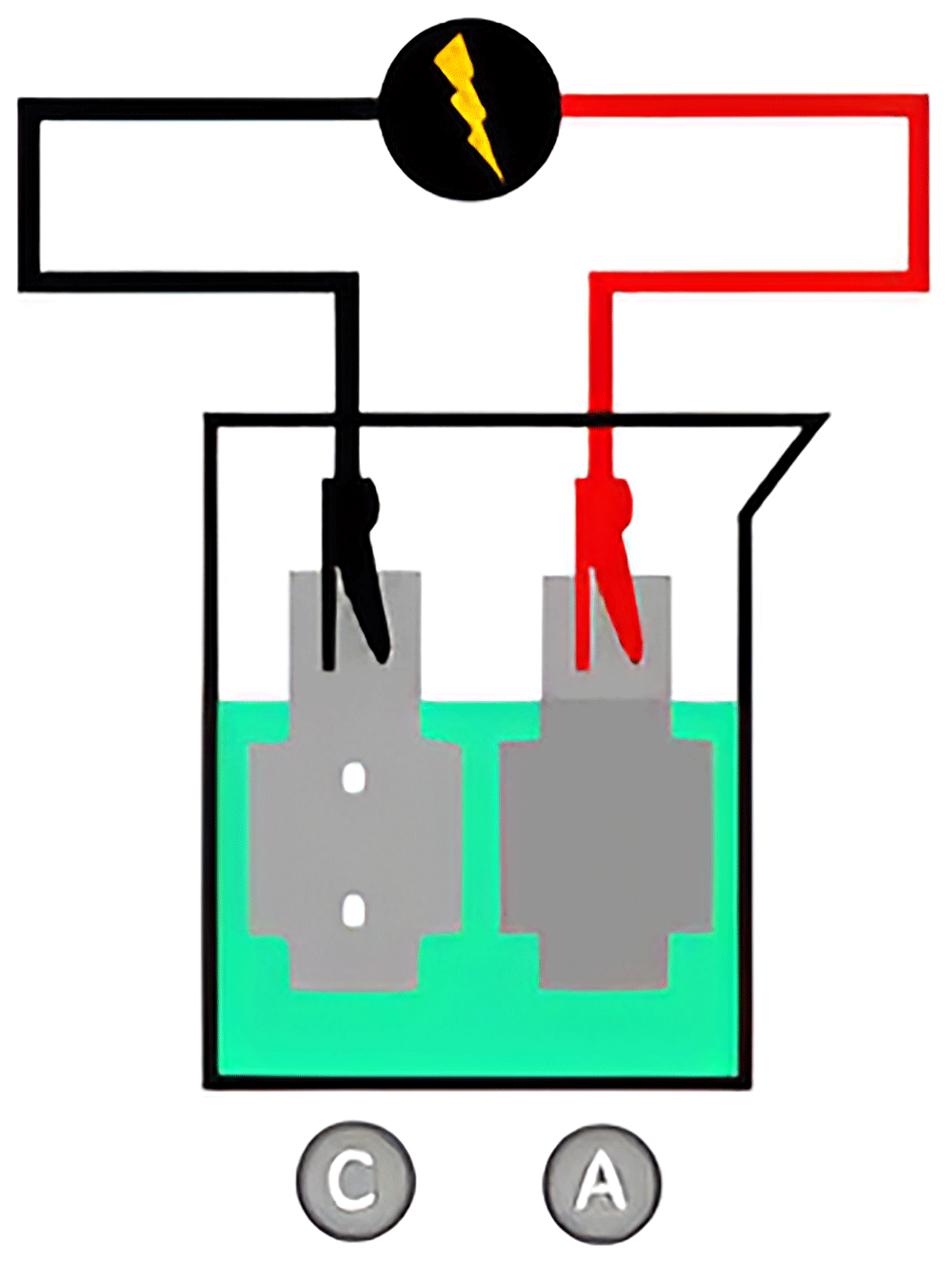
Figure 5. Scheme of the experimental setup for the deposit of a nickel hydroxide layer on the nickel cathode (C) with a nickel anode (A).
Analysis
Molecular weight distribution by GPC. The molecular weight distribution of the samples is assessed using Gel Permeation Chromatography (GPC), a form of Size Exclusion Chromatography (SEC) that separates molecules by size. The analysis is performed on an Agilent HPLC 1100 instrument equipped with a guard column and two PL aquagel-OH SEC columns (300 × 7.5 mm, particle size 8 µm) arranged in series to minimize diffusion. The eluent is an aqueous solution containing 0.27 g/L NaN₃ (Merck, catalogue no. 8.22335) and 0.2 g/L NaOH (Merck, catalogue no. 567530). Samples are dissolved in the eluent at a 1:9 mass ratio and analyzed at 30°C with a flow rate of 1 mL/min. Detection is performed using a Refractive Index Detector (RID) and a Diode Array Detector (DAD) operating in the 190–400 nm range43.
Detection of monomers in HPLC. Lignin monomers are detected using the same HPLC system, equipped with a guard column and a Kinetex C18 RP column (100 × 3 mm, particle size 2.6 µm), designed for high-resolution detection of smaller molecules. The method is based on Fischer et al.43, employing an eluent gradient of 0.15M formic acid (Merck, catalogue no. 5.33002) in water (Merck, catalogue no. 270733) and methanol(Merck, catalogue no. 34860), transitioning from 9:1 to 1:1. Samples are dissolved in the 9:1 eluent at a 2:8 mass ratio, then filtered through a 0.2 µm membrane prior to injection. Key conditions include: Detection: DAD at 230 nm, Temperature: 40°C, Flow rate: 0.4 mL/min, Injection volume: 5 µL.
Monomers identification by GC-MS. To identify monomers generated during depolymerization, a Gas Chromatograph coupled to a Mass Spectrometer (GC-MS) is used, specifically an Agilent 5975C TAD GC×GC-MS system. Samples are prepared by dissolving them in methanol at a 1:9 mass ratio, followed by filtration through a 0.2 µm membrane (). A splitless injection method is employed to maximize peak signals and improve identification accuracy.
Results and Discussion
Effects of electrolyte composition
Diluting BL with water and white liquor. Chronoamperometry experiments conducted in the voltage range of 1 to 3 V reveal that diluting black liquor (BL) with water (W) and white liquor (WL) enhances both electrical conductivity and electrode stability, reducing the formation of deposits. Transitioning from intermediate to weak BL further improves conductivity, lowers viscosity, and decreases the diffusion layer thickness. The optimal electrolyte composition for achieving current stability was found to be a volumetric ratio of BL:W:WL = 2:1:1 (Figure 6). This ratio facilitated the formation of xylene, confirmed by GC-MS analysis. . Additionally, diluting BL (resulting in lower lignin concentrations) increased the ratio of depolymerized lignin to repolymerized lignin. However, increasing salt content in the electrolyte showed diminishing returns beyond a certain threshold, as ion clusters and aggregates began to form. Despite these observations, GPC and HPLC analyses indicated no significant change in molecular weight distribution or composition.
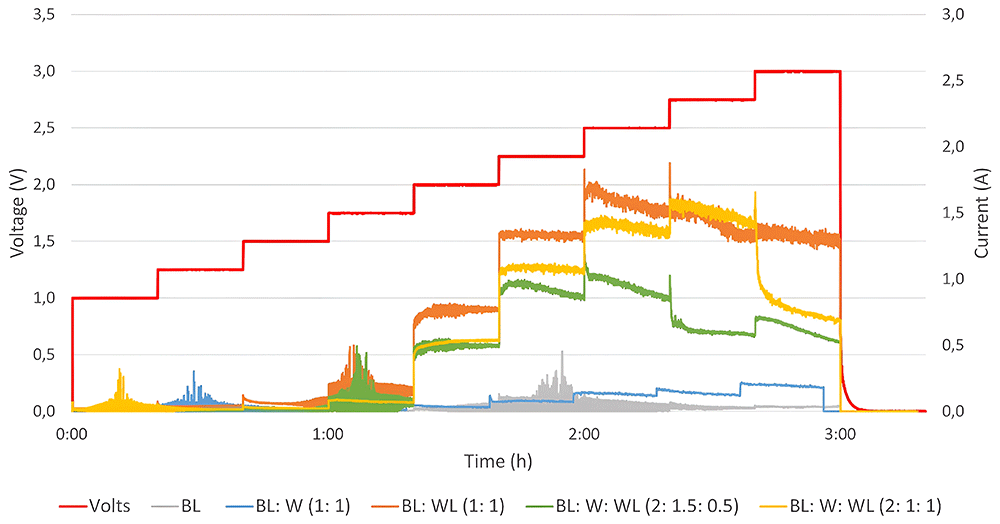
Figure 6. Chronoamperometry step test for BL: W: WL in different ratios with Ni electrodes.
Effect of adding alcohols. The utilisation of alcohols as capping agents effectively prevented oxidative repolymerization of lignin fragments. Among the tested alcohols, ethanol and 1-propanol exhibited the highest current density and stability (Figure 7). However, the operational voltage range could not be extended beyond 2.25 V during continuous operation. Cathodic hydrogenolysis of lignin fragment intermediates and alcohols produced aromatic hydrocarbons, including toluene and xylene, as identified by GC-MS.
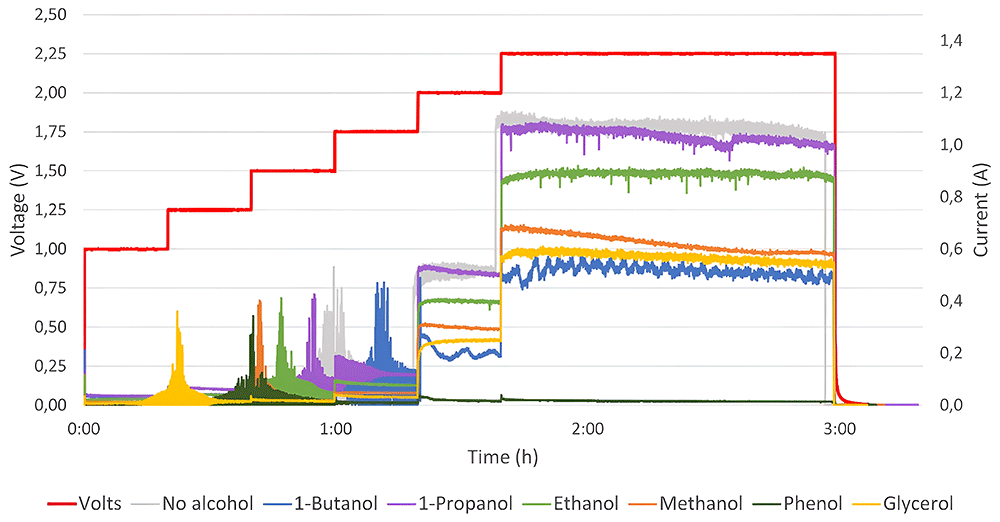
Figure 7. Chronoamperometry step test for BL: W: WL: Alcohol (20: 7.5 :7.5 :5) for different alcohols with Ni electrodes.
Importance of electrode material
Cathode materials selection. The choice of cathode material significantly influences the electrochemical depolymerization process. Copper demonstrates high current density and efficient monomer formation at 2 V. However, repolymerization occurs around 2.25 V, and above 2 V, the current becomes highly unstable. In contrast, lead exhibits low and unstable currents across the entire voltage range, making it unsuitable for stable operation. Stainless steel (AISI 304) offers a more stable performance compared to copper or lead, but it has lower activity for lignin oxidation than nickel, as reported by Oliveira et al.37. Nickel, on the other hand, provides the most stable current across the voltage range and results in minimal deposit formation on the electrode surface, preventing reaction inhibition. Moreover, nickel is advantageous due to its low cost, making it the most promising cathode material for this process. These comparative performances are illustrated in Figure 8.
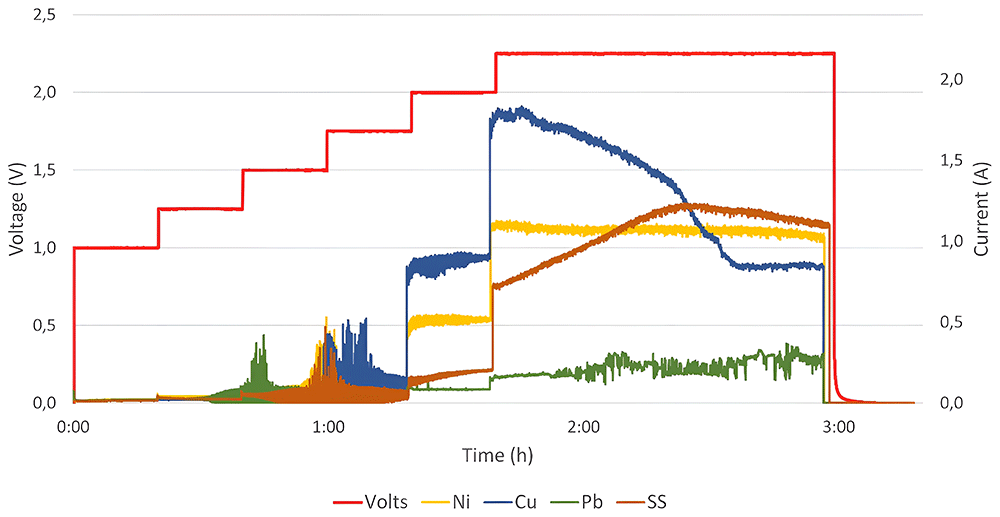
Figure 8. Chronoamperometry step test for different cathode materials, with BL: W: WL (2: 1: 1) and Ni anode.
Inspection of the spent electrodes did not show any deposits for the case of Nickel and stainless steel electrodes. Copper and lead electrodes, instead show significant deposits, indicating that the current fluctuations and the current drop over time are a result of the layer formation. This shows that among the tested materials only Nickel and stainless steel are suitable cathode materials.
Modification of nickel anode. A NiOOH layer is successfully formed on the nickel anode, as indicated by the black deposit observed on its surface (Figure 9, left). This modified anode is then placed in the electrochemical cell, and the experiment is conducted. The DAD spectra show that the formation of monomers is reduced when the preliminary NiOOH layer is applied to the nickel anode (Figure 9, right). Therefore, with this specific electrolyte, the application of the nickel oxide layer does not enhance depolymerization relative to repolymerization. One potential explanation for this observation is that the NiOOH layer is not sufficiently homogeneous when formed using this method. Furthermore, while the current stability is similar whether or not the NiOOH layer is applied, a current drop occurs sooner when the NiOOH layer is present, as shown in Figure 10.
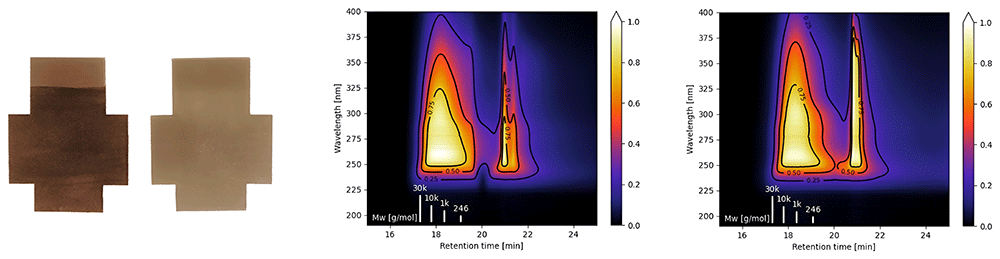
Figure 9. Visual aspect of electrodes after electrolysis test(left), and molecular weight distribution 3D DAD spectra of depolymerisation products, with NiOOH layer (middle) and without (right) showing the formation of low molecular weight products after 20 min of retention time.
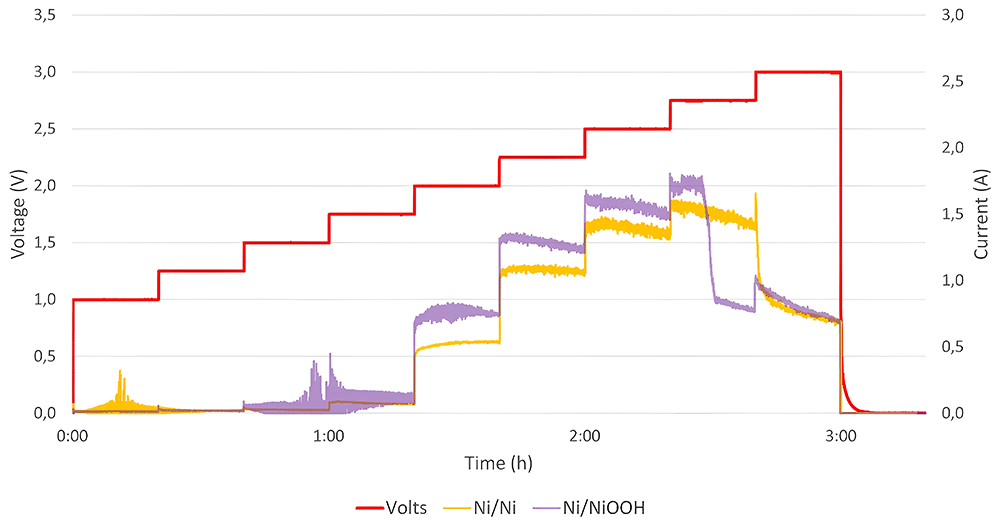
Figure 10. Chronoamperometry step test for BL: W: WL (2: 1: 1) with and without a NiOOH layer on the anode.
Conclusion
The influence of electrode materials and electrolyte composition on the electrochemical depolymerization of lignin from Kraft black liquor has been investigated using a small-scale electrochemical cell. The study demonstrated that diluting black liquor with water and white liquor improves both electrical conductivity and electrode stability. Adding alcohols such as ethanol and 1-propanol effectively promotes lignin depolymerization over repolymerization, leading to the formation of aromatic monomers such as toluene and xylene. Regarding cathode materials, nickel showed the best performance, offering the most stable current and the least deposit formation compared to copper, lead, and stainless steel.
Overall, the optimal results in terms of depolymerization efficiency and current stability were achieved with nickel electrodes and an electrolyte composed of black liquor, water, white liquor, and ethanol or 1-propanol in a volumetric ratio of 20:7.5:7.5:5. The objectives outlined at the beginning of this study were successfully met. However, there are still opportunities for further optimization of the electrochemical depolymerization process.
To improve the analysis of reaction products, LC-MS should be used to combine monomer detection by liquid chromatography (currently achieved by GPC or HPLC) with their identification through mass spectrometry (currently performed with GC-MS). This combined approach would address the challenge of associating low-molecular-weight molecules with their structures, as current analytical methods are divided and do not provide quantitative monomer results. Additionally, phenolic monomers have not yet been detected.
An online-GC system could also be implemented to monitor the formation of gases such as oxygen and hydrogen in real-time during the experiment. Although the online-GC system was connected to the setup, missing equipment, such as a flowmeter for calibrating the nitrogen flow, prevented its proper use.
Finally, extended chronoamperometry tests at a constant voltage should be conducted to evaluate long-term stability. A redesigned electrochemical cell with a larger electrode surface area could improve performance, and a longitudinal design might lead to a more uniform flow of electrolyte. A pilot reactor for the system has already been constructed and will facilitate further optimization and scaling up of the reaction.
Ethics and consent
Ethical approval and consent were not required.
Data availability
ZENODO: EBIO Repository. Lab journal Chloe Roux - Electrochemical lignin conversion., Doi: https://doi.org/10.5281/zenodo.1423085242
The project contains the following underlying data:
(Detailed description of electrochemical experiments performed, including electrolyte composition, process parameters, voltage and current recordings over time).
Data are available under the terms of the Creative Commons Attribution 4.0 International
Faculty Opinions recommendedReferences
- 1.
Trebostad M:
Renewable chemicals from lignin – a conceptual evaluation of thermochemical processes for production of valuable chemicals from lignin. Norwegian University of Life Sciences, Ås, 2016. Reference Source
- 2.
Dahmen N, Lewandowski I, Zibek S, et al.:
Integrated lignocellulosic value chains in a growing bioeconomy: status quo and perspectives.
Glob Change Biol Bioenergy.
2019; 11(1): 107–117. Publisher Full Text
- 3.
Brandt A, Gräsvik J, Hallett J, et al.:
Deconstruction of lignocellulosic biomass with ionic liquids.
Green Chem.
2013; 15(3): 550–583. Publisher Full Text
- 4.
Isikgor FH, Remzi Becer C:
Lignocellulosic biomass: a sustainable platform for the production of bio-based chemicals and polymers.
Polym Chem.
2015; 6: 4497–4559. Publisher Full Text
- 5.
Pettersen RC:
The chemical composition of wood.
The Chemistry Of Solid Wood.
1984; 207: 57–126. Publisher Full Text
- 6.
Mazela B, Perdoch W, Peplińska B, et al.:
Influence of chemical pre-treatments and ultrasonication on the dimensions and appearance of cellulose fibers.
Materials (Basel).
2020; 13(22): 5274. PubMed Abstract
| Publisher Full Text
| Free Full Text
- 7.
Hu LS, Fang XZ, Du MH, et al.:
Hemicellulose-based polymers processing and application.
Am J Plant Sci.
2020; 11(12): 2066–2079. Publisher Full Text
- 8.
Deshavath NN, Veeranki VD, Goud VV:
Chapter 1 - Lignocellulosic feedstocks for the production of bioethanol: availability, Structure, and composition. In: Sustainable Bioenergy. Guwahati, India, 2019; 1–19. Publisher Full Text
- 9.
Jönsson AS:
5 - membranes for lignin and hemicellulose recovery in pulp mills. In: Membrane Technologies for Biorefining. Lund, Sweden, 2016; 105–133. Publisher Full Text
- 10.
Lisý A, Ház A, Nadányi R, et al.:
About hydrophobicity of lignin: a review of selected chemical methods for lignin valorisation in biopolymer production.
Energies.
2022; 15(17): 6213. Publisher Full Text
- 11.
American International Forest Products: Hardwood vs. softwood: understanding the difference. April 11, 2022; [Accessed 14 July 2023]. Reference Source
- 12.
Lourenço A, Pereira H:
Compositional variability of lignin in biomass. In: Lignin - Trends and Applications. InTech, 2018; 65–98. Publisher Full Text
- 13.
Suota MJ, Da Silva TA, Zawadzki SF, et al.:
Chemical and structural characterization of hardwood and softwood LignoForce™ lignins.
Ind Crops Prod.
2021; 173: 114138. Publisher Full Text
- 14.
Kai D, Chow LP, Loh XJ:
Chapter 1: lignin and Its properties. In: Functional Materials From Lignin. World Scientific, 2018; 1–28. Publisher Full Text
- 15.
Tran MH, Phan DP, Lee EY:
Review on lignin modifications toward natural UV protection ingredient for lignin-based sunscreens.
Green Chem.
2021; (13): 4633–4646. Reference Source
- 16.
Precedence Research: Pulp and paper market. June 2022; [Accessed 25 July 2023]. Reference Source
- 17.
Lu X, Gu X, Shi Y:
A review on lignin antioxidants: their sources, isolations, antioxidant activities and various applications.
Int J Biol Macromol.
2022; 210: 716–741. PubMed Abstract
| Publisher Full Text
- 18.
Norgren M, Edlund H:
Lignin: recent advances and emerging applications.
Curr Opin Colloid Interface Sci.
2014; 19(5): 409–416. Publisher Full Text
- 19.
Pola L, Collado S, Oulego P, et al.:
Kraft black liquor as a renewable source of value-added chemicals.
Chemical Engineering Journal.
2022; 448: 137728. Publisher Full Text
- 20.
Mboowa D:
A review of the traditional pulping methods and the recent improvements in the pulping processes.
Biomass Conv Bioref.
2024; 14(1): 1–12. Publisher Full Text
- 21.
Kim KH, Kim CS:
Recent efforts to prevent undesirable reactions from fractionation to depolymerization of lignin: toward maximizing the value from lignin.
Front Energy Res.
2018; 6: 92. Publisher Full Text
- 22.
Zirbes M, Schmitt D, Beiser N, et al.:
Anodic degradation of lignin at active transition metal-based alloys and performance-enhanced anodes.
ChemElectroChem.
2019; 6(1): 155–161. Publisher Full Text
- 23.
Cai J, He Y, Yu X, et al.:
Review of physicochemical properties and analytical characterization of lignocellulosic biomass.
Renew Sustain Energy Rev.
2017; 76: 309–322. Publisher Full Text
- 24.
Roy R, Rahman MS, Amit TA, et al.:
Recent advances in lignin depolymerization techniques: a comparative overview of traditional and greener approaches.
Biomass.
2022; 2(3): 130–154. Publisher Full Text
- 25.
Zhou N, Wass Thilakarathna WPD, He QS, et al.:
A review: depolymerization of lignin to generate high-value bio-products: opportunities, challenges, and prospects.
Front Energy Res.
2022; 9: 758744. Publisher Full Text
- 26.
Wang H, Peng X, Li H, et al.:
Recent biotechnology advances in bio-conversion of lignin to lipids by bacterial cultures.
Front Chem.
2022; 10: 894593. PubMed Abstract
| Publisher Full Text
| Free Full Text
- 27.
Garedew M, Lam CH, Petitjean L, et al.:
Electrochemical upgrading of depolymerized lignin: a review of model compound studies.
Green Chem.
2021; 23: 2868–2899. Publisher Full Text
- 28.
Du X, Zhang H, Sullivan KP, et al.:
Electrochemical lignin conversion.
ChemSusChem.
2020; 13(17): 4318–4343. PubMed Abstract
| Publisher Full Text
- 29.
Di Marino D, Stöckmann D, Kriescher S, et al.:
Electrochemical depolymerisation of lignin in a deep eutectic solvent.
Green Chemistry.
2016; 18(22): 6021–6028. Publisher Full Text
- 30.
Di Fidio N, Timmermans JW, Antonetti C, et al.:
Electro-oxidative depolymerisation of technical lignin in water using platinum, nickel oxide hydroxide and graphite electrodes.
New J Chem.
2021; 45(21): 9647–9657. Publisher Full Text
- 31.
Reichert E, Wintringer R, Volmer DA, et al.:
Electro-catalytic oxidative cleavage of lignin in a protic ionic liquid.
Phys Chem Chem Phys.
2012; 14(15): 5214–5221. PubMed Abstract
| Publisher Full Text
- 32.
Dier TKF, Rauber D, Durneata D, et al.:
Sustainable electrochemical depolymerization of lignin in reusable ionic liquids.
Sci Rep.
2017; 7(1): 5041. PubMed Abstract
| Publisher Full Text
| Free Full Text
- 33.
Stecker F, Malkowsky IM, Fischer A, et al.:
Method for producing vanillin by electrochemical oxidation of aqueous lignin solutions or suspensions. Germany, Patent US20130040031A1, August 08, 2012. Reference Source
- 34.
Chang X, Van der Zalm J, Thind SS, et al.:
Electrochemical oxidation of lignin at electrochemically reduced TiO2 nanotubes.
J Electroanal Chem.
2020; 863: 114049. Publisher Full Text
- 35.
Griesbach U, Fischer A, Stecker F, et al.:
Method for electrochemically cleaving lignin on a diamond electrode. Patent WO 2009/138368, (19.11.2009 Gazette 2009/47). Reference Source
- 36.
Friedrich JM, Ponce-de-Léon C, Reade GW, et al.:
Reticulated Vitreous Carbon as an electrode material.
J Electroanal Chem.
2004; 561: 203–217. Publisher Full Text
- 37.
Oliveira RCP, Buijnsters JG, Mateus MM, et al.:
On the electrooxidation of kraft black liquor on boron-doped diamond.
J Electroanal Chem.
2022; 909: 116151. Publisher Full Text
- 38.
Oliveira RCP, Mateus M, Santos DMF:
Chronoamperometric and chronopotentiometric investigation of Kraft black liquor.
Int J Hydrogen Energy.
2018; 43(35): 16817–16823. Publisher Full Text
- 39.
Shao D, Liang J, Cui X, et al.:
Electrochemical oxidation of lignin by two typical electrodes: Ti/Sb-SnO2 and Ti/PbO2.
Chem Eng J.
2014; 244: 288–295. Publisher Full Text
- 40.
Zhu H, Wang L, Chen Y, et al.:
Electrochemical depolymerization of lignin into renewable aromatic compounds in a non-diaphragm electrolytic cell.
RSC Adv.
2014; 4(56): 29917–29924. Publisher Full Text
- 41.
Tolba R, Tian M, Wen J, et al.:
Electrochemical oxidation of lignin at IrO2-based oxide electrodes.
J Electroanal Chem.
2010; 649(1–2): 9–15. Publisher Full Text
- 42.
Roux C:
Lab journal Chloe Roux - Electrochemical lignin conversion. http://www.doi.org/10.5281/zenodo.14230852
- 43.
Fischer K, Höffler S:
RP-HPLC analysis of phenolic lignin monomers with DAD and coulometric array detection.
J Chromatogr Sci.
2021; 59(4): 312–324. PubMed Abstract
| Publisher Full Text








