Country inputs and descriptions of individual Portals
Sweden. In April 2020, SciLifeLab received an assignment from the Swedish government to accelerate COVID-19 research by helping mobilise and promote relevant data from Sweden. To this end, Sweden launched the first national COVID-19 Data Portal in June 2020 with the express aim of making COVID-19 data more open and FAIR. The portal was developed with the express requirement that it would be quick to launch. This was crucial in ensuring that the portal could be established as a central resource around which the community could aggregate in an emergency situation, such as a global pandemic (Hughes et al., 2024a). To this end, the Swedish Portal was initially developed using volunteers from the Swedish research community, and the code was made openly available to enable other, similar portals to launch quickly (see technical set up section). A dedicated team, composed of individuals with relevant technical expertise and backgrounds in life sciences, was established in Autumn 2024.
The Swedish Portal was embedded in the Swedish research community immediately upon launch. Initial funding for the project was provided by The Swedish Research Council (SRC, Vetenskapsrådet) as part of their wider efforts related to COVID-19. The Swedish Research Council directed other projects in receipt of funding as part of those efforts to contact the Swedish Portal for advice on data management and with help in disseminating their work. SciLifeLab also directed those within their community that were working with COVID-19 to collaborate closely with the portal. This led to close collaborations with the research community, with the portal providing direct support to over 250 research efforts within the first two years. This included work with national organisations (e.g. Biobanks Sweden), national infrastructure (e.g. National Pandemic Centre, and the SciLifeLab Autoimmunity and Serology Profiling unit), and many research groups.
Feedback from the community was sought continuously to ensure that the content of the Swedish Portal met the rapidly evolving needs of the Swedish research community. Priority was given to resources that were considered most broadly useful to the research community, novel research methods that progressed a field, and/or where the resources were not available elsewhere. This led to the development of unique content types. The most popular of these were data highlights (short articles promoting research that shares data, code, and/or tools as openly as possible), data dashboards (pages with descriptions of projects and dynamic data visualisations that are regularly updated with new data), and databases with information about accessing biobanks samples, available research data, and COVID-19 publications from Sweden. As a result, the portal became very popular; receiving over 70,000 unique visitors and 230,000 pageviews in the first two years. Though visitors were primarily from Sweden, there were also frequent visits from countries all around the world.
In order to continue to meet the needs of the Swedish research community, the scope of the portal was expanded in 2022 to reflect a shift in focus towards general pandemic preparedness. The portal became a central pillar of SciLifeLab’s Pandemic Laboratory Preparedness (PLP) program in 2022. The portal has since transitioned to become the Swedish Pathogens Portal, making it the first national Pathogens Portalxi. The aims of the portal are largely unchanged, with the central aim being to make data as FAIR and open as possible.
Poland. At the beginning of April 2020, the Ministry of Science and Higher Education designated the Institute of Bioorganic Chemistry, Polish Academy of Sciences (IBCH PAS) together with the affiliated Poznan Supercomputing and Networking Centre (PSNC) as the national hub for the European COVID-19 Data Platform. IBCH PAS was selected for this role due to its extensive expertise in virology, population genomics, and next-generation sequencing, along with PSNC's advanced supercomputing and networking infrastructure, which enables it to handle large volumes of data while ensuring high standards of data security and integrity. Notably, PSNC manages a robust Polish National Research and Education Network PIONIER, that links all Polish scientific and medical centres with supercomputing and data storage facilities, as well as provides connectivity to the European research network GÉANT, facilitating seamless collaboration and data exchange within the country and with other European entities involved in the COVID-19 Data Platform. Additionally, IBCH PAS and PSNC have strong connections with national and European research networks and extensive experience in large-scale infrastructure projects and partnerships (e.g. EOSC, EuroHPC, PRACE, EUDAT, etc.). The core mission of PSNC, which strengthened the development of the hub, is to foster scientific excellence by providing reliable and cutting-edge e-Infrastructure and highly-specialised laboratories. PSNC achieves this goal, particularly through extensive R&D activities related to information and communication technologies and their innovative applications. In collaborative project teams, they draw from the synergy of science, technology, business, and education to tackle the greatest challenges for our future.
Having such extensive expertise and advanced infrastructure, IBCH PAS and PSNC were able to launch the COVID-19 Data Portal Polandxii, also known as COVID-HUB-PL, within weeks of the Ministry’s decision. The initiative was carried out pro bono by a dedicated team of up to 15 people at the peak of the pandemic.
The main aim of this initiative was to facilitate open data sharing and analysis, accelerating research on the coronavirus. The genomic data available through the COVID-19 Data Portal Poland were generated in collaboration with eight healthcare or science centres from Poland. These centres either deposited sequencing data directly or collected biological material sequenced at IBCH PAS. Genomic data and the Poland-focused Nextstrain COVID-19xiii instance supervised by COVID-HUB-PL team enabled researchers to monitor the spread and evolution of the virus in real-time, providing insights into how different variants emerged and spread geographically. These studies were essential for informing public health strategies, including lockdown measures. Prioritising viral genomics within the COVID-19 Data Portal Poland ensured that the scientific community and central and local government agencies had access to the most relevant and actionable data to combat the pandemic effectively. Indeed, the aggregated COVID-19 statistics available on the COVID-HUB-PL platform as interactive reports for the country's epidemiological situation enhanced transparency, communication, and data-driven decision-making.
In Poland, efforts to mobilise data regarding COVID-19 have encountered numerous challenges, particularly regarding coordination between different ministries (i.e. Ministry of Science and Higher Education overseeing research and scientific institutions, and Ministry of Health overseeing healthcare and medical centers), and legislative obstacles. Various agencies and institutions involved in COVID-19 response efforts maintained separate data silos, complicating efforts to integrate and harmonise data for analysis. The lack of transparent legislation related to data sharing and privacy constrained the willingness to share viral genomic data through the unrestricted data governance model endorsed by the European COVID-19 Data Platform. Furthermore, the COVID-19 Data Portal Poland was created and continued to operate without additional financial support, using IBCH PAS and PSNC own resources and infrastructure.
Additionally, the REGIONAL COVID-HUBxiv platform together with extended e-services have been successfully created thanks to the Wielkopolska Voivodeship Government support and regional WRPO 2014+ programme funding. New and added-value services enabled secure communication and customization for users and public institutions involved in the pandemic response at the Wielkopolska regional level. New capabilities exposed to local users supported advanced visualisation of the pandemic's status and dynamics in Wielkopolska, training and open educational resources for schools as well as functionalities for processing, analysing, and sharing scientific data, and supporting COVID-19 diagnostics using AI methods (Figure 3).
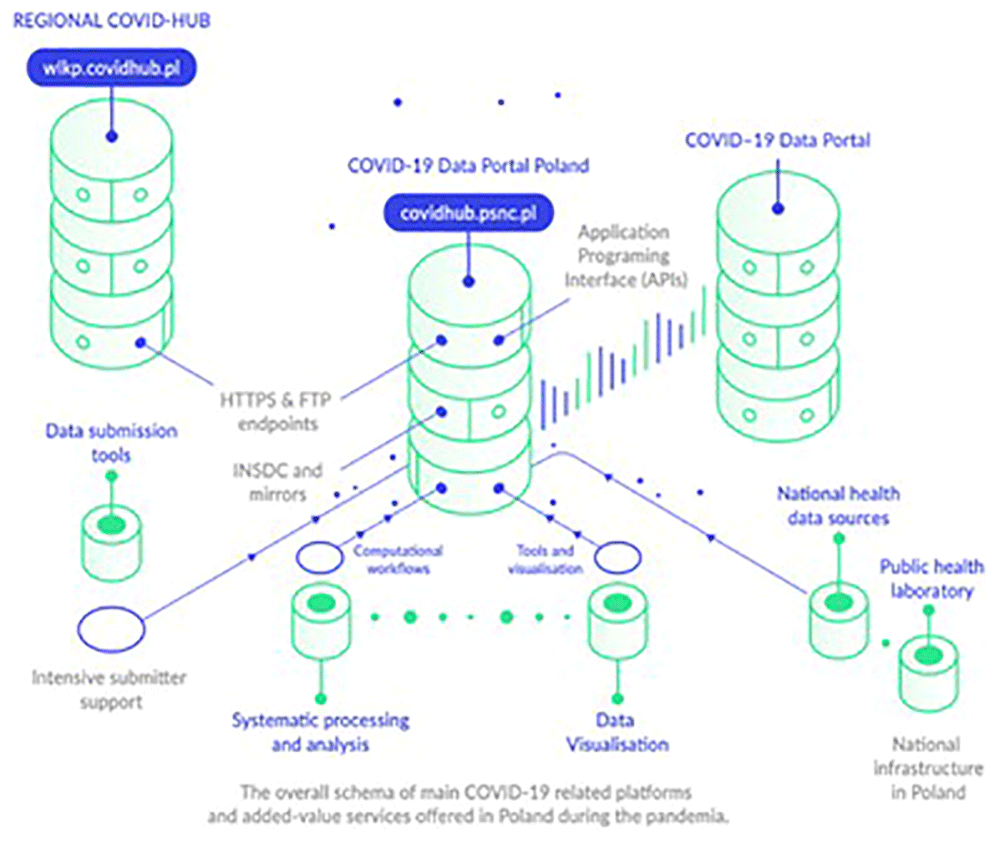
Figure 3. The overall schema of the main COVID-19 related platforms and added value services offered in Poland during the pandemic.
In the period from 2021 to 2023, the COVID-19 Data Portal Poland had a total of almost 230,000 page views by over 47,000 unique visitors. As of December 2021, the further development of infrastructure and services for the COVID-19 Data Portal Poland has been synchronised with standardisation and best practice exchange activities initiated by the EU ELIXIR-CONVERGE project.
Spainxv. In the early months of the pandemic, the nodes of the Spanish National Bioinformatics Institute (INB), which represents the Spanish node of ELIXIR (ELIXIR-ES), and the Translational Bioinformatics Network (TransBioNet), held regular meetings to join forces and share knowledge to contribute during the initial uncertainty of the COVID-19 pandemic. One of the actions was the publication in July 2020 of a curated collection of databases, repositories, and tools that were being developed and adapted, as well as publications, projects, and consortia in which they were involved. In parallel, a European effort began through the coordinated work of EMBL-EBI and ELIXIR to create a European portal for the data sharing and analysis of COVID-19 data, the European COVID-19 Data Portal. Spain joined the initiative of tailored national portals after openly publishing the Swedish portal repository.
INB/ELIXIR-ES, as the bioinformatics technology platform of ISCIII in 2020, received a mandate to develop the Spanish portal from ISCIII, the National funding body for Health Research in Spain. This portal was created in the context of the programme Fondo COVID-19, an ISCIII emergency funding action to contribute to improving the diagnosis and clinical management of patients infected with SARS-COV-2, the treatment of the disease in the COVID-19 pandemic also contribute to the design, development, and implementation of public health measures to effectively respond to the ongoing SARS-CoV-2 epidemic.
The Spanish COVID-19 Data Portalxvi showcases Spanish research efforts and technological developments related to SARS-CoV-2 and COVID-19 within the context of the INB/ELIXIR-ES and TransBioNet, and ensures interoperability with other European and international efforts. Thus, the portal highlights a curated compilation of new or adapted data management and analysis tools developed by Spanish researchers. Data and other resources from global repositories are available in the portal, filtering previously Spain as a country and/or affiliation.
Two unique resources were key in decisive moments of the pandemic by offering interactive COVID-19 incidence map and SARS-CoV-2 variant distribution. Firstly, Flow-Mapsxvii (https://doi.org/10.1038/s41597-021-01093-5), a system for monitoring COVID-19 outbreaks and mobility-associated risk by integrating health information and population-level mobility patterns into a Geographical Information System. Secondly, COVID-19 Viral Beacon, is a tool to find SARS-CoV-2 variability at genomic, amino acid, and motif levels along with other metadata. This implementation was based on the GA4GH Beacon standard and showcased a particular use case for testing and demonstrating the new features of Beacon v2.
In the context of the Fondo COVID-19, a significant effort was made to access, normalise and harmonise - following the OMOP Common Data Model - the data generated for the data-driven projects in the programme. An initial set of 60 projects was identified, although the standardised effort was finally carried out for 13 projects after establishing a general procedure for translating individual projects’ codebooks into unambiguous clinical variables, ideally following established ontologies. When unambiguous assignment of variables was not possible, dedicated sessions were carried out with the projects’ data managers. In the rare cases that disambiguation was not possible, concepts were left out of the overall standardisation effort. Once a project was normalised, an overall harmonisation step was performed to ensure general consistency across all datasets provided. Fondo COVID-19 was highlighted by adding filters in relevant sections, e.g. research projects and literature (Figure 4).
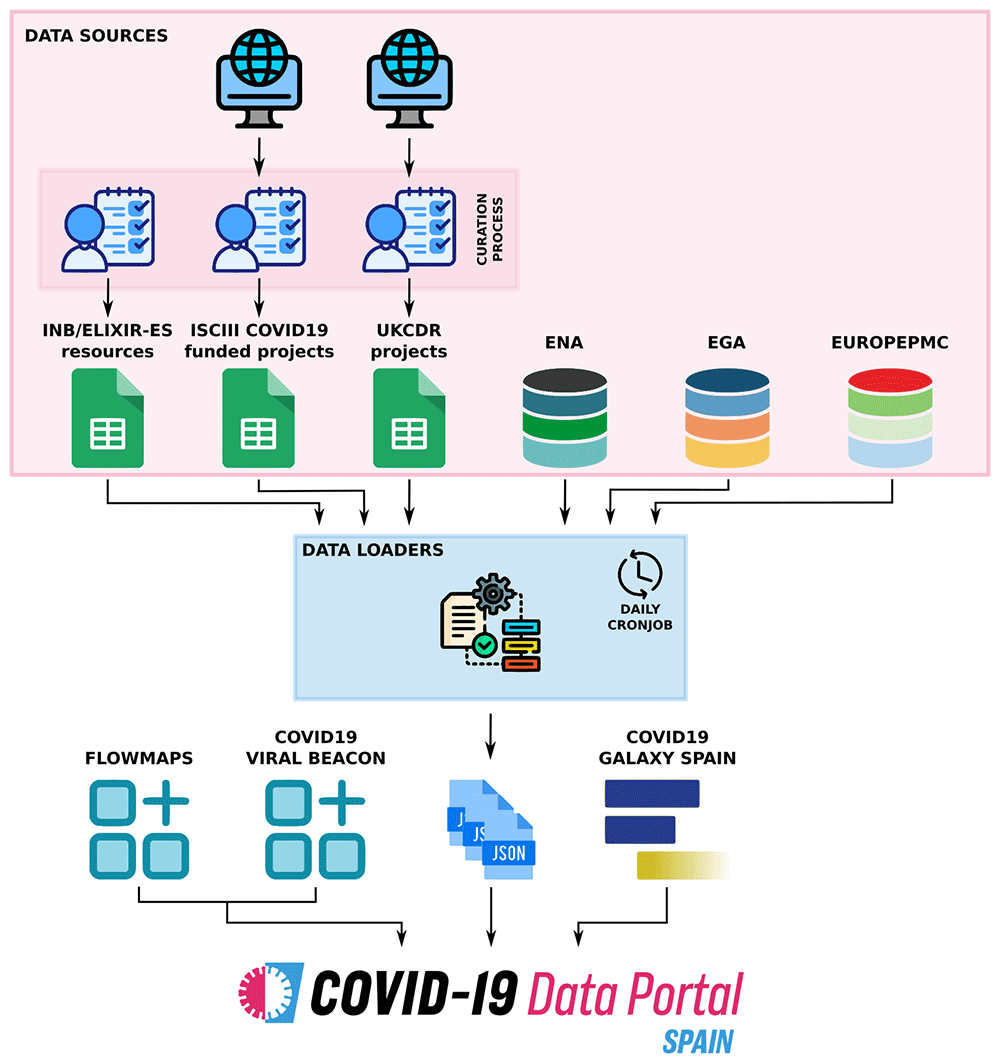
Figure 4. Data flow and presentation schema on the Spanish COVID-19 Data Portal.
The project was fast developed in three months by a part-time senior full-stack developer and a part-time community engagement and content creation manager. The portal is based on the Swedish portal's open-source code. The first release of the website was launched in December 2020, and it has been in a stable maintenance phase since then, with most of the data updates carried out automatically and certain progressive developments, when necessary, e.g., adding new resources. The technological development of the platform was not a challenge, but the strategic side of it when curating the most significant resources to showcase on our portal.
The Spanish COVID-19 Data Portal has tracked statistics with Google Analytics since March 2021. From March 1st, 2021, until March 1st, 2024, the portal had 5,035 unique visitors, with 31% of the users connecting from Spain, 13.6% from the USA and 6% from the UK. There were 15,279 pages viewed, and 9,722 users engaged. The most visited pages after the home were the literature and genomics sections, followed by the resources page.
Norway. ELIXIR Norway plays a central national role in giving support on data management of life science data. This includes managing, analysing and sharing sequences, which became essential during the COVID-19 pandemic. The national COVID-19 portal was set up to help and guide researchers and other interested parties. The portal highlights bioinformatics resources such as data sets and analysis methods that were relevant to the situation (Figure 5). It also is a contact point into the national ELIXIR support desk that could assist researchers wanting to use bioinformatics resources or needed support and advice.
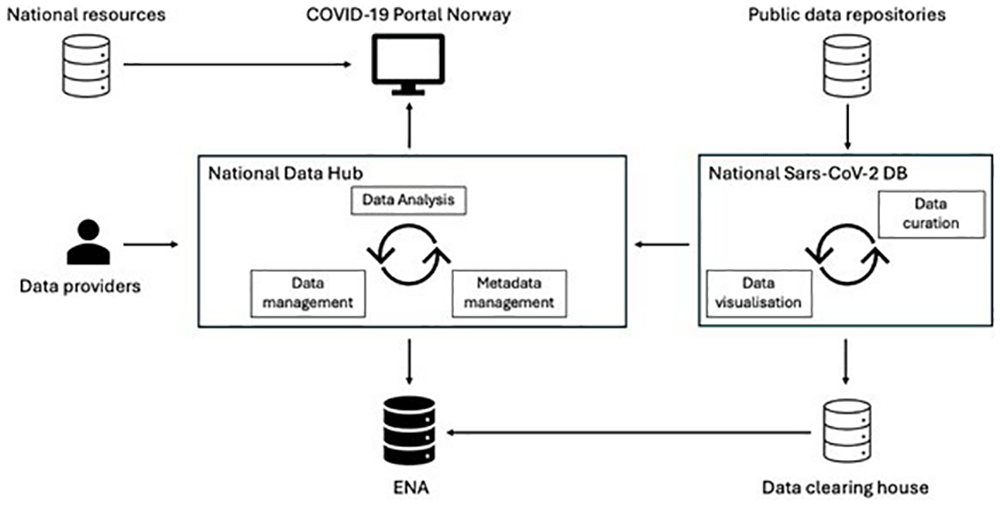
Figure 5. The organisation of data flow and tools and services provided through the Norwegian COVID-19 National Data Portal.
Together with the National Institute of Public Health, the national SARS-CoV-2 data providers were mapped. Through the ELIXIR CONVERGE project, agreements on data quality and contextual metadata standards were implemented nationally. The content of the portal and linking relevant resources was mainly done by ELIXIR Norway personnel. Due to the urgency of the situation at the time and limited funding, no editorial steering group was established.
The portal was set up within months as we based the technology and layout on already existing and open shared source code from other portals in Europe. The Norwegian portal has since transitioned to a pathogen portalxviii (please see the next section).
The Netherlands. The aim to set up the Dutch national COVID-19 Data Portalxix was to support researchers and health care professionals with tools and services in their search for ways to overcome the pandemic and its health consequences. The coordination of this national COVID-19 Data Portal was led by Lygature. Other national stakeholders, such as the different university medical centres, Health-RI, RIVM, KNAW/DANS and ODISSEI were involved for specific input and to review content. As there was already a European portal which brings together relevant COVID-19 datasets and tools, we focussed on national resources that are not available through the European platform and thus augment this resource.
All data and resources related to COVID-19 were included with the idea that anything that could be relevant should be available to a researcher or health care professional. To organise this, the Dutch national COVID-19 Data Portal was developed in synergy with the Dutch national resources page on the Infectious Disease Toolkit (IDTk)xx. It was decided to collect information on relevant national health authorities, initiatives and resources on the IDTk national page and focus the portal on COVID-19 relevant dashboards, such as wastewater surveillance, vaccine administration, infection radar and pathogen surveillance.
With the Github example provided by the Swedish portal team, it was easy to create a first version of the portal within a couple of weeks by one person working on it part-time. The sustainability of the portal has been the largest challenge. Currently we have ensured a long-term solution for hosting of the portal, but discussions about the maintenance after the BY-COVID project ends are ongoing.
In the period 1 October 2023 until 1 May 2024 the Dutch national COVID-19 Data Portal was visited 4,796 times by 2,040 unique user agents. In this period the main (3,118 visits), contact (251 visits) and about (121 visits) pages were most visited. The vaccine administration in the Netherlands (110 visits) was the most visited data dashboard and imaging data (99 visits) is the most visited data type page.
The Dutch pathogens portal https://www.pathogensportal.nl/ has replaced the national COVID-19 Data Portal. Furthermore, to support stakeholders in finding and gaining access to COVID-19 related datasets, all COVID-19 datasets have been included in the national metadata catalogue https://catalogus.healthdata.nl/?q=COVID.










