Introduction
Nature-based solutions (NBS) are approaches inspired and supported by nature that are cost-effective, provide environmental, social, and economic benefits, and enhance resilience (
European Commission, 2021). NBS are increasingly recognized as innovative strategies to mitigate hydrometeorological hazards while promoting biodiversity and sustainability, often more efficiently than traditional grey infrastructure (Kumar et al., 2021b). The effectiveness of NBS depends on achieving its intended objectives and resolving targeted problems, with monitoring identified as a key tool to assess implementation success relative to reference conditions (Raymond et al., 2017; Sarabi et al., 2019). However, published studies on NBS effectiveness remain limited, particularly in forest ecosystems (Arce-Mojica et al., 2019).
Since 2009, as part of LIFE projects, NBS have been applied in the Pico da Vara/Ribeira do Guilherme Special Protection Area (SPA) (São Miguel, Azores, Portugal) to restore priority habitats threatened by invasive alien species (IAS). Within the LIFE+ Lands of Priolo project, slopes affected by landslides were restored using NBS techniques, including bioengineering, planting, and hydroseeding, to recover native vegetation and enhance ecological connectivity. This study presents a ten-year assessment of ecological restoration, focusing on plant community composition and cover as biodiversity indicators.
Given the scarcity of literature on landslide recovery using NBS and on long-term monitoring of NBS interventions (Kumar et al., 2021a), this study also contributes new insights into the effectiveness of these approaches in forested ecosystems. Specifically, it evaluates the extent to which the targeted restoration objectives were achieved, the role of hydroseeding in promoting native species, and the impact on habitat quality. Findings guide future NBS applications in protected areas and inform strategies to enhance biodiversity and ecosystem resilience.
Methods
Five slopes affected by landslides (D1–D5) were restored in 2015 (Figure 1) using NBS and bioengineering techniques as part of the LIFE+ Lands of Priolo project. Technical drawings included topographical surveys, slope and orientation maps, and planting plans. Fieldwork began with the removal of exotic species using mechanical and chemical methods, followed by slope stabilization with heavy machinery. Live crib walls, live living fences, palisades, soil erosion control barriers, and bioswales were constructed using natural materials (logs, stones) and iron rods, supporting the subsequent planting and hydroseeding of native species, thus avoiding the use of commercial mixtures (Figure 2). Hydroseeding included Calluna vulgaris and Erica azorica (1 kg each per 100 m2), Festuca francoi, Leontodon rigens, Luzula purpureosplendens, and Hypericum foliosum (0.25 kg each per 100 m2), collected in SPA. Slopes were maintained quarterly for three years for invasive species control.
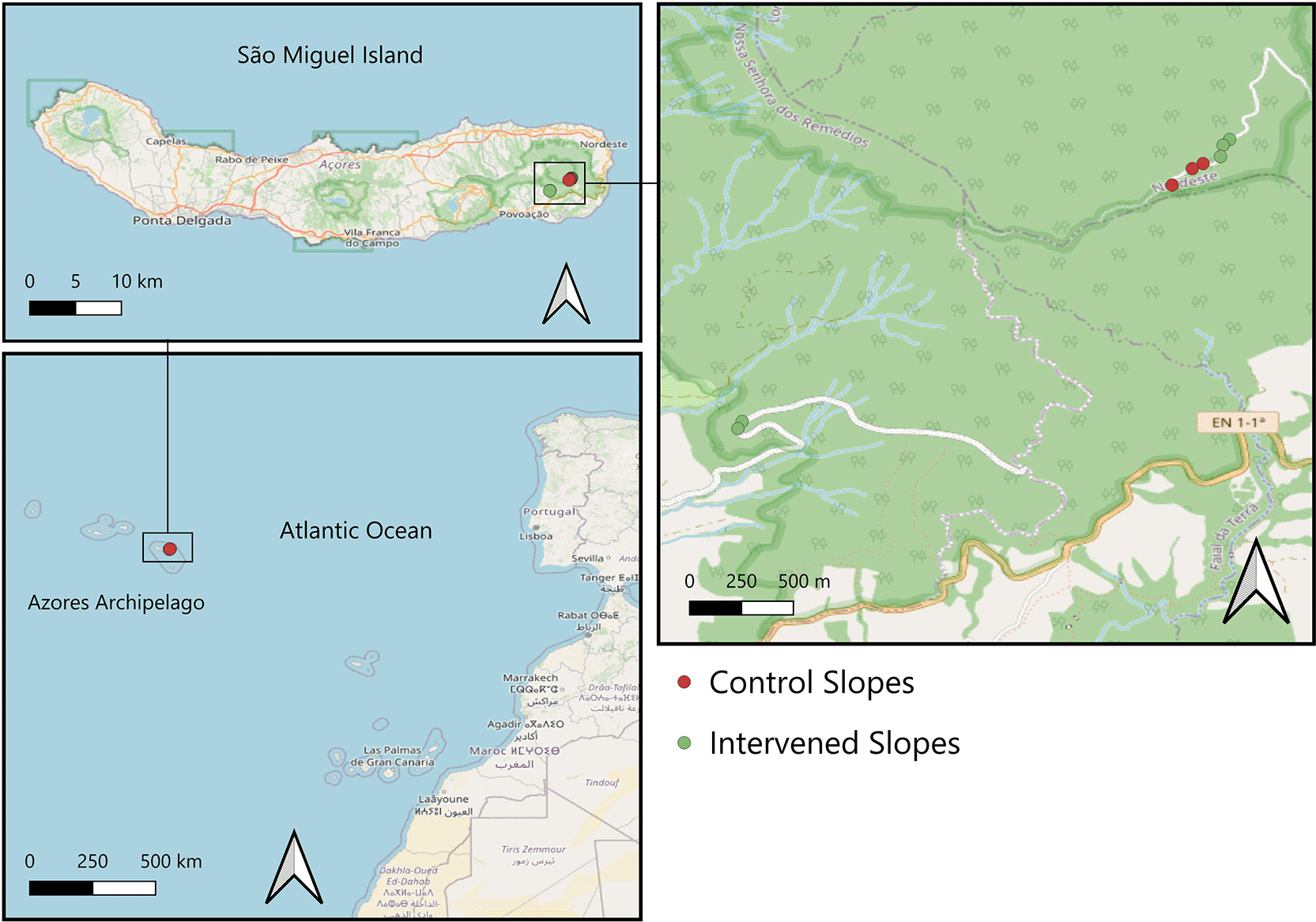
Figure 1. Location of the studied slopes, in the Pico da Vara/Ribeira do Guilherme SPA (São Miguel, Azores, Portugal).
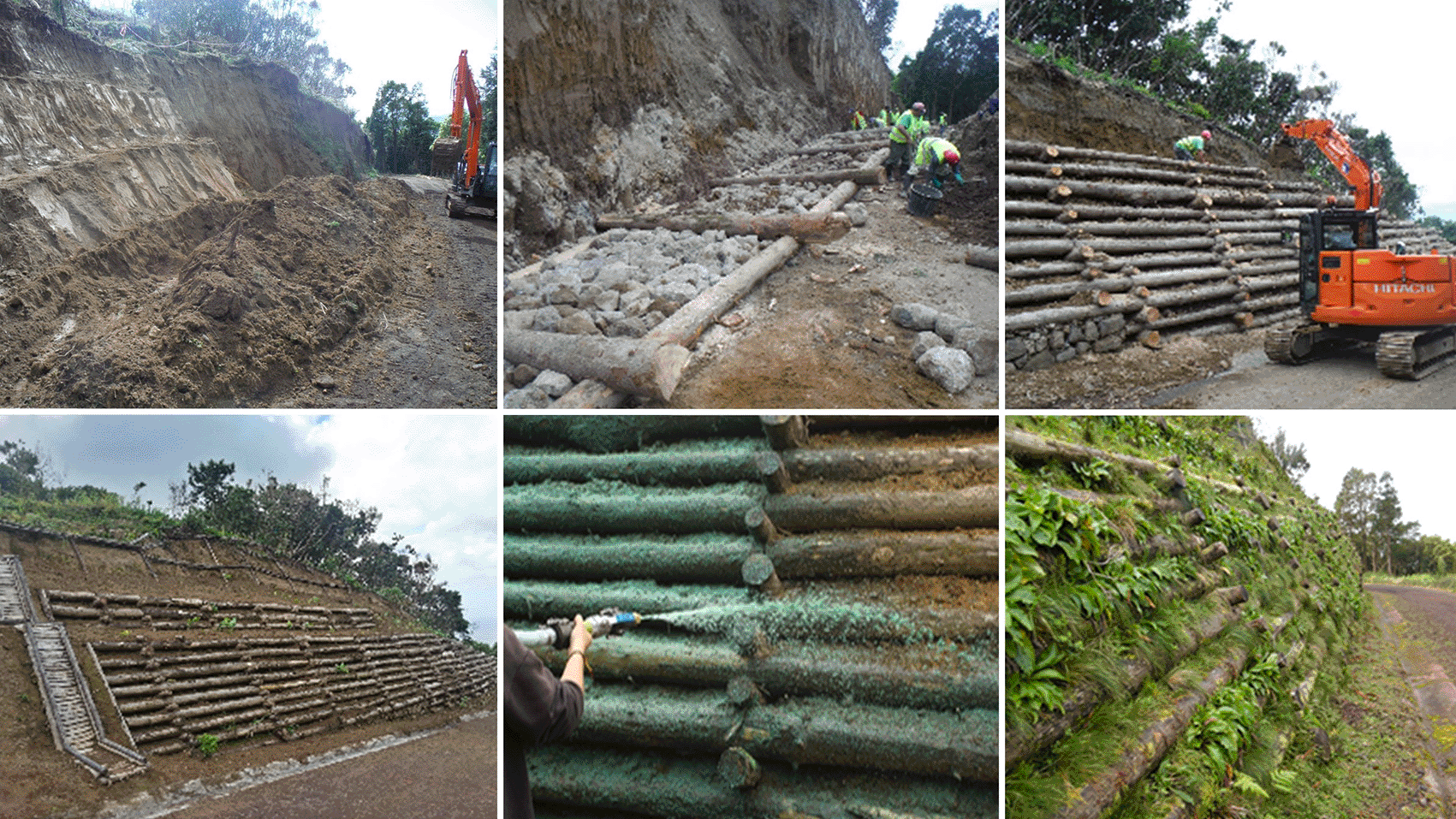
Figure 2. Slope reprofiling using heavy machinery, followed by the installation of NBS (including live crib walls and bioswales, shown here) constructed with natural materials and iron rods, and subsequent hydroseeding with native species.
Hydroseeding success was assessed after one year using six randomly positioned 1 × 1 m plots per slope, counting individual plants to determine germination rates. To evaluate restoration effectiveness, three control slopes were selected outside the intervention areas (Morton, 2009), representing a gradient of environmental conditions: C1 (balanced native and IAS abundance), C2 (intermediate), and C3 (dominance of native species). In 2024, 24 plots of 1 × 1 m were analysed to estimate vegetation cover on restored slopes and controls, with plots distributed across three slope heights. Plant species were categorized by functional groups (fern, herbaceous, moss, woody), and ecological indices and multivariate analyses were used to compare vegetation between restored and control slopes.
This monitoring design allowed assessment of both initial hydroseeding performance and long-term ecological outcomes, including species composition, cover, and biodiversity indices, providing an evaluation of NBS effectiveness for slope stabilization and habitat restoration.
Results
No landslides occurred on the restored or control slopes over the last ten years, and surface hydric erosion was negligible. The NBS remained structurally functional and covered by vegetation. All species used in hydroseeding germinated; however, L. rigens, F. francoi, and L. purpureosplendens showed the highest germination rates (0.22, 0.10, and 0.01 plants/m2), whereas C. vulgaris, E. azorica, F. petraceae, and H. foliosum showed <0.003 plants/m2. Spontaneous germination was higher for native species (72.5%), though more exotic species were recorded (n = 13) than native species (n = 6). Overall, hydroseeding species accounted for 82.5% of total germination.
After ten years, restored slopes averaged 87.9% native species cover (±15.4 SD), with D4 being the only slope showing higher exotic cover than C1. Restored slopes hosted more native species (min = 9, max = 15, mean = 10 spp.) than exotic species (min = 0, max = 6, mean = 2 spp.) (
Figure 3).
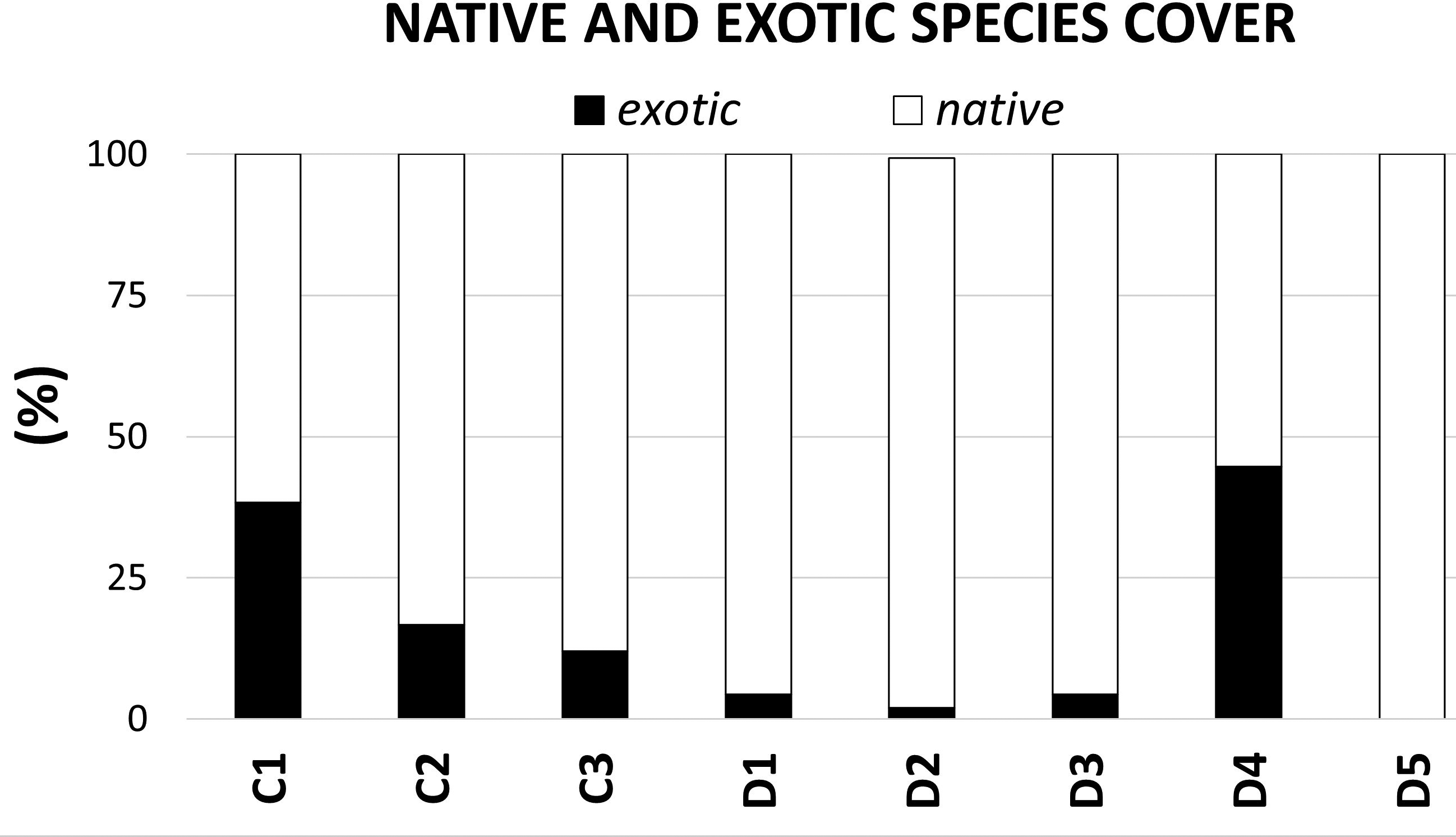
Figure 3. Native and exotic species cover in the restored (D1 to D5) and control slopes (C1 to C3).
The most abundant native species were Sphagnum sp. (Mean cover [MC] = 20%, SD ± 18.9), C. vulgaris (MC = 19.6%, SD ± 14.9), Woodwardia radicans (MC = 10.9%, SD ± 6.7), and F. francoi (MC = 10.2%, SD ± 7.4), of which only C. vulgaris and F. francoi had been hydroseeded. Dominant exotic species included Polygonum capitatum (MC = 3.2%, SD ± 7.2), Poa sp. (MC = 2.9%, SD ± 5.1), Erigeron sp. (MC = 1.2%, SD ± 2.7), and Dicksonia antarctica (MC = 1.6%, SD ± 2.4) (
Figure 4). Herbaceous species were generally most abundant, though mosses dominated on D1, D2, D3, and C3, with Sphagnum sp. covering >25%.
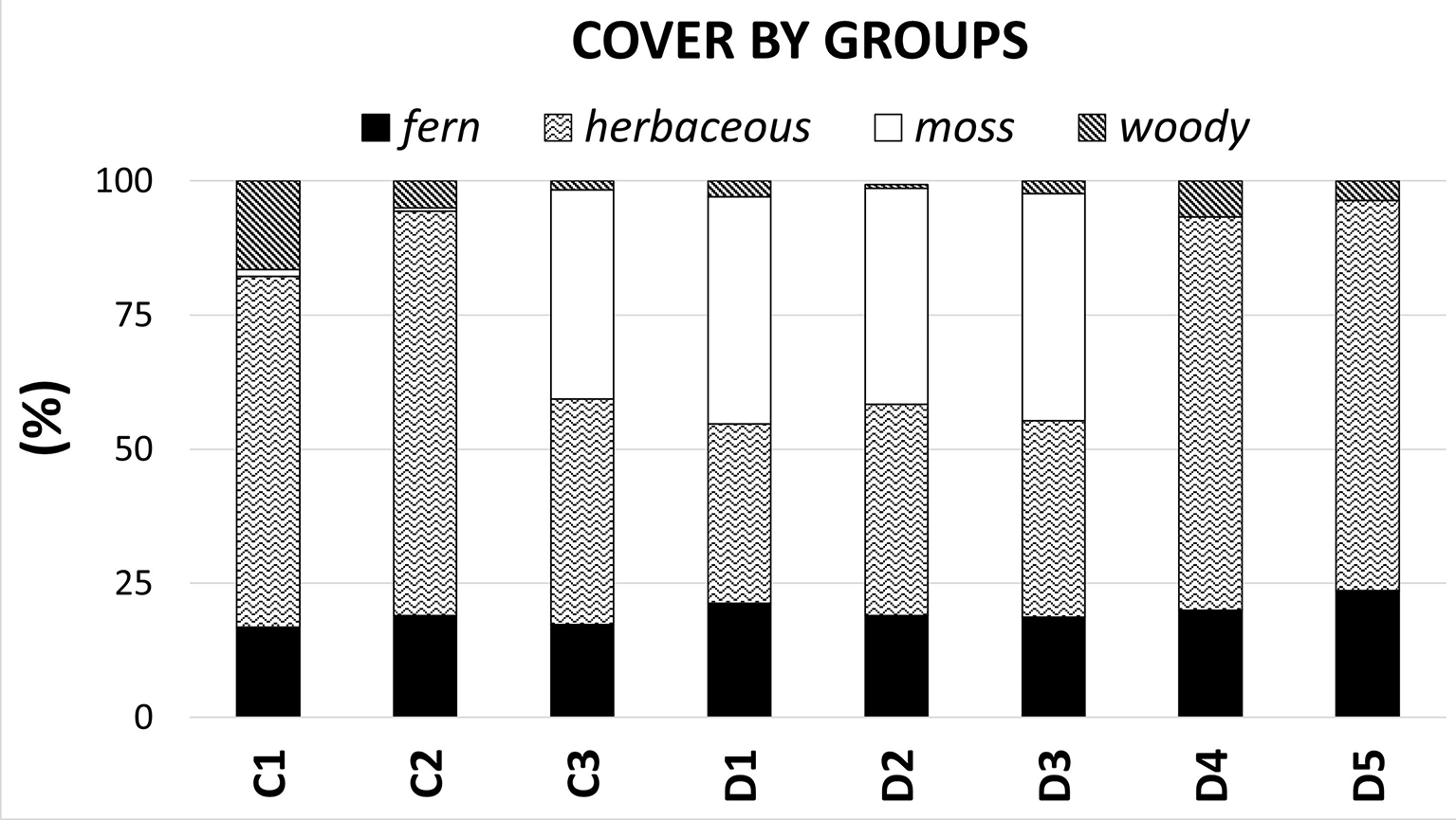
Figure 4. Cover composition by vegetation functional groups in the restored (D1 to D5) and control slopes (C1 to C3).
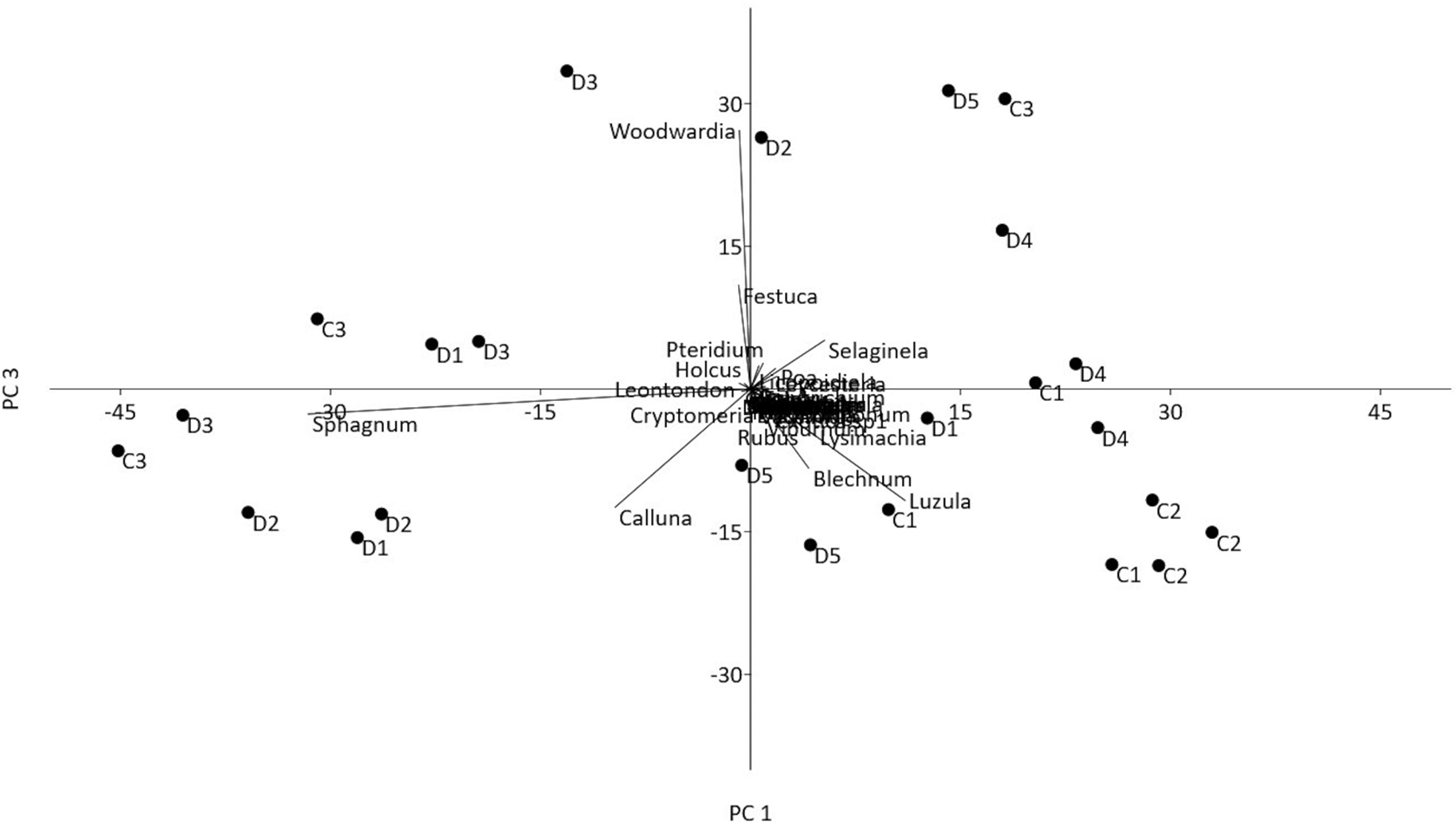
Figure 5. Principal component analysis presenting the similarity relationships between the restored (D1 to D4) and control (C1 to C3) slopes, and related species.
The number of individuals per slope was similar (93–96). Diversity indices were higher when exotic species were more abundant, whereas the Dominance index showed the opposite pattern (
Table 1). Principal Component Analysis revealed similarities between D1, D2, D3, D5, and C3, associated with Sphagnum sp., C. vulgaris, W. radicans, and F. francoi, and between D4, C1, and C2. (
Figure 5).
Table 1. Taxa and individual numbers and Ecological Indices for the restored (D1 to D4) and control (C1 to C3) slopes.
| Indices | Slopes |
|---|
| C1 | C2 | C3 | D1 | D2 | D3 | D4 | D5 |
|---|
| Taxa
| 20 | 18 | 18 | 12 | 18 | 11 | 17 | 9 |
| Individuals
| 93 | 93 | 94 | 94 | 93 | 96 | 95 | 96 |
| Simpson
| 0.916 | 0.815 | 0.803 | 0.839 | 0.799 | 0.757 | 0.895 | 0.763 |
| Shannon
| 2.684 | 2.104 | 2.071 | 2.058 | 1.995 | 1.718 | 2.463 | 1.71 |
| Margalef
| 4.192 | 3.751 | 3.742 | 2.421 | 3.751 | 2.191 | 3.513 | 1.753 |
| Dominance
| 0.0832 | 0.184 | 0.197 | 0.1609 | 0.200 | 0.242 | 0.104 | 0.236 |
Discussion
After ten years of restoration, the slopes were consolidated, with no landslides and negligible surface erosion, and showed a good ecological status in terms of plant community and vegetation cover. The dominance of native species and relatively low abundance of exotic species indicate that the intervention promoted habitat recovery and connectivity with adjacent areas, fulfilling the role of NBS in reestablishing ecosystem structure and biodiversity (Ommer et al., 2022). NBS effectively stabilized soil, reduced water velocity, and directed flow to minimize sediment transport, while structures supported seeds and planted specimens, contributing to slope consolidation and erosion control. The structural function of NBS can be considered a primary success indicator, whereas biodiversity serves as a secondary or final indicator for ecological effectiveness (Raymond et al., 2017;
European Commission, 2021).
Enhancing biodiversity is a recognized strategy to address climate resilience and societal challenges through NBS (Raymond et al., 2017). In the Pico da Vara/Ribeira do Guilherme SPA, invasive species threaten native habitats, particularly following landslides, which create opportunities for opportunistic species to colonize open areas (Costa et al., 2013). Restoration of native plant communities supports resilience and prevents IAS spread, contributing to habitat recovery for the endemic Azores Bullfinch (Pyrrhula murina), whose population (~1,500 individuals) is strongly affected by habitat loss due to IAS (Costa et al., 2023; Heredia et al., 1996; Ramos, 1996). Slope restoration and NBS interventions enhanced shelter, food availability, and connectivity, aligning with conservation objectives under the Natura 2000 framework and EU Biodiversity Strategy for 2030 (
European Commission, 2021; Eggermont et al., 2015).
Monitoring and evaluation are crucial for assessing NBS effectiveness (Sarabi et al., 2019; Kumar et al., 2021a). This study demonstrates that although >80% of initial germination came from hydroseeded species, only C. vulgaris and F. francoi persisted prominently after ten years, while other seeded species showed low representation. Species not included in hydroseeding, such as W. radicans and Sphagnum sp., were abundant, suggesting that natural colonization and ecological succession contribute significantly to restoration outcomes. These results indicate that planting strategies may need optimization, for example, by inoculating slopes with resilient mosses or targeting specific fern species to accelerate desired ecological states and enhance food resources for the Azores Bullfinch (Ramos, 1994; Ramos, 1996).
Ecological indices suggest that successfully restored slopes exhibit lower species diversity but higher dominance, reflecting the effectiveness of a few resilient species in stabilizing vegetation and preventing IAS colonization. To maintain future canopy cover and promote native species diversity, complementary planting of woody species remains important, as root systems further mitigate landslide risks (Baltasar, 1988). Selecting appropriate woody native species for different slopes in the Azores warrants further research. Advancing this work will require a rigorous ecological framework that prioritizes species demonstrably adapted to local habitat conditions, ensuring effective slope stabilization, enhanced soil retention, and enhancing restoration effectiveness, promoting long-term ecosystem resilience, and supporting the reestablishment of functional plant communities.
There remains a lack of widely accepted, standardized approaches for NBS monitoring (Kumar et al., 2021a; Kumar et al., 2021b). Evaluating project success relies on carefully chosen indicators aligned with restoration objectives. For NBS in protected areas, biodiversity indicators are valuable for assessing habitat restoration and connectivity. Comprehensive assessment should also consider ecosystem services, including runoff conservation, flood risk reduction, soil erosion control, drought mitigation, and water storage, to fully capture NBS performance and benefits (Ershad-Sarabi et al., 2019; Kumar et al., 2021a).
The long-term monitoring in this study provides insights to refine NBS methodologies for slope restoration, guiding future interventions to maximize both ecological and structural outcomes. By integrating biodiversity indicators, structural performance, and ecosystem service evaluation, restoration projects can achieve more effective and resilient outcomes in conservation areas (Raymond et al., 2017;
European Commission, 2021; Ommer et al., 2022).
Ethics and consent
Ethical approval and consent were not required.
Acknowledgments
The rehabilitation of the slopes using Nature-Based Solutions (NBS) in the Pico da Vara/Ribeira do Guilherme SPA was carried out under the LIFE+ Lands of Priolo project (LIFE12 NAT/PT/000527), supported by the LIFE Programme of the European Commission and the Government of the Azores.
References
- Arce-Mojica TJ, Nehren U, Sudmeier-Rieux K, et al.:
Nature-based solutions (NbS) for reducing the risk of shallow landslides: Where do we stand?.
Int J Disaster Risk Reduct.
2019; 41: 101293. Publisher Full Text
- Baltasar CFA:
Contribuição para o estudo e caracterização geomorfológica de taludes e escarpas.
Universidade de Évora;
1988; 311 pp. MSc Dissertation.
- Costa H, Bettencourt MJ, Silva CMN, et al.:
Invasive Alien Plants in the Azorean Protected Areas: Invasion Status and Mitigation Actions.Foxcroft LC, Pyšek P, Richardson DM, et al., editors.
Plant Invasions in Protected Areas: Patterns, Problems and Challenges.
Dordrecht, The Netherlands:
Springer;
2013. 9789400777507
- TMM C, Gil A, Timóteo S, et al.:
How Many Azores Bullfinches (Pyrrhula murina) Are There in the World? Case Study of a Threatened Species.
Diversity.
2023; 15(5): 685. Publisher Full Text
- Eggermont H, Balian E, JMN A, et al.:
Nature-based solutions: New influence for environmental management and research in Europe.
Gaia.
2015; 24(4): 243–248.
- European Commission:
Evaluating the Impact of Nature-based Solutions: A Handbook for Practitioners.2021. Publisher Full Text
- Heredia B, Rose L, Painter M:
Globally Threatened Birds in Europe: Action Plans.
Strasbourg, France:
Council of Europe;
1996. 9789287130662.
- Kumar P, Debele SE, Sahani J, et al.:
Nature-based solutions efficiency evaluation against natural hazards: modelling methods, advantages and limitations.
Sci. Total Environ.
2021a; 784: 147058. Publisher Full Text
- Kumar P, Debele SE, Sahani J, et al.:
An overview of monitoring methods for assessing the performance of nature-based solutions against natural hazards.
Earth Sci. Rev.
2021b; 217: 103603. Publisher Full Text
- Morton MH:
Applicability of Impact Evaluation to Cohesion Policy, Report Working Paper.2009.
Reference Source
- Ommer J, Bucchignani E, Leo LS, et al.:
Quantifying co-benefits and disbenefits of Nature-based Solutions targeting Disaster Risk Reduction.
Int J Disaster Risk Reduct.
2022; 75: 102966. Publisher Full Text
- Ramos JA:
Fern Frond Feeding by the Azores Bullfinch.
J. Avian Biol.
1994; 25: 344–347. Publisher Full Text
- Ramos JA:
Introduction of Exotic Tree Species as a Threat to the Azores Bullfinch Population.
J. Appl. Ecol.
1996; 33: 710. Publisher Full Text
- Raymond CM, Berry P, Breil M, et al.:
A framework for assessing and implementing the co-benefits of nature-based solutions in urban areas.
Environ Sci Policy.
2017; 77: 15–24. Publisher Full Text
- Sarabi E, Han S, Romme Q, et al.:
Key enablers of and barriers to the uptake and implementation of nature-based solutions in urban settings: a review.
Resources.
2019; 8(3): 121. Publisher Full Text
- Costa T:
Vegetation Hydroseeding and Monitoring Dataset. [Data set].
International Symposium FloraMac 2025: Program & Abstracts.
Zenodo;
2026; p. 10. Publisher Full Text







