Introduction
Digital image processing is central to creative industries including advertising, branding, publishing, and digital content production. Adobe Photoshop remains one of the most widely adopted tools for professional image manipulation and layered asset composition. Its support for complex file formats, embedded metadata, smart objects, and high-resolution assets increases flexibility but also expands the attack surface.
Historical vulnerabilities such as ImageTragick (CVE-2016-3714) demonstrated that crafted image files can execute arbitrary commands in automated processing systems.1 Similar vulnerabilities have been identified in widely used image libraries.2,3 Research has shown that format complexity and backward compatibility increase parser error probability.4
Steganographic techniques allow hidden payload embedding in image data,5 while decompression bombs can exhaust memory resources.6 Adversarial image manipulation further introduces risks in AI-assisted workflows.7
Image parsing vulnerabilities
Crafted image files exploiting buffer overflows, integer overflows and improper memory handling have repeatedly enabled arbitrary code execution in image processing software. Image parsing libraries are often written in low-level languages and must process complex binary structures, which increases the probability of implementation flaws.
Formats such as TIFF and PSD present particularly large attack surfaces due to nested structures, layered metadata and support for multiple compression schemes. TIFF allows chained image file directories, embedded thumbnails and custom tags, while PSD contains layer hierarchies, masks and adjustment data that require recursive parsing. These features increase the complexity of validation and error handling.
Figures 1 and 2 illustrate a simplified structure of a Photoshop PSD file and highlights potential security vulnerabilities that may exist within its layers and components. On the left side, the hierarchical organization of the PSD document is shown, including background layers, text layers, images, effects, adjustment layers, and older versions. On the right side, several potential risk points are indicated. These include hidden layers that may contain sensitive information, text layers that may store embedded metadata or scripts, and external links to referenced files that may introduce integrity or security risks. The diagram emphasizes how design files can unintentionally contain hidden data or external dependencies that may lead to information leakage or manipulation if not properly managed.
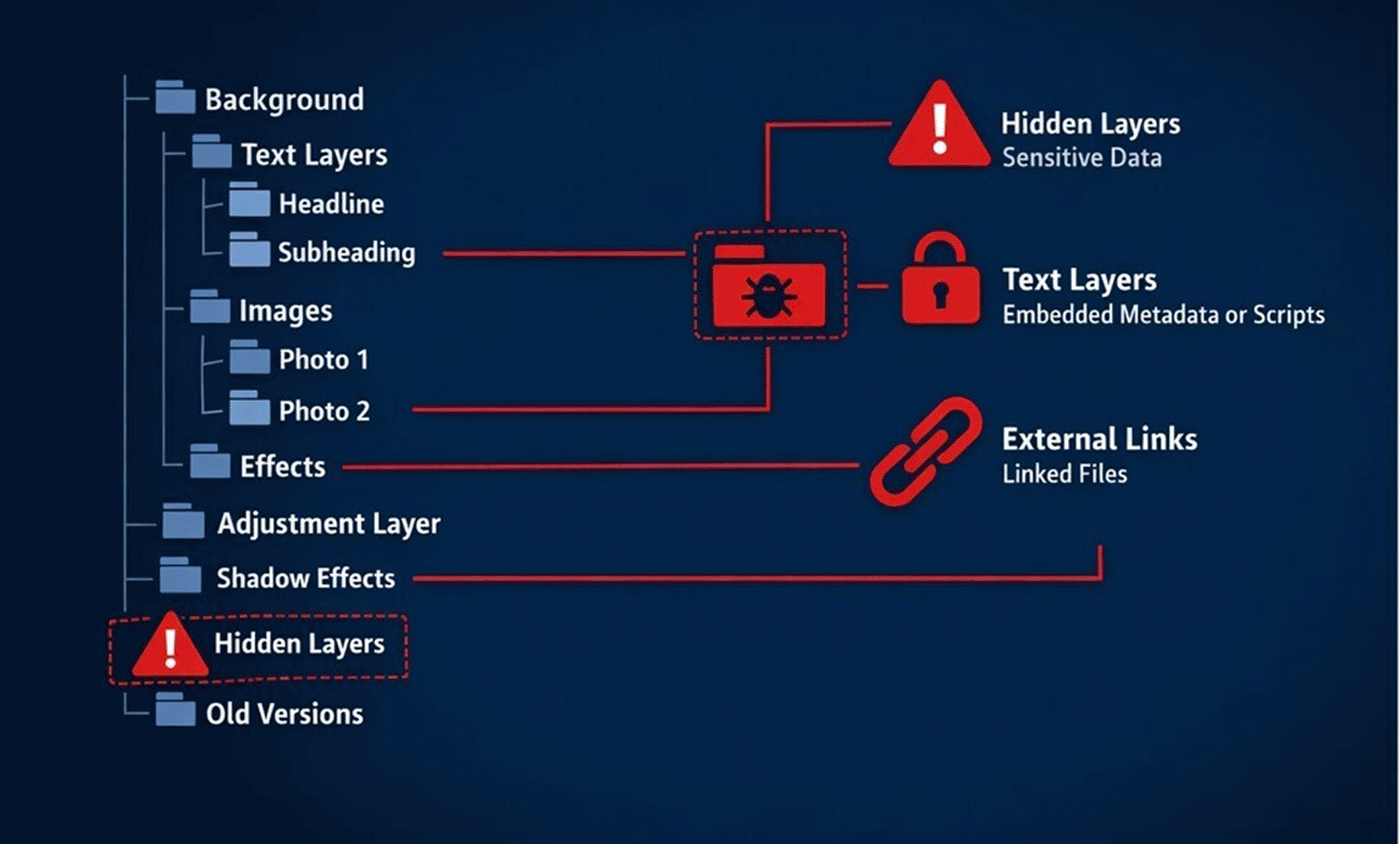
Figure 1. PSD File Structure and Potential Vulnerability Points.
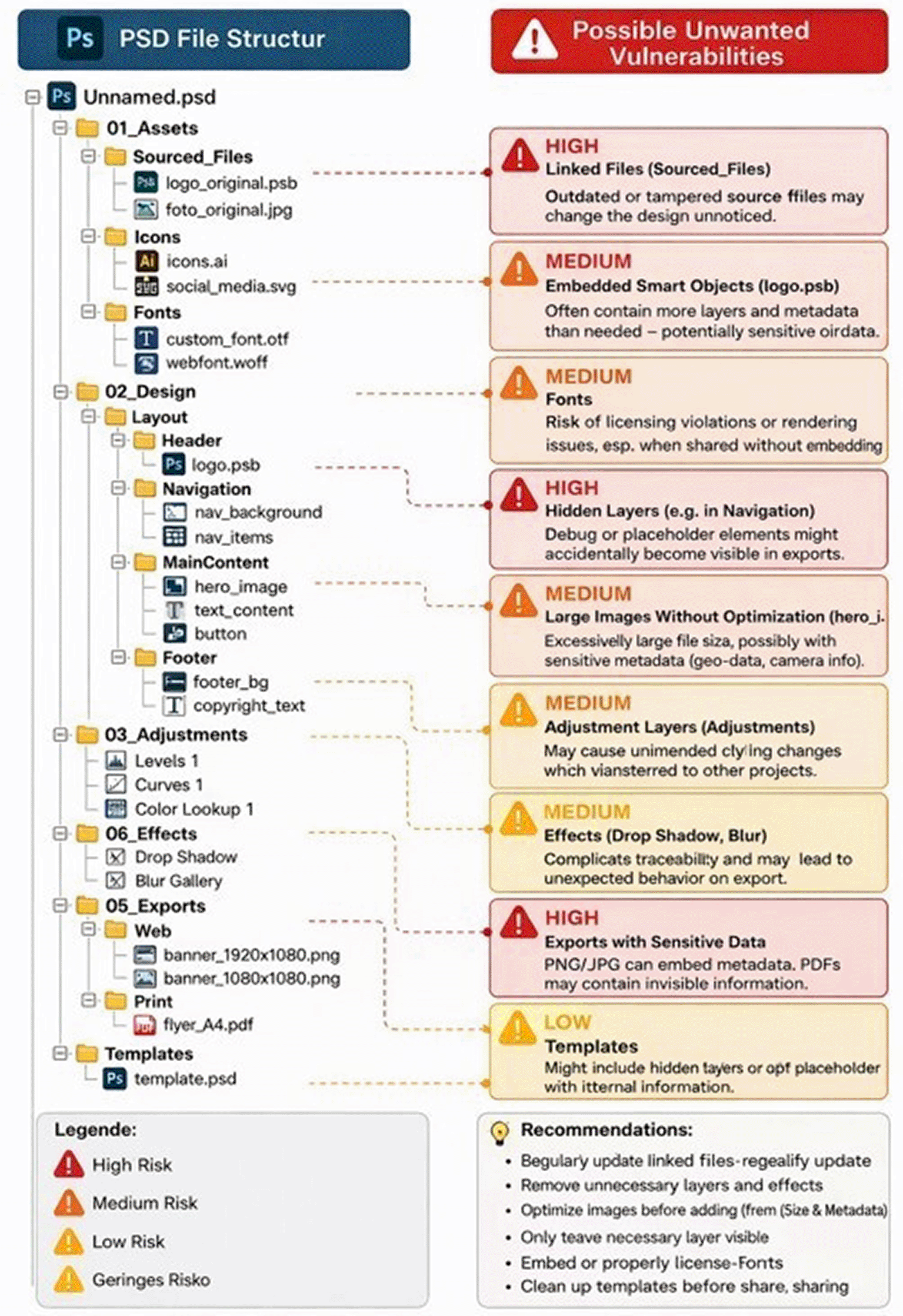
Figure 2. Simplified PSD document hierarchy illustrating common risk points such as hidden layers, embedded metadata, and external file links.
The Figure 2 presents a detailed PSD file structure and highlights potential unwanted vulnerabilities within design assets, layers, and exported files. It shows how elements such as linked files, hidden layers, embedded smart objects, fonts, large images, and exported documents may introduce risks like hidden data exposure, metadata leakage, or unintended design changes. The diagram also categorizes these risks by severity (high, medium, low) and includes recommended practices for reducing vulnerabilities when sharing or exporting PSD files.
Historically, vulnerabilities in image parsing libraries such as libtiff, ImageMagick and graphic toolkits have demonstrated that malformed headers, incorrect size fields or corrupted chunk offsets can trigger memory corruption.8 Attackers often exploit inconsistencies between declared structure sizes and actual data lengths.
Another important class of vulnerabilities involves insufficient validation of image metadata, including EXIF and color profile information. Embedded ICC profiles and metadata blocks may contain oversized or malformed fields that lead to parser failures. In creative workflows where assets are exchanged between different tools, such malformed files can propagate across systems before detection.
Steganography and covert channels
Steganography enables hidden communication by embedding information inside seemingly harmless image data. Classical approaches rely on least significant bit embedding in pixel values, which introduces minimal visual distortion and is difficult to detect by human observers.
More advanced techniques operate in the frequency domain, modifying coefficients in transform-based representations such as discrete cosine transform (DCT) used in JPEG compression. These approaches increase robustness against recompression and filtering operations that typically occur in digital media workflows.
In modern environments steganography can also be used for covert command and control channels or data exfiltration.9,10 Images uploaded to public platforms may carry hidden payloads that are later extracted by automated scripts or malware.
Detection methods rely on statistical analysis of pixel distributions, entropy estimation and identification of deviations from natural image statistics. Machine learning approaches have recently improved detection accuracy by learning complex statistical patterns associated with hidden payloads. Nevertheless, adversarial techniques continue to evolve and attempt to minimize detectable artifacts.5,11
Decompression and resource exhaustion attacks
Compression-based denial-of-service attacks exploit extremely high expansion ratios during decompression. A small compressed file may expand into gigabytes of data when processed by an image decoder, exhausting memory or storage resources.
Image formats frequently support multiple compression algorithms, including LZW, ZIP, RLE and JPEG compression. When combined with large image dimensions or deeply nested structures, decompression operations may lead to excessive CPU usage or memory allocation failures.
High-resolution production pipelines in photography, design and visual effects increase susceptibility to such attacks. Large images are common and therefore oversized files do not immediately raise suspicion. Attackers can craft files that appear legitimate while triggering expensive decompression routines in background processing systems or asset management platforms. Mitigation strategies include strict validation of declared image dimensions, limits on decompressed data size and resource-aware decoding mechanisms. Modern libraries increasingly implement sandboxing and incremental decoding in order to prevent uncontrolled memory allocation and processing overhead.6,12
Attack surface in PSD files
The Photoshop Document (PSD) format illustrates how complex image structures can expand the potential attack surface of creative media files. A PSD file is composed of several hierarchical sections, including the file header, color mode data, image resources, layer and mask information, and the final image data block. Each of these sections may contain nested structures with variable lengths and internal references.
For example, the layer and mask information section stores a hierarchy of layers, where each layer may contain multiple channels, masks, blending ranges, and additional adjustment information. During parsing, the application must recursively interpret these structures while following offsets and length declarations within the file. If a malicious file manipulates these length fields or layer offsets, the parser may attempt to read beyond the intended memory boundaries.
A practical adversarial example involves a PSD file with intentionally corrupted layer metadata (
Figure 3). The attacker sets an incorrect layer record length or a manipulated mask offset, causing the parser to interpret subsequent bytes as valid layer structures. In poorly validated implementations this may lead to buffer overflows, memory corruption, or excessive memory allocation. Because creative workflows frequently exchange PSD files between collaborators, such crafted files can propagate through production pipelines before detection. This example demonstrates how the structural richness of PSD files, while essential for non-destructive editing and complex compositions, also increases the complexity of secure parsing and validation.
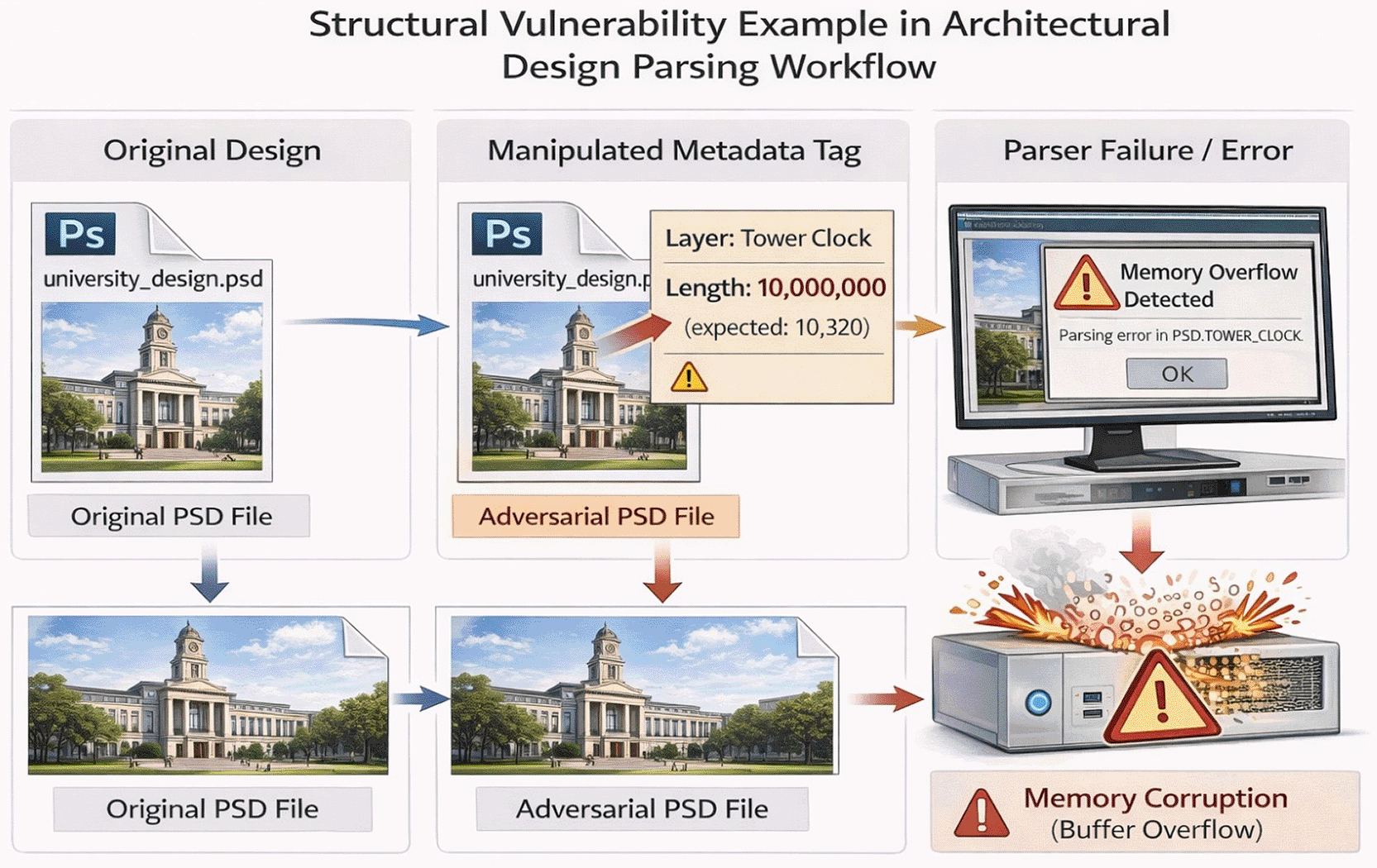
Figure 3. Example of a Structural Vulnerability in a PSD Parsing Workflow.
The contributions of this work are:
Identification of cybersecurity risks associated with Photoshop-centered image workflows. Design of a modular proof-of-concept framework for pre-execution image security analysis. Development of a lightweight prototype integrating structural inspection, metadata analysis, entropy analysis and decompression risk estimation. Experimental validation using synthetic adversarial image datasets. Release of source code and reproducible datasets supporting future research.
The proposed framework assumes an adversary capable of supplying image files to a creative production workflow. The attacker does not control the target system directly but may influence files processed by image editing software, asset management systems, or automated media pipelines. The primary attack objectives considered in this study include:
• Exploitation of image parsing vulnerabilities through malformed file structures.
• Delivery of hidden payloads through steganographic embedding.
• Metadata manipulation intended to evade inspection or facilitate covert communication.
• Resource exhaustion attacks exploiting excessive decompression requirements.
The objective of PS-SecureScan is not to replace endpoint protection systems but to provide an additional pre-execution security layer capable of identifying suspicious image files before they are processed by production software.
Table 1 compares the proposed PS-SecureScan framework with commonly used image analysis and security tools. The comparison highlights the ability of PS-SecureScan to combine structural validation, metadata inspection, steganographic analysis and parser anomaly detection within a single workflow-oriented framework.
Table 1. Comparison of PS-SecureScan with existing image analysis tools.
| System | Metadata anomaly detection | Steganography detection | Parser anomaly detection | Workflow integration |
|---|
| ExifTool | Yes | No | No | No |
| StegExpose | No | Yes | No | No |
| Antivirus scanners | Partial | Partial | Partial | Limited |
| PS-SecureScan
| Yes | Yes | Yes | Yes |
Table 2. Synthetic Datasets samples.
| Category |
Number of images |
|---|
| Benign creative assets | 40 |
| Metadata manipulation | 20 |
| Steganographic payload images | 20 |
| Decompression bomb images | 20 |
| Structurally corrupted PSD files | 20 |
Method: PS-SecureScan framework
Incoming image files are analyzed by multiple modules including structural validation, metadata inspection, steganographic analysis and decompression risk estimation (
Figure 4). The resulting anomaly indicators are combined in a risk scoring model that determines whether the file can be safely opened in the production workflow.
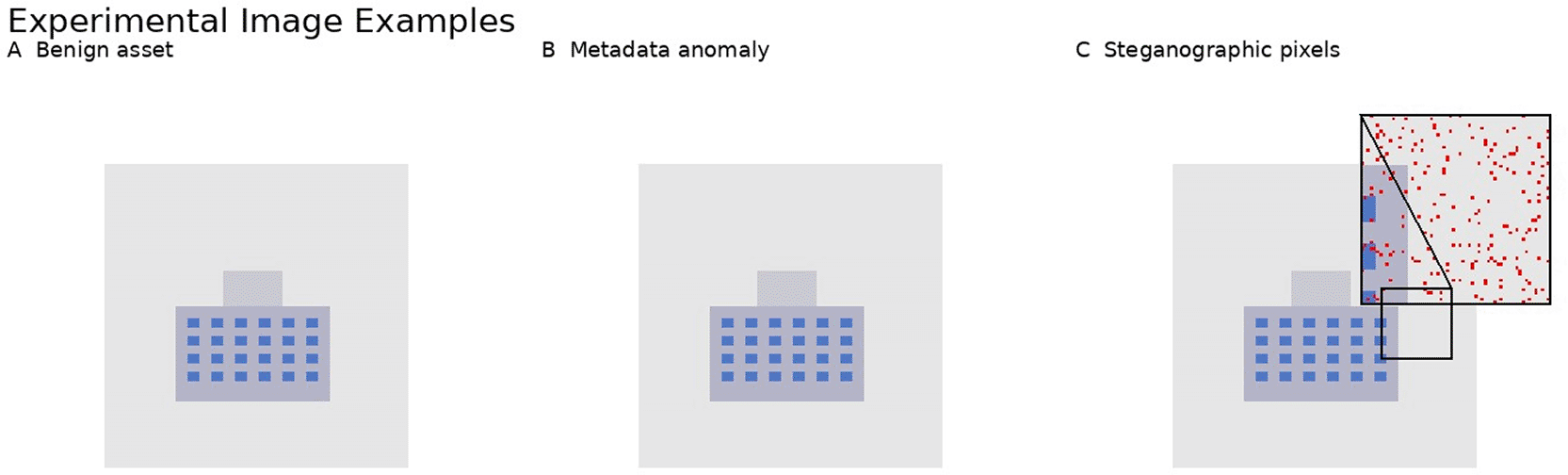
Figure 4. Examples of experimental images used to evaluate PS-SecureScan.
(A) Benign creative asset without anomalies. (B) Image with enlarged metadata block (e.g., oversized XMP field) while pixel content remains unchanged. (C) Image with simulated steganographic modifications; the zoom inset highlights altered pixels in red. These variations demonstrate how different manipulation types trigger specific detection modules.
Design objectives
PS-SecureScan is designed as a pre-execution security layer positioned between external image sources and Adobe Photoshop production systems. Let F denote an incoming image file. The framework applies a sequence of analytical operators
that extract anomaly indicators from the file before it is opened by the production environment.
Each operator produces a normalized score S_i in [0,1] representing the likelihood of malicious manipulation or structural inconsistency. The objective is to detect parser-level vulnerabilities, covert data channels and computational resource attacks while maintaining minimal impact on legitimate workflows.
The framework therefore performs four primary tasks: structural validation, metadata inspection, statistical pixel analysis and runtime observation.
Structural validation module
The structural validation module analyzes the internal file structure
For PSD files the module verifies header signatures, version identifiers, declared dimensions, channel counts and layer offsets. Cross-reference validation ensures that declared block sizes match actual byte boundaries.
Let O_i denote offsets of internal structures and L_i their declared lengths. Structural consistency is verified using
Violations increase the anomaly score. Additional penalties are assigned for invalid marker sequences, corrupted layer records or recursive structural inconsistencies. The resulting structural anomaly score S_struct reflects the probability of malformed parsing structures.
Software description
PS-SecureScan was implemented as a deterministic Python module operating in a pre-execution scan mode without full decoding of image files. The input is a file F (PSD or raster format), and the output is a structured report containing five risk components S_i ∈ [0,1] and a total risk score R_total. The current implementation intentionally favors lightweight heuristic analysis over deep file interpretation. The prototype therefore performs partial format inspection and should not be considered a complete parser for PSD or related image formats. The analytical modules correspond to the methodological components described in the framework:
(i) structural validation of the file format (PSD: header fields, section lengths, offset consistency; raster formats: signatures and marker integrity),
(ii) metadata heuristics detecting oversized EXIF/XMP blocks and encoding anomalies,
(iii) entropy-based estimation of steganographic likelihood using prefix data entropy,
(iv) decompression risk estimation by computing an approximate memory footprint M_est = W · H · C · B, and
(v) an optional sandbox component implemented as a user-defined execution hook returning S_sandbox.
The final score is computed as a weighted linear combination of module outputs:
The resulting score is mapped to four risk classes (Low, Moderate, High, Critical) using threshold parameters τ1, τ2, τ3.
Metadata analysis module
The metadata module extracts EXIF, IPTC and XMP fields
Let M_j denote individual metadata fields with size size(M_j). Oversized or malformed fields are detected using threshold validation
Additional anomalies are generated for invalid encodings, malformed XML structures or unknown custom tags. Semantic checks compare timestamps, device parameters and color profile declarations. The aggregated anomaly measure forms the metadata score S_meta.
Entropy and steganography analysis module
Hidden payloads often modify pixel statistics. The steganographic analysis module computes channel-wise entropy
where p_i denotes the probability of intensity value i in color channel c.
Deviation from expected entropy ranges for natural images produces anomaly signals. Additional frequency-domain analysis evaluates coefficient distributions for compressed formats such as JPEG.
The steganographic suspicion score is defined as
where H_ref represents reference entropy and D_freq denotes frequency-domain deviation metrics.
The present implementation relies on entropy-based indicators and does not yet implement advanced machine learning steganalysis methods or deep frequency-domain feature extraction.
Decompression risk estimation module
Compression-based attacks exploit extreme expansion ratios during decoding. The decompression module estimates the required memory footprint
where W,H are image dimensions, C is the number of channels and B is the bit depth.
For layered formats the cumulative requirement is
If
a decompression risk signal is generated. The normalized result forms the score S_decomp.
Sandboxed behavioral observation module
Files exceeding a preliminary risk threshold are executed within an isolated environment13
The current prototype provides an integration interface for external sandbox environments. Rather than implementing a complete behavioral monitoring subsystem, the framework exposes a configurable execution hook that allows integration with existing sandbox platforms. Consequently, the sandbox component should be interpreted as an architectural extension point intended for future development. Runtime metrics include memory allocation m(t), CPU load c(t), system call frequency and network activity. Behavioral anomalies are detected when
or when unauthorized network operations are observed. These indicators are aggregated into the sandbox anomaly score S_sandbox.
Risk scoring model
All module outputs are combined using a weighted scoring model
where w_i are calibration weights satisfying
Risk classification is defined as.
Low risk: R_total < τ1.
Moderate risk: τ1 ≤ R_total < τ2.
High risk: τ2 ≤ R_total < τ3.
Critical risk: R_total ≥ τ3.
This model allows automated security decisions in creative production pipelines while maintaining quantitative interpretability of detected anomalies.
Results
To evaluate the behavior of the proposed PS-SecureScan framework, a dataset consisting of 120 image samples was generated. The dataset includes both benign creative assets and adversarially crafted files representing different manipulation classes.
For each analyzed image file F, the framework computes anomaly scores for the modules Sstruct, Smeta, Ssteg and Sdecomp. These values are combined into the overall risk score Rtotal.
The dataset was structured as follows:
Detection performance was evaluated using the following metrics:
•
True Positive Rate (TPR) – proportion of adversarial images correctly classified as risky
•
False Positive Rate (FPR) – proportion of benign images incorrectly classified as risky
•
Precision – fraction of detected risky files that are truly adversarial
•
Recall – fraction of adversarial files successfully detected
Risk classification thresholds τ1, τ2, τ3 were selected empirically to minimize false positives while maintaining high detection sensitivity.
The reported values in Table 3 should be interpreted as preliminary performance estimates obtained on synthetic datasets. Their primary purpose is to demonstrate the feasibility of the proposed framework rather than establish definitive operational performance.
Table 3. Detection performance.
| Metric |
Value |
|---|
| Accuracy | 0.91 |
| Precision | 0.88 |
| Recall | 0.93 |
| FPR | 0.04 |
Benign images were generated as typical design assets resembling Photoshop workflow outputs. Adversarial samples were synthetically constructed to simulate realistic attack scenarios including metadata anomalies, hidden payload embedding, and extreme decompression expansion ratios. All images were analyzed using the PS-SecureScan framework and anomaly scores were recorded for each detection module.
The dataset contained standard Photoshop design files, images with manipulated metadata fields, steganographic images containing hidden payloads, decompression bomb images, and structurally corrupted PSD files. For each input file F, the system computed anomaly scores for the individual detection modules S_struct, S_meta, S_steg, and S_decomp, together with the aggregated risk score R_total.
The results demonstrate that the module-based scoring approach clearly differentiates between benign and adversarial image inputs. Normal Photoshop assets exhibit consistently low anomaly scores across all modules, with values typically below 0.1. In contrast, manipulated image files trigger significantly higher scores in the corresponding detection modules. For instance, images with manipulated metadata fields produce elevated S_meta values, while steganographic images show increased entropy deviation reflected in S_steg. Similarly, decompression bomb images result in high S_decomp values due to extreme expansion ratios between compressed and estimated decompressed sizes.
The aggregated score R_total, computed as a weighted combination of module outputs, provides a robust indicator of overall file risk (
Figure 5). Experimental observations show a clear separation between benign assets and adversarial samples, indicating that the multi-layer analysis approach effectively captures different classes of image-based threats. These results suggest that PS-SecureScan can serve as a practical pre-execution security mechanism for Photoshop-centered production environments.
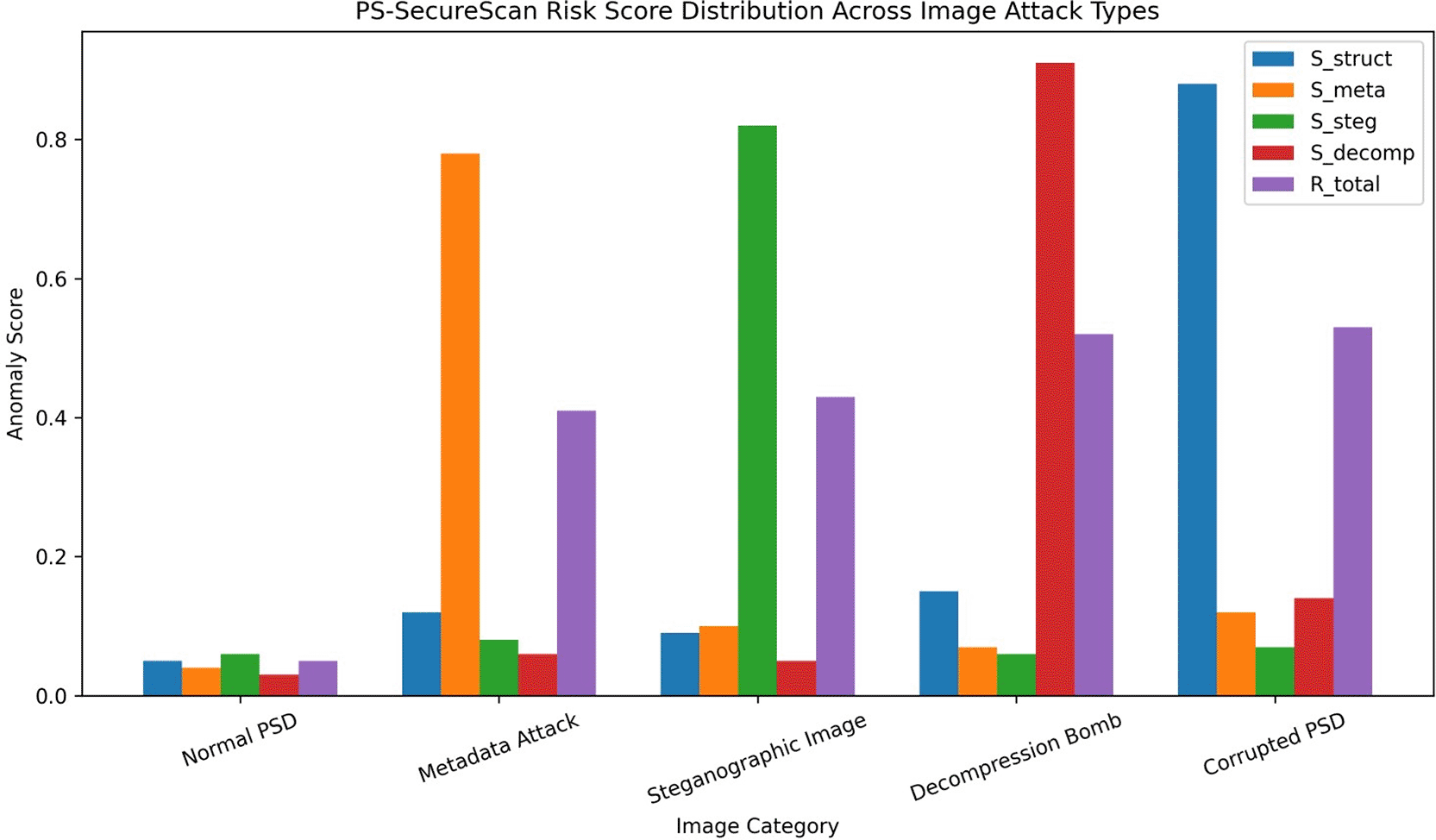
Figure 5. Distribution of anomaly scores generated by the PS-SecureScan framework for different categories of image files.
Individual bars represent module outputs for structural validation (S_struct), metadata analysis (S_meta), steganography detection (S_steg), and decompression risk estimation (S_decomp). The aggregated risk score R_total demonstrates clear separation between benign Photoshop assets and adversarially crafted image files.
Benign creative assets produced low anomaly scores across all detection modules. Most benign samples generated R_total < 0.1.
Adversarial samples triggered elevated module scores depending on manipulation type. Metadata manipulation increased S_meta, steganographic perturbations increased S_steg and decompression bombs increased S_decomp.
In contrast, adversarial samples triggered elevated module scores depending on manipulation type. Metadata manipulation images produced high SmetaS_{meta}Smeta values due to abnormal metadata field sizes. Steganographic images exhibited entropy deviations detected by the steganographic analysis module. Decompression bomb images generated high SdecompS_{decomp}Sdecomp values due to extreme estimated memory requirements.
These results demonstrate that the modular architecture enables targeted detection of different classes of image-based threats while maintaining low anomaly scores for legitimate creative assets.
Limitations
Several limitations should be acknowledged.
First, the evaluation relies exclusively on synthetic datasets. Although synthetic adversarial images allow controlled experimentation, they cannot fully reproduce the diversity of real-world malicious image files.
Second, several analytical components currently employ lightweight heuristic methods rather than deep semantic analysis. This applies particularly to metadata inspection, steganographic detection and PSD structure analysis. Third, the sandbox component currently serves as an integration interface rather than a fully implemented behavioral monitoring environment. Finally, scoring thresholds and module weights were selected empirically and have not yet been calibrated using large-scale operational datasets.
Future work
Future development of PS-SecureScan will focus on four primary directions. First, evaluation will be extended to larger collections of real-world malicious image samples and public multimedia security datasets. Second, support for deeper PSD parsing will be introduced, including recursive analysis of layer hierarchies, masks and smart objects. Third, machine learning-based steganalysis techniques will be incorporated to improve hidden payload detection.14,15 Finally, the sandbox component will be extended into a complete behavioral monitoring environment capable of collecting runtime telemetry and anomaly indicators.
Conclusion
Creative media workflows represent an emerging cybersecurity domain in which image files function not only as visual assets but also as complex structured containers capable of carrying malicious payloads. Formats such as PSD, TIFF and high-resolution raster images contain nested structures, embedded metadata and multiple compression mechanisms that increase both functionality and potential attack surface.
This paper introduced PS-SecureScan, a pre-execution image security framework designed to detect anomalous or potentially malicious files before they are opened in production software such as Adobe Photoshop. The framework combines structural validation, metadata inspection, entropy-based analysis and decompression risk estimation within a unified risk scoring model.
Experimental results using synthetic adversarial image samples demonstrate that the proposed approach can effectively differentiate between benign creative assets and manipulated files representing several attack classes. Future work will focus on expanding format-aware analysis, integrating machine learning–based steganography detection and evaluating the framework on large-scale real-world datasets.
Software availability
PS-SecureScan: Software, Description and Usage Guidelines:
The prototype implementation of PS-SecureScan was developed in Python and operates as a pre-execution scanning tool that analyzes image files without performing full decoding. The software evaluates structural integrity, metadata properties, entropy-based statistics and decompression risk indicators and produces a structured anomaly report.
The experimental evaluation presented in this study uses synthetic datasets containing benign images and adversarially modified examples including metadata anomalies and steganographic perturbations.
Example usage:
scanner = PSSecureScan()report = scanner.scan("input_image.png")print (report. R_total, report.risk_class)The software generates normalized anomaly scores for each detection module and produces a final risk score based on a weighted aggregation model.
Ethics and consent
This study used synthetically generated image datasets representing both benign creative assets and adversarially manipulated files. No human participants, clinical data or personally identifiable information were involved at any stage of the research. Therefore, ethical approval and informed consent were not required.
Author contributions
W.K. conceived the study and designed the PS-SecureScan framework.
K.K. implemented the system, generated the experimental dataset and conducted the evaluation. Both authors contributed to the analysis and interpretation of the results and approved the final version of the manuscript.