Plain language summary
Precious metals are rare and expensive materials. However, they present unique properties that make them relevant for many applications, for instance in catalysis and medicine. Numerous studies focus on gold (Au), silver (Ag), platinum (Pt), palladium (Pd), ruthenium (Ru) or rhodium (Rh). Recently, iridium (Ir) is gaining interest for use in developing more sustainable energy conversion. The interest on precious metals extend to less studied materials like osmium (Os). In order to make the most of every atom of these metals, developing nanomaterials like clusters and nanoparticles is a rewarding strategy. With the increasing work and knowledge gained on precious metals in general, it is expected that some of these less studied materials will be opening new opportunities. This review provides an overview of the work performed to date on osmium nanoparticles.
Introduction
Precious metals, such as gold (Au), silver (Ag), platinum (Pt), palladium (Pd), ruthenium (Ru), rhodium (Rh) or iridium (Ir), are critical and expensive materials. Nevertheless, they play a key role in catalysis1,2, water/air treatment3 and medicine4. Molecules comprising one of few atoms or precious metals stabilized by ligands in complexes have been largely investigated for use as catalysts or in medical applications5. More recently, nanomaterials made of several hundreds or thousands of metal atoms have been investigated for their unique properties6 relevant for medicine4, chemical synthesis and catalysis7, sensing8, water/air purification9, optics10, electronics11, building and construction12, to name only a few examples.
For precious metals, a trend in the literature is to focus on Au, Ag, Pt, Pd, Ru or Rh nanoparticles and nanomaterials. Figure 1 shows the results from a search on the Web of Science (WOS) database (Clarivate Analytics) with different keywords including ‘metal’ and ‘nanoparticles’. These results show the number of references returned for different combination of keywords and metals. A clear trend is that the least studied precious metals are iridium (Ir), rhenium (Re) and osmium (Os) - assuming that the number of references returned for each search gives an indication of the importance of the related research area. This can be explained by the fact that these metals are among the least available on Earth13. The focus here is on the least studied material: Os.
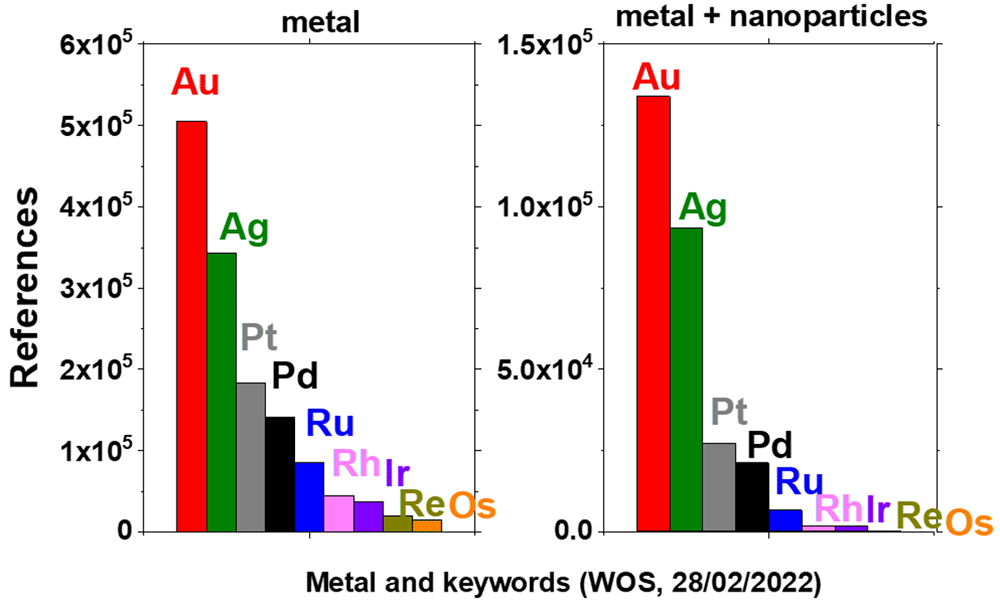
Figure 1. Number of references returned for searches on the Web of Science database with different keywords, ‘metal’ or ‘metal+nanoparticles’, where ‘metal’ is gold (Au), silver (Ag), platinum (Pt), palladium (Pd), ruthenium (Ru), rhodium (Rh), iridium (Ir), rhenium (Re) or osmium (Os), as indicated.
Os is the densest material and has been mainly studied for its mechanical properties14,15. However, Os nanomaterials also show promising features for applications in catalysis and medicine16. There is, to the best of our knowledge, no review on Os nanoparticles. Os nanoparticles are partially covered in a very recent review witch mainly focuses on Ru and Rh and catalytic applications2. In addition to its natural scarcity, the relatively limited amount of work on Os nanomaterials can be inferred to the typically smaller size (<2 nm) for Os nanoparticles compared to other precious metals, for most syntheses reported17. This small size makes the nanomaterials challenging to characterize. In addition, the relative limited number of reports on Os can be related to the fact that Os easily get oxidized to OsOx materials such as OsO4, a highly toxic compound18. Nevertheless, OsO4 has been commonly used as a staining agent in microscopy19 and in catalysis20. Os complexes and clusters have been used as model systems along the years, for instance in the work of Professor Gates21. Based on the knowledge already available on Os complexes, it is expected than the interest and knowledge on Os nanomaterials will grow in the coming years. This review proposes an overview of Os nanoparticles syntheses and applications. Rather than a detailed discussion of selected work, the aim is here to give a broad view of work reported to date on Os nanoparticles, as illustrated in Figure 2.
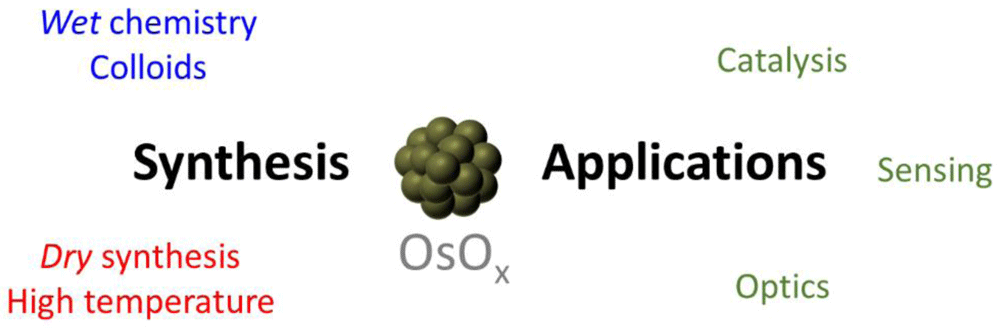
Figure 2. Overview, aim and scope of this review into Osmium oxide (OsOx).
Discussion/analysis of the recent literature
Formation mechanism
It is expected that understanding the formation mechanism(s) of nanomaterials will be a key to develop more controlled syntheses22. This in turn will lead to nanomaterials designed with tuned properties to best match the requirements for a given application. Certainly, materials like Au nanoparticles have been intensively investigated and a relatively clear picture of the nanoparticle formation has been proposed23,24. Nevertheless, several questions remain to understand and control how atoms of metal in a complex form larger nanomaterials, e.g. even for the case of well-studied metals like Pt25. It can be observed that metals for which the synthesis can easily be followed by simple techniques, such as ultraviolet-visible spectroscopy (UV-vis) for Au or Pt, have been more intensively studied. It is therefore tempting to explain the relatively limited knowledge on Os nanoparticles by the challenging characterization of the related materials. Importantly, the risk of forming the toxic OsO418 is also a bottleneck in the investigation of Os nanoparticles compared to Au or Pt.
A specific feature of Os nanomaterials is to easily lead to relatively small (<2 nm, see Table 1) nanostructures, for which most characterization techniques, until recently, are not easily implemented to evaluate size, shape and structure or to follow the formation mechanism of Os nanomaterials. Recently, using a combination of complementary in situ X-ray diffraction (XRD), quick X-ray absorption fine-structure (QXAFS) and X-ray photoelectron spectroscopy (XPS) performed at synchrotron facilities, the formation at high temperature of PdOs nanoparticles from [Pd(NH3)4][OsCl6] was studied44. Such advanced studies are much needed to better understand the formation of nanomaterials but remain scarce for Os and Os based materials. Another example is the use of X-ray total scattering with pair distribution function (PDF) analysis, also requiring access to synchrotron facilities, where OsxCly intermediates structures were suggested for the formation of Os nanoparticles in a colloidal approach42. Despite a relatively poor understanding on how Os nanomaterials form, and few reports focusing on the formation mechanism of Os nanoparticles, a range of successful syntheses have been reported and are illustrated in Table 1.
Table 1. Examples of literature on osmium oxide (OsOx) nanoparticles.
| Ref | Date | Precursor | Method, solvent,
support, additives,
conditions | Use | Size / nm |
|---|
| Dry syntheses |
|---|
| 17 | 1979 | OsO4 | Impregnation | cyclohexene
hydrogenation | < 1 |
| 26 | 2007 | [Os3CO10(NCMe)2] | Pyrolysis (acetone)
- carbon nanotubes | design of
Os nanotubes | < 3 |
| 27 | 2008 | Os metal carbonyls | Pyrolysis – SiO2 | - | 1-10 |
| 28 | 2012 | Os(C5H5)2 | Atomic layer deposition | - | Films
and nanoparticles |
| 29 | 2013 | Os(COD)
(cyclooctatetraene) | Impregnation (pentane)
SiO2 – H2 reduction | alkanes
hydrogenolysis | 1.1 |
| 30 | 2015 | Home made
OsII complex | Electron beam
induced synthesis | - | 1.5-50 |
| 31 | 2017 | Home made
OsII complex | Microwave
Laser | - | 1-50 |
| 32 | 2019 | Home made
OsII complex | Electron beam
induced synthesis | temperature effect
on nucleation | < 2 |
| Wet chemical syntheses |
|---|
| 17 | 1979 | OsO4
0.4 mM | Alcohol + water + PVP
reflux | cyclohexene
hydrogenation | < 1 |
| 33 | 2005 | OsCl3
19 mM | ethylene glycol, NaOH,
160 °C, 3 h | - | 0.6-1.8 |
| 34 | 2010 | OsCl3
2 mM | H2O, HEPES,
EPPS, PIPES, MES
180 °C, 1-3 h, autoclave | aerobic oxidation of
alcohols to aldehydes | 1.6 |
| 35 | 2013 | OsCl3 | H2O, AA
95 °C, 1.5 h | SERS | 1.0-1.5 |
| 36 | 2014 | OsO4
0.9 mM | H2O, NaOH
CTAB, 2,7-DHN
RT, 30 min | catalysis, SERS
(nanoparticles or chains) | 1-3 |
| 37 | 2014 | OsO4
0.7 mM | DNA, TBABH4
RT, 10 h | cyclohexene hydrogenation
SERS | 1-3
Shape control |
| 38 | 2014 | OsO4
0.9 mM | SDS, NaBH4
RT, 30 min | SERS and KMnO4
decomposition
(nanoparticles or chains) | 1.2-2.5 |
| 39 | 2018 | OsCl3 | THF, LiEt3BH
RT, 2 h | benzyl alcohol
oxidation | 1.3 |
| 40 | 2020 | K2OsCl6
0.2 mM | H2O, NaBH4, heparin
RT, 1.5 h | sensing | 1.8 |
| 41 | 2020 | Os(acac)3
12 mM
OsCl3
40 mM | Ethylene glycol, PVP
200 °C, 12 h
H2O, NaBH4, RT | structure control
(hcp vs. fcc) | 1-2 |
42
43 | 2022 | OsCl3
H2OsCl6 | 2.5-100 mM
methanol, ethanol, H2O
85 °C, 6 h – 1 week | - | 1-2 |
Dry syntheses
As opposed to wet chemical syntheses detailed below, where the formation of Os nanoparticles proceeds in the liquid phase, a range of high temperature dry syntheses are reported for Os nanoparticles. Typically a support material is needed to stabilize the nanoparticles2. An overview of different syntheses is proposed and an example of synthesis is the thermal decomposition of Os precursors45. Pyrolysis leads to different nanoparticle size depending on the ligand structures of the precursors27 and needs to be performed at relatively high temperature, e.g. 300 °C, when the precursor is an Os carbonyl complex26. Hydrogen (H2) reduction is also an option29. Magnetron sputtering has been reported for Os films46. Alternative methods include wet incipient impregnation47, freeze drying48 or atomic layer deposition (ALD) of Os films and particles28. However, this last approach suffers from the challenge related to the high toxicity of OsO4 that is easily formed at high temperature.
Wet chemical syntheses
Wet chemical or colloidal syntheses are very popular synthetic approaches to obtain a range of nanomaterials directly relevant for multiple applications1,7,49. The formation of nanoparticles proceeds in a solvent via the reduction of a metal complex in an oxidized state in the presence of a reducing agent50, followed by the growth of the nanoparticles51. In most cases, the syntheses do not require a support material. This is an advantage to truly investigate support and loading-related effects in catalysis since the nanoparticle formation and control over the nanoparticle size and other properties is independent of the presence of a support52. Typically, the syntheses are performed in presence of a range of additives like surfactants to stabilize the nanoparticles.
Os nanoparticles can be obtained from a variety of solvents and reducing agents summarized in Table 1. Surfactants typically added for the synthesis are for example heparin40, (4-(2-hydroxyethyl)-1-piperazineethanesulfonic acid) (HEPES)34, 3-[4-(2-hydroxyethyl)-1-piperazinyl] propanesulfonic acid (EPPS)34, piperazine-N,N′-bis(2-ethanesulfonic acid) (PIPES)34, 2-ethanesulfonic acid (MES)34, polyvinylpyrrolidone (PVP)17, sodium dodecyl sulfate (SDS)38, DNA37,53, sodium citrate54 and various precursors are suitable to obtain Os nanoparticles. OsCl3 remains a common precursor. OsCl3 can be reduced at room temperature (RT) using a strong reducing agent like LiEt3BH (superhydride) in tetrahydrofuran (THF)39. The nanoparticles are circa 1.3±0.2 nm. NaBH4 is also a suitable reducing agents for RT synthesis38. In a range of other syntheses, temperature between 80 to 200 °C are typically used depending on the solvent selected, see Table 1. In methanol-water in presence of PVP, sub-nanometer nanoparticles are obtained17. Ionic liquids are also suitable to obtain nanoparticles for instance from the metal carbonyl precursor Os3(CO)1255,56. The reaction of OsO4 in aqueous solution of cetyltrimethylammonium bromide (CTAB), 2,7-dihydroxynaphthalene (2,7-DHN) and NaOH, leads to nanoparticles circa 1-3 nm36. Adjusting the concentration of CTAB, different morphologies made of individual nanoparticles, chain-like or aggregated clusters were obtained. Chains of Os nanoclusters are also obtained using ascorbic acid (AA) as a reducing and capping agent in an aqueous medium to lead to nanoparticles in the size range 1-1.5 nm with properties suitable for surface-enhanced raman spectroscopy (SERS)35.
Os nanoparticles are typically small (<2 nm) across different syntheses34. This therefore questions the actual need to stabilize the small nanoparticles. Developing surfactant-free colloidal syntheses, although it is challenging, is possible57. Surfactant-free nanoparticles with a more accessible surface to reactants are directly relevant for catalysis. Surfactant-free nanoparticles are also more simply modified, for instance with dedicated ligands and molecules towards bio-medical applications. Examples of surfactant-free nanoparticles include the polyol synthesis33, typically performed in alkaline ethylene glycol, or recently reported mono-alcohol synthesis1, performed in alkaline methanol or ethanol. In the latter case, it was actually shown that high precursor concentrations up to 100 mM43 and even without the need for a base42, leads to the formation of small size <3 nm Os nanoparticles, see Figure 3. Such small size nanoparticles were obtained across a large parametric study investigating the time of synthesis from hours to weeks, nature and concentration of precursors, solvent composition and reducing agent (methanol or ethanol) as well as base concentration.
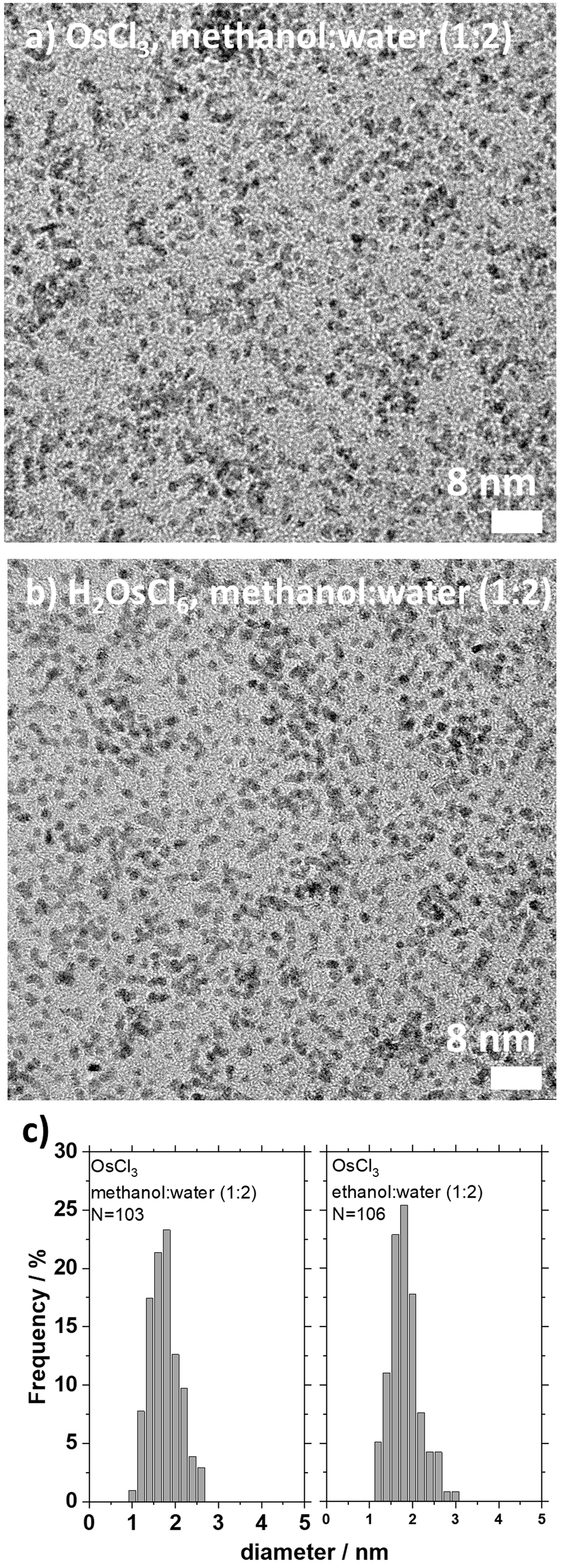
Figure 3. Example of small size Osmium (Os) nanoparticles.
(a–b) transmission electron microscope (TEM) micrographs of Os nanoparticles obtained using water (66 volume %) and methanol (33 volume %) and 100 mM of (a) OsCl3 and (b) H2OsCl6 as precursors after a one-week reaction at 85 °C. The size analysis (c) suggests that the nanoparticles are (a) 1.6±0.4 nm and (b) 1.7±0.3 nm. Reproduced from 42 with permission from the Beilstein-Institut.
A recent work showed that face-centered cubic (fcc) nanoparticles instead of the expected hexagonal close packed (hcp) structure could be obtained by careful choice of the precursor, reducing agent and solvent, see illustration in Figure 4. In presence of ethylene glycol and PVP using Os acetylacetonate (Os(acac)3), fcc nanoparticles were obtained whereas hcp nanoparticles were obtained with OsCl3 in water using NaBH4 as reducing agent41. The change in structure is attributed to the role of ligands (acac) that can stabilize a specific facet. The question of whether or not this would happen is the synthesis was performed under exactly the same conditions (same precursor concentration, reducing agents and solvents) but only changing the precursor remains open. Size selected nanoparticles were obtained in a two-phase (water-toluene) approach from OsO4 and tetrabutylammonium borohydride (TBABH4): 1±0.2 nm, 10–30 nm, 22±2 nm and 31±3 nm nanoparticles were synthesized by changing the concentration ratio of the metal precursor and the amount of reductant37.
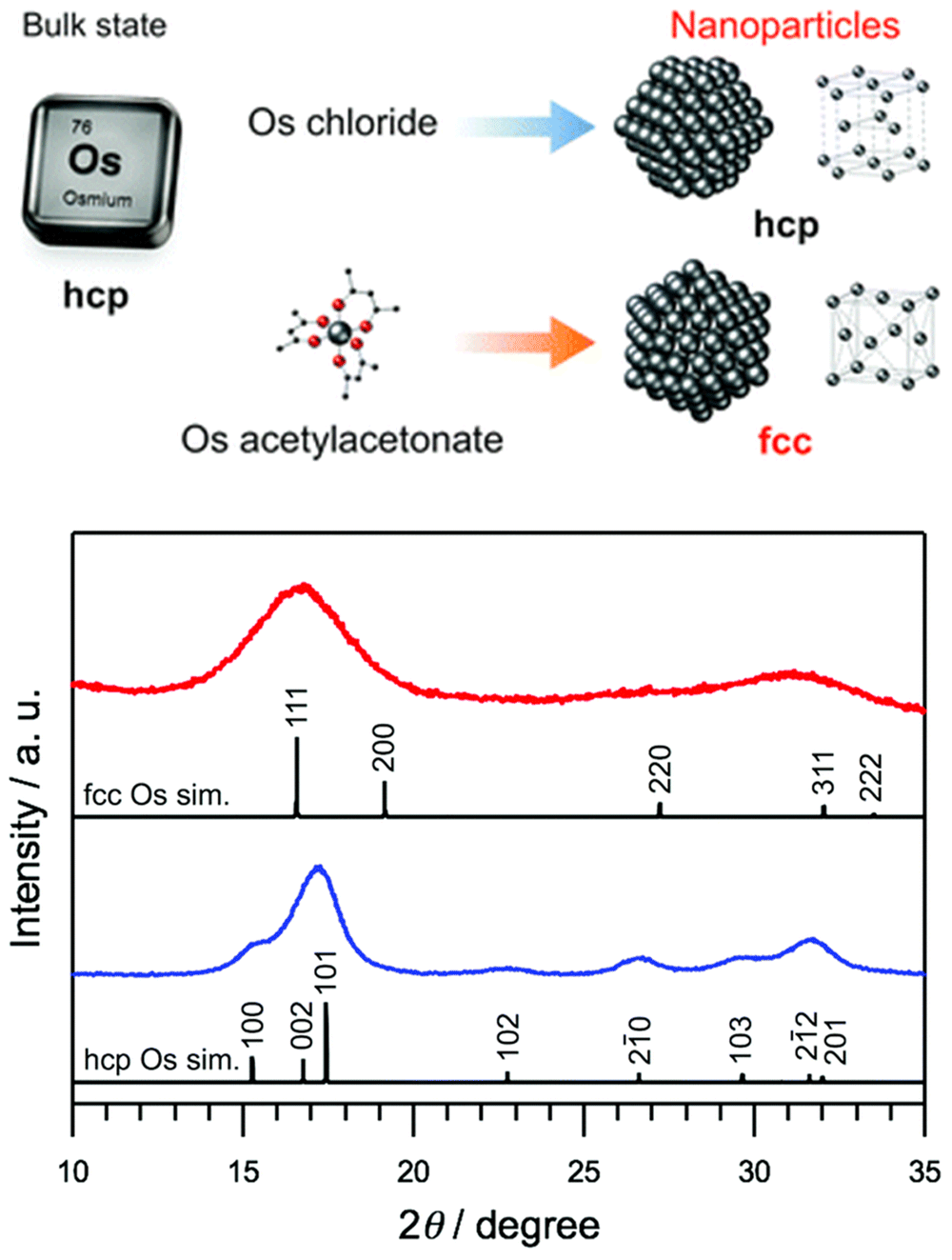
Figure 4. Tuning osmium (Os) nanoparticle structures by controlled synthesis.
(Top) Schematic of the formation of face-centered cubic (fcc) or hexagonal close packed (hcp) Os nanoparticles depending on the precursor used. (Bottom) Synchrotron X-ray diffraction (XRD) patterns of Os nanoparticles synthesized using the Os(acac)3 complexes (red) and (blue) OsCl3, and the simulations of fcc (upper black) and hcp Os (lower black). Reproduced from 41 with permission from the Royal Society of Chemistry.
Os complexes and clusters
Compared with Os nanoparticles, Os complexes have been more studied to date20,58–60. For instance, Os metal carbonyl complexes have been widely investigated61. The group of Professor Gates intensively studied Osn clusters62,63. In particular Os carbonyls clusters were widely investigated on various support like gold64, MoS261, zeolite65, MgO62,63,66,67 with a focus on conversion from complexes to clusters. Carbonyls clusters were investigated by 129Xe nuclear magnetic resonance (NMR), where [HOs3(CO)11]- or [H3Os4(CO)12]- were found to formed in zeolites65 and [Os3(CO)12] on MgO66.
Barry et al. used Os atoms and complexes as their model system for various studies, e.g. to build up 3D nanocrystals to observe, study and quantify crystal growth at the atomic scale controlled in real time68,69, see the illustration in Figure 5. The experiments were conducted using the electron beam of a transmission electron microscope (TEM) and a micelle-stabilized complex of [Os(p-cymene)(1,2-dicarba-closo-dodecarborane-1,2-dithiolate)]30. The same precursor under microwave irradiation leads to supported Os nanoparticles circa 1 nm in diameter31. Os was used to show the temperature dependent nucleation and growth kinetics of precious metal nanocrystals supported on silicon nitride by aberration corrected TEM32. Barry et al. for that purpose used homemade Os complexes in that study. The growth rate was found to be dependent on the temperature (circa 2.5 times faster at 100 °C than at 20 °C). No effect of the temperature on the crystal structure of the nanocrystals was observed, ’’although the sizes of the crystals (<2 nm) and the very small number of atoms per crystal render clear elucidation of the structures extremely difficult’’32. The challenging characterization of Os nanoparticles by routine equipment indeed remains a bottleneck.
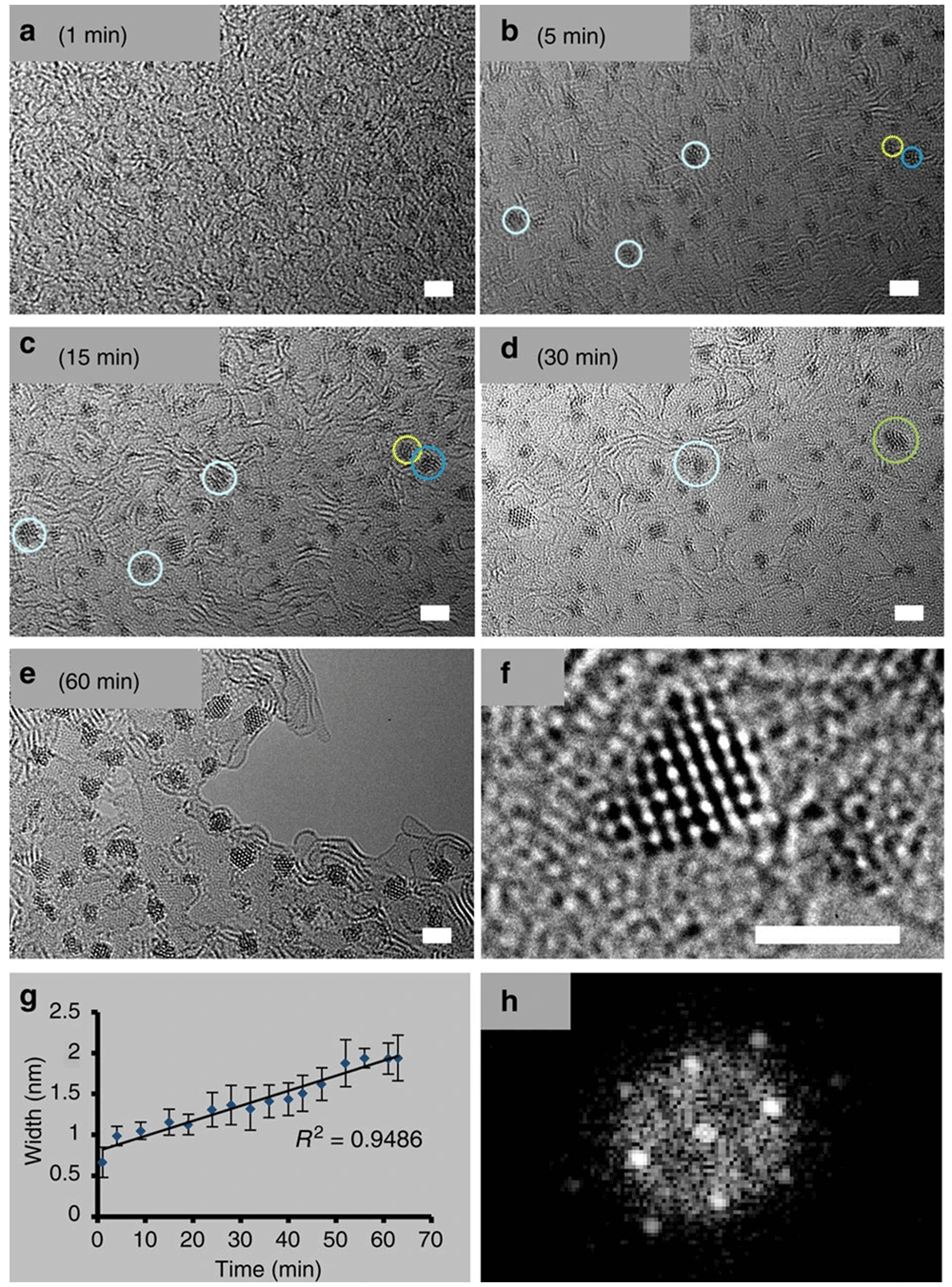
Figure 5. Os nanoparticles as model system to study the formation and stability of nanomaterials.
(a–d) Migration of small Os clusters and their coalescence (e.g. clusters in yellow and dark blue circles merge to give crystal in green circle) over a period 1–30 min; scale bars, 2 nm. (e) Nanocrystals after 60 min. (f) Example of an Os crystal of ca. 1.5 nm, formed after 30 min of irradiation, scale bar, 1.5 nm. (g) Width of the clusters/crystals versus time. (h) Fast Fourier transform analysis of the nanocrystal shown in f. Reproduced from 68 with permission from Springer Nature.
Applications
Os nanomaterials found applications in a wide range of fields and a broad overview is proposed here.
Chemical synthesis. Recent reports suggest that Os nanomaterials might have specific properties for hydrogenation reactions compared to other precious metals70. Os based materials have been used as catalysts for dihydroxylation71, cyclohexene hydrogenation17,37, citral hydrogenation72. Other reactions include oxidation of benzyl alcohol with relatively low yield compared to Ir39 or reduction of 4-nitro aniline36. Using HEPES protected nanoparticles, the conversion of p-methylbenzylalcohol34, p-methoxybenzylalcohol34, p-bromobenzylalcohol34, 3-phenyl-2-propanol34, 3-phenyl-2-propenol (cinnamylalkohol)34, 1-phenylethanol34, lead in all cases to the aldehyde or ketones in relatively high yield. On silica doped with zirconium, Os nanoparticles show reactivity for hydrogenation and hydrogenolysis/hydrocracking of tetralin from aqueous K2[OsCl6]47. A high Os content displays weak hydrogenation activity but very good hydrogenolysis/hydrocracking activity. Os nanomaterials are also suitable for the synthesis of various 1,2-cis-diols73, 1,2/3-triols synthesis from the allylic hydroperoxides74, syn-dihydroxylation of alkenes75, reduction of p-nitroaniline into p-phenyldiamine76, oxidations reaction39, CO oxidation77, ammonia synthesis78 or Fischer–Tropsch synthesis79. Under aerobic condition, oxidation of activated, unactivated and heteroatom containing alcohols to carbonyl compounds lead to high activity and selectivity even under mild conditions80.
6.2.5.2. Electrochemistry. OsOx materials have been shown to be suitable for a range of electrochemical reactions including hydrogen evolution reaction (HER)81, oxygen reduction reaction (ORR)82 or as direct borohydride polymer electrolyte membrane fuel cell anodes83. Freeze drying was used to obtain Os/Si nanowires and the corresponding nanoparticles by etching the Si nanowires48. In this comparative study with Rh, Pt, Pd, Re, Ru, Au or Ag nanocomposites, Os was found to give the higher activity for the HER, a small onset potential of -25 mV and long term stability48. Using magnetron sputtered Os it was found that the high activity of OsOx for the HER in acidic media was correlated with poor stability84. Nanoparticles based on Os are easy to de-alloy, e.g. Pt2Os to from quasi core-shell Os@Pt for ORR in acidic media85. This property can be used to develop high surface area materials by de-alloying, e.g. to develop improved porous-electrodes for the oxygen evolution reaction (OER), see Figure 686. Os itself is expected to show very high activity for the OER but suffer from poor stability84.
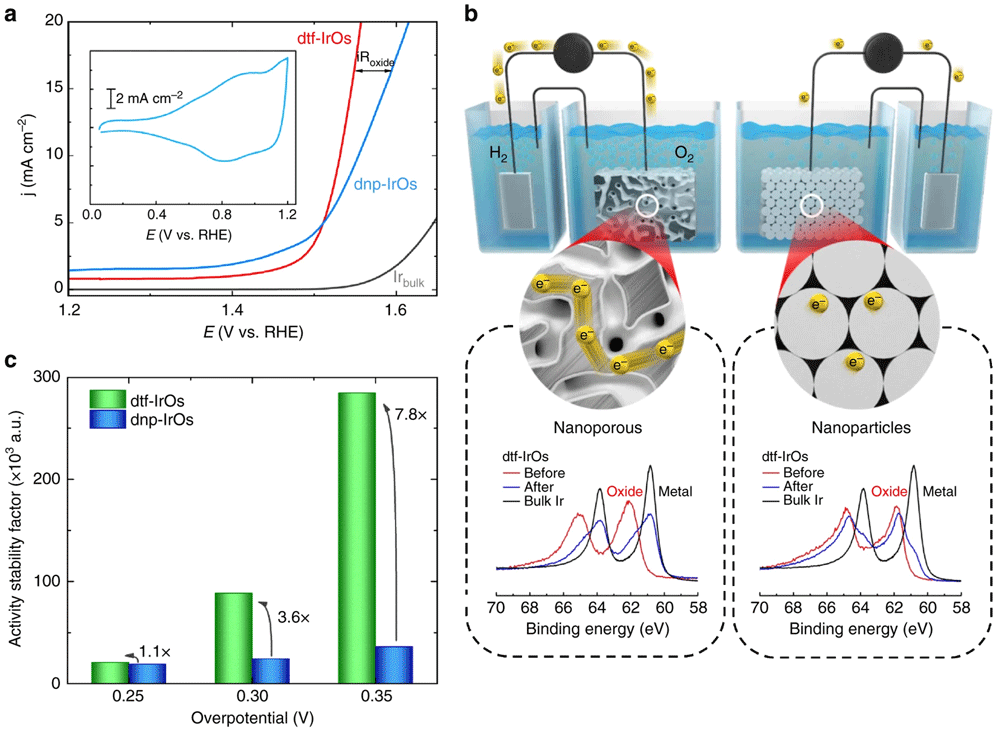
Figure 6. Electrochemical properties of Osmium (Os)-based nanomaterials: Activity-conductivity relationships in de-alloyed thin-film and nanoparticles.
(a) Comparison between oxygen evolution reaction (OER) polarization curves for polycrystalline Iridium (Ir), de-alloyed thin film (dtf) Ir25Os75 and de-alloyed nanoparticles (dnp) Ir50Os50, indicating that conductivity limitations are observed for dnp-Ir50Os50 at higher current densities (denoted as iRoxide). Inset shows the corresponding cyclic voltamograph. (b) X-ray photoelectron spectroscopy (XPS) sputter etching experiments demonstrating that the dtf-Ir25Os75 consists of an IrOx shell with Ir-metallic core, in contrast to dnp-Ir50Os50 that consists entirely of IrOx. Schematic illustrates the impact of multiple oxide-oxide interfaces (present on dnp-Ir50Os50 electrodes) on conductivity. (c) Change in activity-stability factor values with overpotential for dtf-Ir25Os75 and dnp-Ir50Os50 highlighting the importance of balancing activity-stability-conductivity properties of oxide materials for the OER. Reproduced from 86 with permission from Springer Nature.
6.2.5.3. Other applications. Os nanomaterials are less studied than other precious metals for medical applications60 or pollution management37. However, Os nanoparticles found recent applications in sensing. Os nanoparticles protected by heparin as the protecting/stabilizing agent were used as a heparinase sensor40. Bovine serum albumin is an efficient protective shell to give Os nanoparticles an antifouling property regarding various ions (e.g., Hg2+, Ag+, Pb2+, I−, Cr6+, Cu2+, Ce3+, S2−, etc.), saline (0−2 M), or protein (0−100 mg/mL) conditions. A colorimetric sensor was developed for H2O2 detection with improved properties compared to Au or Pt based sensors87, see the illustration in Figure 7. Other examples include glucose and pyruvic acid detections54, folic acid detection88 colorimetric sensors for heavy metal ions discrimination (Cu2+, Ag+, Cd2+, Hg2+, and Pb2+)89. Os nanoparticles also show SERS properties36,37,76.
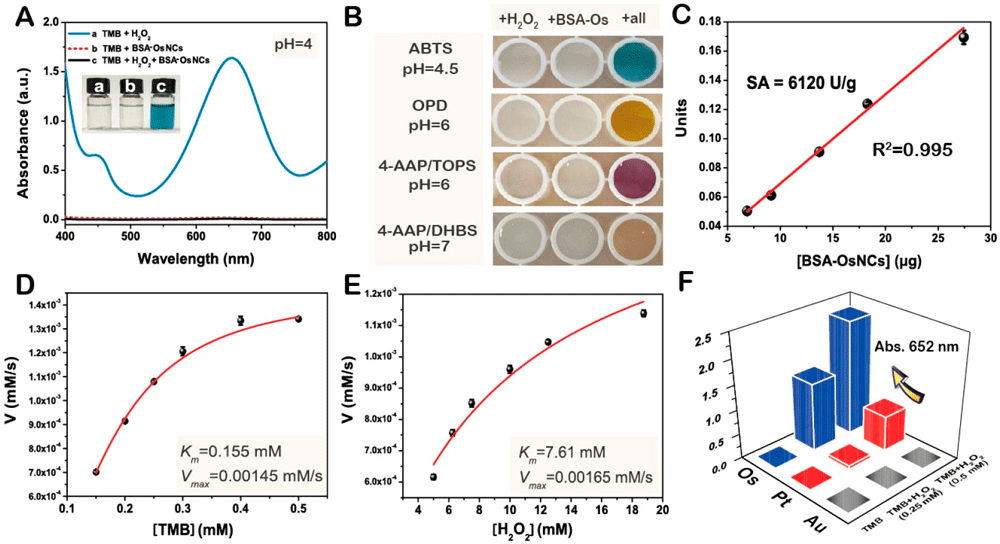
Figure 7. Osmium (Os) nanoparticles for sensing.
(A) Ultra-violet/visible light (UV-vis)spectra of 3,3′,5,5′-tetramethylbenzidine (TMB) + H2O2 (0.25 mM), TMB + bovine serum albumin (BSA)–Os nanoparticles (Os content = 1 mM), and TMB + H2O2 (0.25 mM) + BSA–Os nanoparticles (Os content = 1 mM). Inset: Corresponding photographs. (B) Corresponding photographs of some peroxidase substrates catalyzed by BSA–Os nanoparticles in the presence of H2O2: substrate + H2O2, substrate + BSA–Os nanoparticles, and substrate + H2O2 + BSA–Os NCs. (C) Specific activity of BSA–Os nanoparticles. Steady-state kinetic assay of BSA–Os nanoparticles toward (D) TMB and (E) H2O2. (F) A652nm of TMB, TMB + H2O2 (0.25 mM), and TMB + H2O2 (0.5 mM) catalyzed by BSA–Au nanoparticles (Au content = 1 mM), BSA–Pt nanoparticles (Pt content = 1 mM), and BSA–Os nanoparticles (Os content = 1 mM). Reprinted with permission from 87. Copyright 2022 American Chemical Society.
Theory
Less work has been performed on Os nanoparticles than Ir or Pt nanoparticles but some theoretical work can be found in the literature70,90–92. For instance, Os was suggested to be a suitable catalysts for ammonia production93. While being less investigated than Ir, Osx clusters were studied by density functional theory (DFT) for instance in light of their interaction with MgO for n=4,590.
Os in multi-metallic nanomaterials
In addition to the examples already mentioned above, for instance in Figure 6, various alloyed nanoparticles have been reported such as IrOs14, PtOs94, OsB295, in particular for their improved mechanical properties. PdOs nanoparticles were reported as catalyst for carbon nanotube synthesis26. Other examples include NiOs4 reported for the improved hydrogenation of cinnamaldehyde96, PtOs for the methanol oxidation reaction97, CuOs for the methanol oxidation reaction and ORR98 or OsTe nanorods for cancer therapy99.
Discussion
A range of Os nanomaterials can easily be obtained by various syntheses methods, see Table 1. In particular, a range of surfactant-free syntheses are well documented and are expected to lead to Os nanoparticles with improved properties in fields of applications like catalysis and sensing. However, the characterization of the small (<2 nm) nanoparticles obtained in most cases remains one of the bottlenecks in the study of Os nanomaterials. Relatively complex characterization techniques (not routine) are needed such as high-angle annular dark-field scanning transmission electron microscopy (HAADF-STEM)41, or synchrotron based measurements41, see Figure 4. For instance, X-ray diffraction technique will lead to large Bragg peaks for such small nanoparticles and most TEM equipment will not easily characterize such small nanomaterials. Also, the size range around 1 nm is at the limit of most small angle X-ray scattering (SAXS) equipment.
However, recent progress in the characterization of nanomaterials100, and in particular the increasing availability of high resolution TEM or techniques like X-ray total scattering with pair distribution function (PDF) analysis42,101, are well suited to characterized nanocrystals. Recent advances in these techniques are expected to bring new insights into Os nanomaterial formation. The knowledge gained will be the key for improving syntheses of nanomaterials towards more functional materials. There is a regain of interest on Ir and Ir oxide nanoparticles, in great part due to high expectations on Ir as a potential catalyst for OER102. Ir and Os chemistry are relatively similar in the sense that they both easily lead to small size nanoparticles and clusters. This makes them ideal candidates to study nanoparticle formation and to focus on nucleation phenomena since the nanoparticle growth is moderate. In addition, the materials obtained are relevant for a range of applications and it is expected that the interest on iridium will trigger increasing interest in Os nanoparticles, which in turn will enable further exploration of Os chemistry. However, for long term applications recycling is an important issue to address103, in particular in light of the relatively poor stability of Os in application like electrochemical energy conversion84.
Conclusions
Despite a limited knowledge on the actual formation mechanism of Os nanoparticles, several approaches lead to simple syntheses of Os nanoparticles. The very small size circa 1–2 nm of most Os nanoparticles suggests that a range of reported syntheses probably can be simplified, e.g. avoiding the use of any surfactants or high temperature. Relatively high concentration of precursors can be used and still lead to small size nanoparticles which is a promising feature for future scaling. The obtained OsOx nanoparticles already proved to be relevant for a wide variety of applications in particular as active materials in catalysis or as templating agents. (Re)Emerging areas of application include chemical synthesis79, sensing89 or medical applications60.
Data availability
No data are associated with this article
Ethics and consent
Ethical approval and consent were not required.