Introduction
Agent-based modelling (e.g. Bonabeau, 2002), where simulated ‘agents’ represent people, groups, or institutions interacting with themselves and their environment, offer an appealing methodological choice for simulating human behaviour and gaining insights into the emergence of individual- and macro-level patterns. However, the currently dominant approaches, based on static transition rates or unverified assumptions for agents, are limiting, and the existing secondary data are sometimes sparse for the task at hand. Under these circumstances, agent-based models could be enhanced with quantitative insights gained by collecting primary data on actual decision-making from, for example, surveys or cognitive psychology experiments (Bijak et al., 2021). By carrying out simulation experiments with models, and analysing their results, we can identify these model elements, such as parameters or rules, which would benefit the most from additional information. This information could have interdisciplinary provenance resulting from psychological or sociological insights.
At the same time, standard surveys and experiments may lack ecological validity. There has been a longstanding concern regarding the extent to which survey results about hypothetical decisions can be generalised to real-life settings (Cicourel, 1982). For example, real-life migration decisions, especially in irregular contexts, are often highly emotive, involve costly trade-offs, and may threaten one’s personal safety. These aspects are poorly represented by the short, methodical questions commonly used in surveys. With that in mind, it is reasonable to expect immersive contexts to offer more accurate and engaging representations of reality and provide better tools for capturing such complex decisions (Rossetti & Hurtubia, 2020).
Consequently, this study was motivated by the need to formally, yet realistically, represent migration decisions in the context of an agent-based model of migration route formations (Bijak et al., 2021). In particular, for migration decisions that may involve different levels of risk, we wanted to ascertain whether immersive experiments might provide useful data to help inform the model as well as its assumptions and parameters that represent decisions.
In light of this aim, the preregistered (https://osf.io/tpqxa) research question of this study was the following: Does immersion affect risk-taking in the context of migration decisions? was the following: Does immersion affect risk-taking in the context of migration decisions? The broader, indirect objectives of this study, however, were related to testing the feasibility of informing a multi-disciplinary construction of an agent-based model of migration with experimental data from an online text-based game. In this paper, we present specific results related to the former, preregistered research question, while reflecting more broadly on the general feasibility aspects.
To address the preregistered research question, in an exploratory study, we created a choice-based interactive fiction game in which participants made migration decisions to advance through a story. Choice-based interactive fiction games are fully text-based games where a player progresses by selecting from a list of possible actions (Hausknecht et al., 2020). There are examples of other text-based games about migration (e.g., BBC’s Syrian Journey and IOM’s Migrant Journey), as well as similar story-based games on popular gaming platforms, such as Steam, which include Bury Me, My Love, and The Night Fisherman. Some of these games have been used in empirical studies to examine their impact on certain outcomes, such as prejudice (Lee & Chen, 2023). However, as far as we know, these games are not specifically designed for academic research, so they have more complex designs that do not facilitate the investigation of players’ in-game actions. Therefore, these games differ considerably from ours in terms of research applicability, focus, and design.
In our game, to achieve immersion, we incorporated two elements: narrative and sense of agency (Fendt et al., 2012; Keen, 2006; Lu et al., 2012; McMahan, 2003; Rafael, 2018). The narrative element involved brief statements about the character’s internal thoughts and feelings. The sense of agency element involved repeated decision-making, with each decision being followed by a distinct piece of text outlining its consequence. Unbeknown to the players, their decisions did not impact the game’s overall story or conclusion. The experiment included four conditions. The first condition involved playing a version of the game with both narrative and agency. The second and third conditions involved playing versions of the game with only narrative and only agency, respectively. The fourth condition involved playing a survey version of the game without narrative or agency.
At the broader level, the design of our study was driven by the interdisciplinary needs of agent-based modelling endeavours, discussed in detail in Bijak et al. (2021). In summary, in the background study to which our research was intended to contribute, the process of building an agent-based model of migration route formation was bottom-up, starting from a simple representation of reality, and adding increasing detail in an iterative way. A statistical analysis carried out at each iteration of model building enabled identifying the key information gaps, which, if filled, could bring about the highest gains in terms of model performance. We attempted to fill these gaps where possible with existing secondary data, but also, specifically with respect to human decision making, with additional quantitative data from psychological experiments, such as those described in this paper, and several others (Bijak et al., 2021; Modirrousta-Galian et al., 2024).
In this way, the primary data collected through experiments was intended to respond to specific modelling needs, in this case, related to modelling human decisions under varying levels of risk and reward, operationalised in the context of modelling migrant journeys through travel speed, perceptions of safety, and travel cost. Despite—or perhaps because of—close alignment to the modelling needs, dictated by the parameterisation of the model, the experiment we implemented eventually proved too complex, making the results on their own difficult to interpret. In particular, we identified trade-offs between conducting experiments that provide valuable psychological insights, and those that can inform agent-based models. Critically, to inform an agent-based model, large amounts of data for various different variables are required, with the likely trade-offs involving sacrificing experimental simplicity and control in order to obtain richer empirical material. In this paper, we present the lessons learned from this experimental exercise, and provide recommendations for future interdisciplinary research.
Methods
Participants
The study was carried out on Prolific (https://www.prolific.co), with the participant pool approximately balanced in terms of sex and restricted to those fluent in English, residing in the UK at the time of the study, and with a Prolific approval rate above 90. After excluding three participants for completing the study in under 20% of the expected time and one for failing to complete the study, the final sample consisted of 1000 individuals. This included 491 female and 494 male participants, 10 individuals who identified as “other”, and five individuals who preferred not to disclose their gender. Participants were between the ages of 18 and 78 (M = 37.07, SD = 13.29) and were paid at a rate of £5.00 per hour. The minimum age for our study was determined by Prolific, which requires participants to be at least 18 years old. We did not set a maximum age for our study.1
To replicate this experiment without participant costs, we recommend advertising the study on social media websites such as Twitter and Reddit. This is an increasingly common data collection method for psychological research, which we plan on using for future studies.
Experimental design and research variables
A between-subject, multi-group experimental design was used, with participants taking part in one of four conditions: (a) narrative and agency; (b) narrative-only; (c) agency-only; and (d) survey (without narrative or agency). The independent variables were agency (yes, no), narrative (yes, no), decision stage (one, two, three), and trade-off (chance of success, safety, travel speed). The dependent variable was participants’ responses to migration decision(s). Ten control variables were collected for exploratory purposes, listed under ‘Demographic Questions’ below. All the authors and acknowledged team members tested the surveys prior to data collection, which led to the migration decisions being updated several times. Consequently, we pilot tested the final version of the study with 200 participants to identify potential problems, but we did not find any.
Game design
Schell (2008) defined game design as “the act of deciding what a game should be” (p. 24). With this in mind, we outline the rationale behind the key design choices for our choice-based interactive fiction game. The game consisted of a prologue, three migration decisions (see the “Migration decisions” section), and an epilogue. This structure—comprising a prologue, user commands, and epilogue—is typical of interactive fiction games (Montfort, 2003). We opted for a choice-based interactive fiction game because it requires minimal programming compared to other types of games, which increases the likelihood that it will be used in research if it is shown to be suitable for capturing complex decision-making.
We created the game on Qualtrics (https://www.qualtrics.com/), a platform for building and distributing online surveys. Despite not being game design software, Qualtrics allows for the implementation of HTML, CSS, and JavaScript, which are commonly used to create text-based games. The development process was iterative (Bannon, 1995; Raghothama & Meijer, 2018). This entailed distributing the game among the authors and personal contacts, which included both migrants and non-migrants. We then updated the game based on the feedback, and redistributed it again for further review. We repeated this process until no additional improvements were recommended.
Rafael (2018) suggested that emotional immersion, which denotes an emotional connection to the characters or social context of the game (Zhang et al., 2017), can be established in text-based games by gaining insight into the mental state of the characters. Relatedly, Lu et al. (2012) argued that creating positive affect for the protagonist, which can be achieved in various ways, such as making them an important source of information and beliefs, is vital for developing an immersive narrative. Consequently, we incorporated brief statements about the character’s internal thoughts and feelings, which we refer to as narrative, in the game to foster immersion, since they provide insight into the mental state of the character and are believed to evoke emotion in readers, particularly empathy (Keen, 2006).
Furthermore, McMahan (2003) argued that for a game to be immersive, the players’ actions must have a non-trivial impact on the game, which refers to a concept commonly known as player agency. However, Fendt et al. (2012) found that making players feel as if their actions had a non-trivial impact on the game, even when they did not, led to similar feelings of agency than actually making players’ actions have a non-trivial impact on the game. Therefore, considering that simulated agency is much easier to implement than actual agency, which would involve multiple story arcs and decision trees, we opted for the former. Specifically, we created a sense of agency in the game through repeated decision-making, with each decision being followed by a distinct piece of text outlining its consequence. These consequences made participants believe that their decisions were impactful; despite being dependent on the participants’ decisions, they did not affect any of the later decisions or the conclusion of the game.
Migration decisions
The experiment involved nine migration decisions, divided into three stages, each including three decisions. The three decisions in each stage corresponded to three different trade-offs, namely travel speed versus safety, chance of success versus safety, and chance of success versus travel speed. Although these different trade-offs were present at all three stages, the specific scenario and context for the decision differed between stages. For example, at Stage 1, the trade-off for travel speed versus safety involved either getting on an unsafe boat now or waiting for a safer boat; at Stage 2, the trade-off involved crossing a minefield or taking a long detour; and at Stage 3, waiting longer to cross with a safer smuggler versus crossing the border now with a less reputable one. This variability was implemented to enhance realism and ensure that the migration decisions seemed appropriately embedded within the current stage of the migration journey. However, as we discuss further in the conclusion, this strategy also led to difficulties in interpreting the results.
Participants were not presented with the same trade-off more than once. Therefore, at Stage 1, the first decision was randomly selected from the three trade-offs. At Stage 2, the second decision was randomly selected from the two decisions involving the remaining trade-offs. At Stage 3, the third decision presented the trade-off that had not been presented in either of the preceding stages (e.g., if a participant made a chance of success vs. travel speed decision at Stage 1 and a chance of success vs. safety decision at Stage 2, they would be presented with the safety vs. travel speed decision at Stage 3).
The pools of potential migration decisions for the narrative-and-agency and narrative-only conditions were identical. However, in the narrative-only condition, participants were shown the outcome of the first two migration decisions (randomised in the survey) and only made the third migration decisions. In the agency-only condition, descriptions of the character’s thoughts and feelings were omitted. Finally, for the survey condition, the migration decisions were heavily stripped-down versions of those presented in the other conditions. Thus, each experimental condition was essentially a different version of the choice-based interactive fiction game.
All migration decisions and their different versions were created by the researchers following interdisciplinary discussions within the team about the requirements of the agent-based model of migration route formation (Bijak et al., 2021). To make the decisions as realistic as possible, we drew inspiration from both first-hand and second-hand accounts of migrant journeys. These were obtained from the website Telling the Real Story (https://www.tellingtherealstory.org/en/) and from YouTube videos published by various news channels (e.g., BBC News and Sky News). The final conditions were set up so as to correspond as closely as possible to the simulated environment and decisions made by the agents in the model.
We took the above-mentioned steps (see also our iterative design process in the “Game design” section) to ensure our migration decisions had a high level of content validity. Nevertheless, we did not establish their construct validity. This is often done by examining convergent validity—the degree to which different measures designed to assess the same construct yield consistent results. However, to the best of our knowledge, no comparable measures of migration-specific risk-taking existed at the time of our study.
Demographic and general questions
A total of 10 demographic and general questions (see Table 1) were asked in all conditions, including questions about the participants’ emotional investment and sense of agency while playing (adapted from Jennett et al., 2008), age, gender, number of children, how often they play games, whether they have ever considered migrating or have actually migrated, whether they think the number of immigrants in the UK should increase or decrease (adapted from The Migration Observatory, 2020), and how warm their feelings are towards migrants (adapted from Pawlicka et al., 2019). Originally, we wanted to add these variables as covariates in the analyses to determine how they influence risk-taking in the context of migration decisions. However, considering that the analyses already produced results that were impossible to meaningfully interpret, we decided not to add any more variables. Therefore, we did not examine how these variables influenced migration-specific risk-taking.
Table 1. Demographic and General Questions.
| Question | Response option |
|---|
| To what extent did you feel emotionally invested in the survey? | 0 (not at all) to 100 (very much) |
| To what extent did you feel as though your decisions had consequences in the survey? | 0 (not at all) to 100 (very much) |
| What is your gender? | (1) Male
(2) Female
(3) Other
(4) Prefer not to say |
| What is your age? | Text entry |
| Do you have children? | (1) Yes
(2) No |
How often do you play games (e.g., video games, role-playing games, table-top games, or
similar)? | (1) Very often: Most days
(2) Often: Several times a week
(3) Rarely: Less than once a month
(4) Never |
| Have you ever seriously considered and/or made plans to migrate to a new country? | (1) Yes
(2) No |
| Have you ever migrated to a new country before? | (1) Yes
(2) No |
| Do you think the number of immigrants to Britain nowadays should be... | (1) Increased a lot
(2) Increased a little
(3) Remain the same as it is
(4) Reduced a little
(5) Reduced a lot |
Please indicate how warm or cold your feelings are about migrants and choose the most
suitable degree between 0 and 100, where 0 means very cold negative feelings and 100 means
very warm positive feelings. | 0 (very cold) to 100 (very warm) |
Procedure
No device restrictions were applied on Prolific. Before starting the study, participants were shown a combined information sheet and consent form (University of Southampton Ethics approval No. ERGO 68015). After reading the forms and providing informed consent, participants were asked to provide their Prolific IDs.
Participants then took part in one of four conditions: (a) narrative and agency; (b) narrative-only; (c) agency-only; and (d) survey. Those in the narrative and agency condition made three migration decisions throughout a story that involved both narrative (i.e., descriptions of the character’s thoughts and feelings) and agency (i.e., repeated decision-making). Those in the narrative-only condition made one migration decision at the end of a story that involved narrative but no agency. Those in the agency-only condition made three migration decisions throughout a story that involved agency but limited narrative. Finally, those in the survey condition made three decisions presented as simple survey questions.
Once participants had finished their condition-specific task, they completed the demographic questions and were debriefed. The study’s length varied across conditions; the narrative and agency and the narrative-only conditions took approximately 15 minutes, the agency-only condition around 10 minutes, and the survey condition around 5 minutes. Since progression was entirely self-paced, the completion time varied between participants.
Results
A series of logistic regression analyses were conducted to investigate the impact of condition, decision stage, and trade-off on participant’s decisions. Because participants in the narrative-only condition only made one decision (at the third stage), we first present a series of logistic regression analyses for the narrative and agency, agency-only, and survey conditions, including decision stage as a predictor (as well as condition and trade-off). These logistic regressions were conducted separately for each attribute of the decision (chance of success, safety, and travel speed). We then present logistic regressions on decisions made at the third stage only for all four conditions, excluding decision stage as a predictor (but including condition and trade-off). These logistic regressions are again conducted separately for each of the three attributes.
Logistic regression analysis excluding the narrative-only condition
A logistic regression analysis was conducted to investigate the relationship between the probability of prioritising one of the attributes of the decision (chance of success, safety, or travel speed) and the condition (narrative and agency, agency-only, or survey), decision stage (one, two, or three), and attribute that it was traded off against (chance of success, safety, or travel speed). Table 2 shows the analysis-of-deviance table produced by Type III Wald Chi-Squared tests. For the model prioritising chance of success, Figure 1 shows the significant two-way interaction between condition and trade-off and the two-way interaction between condition and choice stage. For the model prioritising safety, Figure 2 shows the significant two-way interaction between condition and choice stage, and for the model prioritising travel speed, Figure 3 presents the significant three-way interaction between condition, choice stage, and trade-off.
Table 2. Analysis of Deviance for Logistic Regression Models.
| Factor(s) | χ2 | df | p |
|---|
Response Variable: Probability of Prioritising Chance
of Success |
|---|
| Condition | 7.00 | 2 | .030 |
| choice stage | 36.27 | 2 | < .001 |
| trade-off | 12.32 | 1 | < .001 |
| condition:choice stage | 21.97 | 4 | < .001 |
| condition:trade-off | 14.46 | 2 | < .001 |
| choice stage:trade-off | 29.17 | 2 | < .001 |
| condition:choice stage:trade-off | 7.92 | 4 | .094 |
| Response Variable: Probability of Prioritising Safety |
|---|
| condition | 7.00 | 2 | .030 |
| choice stage | 36.27 | 2 | < .001 |
| trade-off | 1.69 | 1 | .194 |
| condition:choice stage | 21.97 | 4 | < .001 |
| condition:trade-off | 5.11 | 2 | .078 |
| choice stage:trade-off | 7.67 | 2 | .022 |
| condition:choice stage:trade-off | 3.03 | 4 | .553 |
Response Variable: Probability of Prioritising Travel
Speed |
|---|
| condition | 26.04 | 2 | < .001 |
| choice stage | 2.81 | 2 | .246 |
| trade-off | 6.98 | 1 | .008 |
| condition:choice stage | 14.86 | 4 | .005 |
| condition:trade off | 13.85 | 2 | < .001 |
| choice stage:trade-off | 0.19 | 2 | .911 |
| condition:choice stage:trade-off | 10.84 | 4 | .028 |
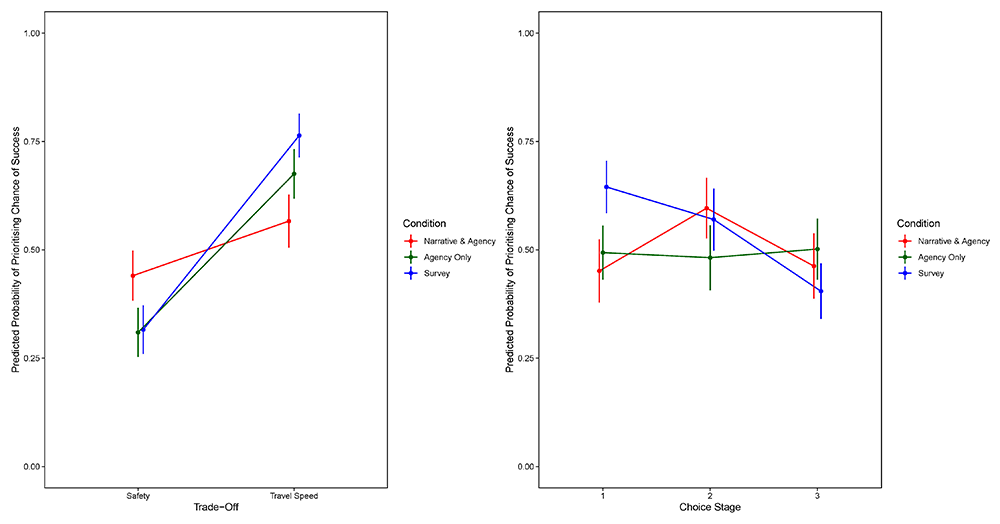
Figure 1. Predicted Probability of Prioritising Chance of Success, by Trade-Off and Condition (Top Panel) and by Decision Stage and Condition (Bottom Panel).
The Narrative-Only Condition Is Excluded.
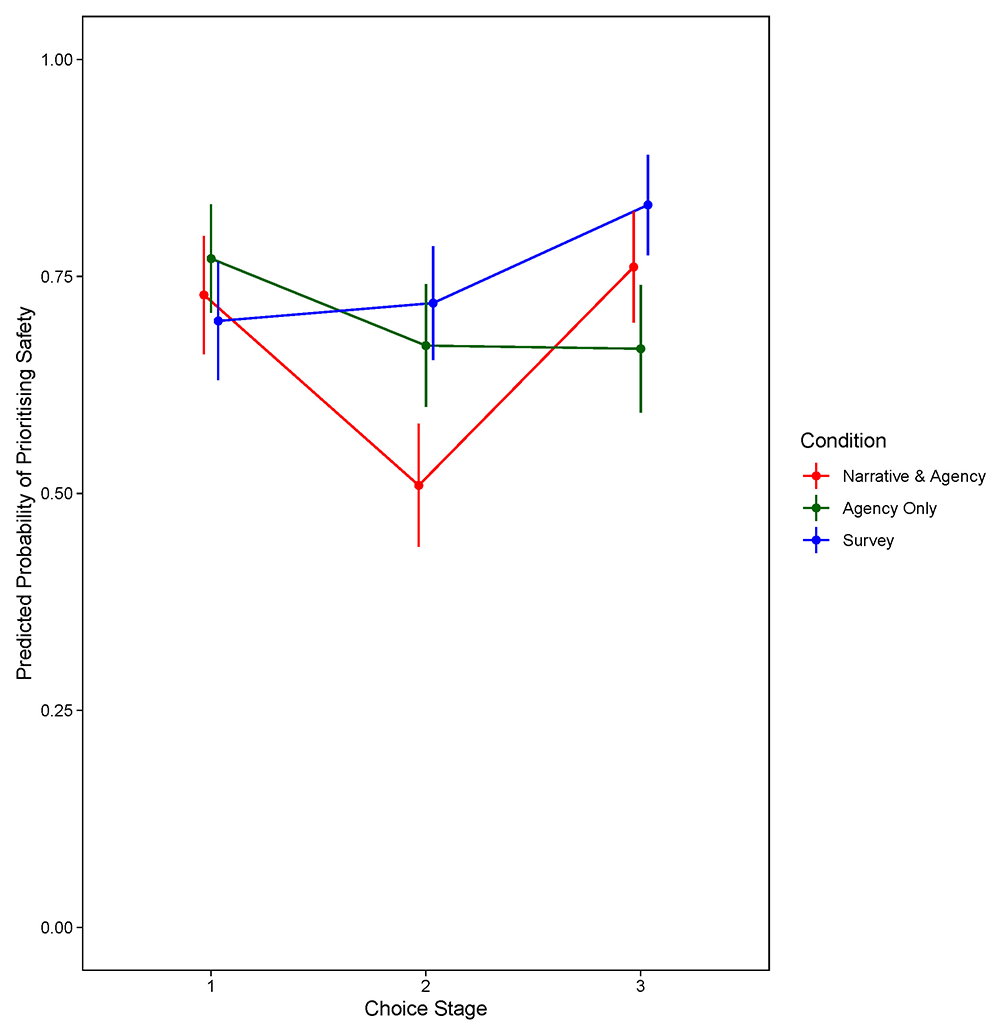
Figure 2. Predicted Probability of Prioritising Safety, by Decision Stage and Condition.
(Excluding Narrative-Only).
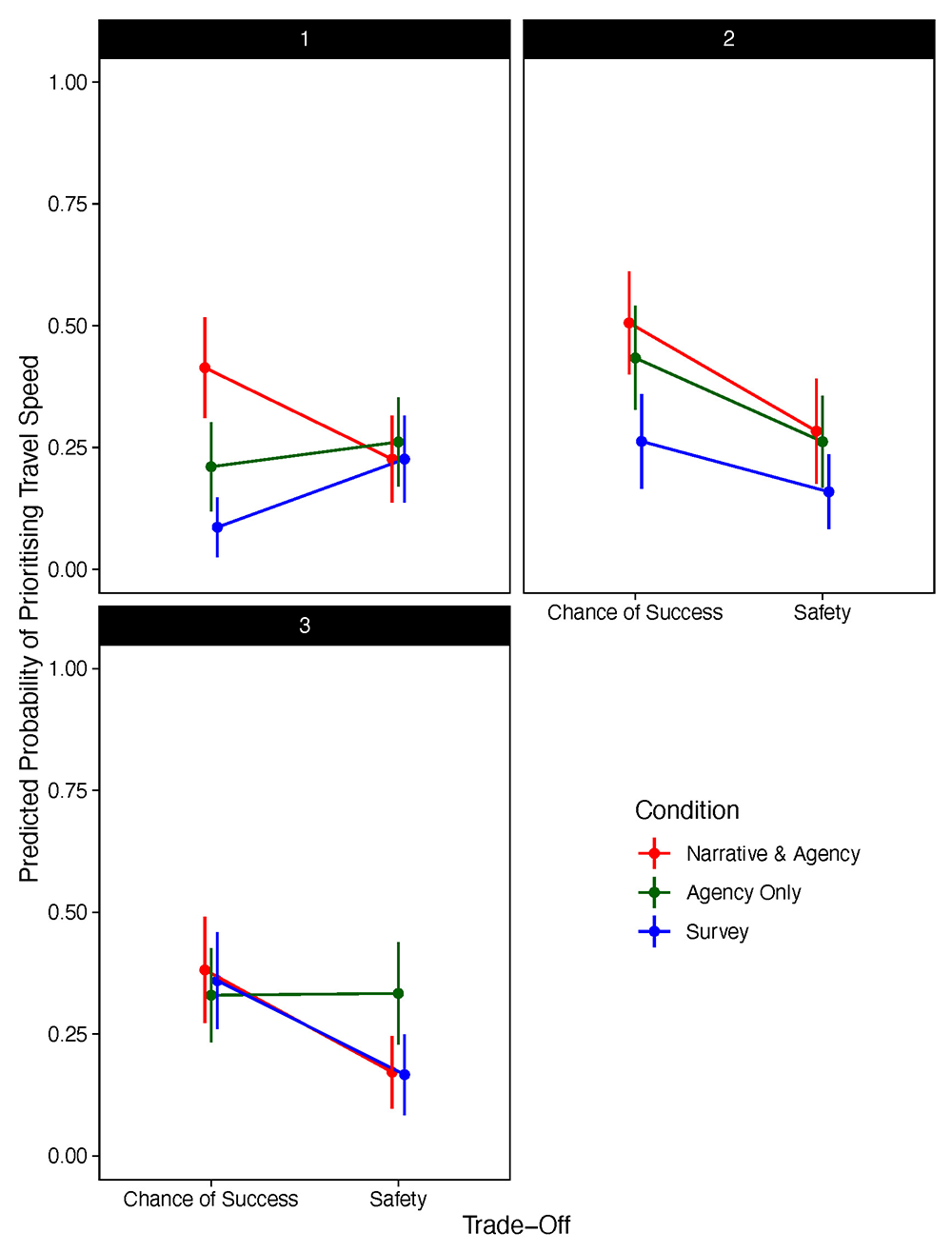
Figure 3. Predicted Probability of Prioritising Travel Speed Against Trade-Off, Decision Stage, and Condition.
(Excluding Narrative-Only).
Logistic regression analysis excluding the first two decision stages
A further logistic regression analysis was conducted on third-stage decisions to investigate the relationship between the probability of prioritising one of the decision attributes (chance of success, safety, or travel speed) and the condition (all four conditions) and attributes it was traded off against (chance of success, safety, or travel speed). Table 3 shows the analysis-of-deviance table for models with response variables related to all three attributes of the decision. For the model prioritising chance of success, although the main effect of condition was significant, a post-hoc Tukey test showed no significant pairwise comparisons, with smallest p = .058. The main effect of trade-off was also significant, and a post hoc z-test showed that the probability of prioritising chance of success when it was traded off against safety (mean M = .29, standard error SE = .025) was significantly lower than the probability of prioritising chance of success when it was traded off against travel speed (M = .66, SE = .026, z = –10.40, p < .001).
Table 3. Analysis of Deviance for Logistic Regression Models for Stage 3 Decisions only.
| Factor(s) | χ2 | df | p |
|---|
Response variable: Probability of Prioritising Chance of
Success |
|---|
| condition | 8.39 | 3 | .039 |
| trade-off | 15.01 | 1 | < .001 |
| condition:trade-off | 3.71 | 3 | .295 |
| Response variable: Probability of Prioritising Safety |
|---|
| condition | 8.39 | 3 | .039 |
| trade-off | 4.36 | 1 | .037 |
| condition:trade-off | 3.32 | 3 | .345 |
| Response variable: Probability of Prioritising Travel Speed |
|---|
| condition | 1.84 | 3 | .606 |
| trade-off | 9.75 | 1 | .002 |
| condition:trade-off | 12.48 | 3 | .006 |
For the model prioritising safety, the main effect of condition was again significant, and a post-hoc Tukey test showed that the probability of prioritising safety in the survey condition (M = .83, SE = .030) was significantly higher than: (a) the probability of prioritising safety in the agency-only condition (M = .67, SE = .037, z = –3.48, p = .003); and (b) the probability of prioritising safety in the narrative-only condition (M = .66, SE = .038, z = 3.69, p = .001). Although the main effect of trade-off was also significant, the probability of prioritising safety when it was traded off against chance of success (M = .71, SE = .025) was not significantly different from the probability of prioritising safety when it was traded off against travel speed (M = .75, SE = .024, z = –0.97, p = .334). For the model prioritising travel speed, in addition to the summary statistics presented in Table 3, the significant two-way interaction between condition and trade-off are shown in Figure 4.
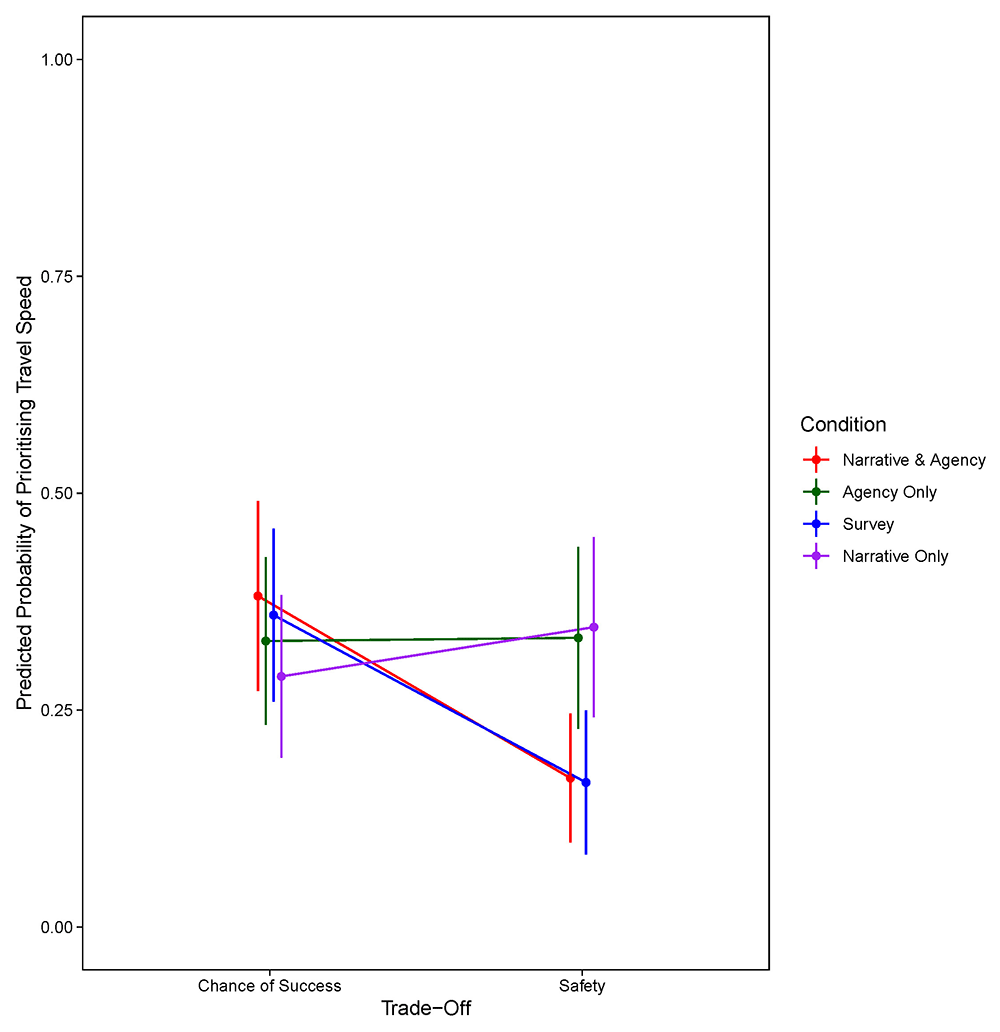
Figure 4. Predicted Probability of Prioritising Travel Speed Against Trade-Off and Condition at the Third Decision Stage.
Discussion and conclusion
With respect to our preregistered research question, interpreting the results of the experiment in a meaningful and generalisable way proved challenging. Firstly, both between and within conditions, participants experienced a different number of migration decisions (i.e., stimuli), some of which were presented in different contexts for the same attribute (e.g., boat crossing or landmines for safety), with different migration decisions presented in different orders. Therefore, although participants made conceptually analogous trade-offs, confounds made it difficult to meaningfully interpret the results. Furthermore, the conditions proved too distinct from each other, meaning that although the different renditions of each migration decision were intended to be analogous, there were unintended confounds. For example, participants could have made different migration decisions in the narrative and agency condition compared to the survey condition simply because in the former case, the text was substantially longer and contained more details than that in the latter. For these reasons, we could not use the results directly in our agent-based models: the information these results carried was too weak to help us pinpoint specific parameters of the models or instantiate behavioural rules that the simulated agents could follow.
At the broader level, especially with regard to the feasibility of using experimental results in modelling, this study, even if exploratory in nature, illuminated some important tensions and trade-offs present in interdisciplinary research. On the one hand, there are important discipline-specific questions, in our case, around the lack of ecological validity in surveys. On the other hand, there is a need to align the experiment closely with the model needs through greater realism and participant immersion. Due to the need to satisfy the interdisciplinary modelling requirements, focusing specifically on quantitative information, from the point of view of experimental psychology, the resulting design ended up being too complex, and we could not obtain the discipline-specific psychological insights we had anticipated and desired. There are several significant differences and interactions, indicating that some signal may be coming through from the experimental data. However, because of issues with the study design, it is difficult to identify specific patterns and then interpret and attribute these findings to a particular variable, not to mention generalising them to different contexts.
Alternatively, idiosyncratic differences between the migration decisions across different conditions, as well as between versions of the same trade-off, designed to be analogous but differing in content and wording, dominated over everything else. Together with relatively small effects of immersion, this could have made the results inconclusive. In this interpretation, the main problem is the failure to anticipate the importance of the specific wording and the details of the situation in determining people's responses. As a result, this study failed to provide an answer for both for the preregistered research question as well as the broader question regarding the utility of experimental data for modelling. However, the challenge in informing agent-based models does not solely stem from experimental complexity. In a follow-up study, we ran a simplified version of the experiment, which produced interesting and interpretable results (Modirrousta-Galian et al., 2024). Still, these results—with clear effects of immersion on participants’ perception of agency, but no impact on their risky migration decisions—also ended up not being directly useful for informing agent-based models.
Ambiguous results notwithstanding, studying decision-making in richer and more ecologically valid conditions in its own right is a worthwhile endeavour, and the results of the ensuing experiments would enrich the toolkit of agent-based modellers, making the models more realistic and valid. However, as we tried to collect quantitative information about the decision processes, the approach reported in this paper proved at the same time too simple for the question at hand and for realistic applications in agent-based models, and too complex for proper formal analysis from the discipline-specific point of view of experimental psychology. This lesson cautiously suggests the need to follow a two-pronged approach, where the in-depth exploration of the topic of migrant decision is done by using qualitative methods, and the immersion effect as such can be only properly analysed with carefully designed—and simplified—experimental tools.
In our case, the analysis of immersion through a simplified experimental design provided more conclusive results, confirming the effect of immersion on the perception of agency, but showing no impact on the risky migration decisions made in the game (Modirrousta-Galian et al., 2024), The qualitative exploration was followed through a dedicated ethnographic study amongst Syrian and Afghan migrants, who were interviewed about their journeys to Europe (Belabbas et al., 2022). The results of this study were promising and enabled verifying or validating some of the key assumptions or results of modelling. Four aspects of decisions emerged as key: access to information, the extent of social capital (in particular, social networks), individual circumstances, and finally chance. This confirms the quantitative results reported in Bijak et al. (2021), where information and its sharing over networks were found to be some of the key drivers of model behaviour, while the high residual uncertainty of model outputs is corroborated by the salience of chance and unforeseen events for shaping migrant journeys.
We therefore hope that this paper acts not only as a cautionary tale, but also as motivation to conduct more rigorous and broader research on this topic, involving qualitative and quantitative aspects alike. Our main recommendation for future psychological research on immersion is to keep the design simple, with well-controlled differences between conditions carried out step-by-step, to allow for more interpretable results. In terms of the broader aim of this study – assessing the feasibility of informing agent-based modelling of complex social processes with experimental data, such results may be too simple, though, which suggests that the rules on which agent behaviour is modelled, should be based on qualitative information as well. For migration route formation, the early results reported in Belabbas et al. (2022) are very promising in that regard. At the most general level, the allure of interdisciplinary research needs to be moderated by discipline-specific rigour.
Ethical approval
This study was approved by the University of Southampton, Ethics approval No. ERGO 68015. Participants provided informed consent to take part in this study and for their anonymised data to be published and uploaded to OSF (please see the combined participant information sheet and consent form at the beginning of all the Qualtrics surveys available on OSF: https://doi.org/10.17605/OSF.IO/PN9EW).
Data availability
Open Science Framework: Modirrousta-Galian, A. (2023). Investigating Immersion and Migration Decisions: A Cautionary Tale. OSF, DOI: https://doi.org/10.17605/OSF.IO/PN9EW, accessed on 31 January 2023.
This project contains the following underlying data:
Data (folder)
Agency Only Condition_November 25, 2021_14.13.csv (https://osf.io/8ewcf; raw data file for the agency-only condition)
Narrative & Agency Condition_November 24, 2021_16.33.csv (https://osf.io/uxp8d; raw data file for the narrative and agency condition)
Narrative Only Condition_November 24, 2021_16.33.csv (https://osf.io/279ux; raw data file for the narrative-only condition)
Survey Condition_November 24, 2021_13.53.csv (https://osf.io/uzea2; raw data file for the survey condition)
Pilot Data (Folder)
Agency Only Condition_November 18, 2021_19.35.csv (https://osf.io/xdbjp; raw data file for the agency-only condition)
Narrative & Agency Condition_November 19, 2021_15.04.csv (https://osf.io/eup2c; raw data file for the narrative and agency condition)
Narrative Only Condition_November 18, 2021_16.55.csv (https://osf.io/rzdsv; raw data file for the narrative-only condition)
Survey Condition_November 18, 2021_16.08.csv (https://osf.io/8r9ac; raw data file for the survey condition
Data are available under the terms of the Creative Commons Attributions 4.0 International license (CC-By Attribution 4.0 International).
Acknowledgements
This article reflects the authors’ views, and the Research Executive Agency of the European Commission is not responsible for any use that may be made of the information it contains. We thank Souhila Belabbas, Jason Hilton, and Peter W. Smith for discussions and help with the testing of the questionnaire. We are also grateful to all five reviewers – Melania Borit, Bruce Edmonds, Anne Goujon, Sebastian Poledna and Puyang Li – for the very insightful comments and suggestions to the first two versions. Needless to say, all errors and interpretations are ours alone.
Faculty Opinions recommendedReferences
- Bannon LJ:
From human factors to human actors: the role of psychology and human-computer interaction studies in system design. In: RM Baecker, J Grudin, WAS Buxton and S Greenberg (Eds.), Readings in human-computer interaction: Toward the year 2000. (2nd ed.,). Amsterdam: Elsevier, 1995; 205–214. Publisher Full Text
- Belabbas S, Bijak J, Modirrousta-Galian A, et al.:
From conflict zones to Europe: Syrian and Afghan refugees’ journeys, stories, and strategies.
Social Inclusion.
2022; 10(4): 211–221. Publisher Full Text
- Bijak J, Higham PA, Hilton J, et al.:
Towards Bayesian model-based demography: agency, complexity and uncertainty in migration studies.
Methodos Series.
Cham: Springer, 2021; 17. . Publisher Full Text
- Bonabeau E:
Agent-based modeling: methods and techniques for simulating human systems.
Proc Natl Acad Sci U S A.
2002; 99 Suppl 3(Suppl. 3): 7280–7287. PubMed Abstract
| Publisher Full Text
| Free Full Text
- Cicourel AV:
Interviews, surveys, and the problem of ecological validity.
Am Sociol.
1982; 17(1): 11–20. Reference Source
- Fendt MW, Harrison B, Ware SG, et al.:
Achieving the illusion of agency. Lecture notes in computer science, Springer. 2012; 7648. : 114–125. Publisher Full Text
- Hausknecht M, Ammanabrolu P, Côté MA, et al.:
Interactive fiction games: a colossal adventure.
Proceedings of the AAAI Conference on Artificial Intelligence.
2020; 34(5): 7903–7910. Publisher Full Text
- Jennett C, Cox AL, Cairns P, et al.:
Measuring and defining the experience of immersion in games.
Int J Hum-Comput St.
2008; 66(9): 641–661. Publisher Full Text
- Keen S:
A theory of narrative empathy.
Narrative.
2006; 14(3): 207–236. Publisher Full Text
- Lee YH, Chen M:
Intergroup contact with a virtual refugee: reducing prejudice through a cooperative game.
Psychol Pop Media.
2023; 12(4): 383–392. Publisher Full Text
- Lu AS, Baranowski T, Thompson D, et al.:
Story immersion of videogames for youth health promotion: a review of literature.
Games Health J.
2012; 1(3): 199–204. PubMed Abstract
| Publisher Full Text
| Free Full Text
- McMahan A:
Immersion, engagement, and presence: a method for analyzing 3-D video games. In: MJP Wolf & B Perron (Eds.),
The Video Game, Theory Reader.
Routledge, 2003; 67–86. Reference Source
- Modirrousta-Galian A, Prike T, Higham PA, et al.:
Exploring the potential of using a text-based game to inform simulation models of Risky migration decisions.
Simul Gaming.
2024; 55(4): 716–735. Publisher Full Text
- Montfort N:
Twisty little passages: an approach to interactive fiction. Cambridge MA: MIT Press, 2003. Publisher Full Text
- Pawlicka P, Kazmierczak M, Jagiello‐Rusilowski A:
Empathy and social closeness toward refugees from Syria: the mediating role of cultural intelligence.
J Community Psychol.
2019; 47(5): 1014–1031. PubMed Abstract
| Publisher Full Text
- Rafael S:
Interactive fiction. Narrative and immersive experience in text-based games.
Proceedings of the 2018 6th International Conference on Illustration Animation.
2018; 568–576. Reference Source
- Raghothama J, Meijer S:
Rigor in gaming for design: conditions for transfer between game and reality.
Simul Gaming.
2018; 49(3): 246–262. Publisher Full Text
- Rossetti T, Hurtubia R:
An assessment of the ecological validity of immersive videos in stated preference surveys.
J Choice Model.
2020; 34: 100198. Publisher Full Text
- Schell J:
The art of game design: a book of lenses. Boca Raton, FL: CRC Press, 2008. Reference Source
- The Migration Observatory: UK public opinion toward immigration: Overall attitudes and level of concern. 2020. Reference Source
- Zhang C, Perkis A, Arndt S:
Spatial immersion versus emotional immersion, which is more immersive?
Proceedings of the 2017 Ninth International Conference on Quality of Multimedia Experiment (QoMEX).
2017. Publisher Full Text