Plain language summary
Public transportation with autonomous mini-buses has being demonstrated in many European cities, due to the great promises it bears on how it can improve urban mobility, reduce pollution and decongest the roads. However, the public transport operators, after a successful experimental deployment, stop short of announcing a plan for a future large scale deployment of AVs, as they comprehend that the paradigm change, of passing from fixed routes and time-tables to on-demand, door-to-door services, is too radical to allow them to plan and estimate the needs, requirements and costs for a full scale deployment of hundreds of AVs in a city. In this paper, based on our experience in the AVENUE project in deploying AVs in public transportation in several European Cities we provide a description of the major issues that any operator will need to face, when it will decide to make the step towards AV based public transportation services.
Introduction
Automated driving: the dream that was born the same day the first cars were moving on the streets. Since the invention of cars we are dreaming to have a car that can take us to our destination without human intervention. Science fiction writers have imagined different solutions, from mechanical automata1 to positronic brain robots2 that can drive a car as a human driver. And the dream, until a decade ago, seemed to be just that: a dream. The computer processing power required was until recently beyond our reach, the technologies required were at the level of laboratory prototypes and the operational models were embryonic. But technologies are evolving very fast, and we have today reached a level where the processing power of the most powerfully supercomputer of the 90’s is available in devices as small as a mobile phone. At the same time sensor technologies allowing us to “see”, analyse and understand the surrounding environment, like LIDAR (Light Detection and Ranging) and very high definition cameras, have become readily available and miniaturised, being available in consumer smartphones (iPhone 13 Pro). As a result, the dream of automated driving, from the point of view of technology, doesn’t appear to be a dream, but rather a target we can reach3. Throughout the world, from the Americas, to Europe and Asia, companies are investing large amounts of funding in the development of Automated Vehicles (AVs), while many cities and mobility actors are experimenting with automated mobility services and solutions4–7, deploying automated vehicles for different use cases, ranging from passenger mobility to urban logistics.
However, the passage from technology offer to service offer can easily become problematic. The major investments today are in the mastering of the technology of automated driving, and it is just recently that the services’ requirements and economic, social and environmental issues started to be studied.
While in the United states the industry targets mainly in the development of automated transport with private cars8, in Europe the target is to offer automated transport for public transportation as first and last-mile and mobility gap filler9,10. The two models face completely different technical, economic, social and regulatory challenges in order to provide a commercial large-scale deployment of fully automated vehicles in cities. One of the major differences in the deployment of automated vehicles for private cars versus public transportation, comes from the fact that the deployment area of a private car is potentially the whole planet, while for public transportation is a well-defined and limited to an urban area, integrated to an existing Public Mass Transportation service, like trains and tramway networks. The first case requires L511 automated driving, while the second can successfully operate with L4 automated driving.
To our opinion, the first large scale commercial deployments of automated vehicles will be in well-defined, geo-fenced areas, offering shared public transportation services with L4 automated driving integrated with other means of transport under a MaaS (Mobility-as-a-Service) model. But the dream turns easily into a nightmare when we start considering the real issues for a public transportation services, like keeping up-to-date city maps, providing vehicle and passenger safety services, inventing new transport models, creating in-city parking spots and recharging outlets, figuring out how to reuse the unused excess automated vehicle capacity and how to integrate automated Minibuses in a MaaS or an Intelligent Transport System (ITS).
A successful and sustainable deployment of automated vehicles in public transportation must be based on a solid commercially viable economic model, able to provide the same service quality as existing public transportation services. However, going from fixed routes, fixed timetable, with small numbers of driver based large buses, to door-to-door, on-demand, with very large numbers of driverless mini-busses, is a radical paradigm change for today’s public transport operators.
Whereas the vast majority of deployments of Automated Vehciles in public transportation are short term “tourist attraction-level” demonstrators, since May 2018, in the context of the H2020 AVENUE project12,13, we deployed and operated, regular, commercial-level, door-to-door and/or on demand public transportation services with automated mini-busses in 10 different sites in Europe. This unique experience, and our focus to the service gap rather than the technology gap, allowed us to identify in depth all the issues that are still open for a commercially viable deployment of AVs in public transportation.
Our experience showed us that in order to create a commercially and economically sustainable and viable, user oriented public transportation service, providing to the passengers at least the same level of quality of service as today’s driver based public transportation, several key issues must be addressed in order to, first, reduce the overall costs, and second provide high level service for and during the passenger trips. Some barrier examples14 are the implicit customer locking to a specific AV provider that Public Transport Operators (PTOs) face, due to high dependency on the specific manufacturer proprietary Information Technology (IT) services and data (from fleet management to High Definition (HD) annotated maps), the lack of viable solutions to replace the driver-offered in-vehicle services, the need to create new policies for passenger travel requests, or even the complexity of optimization of the AVs trips in a highly dynamic public transport environment.
In this paper we present the most important challenges and open issues that need to be resolved in order to achieve an economically viable and socially acceptable public transportation service based on automated mini-busses, offering door-to-door, on-demand public transportation services. In section 2 we present our dream for a commercially viable, user oriented, city wide deployment of automated vehicles with on-demand, door-to-door shared public transportation services. In section 3 we present the eight most critical challenges that need to solved before a viable service can be deployed. In section 4 we present our approach to the development of a solution, presenting the H2020 AVENUE project results and our targets for the next 4 years in the Horizon Europe ULTIMO project. Finally, section 5 presents our conclusions what are the still open issues that will need to be resolved for the creation of an efficient and viable public transportation service with Automated Vehicles.
A day in the city in 2035 – a dream of urban mobility!
Taking as an example the city/canton of Geneva in Switzerland, a typical medium size European city, and which is setting up its long-term strategic plan to further develop public transportation mobility by offering new and innovative services, we make an extrapolation of how the public transportation in Geneva can evolve in the next 15 years, adopting Autonomous Vehicles and on-demand, door-to-door services.
Given a hypothetical city, which has a population of 700,000, and the local PTO (Public Transport Operator) deploys 3.000 Km of public transportation services’ routes, with 4 backbone tram lines, 8 backbone large bus/trolley lines, and 340 fully automated multi-manufacturer mini and micro-shuttles in an on-demand, door-to-door shared public transport service. The fleet of the 340 automated mini-busses is composed of different vehicle generations and models from different manufacturers, as it was purchased in different batches during the last 12 years (it all started with the first 15 bought by a European project in 2023/24). It is today composed of the first 15 twelve-years old vehicles from manufacturer A, 160 eight-years old vehicles from manufacturer B and 160 two-years old vehicles from manufacturer A, which are the new generation of manufacturer’s A vehicles. These last 160 vehicles replaced the last 70 old, driver based, thermic busses that reached the end of their life after 18 years in operation. The change from driver large busses to automated mini-buses and from fixed line service to on-demand, door-to-door, for the last area of the city, was decided 6 years ago, and was based to the great success of the already deployed AV-based services in the other parts of the city.
The integration of new vehicles in the PTO fleet was done within just a few days, thanks to the now standardised APIs of the automate vehicles’ connection with the AV fleet management and orchestration service, that allows a plug-and-operate functionality, but also enables the combination of AVs with all other means of transport, offering a seamless citizen centric journey to the users. Similarly, the now standardized High Definition (HD) maps between the vehicle manufacturers, allowed us to reuse the maps created in the past for the 3.000 Kms of routes of the city, with small adaptations for the new vehicle capabilities. At the same time of the purchase of the last 160 AVs, we also switched to a new AV fleet management and orchestration service, from another provider, which offers more precise trip time estimations, considering also traffic jams in the city and weather conditions (that affect traffic in the city). The replacement was made within just two weeks, thanks to the new standardised interfaces between AV fleet management and PTO MaaS services.
Passengers are now able to reserve, via their mobile phone app, on the fly or with pre-reservation trips from one side of the city to another, using the optimal transport mode available for them, with a combination of different transport modes, and having the automated vehicle arriving next (or almost) to their door entrance and bringing them to their final destination or to a backbone transport connection. All trips are offered with highly reliable and accurate transport and arrival times, based on real time, dynamic route changes of the vehicles, responding to the passenger needs. Many passenger services are available in the AVs via a mobile phone app, adapted to all passengers’ needs, from special needs passengers (visually impaired, wheel-chair users, pregnant women, elderly, children), to persons transporting suitcases or a baby-stroller, providing adapted information of their trip (where to get-off, PTO general information, and even infotainment, like city related information and historical facts and anecdotes, related to their current position).
With the full suppression of on-board operators, automated in-vehicle monitoring provides a multitude of passenger services, which were, and are developed with a continuous collaboration and innovation between users and the PTO. An on-board unit identifies locally (that is, in the bus) incidents and events, like aggressions, vandalism, forgotten objects, littering, accidents, etc., and raises incident alarms to the PTO back-office. The PTO officer at the back-office evaluates the incident and decides, based on the operator policies, what action to take: dismiss the incident, or stop the vehicle and call one of the intervention teams to go the vehicle and take the required action. The back-office operator, based on the number of incidents and intervention time legal obligations, can deploy any of the 15 intervention teams available in the city, ready to reach within a few minutes any AV. At the back-office, service operators are able, with one set of screens linked to the fleet management, to follow the vehicle status, trip reservations, routes chosen, open and closed road segments (due to works, accidents, etc. thus adapting dynamically the trip routings), while in a second set of screens, the back-office operators can follow the passenger services’ incidents and the status and location of the intervention teams. The two systems, although independent, are linked so that the back-office operator can transfer incidents to intervention teams and turn-on, when possible and under the local legal restrictions, video connection to inspect the incident.
The public transport services are operating 24/7 with different active vehicles, depending on passenger transport demands. The PTO, being eco-sensible, has defined that the vehicle must have an average occupancy of at least 3 passengers. This of course has implications, especially in off-peak hours, in the transport delays, but it is fully justified for an optimal and eco-responsible operation. Exceptions are made for people with special needs or when the passenger is ready to pay an additional price.
While at peak-hours the full 340 strong fleet of AVs is in service for public transportation, in the off-peak and night hours, due to the reduced transportation needs, part of the fleet is not serving passenger transportation. However, because having a vehicle waiting idly is a waste of resources, the PTO has signed an agreement with Logistics as a Service (LaaS) Service providers. During the off-peak hours the unused vehicles are dynamically chartered by the different LaaS providers to be used for other types of incidental transport of goods or even non-public transportation of passengers. Local shops and enterprises use the service, on demand with dynamic reservation, to offer home delivery of on-line purchases, or B2B delivery of goods from an urban consolidation center to the distribution center (hub, many to one or one to many7, or even transport their VIP customers directly to their offices or exposition centers. This way they can deliver the goods to their customers in the city, with a delay of just 60 minutes with affordable prices, as the last mile is the most inefficient part of the goods delivery chain. The goods send can include books from local bookshops or libraries, supermarket bags or even documents exchanged between companies or waste. The local shops are even using the service in the early hours (5 o’clock in the morning) for re-provisioning their shops for the day. The so chartered AVs are “returned” to the PTO for public transport at the peak-hours automatically, at the end of the chartered time period.
From dream to nightmare and back to the dream
The above described mobility goal represents an economically realistic and plausibly economically viable model for deployment of automated vehicles in public transportation. However, if we look closely, we can see that many issues still need to be addressed so that the goal can become reality, before becoming out of reach. Many issues are today well known and well documented, like the technical and regulatory requirements, where different approaches are being taken by different authorities and manufacturers5,6. However, the current approaches for a viable service solution cover only the tip of the iceberg, addressing the most “obvious” problems (legal and regulatory, passenger acceptance, services, technical shortcomings), ignoring the more complex deeper issues, (Table 1) that are related to large scale full deployment of commercial services. In the above described dream, every simple element down the list can become a nightmare: from how to scale from a few kms of deployment to thousands of Kms, to what are the required investment and operational costs to cover recharging stations in the city, parking spots for inactive vehicles, city street mappings, as well as and how to avoid the business trap for a PTO to be customer-locked to a single technology provider due to the closed ecosystems of the IT infrastructure or due to the excessive costs in adopting another technological solution.
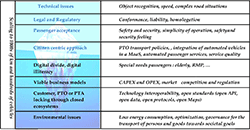
Table 1. The iceberg of deploying AVs in public transportation (image used is under a CC0 license).
Challenges for the realisation of a mobility dream
The ultimate target in any deployment of automated vehicles in public transportation is to create a sustainable, economically viable and commercially realistic deployment of citizen- and user-centric public transportation service. This should be based on proven business models and concepts, like valorisation and preservation of past investments, promotion of competition between technology providers, suppression of customer lock-in situations, and development of cross-section business models and partnerships for the creation of viable, sustainable and optimized business ecosystems.
From an economic perspective, the use of AVs cannot be made profitable today due to the elevated costs linked to the deployment of AVs in an urban environment. Although the major visible costs today in full scale deployment of AVs are the costs of the on-board safety operator (due to the small capacity of AVs the cost ratio per passenger is too high), other very important costs are not yet being considered by the operators due to the fact that all of today’s deployments are small scale and of very short durations, being “simple” proves of concepts.
In our work in the AVENUE project we identified eight major issues that are not yet fully understood by the PTOs and have a major impact in any large-scale deployment of AVs in public transportation.
Life time of Automated vehicles
It is expected that in a large-scale deployment the PTO will deploy hundreds of AVs in the city, this being one of its major capital investments. However, AVs are based on IT systems which are evolving and will continue to evolve relatively fast for the next decades. With the evolution of the technology, it is to be expected that the regulatory requirements will also be adapted in order to consider the new IT and AVs (eg. Long range lidars) capabilities. This will create the risk of making the “older technology” vehicles technologically obsolete and possibly “unusable”, in the sense of not being able to respond to evolved needs for the service. Today the expected lifetime of an AV does not exceed 6 or 7 years, while a traditional thermic bus or electric trolley has a lifetime of at least 15 years. If the PTOs need to replace their AV fleet every 7 years instead of every 15, this creates a major obstacle for an economically viable deployment.
The “nightmare” is thus how to valorise “older” AVs and extend their useful service lifetime (Preservation of Past Investment). One possible solution, fully compatible with the concept of dynamic, on-demand public transport services, would be to dispatch AVs based on the use case and the required vehicle capabilities. For example, if the older generation vehicle is slower, then it will be dispatched only in areas with low speed limits (like the city center where the speed limits are in general no more than 30 Km/h), or for passengers that require lower speed (eg. are not pressed by the time duration of the trip), or even provide a price differentiation based on the speed of the trip (lower price if you choose a low speed vehicle and in consequence increase your trip time). This type of use-case/capabilities-based vehicle dispatching requires a detailed identification of the target use cases and their correlation to the different vehicle capabilities. The fleet management and orchestration service will need to handle this service provision, while the PTOs will need to identify the policies for the differentiated service levels.
City HD- maps
One of the key requirements for the deployment of AVs in a city is the compilation of High Definition (HD) Maps with annotations and information for the smooth and safe operation of the AVs. Each vehicle manufacturer creates its own maps, scanning the deployment roads and making its own annotations. These maps with the inserted annotations are proprietary to each manufacturer.
From one hand, today the majority of the AV deployments operate in small areas with just a few Kms of routes. As a result, the cost for the creation of the HD maps of the small areas is relatively low, compared to the other costs of deployment, but still quite important. We have seen prices ranging from 5,000 EUR to 25,000 EUR for a Km of road (depending on the associate services).
On the other hand, today’s public transportation buses are deployed in a small percentage of the total roads’ network of the city. For example, in a city of a population of 500,000 (Geneva, Switzerland) the public transportation road network is 420Km, whereas the total road network of the canton is roughly 1800 Km15. Passing from fixed line to on-demand, door-to-door, the public transportation road network of the AVs will eventually be required to cover the complete road network of the canton. Considering that many roads will not be able to be served (too narrow, in bad condition, with obstacles (like high speed bumps), private roads etc.) we can safely estimate that from the 1,800Km of road network at least 1,000Km of roads (but the target will be always be to cover the complete network) will need to be served by the automated vehicles. The cost of creating HD maps will thus be very high (in the order of several million EUR).
The nightmare is that each vehicle manufacturer has today its own standards for HD maps. As a result, the PTO will be forced to either use a single AV manufacturer (resulting in customer lock-in to the vehicle vendor) or pay the mapping of roads twice (or even more times). But the nightmare does not stop there: the city roads are constantly modified, changed, blocked. These changes must be integrated to the HD maps in a very short time (ideally seconds, realistically minutes). Keeping the HD maps up to date will require a continuous re-scanning, analysis and manual annotations of the roads. And if the PTO has opted for multiple vendors, keeping the HD maps of the different vendors synchronized is by itself a major challenge (or nightmare!).
The challenge is how to keep the HD-maps up to date and how to reuse the HD maps of different vehicle manufactures. Creating a standard for HD-maps and related annotations will require that all the vehicle manufactures join forces and come up with a common open model. How feasible this is, is not yet known, the different manufactures do not really communicate details of their HD maps structure and annotations. Keeping the HD-maps up to date, might be an “easier” task. Each AV when operated scans the area around it. A comparison of the dynamically scanned area by the AV and static scan, would be able to identify differences and with an intelligent system, create the required HD map updates. Another option is to have a permanent mobile unit visiting “incident” spots and rescanning and manually updating the HD maps. All these solutions however, have a cost and require fine-tuned methodology and logistics.
Plug and play of AVs in MaaS/ITS systems
The current model for traditional bus deployment is that the PTO identifies the new bus model/manufacturer (based on some procurement process with clear specifications) and the new vehicles are adapted (by the manufacturer or by the technical services of the PTO) and deployed in the public transportation network.
On-demand, door-to-door AVs require, among others, to be guided and be connected to the operator fleet management and MaaS/ITS services. However, each AV model has its own interface (API) and its own capabilities. As a result, each AV fleet management provider, provides a custom integration of fleet management services, based on the special capabilities of a specific type of vehicle.
If the PTO wishes to change to a more performance driven fleet management service, the integration cost and adaptation can be prohibitive (in budget and time to develop and test). Furthermore, the new service provider might not support the PTOs older vehicles and will be required to develop new interfaces, thus increasing the transition costs. The challenge is how the PTO can switch fleet management services and integrate them to its MaaS service with minimal costs (Customer Lock-in to the service provider).
A solution would be to standardize the AV APIs and protocols, in the same way that web services were standardized, allowing an open model that will be able to adapt and accommodate new capabilities of the future vehicles. This will require collaboration between vehicle manufacturers and the possible creation of a neutral entity that will be the “guardian” of the open interfaces, operating a similar way as the W3C16. First steps towards this direction are undertaken by the MaaS Aliance17, and companies, like the Trapeze group18, have identified the issue and started working toward this direction.
Critical mass
A major point in the deployment of large-scale public transport services is the deployment of a critical mass of AVs that will allow real transportation services (and not just a “tourist attraction service”). Based on past experience14 we have estimated that the minimal critical mass is 15 AVs serving a single site, under a common management service. However, it is clear that not many PTOs have the budget to purchase 15 AVs (in view of their high cost) for a service that has not proven its commercial value. As a result, the demand of AVs is very low, the prices are very high, and this discourages the demand from the PTOs. We somehow need to break this circle and boost the mass development of AVs, bringing the prices down and allowing the deployment of commercially viable services. This is where the support of the European Commission can provide the required funding, by allowing the PTOs to purchase the initial seed-vehicles with Horizon Europe funding, or other financing sources. An increase demand for AVs, will boost the development and investments to AV manufacturers, which will bring down the unit price of a vehicle and further boost the orders for new AVs.
Scaling up the Automated vehicles’ transport services
Currently the city public transportation operates on well-defined itineraries and time tables. As mentioned above, in a medium size city like Geneva the public transportation routes with fixed route lines, is about 420Km. Passing to an on-demand door to door service, means covering at least 1000Km of roads. In addition, today, the public transportation in the example of Geneva is served with 472 vehicles (tramways, trolleybus, autobus) and 4 automated vehicles19. Scaling up to cover the full Geneva area will require 200 to 300 automated vehicles with the parallel decommissioning of 150 to 250 traditional vehicles and keeping the tram and selected trolley lines as backbone. This transition will require long-term planning and a detailed transition plan (assuming that there is an offer from vehicle manufacturers for this very high numbers of vehicles).
First of all, it must be decided which routes will be served and under which type of services: door-to-door, near-door-to-door, 24/24 vs 18/24 hours of service etc. Once the deployment area is defined the PTO should identify and organize the required city infrastructure: charging points in the area, depot, parking space for vehicles that are on stand-by (chosen to minimize energy consumption - like under shade to minimize the use of air-condition), installation of required V2I technologies for traffic light control, or other needs, ramps for wheel-chair passengers, etc.
Furthermore, the PTO should create a new IT center for the management of the AVs, and a vehicle maintenance center and of course train the personnel to the new technologies and transport models.
The choice of the AVs in such high numbers will also be a challenge, depending on the available offers and how to compare the quality of the automated drivers and their adequacy to the local city and weather conditions (narrow roads, frequent rains, vegetation, etc).
Estimating the costs for the above described scale-up, is not a trivial task and the vast majority of PTOs do not have the required experience to make educated cost estimations. Furthermore, any attempt to reduce costs, might result in service quality degradation and in consequence be rejected by the passengers.
Transport services
The driver in a public transportation vehicle does not simply drive the vehicle, but offers a number of formal and informal services, from controlling the status of the vehicle, resolving small incidents, providing information to passengers and offering a feeling of safety to the passengers. The suppression of the driver should by no means result to the suppression of these services, which must continue being offered (otherwise we will have a radical quality of service degradation and backlash from the passengers). Today, many solutions are proposed and are implemented, based on live surveillance of the vehicle and its passengers20–22. Systems that are able to identify aggressions in the vehicle, vandalism, as well small malfunctions, are developed and tested. However, this can very fast turn to a regulatory obstacle, since it is based on video surveillance of passengers. Do we store the video for later analysis? Do allow the back-office operator to see the live video and decide of an action to take? In a service like “follow my kid” where a parent will be able to track the presence a depended person in the bus using face recognition, how we handle the need that we must scan all faces trying to identify one of them?
The development of driver-replacement in- and out-of-vehicle services, needs a thorough study with active passenger involvement at all stages in order, from one side, the passenger to understand the issues and re-assured on questions of privacy and safety, and from the other side, the PTOs to understand what service need to be introduced and what services can be simply suppressed as not being relevant to the door-to-door, on-demand public transport operation.
Transport policies
Assuming that the above logistics, technology and infrastructure issues have been resolved, the PTO will face a new challenge, due to the radical paradigm change: from fixed line operation to on-demand, door-to-door driverless operation. New transport policies need to be designed, that will be socially acceptable and support the economic viability of the transport services. Some examples of the required transport policies that need to be defined include: a) what is the minimal distance for which a passenger can order a trip? Do we allow trips of just 50m? (considering that ordering a vehicle, might force it to divert its route by 200m to serve a 50m trip, which is highly expensive and might end up degrading the service quality). b) Do we differentiate trip price based on trip distance, speed of delivery, waiting time etc. (going away from today’s flat rate models)? c) What should we do for no-shows? Do we allow the passenger to order a trip and not use it? Do charge the trip at all cases? Are there penalties for regular “no-show”s? d) how long should the vehicle wait the passenger? 1 minute, 5 minutes? Knowing that any delay will affect the overall service quality and increase the overall cost, what can be the policy of the PTO? e) how do we make exceptions for elderly, people with special needs etc? Do we required them to formally prove their special need? Do we ask a pregnant woman to prove she is pregnant? And what about privacy considerations? f) Do we provide for special services, like if a passenger wants to be alone in the vehicle? this can be the case for night service when we transport vulnerable passengers. Or this is not considered as “public transportation” and we create special services using the chartered vehicle services? g) how do we handle false reservations? For example, a passenger reserves for one person, but enters with two large suitcases, taking up all the space in the vehicle, h) how we react to incidents (from small vehicle malfunctions, to passenger related incidents)? We need to have intervention teams roaming the city, but what are the delays to intervene? How we distinguish for different types of incidents the urgency to intervene? i) what we do in case of incidents in the vehicle, like vandalism, aggression etc? do we stop the vehicle and send an intervention team? Do we store the video and refer to the authorities?
The PTO will need to define new policies, in coordination with passenger associations and of course state authorities, and these policies should be integrated in the fleet management services and supported with specialized technology, like an incident service dashboard. Some of the incidents (but which?) should be treated automatically, with predefined actions, while others will require human intervention. Furthermore, the modification of policies and corresponding actions should be very simple to introduce, so that the back-office operator can change them dynamically, according to instructions and the current overall situation, adapting thresholds and automated actions.
Idle vehicles during off-peak hours
One of the advantages of using automated vehicles in public transportation, is that the vehicle is operating only when there is a need. This means that during off-peak hours an important number of vehicles will be sitting idle in a parking spot waiting for the demand to go up. This saves energy, from one hand, but has high cost (we cannot have vehicles that are used just 30% per day (7 out of 24 hours)). We thus need to find ways to reuse the vehicles. This can be done by making the vehicles available for non-public transport usage. Since the vehicles have all the authorization to operate in the city streets, we can use them for services like urban logistics or private transport. This can be done by creating a platform implementing Vehicle as a Service model, where the excess capacity of the AV fleet becomes available to be used by other service providers (like LaaS). In other words, implement a “chartering” model for AVs. The control of a vehicle will be passed to another urban transport provider (Logistics or person), under well defined Service Level Agreements (SLAs). This way we can have virtual operators, using the excess capacity and offering non-public transportation services. This can become an important revenue source for the PTOs, allowing them to better valorize their vehicles.
However, several key questions need to answered. First of all how to define the SLAs and how to implement and enforce them? Second, what will happen if during the chartered operation the vehicle is damaged or was dirtied and cannot be used at the end of the chartering time? And finally, what will be the impact to the overall public transportation service quality?
Making a dream come true
Today, as we have seen from past projects and initiatives, we are in the crossroad for the deployment of AVs in public transportation. Many PTOs have experimented with AVs for short or long periods, identifying the possible advantages in adopting the technology, but can not afford to continue small demonstrator deployments. For these reasons we see PTOs simply terminating the experiments and deciding to wait and see, without making any plans to integrate AVs in their service offer. On the other side the vehicle manufactures need to increase the number of AVs deployed in order to be able to work and improve the shortcomings identified in the experimental deployments. The net result is that the lack of a market does not allow manufacturers to invest to vehicle improvements and the lack of improved vehicles does not allow the PTOs to plan large scale deployments. The evolution is thus very slow. This is where, in Europe, the support of European commission can play a major role, by providing the seed money required. In this direction the European Commission is funding a large number of projects under the Horizon 2020 and Horizon Europe frameworks.
We are participating in two flagship projects, AVENUE and ULTIMO, in which we took a different path than other projects, and allocated large parts of the budget to the PTOs for the purchase AVs, opening the way for a sustainable deployment.
In the rest of this section we give a presentation of the two projects, presenting the achievements of the AVENUE project and the targets of the ULTIMO project.
The H2020 AVENUE project
One of the major and successful deployments of on-demand, door-to-door public transportation was achieved within the Horizon 2020 project AVENUE23. AVENUE, was a four and a half years H2020 project financed by the European Commission. The project started in May 2018 and was completed in October 2022. With 22 partners and a 15.5MEUR funding, the project has designed and carried out full-scale demonstrations of urban public transport services with fully automated vehicles, in 6 European demonstrator cities (Geneva, Lyon, Copenhagen, Luxembourg, Sion, Esch-sur-Alzette). The project deployed, for the first time worldwide, small fleets of automated minibuses in low to medium demand areas offering fully automated on-demand, door-to-door, shared public transportation services. The AVENUE vision for future public transport in urban and suburban areas was that automated vehicles will ensure safe, rapid, economic, sustainable and personalised transport of passengers. AVENUE introduced disruptive public transportation paradigms on the basis of on-demand, door-to-door services, setting up a new model of public transportation, by revisiting the offered public transportation services, and suppressing prescheduled fixed bus itineraries.
At the end of the AVENUE project, our mission was achieved, having demonstrated that automated vehicles have the potential to become the future solution for public transportation, and having provided recommendations and guidelines for the different actors towards the deployment of large-scale AVs in public transportation. The AVENUE project has demonstrated the economic, environmental and social potential of automated vehicles for both public transport operators and passengers, and we were able to identify the needs for a successful service deployment of automated vehicles in public transportation23.
Overview of the AVENUE project results
The Automated vehicles employed in the AVENUE project, fully and automatically manage the navigation and road behaviour in an open street environment. The vehicles are capable to recognise obstacles (and identify some of them), identify moving and stationary objects, and automatically decide to bypass them or wait behind them, based on the defined policies. For example, with small changes in its route the AVENUE mini-bus is able to bypass a parked car, while it will slow down and follow behind a slowly moving car. The AVENUE mini-buses are able to handle different complex road situations, like entering and exiting round-about in the presence of other fast running cars, stop in zebra crossings, communicate with infrastructure via V2I interfaces (ex. red light control).
In the AVENUE project we were operating SAE Level 4 vehicles (NAVYA Autonom Shuttle24), with a capacity of 14 persons, and authorized to operate at a maximum speed of 25-30 km/h, depending on the local regulatory framework. In the current deployments the speed does not exceed 23 Km/h, with an average operational speed of 14 to 20 Km/h. Another, more important reason for limiting the vehicle speed is safety for passengers and pedestrians. Due to the fact that the LIDAR used in the AVENUE vehicles has a range of 100m and the usable range for obstacle identification is no more than 40 meters25, and considering that the vehicle must safely stop in case of an obstacle on the road (which will be “seen” within the 40 meters distance) we cannot guarantee a safe braking if the speed is more than 25 Km/h. Note that technically the vehicle can make a harsh break and stop within 40 meters in high speeds (40–50 Km/h) but then the breaking would be too harsh putting in risk the passengers. The partners in the project are working in finding an optimal point between passenger and pedestrian safety.
Due to legal requirements a Safety Operator must always be present in the vehicle, able to take control any moment, although at the deployments we have reached a 99% automated operation. Additionally, at the control room, a Supervisor is present controlling the fleet operations. An Intervention Team is present in the deployment area ready to intervene in case of incident to any of the mini-busses.
A series of passenger services were introduced and validated in the project26. With the use of an on-board computer and on-board cameras and microphones, we developed and tested several safety services. The system installed was able to locally identify aggressions, vandalism, forgotten objects, number of passengers, available space, and send an incident notification to the back-office operator for further action.
In addition with the collection of real data from long term deployments and by incorporating known data from traditional public transportation service, we were able to develop an economic analysis tool27, that allowed us to estimate the costs for the deployment of a public transportation service, given the different options (from site size, quality of service level (waiting delays, transport delays), number of vehicles, costs of vehicles etc).
A major result of the AVENUE project was that we were able to clearly identify the gap from technology deployment to service deployment. This knowledge was used to define the next step, to be implemented under the ULTIMO Horizon Europe project.
The road ahead - the Horizon Europe ULTIMO project
Based on the experience gained in the AVENUE project a more ambitious project was launched in the Horizon Europe Framework, the ULTIMO project. A 4 years project (October 2022 to September 2026), with 23 partners and a total financial contribution of 40 MEUR (24MEUR from the European Commission and 16 MEUR from the Swiss Federal Government) targeting to create and deploy in three sites in Europe the very first viable, economically feasible and sustainable integration of Automated Vehicles in user-centric Public Transportation services, with integrated LaaS urban goods transportation. The ULTIMO project aims in resolving all the issues presented above, making the dream come closer to reality.
Within ULTIMO we will deploy multi-vendor SAE L4 AVs into large scale sites (3 sites, each with 15 or more multi-vendor AVs per site), designing a user-centric, on-demand, door-to-door, shared, economically viable public transportation and logistics services. Our target is to operate the very first large public transportation service without safety operator on-board, in fully automated, mission management mode and with the support of innovative user centric passenger services. All aspects for improving the services for citizen to offer a real alternative to privately owned cars will be addressed. A further focus will be to enable viable economic deployments, ranging from valorization of past investments (older vehicles), development of economically sustainable passenger and transport services without safety driver, and introducing the concept of vehicle chartering for vehicle reuse in LaaS services.
In the ULTIMO project we will develop and integrate standardised APIs for vehicles and fleet management services, validate the dynamic change of fleet management service provider, integrate multi-vendor vehicles in a plug and play model, and most of all, design passenger services in direct collaboration with the service users.
Conclusion
Automated Vehicles for public transportation have been identified as a very promising solution to the ever-increasing urban mobility problems. However, in spite of the huge investments in technology improvement, the passage from “technology offer” to “service offer” is not yet well understood and we have yet to see a real commercial deployment of AVs in urban mobility. The reason for this is total lack of viable and sustainable business models, which in turn is the result of the lack of experience in the creation of a new mobility paradigm, moving away from the traditional fixed route and time-table services.
The deployment of a full service of public transportation with automated mini-busses in a city will require more than just a few vehicles operating in a certain area. Going from fixed route, fixed time-tables to on-demand, door-to-door, driverless, highly dynamic public transport, will require a multi-target approach in order to come up to a viable, user-oriented, economically sustainable service. In this paper we presented the key elements that need to be studied and where solution must be developed. From one side a long term planning needs to be put in place by the PTOs and PTAs, in a depth of decade, and new policies, infrastructures, passengers services need to be conceived and implemented. From the other side new open standards supporting interoperability of automated related technologies must be developed and adopted, opening the market for a real competition between the technology actors (be it vehicle manufactures, fleet management and orchestration providers, V2X technology developers etc) can be established, creating a sustainable ecosystem.
The issues presented in this paper, although being the most important, are not the only ones. Other challenges include the re-education of maintenance personnel from mechanical to IT and electronics, as well as the phasing out of the existing drivers or their conversion to new functions (like intervention teams, back-office operators). Furthermore, any plan to deploy automated vehicles with on-demand, door-to-door public transportation service, might generate a backlash from other public transportation actors, like taxis, that will see this service as a direct threat to their business. Another major challenge that needs also to be resolved, is the certification of the automated drivers. Today, public transportation vehicles are certified for their mechanical capabilities, and the human driver is “certified” for his/her driving capabilities. Certifying the automated vehicle driving capabilities, is today an open question. How to approach these issues, and others that can only be identified once a real service is deployed, will require a concentrated effort from PTOs, PTAs, legislators and service users to come up with viable solutions.
This is eventually the target of the European project ULTIMO28, started in October 2022, to set the basis of a large-scale deployment and develop the required standards, policies and roadmaps for the creation of viable, user-oriented and economically sustainable public transportation service with automated vehicles. In the ULTIMO project we expect to have the complete service operating with 15 vehicles per site in the last year of the project, that is in 2026 and thus be able to identify yet unknown issues in this new public transport paradigm.
Ethics and consent
Ethical approval and consent were not required.
Data availability
No data are associated with this article.
Faculty Opinions recommendedReferences
- 1.
Breuer MJ:
Paradise and Iron.
Amazing Stories Quarterly.
Summer 1930. Reference Source
- 2.
Asimov I:
Sally. Fantastic, May-June 1953. Reference Source
- 3.
Automated Driving: Safer and More Efficient Future Driving. Watzenig, D. and Horn, M. (eds), Springer International Publishing, 2017. Publisher Full Text
- 4.
Iclodean C, Cordos N, Varga BO:
Autonomous Shuttle Bus for Public Transportation: A Review.
Energies.
2020; 13(11): 2917. Publisher Full Text
- 5.
Oldbury K, Isaksson K:
Governance arrangements shaping driverless shuttles in public transport: The case of Barkarbystaden, Stockholm.
Cities.
2021; 113: 103146. Publisher Full Text
- 6.
Nesheli MM, Li L, Palm M, et al.:
Driverless shuttle pilots: Lessons for automated transit technology deployment.
Case studies on transport policy.
2021; 9(2): 723–742. Publisher Full Text
- 7.
Larsen A, Van Woensel T:
Freight, logistics and the delivery of goods. DTU international Energy Report, 2019. Reference Source
- 8.
Current AV Deployment & Shuttle Initiatives in the United States, Synthesis of Agency Experiences and Lessons Learned. CTSO Cooperative Automated Transportation & CAT Coalition Infrastructure-Industry (I-I) Working Groups, July 2020. Reference Source
- 9.
Fournier G, Thalhofer M, Chrétien P, et al.:
System innovation in transport with automated minibuses and ITS: the citizen centric approach of AVENUE. Transport Research Arena (TRA) Conference. 14 - 17.11.2022, Lisbon, 2022.
- 10.
Korbee D, Naderer G, Fournier G:
The potential of automated minibuses in the socio-technical transformation of the transport system. Transport Research Arena (TRA) Conference. 14 - 17.11.2022, Lisbon, 2022.
- 11.
SAE International - Updated Visual Chart for I “Levels of Driving Automation” Standard for Self-Driving Vehicles.
2018. Reference Source
- 12.
AVENUE project: Achievements and Results. Reference Source
- 13.
The Robomobility Revolution of Urban Public Transport: A Social Sciences Perspective. Sylvie Mira-Bonnardel, Fabio Antonialli, Danielle Attias (Eds), Springer Nature Switzerland, 2021. Publisher Full Text
- 14.
AVENUE project: Deliverable D9.3 Roadmap for cost-attractiveness. November 2022.
- 15.
Swiss Federal Statistics Office:
Length of Roads by Communes. (visited October 2022). Reference Source
- 16.
Web Services Architecture: W3C Working Group Note 11 February 2004. Reference Source
- 17.
Interoperability for Mobility, Data Models, and API. MaaS Alliance, 2021. Reference Source
- 18.
White Paper: ITxPT and Information Technology Standards for Public Transport. Trapeze Group. Reference Source
- 19.
Transports Publics Genevois. Fleet statistics. Reference Source
- 20.
Backar LH, Khalifa MA, Salem MAM:
In-Vehicle Monitoring for Passengers' Safety.
2022 IEEE 12th International Conference on Consumer Electronics (ICCE-Berlin).
Berlin, Germany, 2022; 1–6. Publisher Full Text
- 21.
Abedi H, Luo S, Mazumdar V, et al.:
AI-Powered In-Vehicle Passenger Monitoring using Low-Cost mm-Wave Radar.
IEEE Access.
2021; 1–1. Publisher Full Text
- 22.
In-Cabin Monitoring System for Public Transport. viisights. Reference Source
- 23.
Konstantas D:
From Demonstrator to Public Service: The AVENUE Experience. In: Mira-Bonnardel, S., Antonialli, F., Attias, D. (eds)
The Robomobility Revolution of Urban Public Transport.
Transportation Research, Economics and Policy. Springer, Cham. 2021. Publisher Full Text
- 24.
NAVYA Autonom Shuttle. Reference Source
- 25.
Tang L, Shi Y, He Q, et al.:
Performance Test of Autonomous Vehicle Lidar Sensors Under Different Weather Conditions.
Transportation Research Record.
2020; 2674(1): 319–329. Publisher Full Text
- 26.
Tsiktsiris D, Dimitriou N, Lalas A, et al.:
Real-Time Abnormal Event Detection for Enhanced Security in Autonomous Shuttles Mobility Infrastructures. Sensors, 2020. Publisher Full Text
- 27.
Antonialli F, Mira-Bonnardel S, Bulteau J:
Economic Assessment of Services with Intelligent Autonomous Vehicles: EASI-AV. In: Mira-Bonnardel, S., Antonialli, F., Attias, D. (eds) The Robomobility Revolution of Urban Public Transport. Transportation Research, Economics and Policy. Springer, Cham. 2021. Publisher Full Text
- 28.
The ULTIMO Horizon Europe Project. Reference Source