Introduction
Acrylic polymethylmethacrylate (PMMA) bone cement is one of the most commonly used biomaterials in orthopaedics1,2. It is used extensively in the spine for the treatment of vertebral compression fractures (VCFs) through vertebroplasty3 and kyphoplasty procedures4,5, where the cement is injected minimally invasively into the fractured vertebrae, providing stability and pain relief once it is set in situ. More recently, PMMA cement has been tried for certain patients suffering from advanced disc degeneration disease (DDD), through a procedure named percutaneous cement discoplasty (PCD)6.
However, patients that suffer from VCFs and DDD in the elderly population often suffer from osteoporosis7,8, and PMMA typically has an elastic modulus of around 1700 to 3700 MPa9,10 while the trabecular bone found inside a vertebra varies between 10–900 MPa11,12, with the lower values stemming from osteoporotic patients. This difference elevates the risk of adjacent vertebral fractures (AVFs), in particular for osteoporotic patients. Clinical and radiological studies have revealed that the incidence of adjacent vertebral fractures following vertebroplasty ranges from 54% to 67%13,14 and 30% to 90% after kyphoplasty15. As for PCD, risks of AVFs have been expressed16, but current studies suggest a low number of patients suffering from AVFs17. However, osteoporotic patients are not currently considered for such surgeries18,19.
Tailoring the properties of PMMA to match those of the surrounding bone would reduce the risk of AVFs in vertebroplasty and kyphoplasty, while also potentially enabling its use in PCD procedures for osteoporotic patients. Notably, a finite element simulation of loading after discoplasty revealed reduced stresses on the endplates when utilizing a low-modulus cement20. This suggests the potential to improve stress distribution and reduce the risk of adjacent fractures as well as adjacent segment disease (ASD) in PCD patients.
The development of low-modulus PMMA has been extensively investigated in vertebroplasty to accommodate for the elastic mismatch between the PMMA and bone21,22. This type of PMMA contains additives that may e.g. act as plasticizers23 or a gel that creates a porous cement24 with the aim of reducing the elastic modulus. For example, fatty acids25, cellulose derivatives26,27, N-methyl-pyrrolidone28, and mixtures of blood and saline solutions have previously been investigated29,30. One such additive is linoleic acid (LA). Linoleic acid is a type of fatty acid that has been shown to reduce the mechanical properties of PMMA even when added in small amounts, thereby maintaining similar handling properties to standard cements. The addition of LA affects the polymerisation reaction by creating competing reactions, leading to shorter polymer chains but also a lower polymerization temperature, beneficial for the surrounding tissues31,32. Furthermore, LA acts as a plasticizer, reducing the friction between adjacent polymer chains31. In previous work by the authors, the addition of LA to PMMA cements has been thoroughly characterized in terms of bench, in vitro and in vivo properties. Robo et al. found that the addition of 12%vol LA to commercial V-steady™ PMMA (G21, Italy) reduced the elastic modulus from 2140.4 ± 128.8 MPa to 494.7 ± 51.8 MPa31,33 and that it was the optimal volume to add to, in the long-term, obtain mechanical properties similar to vertebral trabecular bone33. In addition, compression-compression fatigue testing has showed that this type of cement has a fatigue limit of 2.5–5 MPa after 2 million cycles (where it can be noted that the fatigue limit was defined as a decrease in sample height of 15%, the clinical definition of a vertebral compression fracture, but the samples did not fracture)31,33. These results are comparable to pressures found in the disc of 0.27–2.3 MPa during daily activities34. Additionally, an in vivo study in a sheep model observed similar inflammatory response between the commercial F20® cement (Teknimed S.A.S, France) and the LA-modified version of this cement. This suggests that the addition of LA does not negatively affect the bone remodelling process around the implant35. Finally, LA has been shown to possess antibacterial properties36,37. The above listed advantages with LA, and its advancement along the value chain, made it the component of choice for the present study. Currently, no other low-modulus PMMA cements are in clinical use, to the best of the authors’ knowledge.
While compression-compression fatigue tests show promise for use in the envisaged end applications33, there is no data on the cement’s tensile behaviour, nor on its behaviour under tension-compression fatigue. This type of data is considered important for benchmarking purposes, as it is part of the test battery in the ASTM F2118 standard for assessment of PMMA bone cement38. It may also be of higher importance for the novel PCD application as the disc is typically exposed to bending and hence parts of it to tension39. Therefore, the aim of this study was to evaluate the tensile properties as well as the tension-compression fatigue properties of the novel low-modulus bone cement, according to ASTM F2118.
Methods
Materials
V-Steady bone cement (VS) (G21 srl., Italy) was used as a control as well as the base cement for making the low-modulus bone cement in this study. The solid phase was composed of 14.1g of PMMA, 0.2g of benzoyl peroxide (BPO), and 11.7g of zirconium dioxide, while the liquid phase contained 9.6g of methyl methacrylate, 0.13g of N.N dimethyl-p-toluidine, 50 ppm of hydroquinone. Further, 12 vol% of linoleic acid (LA, 99%, Sigma-Aldrich, St. Louis, MO, USA) was added into to liquid phase ahead of cement mixing for the low-modulus cement (VSLA).
Preparation of the cement samples
The cements were prepared according to manufacturer’s instructions. The liquid and solid phase were mixed in a glass mortar using a spatula for 30–60 seconds at room temperature. The cement was then poured into a syringe from which silicon moulds of the desired dog-bone shape were filled. The dimensions of the moulds were designed according to ASTM F2118. The gauge section of the sample was 10mm long and 5mm in diameter while the thicker, grip section was 8.5mm in diameter. A total of 30 samples were used for quasi-static tensile testing, i.e. n=15 per group VS and VS-LA. At least 15 samples per fatigue sample group were also used, as required by the ASTM F2118 standard. After preparation, the samples were then allowed to set in these moulds for 24 hours in phosphate buffer saline (PBS) solution (PBS, Sigma-Aldrich, St. Louis, Mo, USA) at 37°C, before being removed from the moulds and being further conditioned for another 13 days in PBS at 37°C. Previous studies have reported that the mechanical properties of the cement plateau at around 2 weeks20.
Quasi-static tensile testing
An MTS 858 Mini Bionix (MTS Systems Corporation, United States) was used to estimate the ultimate tensile strength (UTS) and Young’s modulus of the bone cement under tension loading. Hydraulic clamps were used to fix the samples onto the machine. The cross-head speed used was 5mm/min and the force and displacement of the sample were recorded. In order to accurately estimate the Young’s modulus of the sample, the test was recorded by video and a custom MATLAB (RRID:SCR_001622) script was developed to analyse the movement of two markers on the gauge length of the sample, acting as an optical extensometer. Alternatively, this script can be written in Python (RRID:SCR_008394) with relevant packages such as NumPy (RRID:SCR_008633).
Each sample was marked with two black lines 10mm apart to isolate the sample gauge. The tests were then recorded at 60fps using a 1080p camera, each image was extracted from the video and analysed within MATLAB in greyscale. Each frame was labelled numerically in ascending order. An Otsu filter with a threshold level of 0.3 was applied in MATLAB to the raw image in order to create a binary black and white image for each frame. Each frame was then rotated 90 degrees for processing purposes. Once every frame had been extracted, filtered and rotated, a region of interest (ROI) was identified by the code. The initial ROI was identified by the user manually inserting the approximate positions of the middle, top and bottom of the sample. From this each column of pixels is analysed until a solid black line of pixels, the length of which is defined by user input, is identified on either side of the image. The distance between these two lines defines the initial length of the sample as well as the initial ROI. To calculate the strain, the initial length of this ROIs compared to the length of the region of interest in each proceeding frame in the video. From this, the change in length of the ROI and hence the strain was calculated. The Young’s modulus of all the samples was then calculated between 0.2% and 0.4% strain to ensure consistency and remain within the linear region of the curve.
Tension-compression fatigue testing
The MTS 858 Mini Bionix was also used to test the properties of the bone cement under fully reversed tension-compression fatigue (R=-1) at the three stress levels defined in the ASTM F2118 standard, i.e. +/-5, 7 and 9 MPa38. For these tests, the setup was surrounded by a biobath which was filled with circulating PBS solution at 37°C, since previous studies have observed an effect of the environment on the fatigue performance40. The samples were cycled to failure at their respective stress levels and the cycles to failure were recorded. A Weibull distribution at each stress level was then calculated using a custom MATLAB script. The three-parameter Weibull distribution is commonly used to effectively analyse fatigue data9,41,42. The three-parameter Weibull distribution is given by43:
Where R(Nf ) is the survival probability of the sample, Nf is the loading cycle, N0 is the minimum or guaranteed fatigue life, Na is the characteristic fatigue life, b is the Weibull slope.
where R(Nf ) is determined from the expression:
Where M is the assigned rank of sample after the data is arranged in ascending order of magnitude, and G is the total number of specimens. After calculating R(Nf) for all samples, initial parameters for the Levenberg-Marquardt algorithm are calculated. N0 is determined by finding the asymptote of the best fit line for the plot of
against In (Nx). The Weibull shape factor (b) is derived from the gradient of the best fit line for the graph ln (Nx – No) versus the linearised Weibull probability.
Once all variables are calculated they can be substituted into the linearized Weibull equation (Equation 3) to find the Weibull characteristic fatigue life (Na).
Then, these parameters are used as a starting point for the Levenberg–Marquardt non-linear regression method (Curve Fitting Toolbox™ in MATLAB version R2022a; The MathWorks® Inc., Natick, MA, USA), which then calculated optimised N0, Na, and b estimates to reduce the errors of the fit.
These optimised Weibull estimates were then used to compute the Weibull mean fatigue life (NWM).
Where NWM is the Weibull mean number of fatigue cycles, and Γ is the gamma function. The Weibull distributions and parameters were calculated for the low modulus bone cement at stress amplitudes of +/-5 MPa, +/-7 MPa and +/-9 MPa.
Statistical analysis
The statistical analysis was performed using Prism GraphPad 10 (RRID:SCR_002798). Normality of the data was checked using Q-Q plots. An unpaired t-test was conducted to assess any differences between elastic modulus and ultimate tensile strength of VS and VSLA. A significance level of α=0.05 was used.
Results
Properties under quasi-static tensile load
A total of 30 samples were tested for VS (n=15) and VSLA (n=15) cements. The Young’s modulus and UTS for the control VS cement were found to be 1478.1 ± 202.9 MPa and 36.6 ± 1.5 MPa, respectively, both of which were found to substantially decrease for the VSLA cement, as expected, giving a Young’s modulus of 581.1 ± 126.4 MPa and an UTS of 11.6 ± 0.8 MPa44 (Figure X).
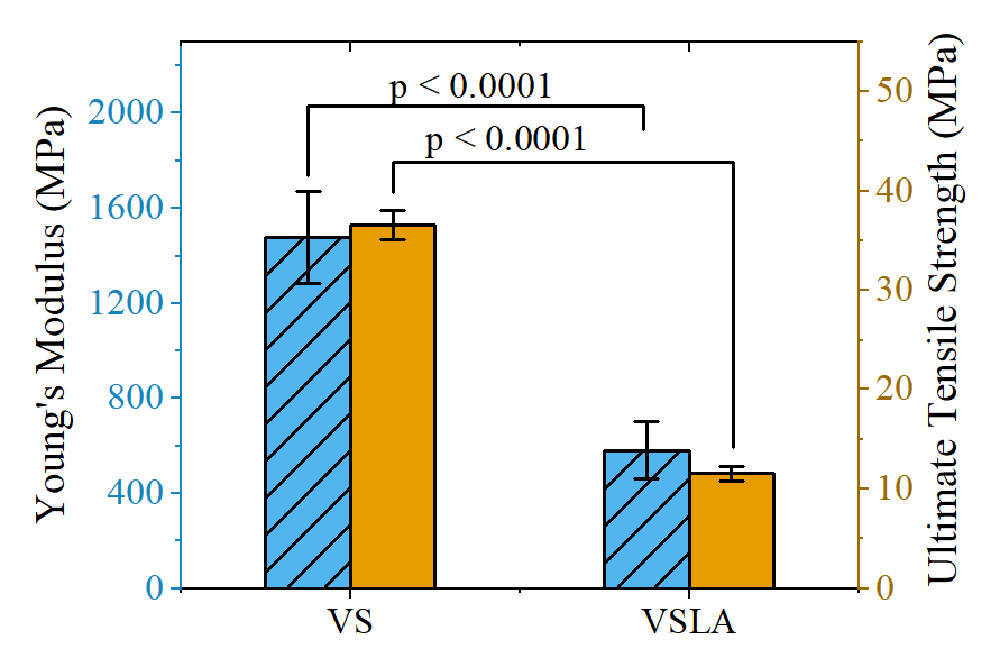
Figure X. Quasi-static tensile properties of VS and VSLA cement.
Properties under tension-compression fatigue
A total of 47 VSLA samples were prepared for dynamic testing. At least 15 samples were used for each stress amplitude (Table 1).
The data points and Weibull survival curves for VSLA are presented in Figure 1, showing good fits (R2>0.93) to the Weibull model.
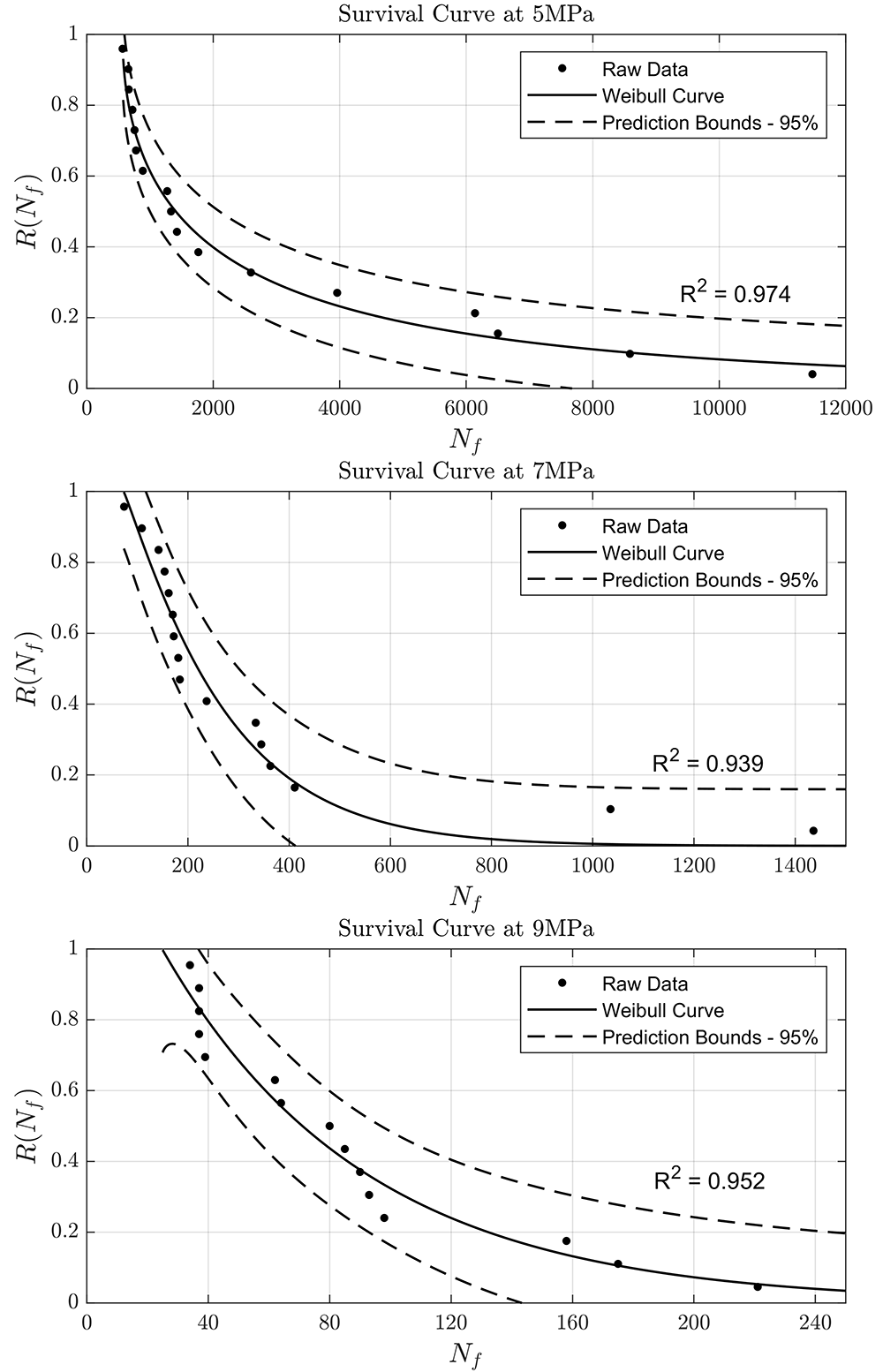
Figure 1. Survival Weibull curves for VSLA at 5 MPa, 7 MPa, and 9 MPa.
Dashed lines indicate 95% confidence interval of the fitting.
The Weibull parameters associated with the low-modulus cement including: the Weibull characteristic fatigue life (Na), the estimated minimum fatigue life (No), the Weibull mean number (Nwm), and the Weibull slope (b) are summarised in Table 1. As expected, the minimum and mean fatigue life values decreased with an increase in test amplitude. Conversely, the Weibull slope increases with increasing stress. This indicates that the sample is more likely to survive more cycles at lower stress levels.
Additionally, three VS samples were tested at 9 MPa and reached a run-out of 5 million cycles (run-out value taken according to the standard38).
Table 1. The Weibull parameters associated with the low-modulus cement.
| No (cycles) | Na (cycles) | Nwn (cycles) | b |
|---|
| 5MPa (n=17) | 564 | 2246 | 3591 | 0.53 |
| 7MPa (n=15) | 73 | 279 | 272 | 1.09 |
| 9MPa (n=15) | 25 | 91 | 91 | 1.00 |
Discussion
The objective of this study was to determine the mechanical properties of a low-modulus PMMA bone cement in tension and tension-compression fatigue. This was carried out using the ASTM F2118 standard38. A commercial cement was used as a control to study the effectiveness of using LA to reduce the mechanical properties under these loading scenarios, and to benchmark its performance in relation to such a cement.
The mean tensile properties of the bone cement were significantly reduced with the addition of linoleic acid with the Young’s modulus decreasing by 61%, from 1478.13 ± 202.92 MPa to 581.10 ± 126.44 MPa, and the mean UTS decreasing by 68%, from 36.57 ± 1.54 MPa to 11.57 ± 0.77 MPa. As discussed previously, the mechanism behind this reduction of mechanical properties is that LA serves as a plasticizer, reducing friction between adjacent polymer chains, while also affecting the polymerization process by initiating competing reactions, resulting in shorter polymer chains and some increase in unreacted monomer33. The UTS of the modified PMMA was still significantly higher than that of vertebral trabecular bone, which has a UTS between 1.33–3.53 MPa in the inferior-superior direction12. The Young’s modulus of the cement was significantly reduced, in accordance with the additive’s aim of achieving a low-modulus cement. The Young’s modulus of VSLA was within the range of moduli recorded for human trabecular bone (1–976 MPa), implicating that the novel cement is better suited for the target treatments, in terms of a reduced risk for adjacent VCFs when compared to commercial PMMA (1700–3500 MPa)9,10. A study by Weightman et al. developed a low-modulus PMMA formulation, suggesting that such cements can result in more even distribution of the stresses in the cement and thereby reducing the risks of fracture, although for the case of fixation of hip replacements45. Their developed cement was compared to previously used commercial cements CMW and Sulphix using tensile testing. The commercial cements had Young’s modulus and UTS ranging between 1330–1820 MPa and 36–43 MPa, respectively, while the low modulus cement had a mean Young’s modulus and UTS of 650 MPa and 19 MPa, respectively45. Although the applications are different, the results and aim of this low modulus cement correlate well with the intended reduction of mechanical properties observed with VS and VSLA. The modulus of the intervertebral disc varies depending on the region of the disc measured, the manner in which the disc is measured, and the stage to which the disc is degenerated46. Even at the highest end of the disc moduli, 140 MPa when the annulus fibrosis was measured in tension47, the bone cement has a much higher modulus than the disc. However, one also needs to consider that under compression, a healthy nucleus exhibits non-linear and viscoelastic properties39, and an exact match to the complete disc properties is difficult to reach in one and the same material. Despite this, the reduced cement modulus could still aid in reducing the incidence of adjacent segment disease – resulting in the cement potentially being better suited to PCD than currently available bone cement. Indeed, the UTS of the modified PMMA was in the higher range of the annulus UTS, which ranges between 6–11 MPa48, and, as previously mentioned, an earlier finite element study indicated that a lower modulus cement could reduce the pressure in adjacent tissues20. The latter however remains to be confirmed in in vivo studies and clinical trials.
The fatigue properties of the cement were examined using a Weibull distribution, which was obtained for each of the stress amplitudes defined by the standard, i.e. ±5 MPa, ±7 MPa and ±9 MPa. As expected, the distributions seen in Figure 1 show that as the stress amplitude increases, the average number of cycles to failure drops. The Weibull characteristic fatigue life (Na), the estimated minimum fatigue life (No) and the Weibull mean number (Nwm) values seen in Table 1 can be compared to values in the literature, summarized in Table 2. Unfortunately, there is a lack of data for commercially available cements for vertebroplasty, and comparisons are only made to bone cements available for joint arthroplasty, which are to be tested at other stress levels according to the standard (10 MPa, 12.5 MPa, and 15 MPa). Table 2 shows that the Weibull characteristic fatigue life (Na), the estimated minimum fatigue life (No) and the Weibull mean number (Nwm) values are all significantly lower for the low-modulus cement compared to the other commercially available cements.
Table 2. Characteristic Weibull parameters of different cements.
R-O indicates run-out. N/A = data not available.
| Cement | Test Type | Frequency
(Hz) | Stress
(MPa) | Na (Cycles) | No (Cycles) | Nwm
(Cycles) |
|---|
| VSLA (n=17) | Compression-Tension | 2 | +/- 5 | 2246 | 564 | 3591 |
| VSLA (n=15) | Compression-Tension | 2 | +/- 7 | 279 | 73 | 272 |
| VSLA (n=15) | Compression-Tension | 2 | +/- 9 | 91 | 25 | 91 |
| VS (n=3) | Compression-Tension | 2 | +/- 9 | R-O | R-O | R-O |
| Simplex P41 | Compression-Tension | 1 | +/- 15 | 20901 | 4915 | 24218 |
| Orthoset 141 | Compression-Tension | 1 | +/- 15 | 24780 | 8103 | 25280 |
| Orthoset 341 | Compression-Tension | 1 | +/- 15 | 108659 | 13360 | 118951 |
Unspecified commercially
available cement42 | Compression-Tension | 2 | +/- 10 | N/A | N/A | 610679 |
| Simplex P9 | Compression-Tension | 2 | +/- 10 | 221606 | N/A | N/A |
However, it is important to highlight that the minimum stress tested in this study was ±5 MPa, which is far larger than the stresses measured in the IVD while walking and running, 0.59 MPa and 0.65 MPa respectively49. Considering that vertebrae are mainly under compression loading, the relevance of the loading case suggested by the ASTM F2118 could be debated, especially for vertebroplasty and kyphoplasty34,50. In contrast, discs may undergo tension and compression depending on the loading case. Tension is predominantly observed in the annulus of the disc due to swelling and bending. It has been reported that the bulk annulus fibrosis has a UTS between 0.9 to 8.6 MPa depending on its location51. Notably, fatigue failure occurred in annulus samples in less than 10,000 cycles when the forces exceeded 45% of the UTS48. Similarly, VSLA has an UTS of around 11.6 MPa and fails in less than 12,000 cycles (Figure 1) at a stress level of approx. 43% of UTS (5 MPa) and above – suggesting a similarity in mechanical performance of VSLA to the disc tissue, although conclusions can only be limited to a similar order of magnitude. More comprehensive testing would need to be conducted to confirm the appropriate functionality of these cements for the use in PCD, although the higher UTS of the VSLA compared to the maximum UTS measured for the annulus fibrosis is promising.
This study has some limitations. The virtual extensometer is sensitive to the lighting conditions of the room. It is important to ensure ambient lighting and that camera exposure is kept constant throughout the testing duration. However, this would only have a potential effect on the Young’s modulus values reported, in terms of a somewhat larger spread in data. Regarding future work, the antibacterial properties of LA have been discussed previously but have not yet been studied within a cement. Exploring the synergistic effects of adding LA to PMMA cements is an area of interest particularly with the increasing concerns on antimicrobial resistance37. Further, the mechanical effects and benefits of soft cements in PCD should be characterised using established ex-vivo models52,53 before further advancement to clinical studies.
Conclusions
In conclusion, this study closed a knowledge gap by providing insights into the quasi-static tensile and tension-compression fatigue properties of a novel linoleic-acid containing, low-modulus bone cement for spinal treatments. The findings demonstrated that the modified cement exhibited a significant reduction in Young’s Modulus and ultimate tensile stress compared to the original cement, indicating improved compatibility with trabecular bone mechanical properties, which could be beneficial for reducing the number of adjacent vertebral fractures after treatments. Tension-compression fatigue testing showed a decrease in survival rates as stress amplitude increased from +/-5 to 7 to 9 MPa, and a much lower fatigue life in tension-compression than standard, commercially available cements for vertebroplasty and joint arthroplasty. However, the lowest stress amplitude used widely exceeds pressures recorded in vivo in the disc, and the cement exhibited a similar fatigue life range to that of the annulus fibrosis tissue found in the disc. While the results provide a benchmark for comparing low-modulus cements for spinal applications, further research is needed to evaluate the clinical feasibility and effectiveness of these bone cements.
Data and software availability
Underlying data
Zenodo: Raw mechanical testing data https://doi.org/10.5281/zenodo.838070244
This project contains the following underlying data:
- FatigueData.zip (contains all the fatigue data for the VSLA cement)
- TensileData.zip (contains all the tensile testing data for the VS and VSLA cement)
- VS videos.zip (contains the videos used to calculate tensile properties for the VS cement)
- VSLA videos.zip (contains the videos used to calculate the tensile properties for the VSLA cement)
- CorrectedTensileData.xlsx (contains all the information on which samples were used to calculate the tensile properties)
- README.txt (contains a summary of each folder and abbreviations used)
Acknowledgements
Dr. Susanne Lewin is gratefully acknowledged for her assistance in developing the strain measurement method.
Faculty Opinions recommendedReferences
- 1.
Ramakrishna S, Mayer J, Wintermantel E, et al.:
Biomedical applications of polymer-composite materials: a review.
Compos Sci Technol.
2001; 61(9): 1189–1224. Publisher Full Text
- 2.
Frazer RQ, Byron RT, Osborne PB, et al.:
PMMA: an essential material in medicine and dentistry.
J Long Term Eff Med Implants.
2005; 15(6): 629–639. PubMed Abstract
| Publisher Full Text
- 3.
Gardner E:
35 - Vertebroplasty. In: Compr Treat Aging Spine. J.J. Yue, R.D. Guyer, J.P. Johnson, L.T. Khoo, S.H. Hochschuler (Eds.), W.B. Saunders, Philadelphia, 2011; 214–217. Publisher Full Text
- 4.
Truumees E:
34 - Kyphoplasty. In: Compr Treat Aging Spine. Elsevier Inc., 2011; 207–213. Publisher Full Text
- 5.
Yue J, Guyer R, Johnson JP, et al.:
The comprehensive treatment of the aging spine. Elsevier, 2011. Publisher Full Text
- 6.
Varga PP, Jakab G, Bors IB, et al.:
Experiences with PMMA cement as a stand-alone intervertebral spacer: Percutaneous cement discoplasty in the case of vacuum phenomenon within lumbar intervertebral discs.
Orthopade.
2015; 44(Suppl 1): 1–S1-7. PubMed Abstract
| Publisher Full Text
- 7.
Kallmes DF, Comstock BA, Heagerty PJ, et al.:
A randomized trial of vertebroplasty for osteoporotic spinal fractures.
N Engl J Med.
2009; 361(6): 569–579. PubMed Abstract
| Publisher Full Text
| Free Full Text
- 8.
Chandra RV, Maingard J, Asadi H, et al.:
Vertebroplasty and kyphoplasty for osteoporotic vertebral fractures: what are the latest data?
AJNR Am J Neuroradiol.
2018; 39(5): 798–806. PubMed Abstract
| Publisher Full Text
| Free Full Text
- 9.
Kurtz SM, Villarraga ML, Zhao K, et al.:
Static and fatigue mechanical behavior of bone cement with elevated barium sulfate content for treatment of vertebral compression fractures.
Biomaterials.
2005; 26(17): 3699–3712. PubMed Abstract
| Publisher Full Text
- 10.
Hernandez L, Muñoz ME, Goñi I, et al.:
New injectable and radiopaque antibiotic loaded acrylic bone cements.
J Biomed Mater Res B Appl Biomater.
2008; 87(2): 312–320. PubMed Abstract
| Publisher Full Text
- 11.
Helgason B, Perilli E, Schileo E, et al.:
Mathematical relationships between bone density and mechanical properties: a literature review.
Clin Biomech (Bristol, Avon).
2008; 23(2): 135–146. PubMed Abstract
| Publisher Full Text
- 12.
Öhman-Mägi C, Ondrej Holub I, Wu D, et al.:
Density and mechanical properties of vertebral trabecular bone—A review,
JOR Spine.
2021; 4(4): e1176. PubMed Abstract
| Publisher Full Text
| Free Full Text
- 13.
Uppin AA, Hirsch JA, Centenera LV, et al.:
Occurrence of new vertebral body fracture after percutaneous vertebroplasty in patients with osteoporosis.
Radiology.
2003; 226(1): 119–124. PubMed Abstract
| Publisher Full Text
- 14.
Ding JK, Zhao B, Zhai YF:
Subsequent fractures after vertebroplasty in osteoporotic vertebral fractures: a meta-analysis.
Neurosurg Rev.
2022; 45(3): 2349–2359. PubMed Abstract
| Publisher Full Text
- 15.
Fribourg D, Tang C, Sra P, et al.:
Incidence of subsequent vertebral fracture after kyphoplasty.
Spine (Phila Pa 1976).
2004; 29(20): 2270–2276; discussion 2277. PubMed Abstract
| Publisher Full Text
- 16.
Wang B, Shan L, Hao D:
Letter to the Editor concerning “Percutaneous cement discoplasty for the treatment of advanced degenerative disk disease in elderly patients” by Sola C, Camino Willhuber G, Kido G et al. Eur Spine J (2018): Doi 10.1007/s00586-018-5547-7.
Eur Spine J.
2018; 27(7): 1665–1666. PubMed Abstract
| Publisher Full Text
- 17.
Techens C, Eltes PE, Lazary A, et al.:
Critical review of the state-of-the-art on Lumbar Percutaneous Cement Discoplasty.
Front Surg.
2022; 9: 902831. PubMed Abstract
| Publisher Full Text
| Free Full Text
- 18.
Camino-Willhuber G, Norotte G, Bronsard N, et al.:
Percutaneous cement discoplasty for degenerative low back pain with vacuum phenomenon: a multicentric Sstudy with a ,inimum of 2 years of follow-Up.
World Neurosurg.
2021; 155: e210–e217. PubMed Abstract
| Publisher Full Text
- 19.
Sola C, Camino Willhuber G, Kido G, et al.:
Percutaneous cement discoplasty for the treatment of advanced degenerative disk disease in elderly patients.
Eur Spine J.
2021; 30(8): 2200–2208. PubMed Abstract
| Publisher Full Text
- 20.
Lewin S, Försth P, Persson C:
Low-modulus PMMA has the potential to reduce stresses on endplates after cement discoplasty.
J Funct Biomater.
2022; 13(1): 18. PubMed Abstract
| Publisher Full Text
| Free Full Text
- 21.
López A, Mestres G, Karlsson Ott M, et al.:
Compressive mechanical properties and cytocompatibility of bone-compliant, linoleic acid-modified bone cement in a bovine model.
J Mech Behav Biomed Mater.
2014; 32: 245–256. PubMed Abstract
| Publisher Full Text
- 22.
Liu MY, Lai PL, Tai CL:
Biomechanical evaluation of low-modulus bone cement for enhancing applicability in vertebroplasty — an experimental study in porcine model.
Biomed Eng Appl Basis Commun.
2018; 30(1): 1850002. Publisher Full Text
- 23.
Lam WM, Pan HB, Fong MK, et al.:
In Vitro characterization of low modulus linoleic acid coated strontium-substituted hydroxyapatite containing PMMA bone cement.
J Biomed Mater Res Part B Appl Biomater.
2011; 96(1): 76–83. PubMed Abstract
| Publisher Full Text
- 24.
Boger A, Bohner M, Heini P, et al.:
Properties of an injectable low modulus PMMA bone cement for osteoporotic bone.
J Biomed Mater Res Part B Appl Biomater.
2008; 86(2): 474–482. PubMed Abstract
| Publisher Full Text
- 25.
Persson C, Robert E, Carlsson E, et al.:
The effect of unsaturated fatty acid and triglyceride oil addition on the mechanical and antibacterial properties of acrylic bone cements.
J Biomater Appl.
2015; 30(3): 279–289. PubMed Abstract
| Publisher Full Text
- 26.
de Wijn JR:
Poly(methyl methacrylate)--aqueous phase blends: in situ curing porous materials.
J Biomed Mater Res.
1976; 10(4): 625–635. PubMed Abstract
| Publisher Full Text
- 27.
Boger A, Bisig A, Bohner M, et al.:
Variation of the mechanical properties of PMMA to suit osteoporotic cancellous bone.
J Biomater Sci Polym Ed.
2008; 19(9): 1125–1142. PubMed Abstract
| Publisher Full Text
- 28.
Boger A, Wheeler K, Montali A, et al.:
NMP-modified PMMA bone cement with adapted mechanical and hardening properties for the use in cancellous bone augmentation.
J Biomed Mater Res B Appl Biomater.
2009; 90B(2): 760–766. PubMed Abstract
| Publisher Full Text
- 29.
Karpiński R, Szabelski J, Maksymiuk J:
Effect of physiological fluids contamination on selected mechanical properties of acrylate bone cement.
Materials (Basel).
2019; 12(23): 3963. PubMed Abstract
| Publisher Full Text
| Free Full Text
- 30.
Karpiński R, Szabelski J, Krakowski P, et al.:
Evaluation of the effect of selected physiological fluid contaminants on the mechanical properties of selected medium-viscosity PMMA Bone cements.
Materials (Basel).
2022; 15(6): 2197. PubMed Abstract
| Publisher Full Text
| Free Full Text
- 31.
Robo C:
Bone-compliant cements for vertebral augmentation. (PhD dissertation, Acta Universitatis Upsaliensis). 2018. Reference Source.
- 32.
Robo C, Wenner D, Ubhayasekera SJKA, et al.:
Functional properties of low-modulus PMMA bone cements containing linoleic acid.
J Funct Biomater.
2021; 12(1): 5. PubMed Abstract
| Publisher Full Text
| Free Full Text
- 33.
Robo C, Öhman-Mägi C, Persson C:
Long-term mechanical properties of a novel low-modulus bone cement for the treatment of osteoporotic vertebral compression fractures.
J Mech Behav Biomed Mater.
2021; 118: 104437. PubMed Abstract
| Publisher Full Text
- 34.
Wilke HJ, Rohlmann A:
Forces on the spine. In:
Biomater Spinal Surg.
Elsevier, 2012; 114–143. Publisher Full Text
- 35.
Robo C, Hulsart-Billström G, Nilsson M, et al.:
In vivo response to a low-modulus PMMA bone cement in an ovine model.
Acta Biomater.
2018; 72: 362–370. PubMed Abstract
| Publisher Full Text
- 36.
Yoon BK, Jackman JA, Valle-González ER, et al.:
Antibacterial free fatty acids and monoglycerides: biological activities, experimental testing, and therapeutic applications.
Int J Mol Sci.
2018; 19(4): 1114. PubMed Abstract
| Publisher Full Text
| Free Full Text
- 37.
Casillas-Vargas G, Ocasio-Malavé C, Medina S, et al.:
Antibacterial Fatty Acids: an update of possible mechanisms of action and implications in the development of the next-generation of antibacterial agents.
Prog Lipid Res.
2021; 82: 101093. PubMed Abstract
| Publisher Full Text
| Free Full Text
- 38.
ASTM International: ASTM F2118-14: standard test method for constant amplitude of force controlled fatigue testing of acrylic bone cement materials. 2020. Reference Source
- 39.
Newell N, Little JP, Christou A, et al.:
Biomechanics of the human intervertebral disc: a review of testing techniques and results.
J Mech Behav Biomed Mater.
2017; 69: 420–434. PubMed Abstract
| Publisher Full Text
- 40.
Johnson JA, Provan JW, Krygier JJ, et al.:
Fatigue of acrylic bone cement-effect of frequency and environment.
J Biomed Mater Res.
1989; 23(8): 819–831. PubMed Abstract
| Publisher Full Text
- 41.
Lewis G:
Properties of acrylic bone cement: State of the art review.
J Biomed Mater Res.
1997; 38(2): 155–182. PubMed Abstract
| Publisher Full Text
- 42.
Lewis G, Li Y:
Dependence of in vitro fatigue properties of PMMA bone cement on the polydispersity index of its powder.
J Mech Behav Biomed Mater.
2010; 3(1): 94–101. PubMed Abstract
| Publisher Full Text
- 43.
Shigley JE, Mischke CR, Budynas RG:
Mechanical Engineering Design. McGraw-Hill, 2004. Reference Source
- 44.
Ghandour S, Christie I, Öhman-Mägi C, et al.:
Quasi-Static and Fatigue Testing Dataset for soft bone cements according to ASTM F2118.
2023. http://www.doi.org/10.5281/zenodo.8380702
- 45.
Weightman B, Freeman MA, Revell PA, et al.:
The mechanical properties of cement and loosening of the femoral component of hip replacements.
J Bone Joint Surg Br.
1987; 69(4): 558–564. PubMed Abstract
| Publisher Full Text
- 46.
Nerurkar NL, Elliott DM, Mauck RL:
Mechanical design criteria for intervertebral disc tissue engineering.
J Biomech.
2010; 43(6): 1017–1030. PubMed Abstract
| Publisher Full Text
| Free Full Text
- 47.
Skaggs DL, Weidenbaum M, Iatridis JC, et al.:
Regional Variation in Tensile Properties and Biochemical Composition of the Human Lumbar Anulus Fibrosus.
Spine (Phila Pa 1976).
1994; 19(12): 1310–1319. PubMed Abstract
| Publisher Full Text
- 48.
Green TP, Adams MA, Dolan P:
Tensile properties of the annulus fibrosus II. ultimate tensile strength and fatigue life.
Eur Spine J.
1993; 2(4): 209–214. PubMed Abstract
| Publisher Full Text
- 49.
Wilke HJ, Neef P, Caimi M, et al.:
New in vivo measurements of pressures in the intervertebral disc in daily life.
Spine (Phila Pa 1976).
1999; 24(8): 755–762. PubMed Abstract
| Publisher Full Text
- 50.
Robo C, Öhman-Mägi C, Persson C:
Compressive fatigue properties of commercially available standard and low-modulus acrylic bone cements intended for Vertebroplasty.
J Mech Behav Biomed Mater.
2018; 82: 70–76. PubMed Abstract
| Publisher Full Text
- 51.
Frost B, Camarero-Espinosa S, Foster E:
Materials for the spine: anatomy, problems, and solutions.
Materials (Basel).
2019; 12(2): 253. PubMed Abstract
| Publisher Full Text
| Free Full Text
- 52.
Ghandour S, Pazarlis K, Lewin S, et al.:
An ex-vivo model for the biomechanical assessment of cement discoplasty.
Front Bioeng Biotechnol.
2022; 10: 939717. PubMed Abstract
| Publisher Full Text
| Free Full Text
- 53.
Eltes PE, Kiss L, Bereczki F, et al.:
A novel three-dimensional volumetric method to measure indirect decompression after Percutaneous Cement Discoplasty.
J Orthop Translat.
2021; 28: 131–139. PubMed Abstract
| Publisher Full Text
| Free Full Text
- 54.
Christie I, Ghandour S, Öhman Mägi C, et al.:
Open-Source MATLAB Code for Optical Extensometer Strain Calculations.
Zenodo.
2023. http://www.doi.org/10.5281/zenodo.10016901