Disclaimer
The views expressed in this article are those of the author(s). Publication in Open Research Europe does not imply endorsement of the European Commission.
1. Introduction
The European Union (EU) set a range of commitments with regards to climate action, in line with Paris climate conference back in 2015 and the “Fit for 55” package approved in 2021. The above range from: (i) greenhouse gases reduction at least equal to 55% before 2030 compared to levels registered in 1990, (ii) increased use of renewable sources equal to at least 40%, (iii) improved energy security, competitiveness and overall sustainability of all Union member states. The final objective is to make the EU climate-neutral by 2050.
Several studies have underlined the role of energy efficiency measures in the building sector to achieve such objectives. The European Building Stock Observatory has defined three different energy renovation levels for the building stock, based on the primary energy savings achieved after renovation: light, below 30%; medium, between 30 and 60%; deep, above 60%. Massive adoption of deep renovation measures would allow an average reduction of energy need in the range of 36% globally1, also reducing reliance on energy import and creating economic growth, innovation, and job opportunities. Asides from these, it would also contribute to transform buildings into more comfortable and healthier indoor spaces.
Considering the ambitious targets that the EU has for 2050 regarding energy efficiency, it is important to highlight that the building stock is one of the largest energy consumers and it is responsible for more than one third of the EU’s emissions. With this overview it is stated that renovation of private and public buildings is an essential measure. EU Member States have created several policies and initiatives to increase awareness and actions for stakeholders in order to ease the renovation process in buildings, which is a great opportunity for economic growth since it provides jobs and boosts the construction sector.
Supermarkets, as owners or tenants of buildings with relatively high energy consumption for heating, cooling, refrigeration, lighting and other equipment, could play a key role in the energy transition process. Moreover, given their important role in the local community and their particular sensitivity to corporate social responsibility (CSR) and environmental sustainability, supermarkets have the chance to exploit energy efficiency renovation to communicate their actions and commitments towards the climate. Moreover, store reward and fidelity programs offer a direct channel to engage and sensitize citizens on climate actions.
With this background, the Super-Heero research project, financed by the European Commission in June 2020 (Grant Agreement 894404) and continuing for 36 months, aims to provide instruments for supermarkets to access funding that allows the implementation of energy efficiency strategies and unlocks the potential of energy savings, which in turn would materialize in economic, social and environmental gains. The final goal is also to leverage on energy efficiency topics to increase the corporate image, to achieve the CSR goals and to increase the loyalty of customers.
2. Background on innovative business models
2.1. Energy Performance Contracting
Since the establishment of strong regulation on energy efficiency at the beginning of 2000s, many new and innovative financing schemes have been created with the aim of boosting investments in energy renovation. One of the most important and most widely studied and applied is the Energy Performance Contracting (EPC).
The Energy Performance Contracting was first defined by EU Directive 2006/32/EC as “a contractual arrangement between the beneficiary and the provider (normally an ESCo) of an energy efficiency improvement measure, where investments in that measure are paid for in relation to a contractually agreed level of energy efficiency improvement”. In other words, an EPC is a mechanism for organising energy efficiency financing. The EPC involves an Energy Service Company (ESCO) which provides various services, such as finance and guaranteed energy savings. The remuneration of the ESCO depends on the achievement of the guaranteed savings. The ESCO stays involved in the measurement and verification process for the energy savings in the repayment period. ESCO and energy performance contracting are mostly found in the public sector and to a lesser extent in the industrial and commercial building sectors2.
This contractual model has been widely used in recent years for the energy renovation of public buildings in a public-private partnership scheme. In fact, one of the most important features of EPCs, is an optimal risk allocation that allows the Public Entity to consider off-balance the expenditure related to that contract. Many wide-scale projects have been carried out on public buildings adopting the EPC principles, also thanks to the strong support provided by the EIB-ELENA and the Horizon 2020 - PDA programs.
While Energy Performance Contracts, and the ESCo model in general, are widespread in the public sector (public buildings and public lighting in particular), they are still underused in the private sector. According to IEA (2018)3, in the EU only 20% of the ESCo market activity is undertaken in the private sector, which is basically dominated by industry. Thus, the private commercial sector in the EU, which includes the supermarkets, is still not developed.
However, supermarkets are very interesting objects for energy efficiency renovation, as they show high energy-saving potential with particular reference to the refrigeration and lighting equipment. On the other side, new technologies are available on the market that allow significant increase in efficiency, compared to the installed stock4. Lastly, soaring energy prices in 2021–2022 have brought additional attention to the importance of energy efficiency and energy savings, making investments even more attractive and urgent.
2.2. Product-as-a-Service
“Servitization” refers to industries using their products to sell “outcome as a service” rather than a one-off sale. This strategy is already well known in the media streaming business, but it is also suited and starting to gain presence in the manufacturing business (e.g. vehicles, devices, etc)5. Different schemes through which “servitization” is being implemented have been analysed and all these business models can be virtually applied to supermarkets.
Nowadays, in the current global competitive environment, companies are facing a growing uncertainty on revenue streams, a growing pressure on economic margins and an increase volatility in prices of input materials6. Several factors and trends are now challenging for manufacturing firms. From a macroeconomic point of view, globalization has driven competition from low-cost Countries, and transformed goods into commodities, leaving price as a major driver for customer’s choice7. Moreover, the life cycle concept has prompted firms to account the total cost of ownership, including the final disposal or recycle.
“Servitization” is a leading trend investing directly or indirectly in several industries: 71% of global manufacturers are expected to use services in order to differentiate their products – 82% of European manufacturers are expected to focus on services. It is defined as the innovation of organisation’s capabilities and processes to better create mutual value through a shift from selling product to selling Product-Service Systems (PSS) and services8. It is a disruptive change for a company's business model that implies a massive organizational change. Organizational changes are driven by the dynamic capabilities and strategy of a company9. Through servitization, companies can transform their value proposition from product oriented to performance oriented and better meet their clients’ needs. Servitization can produce different variation of usage-paid products such as: pay per service unit, product renting or sharing, or product lease10. These models can enable predictable and renewable revenue streams while delivering a greater value to customers who are paying for only what they consume.
In the pay per use, the customer is charged every time the service is used. The service provider, instead, is responsible for the total life costs of the product being so incentivised in manufacturing a product optimised for usage, maintenance and its final disposal.
In product renting or sharing, the customer is charged for having access to the product for a specified amount of time, the product is provided and maintained by the provider.
In product lease the provider keeps the ownership of the product while the customer can have access to it, typically the provider maintains and controls the product.
Flexible consumption models usually differ from the traditional operating models for their specific focus on constant customer engagement.
Product-as-a-service is a business model based on the pay per use scheme that is being implemented by manufacturing companies in order to provide to their customer a service, a performance and/or a result instead of a product itself. Customers choose a specific product for the benefits it can provide to them, by buying the service instead of the product they ensure the exact performance they are looking for. By doing so, suppliers and customers are not only agreeing upon a specific product but on services, performance, potentials and risks.
3. Super-Heero approach to innovative business models
In this context of emerging opportunities in the market and increased sensitivity of almost all businesses towards energy efficiency, it’s important to define innovative business models that can support the energy transition process. Since the supermarket sector has specific technical needs, the several available schemes need to be assessed in order to check which is the most suitable in different situations. In Super-Heero, three approaches are developed which can also be combined in hybrid contracts or multi-action renovation campaigns.
3.1. Partnerships with Energy Service Companies and Energy Performance Contracting
Even though EPCs have started spreading on the market for public buildings, their principles are applicable also to other sectors, such as industry and commercial, including supermarkets. In these cases, according to the type of the installed technologies and the technical features of the building and its equipment, the contractual clauses and guarantees can be adapted to the specific case with various levels of complexity.
In fact, supermarkets are more complex buildings than schools or office buildings, with a totally different energy consumption profile mainly due to high relevance of refrigeration compared to climatization. This leads to the need to establish more detailed and technical contractual clauses for the definition of the performance parameters (KPI) and their monitoring and verification.
Energy Performance Contracting to the supermarket sector can have a wide range of applications and varieties, according to the involved technologies, expected results, contractual obligations and actors involved. The simplest cases can just involve one single technology (e.g. lighting-as-a-service) or a more comprehensive energy renovation of the whole building and its equipment.
In order to establish a clear distinction between the EPC model and other similar models with guaranteed performance for a single technology (in particular LaaS and EaaS schemes), the EPC for the Super-Heero projects are supposed to include a variety of measures, all together contributing to an overall energy performance. In this case, the ESCo will be responsible for the whole renovation process of the building and its equipment, fully controlling and monitoring all the systems entrusted by the contract. At the same time, the ESCo will be the only (or main) counterparty of the supermarket for all matters related to ordinary and extraordinary maintenance of the building and its equipment. This will ensure a correct allocation of responsibility and risk to the ESCo and allows the ESCo to guarantee a comprehensive energy performance at building level. Figure 1 shows a typical cost structure of Energy Performance Contracts, where energy savings reduce the energy and O&M costs for the client (HVAC, Cooling, Refrigeration and others) and are paid through an EPC Fee. Where the EPC Fee is lower than the economic energy savings, there is an immediate saving left to the Client.
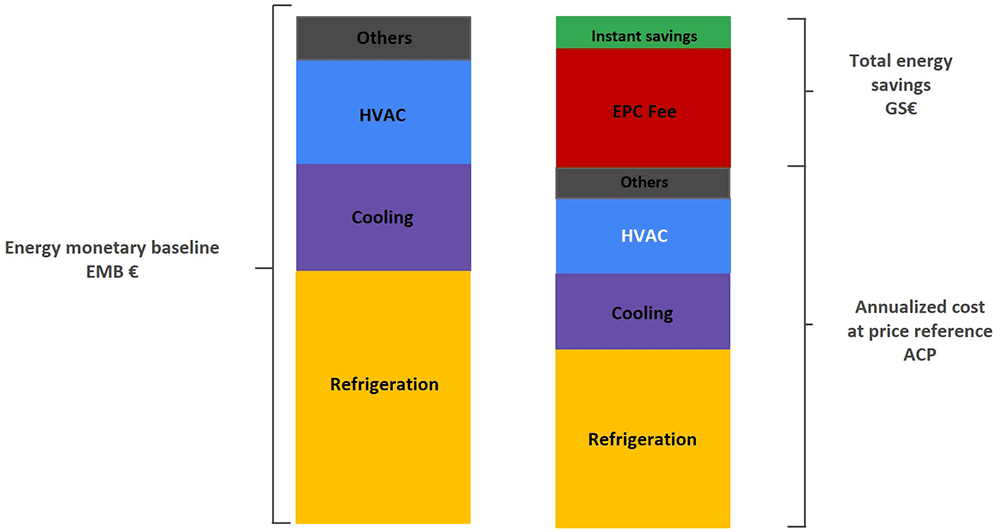
Figure 1. Cost for energy in a supermarket and overall cost of an EPC after renovation works.
3.2. Partnerships with technology providers
Technology leasing is a widespread model used in several industries. Usually, it’s done through an operating leasing of the equipment, where the lessee pays a periodic fee to the lessor, which offers continuous maintenance, guarantee, update and upgrade service. This type of contract is suitable for highly technological equipment or for systems with fast technological obsolescence, which need to be updated or changed frequently.
In the specific case of supermarkets, several equipment can be the object of a leasing contract, such as refrigerators, HVAC systems or even cash desks. Moreover, leasing can be applied to renewable energy systems such as photovoltaic plants. Different companies are now offering PV panels and components in leasing form instead of the traditional sale. Operational leasing offers numerous advantages such as:
No (or limited) upfront investment, only periodic leasing fees;
No need for financing the system with own or debt capital;
Tax deductions for the leasing costs;
Immediate benefit from the use of the good;
Typically, all-risk guarantee, as all maintenance and management risks are supported by the lessor who still owns the system;
Leasing allows lessee to enjoy all the benefits of the equipment without bearing the risk of ownership. Furthermore, up-front CAPEX is not required and may be employed for more business-related investments.
Operative leasing is suitable for technology equipment to supermarkets such as photovoltaic plants or refrigeration equipment. A supermarket can opt to install a photovoltaic system through an operative leasing contract. By doing so, the supermarket can benefit from the energy production without having to face a huge initial investment. The usual required CAPEX is so transformed in a periodic OPEX and the assets are not owned by the supermarket.
Moreover, technology leasing can also be implemented for the refrigeration technology used by supermarkets. Refrigeration is a key element for the operations of a supermarket and can become an attractive field of implementation for operative leasing. Operative leasing of refrigeration and cooling equipment is not a widespread practice yet, however there are companies offering specific energy saving air conditioning solutions dedicated to commercial buildings in the form of operative leasing.
3.3. As-a-Service schemes
As anticipated in Paragraph 2.2, as-a-service schemes refer to contractual agreements where a payment for a good is made according to the output it provides to the customers. In the supermarket sector, these could be applied to several technologies, such as: lighting (LAAS), energy (EAAS) and cooling (CAAS).
As previously described, LAAS is an innovative service regarding the illumination systems of a building. Since supermarkets must always pay attention to the customer experience, lighting is a key factor to showcase the products in order to attract the customers. So, there is the need for a complete reconsideration of how illumination is implemented and managed in the supermarket building.
Light-as-a-service model implemented in a supermarket building would require some essential elements, such as:
proper design and technical planning in order to guarantee the correct illumination and comfort for the users;
all the performance parameters, including energy efficiency, have to be agreed upon in the contract;
a measurement and verification protocol has to be put in place in order to check the achievement of the contractual obligations.
The service provider will oversee the maintenance and management of the lighting system for the contract lifetime. The LAAS provider shall provide material, equipment and labor to replace and maintain the lighting system and operate inside defined time intervention slots.
The energy-as-a-service scheme in the supermarket sector would, instead, regard the installation and maintenance of a renewable energy production asset (i.e. photovoltaic, solar thermal or small cogeneration/trigeneration system). In this scheme the EAAS provider installs the energy production plant at the supermarket building site, keeping the ownership of the systems, while the supermarket can benefit from a lower price electric energy and/or heating and from potential energy savings and emission reduction. Thus, the main difference between the EAAS and the leasing (of energy production systems) is that in the first case the energy produced is “owned” by the ESP and sold to the supermarket, while in the second case, as shown in previous paragraph, the energy produced is “owned” and self-consumed by the supermarket who pays a fixed annual leasing fee to the lessor. This affects, in particular, the allocation of price risk among the parties. The design, installation, maintenance and management of the systems is in charge of the service provider, who will perform a turnkey service. According to the type of technology installed, the ESP will obtain a return on the investment from the sale of energy to the supermarket. The financial return will depend on the difference between the unit production cost of energy (€/kWh) and the sale price, which must be lower than market price in order to make the contract convenient for the supermarket. In the case of solar systems (PV or thermal) unit production cost should take into consideration investment and O&M expenditure, while in case of CHP systems it should also include the cost for the fuel to run the cogeneration (natural gas or biomass). One method to calculate the cost of energy generation could be the Levelized Cost of Energy (LCoE), which is a standard method to assess an investment in an energy production asset and to compare different production methods and technologies.
The proposed scheme is thus assumed to be convenient for both the involved parties. The energy service provider will undertake a financially profitable investment, actually related to its business, benefitting from the high energy consumption of the supermarket, with a minimum guaranteed purchase level. On the other hand, the supermarket does not have to commit its own capitals in non-business-related activities, enjoys the cost benefits and can invest its own resources in business related activities. At the end of the contract, since the investment has been completely amortized by the ESP, the contract could foresee the transfer of the property to the supermarket for free or at a symbolic price.
Cooling-as-a-service (CAAS) is instead a contract where the payment is made according to the quantity of “refrigeration” provided to the systems by the service provider. In supermarkets, refrigeration is in fact one of the main final use of energy, thus representing a large share of the overall energy costs. In these contracts, the installed system is required to provide an agreed upon and verifiable amount of cooling at specific delivery points, thus the metering system for the refrigeration service is essential. The service offered by the cooling provider is then charged to the client according to the actual service and performance delivered, measured in terms of cooling capacity (tonnes of refrigerant) which are directly measured by the metering system installed by the service provider itself. CAAS is a solution more suitable for the construction from zero of supermarkets buildings compared to retrofit operations. This is because through a new and precise cooling system design the service performance can be better planned and assessed, delivering the highest possible efficiency. Table 1 shows a comparison between the different models.
Table 1. Comparison between PAAS schemes for supermarkets.
| LEASING | LAAS | EAAS | CAAS |
|---|
Contractual
obligation | Operative leasing of a good | Lighting quality and
performance | To produce and provide
energy to the user | Cooling quality, quantity,
reliability and performance. |
Suitable
technologies | HVAC
CHP
Refrigeration Renewables (incl. PV) | Lighting | PV and Solar thermal
CHP | Cooling
Refrigeration |
Services
included | Design
Installation
O&M
Remote control (if applicable) | Design
Replacement of old
lamps with new ones
O&M | Design/Permitting
Installation
O&M
Remote control
Energy supply | Design
Installation
O&M
Remote control (if
applicable) |
| Guarantees | Technical & energy performance
Repair/substitution | Lighting/energy
performance Repair/
Relamping | Energy price
Equipment performance
Repair/substitution | Heating/Cooling
performance
Repair/substitution |
| Payment | Down payment (usually max 20%)
Periodic fee according to
performance | Periodic fee, subject to
performance verification | Based on consumed
electricity
Take-or-pay
Margin sharing | Periodic fee according to
performance and availability |
| Suitable for | Supermarkets undertaking
renovation | Upgrading of lighting
system – not invasive
intervention | Stores of large
dimension with available
space | Complete renovation of the
cooling system. |
4. Leveraging on energy efficiency investment to enhance the relationship between supermarkets and local communities
Supermarkets play a key role in the local community, being in strict connection with the people living around a neighborhood. Customer loyalty is a great value for the supermarkets, that typically offer rewards (points, discounts, etc.) according to the expenditure or the purchase of selected products, encouraging the customers to keep on attending the same store or chain.
At the same time, being usually medium to large companies, supermarkets are very sensitive to environmental and sustainability topics. Most supermarkets have a CSR department and pay strong attention to the communication of actions, initiatives and projects related to sustainability, including use of renewable energy and energy efficiency.
In this context, matching these two aspects of the supermarkets activity, new opportunities could come up to strengthen the relationship with customers while developing concrete actions and investments in renewables and energy efficiency. One of these opportunities could be the crowdfunding, which can be deployed in several ways as will be described in Paragraph 4.1, while any activity of this kind, in order to be effective, must be communicated to the customers in the right way.
4.1. Crowdfunding schemes involving the customers
Crowdfunding can be seen as an interesting financing tool also for the energy sector11, not only for energy projects in developing countries but also for businesses in developed countries who can have access to different credit lines in order to invest in energy transformation. Several platforms are active in the sector and have proved to be effective in raising capitals for renewable energy and energy efficiency projects. Moreover, as it’s in the logic of the EU RED II, the energy sector is undergoing a decentralization process and becoming a network where people can be both consumers and producers, becoming active players in the energy transition. Thanks to crowdfunding, a business, a local authority or a community can not only raise the needed capital for pursuing renewable or energy efficiency projects, but also involve the citizens, whose return will not only be financial but also social and environmental.
Two main types of energy crowdfunding are assessed: equity and lending based.
Equity-based crowdfunding can be considered as a suitable model for financing projects, but not to engage customers and increase loyalty. In fact, this possibility requires investors to make a long-term commitment on an uncertain outcome. Usually, the proponent is a newly created entity, a startup, active in a very innovative and uncertain market. These intrinsic characteristics require a long-lasting commitment in the project and create uncertainty over the expected results of the investment. Such characteristics increase the risk of the investment, making it less attractive to risk-averse investors, but more attractive to rising innovative market enthusiasts. Such description seems not in line with a classic retrofit intervention, where duration and risks are identified. As an example, the Italian Supermarket chain NaturaSì has launched an equity crowdfunding campaign called “SìRicarica”, for the installation of E.V. charging points in the parking lots of their stores. However, even though the object of the campaign is strictly related to NaturaSì, the supermarket did not sponsor the campaign, keeping it always precisely separate from their core business. As reported before, the risk of such initiatives is higher compared to lending crowdfunding, and supermarkets may not want to figure as promoters of such risky investments. This way, investors are sought only among the typical users of equity crowdfunding platforms, who are more open to financing this kind of project, but not among the supermarket customers.
On the other hand, lending-based seems to be a more suitable crowdfunding model for promoting supermarket’s energy efficiency projects, also toward the customers. In fact, lending-based crowdfunding foresees the financing of a specific investment project, where cash flows for the investor can be defined easier and, most of all, are usually independent from the technical performance of the investment itself. Lending-based crowdfunding is in fact a form of debt for the project promoter and the remuneration depends on the capacity of the borrower to pay back the loan. In general, supermarkets are medium to large companies with good reliability and creditworthiness and this should encourage investors to subscribe to crowdfunding campaigns. However, no initiatives of this kind seem to be promoted by supermarkets directly, while there are examples of lending-based crowdfunding campaign launched by the ESCo in charge of the installation and operation of the new equipment in the supermarket.
Even though crowdfunding initiatives in their classical scheme and on a stand-alone basis may not be common among supermarkets, leveraging on crowdfunding in an innovative way could represent the key to connect with customers and increase loyalty. In other terms, the crowdfunding campaign should not be seen as a way to raise capital for the investment, but as an additional opportunity with special reward to be provided to the customers.
One option could be the integration between a lending-based crowdfunding campaign and the supermarket loyalty program. As an example, if a customer of the supermarket, holder of a loyalty card, decides to invest in the crowdfunding campaign promoted by the supermarket, he may receive an extra return on the investment or extra rewards from the supermarket (in the form of extra loyalty points, discounts, etc.). This is particularly true in the case of large supermarket chains that likely need no funding for financing the energy efficiency intervention and can thus share a large part of the benefits with their customers. Their goal would rather be to create a tight relationship with the customers and to start a project together, offering them the opportunity to get a high return on the investment.
Supermarkets could follow this example and involve their customers in the crowdfunding campaigns to offer them an opportunity for a green investment with an interesting return and/or reward. So, this could be promoted by the supermarkets with a double value proposition:
1. The promotion of an energy renovation or renewable energy investment, in line with the corporate social and environmental responsibility objectives;
2. The opportunity for the customers of the supermarket to benefit from a special reward or dedicated higher interest rate on a safe investment.
4.2. Activating new sustainable projects for local communities
Another strategy to involve customers is through the organization of territorial initiatives and events. The strategy should be prepared at neighborhood level, since, with some limited exceptions, neighborhoods are the places where the relationships between the supermarkets and their clients occur.
The main objective of the engagement strategy should be the creation of a loyalty scheme between local communities (citizens and supermarket clients) and supermarkets operators. There are plenty of examples to reach this goal: supermarkets usually support projects and initiatives through sponsorship or donation activities, as exemplified by the “We Love Nature campaign”12 by Alì supermarket in Padova. This campaign donates trees to the territory where the supermarket is located; thanks to the collaboration of the customers the supermarket was able to plant over 28,000 trees in the last years. The project works easily: customers can use their loyalty points to finance the trees planting, while the supermarket takes care of the rest.
Supermarkets can also organize events on the territory to create a stronger connection with local communities, conveying messages of sustainability. Deeply linked to the territory in which it operates, the Italian supermarket chain Alì is engaged in numerous charitable, social, sports and cultural initiatives. On an annual basis, it activates the Premialì competition. Alì customers can accumulate points in the loyalty card and support various associations and non-profit organizations of the territory. The supermarket usually doubles the amounts coming from the customers to convert their “points” into donations to charities and research institutions.
Supermarkets are activating numerous projects for schools as well. NaturaSì, in Padova, is strongly committed to spreading new values in agriculture respecting the land and offering healthy food. In this regard NaturaSì dedicated a project13 to primary and secondary schools that deals with issues such as sustainability, organic and biodynamic agriculture, the importance of feeding adequately with a simple, accessible, and fun language. Thanks to videos, tutorials and educational cards, children and young people can acquire new notions and experience the importance of taking care of Earth. Schoolteachers can sign up to participate in the project being provided with all the educational material by NaturaSì. After the teaching lessons, children can move from theory to practice: every year the classes are involved in the creation of handworks to be published in an online gallery, being awarded with school prizes.
4.3. Communicating the sustainability of supermarkets as physical places where purchases take place
The attention of supermarkets to the environment can be reflected in the design and refurbishment of their stores. Over time, supermarkets have put in place several initiatives, giving particular attention to the production of energy from renewable sources, the energy efficiency of processes and technologies installed. In most cases, however, it can be overly complex to significantly improve the structural parts of buildings or even slightly change their structures.
In the following list there are some of the most common measures that supermarkets are implementing and that can be communicated to customers to increase the awareness on the sustainability of stores, as physical places where purchases take place:
Provide the insulating doors to the refrigerators.
Use less plastic or not recycling packages.
Install devices to recover heat waste from refrigeration systems, to be used for onsite hot water production.
Produce electricity with renewable sources (e.g., PV on rooftop).
Install the LED light systems.
Promote the sustainable mobility through the installation of e-charging points in the parking lots.
Use of vegetation and shading in parking lots
Some measures are more attractive than others for the customers: the more they are visible, the more are appreciated. There are many opportunities to give visibility to these interventions and increase the awareness of the clients, e.g. through the application of stickers or the posting of communication panels. For instance, the retrofitting of internal lighting or the installation of e-charging points can be easily communicated and branded.
Supermarkets must carefully manage the available choices searching for the optimal trade off between the costs of measures and the impact/attractiveness that they will be able to produce. When a measure is not easily visible for customers, good communication strategies can be developed in order to inform and make them aware of the work done.
One of the main objectives of supermarkets in implementing energy efficiency measures and in promoting RES production is, for example, the reduction of CO2 emissions. In this case supermarkets must be able to quantify the amounts of emissions saved and should communicate to local communities these results, coordinating the effort with the Local Authority.
4.4. Communicating the sustainability of purchases
Communicating sustainability to customers is a fundamental step for supermarkets, both to raise awareness on this topic and to create an alliance in the path towards a more sustainable planet.
To promote healthy eating and protect the environment in which they operate, supermarkets can provide an increasingly sustainable assortment of products from an ethical, social, and environmental point of view. To achieve this goal, supermarkets use well-known certifications (like Bio, Vegan, Fairtrade etc.), which guarantee the environmental and social sustainability of the products. They are also committed to provide clear and transparent information, with the aim of fostering informed purchasing choices.
Another way to pursue a sustainable supermarket is the introduction of unpackaged products, in order to push customers to buy only what they actually need, to produce less plastic and to ensure cheaper goods keeping steady their quality. Italian supermarket chain NaturaSì, as an example, has already added bulk and water dispensers in its stores.
5. Putting it together in a hybrid approach and service offerings to supermarkets at the brand and franchise levels
Super-Heero is about informing, empowering and motivating supermarkets, citizens and communities to make energy efficiency renovations in win-win scenarios. The end result is not a pre-determined product or service, but a process to develop the intervention(s), financing and contracting approach that is best fit for any particular chain or site location.
5.1. Brand owned vs. franchises vs. co-owned store locations
Store ownership can change the underlying value proposition offered by the Super-Heero approach. At the brand level, the development of energy management programs and financing is likely less of a pain point and engagement with the community at large and fidelity programs is likely more interesting. At the franchise level, technical assistance to determine appropriate energy efficiency measures and financing are likely pain points and main drivers whereas wider scale initiatives at the community or brand level are further away. The governance structure (brand owned, vs. entrepreneur owned vs. co-owned) can affect the use / availability of local or national incentives on various types of measures. Franchising is a partnership, and it is a result of the project that it is found that the Super Heero approach can be a tool to help brands and franchise owners to communicate, build capacity and conduct energy efficiency actions.
5.2. Store typologies
All stores can benefit from energy efficiency and sustainability actions. When communicating about the Super-Heero approach, it is never one thing that is offered and never one store typology that is targeted. It is sustainability for supermarkets on the territory and also engaging citizens. In carrying out this mission, three main types of supermarket typologies are present. Superstores on the outer ring, periphery stores of moderate size and boutique stores in urban centres. Each of these typologies can be further categorized into new, semi-modern or old. With this acknowledgment of typology, characterization and further coupled to the type of ownership structure, it then becomes a process to design the technical interventions appropriate for any given location and best-fit methodology to carry it out.
5.3. Super-Heero Process
Given different typologies, ownership structures, characterization, and people / stakeholders involved that want to satisfy different objectives important to them, Super Heero has developed a five-step process that can adapt to the scenario present at any particular location and which can result each time in a unique or customized solution (Figure 2). Step 4 can be considered optional or dependent upon when crowdlending is utilized. The project has had a specific focus on crowdlending for its ability to directly engage shoppers and citizens on the territory and has developed a crowdlending platform dedicated to this purpose (www.super-heero.com). Generalized, Steps 1–2 are engaging supermarkets, Steps 3–4 are engaging people, and Step 5 closes work also with the intent to communicate with all stakeholders to celebrate the work done in Steps 1–4.
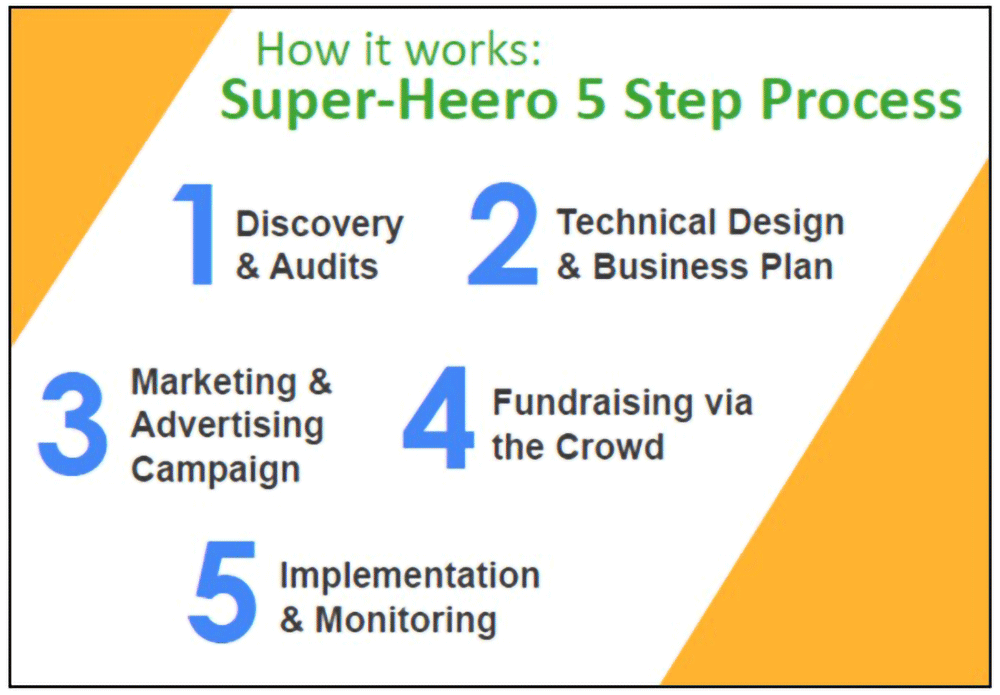
Figure 2. Super Heero Process.
5.4. First Implementation
The first implementation of the Super Heero approach involved a franchised location of NaturaSì in Padova, Italy where a 23.8 kWp photovoltaic system was installed on a recently renovated store location (see Figure 3). The financing campaign was designed such that the brand, franchise and crowd each contributed to raising the funding necessary for the project. R2M Solution acted as the project “proponent” or general contractor establishing the relationship with the crowd, securing permissions from the building owner, collecting financing from all parties and carrying out the works. Contractually, a 7-years leasing agreement has been utilized with protective clauses on energy pricing and contract transfer in the event the franchise owner transfers ownership back to the brand. Crowd investors are remunerated in one year. The campaign was promoted by the brand, franchise owner, Super Heero project, Comune di Padova and R2M Solution. In this particular case, Super Heero facilitated collaboration between the parties and reduced risks related to ownership, pricing, transfer and financing.
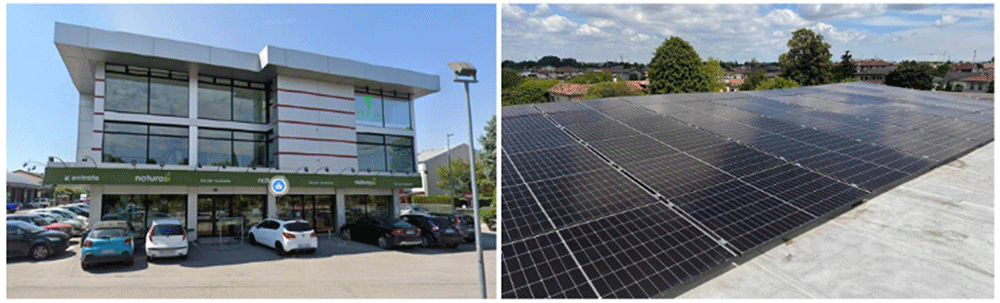
Figure 3. Super-Heero first implementation (Padova, Italy).
5.5. Second Implementation
The second implementation of the Super Heero approach involved directly owned and run store of NaturaSì in Pordenone, Italy, where a 83kWp photovoltaic system is going to be installed by summer 2023 (Figure 4 shows the building and the rendering design of the PV plant). The financing campaign was designed such that the brand and crowd each contributed to raising the funding necessary for the project. As for the first implementation, R2M Solution acted as the project “proponent” or general contractor establishing the relationship with the crowd, securing permissions from the building owner, collecting financing from all parties and carrying out the works.
Financial aspects of the campaign were almost the same as the first implementation, but in this case the store decided to also reward the investors with a coupon to have a €5 discount on €30 spent in the store.
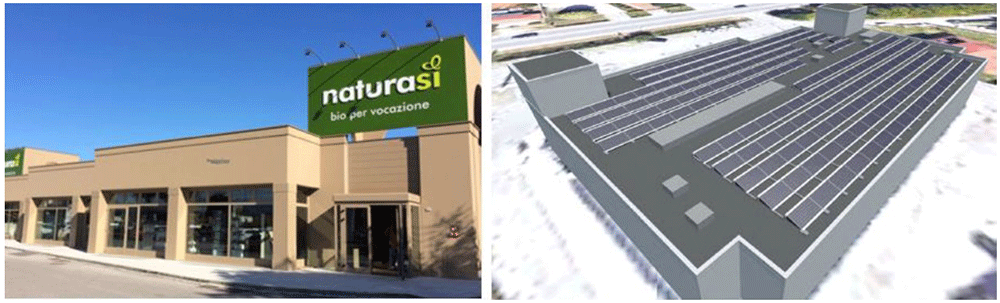
Figure 4. Super-Heero second implementation (Pordenone, Italy).
6. Conclusions
This paper presented methodologies and models developed to ease and foster the deployment of energy efficiency investments in supermarkets, created within the frame of Super-Heero project funded by the European Commission in June 2020 and running for 36 months.
The methodology defined by the Super-Heero project has a strong potential to unlock energy efficiency intervention and, at the same time, empowering the relationship between supermarkets and customers. Leveraging on energy efficiency and emission reduction, as a common goal, can support the establishment of a long-term relationship and loyalty of customers, who can be part of the transition process, while also getting a financial reward for the investment. From the supermarket perspective, the investment and related promotion campaign represents an important opportunity to increase their image and improve their corporate social responsibility.
To date, two crowdfunding models for the installation of a PV plant on supermarkets have been tested on case study building located in the Padua and Pordenone areas (Italy), which is part of the demonstration activities of the research project. The investments, done through an ESCo, will be partly financed by the crowd. Investors who are also owners of a loyalty card of the supermarket chain will get additional rewards in terms of higher interest rate on the investment, other sustainability-related benefits such as free tickets to participate to local events and vouchers for discount in the stores.
For this reason, authors believe that the model is a valuable instrument to support the acceleration of the renovation process of supermarket buildings, as well as increasing their corporate image and relationship towards their customers.