Quantitative results
To address RQ1, we conducted a repeated-measures ANOVA to examine the perceived importance of music, with aspect of love (intimacy, passion, commitment) and relationship phase (attraction, building, maintenance) as within-subject factors. This analysis revealed significant main effects for both aspect, F(1.39, 240) = 195.75, p < .001, ηp² = 0.53, and phase, F(1.62, 280) = 13.44, p < .001, ηp² = 0.07, and no interaction effect, F(3.56, 616) = 0.87, p = .475, ηp² = 0.01. Pairwise comparisons using Bonferroni correction indicated significant differences between all relationship aspects (p < .001). Regarding relationship phases, there were no differences between the attraction and building phases (p = 1.00), but there were differences between the maintenance phase and both the attraction and building phases (ps < .001). In a second ANOVA, the perceived general role of music did not differ across relationship phases, F(1.85, 319.2) = 0.77, p = .462, ηp² < 0.01. As shown in Figure 1, participants reported a high general role of music in all three phases (M = 4.00, SD = 0.89). The importance of music for the three components was higher in the attraction (M = 3.61, SD = 1.08) and building (M = 3.59, SD = 1.02) phases than in the maintenance phase (M = 3.31, SD = 1.05), while it appeared to be most important for intimacy (M = 3.96, SD = 0.97), followed by passion (M = 3.76, SD = 0.99), and commitment (M = 2.79, SD = 1.18).
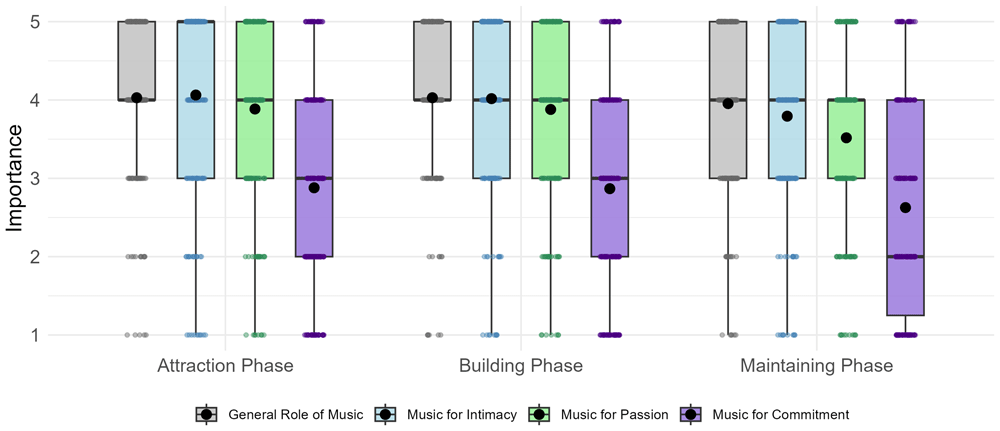
Figure 1. The importance of music across the three phases of romantic relationships.
Note. Boxplots summarise the distribution of the data, while the responses of individual participants are shown as jittered points. Mean values are indicated by larger black circles. Questions regarding the general role of music, as well as its perceived contribution to strengthening the three aspects of love, were measured on a scale from 1 (not at all) to 5 (totally).
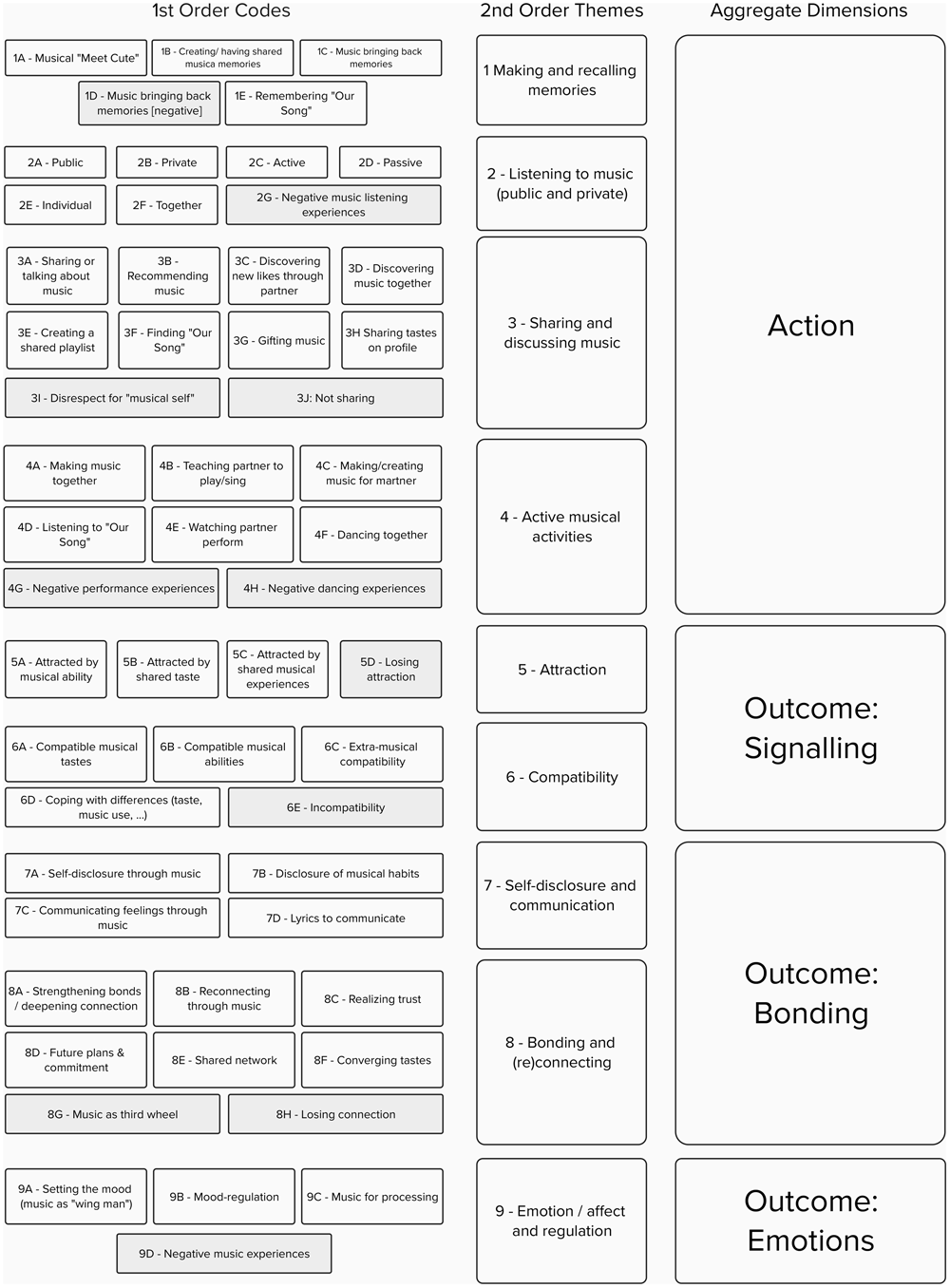
Figure 2. Full list of codes and higher order themes.
Note. Negative valence codes are shown in grey. Code descriptions can be found in the extended data (see OSF repository).
To explore whether music-related individual traits moderate role of music in romantic relationships (RQ2), we correlated musical expertise and sensitivity to music-related reward with the perceived overall role of music and its contribution to strengthening the three aspects of love (aggregated across phases). As an exploratory analysis, we also included demographics (gender, age, and education) in the correlation analysis. As detailed in Table 2, sensitivity to musical reward was positively associated with all outcomes except commitment, whereas musical expertise correlated only with the overall role of music. Table S1 in the Extended Data (see OSF repository) shows the same correlations for all BMRQ subscales. The strongest correlations with the overall role of music and its contribution to the three aspects of love appear for the social reward subscale, while the weakest correlations appear for the sensory-motor subscale.
Table 2. Correlations between the role of music overall and in contributing to the three aspects of love (intimacy, passion, commitment) and personal characteristics, including means and standard deviations.
| Variables assessing personal characteristics |
|---|
| Variables assessing the role of music | Musical expertise
(M = 0.00, SD = 0.83) | BMRQ Total Score
(M = 4.04, SD = 0.46) | Gender::female | Age
(M = 27.18, SD = 9.27) | Education
(M = 4.77, SD = 1.17) |
|---|
| Overall role of music | .22* | .47*** | .02 | .07 | -.01 |
| Music strengthening passion | .09 | .38*** | -.06 | .04 | -.06 |
| Music strengthening intimacy | .03 | .34*** | .03 | .03 | -.05 |
| Music strengthening commitment | .14 | .25** | -.04 | .18 | .06 |
As the BMRQ showed moderate correlations with all outcomes, we conducted an additional analysis to examine whether music-related reward sensitivity influenced the importance people attach to music across different relationship phases and aspects of love. Specifically, we ran a repeated-measures ANOVA including the BMRQ group (low versus high, based on a median split) as the between-subjects factor. The analysis revealed significant main effects of love aspect (F(1.38, 238) = 197.17 p < .001, ηp2 = 0.53) and phase (F(1.62, 279) = 13.35, p < .001, ηp2 = 0.07), as well as a main effect of BMRQ (F(1.00, 172) = 23.21, p < .001, ηp2 = 0.12). These results suggest that individuals with higher BMRQ scores consistently rated music as more important than those with lower scores, across all phases and love aspects. There were no significant interactions between BMRQ and phase (F(1.62, 279) = 0.01, p = .991, ηp2 < 0.01) or between BMRQ and aspect (F(1.38, 238) = 1.76, p = .184, ηp2 = 0.01). Thus, the relative pattern of music's contribution to different love aspects across phases was unaffected by BMRQ. Figure S1 in the Extended Data (OSF repository) illustrates these results, showing music importance across phases and love aspects separately for low and high BMRQ groups.
In response to additional 5-point scale questions, participants indicated that they typically discussed their musical preferences with their (potential) partners (M = 4.28, SD = 0.86) and placed moderate importance on their partner's musical taste (M = 3.52, SD = 1.06), but less importance on their partner's musical ability (M = 2.19, SD = 1.14). On average, participants tended to have songs that they considered defining their relationships with (M = 3.70, SD = 1.37). Overall, the participants did not perceive musical compatibility as more important than compatibility in other leisure activities (M = 2.54, SD = 1.05). Consistent with findings regarding the role of music in romantic relationships, musical expertise was positively correlated with talking about preferences and placing importance on a partners’ musical ability, while musical reward was associated with all five additional questions (see Table S2 in the Extended Data (OSF repository) for more details).
Qualitative results
Out of 174 participants, 147 answered at least one of the three open-ended questions. Responses were provided by129 participants for the attraction phase, 119 for the building phase, and 103 for the maintenance phase, resulting in a total of 351 coded responses. Qualitative template analysis, as described in the Methods section, yielded 55 distinct codes grouped into nine higher order themes (making and recalling memories, listening to music, sharing and discussing music, active musical activities, attraction, compatibility, self-disclosure and communication, bonding and (re)connecting, emotion/affect, and regulation) and two aggregate dimensions (action and outcome), as shown in Figure 2. We recognise that readers may be surprised to see 'memories' categorised as an action rather than an outcome code. Unlike our outcome codes, which reflect emotional or relationship-related processes, the theme 'memories' occupies a somewhat intermediate position. We have placed it in the action dimension because it primarily refers to the active process of creating and recalling memories in later phases of a relationship, which can then lead to emotional or relational outcomes.
Inter-coder reliability was substantial, with κ = 0.62, z = 104, p < .001 across all codes and phases. Agreement was similarly high for the attraction (κ = 0.62, z = 60.27, p < .001), building (κ = 0.60, z = 58.65, p < .001), and maintenance (κ = 0.63, z = 61.65, p < .001) phases. Tables S4 and S5 in the Extended Data (see OSF repository) further show that all Kappas for second-order themes were consistently above 0.40, indicating at least moderate agreement (M = 0.57, SD = 0.12, range = 0.40 - 0.65). Of the 55 first-order codes, 76% showed at least moderate agreement (> 0.40), and 96% achieved at least fair agreement (> 0.20) (M = 0.58, SD = 0.21, range = 0.12 - 1.00). The code with the lowest agreement was 5C ('Attracted by shared musical experiences', κ = 0.12), followed by 6C ('Extra-musical compatibility', κ = 0.19).
Given the high level of agreement between the coders, we present the qualitative responses based only on those codes on which both coders agreed, to increase the robustness of the findings. Consequently, only the codes that both coders identified as present in a participant's response were included in the analysis. Below, we present the frequency with which each aggregate dimension, second-order theme and first-order code was referenced, expressed as a percentage of participants who mentioned it at least once, either across all three open-ended questions or within a given phase.
Aggregate dimensions: Action and Outcome. Regarding the two aggregate dimensions of action and outcome (the latter subdivided into bonding, signalling, and emotions), 72.4% of participants mentioned musical actions in at least one of their responses, which included activities such as listening to music, sharing music, and creating music. Bonding as an outcome, involving the themes connection/reconnection and self-disclosure, was mentioned by 39.7% of participants. Signalling was mentioned by 40.2% of participants and referred to indications of attraction (e.g., being attracted by the musical ability of a potential partner) or compatibility (e.g., finding out about shared musical tastes or extra-musical compatibility). Emotion as an outcome appeared in 13.2% of participants’ responses and involved (co)regulation of emotions, such as setting the mood or processing emotional experiences.
Across all relationship phases, musical actions show a consistent presence, being present in 58.0%, 56.9%, and 44.8% of participants’ responses in the attraction, building, and maintenance phases, respectively. Similarly, bonding was observed across all phases with 18.4%, 19.0% and 19.5% in the attraction, building and maintenance phases respectively. Signalling was most pronounced in the attraction phase (27.0%), followed by the building phase (14.4%), and maintenance phase (13.2%). Finally, emotions were less pronounced in all phases, with 7.5%, 5.2%, and 2.9% in the attraction, building, and maintenance phases, respectively.
Second-order themes. The heatmap in Figure 3 provides an overview of theme frequencies, based on the percentage of participants who mentioned codes belonging to each theme, both overall and across phases. Overall, the most frequent theme was listening to music in public and private contexts (Theme 2), followed by sharing and discussing music (Theme 3) and engaging in active musical activities (Theme 4). We also observed variations in the prominence of themes across phases. For example, 'listening to music' increased in frequency from the attraction phase to the maintenance phase, while 'sharing and discussing music' was more common in the attraction and building phases and decreased in the maintenance phase. The theme of 'making and recalling memories' (Theme 1) was most prevalent in the attraction and, to a lesser extent, maintenance phases, where participants referred to creating shared memories early on and recalling them later. These participant responses include quotes such as, “Having that song as a reminder of all the good in the relationship and why you love the other person, having positive memories tied to that and other songs that are brought up when you listen to them[...]” (Participant 116), and
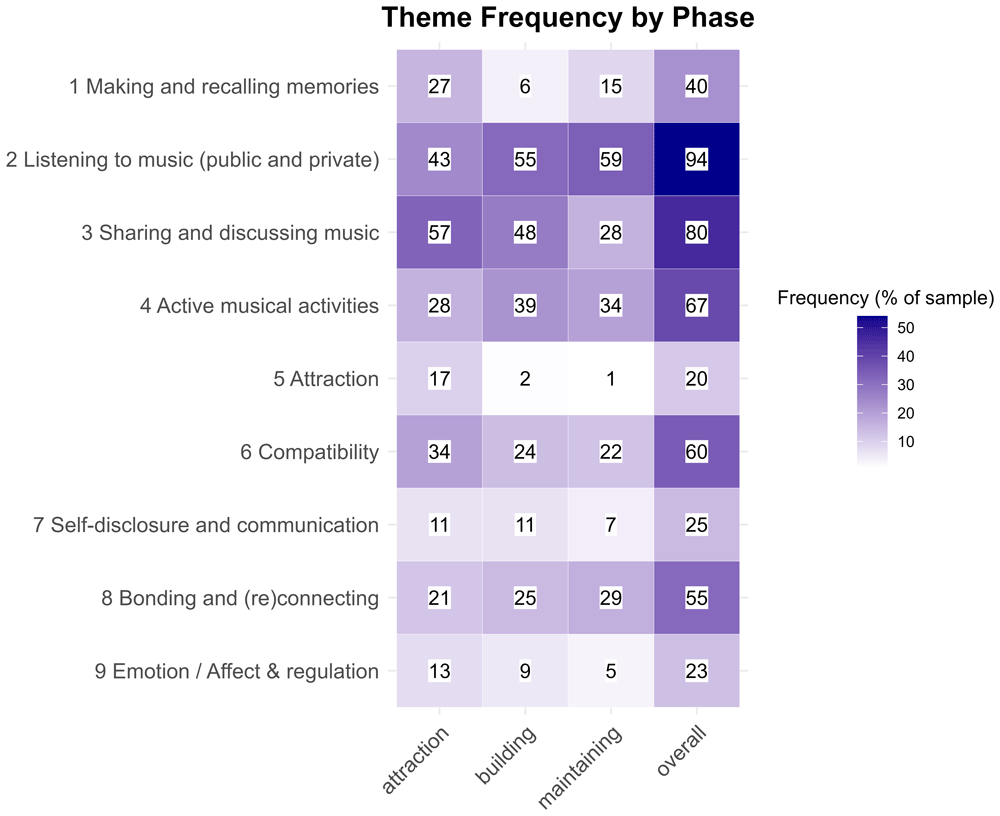
Figure 3. Frequencies of second-order themes across relationship phases, shown as percentages of participants (color) and absolute participant counts (numbers).
“Certain songs discovered and consumed during that period (especially when they were relationship pop [songs]) connect with that time and reinforce the feeling of attraction. I've always felt that the songs I've consumed a lot tie in with important events in my life during the listening period, as well as the seasons.” (Participant 168)
Feelings of attraction through music were the most prevalent in the attraction phase (Theme 5), whereas references to compatibility through music (Theme 6) were present in all phases, but again mostly in the attraction phase. The themes 'Self-disclosure and communication' (Theme 7) and 'Emotion/affect & regulation' (Theme 9) were more prominent in the early stages of the relationship. Regarding self-disclosure, participants detailed instances in which they revealed personal information to their partners, including their musical preferences and experiences, and used songs or song lyrics to communicate their feelings and intentions to their partners. Quotes exemplifying this theme include, “we shared playlists of music that we like. also we exchanged playlists with music in our native languages, as we are an international couple (finnish and spanish).” (Participant 17), “You can also ask which songs you listened to as a child and find out something about your family environment.” (Participant 326), Regarding emotion/affect & regulation, participants wrote about experiences in which music was used either intentionally or unintentionally to set the mood or affective tone while together or independently. Examples of this theme in participants’ responses include quotes such as,
Many participant responses in which this theme was observed discussed the importance of music before, during, and/or after sex. These participants’ responses shared ideas such as:
“I think that the choice of music is extremely important during sex. In my experience, the type of music has a significant effect on sex and therefore also determines whether it vibes. What I've also noticed personally in this context is that "more relaxed" and "romantic" music only feels good with people you really like. So music can also be an indicator of how comfortable I feel with a person and how vulnerable I can be.” (participant 238)
First-order codes. In the action dimension, three of the most frequent codes were related to listening to music: listening to music together (2F, n = 88, 15.6%), listening to music in public (2A, n = 52, 29.9%) and listening to music in private (2B, n = 37, 21.3%). In addition, 28.2% of participants mentioned sharing and talking about music (3A, n = 49), and 19.5% mentioned making music together (4A, n = 34). In the outcome dimension, the most prevalent codes were compatible musical tastes (6A, n = 37, 21.3%) and strengthening bonds/deepening connections (8A, n = 33, 19.0%), followed by realising incompatibility through music (6E, n = 16, 9.2%).
Table 3 provides an overview of the top three codes in each relationship phase, separately for the action and outcome dimensions. Across all phases, the most common action codes consistently involve listening to music together (together, in public, and in private; 2F, 2A, 2B), whereas the outcomes of musical activities vary according to the relationship phases. In the attraction and building phases, participants primarily mentioned compatibility (e.g., having compatible tastes or musical abilities, 6A) and to a smaller extent incompatibility (e.g., finding out to have different tastes, 6E), followed by deepening bonds through music (8A). In the maintenance phase, coping with differences becomes more prominent (e.g., finding a way to deal with differences in musical preferences, 6D), as do topics such as incorporating music into future plans and commitments (e.g., planning dance lessons or choosing of music for a wedding, 8D).
Table 3. Most prevalent (top three) first-order codes across relationship phases.
| Code | Frequency | Percentage
(by phase) |
|---|
| Attraction Phase | | |
| Action | | |
| 2F - Together (music listening) | 40 | 23.0 |
| 3A - Sharing or talking about music | 38 | 21.8 |
| 2A - Public (music listening) | 17 | 9.8 |
| Outcome | | |
| 6A - Compatible musical tastes | 25 | 14.4 |
| 8A - Strengthening bonds / deepening connection | 17 | 9.8 |
5A - Attracted by musical ability & 5B - Attracted
by shared taste | 8 | 4.6 |
| Building Phase | | |
| Action | | |
| 2F - Together (music listening) | 46 | 26.4 |
| 3A - Sharing or talking about music | 20 | 11.5 |
| 2A - Public (music listening) & 4A - Making music | 19 | 10.9 |
| Outcome | | |
| 8A - Strengthening bonds/deepening connection | 17 | 9.8 |
| 6A - Compatible musical tastes | 14 | 8.1 |
| 6E - Incompatibility | 8 | 4.6 |
| Maintaining Phase | | |
| Action | | |
| 2F - Together (music listening) | 53 | 30.5 |
| 2A - Public (music listening) | 35 | 20.1 |
| 2B - Private (music listening) | 22 | 12.6 |
| Outcome | | |
| 6D - Coping with differences | 12 | 6.9 |
| 8A - Strengthening bonds/deepening connection | 8 | 4.6 |
6E - Incompatibility, 8D - Future plans &
commitment, & 8H - Losing connection | 7 | 4.0 |
A more detailed heat map of the frequency of all 55 first-order codes across the relationship phases is provided in Figure 4.
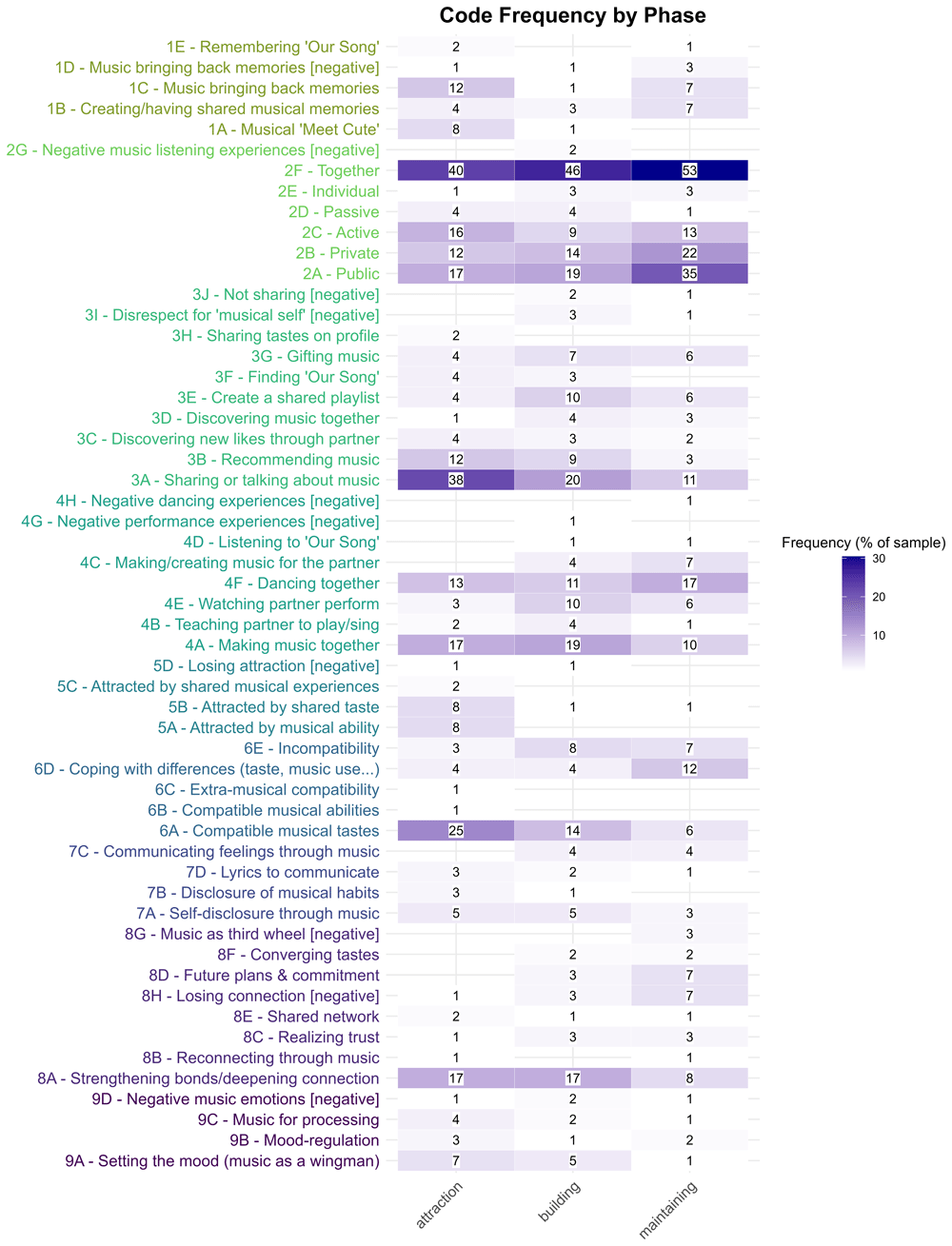
Figure 4. Frequencies of first-order codes across relationship phases, shown as percentages of participants (color) and absolute participant counts (numbers).
Note. The text colors of the codes indicate the nine higher order themes to which the codes were assigned: 1 = making and recalling memories, 2 = listening to music (public and private), 3 = sharing and discussing music, 4 = active musical activities, 5 = attraction, 6 = compatibility, 7 = self-disclosure and communication, 8 = bonding and (re)connecting, 9 = emotion/affect and regulation.
Negative experiences. Overall, the majority of participants (n = 139, 79.9%) described positive experiences with music, whereas a smaller proportion (n = 36, 20.7%) reported negative experiences. Negative experiences were most frequently mentioned in the maintenance phase (11.5% of the sample), followed by the building phase (9.2%) and the attraction phase (4.0%). In the maintenance phase, these negative experiences most often concerned realising incompatibilities (4.0%, 6E; e.g., discovering differing musical tastes) and a loss of connection (4.0%, 8H; e.g., spending less time together due to one partner being too absorbed in music). Quotes from participants' responses exemplifying these negative experiences shared ideas such as,
“Different music preferences led to us growing apart (he never really wanted to listen to music, but it was important to me) - even with the songs we listened to, when we listened to music we became estranged (I think) because we only ever listened to his songs.” (Participant 370).
Similarly, both in the building phase and attraction phase, the most mentioned negative code was realizing incompatibility (6E), with 4.2% of participants mentioning the code in the building phase, and 1.7% of participants mentioning it in the attraction phase.
Co-occurrence of codes. To explore whether certain action and outcome codes were frequently mentioned together, we conducted a thematic co-occurrence analysis following the method outlined by Scharp (2021). As shown in Figure 5, outcome codes belonging to compatibility (Theme 6) and bonding (Theme 8) mostly co-occurred with action codes. Of the compatibility codes, compatible tastes (6A) showed the most co-occurrences, specifically listening to music codes (2F together, n = 19; 2C active, n = 7; 2A in public, n = 7), sharing music (3A, n = 15), and actively making music (4A, n = 5). Participant responses illustrating these co-occurrences included descriptions of actions such as, “Discussing musical preferences, and finding common interests, setting up a date location based on mutual musical interests (e.g. jazz bar), meeting up at a festival.” (Participant 110). The codes belonging to bonding (Theme 8), specifically strengthening bonds (8A), mostly co-occurred with listening to music (2F, n = 8) and sharing music (3A, n = 8). Responses such as, “Going to concerts together and generally listening to songs that both partners like was a nice experience. I feel more connected to my partner when he has at least some idea of what music I like [...].” (Participant 245- 8A and 2F) demonstrate the co-occurrence of these codes.
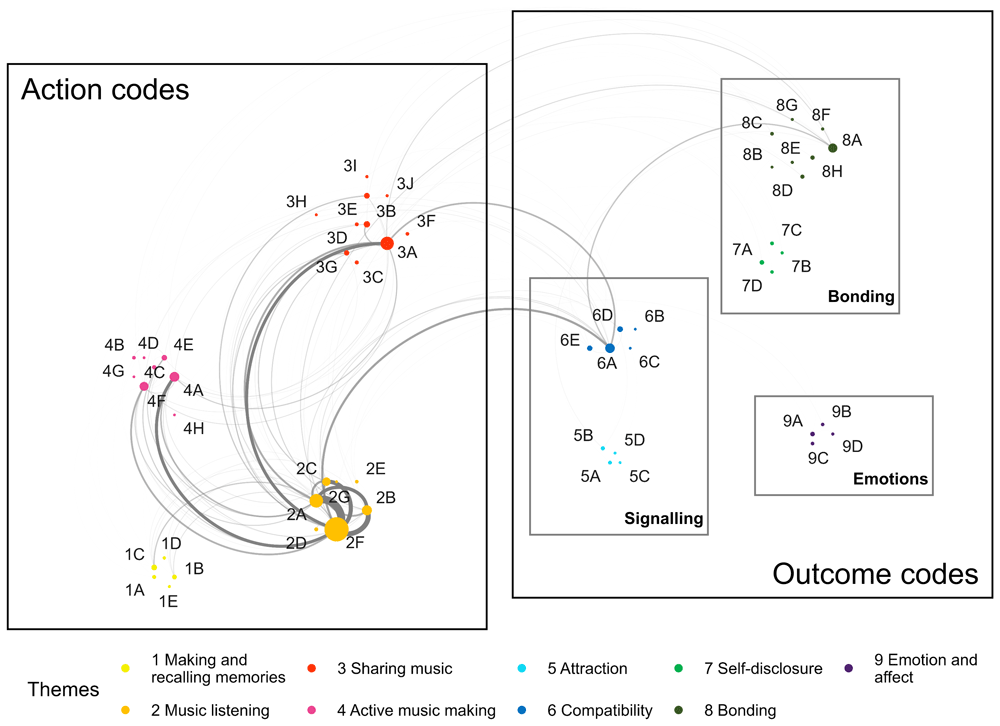
Figure 5. Co-occurrences of action and outcome codes across all relationship phases.
Circle sizes indicate the frequency of individual codes, and line thicknesses indicate how often the two codes (absolute numbers) were mentioned in the same responses.
A full matrix of co-occurrences overall and separately by relationship phase can be found in the Extended Data (see OSF repository).