Following this, a short introduction on the importance of each specific layer for the cross borders interoperability of the EV charging infrastructure is made. Furthermore, the identified minimum requirements within each layer are displayed together with an explanation of their role in achieving interoperability, possible barriers that hinder their complete fulfilment and, if existing, concrete solutions to overcome these barriers are proposed. Baseline for the development of the minimum requirements are the results of INFRA. However, these have been updated, and some new requirements have been added and merged with them.
As already mentioned, all layers are interconnected. This means that, while some technical and semantical essential aspects to the interoperability of the charging infrastructure are identified and described in the respective layer, they are also mentioned in the legal layer because they need to be foreseen in the legal instruments at EU level in order to achieve a charging infrastructure with unified characteristics in all EU member states. Thus, they are also briefly mentioned in the legal layer.
3.2 Minimum requirements within the specific layers
The specific layers (the technical, the semantic and the legal) contain the aspects that condition interoperability in a practical way. Therefore, the readiness status of science and politics to achieve the interoperability of the EV charging infrastructure was analysed in INFRA. For this, the guidelines and recommendations elaborated in the INFRA deliverable have been summarised and used as baseline for this paper in form of minimum requirements. Additionally, new insights on the developments within each layer in relation to different aspects have been added to the respective requirements. The information from the INFRA deliverable and the information from the desk research have been therefore merged. Nevertheless, every paragraph has a footnote that indicates weather the input comes from the INFRA deliverable or it is the author´s own input. Information from the INFRA deliverable is either cited as “Nowack et al. (2021)” or marked as such in a footnote.
3.2.1 Technical layer. Within the technical layer, the literature about the essential technological conditions (hardware) to achieve the interoperability of the charging infrastructure of EV across the EU was analysed. In this sense, the results from the INFRA deliverable were summarized (as mentioned in Section 2) in three “minimum requirements”31 (see Figure 3). Additionally, some further desk research on the development and status of these technologies and further technological applications that condition interoperability has been conducted. The results of INFRA have been systematised as follows and have been complemented with information resulting from the desk research (for further information on the authorship see citations and footnotes).

Figure 3. Summarised minimum requirements of the technical layer on basis of INFRA (Interoperability Framework) input.
Own presentation.
The first minimum requirement is related to the energy supply and the metering devices of the charging points. In this sense, the prerequisites for the physical connection of the charging points to the distribution grid and the requisites on the location of the measuring devices established by local grid and metering point operators must be observed. There are standards and Technical Connection Rules (TCR) for the connection to the grid and rules for the measuring device’s location on regional, national, and international level that need to be complied. All these issues, together with potentially necessary grid extensions should be identified at the early stages of the planning process32.
The use of uniform charging plug components33 (charging plugs standards) is the second minimum requirement for interoperability in the electromobility sector within this layer. There already are standards in place for these plugs at international and at European level. In this sense, the use of “Type 2 sockets or cables for AC charging points and Combo 2 sockets or cables for DC charging points”34 is already a requirement at European level and was established through Annex II of the Alternative Fuels Infrastructure Directive (AFID)35. For more information about the AFID see section 4.2.3 dealing with the legal layer36.
The third minimum requirement deals with plug components for Light Electric Vehicles (LEV)37 charging38. Thus, the use of standardized plug components is of high importance. However, unified standards have not been established yet at every level and each provider uses its own plug components.
There are plenty of other charging solutions next to self-reliant solar-powered battery charging scheme for LEVs39 or onboard charger (OBC)40. Plenty of experiences have already been made on the difficulties that the lack of initial standards causes for the acceptance and access of new EV to the charging infrastructure. Thereafter, special and concrete requirements for LEVs must be quickly integrated into EU legislation. An example is the introduction of small three– or four-wheeled electric vehicles (SEVs)41, that is currently being discussed and is, again, leading to new technical challenges for the EV charging infrastructure42.
The same applies to wireless charging. Several different technologies for wireless charging already exist43 and this kind of EV charging will probably incur a complex situation in the next years since there are no requirements established for the technical components for wireless charging yet (technology is still in development). These Wireless Electric Vehicle Charging Systems (WEVCS) are currently rare in most countries and the discussion is mostly based on the techno-economic aspects44. This fact has the risk that this technology remains as a “niche product”45 because it is not interoperable. However, it could foster the discussions about smart road concepts46 and more hard- and software applications on street.
The fourth minimum requirement consists of the implementation of a smart metering infrastructure47, which’s importance is already mentioned in the AFID48. Smart meters are considered as an improvement of the public charging points that allows to monitor the energy flowing process and gives the user the possibility start and stop the charging process in order to save energy49. Among other things, smart meters could track and submit the charging information to the supplier to ensure accurate bills. However, for smart meters to be able to operate accurately the interoperability of this technology needs to be guaranteed across the EU.
In conclusion, the technical possibilities are growing rapidly and technological developments occur on a daily basis. Therefore, the technological development in matters of interoperability needs to be closely followed. On the other hand, the adoption of minimum universal requirements for components of EV at early stages is very important to ensure interoperability within the technical layer.
3.2.2 Semantic layer. The semantic layer contains the communication aspects between service providers (stakeholders). Achieving semantic interoperability means providing “a common meaning of the data exchanged by heterogeneous devices, even if they belong to different domains”50. In this sense, seven minimum requirements51 for syntactic and communication that condition the interoperability of the charging infrastructure for EV have been summarised within the semantic layer (see Figure 4) based on the input of the INFRA. Further desk research was conducted on these minimum requirements. The minimum requirements have been systematised as follows merging the input of the INFRA deliverable and the results of the desk research (for further information on the authorship see footnotes and citations).
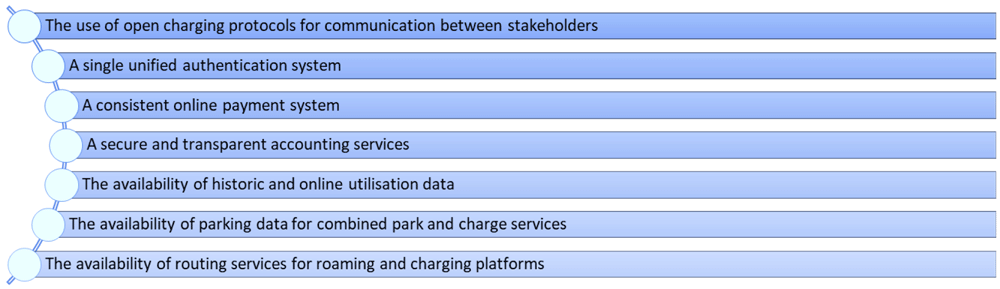
Figure 4. Summarised minimum requirements of the semantic layer on basis of INFRA (Interoperability Framework) input.
Own presentation.
The first minimum requirement within this layer is the use of open charging protocols for communication between stakeholders, such as OICP (Open InterCharge Protocol)52 for roaming and authentication or OCPP (Open Charge Point Protocol)53 for communication between Electric Vehicle Supply Equipment (EVSE) and Charging Point Operators, (CPOs). Currently, semantic communication and data exchange are not uniformly guaranteed because stakeholders use different proprietary protocols (OICP, Open InterCharge Protocol; OCHP, Open Clearing House Protocol; eMIP, Electro Mobility Inter-roaming Protocol) or customised interfaces54.
The use of a single unified authentication system or the possibility to authenticate at public charging stations through any of the available systems on the market55 is the second minimum requirement. Currently, every CPO uses a different authentication system and EV drivers are forced to have several different ways to authenticate to be able charge their EVs at different charging points. Essential for interoperability is also the existence of consistent/uniform online payment systems56 between stakeholders and users that consider the complexity of roaming services, being this the third minimum requirement. For general and specific applications, different providers of online payment services are available. This situation does not foster interoperability. Therefore, the utilization of an online payment system that doesn´t depend on any operator could, in this case, be a good solution. Linked to this is the use of secure and transparent accounting services57 (fourth minimum requirement)58. Additionally, the application of the blockchain technology could contribute to achieve interoperable and secure accounting processes amongst stakeholders59.
Steps towards the achievement of unified payment systems that fosters an interoperable EV charging infrastructure have already been taken. An example of this is the change introduced in the “Charging station ordinance” (‘Ladesäulenverordnung’)60 in Germany. This ordinance foresees that, from July 2023 on, CPOs are obliged to offer users the possibility to pay with credit card. Currently the option to pay with EC/credit card is the most attractive option for EV users and a good known alternative to this is ‘PayPal’, as a digital payment service provider61. Countries like Greece, Poland, France, and Slovenia have the highest rates of payment with credit card62. In conclusion, a unified payment system with credit card across the EU charging infrastructure would clearly foster the interoperability of the EV charging infrastructure63.
As already mentioned, the ordinance applies only to the German charging infrastructure, but the EU also plans to simplify the payment system by introducing modifications to the AFID64 with the proposal for the new Alternative Fuels Infrastructure Regulation (AFIR)65 to make the payment service “as simple as possible for consumers”66. In this sense, there are several stakeholders67, made comments to the AFIR proposal and many of them recommend the introduction of the obligation to allow credit card payments68 at public charging points as an essential requirement to achieve the interoperability of the charging infrastructure across the EU69.
Back to the requirements70: to achieve a well-planned roll out of the EV charging infrastructure, the availability of historic and online utilisation data71, in compliance with the data protection regulations, is necessary for administrations to be able to coherently plan the expansion of the charging infrastructure in public (and semi-public) spaces, and therefore constitutes the fifth minimum requirement. Also, the availability of parking data for combined parking and charging services72 (‘Park and Charge’, P&C) is of high importance for interoperability and constitutes the sixth minimum requirement. Currently, there are no uniform standards for a uniform data exchange between stakeholders73 (particularly for off-street) and, instead, multiple proprietary solutions are being used. A way to overcome this is to use open standard systems, e.g., Alliance for Parking Data Standards (APDS)74, and to integrate P&C data into roaming platforms from the planning on. The availability of routing services for roaming and charging platforms75 that allow EV driver an easy access to P&C services constitutes the seventh minimum requirement. Thus, open charging protocols should be used as well when providing routing services.
Closely related to all beforementioned requirements is the aspect of the cybersecurity of the charging points (as of every other product connected to the internet)76. Cybersecurity is, in this sense, essential to the charging station itself, to CPOs and to the energy Distribution System Operators (DSOs) and constitutes the eighth minimum requirement. Some of the risks in terms of cybersecurity are “identity theft, data alteration, unauthorized access privileges, malware insertion, private & sensitive information theft, electricity flow manipulation and changes in operating parameters that may compromise charging stations’ safety”77. Security measures need, therefore, to be implemented for “communication, mobile apps, firmware updates and physical access points”78. To achieve the cybersecurity of the charging infrastructure, the implementation of unified protocols is essential, too. Moreover, the compliance with the data protection regulations79 is of high importance80.
As already mentioned in Section 3.1 about the global layer, communication and organisation is a key element for electromobility charging infrastructure. In the USER-CHI project, different products shall be developed and implemented in different demonstration sides. For example, INCAR, an interoperability, charging and parking platform, aims to ensure a barrier-free and operator-independent access for end-users, maximising EVSE availability, improving user convenience and providing roaming services along the two TEN-T corridors with transparent and flexible payment features. CLICK (Charging Location and Holistic Planning Kit) is another product developed within the USER-CHI project, that will be an easy-to-use question-and-answer online tool for the top-down location planning for charging infrastructure, which´s purpose is to optimise the location and planning of new charging infrastructure in cities. Therefore, CLICK will use data – like historic data, city data – to analyse locations for expanding electromobility charging hubs. Both products of USER-CHI are good examples of a first steps to meet the semantic requirements. The lessons-learned from the development of these products at the end of the project in 2024 will probably be a good adding to the requirements of INFRA and to what is needed to achieve interoperability in semantic layer.
3.2.3 Legal layer. The legal framework is meant to establish obligations for stakeholders (service providers, EV builders, governments, etc.), unify technical standards and set mechanisms to make charging easy and attractive for EV drivers. Therefore, an overall uniformity of the legal aspects for the deployment of a cross border charging infrastructure for EV is essential. In a first step, the guidelines and recommendations made in the INFRA deliverable within the legal layer were examined and summarized into minimum requirements. In this sense, a set of eight legal minimum requirements to achieve interoperability was consolidated as baseline for this paper and systematised as follows (see Figure 5). In a second step, further desk research was made in relation to the EU and national relevant laws and regulations to achieve the interoperability of a cross borders charging infrastructure as presented in INFRA. The desk research on the applicable legislation was expanded to any relevant legal aspect that could condition interoperability in other ways not considered in INFRA (for further information on the authorship see footnotes and citations).
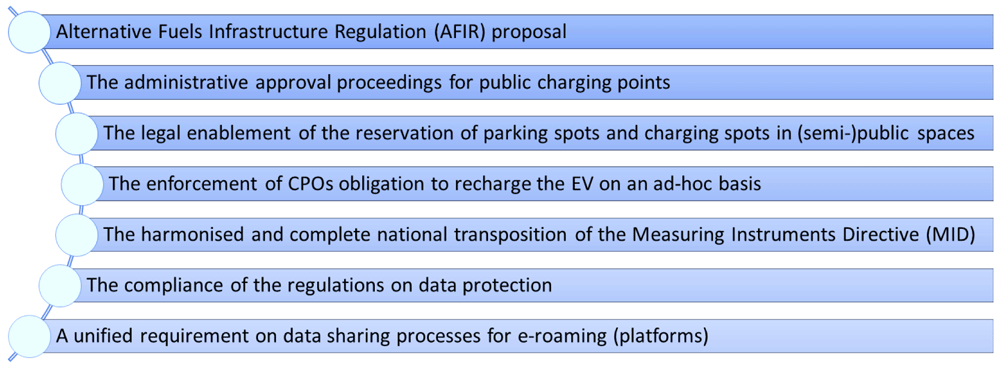
Figure 5. Summarised minimum requirements of the legal layer on basis of INFRA (Interoperability Framework).
Own presentation. CPO, Charging Point Operators; EV, Electric Vehicle.
As first legal requirement for interoperability, a harmonised national transposition of the AFID is necessary81. The AFID regulates the roll out of the charging infrastructure for EVs and alternative fuels across the EU82. Until now a harmonised transposition of the AFID into the national legislations of the EU state members has not been achieved. This and the fact that the AFID doesn´t include determinations for roaming for EV charging and charging protocols, constitute huge barriers for interoperability83.
As consumers demand for EV is necessarily linked to the deployment of an interoperable charging infrastructure across the EU, the European Commission proposed a revision of the AFID that was included in the “Fit for 55” Package84 published in July 2021. The AFID is planned to be repealed and replaced by the Alternative Fuels Infrastructure Regulation (AFIR), which will be directly applicable in the member States. This way, a uniform implementation of the obligations established at EU level in each member State is ensured. The AFIR proposal is also meant to fill some of the current legal gaps that hinder interoperability. In this sense, the actual adoption of this regulation would, so to say, guarantees the fulfilment of this first legal minimum requirement. The uptake of the AFIR will, in this way, introduce some changes and have impacts on different aspects of the other layers that condition interoperability85.
Complementary to this is the inclusion of interoperability requirements in the national legal frameworks of the EU member states. In general, the national legislations of EU member states do not establish minimum requirements to ensure the interoperability of EV charging points operated by different CPOs86. This requirement can´t be considered separately from the preceding requirement. Since the interoperability of the EV charging infrastructure across the EU depends completely on the uptake of minimum requirements at EU level (within all layers), the uncoordinated adoption of national requirements is rather detrimental. Thus, the actual adoption of the AFIR proposal, would guarantee a unified inclusion of the foreseen interoperability requirements in the national legal frameworks87.
A second requirement, also considered to be essential to achieve interoperability in this sector, is for the administrative approval proceedings for public charging points to be optimised. Often the approval of new charging points in public spaces is competence of the municipalities and each municipality may, to a certain point, establish its own proceedings. These proceedings can be very tedious for all parties involved. In this regard, municipalities should reduce the complexity of their own authorisation proceedings88.
The legal enablement of the reservation of parking spots and charging points in (semi-) public spaces is the third minimum legal requirement for interoperability89. However, a uniform regulation of this matter at EU level has not been achieved yet. The AFIR proposal does not contain any provisions in this regard either. Therefore, a first step would be to conduct feasibility studies of this matter mainly at municipal level. An example of the implementation of P&C in an EU city is the case of Barcelona. The municipality of Barcelona developed a public service of parking spots on public roads for charging EV called “Endolla”90. While using this service, users can make a reservation with 20 minutes in advance to charge their EV for up to 12 hours. In Berlin, and within the MEISTER project91, four pilot P&C points have been installed with booking possibilities through the MEISTER Neighbourhood app92. A similar service will be provided in the USER-CHI project with the beforementioned INCAR platform93, where a reservation of P&C is possible94.
The fourth minimum requirement is the enforcement of the CPOs obligation to offer the possibility to recharge the EV on an ad-hoc basis95. This obligation is already foreseen in the AFID (Art. 4 Nr. 9) without further explanations on what “on ad-hoc basis” means or which services must be guaranteed. By contrast, it is established in the AFIR proposal that charging “on ad-hoc basis” refers to “a recharging service purchased by an end user without the need for that end user to register, conclude a written agreement, or enter into a longer-lasting commercial relationship with the operator of that recharging point beyond the mere purchase of the service”96. To this respect, the AFIR proposal establishes that this service will have to be provided by all CPOs of public accessible charging points and, at the same time, that CPOs must guarantee the possibility for users to pay with credit card97 at newly established charging points98.
A fifth minimum requirement99 is the harmonised and complete national transposition of the Measuring Instruments Directive (MID)100 in all EU member states, or put differently, the enforcement of a directly binding legislation on metering devices in the EU. The AFID already established in Art. 4 Nr. 7 that, if technically feasible and economically reasonable, the recharging points accessible to the public shall “make use of intelligent metering systems” in compliance with the Directive 2012/27/EU101. Nevertheless, until now, there is no legal overall obligation for CPOs to use intelligent metering systems in publicly accessible charging points.
In this regard, the AFIR proposal highlights the importance of smart recharging points, which need to have specific hardware and software features that are necessary for the data exchange between stakeholders and end users102, in combination with smart metering systems. This would have great benefits for users and would mean an easier integration of EV in the electric system. Thereafter, the AFIR proposal mentions that Member States should encourage, were technically and economically feasible, “the use of smart metering system for the recharging of EV at publicly accessible recharging stations”103. It also states that smart metering systems are essential to guarantee the availability of real-time data. This kind of data is needed “to ensure the stability of the grid and to encourage rational use of recharging services”104 as well as to ensure the accuracy of the billing information.
To the day, the requirements for smart metering devices are regulated by the Directive (EU) 2019/444105, which Member States should have already transposed into national law. In any case, if used, smart metering systems must comply with the requirements established in Art. 20 of the same Directive (EU) 2019/444. However, and even though smart metering systems could promote smart charging106, the AFIR proposal does not lay down specific obligations regarding the use of smart metering systems within the EV charging infrastructure (unless it is a feature that smart charging points need to have, which is not established in the AFIR either)107.
The compliance with the regulations on data protection regarding the personal data generated when EV drivers use public charging points108 is the sixth minimum requirement. In this sense, the EU General Data Protection Regulation (GDPR)109, which is directly applicable in all EU member states, and further nationally or regionally established obligations must be observed110 (e.g., in German ‘Bundesdatenschutzgesetz’111 or in Spanish ‘Ley de Protección de Datos’112). In this sense, some communication protocols like OCPP are configurable to comply with the GDPR provisions. However, the compliance with the GDPR is responsibility of the implementers of the OCPP113.
In addition, the requirement of having binding obligations on data sharing processes between providers has been identified in the INFRA deliverable114. The goal is to achieve interoperable systems (for all transactions that are necessary in the charging process)115 that are not depending on a single provider. This is currently not possible because there are no legal obligations in this regard and stakeholders use proprietary systems that are mostly partly interoperable116.
The importance of the data exchange between stakeholders is also recognised in the AFIR proposal117. In this sense, the AFIR proposal mentions the importance of digitally connected and smart recharging points to achieve an interoperable charging infrastructure. These smart charging points need to have specific hardware and software features for the data exchange between stakeholders and end users118. The specifications on these hardware and software features should be included in the legislation at EU level. Smart recharging is thus defined in Art. 2 Nr. 59 AFIR proposal as “a recharging operation in which the intensity of electricity delivered to the battery is adjusted in real-time, based on information received through electronic communication”119.
A digitally connected recharging point is, as established in Art. 2 Nr. 14 AFIR proposal, a charging point that “can send and receive information in real time, communicate bi-directionally with the electricity grid and the electric vehicle, and that can be remotely monitored and controlled, including to start and stop the recharging session and to measure electricity flows”. Even though the AFIR proposal this way includes first references to the need for stakeholders to be able to exchange data, it does not establish a specific obligation for stakeholders to, for example, use open communication protocols, which are needed for smart charging120 and that would ensure interoperability.
There is also a gap in relation to unified requirements on data sharing processes for e-roaming121 or e-roaming platforms122 for EV charging (seventh requirement)123. The before mentioned overall situation in relation to data exchange between stakeholders across the EU foreseen in the AFIR proposal is the same for data sharing processes for roaming and roaming platforms.
On the other side, the existence of a uniform regulation of vehicle to grid charging/reverse charging is necessary (eighth requirement). There are currently non-binding international standards on this matter (ISO 15118-1:2019124 and IEC 60870-5-104125) and some countries (e.g., Germany and Spain) have started to act. As there are no obligations in force on this matter at EU level, a unified legislation on this matter is essential.126
In this sense, the integration of this issue into the AFIR proposal is an important milestone. The AFIR proposal acknowledges in its Preamble (21) the importance of “bi-directional charging”127, to facilitate the integration of EV charging in the electric system. As already mentioned, the possibility of bi-directional charging, is a feature that digitally connecting charging points (Art. 2 Nr. 14 AFIR proposal) and, as set out in Art. 5 Nr. 7 AFIR proposal and if the AFIR proposal is finally adopted, CPOs will need to ensure the digital connectivity of charging points128.
Related to these last aspects is the importance of the cybersecurity of EV charging points (as already mentioned in the semantic layer). However, there is still no unified cybersecurity protocol or regulation put in place. Therefore, there could be an overall lack of coordination between all stakeholders129 (which is highly important for interoperability, as already mentioned in the global layer130). Some countries, like the United Kingdom (UK), are already acting in this respect (even though not in the EU, it is still worth mentioning). In this sense, for example the UK plans to release new legislations on EV smart charging, that include cybersecurity requirements. The British Standard Institution already released two publicly available specifications (PAS) 1878 and 1879, that include security requirements that contribute to securing smart and V2G (Vehicle to Grid) charging infrastructure131.
The use of encrypted communication, that no one can interfere with and/or alter, is a possible answer to this problem. The use of “smart contracts”132 could pose a solution for the cybersecurity problems and might, also, simplify the contractual situation between service providers. There are multiple possible applications for smart contracts in blockchain-based systems133. A special significance has the blockchain technology when it comes to the verifiability of transactions134. Smart contracts could be used, in this sense, between stakeholders (Business to Business, B2B) to improve transparency, security, and effectivity135,136.
The use of smart legal contracts137 to regularise relations between stakeholders and end consumers is also possible but it has some important disadvantages for the consumer due to their immutability138. In this sense, the GDPR recognises the right to rectification (Art. 16 GDPR) and the right to erasure (‘right to be forgotten’, Art. 17 GDPR)139 and these rights are very difficult to guarantee with the use of smart contracts140. In any case, there is no harmonised regulation at EU level on blockchain technology nor “smart contracts” and, with it, the interoperability of the charging infrastructure is not guaranteed with the use of these technologies either141.
On the other hand, the incorporation into the EU legislation of time-of-use tariffs and, eventually, dynamic prices for EV charging are also aspects that would foster the roll out and scale up of electromobility142. By offering price signals to users, it would be possible to shift the charging of EV to off-peak periods and optimise the use of the already available electricity without having to invest excessively in the expansion of the electricity production or distribution systems143,144.